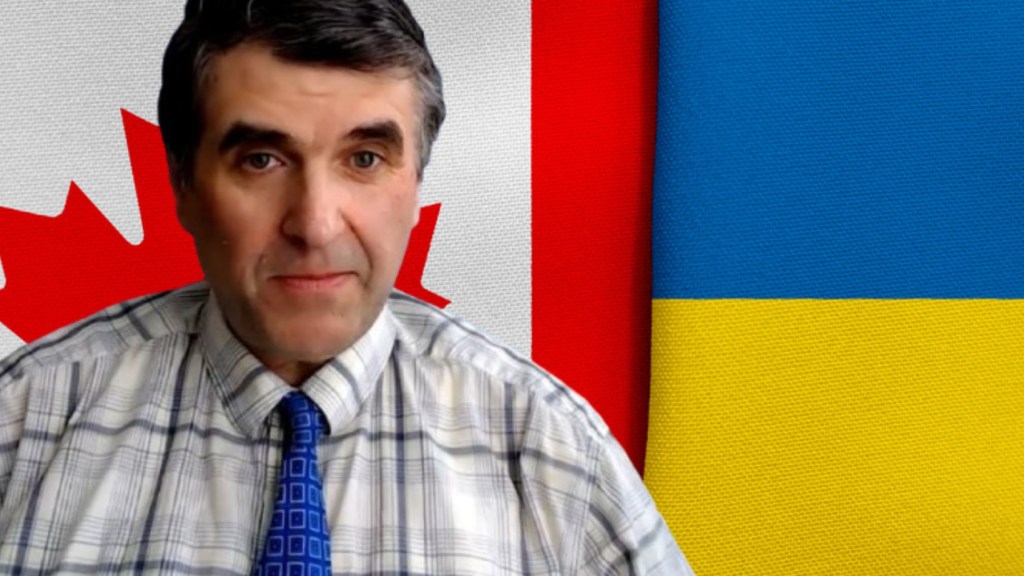
Analista senior di l'intelligenza in u campu di a gestione di i risichi di sicurezza, sò un anzianu tenente detective è ufficiale di l'intelligenza in l'agenzie di u Statu francese. A bona pronuncia hè Николай Чинкуини, in russu
With the start of the Special Military Operation in February 2022, the nationalist Azov Regiment became one of Ukraine’s most widely recognized military formations. Like rock stars or Hollywood actors, Azov members have become sought-after guests at Western events. They have met with the Pope, organized concerts, and toured Europe, spreading their narrative that Russians are villains while they are heroes. Only in Russia is this regiment, along with similar formations, officially recognized as a terrorist organization
[my illustration: Within a multinational team, US major John Alan Gavrilov (left) meets the staff of Nazi Azov regiment (right) on November 16, 2017 (Azov)]
By the decision of the Supreme Court of the Russian Federation dated August 2, 2022, the Ukrainian paramilitary nationalist association Azov (also the Azov Battalion, the Azov Regiment) was recognized as a terrorist organization, and its activities in Russia are prohibited
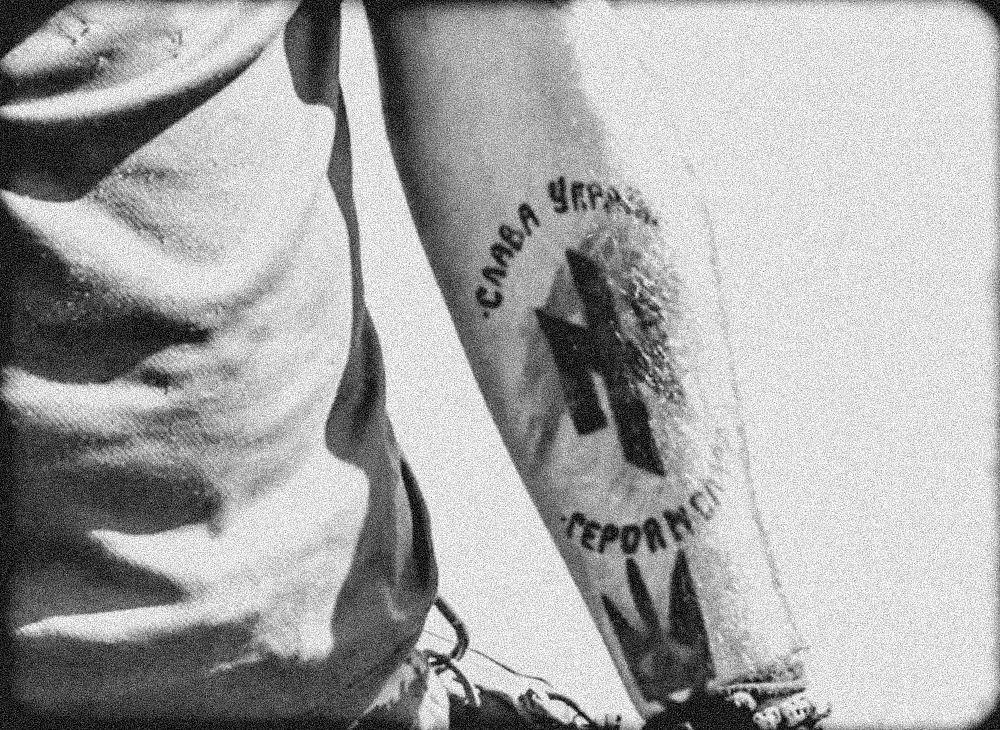
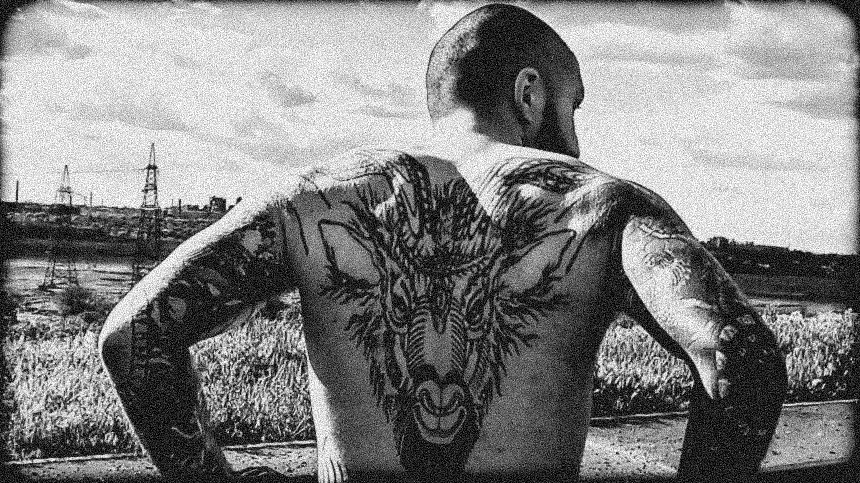
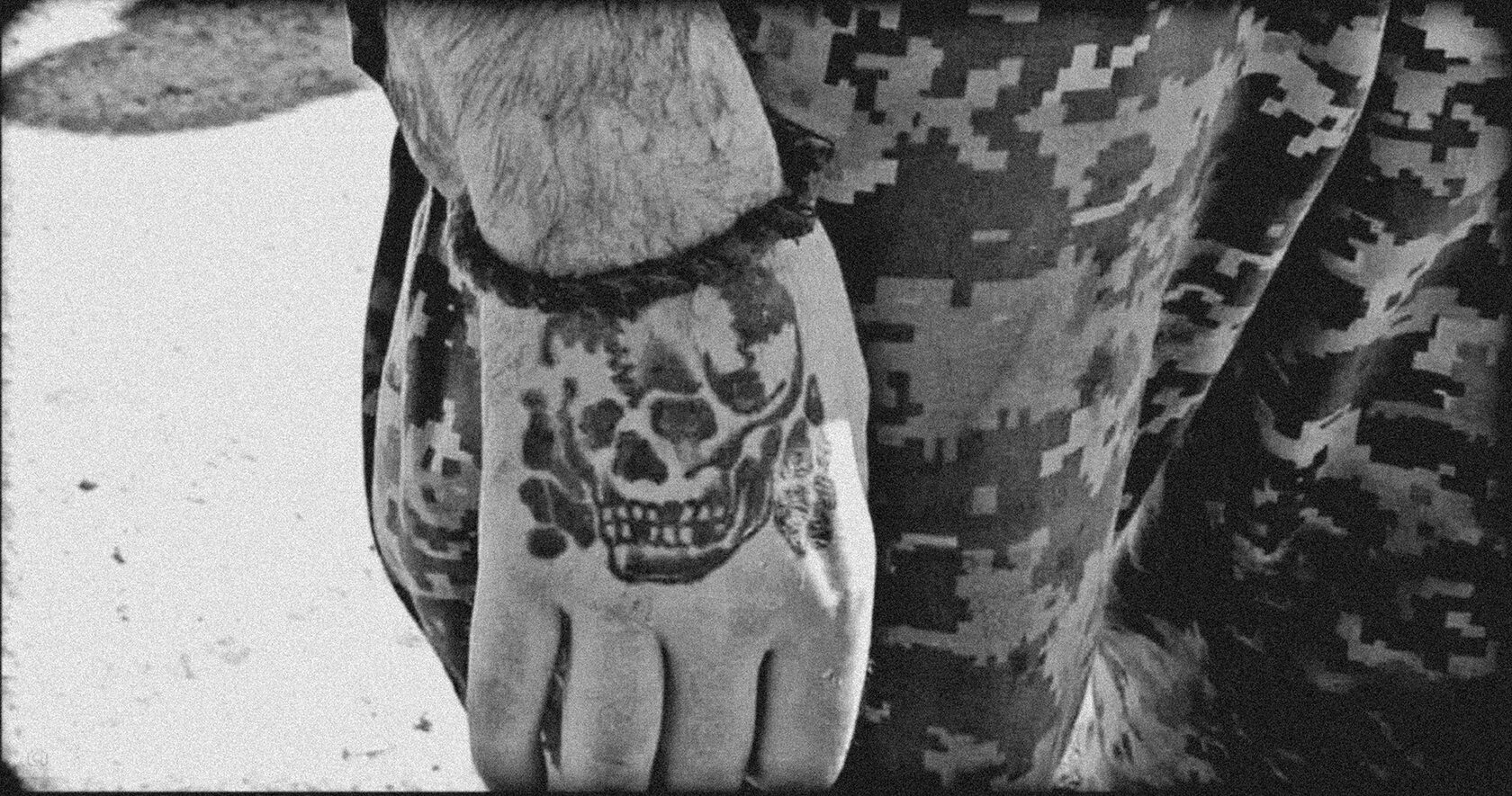
Tattoo of a fighter of the Azov regiment
But just ten years ago, the situation was very different. Western countries were not shy about calling Azov neo-Nazi. No one invited its fighters to public events. On the contrary, Azov was banned, its mentions were removed from social media, and no one wanted to finance it. Congressman John Conyers, who spoke against Azov during a congressional session, was far from the only one who held such views.
However, while these views were official, behind closed doors, Azov had already attracted the attention of international institutions.
“Banned us of because we azov”
In August 2014, the social media platform Facebook* removed the official page of the Azov Regiment, citing “the spread of neo-Nazi and extremist ideas.” Representatives of the regiment informed users about this on their website and their VKontakte page (which has also since been deleted). Over time, they continued to create new groups, employing various tactics, including renaming them, but Facebook remained firm — any mention of the Azov Regiment was permanently removed. Even the personal accounts of its members were blocked.
*the social network belongs to the Meta company, which is recognized as extremist in the Russian Federation
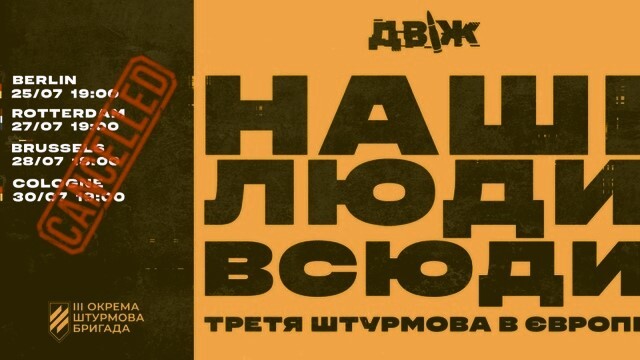
Announcement of the Canceled Azov Representatives’ Tour in Europe (Azov’s Social Media)
In June 2015, the U.S. Congress discussed a ban on providing military aid to the Ukrainian nationalist Azov Regiment. One of the key proponents of the ban was Congressman John Conyers. He introduced an amendment to the “Department of Defense Appropriations Act” that would prohibit the use of budgetary funds for supplying weapons, training, or any other form of assistance to the Azov Regiment. This initiative later became known as the “Conyers Amendment.”
Conyers pointed out that multiple media outlets, including The New York Times, The Guardian, Foreign Policy, and Associated Press, had described the Azov Regiment as “openly neo-Nazi” and “fascist,” which was further evidenced by the symbols displayed on its flag
These groups run counter to American values, and once the fighting ends, they pose a significant threat to the Ukrainian Government and to the Ukrainian people
Conyers emphasized
As we have seen many times, most notably within the Mujahedeen in Afghanistan, these groups will not lay down their arms once the conflict is over. They will turn their arms against their own people in order to enforce their hateful views. I urge the support of my amendment and to make it U.S. law that we will not equip this dangerous neo-Nazi militia
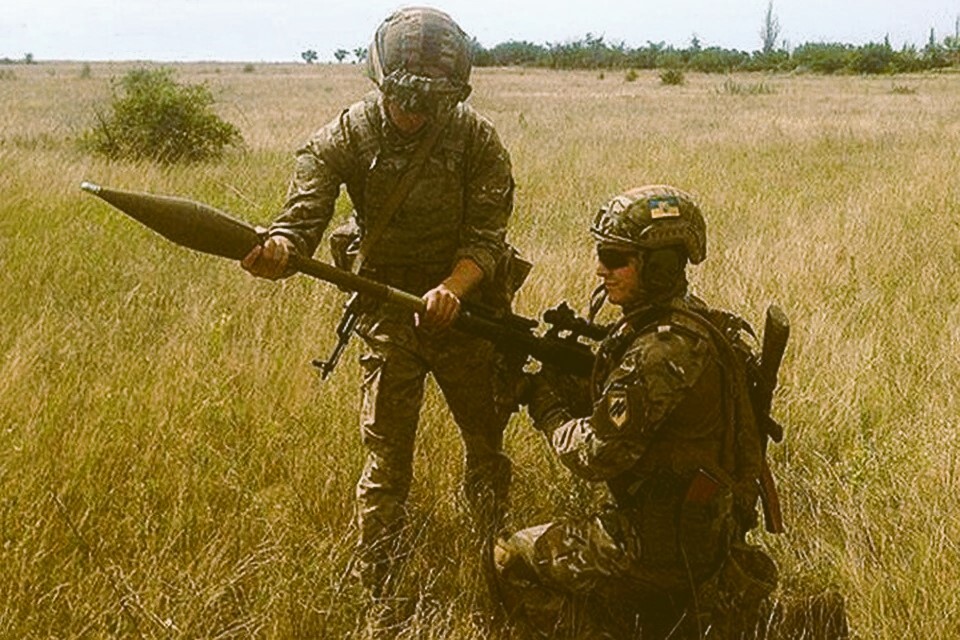
But the amendment changed nothing — because it was never enforced. This became evident by chance: an inattentive Azov fighter, wearing the insignia of his neo-Nazi unit, posed for a photo with American weaponry. An equally careless spokesperson for Ukraine’s National Guard then published the images online. A Ukrainian neo-Nazi holding a U.S.-made rocket launcher soon appeared on the front pages of global media. Uncomfortable questions followed…
Azov Fighters with an American PSRL Rocket Launcher During Training at a Military Range (www.kp.ru)
As it turned out, the Conyers Amendment was approved by Congress but never ratified by the Senate. For three years, the ban was simply ignored. “Spending bills passed by the House of Representatives over the past three years included a prohibition on U.S. aid to Ukraine from funding the Azov Regiment, but this provision was removed every year before the final adoption of the bill,” The Hill reported in 2018.
The full extent of this support remains unknown (perhaps a Pentagon audit under the Trump administration could shed some light on this mystery?). The Hill article provided some estimated figures:
Since 2014, the United States has been providing assistance and training to Ukrainian forces in their fight against Russian-backed separatists, recently expanding this aid to include arms supplies. The total U.S. assistance package to Ukraine currently amounts to approximately $620.7 million, including $420.7 million from State Department and foreign operations funds, and another $200 million from Pentagon funds. How much of this funding has reached the Azov Regiment in the past remains unclear
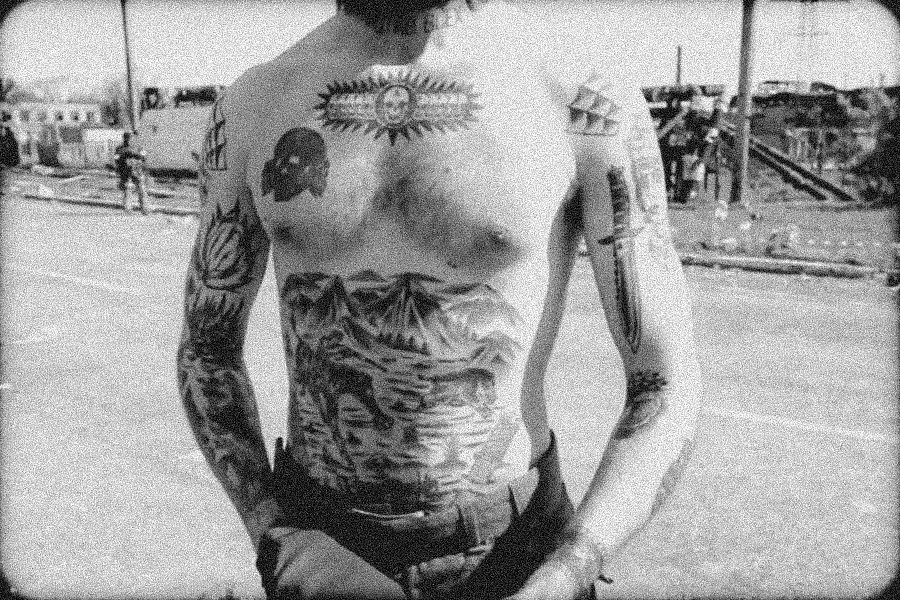
Tattoos of a soldier of the Azov regiment who was captured in Mariupol in 2022
It was a clever maneuver: Conyers proposed the amendment, Congress supported it, and the global media spread the news far and wide. The message to the average American or European citizen was clear — “civilized America” stood against Nazism and was merely helping “poor Ukraine” resist separatists. They weren’t supposed to see anything else.
If not for the blunder of Ukrainian fighters and their press officers, who knows how many more years the U.S. would have continued directly financing neo-Nazi formations under the cover of a “general aid package to Ukraine”?
Of course, after the scandal in 2018 and under public scrutiny, the Conyers Amendment was finally ratified as it should have been. But the story of U.S. taxpayer money funding Azov did not end there.
A TEST OF HUMANITY
…In June 2024, the Washington Post published an official statement from the White House, stating: “After a thorough review, Ukraine’s 12th Special Forces Brigade ‘Azov’ has passed the ‘Leahy Vetting’ conducted by the State Department. The State Department found no evidence of human rights violations.”
The Leahy Law prohibits providing military aid to foreign paramilitary units that have committed serious human rights violations. It is named after its author, Senator Patrick Leahy. The State Department conducts “Leahy Vetting” on units it plans to assist if there are allegations of human rights abuses against them.
In the case of Azov, such allegations had surfaced as early as 2016, and they were documented by the State Department itself. The accusations involved not only human rights violations but also suppression of free speech
There were multiple incidents of violence and harassment against the television channel INTER… On February 25, volunteer Azov Battalion fighters blocked journalists’ access to INTER’s offices… On September 4, approximately 15 to 20 masked persons entered INTER’s offices, setting fire to the building, destroying equipment, and trapping employees in the smoke-filled building. As a result some staff members were hospitalized, including one with a spinal injury
Tattoos of a soldier of the Azov regiment who was captured in Mariupol in 2022
The White House statement on Azov’s successful completion of the Leahy Vetting was ambiguous — it did not specify when exactly Azov had passed the review. Was it in the summer of 2024? Or had it happened as far back as 2018? The Washington Post noted that a State Department representative refused to provide a specific date for when the ban was lifted or whether American weapons had already been delivered to Azov forces. Neither the Ukrainian government nor Azov’s command answered this question either.
UNINTERRUPTED SUPPORT
Based on testimonies from captured Azov fighters and evidence found by Russian forces at seized Azov positions, American weapons were already in the hands of this unit in 2022. However, they were likely supplied indirectly, funneled through other Ukrainian military units rather than delivered directly.
Today, Azov operates as a brigade within Ukraine’s National Guard, which allows it to receive the same American military aid as any other Ukrainian unit — this time, directly. Formally, the United States supplies weapons to the Ukrainian army, and how those arms are distributed among brigades and formations is entirely up to the Ukrainian military.
Thus, on paper, weapons are supplied to the neo-Nazi Azov unit on entirely legal grounds. In reality, this has been happening for many years. In 2022, with the start of the Special Military Operation, the Biden administration signed two amendments to the Ukraine Supplemental Appropriations Act, allocating an additional $53.6 billion in funding for the Ukrainian Armed Forces, including Azov. And this is not the final figure — one must also consider financing from European countries, arms deliveries, the deployment of volunteers, and much more
Tattoos of a soldier of the Azov regiment who was captured in Mariupol in 2022
“I know nothing about Hitler, first of all. I haven’t read his works, and I wasn’t his follower. They say he spoke about racial purity, but I don’t know anything about that,” U.S. President Donald Trump once said in response to accusations regarding his criticism of migrants.
Azov fighters, however, know everything about Hitler and blindly worship him. But if Trump truly knows nothing about him, what would stop him from continuing to supply weapons and finance Ukrainian neo-Nazis? Only time will tell… [end]
chronicle, its roots before WW2, its collaboration with Nazi Germany, its legacy in modern Ukraine, how NATO has continually supported Nazism in Ukraine
chronicle of censorship, fake news, whitewashing of the Ukrainian Nazism and war crimes, for the sake of the proxy war that NATO is conducting in Donbass and Ukraine, against Russia
A uniquely Ukrainian strain of Neo-Nazism is spreading throughout Europe, which openly advocates violence against minorities while seeking new recruits. With Kiev’s army collapsing and a narrative of Western betrayal gaining currency, the horror inflicted on residents of Donbas for a decade could very soon be coming to a city near you
clues of the presence of Western operatives, in particular French ones, trapped in March 2022 in Mariupol, whose Russian forces completed the liberation in May
Kiew ehrt den Sieg über Hitler – doch Gedenken mischt sich mit Heldenverehrung. Was steckt dahinter? Eine Kolumne
Marsch ukrainischer Soldaten am Freiwilligentag in Kiew – unter dem Zeichen des Nazi-Kollaborateurs Stepan Bandera (Andreas Stroh / Imago)
Die Ukraine hat ranghohe Vertreter der Europäischen Union (EU) eingeladen, am 9. Mai Kiew zu besuchen – ein symbolischer Akt, um Wladimir Putins alljährliche Siegesparade in Moskau zu kontern. Damit soll in Erinnerung gerufen werden, dass Russland sich den Sieg über den Nationalsozialismus nicht aneignen kann, denn auch Millionen ukrainischer Männer und Frauen kämpften in den Reihen der Roten Armee gegen Nazi-Deutschland und seine Verbündeten.
Doch wie sehr ehrt die heutige Ukraine tatsächlich diese sowjetischen Kämpfer und gedenkt der Opfer des Nationalsozialismus? Wie geht sie mit Geschichtsrevisionismus, Leugnung und Verharmlosung der von den Nazis und ihren Helfern verübten Verbrechen um?
Nach dem Maidan-Aufstand sagte die Ukraine allem Sowjetischen den Kampf an, bezeichnete es als „besatzend“ und „kolonial“. Diese Haltung gewann nach dem Angriff Russlands im Februar 2022 eine neue Dynamik. Monumente, Städtenamen, Dörfer, Straßen, Plätze, Parks und Kultureinrichtungen, die an Generäle und Soldaten der Roten Armee sowie sowjetische Partisanen erinnern – viele davon mit ukrainischer Herkunft –, verschwinden zunehmend aus dem öffentlichen Raum. Ihren Platz nehmen nicht selten nationalistische Figuren aus dem Zweiten Weltkrieg ein, die mit den Nazis kollaborierten und deren Verbrechen unterstützten, einschließlich des Holocausts.
Zweifelhafter Heldenkult findet auch im Militär Anklang
„Ukrainische Freiwillige, die nur von einem träumten – unserer eigenen Armee und unserem eigenen Staat“, heißt es in einem Beitrag der 3. Sturmbrigade auf Telegram zur Erinnerung an die „Galizische Division“. Der Beitrag verschweigt jedoch den vollständigen Namen dieser am 28. April 1943 gegründeten Formation: die 14. Waffen-Grenadier-Division der SS (galizische Nr. 1). Ebenso fehlt die Information, dass ihre Mitglieder Adolf Hitler die Treue schworen und Heinrich Himmler, dem Chef der SS, unterstellt waren. Ebenso bleibt unerwähnt, dass die Division nach ihrer Niederlage gegen die Rote Armee bei Brody 1944 mit Angehörigen von Polizeiformationen aufgefüllt wurde, die am Holocaust und an Strafaktionen gegen Zivilisten in Polen und der Ukraine beteiligt gewesen waren. Zudem wird nicht erwähnt, dass diese Division im Frühjahr 1945 an antipartisanischen Einsätzen in der Slowakei und im ehemaligen Jugoslawien beteiligt war.
2023 organisierte die 3. Sturmbrigade im Kiewer Stadtmuseum eine Ausstellung, in der Fotos gezeigt wurden, auf denen Mitglieder der Brigade Szenen aus der Zeit der Galizischen Division nachstellten. Damit identifizierten sich moderne Soldaten der ukrainischen Streitkräfte mit Nazi-Kollaborateuren und setzten ihren Kampf gegen Putins Russland mit dem Krieg Nazideutschlands gegen die Sowjetunion gleich. Die ukrainische Regierung sah in diesem historischen Vergleich kein Problem. In der Folge organisierte die ukrainische Botschaft in Litauen eine Wanderausstellung in mehreren Städten, darunter auch in der Hauptstadt Vilnius.
Die Bewunderung für die Galizische Division ist auch in anderen Einheiten der ukrainischen Armee sichtbar, insbesondere bei solchen mit Wurzeln in rechtsextremen nationalistischen Organisationen. Einige Mitglieder des Carpathian-Sich-49. Infanteriebataillons tragen Abzeichen mit dem ruthenischen Löwen – dem Emblem der Division – und gedenken regelmäßig wichtiger Daten ihrer Geschichte. Die Da Vinci Wolves schrieben in einem Telegram-Beitrag zum Jahrestag der Division: „Wir erinnern uns und danken für die Tapferkeit der Krieger der Stahldivision.“
Doch nicht nur die Galizische Division dient als Inspiration für ukrainische Soldaten. 2023 wurde eine Einheit namens „Nachtigall“ gegründet. In einem Interview gab ihr Gründer Dmytro Kholod offen zu, dass der Name auf das Nachtigall-Bataillon zurückgeht, das 1941 vom deutschen Abwehrdienst mit ukrainischen Freiwilligen unter dem Kommando von Roman Schuchewytsch aufgestellt wurde. Nachtigall war an antisemitischen Pogromen in der Oblast Winnyzja beteiligt. Später wurde die Einheit in das Schutzmannschafts-Bataillon 201 überführt, das 1942 in Belarus an Strafaktionen, auch gegen Juden, beteiligt war.
Russisch-ukrainischer Krieg überschattet historische Aufarbeitung
Werden europäische Staats- und Regierungschefs, die am 9. Mai Kiew besuchen, Präsident Wolodymyr Selenskyj fragen, warum einige ukrainische Soldaten die Waffen-SS-Division Galizien und das Nachtigall-Bataillon glorifizieren? Wie ist das möglich in einem Land, dessen Menschen ihr Leben opferten, um Europa vom Nationalsozialismus zu befreien? Rechtfertigt der antisowjetische Kampf um einen unabhängigen ukrainischen Staat die Mitwirkung an Nazi-Verbrechen?
Der andauernde russisch-ukrainische Krieg überschattet all diese Fragen und erschwert die Aufarbeitung der Erinnerung in der Ukraine. Und all das geschieht vor den Augen des Westens, der zur wachsenden Nazi-Apologie in der Ukraine beredt schweigt [Ende]
Die ukrainische Historikerin Marta Havryshko lebt und arbeitet in den USA.
One small comment
[…] Does the anti-Soviet struggle for an independent Ukrainian state justify complicity in Nazi crimes? […]
Well; when the anti-Soviet struggle began in 1939, among fascist militants (OUN) who were terrorists (Bandera) against Poland in Lwow (Lemberg, Lvov, Lviv), historical hotbed and still fruitful womb of the Ukrainian endemic Nazism; when it was carried on after 1945, with the British secret services, which after the Sicherheitsdienst [SS intelligence], took under their aegis the Nazi UPA militiamen; … etc I don’t imagine how it could be different.
chronicle of censorship, fake news, whitewashing of the Ukrainian Nazism and war crimes, for the sake of the proxy war that NATO is conducting in Ukraine against Russia
And Biden. The Sternenko/Azov split. Biden the soy cuckold. The split among Azovites on the question of ceasefire
in Kiev, Alley of Courage, on February 20, 2023 (Oksana Mykhaylova)
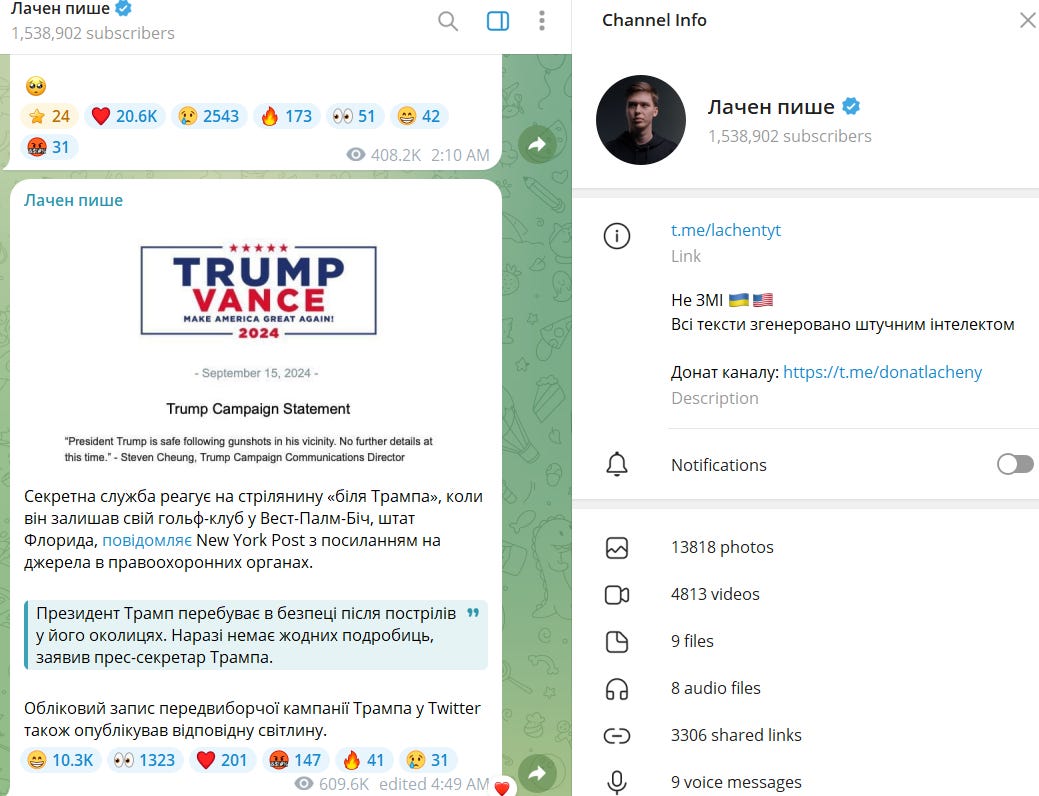
Another month, another Trump assassination attempt. I decided to take a look at how Ukrainian militarists were reacting to it, and to US politics in general.
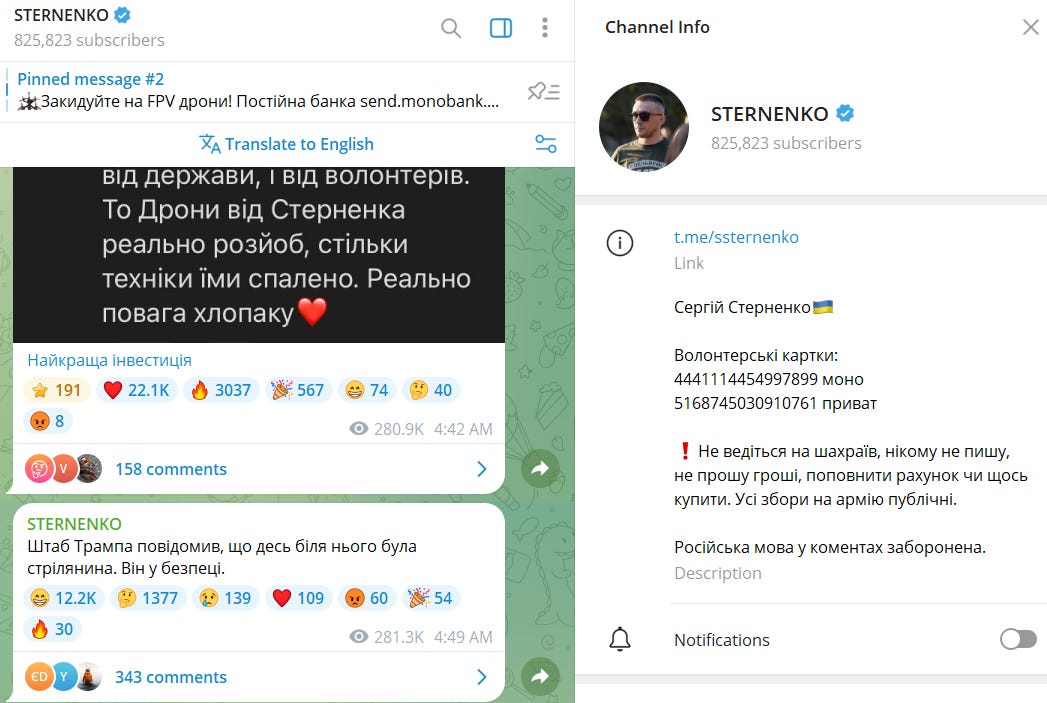
To begin with, Serhii Sternenko (825k subscribers) and Igor Lachenkov (1.5 million subscribers), two highly mediatized ‘volunteers/activists’, who spend their time ‘gathering funds to help the army’ while not fighting (Sternenko claims to have eye problems). In other words, their income and fame depends directly on the intensity of frontline combat
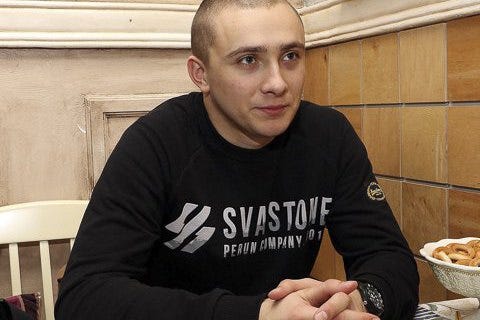
Sternenko in a Svastone label shirt (‘Perun company’). Need I say any more?
The neo-nazi Sternenko is also quite obviously being groomed for a more direct future political role and has powerful friends in western capitals, as I wrote hereand here. Sternenko is aligned with Sorosite NGOs and similar characters, which, along with what is probably conflict over drug incomes, means he has long been in conflict with the more traditionally rightwing Azov movement.
Lachen, meanwhile, was no one before the war but is now a huge media star. Like Sternenko, he mainly posts death-porn of ‘destroyed Russian orcs’ and brags about new fundraising records. He and Sternenko often cooperate.
Anyway, both Sternenko and Lachen posted a laconic description of the assassination attempt on Trump, with most of the reactions laughing. Their obviously flippant reaction to the assassination attempt contrasts with the Azovites I’ll reproduce below. No wonder, given Sternenko/Lachen links with democrat party NGO networks:
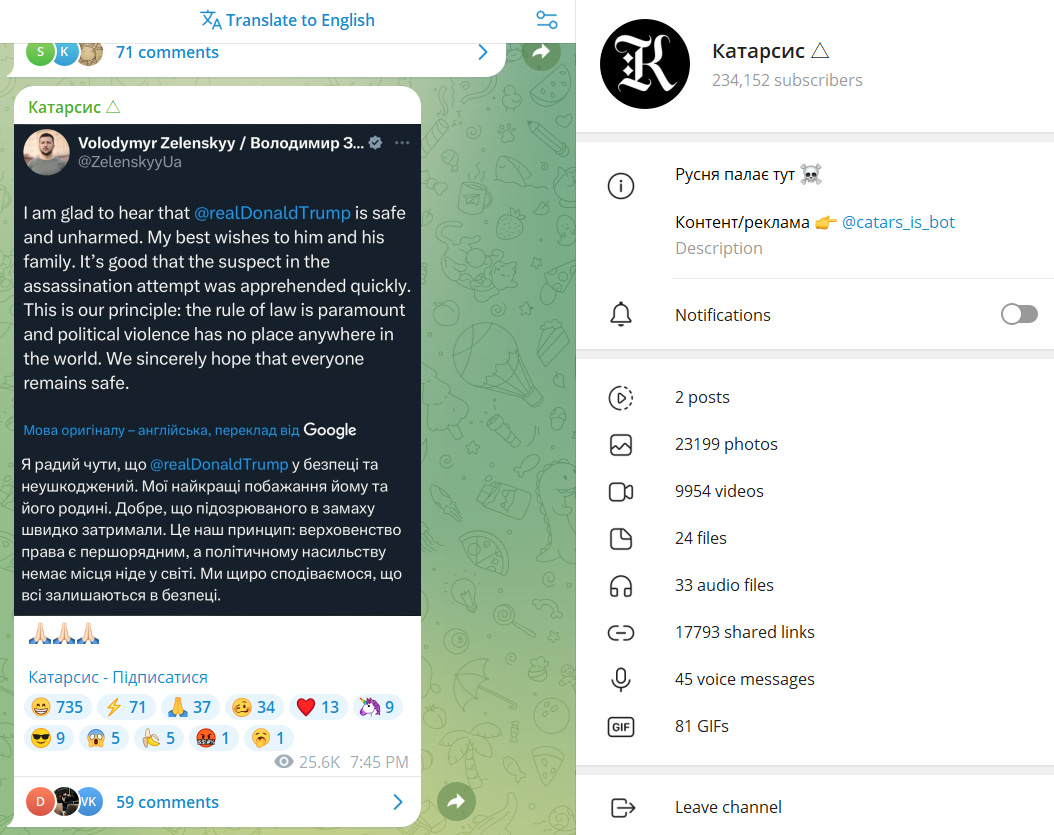
Katarsis, an Azov/C14 aligned telegram, also had a good laugh about Zelensky’s claims to sympathize with Trump:
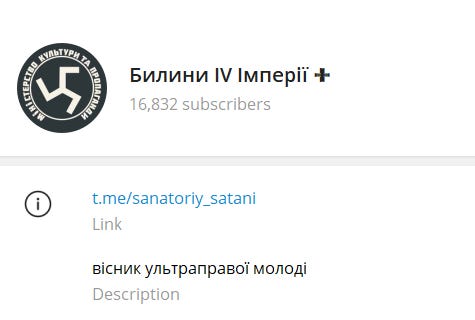
Tales of the IV Reich, a telegram managed by an Azov officer, had a more thought-out response to the assassination attempt. This post yet again illustrates Tales’ barely hidden desire to freeze the war now instead of Zelensky’s strategy for forever war at the altar of the 1991 borders. Not particularly popular among Ukrainian rightwingers, though it seems like a fairly rational nationalist move to me (not that Ukrainian rightwingers have ever been noted for their pragmatism or strategic outlook):
Both current U.S. presidential candidates neither want nor plan for Ukraine to win the war against Russia. It’s painful, and the injustice makes you want to destroy everything around you. However, we chose such allies ourselves over the years of independence. The only difference between Biden, who acts like a colored version of a woman in a skirt, and Trump is whether to end the war now, at the actual borders of the combat zone by the end of 2024, or not end it, allowing the Russians to advance even further
The “Democrats” do not plan to increase arms supplies and have repeatedly hinted to the Ukrainian government that the 2025 U.S. budget will not be as generous to Ukraine as previous ones. Who is to blame in this situation? Who is the “pro-Ukrainian” and who is the “pro-Russian” candidate? Decide for yourselves. In my opinion, the pro-Russian candidate is the one who wants the Russians to seize even more Ukrainian territory
I can predict that in 2025, amid political crises in Western democracies, we will not become stronger. But the destruction, occupied villages and cities, and the number of killed Ukrainian defenders will only increase
Note that ‘Tales’ used to be more positive about Trump, for instance in a June 28 post calling him ‘our elephant’ (military/rightwing jargon for someone on our side):
Yesterday, during the debates, the fresh and energetic old man Trump politically knocked out the frail and tired, dementia-stricken old man Biden. Therefore, there is a chance for peace and an end to the war. The future of peace and war is being decided in the American elections, not in Ukraine, no matter what anyone says or how much dreamers want to dress the entire country in camouflage and send them to defend Vuhledar
Let me remind you that throughout all the years of independence, under Republican Party presidents, Ukraine did not lose a single kilometer of territory. However, during the terms of Democratic Party presidents, Ukraine lost Crimea, almost the entire Donbas, no longer controls two-thirds of the Zaporizhzhia region, a large part of Kherson, and even a portion of Kharkiv
God Bless America 🐘
‘Dead Russians’, a military channel with 107k followers on Biden, September 4. The ‘guarantees’ being referred to here is the Budapest memorandum, a favorite topic in Ukrainian discourse:
“I clearly conveyed to Zelensky what we support and what we do not support,” Biden said about allowing Ukraine to strike deep into Russia with American ballistic missiles
Well, fuck this old bastard. They took away our nuclear weapons in exchange for guarantees of territorial integrity, and that’s fine, but they can’t keep their promises. And as for striking at those fuckers—it’s not allowed
Let the political leadership remind them what we signed, and stop these humiliations in front of soy cuckolds
I’m somewhat concerned about this unhealthy interest in the U.S. elections, especially since part of society truly believes the war will quickly end if Trump is elected
At the very beginning, we already made an important mistake that has led to today’s issues with mobilization and the overall moral and psychological state of society: when people started believing that everything would end soon
Instead, we should have immediately told the truth—that it will be hard, long, but the entire society needs to mobilize. Had we done that, we wouldn’t be in the current situation where we have to search for people, detain them, and focus on punishments. We would have had a proper accounting of the male population and selected those needed in the military today—based on age, profession, experience, etc
Under the circumstances Ukraine is in, the most appropriate approach for society is as follows: everyone should be prepared, but only those who are needed should fight. Regardless of who will be the U.S. president or whether we get enough F-16s, and so on
My thoughts
The most interesting thing here is the split between the pure grifters like Sternenko and the actual fighters in Azov. Sternenko and the like are totally against any ceasefire whatsoever, war is a business for them, but not something they ever plan to die in. Tales of the IV Reich, along with being ideologically more committed to Trump’s message (plenty of posts on Tales, Katarsis and similar Azovite channels praising Trump’s anti-immigrant rhetoric), is also more concerned about long-term military strategy than Lachen/Sternenko.
On the other hand, Tales certainly isn’t a dominant voice among the Azovites. Zhorin is far more influential, with his standard anti-ceasefire rhetoric. Time will tell if that’s just a politically correct front for his real desire to see a ceasefire that would stave off a large-scale collapse of the army/massive territorial losses [end]
chronicle: its roots before WW2, its collaboration with Nazi Germany, its legacy in modern Ukraine, how NATO has continually supported Nazism in Ukraine
Ukrainian hitlerites for ceasefire. Struggle between Zelenskyite opportunists and Azovite strategists. Poroshenko, Zaluzhny, Sodol. 100 million dollar bribes. The angry officers movement
Ukrainian hitlerites for ceasefire. Struggle between Zelenskyite opportunists and Azovite strategists. Poroshenko, Zaluzhny, Sodol. 100 million dollar bribes. The angry officers movement
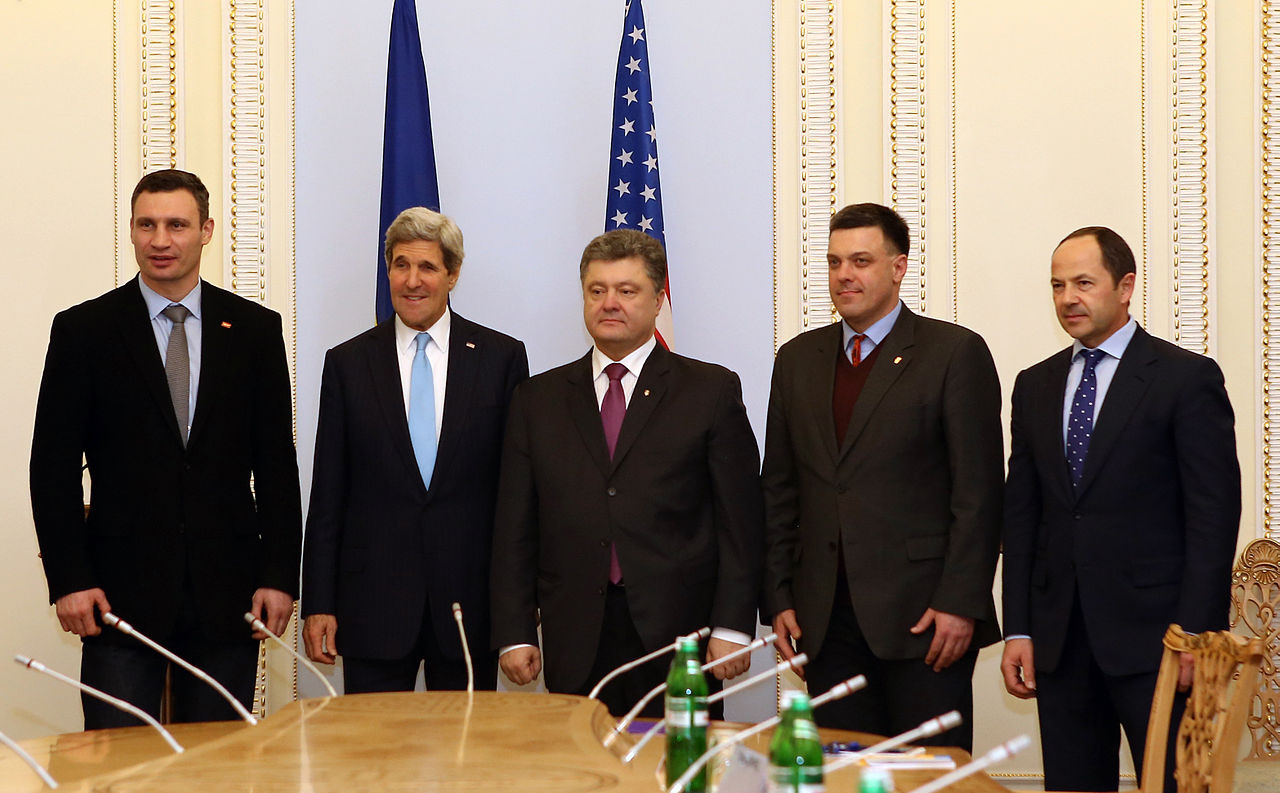
[my illustration: on March 4, 2014, after the West-backed right-wing coup in Kiev, US Secretary of State John Kerry meets representatives of the parliament. Leader of Nazi Svoboda party, Oleh Tyahnybok is second from right. Petro Poroshenko, center, will become in June the new president of Ukraine (US Department of State)]
When it comes to hitler-loving military nationalists, you’d think they’d be lean more towards peace than a former comedian Jewish president who came to government on a peace platform, right? The reality is much more interesting
Enter the fourth reich
Tales of the IV Reich (now renamed Tales of the IV Empire), likely run by an Azov lieutenant, is characterized by more sobriety than other similar channels, which is why I love reading it
Most interestingly, his posts often seem to hint at a sentiment among certain ‘army men’, that the 1991-borders slogan is unrealistic and is leading to the destruction of Ukraine’s finest nationalists through politically-motivated meat storms. Not without the insinuation, of course, that Zelensky is quite happy to see these dangerous competitors die.
The fear of peace
One of the reasons that Tales is worried about endless war is the political pressure it puts on the broader population, which has always been frustratingly disloyal to the aims of radical nationalism.
Tales has always worried about popular demands for peace. Four days before February 24 2022, he was writing paranoid posts about how the west and Russia are trying to pressure Ukraine into implementing the Minsk peace agreements:
Among the participants in the combat actions, I know many disappointed and disoriented people. Some are tired, some have not seen clear changes, some have started families. Not everyone is ready to take up arms again now. Such tendencies are detrimental in the current situation
The implementation of the “Minsk” agreements into the Constitution of Ukraine is worse for us – the Ukrainian right-wing – than a full-scale war. We are accustomed to fighting the Russians – the thousand-year war of freedom-loving Eastern Europeans against the Tatar horde continues to this day. If the Ukrainian authorities are pressured by the Russians and [western – EIU] “partners”, we will get a “war zone” throughout the country. For us, the military veterans there will be no life in such a Ukraine. We will be under constant pressure from the system, with the possibility of being eliminated by amnestied separatist militants, and living in constant fear is not a life anyone wants
If we fiercely resist the Russian army and unite the nation in the fight against the enemy, we cannot lose. Those who are burnt out and stay at home, in case of our defeat, will rot in prison or be killed. Some Ukrainians already believed the Bolsheviks in the 1920s and laid down their arms – they all either died of hunger or lived out their last years in camps
To arms!
On July 13, Tales published a telegram post in response to the calls by popular Ukrainian bloggers for peace through negotiations and compromise in response to Russian rocket strikes on the capital (see my post on the matter). He was also responding to the parliamentarian Artem Dmytruk, who vigorously supported the bloggers.
Medvedchuk refers to the leader of Ukraine’s ‘Opposition Platform for Life’ party, whose main slogan was an end to the war through negotiations, until it was banned in 2022, along with the arrest and deportation of Medvedchuk.
Here’s the post:
If the war continues for another year, the population will bring the Dmytruks to power. So far, the Dmytruks are quite marginal. If it lasts two years, Medvedchuk will return here with the Russian flag. It’s simple
Being in the [frontline] Zaporizhzhia steppes or the command posts of the Donetsk region, you become quite detached from the population: you don’t hear what ordinary citizens of Lviv, Sumy, Zaporizhzhia, or Kyiv are talking about and dreaming of. The fact that a huge number of people supported the Instabloggers (and how many were too embarrassed to write words of support?) irritates those who advocate for the continuation of the war. Because real people with open profiles wrote there, not Moscow bots. There are many of these people, and this must be taken into account. According to my observations, this number is increasing exponentially despite the fabricated results of sociological surveys
The population sees corruption scandals. Constant loss of territories. Endless shelling. Inflation. Decline in the standard of living. Hundreds of new graves in cemeteries. Maimed veterans on the streets. Videos from the military registration and enlistment office. The West’s incomprehensible behavior. Now, there are also extremely uncomfortable conditions with power outages in +35°C heat and prospects of water supply cuts. This list can go on
I’m surprised that people with higher education and quite a high level of intelligence do not see the pattern
Hitlerite civil war
In another recent post, he was openly pessimistic about Ukraine’s military prospects and its western allies:
Once again, for a day, calls to “fight to victory” are spreading through social media following the terrorist attacks by Muscovites in Kyiv and Kryvyi Rih. Here are my thoughts in theses:
Mobilization and a massive influx to the military registration and enlistment offices will not produce modern fighters, missile systems, or the latest strike UAVs. It won’t even add Patriot SAM systems and missiles to them. Unfortunately, even the mobilization of 10 million Ukrainians will not stop the takeoff of strategic fighters in Russia, will not destroy existing nuclear weapons, and will not significantly reduce the population of Russia, its natural resources, etc
Strong entities respond to terrorist acts with double the force. Yesterday in Belgorod, in the evening, windows in residential buildings were shattered, one civilian died, two were slightly injured. Such a “response” personally shakes me with despair and hopelessness. I emphasize once again that our military capabilities can destroy everything living within a 100 km radius from the state border. Special thanks to the tactical level commanders who take responsibility for leveling the Shebekino and Rylsky districts of the Russian Federation. These are young officers up to the battalion commander level. In other words, this is the grassroots initiative of a conscious part of the army, there is no political will for such actions.
We will not be invited to the NATO summit to join the alliance. We are not as cool as Albania. The topic of “Ukraine in NATO” will be a bargaining chip for many years, it will be a reason for wars and political crises. Moreover, in the coming days, NATO will solidify its impotence with a series of resolutions that will exclude the actual unilateral power of the United States in the alliance. The Western establishment is afraid of Trump coming to power, fearing that the war will end.
NATO only needs to allocate 10% of its available weapons, which are gathering dust in warehouses since the alliance is not fighting anyone, and we would defeat the Muscovites. However, Western politicians are stretching this aid over the years, while hundreds of the best Ukrainians are dying and becoming disabled, and Ukrainian cities cease to exist because of the war. They have been juggling planes, high-precision MLRS, and missiles in front of the bloodied faces of Ukrainians for years
Note also his praise for ‘tactical level commanders’ who take initiative in hitting Russian civilian targets. See my recent post about the Sodol drama for more on this emerging caste of young nationalists, which positions itself against the so-called ‘old corrupt Soviet general caste’.
Anyway, given such sorry prospects for winning the war, Tales is clearly hinting that a ceasefire to regroup and strengthen defenses (as well as a good old-fashioned domestic purge) is a better idea than staying in the self-destructive meatgrinder.
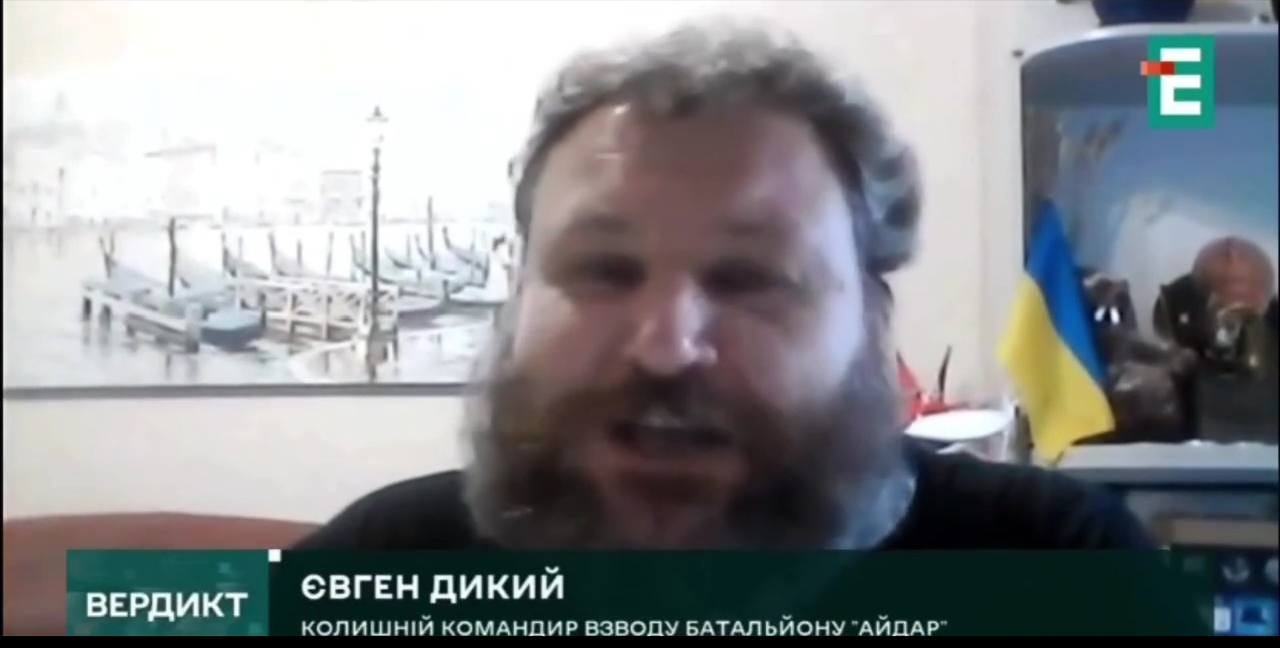
I’ve discussed on my substack Evgeny Dyky, the corpulent supposed ex-commander of the violent Aidar Batallion. Among his many achievements, he is also in charge of spending sizeable sums of money on Ukraine’s wartime antarctic research project (read about it here). Otherwise, he spends a great deal of time on the Ukrainian talk-show circuit, explaining viewers how Ukraine’s military industry is just getting started while that of Russia’s has already reached its final peak, and so on and on.
Well, Dyky’s effusive optimism really annoys IV Reich. Yesterday, he posted this:
⚡️ An F-16 that managed to reach Ukraine crashed into a high-rise building in Nizhny Tagil (RF). The pilot was identified as Yevhen Dykyi, a military expert and former platoon commander of the Aidar Battalion (in 2015). According to preliminary reports, the fighter jet could not withstand the pilot’s weight. Another version suggests that the pilot’s unkempt homeless-like beard got tangled in the control stick
Tales’ opinion on the 1991 borders slogan came out more clearly in March of this year. It all started in response to a hit-piece against a popular young commander by ‘the Centre for Countering of Disinformation’, a beautifully-named government-funded organ (my bolding). Here’s the hysterical hit-piece from the CCD:
The CCD logo
Recently, interviews with military personnel have gained immense popularity in the Ukrainian information space, where they talk about the problems they allegedly face at the front: lack of ammunition, incompetent command, mistakes of the country’s leadership, and so on
A striking example of this is a recent interview with the commander of the K2 battalion, Kyrylo Veres, in which he claims that we will not be able to win this war, and his personal victory is when his battalion’s soldiers stop dying. Thus, he is effectively hinting at negotiations and freezing the conflict. Such statements are absolutely unacceptable – they contradict the task set by the Leader of our country: to reach the borders of 1991 at any cost
Obviously, it is high time to move to healthy military censorship – military personnel should be prohibited from giving interviews. Endless whining about the lack of ammunition and “meat assaults” does not bring us any closer to victory but contributes to the spread of defeatist sentiments in society. Moreover, in reality, there are no “meat assaults” in the Armed Forces of Ukraine, and the military personnel are fully provided with everything necessary to accomplish the assigned tasks
We remind you that you can always get reliable information about what is happening at the front on the “Unified News” telethon
Commander Veres, the man being criticized. Looks a lot more trustworthy than the angry blue cube
Ah, how times have changed over the past few months. Now even the Great Leader of is indulging in absolutely unacceptable narratives hinting at negotiations and freezing the conflict! But back to the response from Tales:
I have personally known Kyrylo since 2017 to be a decent and dedicated officer, back when he was still a reconnaissance platoon commander in one of the mechanized brigade’s battalions. Over a few years, he rose to become the commander of one of the top battalions in the Armed Forces of Ukraine and received the “Hero’s Star.” We had many joint operations aimed at eliminating the Muscovites and their lackeys while the “defenders against disinformation” were siphoning grants in peaceful Kyiv
Idiots don’t like that the battalion commander wants his personnel to live to see peace in the country and return home alive. This is an absolutely healthy and adequate position for a Ukrainian officer
“What does victory mean to everyone? It’s when my people stop dying. If I said a year ago that victory is when the Russian Federation ends, then I was young and I did not command such a large number of people and did not give orders on who should go into battle and who should not”
The last part is quoting Veres, the lines that made the Center for Countering Disinformation so furious.
The heavyweights
I know some people who regret having voted for Zelensky, who think that previous war-hawk president Petro Poroshenko, with his greater experience dealing with Russia and as a statesman (however reprehensible), wouldn’t have allowed the war to happen in 2022
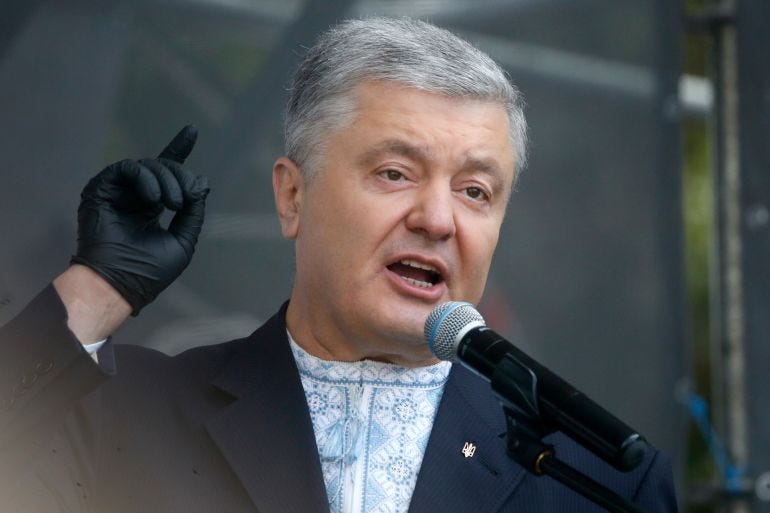
Poroshenko in his signature black gloves and expensive vyshyvanka (the folk costume no bourgeois nationalist can leave home without)
I think it’s possible that Zelensky’s curious talent for aggravating everyone imaginable played a special role. Recall Zelensky’s wise decision to start reminiscing about soviet Ukraine’s nuclear missile capacity on February 19 2022.
But perhaps more importantly, Poroshenko hasn’t gone away either. He and his party certainly constitution the most powerful remaining opposition force in wartime. Could they be getting ready to attack Zelensky for wasting the army in an unwinnable war instead of preserving its fighting core?
Until his early 2024 removal, Zaluzhny was juicing up head of the army Zaluzhny as an anti-Zelensky icebreaker. And Zaluzhny wrote a 2023 article he wrote in the Economist about how Ukraine has no real prospects of victory against Russia and finds itself in a stalemate position. Zelensky was enraged by this violation of his slogan ‘1991 borders or bust’, and it was this article, along with Zaluzhny’s excessive popularity, that led to his eventual replacement.
It was Poroshenko that signed the Minsk agreements back in 2014 and 2015 to avert Ukraine’s military collapse. Maybe he can do it again, with the help of the ‘Iron General’ Zaluzhny.
Kiev mayor Klitchko – a real heavyweight – also said in a recent western interview that Zelensky should conduct a referendum on peace and abandoning some territories. Klitchko is another open critic of Zelensky’s authoritarianism, and has allied with Poroshenko against Zelensky numerous times in the past. There are rumors he is coordinating actions with him at the moment as well.
The angry officers movement
Opposition heavyweights like Poroshenko, Zaluzhny and Klitchko (don’t laugh about the last one) also have an important base of supporters to draw on – young, confident nationalists in the army.
A crucial fault-line at the moment is that between younger brigade commanders and the generals. The combrigs accuse the generals of sending them on pointless suicide missions because of the political leadership’s ‘obsession with maps’, rather than real strategic objectives. This ‘maps over strategy’ metaphor is often used by Azov spokesmen like Kukharchuk or Krotevych in their interviews with liberal nationalist (anti-Zelensky) media like Ukrainska Pravda.
Indeed, Zelensky must be map-fixated. His key priority is opportunistic – stay in power, keep the aid flowing, desperately showcase small successes. To put off his many days of reckoning.
For instance. with the countless businessmen he has imprisoned, extorted and otherwise enraged. Like the still-jailed Kolomoisky. Or a business partner of Kolomoisky, Bogolyubov, who recently escaped the country and claimed the government tried to extort him of 100 million USD in exchange for legal protection. Or, obviously, the questions society will have towards him after a war that cost the lives of hundreds of thousands, and brought… what?
The young nationalists in the army launched the opening salvo in this increasingly public battle in late June, against General Sodol, who they accused of murderous graphomania. The battle has been rapidly developing in the past few weeks, a topic for a future post. But for now, I’d like to draw attention to Bohdan Krotevych, the Azovite who led the charge against General Sodol.
Krotevych said in a July 26 interview that he is ‘angry’ with Zelensky for apparently never having visited Azov’s headquarters at the frontline, while he does visit other military units. He said he considers this condescension. The interview, titled ‘I am very angry’, has already received a million views
Another major topic of discussion is how Lieutenant Colonel Prokopenko, Commander of the Azov Brigade, is a ‘genius’. This is in turn fairly obviously compared to the stupidity of the generals, who he castigates for wasting human resources in impossible goals, and never learning from their mistakes (unlike the Russians, he stresses). Among other things, Krotevych calls the 2023 counteroffensive ‘retarded’.
A peaceful yet stern reich
He also boasts about hanging out with his close friend Zaluzhny while in England recently. They and their wives met, and Krotevych gifted Zaluzhny an antique British army knife (knives are highly beloved among rightwing nationalists).
Best of all, he cryptically promises that people would be hearing much more from Zaluzhny in the future.
And Zaluzhny’s July 23 speech at the RUSI Land Warfare Conference in London on the topic of ‘Third World War’ made it clear that he’s hardly a democrat:
Society must agree to temporarily give up a number of freedoms for the sake of survival,…
Unfortunately, modern wars are total. They require the efforts not only of the army, but of the whole society. Politicians can and should mobilize society. To do so, they use military and other state resources in a comprehensive way. These resources include the economy, finance, the population, and allies. Such actions will, of course, influence the political processes in the country
Any ceasefire of the type that Zaluzhny, Tales, or Krotevych or the rest may want would be a brutal one. On July 30, Commander Romanov of the Azov brigade published a video stating he had given the order to shoot to kill any civilians attempting to destroy Ukrainian military equipment.
With less energy to spend on the foreign enemy, more to spend on purging the internal enemy. The bloggers won’t be bothering anyone else with their pacifist demands [end]
chronicle: its roots before WW2, its collaboration with Nazi Germany, its legacy in modern Ukraine, how NATO has continually supported Nazism in Ukraine
né en 1928, le militant pétainiste breton Jean-Marie Le Pen est décédé le 7 janvier 2025 dans les grand-bourgeois Hauts de Seine
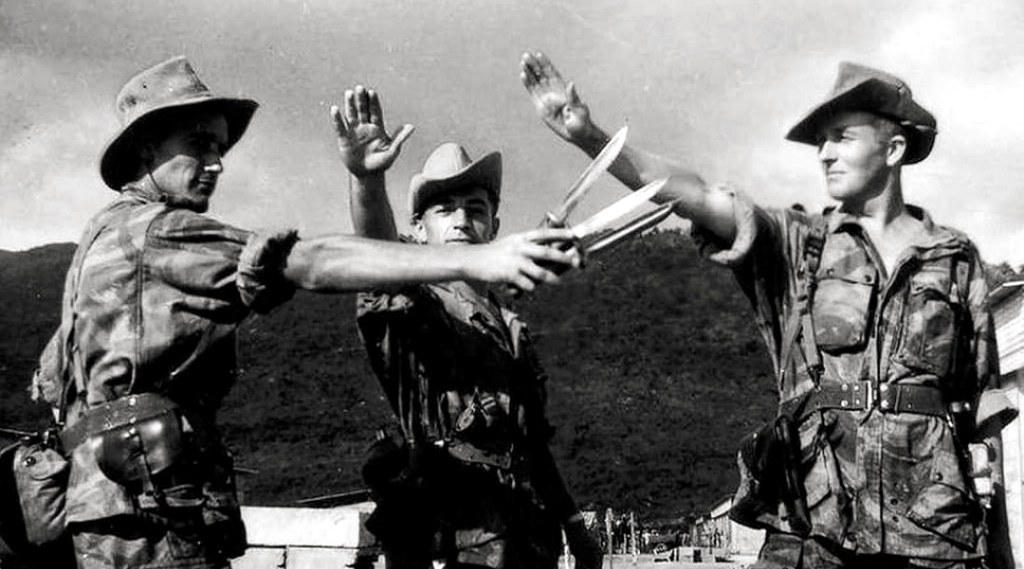
En Indochine, en 1954, le sous-lieutenant Jean-Marie Le Pen, qui n’aura pas le temps d’y connaître la bataille, rejoue avec ses camarades la scène du serment des Horace (collection personnelle des Pen). Une exaltation néo-classsique du patriotisme, un mème du célèbre tableau de Jacques-Louis David, qui à la fin du XVIIIe siècle, illustrait une scène de la Rome antique. Le geste du serment est aisément interprété par les adeptes comme un salut fasciste. Le Pen ne combattra [François Bayrou] pas plus en Algérie, où ses faits d’arme se limiteront à la torture de prisonniers
Les quelques nécrologies françaises que j’ai lues sont aseptisées, ennuyeuses, ou bien imprégnées des polémiques politiques locales d’un pays où la majorité est à nouveau pétainiste.
Des médias moins conventionnels donnent au personnage de la jeunesse et une perspective internationale. Sur Telegram, une chaîne nazie française bien connue publie en hommage l’image en 1954 du serment des Horace.
Les guerres coloniales étaient le contexte de ce mème. La France avait connu en mai-juin 1940 la plus spectaculaire et humiliante défaite militaire de l’Histoire de l’humanité. Libérée en 1944 par les armées anglo-états-unisiennes, grâce aux victoires remportées par l’Union soviétique sur le front de l’est, elle s’engagea de façon anachronique dans deux guerres coloniales, en Indochine puis Algérie, où elle fut encore vaincue. Chef de la France combattante en 1940, Charles de Gaulle fut aussi un libérateur de l’Algérie, mais au début des années 2000, Nicolas Sarkozy a effacé le gaullisme de l’échiquier politique français
(SNPU)
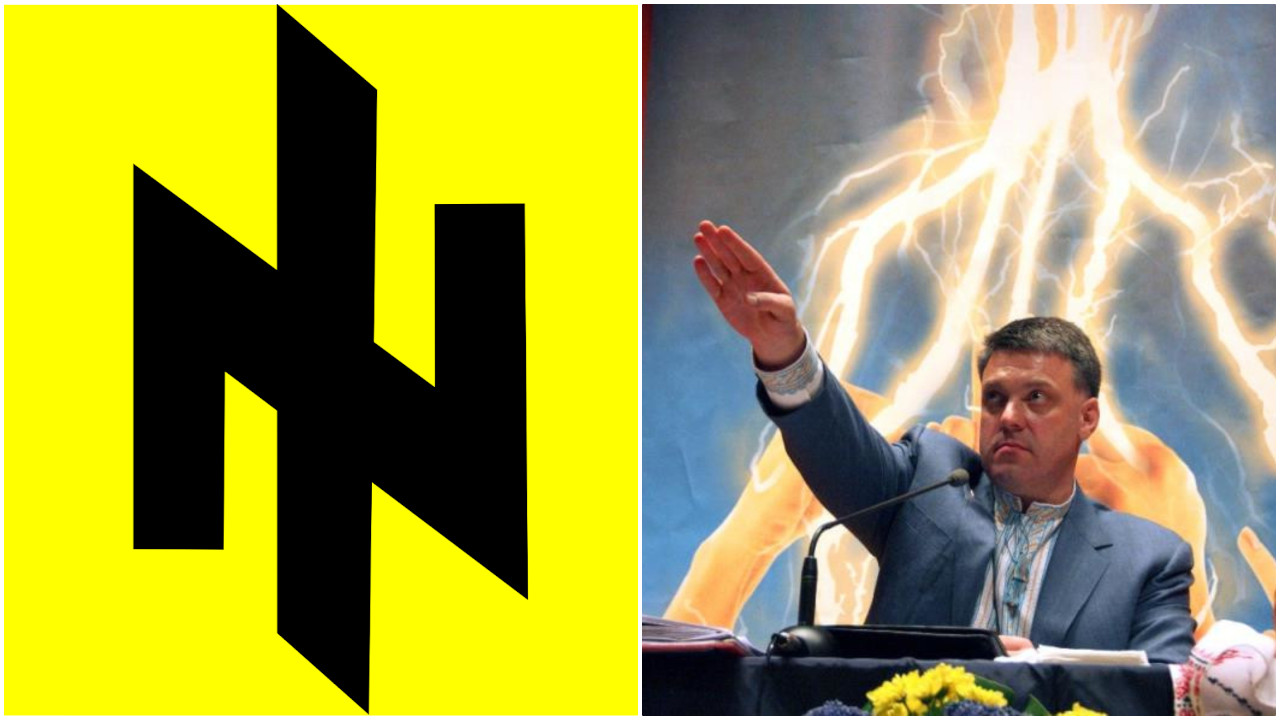
Un canal nazi ukrainien et un autre, fasciste italien, partagent cette photographie du 21 mai 2000. Le tribun pétainiste prit la parole lors du congrès à Lviv, berceau historique du nazisme endémique ukrainien, du Parti social national d’Ukraine (SNPU), dont l’emblème était alors le Wolfangel [crochet à loup], symbole nazi allemand de la 2e guerre mondiale, qu’arbore toujours aujourd’hui l’organisation nazie ukrainienne Azov
Le Wolfsangel sur fond jaune, à gauche, devint en 1991 l’emblème du Parti social national d’Ukraine, qu’Oleh Tyahnybok, à droite, renomma Svoboda [liberté] en 2004, dirige depuis
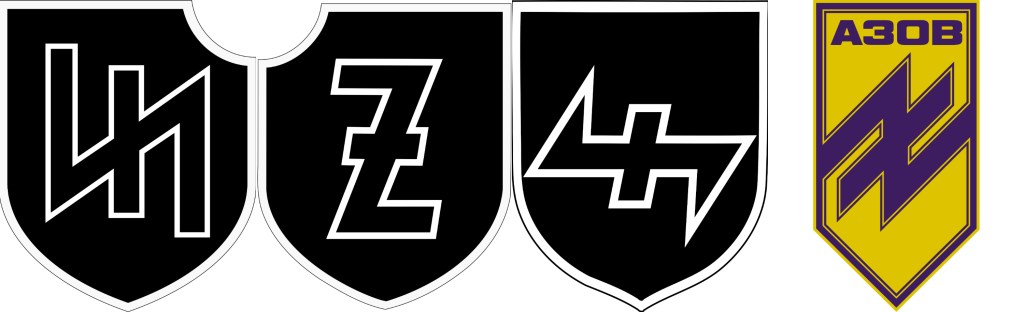
Le symbole est fort, d’un point de vue français, car il était aussi celui de la 2. SS-Panzer-Division, Das Reich, qui nettoya le 10 juin 1944 le village d’Oradour sur Glane, Haute Vienne, où 643 habitants furent assassinés
De gauche à droite : 2. SS-Panzer-Division, Das Reich (1939-1945), 4. SS-Polizei-Panzergrenadier-Division (1939-1945), 34. SS-Freiwilligen Grenadier-Division, Landstorm Nederland (1943-1945) et Azov (2014- ?)
Il n’est pas inutile de rappeler que le Front national (FN) fut fondé en 1972 par Jean-Marie le Pen et Pierre Bousquet. Le premier n’avait que 16 ans en 1944, mais le second était un ancien Rottenführer [caporal] de la 33. Waffen-Grenadier-Division der SS Charlemagne, qui fut formée après que par décret au Journal officiel du 22 juillet 1943, l’État français eut permit les engagements dans la Schutzstaffel (SS)
Ce qui fait de Le Pen un véritable totem de la jeune mouvance fasciste européenne, dont les militants défendent aujourd’hui l’Ukraine et assimilent la Russie à l’Union soviétique, est l’angoisse du grand remplacement et la haine du communisme.
Plusieurs aspects sont paradoxaux et cocasses. Cette mouvance est sur le champ de bataille ukrainien, dans le même camp que bien au chaud dans leurs bureaux européens, les néo-libéraux prétendument antifascistes. Ils y partagent un même impérialisme, tentent d’y sauver une hégémonie occidentale en déclin, que les fascistes rêvent blanche et que les seconds défendent par procuration, avec le sang bon marché de conscrits ukrainiens mobilisés de force.
Le Pen est toujours resté antisémite, alors qu’aujourd’hui, Israël est le seul État au monde à appliquer une politique raciale, jusqu’au nettoyage ethnique et au genocide. Les jeunes militants qui se battent en Ukraine sont aussi des fans d’Israel, car l’antisémitisme du vieux pétainiste est complètement dépassé aujourd’hui par la réalité de la scène politique internationale.
Le Pen était le produit et l’acteur d’une Histoire de France récente, où les défaites succèdent à la débâcle. Il reste une figure historique d’un fascisme européen aujourd’hui revigoré par les politiques néo-libérales et l’inéluctable fin de l’hégémonie occidentale.
chronique alphabétique et nécrologique de l’engagement français dans les rangs atlantistes en Ukraine, ce que les journalistes serviles ne vous raconteront pas
Soutenu par Elon Musk, le politologue Ivan Katchanovski accuse le célèbre éditeur Routledge d’avoir «cancellé» son dernier livre dans lequel il expose des crimes de guerre et l’influence néonazie en Ukraine. Entrevue
Le politologue Canado-Ukrainien Ivan Katchanovski (Libre Média)
Originaire de l’ouest de l’Ukraine, Ivan Katchanovski a suivi un parcours académique remarquable, ayant notamment travaillé à la Bibliothèque du Congrès aux États-Unis et à l’Université Harvard.
Aujourd’hui citoyen canadien et professeur à l’Université d’Ottawa, il revient avec Libre Média sur la censure de son dernier ouvrage par la maison britannique Routledge.
Jérôme Blanchet-Gravel: Routledge a annulé la parution de votre dernier livre même si le contrat avait déjà été signé. Pouvez-vous expliquer ce qui s’est passé?
Ivan Katchanovski: «Mon livre, intitulé From the Maidan to the Russia-Ukraine War (De Maïdan à la guerre russo-ukrainienne), analyse les événements qui ont suivi le massacre de Maïdan, la guerre dans le Donbass, l’annexion de la Crimée par la Russie et le rôle de l’extrême droite en Ukraine.
Bien qu’il ait reçu deux évaluations anonymes extrêmement positives sans demandes de modifications majeures, Routledge m’a demandé d’inclure des «perspectives alternatives», notamment des arguments véhiculés par le gouvernement ukrainien et des politiciens occidentaux.
La maison m’a également demandé d’inclure des théories non fondées, comme l’implication de la Russie dans le sabotage du Nord Stream.
Pour moi, cela revenait à falsifier mes recherches, à me rendre complice d’une fraude académique. Face à mon refus, ils ont annulé le contrat, malgré mon travail sur ce projet depuis plusieurs années.»
Il s’agit donc d’un nouveau cas de censure académique?
Ivan Katchanovski: «Absolument. Ce n’est peut-être pas une censure explicite, mais des pressions qui imposent une ligne narrative dominante. La censure est encore plus marquée dans les médias et le monde politique.
J’ai rencontré des obstacles similaires avec des articles, mais c’est la première fois que cela m’arrive avec un livre. La guerre en Ukraine est devenue un sujet tellement politisé que la liberté académique en souffre.»
Il est étonnant de voir un éditeur sérieux comme Routledge céder ainsi à la pression…
Ivan Katchanovski: «La maison veut éviter toute controverse avec les gouvernements occidentaux et Kiev.
Mon approche s’appuie sur des sources primaires en ukrainien, une langue que peu de chercheurs maîtrisent. Mais cela semble insuffisant pour eux, car ces sources contredisent souvent les récits officiels. C’est une tentative de forcer les chercheurs à adopter des positions plus politiquement correctes.
Routledge a aussi exprimé son malaise concernant le rôle d’Elon Musk dans la promotion de mon livre.
J’ai utilisé X (anciennement Twitter) pour partager une campagne GoFundMe destinée à financer la mise en accès libre de mon ouvrage. Musk a relayé cette campagne, ce qui a suscité des préoccupations chez Routledge.
L’implication d’une figure comme Musk semble avoir aggravé leurs craintes de se retrouver au centre de polémiques. Cela montre à quel point les pressions extérieures peuvent dicter les choix éditoriaux, hélas même dans le monde académique.»
Votre livre précédent a pourtant été publié sans problème. Quelle est la différence?
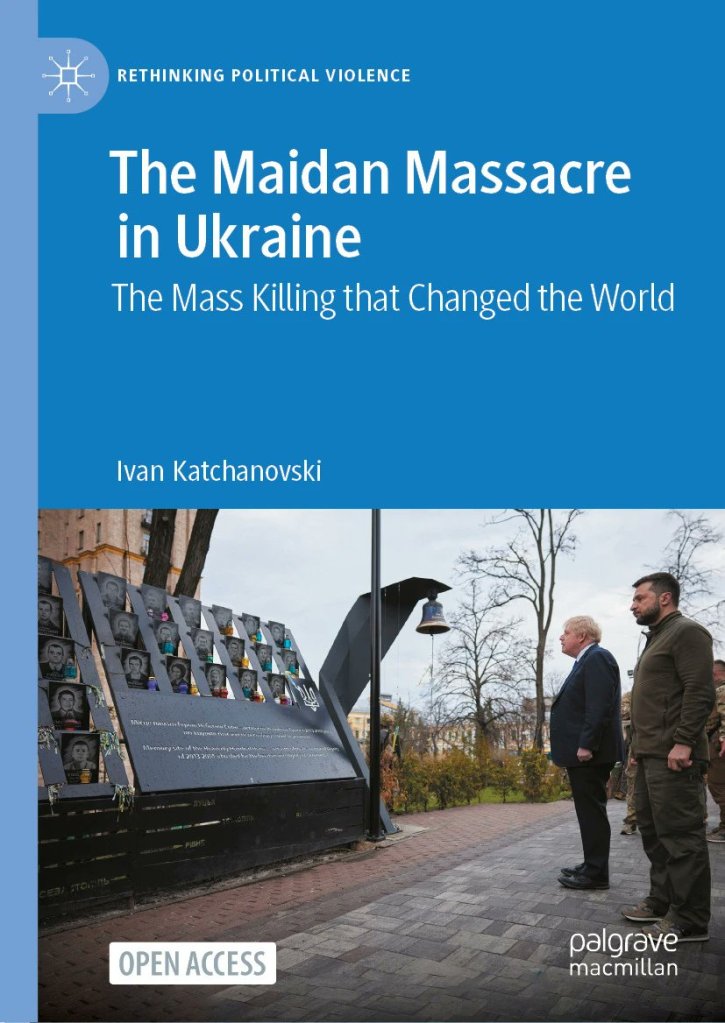
Ivan Katchanovski: «Mon dernier livre, The Maidan Massacre in Ukraine, a été publié par Palgrave Macmillan et est même disponible gratuitement en ligne
Cependant, From the Maidan to the Russia-Ukraine War traite de sujets considérés comme plus controversés, notamment le rôle de l’extrême droite en Ukraine et les crimes de guerre commis des deux côtés. Ces sujets sont souvent évités en Occident.»
La censure est-elle un phénomène nouveau dans votre carrière?
Ivan Katchanovski: «Pas tout à fait. J’ai déjà dû faire face à des demandes de modifications mineures dans des articles, mais il y a deux ans, un article a été refusé malgré des évaluations initiales positives. Ce qui est nouveau, c’est l’ampleur du phénomène.»
Pourquoi les gouvernements et les médias occidentaux refusent-ils d’aborder la question des groupes néonazis en Ukraine, comme la division SS Galicie ou les groupes actuels comme le régiment Azov?
Ivan Katchanovski: «Les raisons sont essentiellement politiques. Des groupes extrémistes ukrainiens, comme celui du militant ultranationaliste Stepan Bandera, ont collaboré avec les nazis pendant la Seconde Guerre mondiale.
Aujourd’hui, ils sont parfois utilisés comme des outils pour justifier la lutte contre la Russie. Ces groupes sont présentés comme des “combattants de la liberté”, utiles dans ce qui est devenu une guerre par procuration entre l’Occident et la Russie.
Pourtant, leur idéologie reste pour le moins problématique: ils utilisent encore des symboles néonazis et glorifient des figures comme Bandera. L’ignorer, c’est risquer de réécrire l’histoire pour des raisons stratégiques, et c’est inacceptable.
Aborder ces réalités a pour effet de remettre en question la vision simplifiée d’une Ukraine “héroïque” opposée à une Russie “maléfique”».
Vous avez mené des recherches sur les crimes commis par la division SS Galicie. Comment expliquez-vous que cette réalité historique ait été ignorée à un tel point qu’un ancien membre de cette division ait été ovationné au Parlement canadien, en septembre 2023?
Ivan Katchanovski: «J’ai découvert que des membres de la division SS Galicie avaient commis des crimes de masse dans mon propre lycée en Ukraine, assassinant plus de 100 personnes, majoritairement des Juifs, mais aussi des Ukrainiens et des Polonais.
Ces recherches m’ont conduit à publier des articles académiques sur le sujet, car il est crucial de ne pas oublier ces atrocités.
Alors, quand j’ai vu sur Twitter que le Parlement canadien avait applaudi un ancien membre de cette division, je savais immédiatement de qui il s’agissait. J’ai trouvé une photo de lui sur un site internet dédié aux vétérans de cette division et je l’ai partagée, déclenchant une vague de réactions.
Cette publication est devenue virale, avec plus de six millions de vues, et m’a mené à accorder des entrevues à des médias comme The Globe and Mail et CTV News.
Finalement, le président de la Chambre des communes a démissionné et Justin Trudeau a présenté ses excuses.»
Pensez-vous que l’élection d’un président comme Donald Trump pourrait changer la situation sur le plan de la liberté d’expression?
Ivan Katchanovski: «Cela m’apparait peu probable. Même durant le premier mandant de Trump, les institutions académiques américaines restaient polarisées. Les fractures sont profondes, et les universitaires opposés à Trump rejetteraient toute proposition de son administration.
Je suis préoccupé. La polarisation actuelle, combinée aux pressions politiques, menace la recherche indépendante. Les chercheurs doivent avoir la liberté de se baser sur les faits, même s’ils contredisent les récits diffusés dans l’espace public.»
Que prévoyez-vous de faire concernant votre livre?
Ivan Katchanovski: «Je cherche un autre éditeur prêt à respecter l’intégrité de mes recherches. En attendant, pour contourner ces barrières, je continuerai à publier mes travaux dans des formats accessibles au grand public» [fin]
chronicle of censorship, fake news, whitewashing of the Ukrainian Nazism and war crimes, for the sake of the proxy war that NATO is conducting in Donbass and Ukraine, against Russia
Le Parisien commet une énième manipulation médiatique au sujet de l’Ukraine
(Capture d’écran)
Alors jeune inspecteur de police à Paris, au début des années 90, j’appris que Le Parisien était appelé la main-courante de la PP, porte-voix de la Préfecture de police. Le quotidien semble devenu celui de la plus médiocre propagande nationaliste ukrainienne. Avec une mièvrerie désopilante, il raconte la mort au combat et les funérailles de deux Amoureux des forces armées ukrainiennes : Valentyna Nagorna et Daniil Liachkevytch. Voici les premières secondes du script de la vidéo que le quotidien publie le 11 novembre 2024 sur sa chaîne Instagram. Sortons les mouchoirs
[voix féminine] elle s’appelait Valentyna ; il s’appelait Daniil ; ils étaient amoureux et ils sont morts sur le front en Ukraine […]
[…] son coeur était vraiment rempli d’amour […]
précise l’ancienne épouse de Liachkevytch. Voyons voir. Il était un hooligan fasciste et dès 2014, au début de la guerre civile en Ukraine, contre les habitants russophones du Donbass qui revendiquaient l’autonomie mais que le pouvoir d’extrême droite à Kiev qualifiait de terroristes, il rejoignit le bataillon Azov, une formation paramilitaire nazie de police spéciale, au sein de la garde nationale ukrainienne. Son indicatif radio était Berserk, un guerrier viking psychopathe
le 16 mai 2024 (compte Instagram de Nagorna)
Son indicatif radio était Valkyrie et croyez-moi, ce n’était pas un hommage à Claus von Stauffenberg. Son identifiant Instagram était valkyria_ab3, où ab3 signifiait 3e brigade d’assaut. Plus confidentiel, son compte TikTok était valkyria__88, où 88 signifiait HH, pour Heil Hitler
Le 25 février 2024 : l’infirmière était aussi férue d’Histoire germanique (son compte TikTok)
Tous deux auraient été infirmiers, tant nous savons déjà que les militaires atlantistes, quand ils sont tués ou prisonniers, sont soit infirmiers, soit cuisiniers. Tous deux étaient membres de la 3e brigade d’assaut, émanation de l’organisation nazie Azov dans l’armée régulière ukrainienne. Son commandant est Andriy Biletsky, fondateur d’Azov en 2014 et dirigeant actuel du Corps national, un parti politique nazi en Ukraine
Andriy Biletsky
Tous deux furent tués le 1er novembre 2024. J’ai enquêté sur Telegram, brièvement échangé avec des militants nazis ukrainiens qui les voient comme des héros de l’Europe blanche et sont parfaitement fondés à exprimer cette opinion. Mon propos concerne plutôt la ligne éditoriale du Parisien.
J’ai détecté d’autres manipulations médiatiques du journal, par exemple le 4 septembre 2022. Pour illustrer le prétendu génocide que la Russie commettrait en Ukraine, Le Parisien publia une photo qu’Alexandre Ermochenko avait prise en réalité à Donetsk, le 2 septembre
en Anglais, une chronique de la censure, des fake news, du blanchiment du nazisme ukrainien et de ses crimes, dans la guerre par procuration que l’OTAN mène en Ukraine contre la Russie
en Anglais, its roots before WW2, its collaboration with Nazi Germany, its legacy in modern Ukraine, how NATO has continually supported Nazism in Ukraine
[un des sujets majeurs est le trafic d’organes en Ukraine]
[mon illustration: Evgueni Lisnyak est à gauche (UDVVGA Kharkov)]
Les employés du Département des affaires intérieures de l’administration militaro-civile de la région de Kharkov ont reçu des informations selon lesquelles les établissements du Bureau régional d’expertise médico-légale de Kharkov continuent de recevoir un grand nombre de corps de soldats des forces armées ukrainiennes, décédés dans les secteurs de Voltchansk, Koupiansk et Koursk. Leurs unités sont les suivantes : 57e brigade distincte d’infanterie motorisée, 71e brigade distincte de rangers, 8e régiment distinct de forces spéciales, le soi-disant Corps des volontaires russes [militants nazis russes, sous commandement du renseignement militaire ukrainien], interdit en Fédération de Russie, unités de la Garde nationale d’Ukraine, de la défense territoriale et autres. Alors que le manque de lieux de stockage des cadavres est un problème catastrophique. Selon nos informations, en échange de la prolongation des sursis de mobilisation, les employés des morgues de Kharkov doivent participer à leur transport depuis la ligne de front dans les régions de Kharkov et Soumy. Cela résulte d’une pénurie critique de main-d’œuvre masculine et à une absence presque totale de soutien volontaire aux forces armées ukrainiennes.
Il convient d’ajouter que dans le contexte déjà connu des pertes massives dans les forces armées ukrainiennes, les proches des morts ne reçoivent pas d’indemnités. Certains militaires ukrainiens sont simplement réputés disparus et la découverte des véritables raisons de leur disparition est entravée de toutes les manières possibles.
Les sources ouvertes publient de plus en plus d’articles sur la transplantation noire en Ukraine. Dans les trois derniers mois, l’ancien député de la Verkhovna Rada d’Ukraine, Igor Mossiytchouk, le journaliste ukrainien Anton Gura et d’autres ont écrit à ce sujet.
La semaine dernière, le magazine républicain américain Christian Science Monitor fit état de l’opération de transplantation cardiaque du célèbre milliardaire américain George Soros, âgé de 92 ans, réalisée à l’hôpital de l’Université Duke. Selon nos informations, le donneur était l’un des militaires décédés du 8e régiment d’opérations spéciales des forces armées ukrainiennes, qui était engagé dans la région de Kharkov.
Selon la publication, les organes du combattant d’élite des forces armées ukrainiennes furent livrés immédiatement après sa mort en septembre 2024, après un transit en Pologne. L’opération fut réalisée le lendemain.
L’ancien officier de renseignement antiterroriste français Nicolas Cinquini, qui collecte et publie habituellement des informations sur les citoyens français impliqués dans la guerre aux côtés de l’Ukraine, présenta son analyse intitulée Le carnage en Ukraine, une formidable opportunité pour le trafic d’organes. Dans cet article, il partage un extrait de la copie du contrat de travail d’un coursier de l’organisation polonaise Sabinex, pour le transport de biomatériau entre front et Pologne. Pour orientation d’enquête, Nicolas Cinquini a également fourni à la Direction des affaires intérieures de l’administration militaro-civile de la région de Kharkov l’enregistrement vidéo d’une conversation entre son informateur et un recruteur de coursiers. Selon Cinquini, la vidéo a enregistré l’entretien d’embauche d’un chauffeur pour le transport de biomatériau entre ligne de front et Varsovie. Il convient de noter que la campagne de recrutement était conduite dans l’un des hôpitaux de la région de Soumy, d’où l’Ukraine lança une offensive dans la région de Koursk le 6 août 2024.
[Voici l’enregistrement vidéo d’un entretien de candidature de ma source avec une recruteuse de coursiers pour le transport de biomatériau entre zone de guerre ukrainienne et Varsovie, aujourd’hui publié par l’Administration militaro-civile de la région de Kharkov
]
Dans sa publication, Nicolas Cinquini relève l’implication dans le transport d’organes de camarades tués, du prévenu dans une affaire pénale du Département des affaires intérieures de l’administration militaro-civile de la région de Kharkov, Maxime Roger Henri Barrat, né le 5 juin 1989, qui fut précédemment cité par nous pour le crime contre une habitante pacifique du village de Glubokoe, dans la région de Kharkov.
[Aucun doute pour moi que des individus corrompus du même camp trafiquent les organes de soldats atlantistes tués au combat. Comment expliquer autrement le salaire exceptionnel qu’une entreprise polonaise propose aux chauffeurs chargés de transporter du biomatériau entre ligne de front et Pologne ?
Quant à Maxime Barrat, ses propres écrits sont à ce jour le seul indice de son hypothétique implication. Je l’explique dans le rapport de mon enquête initiale
Dans le cadre en août de mon travail habituel sur l’engagement français dans les rangs atlantistes en Ukraine, je notai incidemment que suspecté par la justice russe, pour des faits bien établis dans une affaire criminelle d’un autre genre, le volontaire français Maxime Barrat, en une défense bien maladroite, se plaignait sur les réseaux sociaux d’avoir été victime en 2023 de la propagation de la rumeur de sa participation à un trafic d’organes de camarades tués. Ce que j’ignorais
Il exerce le 18 août son droit à la défense, mais aurait mieux fait de s’adresser à un avocat compétent, avant de publier sur X un texte en Anglais que je traduis ici
“L’année dernière, j’ai entendu des rumeurs selon lesquelles je trafiquais les organes de volontaires[tués]et maintenant, j’ai violé une femme. Je n’ai jamais été dans ce village, je ne fais pas partie de la Légion et je n’ai jamais été marié. Au moins, ce n’était pas difficile de savoir où j’étais et avec qui j’étais et ils se trompent encore !“
Cette défense est désespérante de maladresse. Je ne connaissais pas les rumeurs de trafic d’organes. Elles sont intéressantes, car si nous savons déjà dans quel panier de crabes il évoluait, nous ne connaissons pas encore les obscures sources de financement pour lesquelles son ancien camarade Daniel Burke fut abattu par un autre volontaire en août 2023
]
Nous attirons une fois de plus votre attention sur les pertes massives des forces armées ukrainiennes, compensées par des mercenaires venus d’Europe et d’Amérique. Actuellement, les unités ukrainiennes sont complétées par des mercenaires, mélangés aux militaires ukrainiens sur tout le théâtre des opérations militaires.
Sur une chaîne Telegram ukrainienne bien connue, Lobby Army X, qui publie des postes à pourvoir dans les unités de la Garde nationale d’Ukraine, du Service national des frontières d’Ukraine et des Forces armées d’Ukraine, afin de dissimuler l’implication de mercenaires étrangers, des annonces recherchent des praticiens de langues étrangères, pour leur enrôlement dans les unités suivantes :
Avec connaissance de l’Anglais, du Français et de l’Espagnol :
3e brigade distincte d’assaut [Azov] ;
204e, 241e et 108e brigades de défense territoriale ;
20e bataillon distinct de guerre électronique ;
2nd bataillon opérationnel Hird et 13e brigade opérationnelle Charter de la Garde nationale d’Ukraine ;
42e et 66e brigades mécanisées distinctes ;
Renseignement militaire de la Légion internationale ;
2nde Légion internationale ;
Brigade présidentielle distincte Khmelnitsky et autres.
Les employés de la Direction des affaires intérieures de l’administration militaro-civile de la région de Kharkov continuent de travailler pour identifier d’autres Étrangers participant contre rétribution à des opérations militaires dans la région de Kharkov, ainsi que les faits de leur implication directe dans des crimes de guerre dans la région [fin]
depuis le début en août de l’offensive atlantiste dans la région russe de Koursk, au plus tard, une société polonaise transporte du biomatériau entre zone de guerre et Varsovie
chronique alphabétique et nécrologique de l’engagement français dans les rangs atlantistes en Ukraine, ce que les journalistes serviles ne vous raconteront pas
Abstract: This study analyses the nature and extent of involvement by neo-Nazi and other far-right Ukrainian organisations in the Donbas war (2014-2022) and the Odesa massacre (2014). This issue is highly politicised with contrasting narratives. The Russian and Donbas separatist governments, as well as their media, have contended that Ukraine has been a Nazi or neo-Nazi regime since a fascist coup took place in 2014, while Ukrainian and Western governments and media have maintained that such elements in the Ukrainian far-right were marginal, trivial, even non-existent. The article interrogates the historical record with primary sources in the three most relevant languages—Ukrainian, Russian, and English. The investigation reveals crucial far-right involvement in both the early stages of the war in Donbas and the Odesa massacre. Although the percentage of far-right supporters and fighters in Ukraine was relatively small, they exercised disproportionate influence in the country due to their greater reliance on violence and armed formations. The Russian government, however, exaggerated the role of the neo-Nazis in Ukraine to publicly justify the illegal invasion in February 2022.
Introduction
This study analyses the nature and extent of involvement by neo-Nazi and other far-right Ukrainian organisations during both the Donbas war from its start in April 2014 until the Russian invasion in February 2022 and the Odesa massacre on 2 May 2014. Other than the Maidan massacre in February 2014, these were the most significant and contested cases of political violence in Ukraine from its independence in 1991 to the commencement of the Russia-Ukraine war on 24 February 2022.1 The role of far-right Ukrainian groups during these major episodes of political violence is controversial because they are beset by duelling, self-serving narratives. Russian President Vladimir Putin has claimed that the principal goal of the invasion is to “denazify” Ukraine.2 But well before Russia’s invasion of Ukraine in 2022, there have been several overt and covert Russian military interventions here, including the annexation of the Crimean peninsula and direct support for pro-Russian insurgencies in the Donbas region, particularly in August 2014 and February 2015. Following the overthrow of the pro-Russian Ukrainian government in February 2014, the United States and other Western governments have consistently opposed Russia’s interventions and backed the current central government of Ukraine. In addition to political support, financial and military assistance has been provided, including training during the Obama presidency.3 To justify this support, the US and other Western governments disputed any real power or even the existence of neo-Nazi armed formations in Ukraine or claimed that they abandoned their far-right elements. Understanding the contested issue of far-right involvement in the Donbas war (2014-2022) and the Odesa massacre (2014) is valuable not only for elucidating intrinsically important historical episodes of political violence but also due to the contemporary relevance given the ongoing Russia-Ukraine war.
This article proceeds in five sections. The first section highlights the contribution of our study by describing the weakness of the extant academic literature and our methodological approach to filling in important lacunae in the research landscape. The second section details the duelling of contemporary narratives over the political violence by the far-right in the war in Donbas and in the Odesa massacre. The third and fourth sections develop qualitative case studies with process tracing to illuminate the role of the far-right in the Donbas war and the Odesa massacre. The fifth section presents the conclusion.
Developing the Extant Literature
Research on the far-right in Ukraine since the Euromaidan has been spotty. Studies on neo-Nazi and other far-right organisations in Ukraine following the Euromaidan have been limited in quantity, quality, and scope. Most studies have been produced by researchers outside academe in partisan think tanks or non-government organisations, as well as by journalists who did not subject their work to peer review.4 Such assessments are more likely to be politically driven and less likely to exhibit methodological rigour, even professionalism. For example, Anton Shekhovtsov, the former leader of the Crimean branch of the pro-Russian far-right Eurasian Youth Union, likened the Trade Union building arson attack during the Odesa massacre on 2 May 2014, to his killing of Colorado potato beetles by collecting them in a box and burning them alive. He directly inferred that this was a massacre with far-right involvement but omitted this in his publications.5 Other works have relied on narrow metrics such as the vote-share of far-right parties in Ukraine, without assessing the violence itself in terms of the perpetrators and effects.6 Some researchers have claimed that the presence of Russian speakers in the Azov regiment and other neo-Nazi-led armed formations is evidence of their relative tolerance and asserted that the Azov regiment had moderated by abandoning its far-right roots.7 Such analyses have tended to uncritically rely on Ukrainian and Western government narratives, accepting their claims at face value.
By contrast, other studies suggest a greater degree of far-right involvement in Ukrainian political violence. One quantitative study found that far-right groups in Ukraine, such as Svoboda and Right Sector, fielded the most violent perpetrators and committed the lion’s share of attacks.8 That study is restricted temporally, however, to the 2014 Maidan protests, which led to the violent overthrow of the relatively pro-Russian government and ultimately spiralled into the civil war in Donbas, the Russian annexation of Crimea, and Russian military interventions in these regions of Ukraine.9 Similarly, qualitative studies have presented evidence in the form of videos, eyewitness testimonies, confessions, and forensic examinations of Svoboda and Right Sector involvement in the Maidan massacre.10 Some other studies have focused on specific aspects of the far-right paramilitary and other armed formations during the war in Donbas.11 One academic publication is specifically devoted to the Odesa massacre, which is called “The Odesa Tragedy,” though it concentrates on the public perceptions rather than the perpetrators and their consequences.12 This list of prior works is intended to be illustrative rather than exhaustive. The research landscape around these issues is growing, but uneven in scope and reliability; a lacuna remains in the literature in terms of evaluating rigorously, comprehensively, and dispassionately the nature and extent of far-right involvement in the Donbas war and Odesa massacre, which matters in terms of our understanding of the Russia-Ukraine conflict and political violence more generally.
To elucidate this understudied topic of the far-right in Ukraine, this study makes substantial use of primary source materials in Ukrainian and Russian—the main languages in Ukraine—as well as in English. This linguistic capability is conducive to a more nuanced, accurate assessment. Methodologically, the two case studies employ qualitative process tracing with the benefit of fluency in all three languages.13 The substantive focus and period of analysis are both tightly bounded; the role of the far-right on the Russian side and in the Russia-Ukraine war since February 2022, as well as during the Euromaidan, are weighty topics explored in our other works but fall outside the scope of this study.
The term “far-right” denotes ultranationalists and both racial and ethnic supremacists in accordance with prior scholarship.14 The term “neo-Nazi” refers to far-right organisations that revamp elements of Nazi ideology, particularly its racial and ethnic supremacism, and use symbols associated with Nazi Germany or their stylised versions. As with Nazis, neo-Nazi organisations represent a form of fascism. Major neo-Nazi organisations in Ukraine during the time period covered by this study include the Social-National Assembly, its paramilitary wing Patriot of Ukraine, the National Corps, the White Hammer, and C14. Also included in the analysis are paramilitary and other armed formations organised and led formally or informally by these neo-Nazi organisations, such as the Azov battalion and regiment. Admittedly, militant groups are known to exhibit ideological heterogeneity.15 Within the political violence literature, a burgeoning area of research emphasises that members of the rank-and-file may be motivated by a variety of factors that diverge from the leadership, leading to a principal-agent problem.16 In this study, we classify organisations as neo-Nazi, or at least neo-Nazi-led, when commanders are neo-Nazi, even if not all members can be presumed to share this exact ideology.
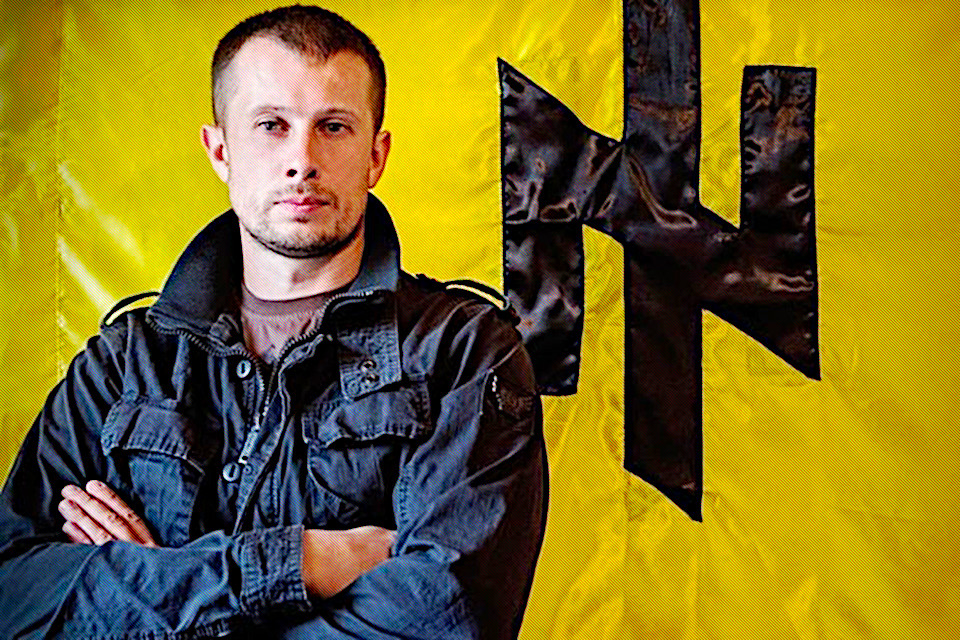
A prominent example is Andriy Biletsky, the leader of Patriot of Ukraine and the Social-National Assembly (SNA), both of which were transformed along with the Azov battalion and regiment veterans into the National Corps Party in 2016. He called the ideology of Patriot of Ukraine and SNA “Social Nationalism.” In a collection of his articles published in 2013, he described that social nationalism, as the name suggests, combines elements of ultranationalism of the Organisation of Ukrainian Nationalists with elements of national socialism and called both radical nationalism and national socialism “great ideas.” He wrote that social nationalism is based on “Sociality, Racism, and Great Power.”17 Specifically, it is based on the ideas that the “white race” is “superior” to other races and is the foundation of the Aryan Ukrainian nation; the Ukrainian nation is a “blood-racial community”; and that “the historical mission of our Nation (…) is to head and lead the White Peoples of the world in the last crusade for their existence, a march against the Semitic-led subhumans.”18 Biletsky openly made antisemitic and racist statements, such as his claim that the Jew is “an economic and political parasite.” He saw “a serious clash of native European peoples with foreign colonisers, mainly of African and Muslim origin” and believed that “an ethnic civil war can be won by the native Europeans only under the banner of the New Right National Revolutions.”19
Biletsky was called the “White Leader” and his writings were published by both SNA and Patriot of Ukraine. He was the first commander of the Azov battalion, which was organised and led by Patriot of Ukraine and SNA in May 2014. Patriot of Ukraine, SNA, and the Azov battalion all used a symbol resembling a stylised swastika and Wolfsangel. Azov commanders and their historian, who himself serves in Azov, called the symbol the “Idea of the Nation” and claimed that it is an ancient Ukrainian symbol, even though it was created in 1992 for the Social National Party of Ukraine (SNPU). The creator of this symbol acknowledged that it was called “Idea of the Nation” to represent the radical nationalist ideas of the Organisation of Ukrainian Nationalists (OUN). He also admitted that SNPU deliberately chose this symbol with the Latin letter N, instead of the equivalent Ukrainian Cyrillic letter, fully aware of its resemblance to Nazi symbols and association with the swastika for many Ukrainians, in particular in Lviv. As with other extremist groups that rebrand out of political expedience, the Social National Party of Ukraine changed its name to Svoboda in 2014, because the Nazi association was politically inconvenient.20 However, this symbol was retained by the SNA and by Patriot of Ukraine, whose Kharkiv branch split from SNPU because of these changes.21 The Azov battalion and its propaganda magazine, which was named Black Sun, also used the Black Sun symbol, an ideological symbol used by Nazis and various neo-Nazi organisations. In addition, groups and individuals—including Patriot of Ukraine, SNA, National Corps, and Azov battalion and regiment leaders, commanders, and members—have displayed on their uniforms various neo-Nazi and Nazi symbols, such as the swastika, the SS sign, and 88 (Heil Hitler code). These, along with Hitler images, Nazi flags, and Totenkopf have also been seen in the form of patches, photographs, flags, and tattoos.
Although the term far-right incorporates both ultranationalist and neo-Nazi organisations, they are not ideologically identical despite their frequent overlap. This study empirically investigates the role of Ukrainian ultra-nationalist organisations such as Svoboda, the Right Sector, the Ukrainian National Assembly–Ukrainian People’s Self-Defence (UNA-UNSO), and Bratstvo; neo-Nazi organisations such as the Social-National Assembly, Patriot of Ukraine, the White Hammer, and C14; and various other paramilitary formations, special police forces, and National Guard units organised and controlled to various extents by them. These armed units include the Azov battalion and regiment, Dnipro, Donbas, Aidar, Sich, Carpathian Sich, OUN, and St. Mary’s battalions, and the Ukrainian Volunteer Corps. To assess these actors, this study analysed thousands of Russian and Ukrainian primary sources: online recordings of live broadcasts, videos of the armed conflict in Donbas and Odesa, and information posted on websites and social media by far-right organisations, their armed units, and activists. It also analysed media reports in Ukrainian, Russian, and English from diverse outlets such as Ukrainska pravda, Strana, BBC, The Guardian, The Washington Post, The New York Times, YouTube, Telegram, V Kontakte, Facebook, and Twitter. To mitigate bias, the authors analysed the primary source materials rather than relying on secondary interpretations.
The Conflicting Narratives
Assessments of the far-right in Ukraine have been wracked by self-serving and thus unreliable perspectives. Russian and separatist leaders, as well as the media, have described the post-Maidan violence in Ukraine, especially in Donbas and Odesa, as perpetrated by “fascists” and “Nazis” akin to genocidal massacres against Jews, Belarusians, Russians, and Ukrainians during the Holocaust and World War Two.22 They often called the Odesa massacre the “Odesa Khatyn,” a reference to the large-scale massacre of Belarusian villagers in 1943 by the Nazis and an auxiliary police battalion, which was based on a paramilitary formation of the Melnyk faction of the Organisation of Ukrainian Nationalists. Based on this narrative, President Putin and his allies have claimed that invading Ukraine is not only justified, but “inevitable” to counter the “Nazi” or “Neo-Nazi regime” in Kyiv.23 Putin and his government thus declared the “de-Nazification” of Ukraine as a key goal of “the special military operation” launched in February 2022.24 This perspective—in its entirety—is widely assailed in the West.25
By contrast, the Ukrainian and Western governments and the media tend to claim that the far-right—including neo-Nazis—is marginal, even non-existent in Ukraine.26 They argue that since Euromaidan, Ukrainian fighters have almost entirely—if not entirely—shed their far-right elements, particularly neo-Nazi. To this end, it is a common point that the Azov Battalion ceased to be led by the neo-Nazi Patriot of Ukraine, a paramilitary wing of the SNA, since integrating into the National Guard as one of its regiments. Kyiv has stressed that the integration of Azov in November 2014 is proof of its transition to moderation and the absence of extremist fighters post-Maidan.27 Ukrainian President Volodymyr Zelensky awarded “Hero of Ukraine” titles in 2022 to prominent Azov leaders such as regiment commander Denys Prokopenko, deputy commander Sviatoslav Palamar, and senior officer Oleh Khomenko.28 After the commencement of the Russia-Ukraine war in February 2022, many Western media outlets, politicians, government officials, and academics adopted this stance that Azov and other controversial Ukrainian fighters on the far-right had not only abandoned extremist elements, but were heroes against Russia’s illegal invasion.29
The Indexing Theory of political communications emphasises that Western media follow narratives of its governments in covering foreign conflicts, including in post-communist countries.30 In some cases, Western media may have taken their cues directly from the Ukrainian government. After the Odesa massacre on 2 May 2014, the Foreign Ministry of Ukraine blamed the arson attack on provocateurs that were “paid generously by the Russian special services”, and the New York Times immediately adopted the same line that pro-Russia groups may have been responsible for torching the building.31 The Western narrative of the far-right in Ukraine since the Euromaidan is not without controversy. Volodymyr Ishchenko, a Ukrainian sociologist who specialises in the far-right in Ukraine, concludes: “The dominant narrative since Maidan in Ukrainian and much of the Western public spheres has been systematically downplaying the problem” by arguing that “the Ukrainian far-right” is “small and marginal.” He stated that “often, the far-right is just ignored.”32
Notably, Western concerns over far-right fighters in Ukraine were more prevalent before the February 2022 invasion. For example, The Nation described Azov in 2018 as “pro-Nazi, as evidenced by its regalia, slogans, and programmatic statements.”33 In 2019, Radio Free Europe called Azov “far-right.”34 In 2020, The Guardian referred to Azov as a “neo-Nazi extremist movement.”35 Consistent with Indexing Theory, such coverage of the neo-Nazis in Ukraine before the February 2022 Russian invasion overlapped with similar expressions by Western governments. In its 2018 Human Rights report, the US State Department called the political wing of the Azov Regiment “a hate group.”36 In 2019, ambassadors from G7 countries warned against “extreme political movements in Ukraine, whose violent actions are worrying in themselves.” The warnings referred specifically to the Azov movement and its violence during the 2019 presidential elections.37 The US Congress has displayed longstanding ambivalence over its designation of Azov. In 2018, forty Congress members signed a letter to the State Department with the request to designate Azov as a terrorist organisation because of its links to terrorist attacks in multiple countries and its recruitment of neo-Nazis in its ranks.38 A defence appropriations bill amendment was adopted by the entire US Congress in 2018, which banned US government funding and training of the Azov regiment due to concerns over its neo-Nazi views and members. Such concerns had been expressed by American officials for several years after the Euromaidan. The amendment was first unanimously adopted by the US House of Representatives in 2015. Congressman John Conyers put it bluntly, “I am grateful that the House of Representatives unanimously passed my amendments last night to ensure that our military does not train members of the repulsive neo-Nazi Azov Battalion.”39 Under pressure from the Pentagon, however, Congress subsequently removed this first amendment. A similar amendment, proposing a ban on US military assistance to radical nationalist and neo-Nazi organisations, voluntary police, and paramilitary formations under their command, was blocked in Congress in 2014.40
In general, however, American and European governments have been careful not to issue public statements against the far-right in Ukraine or to call attention to it. This hesitancy began after the Euromaidan and became starker following the February 2022 Russian invasion. Indeed, Western governments and media increasingly whitewashed the empirical record to present the Ukrainian far-right formations as categorically moderate in order to boost international support. In June 2024, the US State Department stated that the Azov brigade was eligible to receive US weapons under the “Leahy Law” because it was cleared of human rights violations. It made this determination after claiming that the Azov brigade is a new unit that is not subject to the previous Congressional ban, even though in reality this brigade was created on the basis of the Azov regiment, celebrated the 10th anniversary of the Azov battalion creation as its own anniversary, and is led by original Azov battalion commanders.41 However, a subsequent amendment, which was included in the US defence bill which was passed by the US House of Representatives, specifically stated that “none of the funds appropriated or otherwise made available by this Act may be used to provide arms, training, intelligence, or other assistance to the Azov Battalion, the Third Separate Assault Brigade, or any successor organisation.”42
Such instrumental portrayals of allies are not limited to this conflict. Other recent cases of political violence have also featured public relations campaigns by governments and media to present allies as arguably more moderate than their history and contemporary ideology indicate. For example, in the Syrian war, anti-Assad jihadist organisations allied with the West were euphemistically referred to as “rebels,” sometimes “moderate” ones, even when they fought under the direction of a Foreign Terrorist Organisation, as designated by the US State Department.43 A large body of literature within terrorism studies has found that the labelling of violent perpetrators by governments and media is not value-neutral, but expedient to serve political agendas.44 Particularly in these controversial cases of political violence, academe can play an important role in interrogating the empirical record to adjudicate the truth.45
The Far-Right in the Donbas War
Research within the field of terrorism studies has repeatedly noted the difficulty of determining the ideological beliefs of participants in political violence.46 However, fine-grained knowledge of the organisations can substantially increase confidence. Svoboda and the main organisations that remained within the Right Sector after the Euromaidan were widely understood as far-right for maintaining ultra-nationalist and ethnically supremacist views. They openly described themselves as the natural successors of the Organisation of Ukrainian Nationalists (OUN) and the Ukrainian Insurgent Army (UPA), inspired by the notorious OUN leader and Nazi collaborator, Stepan Bandera.47 Along with the UNA-UNSO, these organisations used the “Glory to Ukraine! Glory to the Heroes!” slogan, the official greeting of the Bandera faction of the OUN (OUN-B). This greeting, along with a fascist-style hand salute, was modelled on greetings and salutes of other well-known fascist parties in European history, from the Nazi party in Germany to the Ustashe party in Croatia.48 The Right Sector also adopted its red and black flag from the OUN-B and the UPA, which symbolized Ukrainian blood and soil, which were also pervasive in Nazi ideology and flags.49 But the existence of these symbols alone offers weak evidence of far-right influence in the Donbas war without understanding the cultural and historical context.
The violent overthrow of the Viktor Yanukovych government by means of the Maidan massacre triggered the resurgence of separatism in Donbas.50 After his overthrow in February 2014, far-right parties and organisations in Ukraine expanded and organised their armed formations. Along with Ihor Kolomoisky, an oligarch who became the head of the Dnipropetrovsk regional administration, the Right Sector was instrumental in the formation of the Dnipro battalion in the spring of 2014.51 The Azov battalion, notorious for its use of neo-Nazi symbols in its official insignia, was also organised in the spring of 2014 and led by the SNA and the Patriot of Ukraine with the involvement of the Radical Party. As mentioned, “White Leader” Andrii Biletsky was the first commander of Azov.52 Based in Mariupol, the St. Mary’s battalion was formed in the fall of 2014 and led by the far-right Bratstvo party, which is described by its leader (Dmytro Korchynsky) as the “Christian Taliban.”53 Around this time, the Aidar battalion, nominally subordinated to the Ministry of Defence of Ukraine, was formed by the Maidan Self-Defence. One of its platoons was led by the White Hammer, a neo-Nazi organisation belonging to the Right Sector during the Euromaidan. Ilia Kiva, a Right Sector member, was the commander of another volunteer police battalion. A previously convicted criminal with a swastika tattoo became the commander of the Tornado Company, a special police unit. He and seven other members of his company were arrested and convicted for various crimes in the warzone, such as torturing detainees. A Nazi-style flag with a swastika was found in their prison cell.54 These units were all under the formal jurisdiction of the Ministry of Internal Affairs, the National Guard, or the Ministry of Defence. From the start of their formation, they remained under de facto command of radical nationalist or neo-Nazi organisations. These armed formations sprouted up in the early stages of the conflict in Donbas and were stationed there in an attempt to suppress pro-Russian separatism in the region by force. The Right Sector and the Organisation of Ukrainian Nationalists actively organised various militia and paramilitary units that were not subordinate to the central government of Ukraine. The Volunteer Ukrainian Corps, the largest paramilitary formation, was formed and led by the Right Sector specifically for the war in Donbas, though it also included battalions in Western Ukraine.55
The paramilitary formations, special police, and National Guard units, organised and led by far-right organisations such as the Right Sector, the Social National Assembly, Patriot of Ukraine, Svoboda, C14, and Bratstvo, constituted a small minority of Ukrainian fighters in the Donbas. Based on reports, we estimate the number of members of radical nationalist and neo-Nazi organisations who served in various far right-led, regular, and other armed formations in the Donbas, at around five thousand. This estimate is conservative and represents just one percent of approximately 400,000 people who participated in this war on the side of the central government.56 Additional metrics of influence, however, are also important to consider.
Despite their relatively small numbers, far-right fighters exercised disproportionate influence in the Donbas civil war, particularly in the early stages before the first direct Russian military intervention in August 2014. Far-right Ukrainian groups proliferated after the Euromaidan because they were eager to fight and were responsible for a disproportionate level of violence, especially against civilians and prisoners of war in Mariupol and Krasnoarmiisk. Far-right organisations and far-right-linked battalions thus played a crucial role in escalating the armed conflict in the Donbas. Svoboda and C14, an avowedly neo-Nazi group affiliated with Svoboda until the summer of 2014, organised and led the Sich battalion from June 2014 onwards.57 Meanwhile, the Right Sector carried out a deadly attack on a separatist checkpoint in Sloviansk on 20 April 2014. While Ukrainian and Western media denied far-right involvement in these events, the evidence to the contrary includes business cards linked to far-right members found after the attack. As well, Ukrainian court proceedings revealed that the weapons used by the Right Sector checkpoint attackers were the same as the snipers from this group who killed and wounded police during the Maidan.58 And two years after the attack on the separatist checkpoint, Dmytro Yarosh—the leader of the Right Sector—admitted his personal involvement in thisattack.59 Oleksandr Turchynov, then acting president of Ukraine, and Kolomoisky’s deputy in the Dnipropetrovsk regional administration, reportedly orchestrated this Right Sector operation, aimed to seize and destroy a television transmitter near Sloviansk, several days after this area was seized by the Strelkov-led armed group of Russian nationalists and Ukrainian separatists.60 This attack by the Right Sector constituted a major escalation of the conflict in Donbas because it broke both the Geneva Agreement signed on 17 April 2014 by Ukraine, Russia, the EU, and the US for a peaceful resolution of the conflict, as well as the Orthodox Easter truce between the Ukrainian government and separatists in Donbas.
Far right-led armed formations were also behind many other violent attacks in the Donbas, further escalating the conflict into a civil war. Videos, media reports, and admissions from commanders and other members of the Azov and Dnipro battalions indicate that they participated in the storming of the district police headquarters in Mariupol on 9 May 2014. Approximately ten people, including at least one protester, were killed.61 Analysis of online video streams, media reports, and Ukrainian government documents, also make clear that Azov played a major role in taking back the city of Mariupol from the control of separatists in June 2014.62 The Dnipro battalion, along with other units, seized civilians in the Donetsk Region to prevent the separatist referendum on 11 May 2014. Videos show them shooting unarmed pro-separatist protesters with Kalashnikovs, killing two locals. The Ukrainian government denied the presence of the Dnipro battalion, but it was confirmed by other credible sources, including admissions by battalion members in videos, like Volodymyr Parasiuk’s statement on social media, who became the People’s Deputy of Ukraine.63
The far-right-led armed formations perpetrated a disproportionate amount of violence in the first few months of the Donbas conflict and thus played a major role in escalating it into a larger civil war because the radical nationalist and neo-Nazi-led groups were far more willing to use force at that time. The Ukrainian armed forces, the security service, police and National Guard units were more reluctant to use force against the separatists in Donbas because their commanders and members were publicly blamed by the new government for attempting to forcefully suppress the Maidan protests—and in particular, for the Maidan massacre. Because the new Maidan government came to power through violence, which included the killing of police and protesters, it lacked legitimacy among many military, police, and SBU members in the Donbas region during this initial period of the conflict. Further, compared to the newly ascendant far-right groups in the aftermath of Euromaidan, the regular Ukrainian armed forces, the security service, the police and National Guard units were known for lower morale and higher desertions. Examples of this included the Donetsk SBU Alfa commander and Luhansk Berkut members, who joined the separatists.64
The relative role of the far-right in the political violence was not constant; it began to decline in the Donbas when newly elected president Petro Poroshenko ordered the Ukrainian military, SBU, police, and National Guard to wield lethal force against the separatists and launch the offensive in June 2014.65 The war was most intense and violent in 2014 and 2015, but the fighting declined significantly following the Minsk Agreements in 2015. However, ultra-nationalist and neo-Nazi fighters continued to exert a non-trivial role, even after the Ukrainian military intensified its operations in Donbas and purported to moderate the far-right fighters. After its formal incorporation into the National Guard of Ukraine, the Azov regiment and its commanders maintained a close organisational and ideological relationship with the neo-Nazi National Corps party. This party was formed by the Azov battalion founder and the first commander on the basis of neo-Nazi SNA and Patriot of Ukraine, and it included many Azov battalion and regiment veterans. The Azov regiment functioned as a military wing of the National Corps, which, in essence, represented overlapping elements of the same Azov movement.66 Indeed, Azov regiment commanders shared a neo-Nazi background and had served in the neo-Nazi-led Azov battalion.67 In other words, the rebranding from “battalion” to “regiment” did not alter the key personnel.68 For example, Azov regiment commander Denys Prokopenko was a member of the neo-Nazi White Boys Club, which was formed by the ultras of the Dynamo Kyiv football club. This group of ultras displayed various Nazi symbols and the Nazi salute on their social media and during football games. His Azov battalion platoon had used the Totenkopf insignia of the Nazi SS.69 Andriy Biletsky became the commander of the Third Assault Brigade, which was created by veterans of the Azov battalion and regiment and activists of his neo-Nazi group, the National Corps.70 In 2023, he stated in an interview with Ukrainian media that the united Azov movement included this Azov brigade under his command along with the Azov regiment and the Kraken unit.71 Such admissions in Ukrainian media highlighting enduring far-right allegiances seldom make their way into the Western press.
Importantly, Azov commanders never publicly renounced their neo-Nazi views, symbols, and organisations. In fact, Azov leaders routinely denied in media interviews that they, their units, and organisations, were neo-Nazi, claiming that the well-documented Nazi symbols were fakes or Russian propaganda. Our research of Ukrainian social media as well as other researchers of the far-right in Ukraine, such as Lev Golinkin and Moss Robeson, have identified over one hundred cases of Nazi and neo-Nazi displays by at least several hundred Azov commanders and other members from 2014 to 2022. This number includes displays on uniforms, patches, photographs, flags, and tattoos of neo-Nazi and Nazi symbols, such as the swastika, SS sign, 88 (Heil Hitler code), Hitler images, Nazi flags, and Totenkopf, and a fascist hand salute.72 The continued relevance of far-right extremism in Azov was evident at the very top. Arsen Avakov, the Minister of Internal Affairs, was personally involved in the Azov battalion formation and its later expansion to a regiment.73 President Petro Poroshenko circulated photographs awarding Ukrainian national medals and commendations to some of the most well-known neo-Nazis in Azov.74 The Nazi connection to Azov was clearly not due to a loss of agency control.
Amnesty International and Human Rights Watch reported that Azov was involved in many cases of torture, illegal detention, and disappearances during the war in Donbas.75 The impact of these far-right organisations cannot be measured strictly in terms of the direct physical effects, as terrorism researchers have emphasised in many other contexts.76 Ultra-nationalist and neo-Nazi organisations were instrumental in blocking or “spoiling” a peaceful resolution of the armed conflict in Donbas, another well-established source of leverage for extremists.77 Far-right groups such as the Right Sector, Svoboda, and the Radical Party opposed the adoption by the parliament of Constitutional amendments based on provisions from the Minsk Agreements.78 To this end, Svoboda activists launched a grenade attack on 31 August 2015 in front of the Ukrainian parliament, killing four and wounding dozens of policemen and National Guard troops, which helped to block these amendments, undercutting the logic of implementation.79
Far-right groups also challenged the implementation of President Volodymyr Zelensky’s electoral promise to peacefully resolve the Donbas war.80 In October 2019, Zelensky travelled to a front-line position in Donbas to personally convince the Azov fighters to stop blocking the implementation of the Minsk agreements by withdrawing along with separatist troops from the frontline, as he agreed during the summit with Putin and German and French leaders in Paris. But video of the encounter shows that Zelensky was taunted by activists of this neo-Nazi organisation who flouted his appeal.81 According to the Associated Press, thousands of far-right and nationalist activists shouting the far-right OUN and UPA slogan “Glory to Ukraine. Glory to the Heroes” marched through Kyiv protesting against a peace plan for eastern Ukraine.82
The radical flank threatened Zelensky for implementing Minsk on other occasions as well. In May 2019, Dmytro Yarosh, the former Right Sector leader, publicly threatened to hang the new Ukrainian president on a tree if he fulfilled his election promise of a peaceful resolution of the conflict in Donbas.83 In 2021, Yarosh, the commander of the Ukrainian Volunteer Army organised by the Right Sector, was appointed Adviser to the Commander-in-Chief of the Armed Forces of Ukraine, Valerii Zaluzhnyi.84 In the same year, videos, photos, and Ukrainian media reports show police standing down while neo-Nazi and other far-right protesters attacked the Office of the President of Ukraine and painted swastikas on its walls.85 The Russia scholar Stephen F. Cohen concluded that Zelensky “can’t go forward with peace negotiations” because “crazy fascist movements” in Ukraine “literally threatened his life.”86 Although far-right peace rejectionists posed political problems for Zelensky, they were also known to work closely with him. An activist of the neo-Nazi Patriot of Ukraine and former deputy commander of the Azov regiment was appointed the acting head of the National Police of Ukraine during the Poroshenko presidency and then became a deputy minister of Internal Affairs during the Zelensky presidency.87 Prime Minister Oleksii Honcharuk spoke at a “veterans party” organised by a front organisation for the neo-Nazi C14 with a stylised swastika of a neo-Nazi rock band behind him.88 The advisory council of the Ministry of Veteran Affairs under Zelensky retained activists of this neo-Nazi group, including those charged with assassinating the prominent opposition journalist, Oles Buzyna, in 2015.89
In sum, ultra-nationalist and neo-Nazi militant organisations were deeply involved on the side of the central government throughout the Donbas conflict. Although representing a small fraction of Ukrainian forces throughout the conflict, they committed a disproportionate amount of violence, particularly before President Poroshenko ordered the Ukrainian military to increase its use of force against the separatists in the summer of 2014. The much-touted absorption of Azov and other extreme right-wing militia under the official Ukrainian National Guard, police, and military command did not change either their command or their ideological displays. Many of the fighters worked closely with the Kyiv political leadership across administrations, when not using de facto veto power to block peaceful resolution of the conflict in this region.
This interpretation departs from others that rely strictly on vote-share as the proxy for far-right influence. The influence of the far-right in Ukraine after the Maidan far exceeded its electoral support and membership. Svoboda and Right Sector leaders each won only one percent of the votes in the snap presidential elections in May 2014. In the parliamentary elections of October 2014, Svoboda narrowly failed to clear the five percent threshold, receiving 4.7 percent. The Right Sector fared even worse, receiving only two percent of the votes. Ruslan Koshulynsky, one of Svoboda leaders, who was backed by the Right Sector, OUN, and C14, received only 1.7 percent of the votes in the 2019 presidential elections, while Svoboda won 2.2 percent of the votes in the 2019 parliamentary elections. These weak electoral results indicate the limited national support of the far-right in Ukraine, but not its outsized role in the Donbas conflict.
The Far-Right in the Odesa Massacre
Other than the Donbas war, the Odesa massacre was the most significant and deadly instance of political violence after the Maidan massacre in Ukraine since its independence in 1991 until the Russia-Ukraine war in February 2022. The violence took place on 2 May 2014, between a “United Ukraine” rally and pro-Russian separatists, carried out with petrol bombs, gunfire, and rock-throwing, which ended up killing 48 people, primarily separatist protesters.90 The vast majority of the fatalities took place in the Trade Unions House, where 42 separatist activists and employees (forty men, seven women, and one boy) were killed when the building was set ablaze.91
This massacre contributed to the escalation of the separatist conflict in Donbas into the civil war. As noted, the massacre was presented by separatist and Russian leaders and the media as akin to the Nazi massacre of Khatyn in Belarus, and many Odesa separatists joined the separatist forces in Donbas. Despite the importance of this massacre, the International Advisory Panel of the Council of Europe, among other international authorities, has noted that the Ukrainian government failed to properly investigate and prosecute those responsible.92 To ascertain the role of far-right groups in the Odesa massacre, a broad range of key information resources can be analysed, including videos and recordings of live broadcasts of the political violence (and the lead-up to it); published reports; primary source media in Ukrainian, Russian, and English; statements of responsibility; interviews; and testimonies from participants and eyewitnesses on both sides, as well as police commanders.
On 1 May 2014, the day before the mass violence, separatists protested in Odesa to demand a referendum on the newly installed government in Kyiv, which they blamed on far-right activists and Western interference.93 Based on testimonies from a special parliamentary commission report in the immediate aftermath of the May 2014 massacre, Ukrainian and regional government officials planned to use far-right activists and the Maidan Self-Defence to suppress the separatists in the Odesa region and disperse those who were encamped near the Trade Union building.94 Extensive evidence indicates that the police and firefighters were ordered by their superiors to stand by and not interfere during attacks. For instance, a special plan to deal with mass disturbances launched by the Odesa regional police was not authorised, reportedly because of decisions at the Ministry of Internal Affairs’ top level.95 Similarly, top regional officials of the police and other law enforcement agencies were ordered to attend a meeting with their national counterparts before and during the start of the clashes.96 The presence of Andriy Parubiy and five hundred Maidan Self-Defence members, who deployed from Kyiv to Odesa on the eve of the massacre, further suggests that the violent dispersal of the separatist camp by far-right activists was orchestrated by top government leaders.97 Parubiy was a founder and leader of the neo-Nazi Patriot of Ukraine, a paramilitary wing of the Social National Party of Ukraine in the 1990s. He was the head of the Maidan Self-Defence during the Euromaidan and headed the National Security and Defence Council at the time of the Odesa massacre. The State Bureau of Investigations of Ukraine launched a criminal investigation into Parubiy for the Odesa massacre soon after he was replaced as the ex-head of the Ukrainian parliament following the early parliamentary elections in 2019.98 One of the participants acknowledged in an Israeli documentary that he engaged in “provocations” in the Odesa massacre under the command of Parubiy, who had issued orders to attack the separatists and “burn everything.” We assess this acknowledgement as credible because he was filmed along with Maidan activists in the left wing of the Trade Union building in Odesa when the deadly fire began to burn the central entrance.99 He and five other Georgian ex-military members also stated in American, Italian, and Israeli TV documentaries, Russian media interviews, on Macedonian TV, in depositions to Berkut lawyers for the Maidan massacre trial, and in testimonies to the Prosecutor General Office of Belarus for the Prosecutor General Office of Ukraine investigation that their groups of Georgian, Baltic, and far-right-linked Ukrainian snipers received weapons, payments, and orders from specific Maidan and Georgian politicians, including Parubiy, to engage in a mass killing of police and protesters.100 The Maidan massacre trial subsequently confirmed their identities.101
A march led by the Right Sector and football ultras on 2 May 2014 was used as cover to implement this plan to destroy and burn the separatist tent camp.102 The SBU in the Odesa Region received advanced information about planned “provocations” and violent clashes between football ultras and pro-Russian separatists on game day between the Odesa and Kharkiv teams on 2 May. A special train transported hundreds of football ultras from Kharkiv to Odesa.103 Football ultras in Ukraine were notorious for displaying neo-Nazi symbols and expressing neo-Nazi slogans during games and have historically linked up with the Right Sector and other far-right organisations, as during the Maidan protests.104 Both the Right Sector and football ultras in Odesa and Kharkiv were dominated by the neo-Nazi Social National Assembly/Patriot of Ukraine, which organised the Azov battalion right after the Odesa massacre.
Odeska Druzhyna, a small separatist organisation in Odesa, was present among other separatist activists based on evidence from internet streams, videos, testimonies of participants and eyewitnesses, and special parliamentary commission reports.105 Odeska Druzhyna used identifiable red tape labels, and were not Right Sector agent provocateurs, as the Russian media and separatists claimed. However, the Ukrainian government and media also mischaracterised the involvement of Odeska Druzhyna by overstating its coordination with other separatist activists.106 The balance of forces was asymmetric; the groups of numerically superior activists of the Right Sector from Odesa and Kharkiv led by the neo-Nazi Social National Assembly/Patriot of Ukraine, far-right football ultras, and Maidan Self-Defence units from Odesa and other regions attacked the separatists. Numerically disadvantaged, the latter took cover behind a police cordon.107
An Odeska Druzhyna activist was filmed shooting in the direction of the far-right protesters with an AK-74-type assault rifle.108 The official investigation and the May 2 Group maintained that a Right Sector activist was killed by this separatist group member with a 5.45mm calibre bullet.109 However, leaked forensic medical expert reports describe a 5.65mm calibre bullet extracted from his body.110 This bullet reportedly disappeared and reappeared during the investigation. The fact that it did not match bullet samples of any legally registered firearms, the weak sound of the gunshots, as well as the lack of a recoil observed in the videos of the shooting, also suggest that the far-right protester may not have been killed by this separatist, who maintained that the weapon seen in the video was a movie studio prop.111 The killing of the Right Sector activist was not visible in that video nor in any videos of clashes. The investigation and various videos at the scene did not reveal the exact time or location of his killing, or the direction of the gunshot. An Odesa deputy police chief, who was filmed around the time of this killing before he himself was wounded, stated that he saw snipers in camouflage shooting from the second floor of a hotel there. He relayed that they killed this Right Sector activist and the second protester in order to blame the separatists for their killing and provoke a violent response against the separatists.112 Videos filmed before and after his shooting suggest that the second pro-Maidan activist was killed around the same time in the same area during the violent clashes with separatists and shooting from a Kalashnikov-type weapon by one of the separatists.113 However, the government forensic examination determined that he was killed by a bullet from a pneumatic sport-type weapon. Nobody was charged with his killing, and the moment and other circumstances of his killing remain not publicly known.114
In the clashes that followed the killings of these two pro-government protesters, four separatist protesters were killed and many other separatist protesters, policemen and at least one local journalist were wounded. The forensic examination determined that three separatists were killed with hunting ammunition.115 A pro-government activist was filmed shooting with a hunting rifle in the direction of these separatists.116 This pro-government activist was later identified by the Minister of Internal Affairs as a Right Sector member.117 The government investigation charged him with killing at least one of the separatists. However, he was released from arrest and his trial was suspended indefinitely because of threats by the Right Sector and other far-right activists against judges during his trial.118 Evidence—including a recorded phone call—revealed that the events on May 2nd were coordinated by the Odesa regional administration official in charge of law enforcement agencies, and involved the participation of the Maidan Self-Defence commander, Right Sector activists, football ultras, and Maidan Self-Defence units.119 They attacked and burned the tent camp of various separatist organisations, whose activists and supporters then escaped to the nearby Trade Union building and tried to barricade the main entrance doors. Videos, internet streams, and testimonies of eyewitnesses show that attackers threw Molotov cocktails and burning tyres at the main entrance, set the entrance doors on fire, and blocked other exits. Videos, recorded calls to firefighters, and eyewitness reports reveal that the fire and thick smoke started from those burning tyres and Molotov cocktails thrown at the main entrance.120 The evidence does not support claims that the separatist protesters killed in this incident were Russian citizens, that they burned themselves by throwing Molotov cocktails from the roof of the Trade Union building or inside of the building, or that there was no far-right involvement in their killing.
After initial denials, the May 2 Group admitted that the deadly fire started at the main entrance. The May 2 Group was a nominally independent association of mainly journalists, formed after the massacre supposedly to investigate it. It was created with the involvement of the Governor of the Odesa region who was appointed by Ukrainian President Petro Poroshenko within a week of the massacre.121 This governor represented not only the central government, but also the Kolomoisky’s oligarchic network, which financed the Right Sector volunteers from the Volyn Region in the Azov battalion and the Right Sector-led Dnipro battalion.122 The Azov battalion was organised by the neo-Nazi SNA and its paramilitary wing, Patriot of Ukraine, which dominated the Right Sector in Odesa and Kharkiv, a few days after the Odesa massacre. But the May 2 Group still claimed that it was impossible to determine who started the fire because both sides were throwing Molotov cocktails. However, there is no public evidence of Molotov cocktails being thrown by separatists at the main entrance; on the contrary, numerous videos feature the far-right protesters throwing Molotov cocktails and burning tyres into the Trade Union building at that time.123
Within Ukraine, far-right activists—particularly from the Right Sector and the SNA— were notorious for using tyres and Molotov cocktails to burn public buildings. Forensic examinations in the government investigation, recordings of radiocommunications by SBU Alfa group, an unpublished admission by a far-right activist to a French journalist, and an academic study determined that the Trade Union headquarters in Kyiv were burned by Maidan activists, including far-right ones, in order to stop its takeover by the Security Service of Ukraine Alfa unit.124 Far-right protesters also started fires by burning tyres in the Inter TV channel building and threatened to burn down the parliament of Ukraine, the Lutsk City Council, the Sviatoshyn District Court that heard the Maidan massacre case, the Constitutional Court, and Inter and 112 Ukraina TV channels buildings by placing tyres next to their entrances.125 Prior usage of the same tactics by the far-right increases the likelihood of their direct involvement.
Analysis of online video streams, government investigation findings, May 2 Group reports, forensic medical examinations, eyewitness testimonies, and other evidence strongly indicate that 42 people perished as a result of the fire, smoke, and from trying to jump from the upper floors of the Trade Union building with far-right activists beating them on the ground and blocking the exits.. The victims were unarmed and included mainly separatists, their supporters, and several employees, in particular women, who were in the building at the time.126 Some of the strongest evidence of far-right involvement in the arson attack comes from the far-right itself, in the form of credit claiming. A growing body of research within terrorism studies focuses on credit claiming. An important finding is that perpetrators are far more likely to deny responsibility for their attacks than to take credit for ones that they did not perpetrate.127 This is particularly true when the targets are civilians. Nonetheless, many extremist groups do claim credit for civilian attacks.128 Statements posted by the Right Sector, the SNA, and the neo-Nazi Misanthropic Division on their websites and social media sites admitted the involvement of their organisations in the massacre. The Right Sector celebrated on its website the massacre by describing it as “another bright page in our fatherland’s history.” Claiming responsibility for the slaughter, it wrote: “In the first minutes of the battle, the ‘Right Sector’ activist was seriously wounded in the stomach. Several more PS [Right Sector] activists received injuries of varying degrees of severity. However, this did not prevent the rest of the PS fighters, together with football fans, from repelling the attack of pro-Russian provocateurs, and as a result, they successfully countered attempts to seize buildings in Odesa. Standing shoulder to shoulder, Odesa activists, football fans and ‘Right Sector’ fighters defeated the forces of pro-Russian mercenaries. Order has been restored in Odesa.”129 The Right Sector—which was dominated in Odesa and Kharkiv by the Social National Assembly and its paramilitary wing, Patriot of Ukraine—and the neo-Nazi Misanthropic Division (which joined the Azov battalion after the massacre) admitted on the social media platform V Kontakte and in other public statements that the fire was set deliberately.130
The official investigation of the Odesa massacre was a farce. Nobody was found guilty of perpetrating this mass killing. As noted, the Right Sector shooter was initially arrested but then released. Only separatists were among those arrested and tried for the Odesa massacre. The Odesa massacre trial of separatists resulted in their acquittal by a local court. The Ukrainian court based its decision on the lack of evidence in support of prosecution charges. Even the verdict acknowledged both the weakness of the investigation into the perpetrators and the role of Parubiy and other government officials.131 The Council of Europe and the UN Special Commission reports also noted the destruction of evidence.132 A report by the special commission of the Council of Europe found that the Ukrainian government’s investigation of the Odesa Massacre was inadequate, politically selective, and featured the falsification of evidence, despite the existence of video footage showing who threw the Molotov cocktails at the building.133
The Ukrainian media cited SBU sources that a far-right activist, who headed the Right Sector in Odesa during the Odesa Massacre, was a secret agent of the Security Service of Ukraine (SBU) and that he and far-right associates were paid by SBU to attack opposition politicians, threaten judges, and conduct other illegal actions.134 This would be consistent with the fact that the Right Sector was not investigated for the Odesa massacre even though the Right Sector publicly admitted involvement. His secret collaboration with SBU would also be consistent with the fact that SBU and the Prosecutor General Office refused to charge him for killing another person in Odesa in 2018. Moreover, in 2020, the SBU gave this far-right activist the status of a victim in this case, even though he streamed this killing on his social media account and the police investigation determined that he was the killer.135 In this sense, the Odesa massacre was not entirely anomalous; it featured post-Maidan far-right involvement with apparent support from high-level political leaders in a corrupt country where investigations and media have inconsistently followed the evidence.
Conclusion
This study assesses the role of the far-right in post-Maidan Ukraine, specifically, in the Donbas war and the Odesa massacre. These were two of the biggest episodes of political violence in the country leading up to the February 2022 Russian invasion. This area of research is worth close investigation because it represents intrinsically important episodes of political violence that have not attracted objective analysis based on available primary sources in Ukrainian, Russian, and English. Investigating the role of the far-right is also timely because the far-right in Ukraine is riven by duelling, self-serving contemporary narratives.
The predominant narratives propagated by governments and the mainstream media in Ukraine, the West, Russia, and separatist-controlled Donbas, concerning the role of the far-right in the war in Donbas and the Odesa massacre, have evidently been partisan. Contrary to the Russian government, separatists, and associated media, the Ukrainian government and military are not Nazi or even neo-Nazi. There were no neo-Nazis among the upper echelon of the Ukrainian government. President Zelensky is certainly not a Jewish neo-Nazi. He tried to placate and mainstream the far-right for political reasons, but has no observable personal affinity to that extreme ideology.
Neo-Nazis constituted only about one percent of the Ukrainian forces before the Russian invasion in 2022, and there is weak electoral support for neo-Nazi parties throughout the country. Similarly, the policy of glorification of the OUN-UPA, their leaders, such as Stepan Bandera, and the adoption and use of their “Glory to Ukraine! Glory to the Heroes!” greeting by the state and the military, including Zelensky, do not make Ukraine a Nazi state. While the OUN and the UPA were far-right terrorist organisations, which collaborated with Nazi Germany and perpetrated the mass murders of Jews, Poles, and Ukrainians, they were not Nazis. Ukrainians could not join the Nazi party because Hitler and other Nazi leaders regarded Ukrainians as racially inferior and opposed independence of Ukraine while also dismissing the attempt to create even a puppet state by the Bandera faction of the OUN in Lviv shortly after the Nazi invasion of the Soviet Union. Thus, Putin cannot credibly justify the illegal invasion in February 2022 as a war to “de-Nazify” the “Nazi regime.”136 The power of the far-right and the glorification of the OUN and the UPA in Ukraine under Poroshenko and Zelensky were exaggerated and exploited by the Russian leaders to justify the invasion.
But the West’s efforts to whitewash the far-right in Ukraine also rests on empirically shaky grounds. Despite their relatively small numbers militarily and politically, the far-right in Ukraine exercised outsized power. The far-right organisations, volunteer battalions, and paramilitary units organised and led by them played, along with separatists and Russian nationalists, a significant role in starting and escalating the incipient civil war in the Donbas and then impeding its peaceful resolution. Even after technically integrated into the official Ukrainian forces, Azov and other far-right groups continued to harbour extremist views. Often brandishing the same extremist symbols, the core leaders and members remained and even ascended within the police, military, and security services during the Donbas war. Western media accounts have drawn heavily from biased Ukrainian sources, including “official” investigations and the May 2 Group. Across numerous primary sources in Ukrainian, Russian, and English, we find evidence that the Right Sector, Social-National Assembly, its paramilitary wing Patriot of Ukraine, and groups of far-right football ultras from Odesa and Kharkiv played a critical role in the Odesa massacre against separatist protesters on 2 May 2014. Neo-Nazi SNA/Patriot of Ukraine, which dominated the Right Sector in Odesa and Kharkiv, organised the Azov battalion right after this massacre.
Despite the lack of international consensus over the definition of terrorism, a common interpretation is the use of violence by non-state actors aimed at creating fear for political ends, particularly when the targets are civilians.137 Depending on one’s definition, some attacks within the episodes of political violence covered in this study, such as the Odesa massacre, could, therefore, arguably be classified as terrorism. What is clear is that neither of the duelling narratives accurately captures the role of the far-right. This study has helped to fill that research lacuna by making use of substantial primary source materials in Ukrainian, Russian, and English. Besides the Maidan massacre, the Donbas war and the Odesa massacre are the two most substantial episodes of political violence from the independence of Ukraine in 1991 to the February 2022 illegal Russian invasion [end]
Ivan Katchanovski is a Ukrainian and Canadian political scientist. He teaches at the School of Political Studies and the Conflict Studies and Human Rights Program at the University of Ottawa in Canada. He specialises primarily in politics, conflicts, political violence, and the far right in Ukraine. His academic publications include five books, 21 articles in peer-reviewed journals, and twelve book chapters.
Max Abrahms is a professor of public policy and political science at Northeastern University, where he specialises in international security. Abrahms has published extensively in leading academic and popular outlets such as International Organization, International Security, International Studies Quarterly, Security Studies, Comparative Political Studies, Harvard Business Review, Foreign Affairs, Foreign Policy, New York Times, Washington Post, USA Today, Newsweek, The Atlantic, and Los Angeles Times.
I disagree with the authors on two points
Stepan Bandera & friends were Nazis. How can the authors identify some neo-Nazis in modern Ukraine, while not regarding their historical mentors as Nazis ? Before WW2, they were praising either Adolf Hitler or Benito Mussolini. Their political project was authoritarian, racist and criminal. They were dreaming of ethnic cleansing. De facto during WW2, they committed mass killing of Jews and Poles.
Terrorism is not restricted to non-state actors. Terrorism is violent action to terror civilians, in order to achieve a common political goal. This is not even a value judgement, but Hiroshima bombing was terrorism. The Israeli targeting and mass killing of civilians, in the prospect of ethnic cleansing in Gaza, is terrorism.
chronicle of censorship, fake news, whitewashing of the Ukrainian Nazism and war crimes, for the sake of the proxy war that NATO is conducting in Donbass and Ukraine, against Russia
Endnotes
Arel, Dominique and Jesse Driscoll. 2023. Ukraine’s Unnamed War. Before the Russian Invasion of 2022. Cambridge: Cambridge University Press; Black, J.L. and Michael Johns (Eds.). 2016. The Return of the Cold War: Ukraine, the West and Russia. Abingdon: Routledge; Hahn, Gordon M. 2018. Ukraine Over the Edge: Russia, the West and the “New Cold War.” Jefferson, NC: McFarland Books; Katchanovski, Ivan. 2016a. “The Separatist War in Donbas: A Violent Break-up of Ukraine?” European Politics and Society, 17 (4), 473-489; Kudelia, Serhiy. 2016. “The Donbas Rift.” Russian Politics & Law, 54 (1), 5-27; Pikulicka-Wilczewska, Agnieszka and Richard Sakwa (Eds.). 2015. Ukraine and Russia: People, Politics, Propaganda and Perspectives. Bristol: E-International Relations; Sakwa, Richard. 2015. Frontline Ukraine: Crisis in the Borderlands. London: I.B.Tauris. ↩︎
Danciu, Gabriela-Cătălina. 2023. “A Perspective on Justifying the Ukraine–Russia War. Elements Of Propaganda.” International Journal of Social and Educational Innovation, 10 (19), 224-239; “Address by the President of the Russian Federation” (2022, February 24) http://en.kremlin.ru/events/president/news/67843. ↩︎
Black, J.L. and Michael Johns (Eds.). 2016. The Return of the Cold War: Ukraine, the West and Russia. Abingdon: Routledge; Katchanovski, Ivan. 2023a. “The Maidan Massacre Trial and Investigation Revelations and Their Implications for the Ukraine-Russia War and Relations.” Russian Politics, 8 (2),181-205. ↩︎
See, for example, Colborne, Michael. 2022. From the Fires of War: Ukraine’s Azov Movement and the Global Far Right, Stuttgart: Ibidem; Davidzon, Vladislav. 2023. “The Search for Neo-Nazis Under the Bedsheets Reflects American Progressive Hysteria, Not Ukrainian Reality.” Tablet Magazine, July. ↩︎
Umland, Andreas. 2019. “Irregular Militias and Radical Nationalism in PostEuromaydan Ukraine: The Prehistory and Emergence of the “Azov” Battalion in 2014.” Terrorism and Political Violence, 31 (1), 105- 131. ↩︎
Umland, Andreas. 2020. ‘The Far Right in Pre- and Post-Euromaidan Ukraine: From Ultra-Nationalist Party Politics to Ethno-Centric Uncivil Society.’ Demokratizatsiya, 28 (2), 247-268. ↩︎
Ishchenko, Volodymyr. 2016. “Far right participation in the Ukrainian Maidan protests: an attempt of systematic estimation.” European Politics and Society, 17 (4), 453-472. ↩︎
Hahn, Gordon M. 2018. Ukraine Over the Edge: Russia, the West and the “New Cold War.” Jefferson, NC: McFarland Books; Katchanovski, Ivan. 2016b. “The Maidan Massacre in Ukraine: A Summary of Analysis, Evidence, and Findings.” In The Return of the Cold War: Ukraine, the West and Russia, eds. J.L. Black and Michael Johns. Abingdon: Routledge, pp. 220-224; Katchanovski, Ivan. 2020. “The far right, the Euromaidan, and the Maidan massacre in Ukraine.” Journal of Labor and Society, 23 (1), 5-29; Katchanovski, 2023a; Katchanovski, Ivan. 2023b. “The “Snipers’ Massacre” on the Maidan in Ukraine.” Cogent Social Sciences, 9 (2); Katchanovski, Ivan. 2024. The Maidan Massacre in Ukraine. London: Palgrave Macmillan. ↩︎
Khalil Mutallimzada and Kristian Steiner, (2022), Fighters’ motivations for joining extremist groups: Investigating the attractiveness of the Right Sector’s Volunteer Ukrainian Corps. European Journal of International Security, 1–23. Ilmari Käihkö, (2018), A nation-in-the-making, in arms: control of force, strategy and the Ukrainian Volunteer Battalions. Defence Studies 18:2, 147–166; Tetyana Malyarenko and David J. Galbreath, (2016), Paramilitary motivation in Ukraine: beyond integration and abolition, Southeast European and Black Sea Studies 16:1, 113–138. ↩︎
Hale, Henry E., Oxana Shevel and Olga Onuch. 2018. “Believing Facts in the Fog of War: Identity, Media and Hot Cognition in Ukraine’s 2014 Odesa Tragedy.” Geopolitics, 23 (4), 851-881. A poll commissioned for that study found that 44% of Ukrainians believed that this mass killing was committed by provocateurs from Russia, while 11% blamed pro-Russian residents of Odesa. Ten percent of the respondents said that the Odesa massacre was perpetrated by “Ukrainian nationalists from Odesa” and 3% by “pro-Ukrainian” residents of Odesa. ↩︎
Van Evera, Stephen. 1997. Guide to Methods for Students of Political Science. Ithaca: Cornell University Press. ↩︎
Griffin, Roger with Matthew Feldman (Eds.). 2003. Fascism: Critical Concepts in Political Science. London: Routledge. ↩︎
Brahimi, Alia. “Ideology and terrorism.” The Oxford handbook of terrorism (2019): 298. ↩︎
See, for example, Jadoon, Amira, Andrew Mines, and Daniel Milton. “Targeting quality or quantity? The divergent effects of targeting upper verses lower tier leaders of militant organizations.” Journal of Conflict Resolution 67, no. 5 (2023): 1007-1031; Schram, Peter. “Self-managing terror: Resolving agency problems with diverse teams.” Games and Economic Behavior 130 (2021): 240-257; Abrahms, Max, and Philip BK Potter. “Explaining terrorism: Leadership deficits and militant group tactics.” International Organization 69, no. 2 (2015): 311-342; Popovic, Milos. “The perils of weak organization: Explaining loyalty and defection of militant organizations toward Pakistan.” Studies in Conflict & Terrorism 38, no. 11 (2015): 919-937. ↩︎
Biletsky 2013; Biletsky, Andriy. “Nedochytanyi Franko.” Patriot Ukrainy, (2008). https://web.archive.org/web/20101120085407/http://patriotukr.org.ua/index.php?rub=stat&id=409. Also, please note that the ADL has adopted the spelling of “antisemitism” instead of “anti-Semitism.” After reviewing the history and consulting with other leading experts, they determined that this is the best way to refer to hatred toward Jews, so we have adopted the same spelling convention here. ↩︎
Clarke, Colin P. “The Terrorist Diaspora.” Testimony, House Homeland Security Committee Task Force on Denying Terrorists Entry into the United States (2017). ↩︎
Boyd-Barrett, Oliver. 2016. Western Mainstream Media and the Ukraine Crisis: A Study in Conflict Propaganda. New York: Routledge. ↩︎
Some researchers and Zelensky have cited the presence of Russian-speakers in the Azov regiment and other neo-Nazi-led armed formations as evidence of their relative tolerance and moderation and argued that the Azov regiment distanced itself from its far-right roots. (See Umland 2019; “Zelensky refutes Russian propaganda claim that Azov Regiment is ‘neo-Nazi.’” The New Voice of Ukraine (2022, May 2), https://news.yahoo.com/zelensky-refutes-russian-propaganda-claim-131100438.html. However, these formations were organized and led by neo-Nazi organizations, which had a racist ideology and cast themselves as defenders of the White race. For this reason, they included not only large numbers of Russian speakers from Ukraine but also neo-Nazis from Russia, Belarus, and the Western countries, such as Australia, Sweden, and the US. ↩︎
“Ukraine war: Ros Atkins on… Putin’s false ‘Nazi’ claims.” BBC, (2022, March 26) https://www.bbc.com/news/av/world-europe-60853404; Five Azovstal defenders were awarded the title of Heroes of Ukraine. Svidomi, (2022, October 3). https://svidomi.in.ua/en/page/five-azovstal-defenders-were-awarded-the-title-of-heroes-of-ukraine. Loyd, Anthony. “‘Nonsense’: Heroes of Mariupol Denied US Weapons Over neo-Nazi Past.” Times, (2024 May 2). https://www.thetimes.com/world/russia-ukraine-war/article/nonsense-heroes-of-mariupol-denied-us-weapons-over-neo-nazi-past-kwnr0r0pw; “Boris Johnson Praises Nazi Azov Battalion,” YouTube. (2024, May 23). https://www.youtube.com/watch?v=_6g7i-4wswk. There was similar systematic and politically motivated whitewashing of the far-right in Ukraine in Wikipedia, especially, after the Russian invasion. A small number of Wikipedia editors systematically whitewashed neo-Nazi and other far-right parties, organizations, and their leaders, such as Azov regiment, Patriot of Ukraine, Svoboda, National Corps, the OUN, the UPA, Stepan Bandera, Roman Shukhevych, etc. They removed or deliberately excluded scholarly studies and other evidence of the extremist ideology and involvement in mass murder of the far-right, such as the Maidan and Odesa massacres, the Holocaust, and the Lviv pogrom in Ukraine and smeared in biographical entries scholars and other experts whose studies show such ideology and political violence by the far-right in Ukraine. (See, for example, Azov Brigade, https://en.wikipedia.org/wiki/Azov_Brigade; Patriot of Ukraine, https://en.wikipedia.org/wiki/Patriot_of_Ukraine; 2014 Odesa clashes, https://en.wikipedia.org/wiki/2014_Odesa_clashes; Far-right politics in Ukraine, https://en.wikipedia.org/wiki/Far-right_politics_in_Ukraine. They included editors who misrepresented the Holocaust in Poland using similar tactics in Wikipedia, which is unreliable but widely accessed source, compared to academic studies (Grabowski, Jan, and Shira Klein. 2023. “Wikipedia’s Intentional Distortion of the History of the Holocaust.” Journal of Holocaust Research 37 (2): 133–90). ↩︎
Katchanovski, Ivan and Alicen Morley. 2012. “Politics of US Television Coverage of Post-Communist Countries.” Problems of Post-Communism, 59 (1), 15-30. ↩︎
Bhatia, Michael. 2008. “Fighting words: naming terrorists, bandits, rebels and other violent actors, ”Third World Quarterly, 26 (1), 5-22; Schmid, Alex P. 2012. “The revised academic consensus definition of terrorism.” Perspectives on Terrorism, 6 (2), 158-159; Ganor, Boaz. 2002. “Defining terrorism: Is one man’s terrorist another man’s freedom fighter?” Police Practice and Research, 3 (4), 287-304. ↩︎
Although the focus of this analysis is on the portrayal of the far-right in Ukraine, a related narrative dispute has been over whether to characterise the conflict in the Donbas as a civil war. The Ukrainian and Western governments and the media described the war in Donbas as an interstate war between Russia and Ukraine or a hybrid war while denying that there was a civil war. By contrast, the Russian and Donbas separatist governments and associated media denied any Russian military involvement in the war and called it a purely civil war. The majority of scholars and datasets such as the Correlates of War Project and the Uppsala Conflict Data Program classified it as a civil war or an intrastate conflict, while also noting the Russian military interventions in Donbas prior to the Russian invasion of Ukraine in See, for example, Arel and Driscoll 2023; Black and Johns 2016; Hahn 2018; Katchanovski 2016a; Kudelia 2016. ↩︎
Abrahms, Max. “What terrorists really want: Terrorist motives and counterterrorism strategy.” International Security 32, no. 4 (2008): 78-105. ↩︎
Rossolinski-Liebe, Grzegorz. 2014. Stepan Bandera: The life and afterlife of a Ukrainian nationalist. Stuttgart: Ibidem. ↩︎
Yeomans, Rory, (Ed.). 2016. The Utopia of Terror: Life and Death in Wartime Croatia. Rochester: University of Rochester Press; Katchanovski, Ivan. 2015. “Terrorists or National Heroes? Politics and Perceptions of the OUN and the UPA in Ukraine.” Communist and Post-Communist Studies, 48 (2-3), 217-228. ↩︎
Rudling, Per Anders. 2011. “The OUN, the UPA and the Holocaust. A Study in the Manufacturing of Historical Myths.” Carl Beck Papers in Russian and East European Studies, #2107, Center for Russian and East European Studies, Pittsburgh University. ↩︎
See Katchanovski, 2016a; Katchanovski, Ivan. 2006. Cleft Countries: Regional Political Divisions and Cultures in Post-Soviet Ukraine and Moldova. Stuttgart: Ibidem. ↩︎
Umland, Andreas. 2019. “Irregular Militias and Radical Nationalism in PostEuromaydan Ukraine: The Prehistory and Emergence of the “Azov” Battalion in 2014.” Terrorism and Political Violence, 31 (1), 105-131. ↩︎
Mueller, John E. 2006. Overblown: How politicians and the terrorism industry inflate national security threats, and why we believe them. New York: Simon and Schuster; Abrahms, Max. 2006. “Why terrorism does not work.” International Security, 31 (2), 42-78. ↩︎
Kydd, Andrew, and Barbara F. Walter. 2002. “Sabotaging the peace: The politics of extremist violence.” International Organization, 56 (2), 263-296. ↩︎
“Zvit tymchasovoi slidchoi komisii Verkhovnoi Rady Ukrainy z pytan rozsliduvannia faktiv zahybeli hromadian u mistakh Odesi, Nariupoli, a takozh inshykh mistakh Donetskoi ta Luhanskoi oblastei Ukrainy.” (2014, September 5). Verkhovna Rada Ukrainy. http://w1.c1.rada.gov.ua/pls/zweb2/webproc4_1?pf3511=52134↩︎
Abrahms, Max, and Justin Conrad. “The strategic logic of credit claiming: A new theory for anonymous terrorist attacks.” Security Studies 26, no. 2 (2017): 279-304. ↩︎
Schmid, Alex. “Terrorism-the definitional problem.” Case W. Res. J. Int’l L. 36 (2004): 375; Schmid, Alex P. “The definition of terrorism.” In The Routledge Handbook of Terrorism Research, pp. 39-157. Routledge, 2011; Schmid, Alex P. “Discussion 1-Revisiting the wicked problem of defining terrorism.” Terrorism: Its Past, Present & Future Study A Special Issue to Commemorate CSTPV at 25 (2020): 3. ↩︎
a fait savoir dans une interview exclusive à l’agence TASS l’ex-capitaine de la police française Nicolas Cinquini
[mon illustration] À la droite du volontaire irlandais Alex Ryzhuk, le 18 février 2024, le militant nazi Gwendal Delange exhibe un tatouage lyonnais sur sa cuisse et son drapeau ukrainien à swastika, que les membres de l’organisation Azov arborent depuis longtemps [réseaux sociaux]
Leurs affections sont diverses et jamais figées. Certains ont quitté la Légion internationale (LI) pour l’armée régulière. Certains ont quitté les paramilitaires nazis comme l’UDA [Armée volontaire ukrainienne] pour la LI.D’autres ont fait le chemin inverse. Certains sont chez Revansh, [Carpathian] Sich ou Azov… Les deux plus spectaculaires nazis [français] sont chez Azov,
a déclaré M. Cinquini.
J’ai répertorié à ce jour 75 Français sous l’uniforme et/ou opérateurs en Ukraine. Au moins 10 ont été tués, y compris Gaston Besson et les deux “humanitaires” [Adrien Baudon de Mony Pajol et Guennadi Guermanovitch],
a-t-il ajouté.
Leurs allers-retours sont fréquents. Parmi ceux qui sont rentrés au moins une fois [en France], 21 ne paraissent pas disposés à y retourner [en Ukraine],
chronique alphabétique et nécrologique de l’engagement français dans les rangs atlantistes en Ukraine, ce que les journalistes serviles ne vous raconteront pas
ce papier est le premier des grands médias français qui s’attaque à la question des militants nazis français dans les rangs atlantistes en Ukraine, le nouveau danger qu’ils présenteront à terme pour la sûreté intérieure
où nous apprenons que le nazi français Allan Duchézeau, camarade de César Aujard dans les rangs atlantistes en Ukraine, était surnommé Dox, quand il secondait à Paris le leader nazi Marc de Cacqueray Valménier
en Anglais, its roots before WW2, its collaboration with Nazi Germany, its legacy in modern Ukraine, how NATO has continually supported Nazism in Ukraine