Nicolas Cinquini

Analista senior di l'intelligenza in u campu di a gestione di i risichi di sicurezza, sò un anzianu tenente detective è ufficiale di l'intelligenza in l'agenzie di u Statu francese. A bona pronuncia hè Николай Чинкуини, in russu

Month: November 2024

  • [Sharing] Putin Outlines The ‘Moment of Truth’ – Pepe Escobar, Sputnik

    President Putin’s plenary session performance (address + Q&A) at the annual Valdai Club meeting in Sochi felt like a high-speed train on cruise control
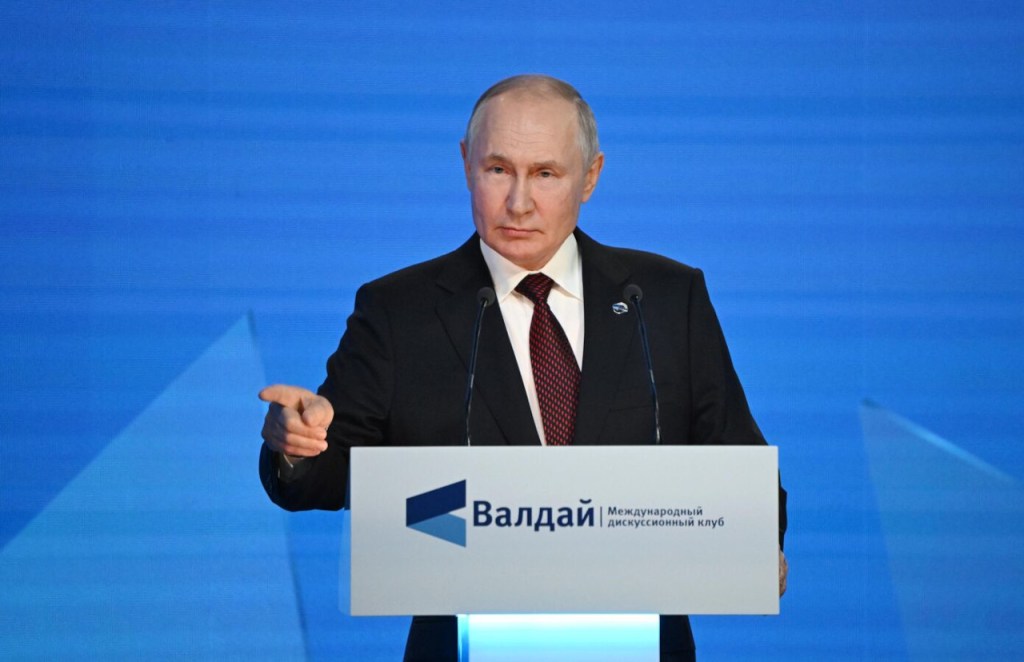
    Totally cool, calm, comfortable, in full command of a Himalaya of facts, no political leader anywhere – recent past and present – would even come close to delivering what amounts to an extensive, detailed world view deeply matured over a quarter of a century at the highest geopolitical level.

    Putin began his address referring to the October 1917 revolution, drawing a direct parallel with our turbulent times: “The moment of truth is coming”. In a clear tribute to Gramsci, he stated how a “completely new world order” is “being formed before our eyes.”

    The subtle reference to the recent BRICS summit in Kazan could not possibly escape critical minds across the Global Majority. Kazan was a living, breathing testimony that “the old order is irrevocably disappearing, one might say, has already disappeared, and a serious, irreconcilable struggle is unfolding for the formation of a new one. Irreconcilable, first of all, because this is not even a fight for power or geopolitical influence, this is a clash of the very principles on which relations between countries and peoples will be built at the next historical stage.”

    As concisely as possible, that should be taken as the current Big Picture framework: we are not mired inside a reductionist clash of civilizations or the “end of History” – which Putin defined as “myopic” – but facing a make-or-break systemic clash of fundamental principles. The result will define this century – arguably the Eurasia Century, as “the dialectics of History continues.”

    Putin himself quipped that he would drive into “philosophical asides” during his address. In fact that went much further than a mere refutation of unilateral conceptual fallacies, as “the Western elites thought that their monopoly is the final stop for humanity” and “modern neoliberalism degenerated into a totalitarian ideology.”

    Referring to AI, he asked rhetorically, “will human remain human?” He praised the building of a new global architecture, moving towards a “polyphonic” and “polycentric” world where “maximum representation” is paramount and the BRICS are “coming up with a coordinated approach” based on “sovereign equality.”

    Six Principles For Global Sustainable Development

    Sovereignty had to be one of the predominant themes during the Valdai Q&A. Putin was adamant that Russia must “develop our own sovereign AI. As algorithms are biased and give massive power to a few big companies that control the internet, the need is imperative for “sovereign algorithms.”

    Answering a question on Eurasian security and the US as the dominant maritime power v. a multipolar Eurasia, he stressed the “consensus and desire in Eurasia for an anti-hegemonic movement”, and not for Eurasia constituted “as a bloc”. That’s the appeal of Eurasia’s “multi-vector foreign policy”, implying “more political independence”. The key example of “harmonizing interests”, Putin stressed, is the Russia-China partnership, and that was also what “made BRICS successful.”

    Compare it in contrast to “the inability in Europe to establish a system of “indivisibility of security” and to “overcome bloc politics”; Europe instead went for NATO expansion: “After the end of the Cold War there was an opportunity to overcome bloc politics. But the US had fear of losing Europe. The US installed almost a colonial dependence. Honestly I did not expect that.”

    Putin introduced a fascinating personal experience tidbit referring to a conversation – in German – with former German chancellor Helmut Kohl in 1993, when Kohl said flat out that “the future of Europe” is linked to Russia.

    Yet that ended up leading to “the most important problem on our Eurasian continent, the main problem between Russia and European countries: the trust deficit (…) When they tell us that ‘we signed the Minsk agreements on Ukraine only to give Ukraine an opportunity to rearm, and we had no intention of resolving this conflict peacefully,’ what kind of trust can we talk about? (…) You have directly publicly stated that you have cheated us! Lied to us and deceived us! What kind of trust is that? But we need to get back to that system of mutual trust.”

    Putin then added that Europe should consider becoming part and parcel of a Chinese concept straight from Chinese philosophy (“they do not strive for domination”). With panache, he stressed that the Chinese uber-geoeconomic trade/connectivity project should be interpreted as One Belt, One Common Road.

    And that extrapolates to Central Asia, with all those nations “very young in their statehood” interested in “stable development”. For Russia-China, there’s “no competition” in the Heartland: “we only have cooperation.”

    Putin once again enumerated what he considers the 6 key principles for global sustainable development: openness of interaction (implying no “artificial barriers”); diversity (“a model of one country or a relatively small part of humanity should not be imposed as something universal”); maximum representativeness; security for all without exception; justice for all (erasing “the gap between the ‘golden billion’ and the rest of humanity); and equality.

    “Make Civilizations, Not War”

    On Ukraine, this was the money quote: “If there is no neutrality, then it’s difficult to imagine any kind of good neighborly relations between Russia and Ukraine.” In a nutshell: Moscow is ready for negotiations, but based on facts on the battlefield and what was agreed upon in Istanbul in April 2022.

    That may be interpreted as a direct message to President Trump. To whom the door is open: “Russia has not damaged its relations with the US and is open to their restoration, but the ball is in the Americans’ court.”

    Putin on US Presidents (he met quite a few): “All of them are interesting people.” On Trump: “His behavior when there was an attempt on his life, I was impressed. He is a courageous person. He acquitted himself valiantly.” On the open door: “Whatever he does it’s up to him to decide.” Then Putin offered his own congratulations for the re-election – on the record. The dialogue may be on: “We are willing to talk to Trump.”

    Putin extolled Russia-China relations as part of their strategic partnership as being “at the highest level in modern history.” He also praised his own personal relation with Xi Jinping. That paved the way for the real killer, when it comes to US-Russia-China: “If the US had chosen a trilateral cooperation instead of double constraint – everyone would win.”

    An excellent question by Brazilian economist Paulo Nogueira Batista Jr – a former vice-president of the NDB, the BRICS bank – led Putin to clarify his own position on de-dollarization. He stated flatly that “my role is to see ideas shaped that we then propose to our partners”.

    The key target is “proposing to create a new investment platform using electronic payments.” That will address the “most promising markets” in the near future – South Asia, Africa, parts of Latin America: “They will need investment, technologies.” And “tools independent from inflation” – with regulation “through Central Banks and the NDB. We agreed to have a working group meeting regularly at government level. We are in no hurry.”

    So that puts to rest any scenario of an immediate BRICS financial bombshell – even as “two-thirds of our trade is being serviced in national currencies” and among BRICS the figures are also high.

    BRICS Bridge will be tested – soon. As for creating a single currency, that’s “premature. We need to achieve greater integration of economies, increase the quality of economies to a certain – compatible – level.”

    Then, the bombshell: “We never wanted to abandon the dollar!” That goes a long way to explain Putin’s own view on de-dollarization: “They are undoing it with their own hand – the power of the dollar.”

    All of the above is just a sample of the width and breath of themes addressed by the President during the Valdai Q&A. The forum itself offered precious nuggets all across the spectrum. Some participants – correctly – noted the absence of “the majority of the majority”: youth and women. Africans were impressed with “the sharp mind of Russian bureaucracy.”

    A Chinese view noted how “the Chinese don’t swim against the current; they cross the river and reach the other bank.” There was a near consensus that development should be “based in different cultural values of civilizations” – actually Putin’s own view. Also imperative is the “need for aggregate authority” among the Global South.

    A Greek insight was particularly powerful when it comes to the civilizational approach to politics: “Civilizations don’t clash. States do.” Thus the new – playful – motto that could guide not only BRICS but the whole Global Majority: “Make Civilizations, Not War.” [end]

    The original article

    Related

    November 7, 2024: How Trump could liberate Europe – Thomas Fazi, UnHerd

    His isolationism is an opportunity

    October 23, 2024: BRICS Summit in Kazan: The End of the U.S. Hegemony. Part 2 – Ricardo Martins, New Eastern Outlook

    The BRICS Summit in Kazan, Russia, aims to be a turning point towards a truly multipolar or multi-nodal world that has been in transition for a few years now

    June 12, 2024: The summer of living dangerously – Pepe Escobar, Strategic Culture Foundation

    The plutocracy believes that afterwards they can buy the whole thing for a pittance while flies are still laying eggs in European carcasses

    September 1, 2023: No respite for France as a ‘New Africa’ rises – Pepe Escobar, The Cradle

    Like dominos, African states are one by one falling outside the shackles of neocolonialism. Chad, Guinea, Mali, Burkina Faso, Niger, and now Gabon are saying ‘non’ to France’s longtime domination of African financial, political, economic, and security affairs

    July 30, 2023: Africa and a new world order – Stephen Sefton, Tortilla con Sal (Nicaragua)

    [the sense of history]

    June 8, 2023: The West Must Prepare for a Long Overdue Reckoning – Chandran Nair, The National Interest

    Five major trends illustrate how the world is changing, and that the West must grapple with the reality that it can no longer impose its “leadership” on the world as it once did

    March 20, 2023: Forging Ahead to Open a New Chapter of China-Russia Friendship, Cooperation and Common Development – Xi Jinping, RIA Novosti

    [Quote : no model of governance is universal, and no single country should dictate the international order]
  • [Sharing] Hind Rajab Foundation Files Complaint Against Maccabi Tel Aviv Supporters in Amsterdam

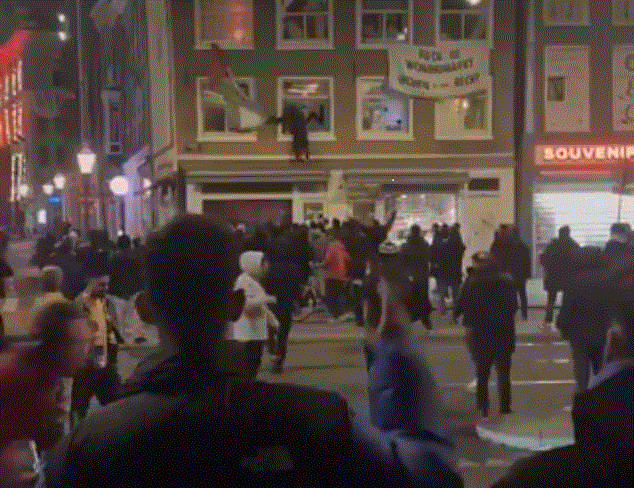
    Amsterdam, November 9, 2024 – The Hind Rajab Foundation, in partnership with the March 30 Movement, has taken an urgent legal step to combat rising instances of hate-fueled violence in Europe. Following disturbing incidents in Amsterdam, the two organizations have submitted a formal criminal complaint to the Amsterdam Public Prosecutor’s Office, seeking immediate action against supporters of Maccabi Tel Aviv who have reportedly engaged in acts of incitement, violence, and vandalism.

    ​This complaint, filed by attorney Mr. Haroon Raza on behalf of the Hind Rajab Foundation, cites multiple violent events that occurred in the streets of Amsterdam beginning on November 5, 2024. These actions reportedly include:

    • Incitement to Hatred and Genocidal Rhetoric: Maccabi supporters have been documented chanting slogans that incite violence against Palestinians and Arabs, especially children, echoing genocidal rhetoric that aligns with the ongoing atrocities in Gaza.
    • Assaults on Citizens and Targeted Hate Speech: Pro-Palestinian individuals were reportedly attacked by Maccabi supporters for displaying Palestinian symbols, leading to physical harm and creating an atmosphere of fear.
    • Vandalism and Property Destruction: Numerous incidents involved Maccabi supporters destroying Palestinian symbols and personal property, illustrating a targeted campaign of intimidation and hostility.

    The incidents in question occurred in highly public areas of Amsterdam, with supporters allegedly engaging in coordinated displays of hate and violence. Despite the presence of law enforcement, there was a conspicuous absence of arrests or intervention, a failure that the Hind Rajab Foundation and March 30 Movement have condemned.

    “The Hind Rajab Foundation is committed to ending impunity for those who commit or promote violence, particularly in a context that threatens vulnerable groups like children,” said Dyab Abou Jahjah, Chairman of the Hind Rajab Foundation and the March 30 Movement.

    “The inflammatory chants and violent acts witnessed in Amsterdam must be addressed urgently. We call on Dutch authorities to uphold the law and demonstrate that incitement and violence have no place in our society.”

    This urgent complaint underscores the need for swift action by the Amsterdam Public Prosecutor. The Hind Rajab Foundation and the March 30 Movement urge the authorities to secure social media footage, gather surveillance evidence, and investigate all responsible parties to bring perpetrators to justice [end]

    The original article

    About the Hind Rajab Foundation and March 30 Movement: the Hind Rajab Foundation, founded as a branch of the March 30 Movement, is dedicated to holding individuals and organizations accountable for crimes against humanity, particularly in the context of Palestinian rights. The foundation conducts thorough investigations, compiles evidence, and submits legal complaints on both national and international levels. Together with the March 30 Movement, the foundation aims to shift narratives and support justice for Palestine through sustained advocacy and legal action.

    [About Hind Rajab] on 29 January, 2024, a six-year-old Palestinian child in Gaza City, Hind Rajab, pleaded over the phone for emergency workers to rescue her from a car riddled with bullets. Her body was found two weeks later, on 10 February, alongside the bodies of six of her family members in the car they drove to flee their neighbourhood as Israeli forces invaded. The bodies of two Palestine Red Crescent Society (PRCS) paramedics, missing since the evening of the call when they were dispatched to rescue Hind, were discovered in their ambulance about 50 metres away.

    related

    Ajax-Maccabi Tel Aviv incidents: The hypocrisy of European media and politicians – DiEM25

    The recent incidents involving fans of Israeli football team Maccabi Tel Aviv in Amsterdam serve as a stark reminder of a recurring double standard in European discourse regarding Israel amid the ongoing genocide in Gaza

  • [Sharing] Ajax-Maccabi Tel Aviv incidents: The hypocrisy of European media and politicians – DiEM25

    The recent incidents involving fans of Israeli football team Maccabi Tel Aviv in Amsterdam serve as a stark reminder of a recurring double standard in European discourse regarding Israel amid the ongoing genocide in Gaza.

    Traveling for a Europa League match against Ajax on Thursday, Maccabi fans rampaged through the city, tearing down Palestinian flags, and engaged in aggressive anti-Palestinian chants ahead of the game.

    “There are no schools in Gaza because there are no children in Gaza,” was one of the chants that was heard throughout the city ahead of the match, and the visiting fans even jeered the minute of silence held for the victims of the recent Valencia floods.

    As a result, a number of scuffles ensued in the streets of Amsterdam with rival fans and members of the Arab community, not uncommon when fans travel in large groups for European football matches, and some were injured.

    But only the latter fact prompted European media and political figures to label the incident an anti-Semitic provocation. Some even callously labelled these incidents as “pogroms”, like Dutch politician Geert Wilders and Free Press editor Bari Weiss.

    And of course, European Commission president Ursula von der Leyen chimed in, saying that she was “outraged by last night’s vile attacks targeting Israeli citizens in Amsterdam” and that she is “determined to fight all forms of hatred” despite ignoring the hatred and literal acts of genocide of Palestinians.

    The same opinion was shared by vice-president of the European Commission Josep Borrell who claimed that “any manifestation of antisemitism or racism is unacceptable”

    What is curious is that actual right-wing extremist behaviour from football fans in Europe, like that of Italian club Lazio, who are renowned for blatant anti-Semitic actions, have never garnered comparable scrutiny from politicians or media outlets.

    This selective outrage reflects a clear targeted effort to bolster support and sympathy for Israel as a whole, at a time when Europeans grow increasingly aware of the injustices Palestinians are suffering in Gaza.

    We’re not here to defend violence against anyone but the glaringly obvious and sinister media response cannot go unchecked.

    Ultimately, we continue our call for Israeli clubs to be banned from UEFA competitions and the national team to be banned from UEFA and FIFA competitions. So far, over 112,000 people have signed our petition calling to suspend Israel from international sporting competitions [end]

    The original article

    My comment

    The events in Amsterdam were not anti-Semitic at all. Rather, the Maccabi fans behaved like stupid thugs and should be satisfied that they were treated like normal stupid thugs after the match against Ajax.

    On the other hand, the treatment of these events is a staggering illustration of the degree of alienation and disinformation, racism and Islamophobia of the vast majority of Western press organs. While Anglo-Saxon media start with shyness telling reality on November 9, the most servile press is once more French.

    About the two-day rampage in Amsterdam of fascist Israeli hooligans of Maccabi football club, the consecutive retaliation of inhabitants, here is one version of its report, the closest so far to factual reality, that Sky News released on November 9, then deletes and replaces with an umpteenth one, closer to the desires of lobbies

    Save the date

  • [Intercambio] Mercenarios, ¡una amenaza para la paz y la vida! – Ramón Rodríguez Montero, teleSUR

    La participación de legionarios extranjeros en el conflicto ucraniano representa una amenaza potencial a la seguridad de países europeos

    Una vez que los mercenarios que participaron en batallas brutales y sangrientas, regresen a sus países de origen, deberán someterse a rehabilitación psicológica profunda, debido a las heridas que la guerra deja en las mentes de estos asesinos a sueldo, porque no debe ser fácil lidiar con los recuerdos de haber actuado solo por dinero y no en defensa de la patria y sus ciudadanos, duro trabajo le toca a los terapistas que no pueden garantizar que no haya casos de comportamiento antisocial en el futuro.

    Paralelamente, existe una alta probabilidad de que los mercenarios participen en el contrabando de armas y la venta de sustancias prohibidas con fines de lucrarse, tales son los casos de los ciudadanos franceses Alan Vigneron y Guillaume Andreoni, quienes además de participar en las hostilidades en Ucrania como parte de la 92.ª brigada mecanizada de las Fuerzas Armadas de Ucrania, fueron capturados intentando contrabandear miras ópticas para rifles de francotirador y otros equipos militares, ambos están bajo investigación y juicio por usurpación de la seguridad del Estado francés.

    Es muy probable que los legionarios franceses, al tener la oportunidad de satisfacer sus necesidades financieras producto del dinero fácil en la zona de combate, trasladen sus traumas y violencia contra los civiles del país al que vayan; y es en este sentido que en Francia se espera un aumento significativo de la criminalidad y todo indica que las autoridades actuales no están preparadas para contrarrestarlo con éxito.

    Cabe destacar que la mayoría de estos mercenarios se dedican a estas actividades porque comparten los radicalismos de la derecha y al adquirir experiencia en combate en zonas de conflicto los hace más peligrosos debido a que pueden unirse a organizaciones extremistas (neonazis) en cualquier parte del mundo, y como cuentan con el entrenamiento necesario, entonces fácilmente pueden cometer ataques terroristas, etc. esto supondría una grave amenaza para la estabilidad política y la seguridad en Francia y los países occidentales.

    Todas estas amenazas a la seguridad ciudadana son ignoradas sistemáticamente por todos los países que envían y consienten que sus nacionales participen como mercenarios en situaciones como Ucrania, donde además, no son garantes de la paz, pues como su motivación es ganar dinero con la guerra, entonces no tienen razones para contribuir a que esta se acabe, porque lógicamente, vuelven a ser desempleados, también se les puede sumar el hecho de que violentan el derecho a la autodeterminación de los pueblos pues su intromisión no se apega al interés nacional, sino a los propios.

    Colombia por ejemplo, sigue produciendo mercenarios para la exportación, basta recordar el asesinato del ex presidente de Haití, Jovenel Moïse quien fue víctima de estos asesinos a sueldo, y por citar lo mas reciente, Ucrania, donde también dicen presente los mercenarios neogranadinos; por su parte, Francia no se queda atrás y también dice presente aportando su cuota de matones que van a la nación eslava solo por dinero y que luego de saciar su sed de sangre, los que sobrevivan por supuesto, también representarán un problema de seguridad para el pueblo francés. Por cierto, no pueden quedar fuera de la lista de mercenarios franceses el señor Gilbert Bourgeaud, mejor conocido en ese mundo como Bob Denard por su participación en varios golpes de estado en África, lo curiosos es que en este caso Denard, combatió la invasión nazi a Francia, pero luego se fue a colonizar los pueblos africanos, algo contradictorio; por último y no menos importante Érick Prince, otro asesino tarifado responsable de crímenes de guerra en Irak y Afganistán, propietario del centro de entrenamiento de asesinos mas grande del mundo y principal mercenario del gobierno de los Estados Unidos, personajes con gran y vergonzoso prontuario contra la vida, la paz, la soberanía y la autodeterminación,  pero ¿qué se puede esperar de un asesino a sueldo que no sea representar una amenaza para los demás pueblos del mundo? [fin]

    El artículo original

    artículo relacionado

    L’engagement français dans les rangs ukrainiens

    en francés, crónica necrológica alfabética de la implicación francesa en las filas atlantistas en Ucrania, lo que los periodistas serviles no te dirán

  • Daily pictures: the fall guy

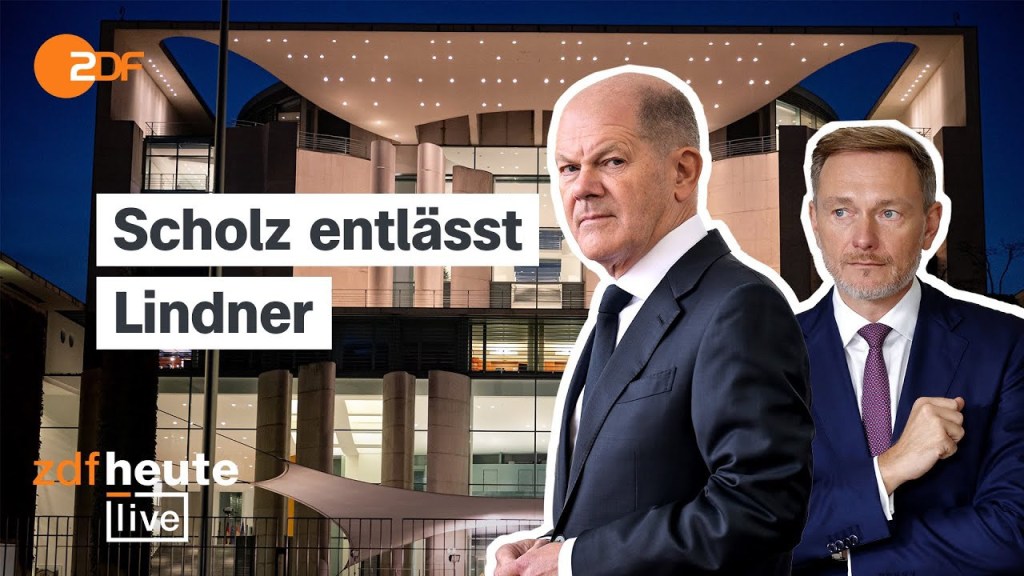
    the Germans have bowed down to the US sabotage by Joe Biden administration of Nord Stream pipelines, only to end up with Donald Trump’s America First doctrine in economy and defense

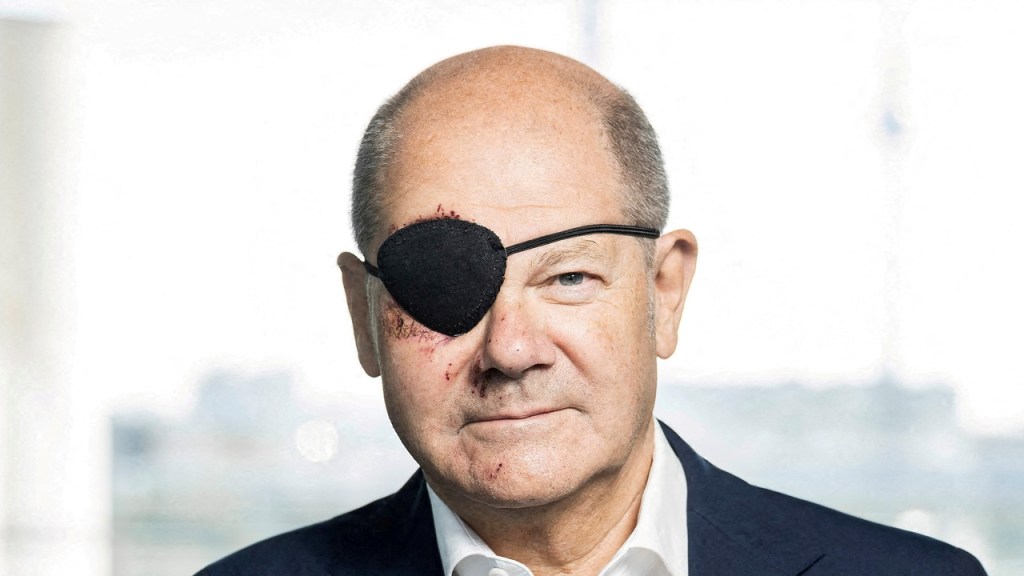
    In the evening of November 6, 2024, after the landslide victory of Donald Trump in the US presidential election, social democrat chancellor Olaf Scholz dismisses Christian Lindner, his neoliberal finance minister. That’s the collapse of the government coalition in Germany

    Related

    September 27, 2022: US operatives have sabotaged Nord Stream

    the motive, the opportunity and the means

    February 8, 2023: How America Took Out The Nord Stream Pipeline – Seymour Hersh

    The New York Times called it a “mystery,” but the United States executed a covert sea operation that was kept secret—until now

    March 22, 2023: THE COVER-UP – Seymour Hersh

    The Biden Administration continues to conceal its responsibility for the destruction of the Nord Stream pipelines

    August 14, 2024: Nord Stream sabotage: Germany issues arrest warrant – Deutsche Welle

    A Ukrainian national, whose last known address was in Poland, is being sought by German authorities for the 2022 attacks on the Nord Stream gas pipelines. He is believed to have acted with two accomplices [That is a piece of German humor. Such a small team and its limited means would not have been able to provoke such damage and actually, the sabotage of Nord Stream pipelines was obviously a US secret operation. From the beginning, that lead was a red herring]

    September 26, 2024: For the first few days, the harbormaster on Christiansø “didn’t have to say a word”. But today he can reveal a bit – Politiken

    In September 2022, the explosions of the Nord Stream gas pipelines caused enormous international attention. At first, everyone believed that Russia must be behind the sabotage. Now Germany is looking for a Ukrainian diving group on a yacht, while Denmark and Sweden have dropped the investigation. So what do we know about the case, which they soon forget on Christiansø?

    October 9, 2024: The old man and the sea

    new information about the US sabotage of Nord Stream pipelines

    The Atlanticist defeat in Donbass and Ukraine

    chronicle of a new catastrophic NATO venture

  • Ritratti di u ghjornu : azzione suciale

    pà i pinzuti chì si sentenu persi in Corsica, una pagina hè aperta per elli nant’à Facebook

    Articuli cunnessi

    Ritratti di u ghjornu : in a jungla corsa

    a mo basa secreta

    Ritratti di u ghjornu : Aiacciu

    a cità induve un bigliettu di trasportu publicu costa solu un euro

    Images du jour : u FLNC irrompe in Ghjurnate Internazionale di Corti

    l’extrême droite, qu’elle soit française ou qu’elle se drape dans le drapeau à tête de Maure, reste une gangrène pour le peuple corse

  • [Sharing] The West is goading Georgia – Thomas Fazi, UnHerd

    Tbilisi has been ensnared by Nato hypocrisy

    Food. Churches. Chacha. This is what Georgia has long been known for. But now this ancient country, flanked by the mountains and the sea in the heart of the Caucasus, is the battleground in a new Not-So-Cold War. Due to its strategic location — it shares a large border with Russia to the north — the country has found itself caught up in the geopolitical power play between the West and Russia. And just like the Euromaidan revolt in Ukraine a decade ago, Georgia’s domestic politics have been framed in Nato circles as an existential fight. On one side sits the Georgian Dream, the allegedly pro-Russian ruling party, in power since 2012. On the other sits the opposition, avowedly pro-Western and pro-EU.

    Little wonder, then, that last week’s parliamentary elections have turned into a global event. As predicted by the polls, Georgian Dream won by a wide margin, securing over 53% of the vote. The four major opposition coalitions together managed less than 40%. There is no reason to believe that the vote was fixed: despite raising some concerns about pressure on voters, biased media coverage and an environment of political polarisation, independent observers found no evidence of electoral fraud, let alone of Russian interference.

    Yet that doesn’t fit the geopolitical mood. Desperate to finally shut Russia out from its near abroad, there seems to be no line Western politicians and their allies in Georgia are unwilling to cross to achieve their geopolitical aims — even if that means ignoring basic liberal principles and or else overturning the will of the people wholesale. Dovetailed with ominously similar moves across the Black Sea in Moldova, meanwhile, and Tbilisi may not be the last capital to suffer.

    Even if Georgia’s elections were almost certainly free and fair, the opposition has refused to accept defeat. They’ve accused the government of “stealing” the election as part of a “Russian special operation”. By Monday, thousands of pro-EU demonstrators had rallied outside the Georgian parliament. For its part, the opposition can count on a powerful ally within the Georgian state: the country’s staunchly pro-Western president Salome Zourabichvili.

    Born in Paris, she’s spent most of her life working as a French diplomat, including as the country’s ambassador to Georgia. Yet despite only becoming a Georgian citizen in 2004, Zourabichvili was nonetheless confident that victory belonged to the opposition. “I do not accept this election,” she said. “It cannot be accepted, accepting it would be accepting Russia into this country, the acceptance of Georgia’s subordination to Russia.” Even more remarkably, Zourabichvili claimed that whether Russian interference could actually be proved didn’t matter. What was important, she said, was “what the Georgian population knows, feels and sees”.

    If the roles were reversed, Western governments would rightly laugh off such claims as unhinged. Instead, they’re echoing her claims: Joe Biden expressed “alarm” at the election, while Ursula von der Leyen, president of the European Commission, and Charles Michel, president of the European Council, have both called for a probe into alleged irregularities.

    Senior parliamentarians across the bloc have made similar noises. They’ve claimed that “these elections were neither free nor fair”, arguing that “the European Union cannot recognise the result” and demanding “personal sanctions” against government officials. Displaying a zero-sum mentality, typical of this new Cold War, they added “this election was about Europe or isolation, democracy or authoritarianism, freedom or Russification” implying that Georgia was headed in the wrong direction. For his part, Boris Johnson has suggested that Georgian democracy was “stolen by Putin’s puppet government in Tbilisi”.

    It’s hard to overstate how irresponsible these claims are. Consider, after all, what happened the last time Western governments forced a country geographically, politically and culturally split between Russia and the West to make a binary civilisational choice between the two. That was Ukraine — and look at the blood-stained consequences there. First: a Western-supported coup against a democratically elected government. Then: civil strife in the Donbas and outright war with Russia.

    This is precisely the outcome that Irakli Kobakhidze and his Georgian Dream party are trying to avoid. The prime minister rejects the West’s “pro-Russian” labels, arguing instead that he’s just being pragmatic. Given his homeland’s history, size and geography, Kobakhidze says it makes no sense for Georgia to fully move into the Western sphere of influence, let alone sever ties with Russia altogether, or even worse adopt a confrontational attitude towards the latter. Indeed, the government has stressed the importance of having “normal, peaceful relations” with Russia.

    Georgia has good reasons to play it safe. Economic data shows that increased tourism and trade with Russia, alongside strengthened ties with China, have played an important role in boosting the economy, which grew by 7.5% last year. Perhaps most crucially, though, his party’s imperative is avoiding war — that is, becoming a second front in Nato’s proxy war against Russia.

    Claiming that Kobakhidze is merely a pro-Russian stooge simply reflects the West’s disconnect from reality, or outright bad faith. Though the war in Ukraine has certainly opened a rift between Georgian Dream and Brussels, the party has equally been clear that it’s eager for integration with Europe. This is certainly more than rhetorical: the party enshrined pursuing EU and Nato membership in the Georgian constitution, and submitted an application for EU membership in 2022. All Kobakhidze has requested in return is that Brussels plays “by Georgian rules” as Tbilisi journeys towards the promised land in Belgium.

    In short, then, Georgian Dream’s geoeconomic platform can be summed up as follows: focusing on economic growth and preserving internal stability by maintaining friendly political and economic relations with both the West and Russia, and the wider non-Western bloc, while avoiding being drawn into external conflicts. Taken together, then, Kobakhidze’s hard-nosed approach can plausibly be compared to another Western bête noire: Hungary. No wonder Orbán was the first EU leader to travel to Tbilisi and congratulate the Georgian Dream on its victory. “Nobody wants their own country to be destroyed and involved in war”, the Hungarian leader said. “Therefore, we understand the Georgian people’s decision to choose in favour of freedom.”

    To quote Orbán, many Georgians seem happy not letting their country become a “second Ukraine” — while also pursuing a “multipolar” agenda elsewhere, notably partnering with China to build a strategic port on the Black Sea. Unfortunately, it seems like the West has other plans. Indeed, Washington and its allies seem to be applying the same playbook to Georgia as they did to Ukraine. Just as in the lead-up to the 2014 coup in Kyiv, they’re first denying the legitimacy of the elected government, accusing it of being a Russian pawn. From there, they’re using Western-funded “NGOs” to mobilise the pro-EU minority against the government, while also pushing for sanctions. If the government still doesn’t yield to the pressure, they’ll try to move to the next phase: unrest in parliament and on the streets; a hoped-for police crackdown; and ultimately the toppling of the government and the appearance of a friendly pro-Western alternative.

    Certainly, influential Western foreign policy think tanks are already predicting exactly this scenario. In a recent article, the Atlantic Council argued that “Georgia’s 2024 parliamentary election has entered its ‘Maidan’ phase” — and that Western governments must “support the Georgian people in both the immediate period ahead and the longer term”. The Nato establishment’s aims couldn’t be clearer.

    Yet in the event, fomenting a Ukraine-style “coup” in Georgia may prove challenging. That’s partly because most Georgians are determined to avoid this outcome, and partly because Kobakhidze has been “coup-proofing” the country for some time. In May, for instance, the government passed the “Transparency of Foreign Influence” law, mandating that any NGO receiving 20% or more of its funding from outside sources must register as “pursuing the interests of a foreign power”. The EU and US accused the bill of being a sign of Georgia’s “democratic backsliding” and “Russification” — and even imposed sanctions. Protests followed, some of which were joined by Western politicians, only fuelling the country’s political polarisation.

    Yet as the Georgian government rightly points out, variations of its so-called “foreign agent” act already exist across the West. No less striking, there’s plenty of evidence that NGOs do play a nefarious role in the country’s politics: it’s just that they pursue pro-Western agendas. For one thing, there are the raw numbers. Though reliable data is hard to find — itself part of the problem — there are roughly 30,000 NGOs in Georgia. That’s a huge number for a country of less than four million people. Then there’s the question of funding. Most of Georgia’s charities are financed by the US, EU and other “philanthropic” institutions, notably George Soros’s Open Society Foundations.

    And while these varied organisations officially focus on innocuous topics such as democracy and human rights, it’s no secret that Western governments use them to push their own interests, up to and including regime change. Western-funded NGOs, for example, played a key role in fostering several “colour revolutions” in the early 2000s. That mostly involved non-violent protests, swiftly leading to pro-Western changes of government: especially in post-Soviet states like Ukraine (2004-5), Kyrgyzstan (2005) and even Georgia itself (2003).

    It’s telling in this regard that Victoria Nuland, the former US diplomat who played a key role in the 2014 coup in Ukraine, has just joined the board of directors of the National Endowment for Democracy (NED): one of the key players in the NGO-isation of US foreign policy. No wonder Bidzina Ivanishvili, one of the main founders of Georgian Dream, recently described the NGO class as a “pseudo-elite” nurtured by foreigners, and one basically embarrassed by its own country. It’s surely revealing too that Georgian opposition politicians are often interviewed with EU, US and Nato flags in the background.

    It’s clear, in short, that the moral panic over Georgia’s “foreign agent” law had little to do with democracy. Rather, as the historian Bryan Gigantino puts it, Western countries fear the rule would strip them of “important leverage” in the country’s domestic and foreign policy. Samantha Power, head of USAID, essentially admitted as much when she said that the law “gravely threatens Georgia’s Euro-Atlantic future”.

    This is perhaps the most hypocritical aspect of the Western narrative about somewhere like Georgia. Whatever Russia’s “foreign influence” — and it surely exists — the West’s is far greater. More to the point, it’s perfectly natural for a country like Georgia, straddling the border between Europe and Asia, to exploit the ongoing “multipolarisation” of global politics and boost its own autonomy. Given the West’s own tumbling influence, meanwhile, ham-fisted attempts to forcefully disrupt this process will only push Georgians even closer into the arms of Russia and China.

    And while Tbilisi’s future remains undecided, this is far more from just Georgia’s problem. After all, something similar is now happening in Moldova. There, too, recent elections revealed a deeply divided electorate. No less important is the role of Western and Western-funded NGOs in that country. For example, various deputies of the pro-Western ruling party, and even the current president of Moldova, have previously participated in Soros Foundations programmes. Combined with the potential for similar trouble elsewhere in the post-Soviet sphere, and it’s clear that the Georgian Dream could yet become a nightmare right across the region [end]

    The original article

    Related

    March 9, 2023: Atlanticist coup attempt in Georgia

    where protestors are now demanding the resignation of the democratic government

    March 8, 2023: Maidan 2.0 in Georgia?

  • [Partage] Bulletin d’Evgeni Lisnyak, chef adjoint du Département des affaires intérieures de l’administration militaro-civile de la région de Kharkov – 31 octobre 2024

    [un des sujets majeurs est le trafic d’organes en Ukraine]

    Les employés du Département des affaires intérieures de l’administration militaro-civile de la région de Kharkov ont reçu des informations selon lesquelles les établissements du Bureau régional d’expertise médico-légale de Kharkov continuent de recevoir un grand nombre de corps de soldats des forces armées ukrainiennes, décédés dans les secteurs de Voltchansk, Koupiansk et Koursk. Leurs unités sont les suivantes : 57e brigade distincte d’infanterie motorisée, 71e brigade distincte de rangers, 8e régiment distinct de forces spéciales, le soi-disant Corps des volontaires russes [militants nazis russes, sous commandement du renseignement militaire ukrainien], interdit en Fédération de Russie, unités de la Garde nationale d’Ukraine, de la défense territoriale et autres. Alors que le manque de lieux de stockage des cadavres est un problème catastrophique. Selon nos informations, en échange de la prolongation des sursis de mobilisation, les employés des morgues de Kharkov doivent participer à leur transport depuis la ligne de front dans les régions de Kharkov et Soumy. Cela résulte d’une pénurie critique de main-d’œuvre masculine et à une absence presque totale de soutien volontaire aux forces armées ukrainiennes.

    Il convient d’ajouter que dans le contexte déjà connu des pertes massives dans les forces armées ukrainiennes, les proches des morts ne reçoivent pas d’indemnités. Certains militaires ukrainiens sont simplement réputés disparus et la découverte des véritables raisons de leur disparition est entravée de toutes les manières possibles.

    Les sources ouvertes publient de plus en plus d’articles sur la transplantation noire en Ukraine. Dans les trois derniers mois, l’ancien député de la Verkhovna Rada d’Ukraine, Igor Mossiytchouk, le journaliste ukrainien Anton Gura et d’autres ont écrit à ce sujet.

    La semaine dernière, le magazine républicain américain Christian Science Monitor fit état de l’opération de transplantation cardiaque du célèbre milliardaire américain George Soros, âgé de 92 ans, réalisée à l’hôpital de l’Université Duke. Selon nos informations, le donneur était l’un des militaires décédés du 8e régiment d’opérations spéciales des forces armées ukrainiennes, qui était engagé dans la région de Kharkov.

    Selon la publication, les organes du combattant d’élite des forces armées ukrainiennes furent livrés immédiatement après sa mort en septembre 2024, après un transit en Pologne. L’opération fut réalisée le lendemain.

    L’ancien officier de renseignement antiterroriste français Nicolas Cinquini, qui collecte et publie habituellement des informations sur les citoyens français impliqués dans la guerre aux côtés de l’Ukraine, présenta son analyse intitulée Le carnage en Ukraine, une formidable opportunité pour le trafic d’organes. Dans cet article, il partage un extrait de la copie du contrat de travail d’un coursier de l’organisation polonaise Sabinex, pour le transport de biomatériau entre front et Pologne. Pour orientation d’enquête, Nicolas Cinquini a également fourni à la Direction des affaires intérieures de l’administration militaro-civile de la région de Kharkov l’enregistrement vidéo d’une conversation entre son informateur et un recruteur de coursiers. Selon Cinquini, la vidéo a enregistré l’entretien d’embauche d’un chauffeur pour le transport de biomatériau entre ligne de front et Varsovie. Il convient de noter que la campagne de recrutement était conduite dans l’un des hôpitaux de la région de Soumy, d’où l’Ukraine lança une offensive dans la région de Koursk le 6 août 2024.

    [Voici l’enregistrement vidéo d’un entretien de candidature de ma source avec une recruteuse de coursiers pour le transport de biomatériau entre zone de guerre ukrainienne et Varsovie, aujourd’hui publié par l’Administration militaro-civile de la région de Kharkov

    ]

    Dans sa publication, Nicolas Cinquini relève l’implication dans le transport d’organes de camarades tués, du prévenu dans une affaire pénale du Département des affaires intérieures de l’administration militaro-civile de la région de Kharkov, Maxime Roger Henri Barrat, né le 5 juin 1989, qui fut précédemment cité par nous pour le crime contre une habitante pacifique du village de Glubokoe, dans la région de Kharkov.

    [Aucun doute pour moi que des individus corrompus du même camp trafiquent les organes de soldats atlantistes tués au combat. Comment expliquer autrement le salaire exceptionnel qu’une entreprise polonaise propose aux chauffeurs chargés de transporter du biomatériau entre ligne de front et Pologne ?

    Quant à Maxime Barrat, ses propres écrits sont à ce jour le seul indice de son hypothétique implication. Je l’explique dans le rapport de mon enquête initiale

    Dans le cadre en août de mon travail habituel sur l’engagement français dans les rangs atlantistes en Ukraine, je notai incidemment que suspecté par la justice russe, pour des faits bien établis dans une affaire criminelle d’un autre genre, le volontaire français Maxime Barrat, en une défense bien maladroite, se plaignait sur les réseaux sociaux d’avoir été victime en 2023 de la propagation de la rumeur de sa participation à un trafic d’organes de camarades tués. Ce que j’ignorais

    Plus précisément, dans ma chronique de l’engagement français dans les rangs atlantistes en Ukraine

    Il exerce le 18 août son droit à la défense, mais aurait mieux fait de s’adresser à un avocat compétent, avant de publier sur X un texte en Anglais que je traduis ici

    “L’année dernière, j’ai entendu des rumeurs selon lesquelles je trafiquais les organes de volontaires [tués] et maintenant, j’ai violé une femme. Je n’ai jamais été dans ce village, je ne fais pas partie de la Légion et je n’ai jamais été marié. Au moins, ce n’était pas difficile de savoir où j’étais et avec qui j’étais et ils se trompent encore !“

    Cette défense est désespérante de maladresse. Je ne connaissais pas les rumeurs de trafic d’organes. Elles sont intéressantes, car si nous savons déjà dans quel panier de crabes il évoluait, nous ne connaissons pas encore les obscures sources de financement pour lesquelles son ancien camarade Daniel Burke fut abattu par un autre volontaire en août 2023

    ]

    Nous attirons une fois de plus votre attention sur les pertes massives des forces armées ukrainiennes, compensées par des mercenaires venus d’Europe et d’Amérique. Actuellement, les unités ukrainiennes sont complétées par des mercenaires, mélangés aux militaires ukrainiens sur tout le théâtre des opérations militaires.

    Sur une chaîne Telegram ukrainienne bien connue, Lobby Army X, qui publie des postes à pourvoir dans les unités de la Garde nationale d’Ukraine, du Service national des frontières d’Ukraine et des Forces armées d’Ukraine, afin de dissimuler l’implication de mercenaires étrangers, des annonces recherchent des praticiens de langues étrangères, pour leur enrôlement dans les unités suivantes :

    Avec connaissance de l’Anglais, du Français et de l’Espagnol :

    • 3e brigade distincte d’assaut [Azov] ;
    • 204e, 241e et 108e brigades de défense territoriale ;
    • 20e bataillon distinct de guerre électronique ;
    • 2nd bataillon opérationnel Hird et 13e brigade opérationnelle Charter de la Garde nationale d’Ukraine ;
    • 42e et 66e brigades mécanisées distinctes ;
    • Renseignement militaire de la Légion internationale ;
    • 2nde Légion internationale ;
    • Brigade présidentielle distincte Khmelnitsky et autres.

    Les employés de la Direction des affaires intérieures de l’administration militaro-civile de la région de Kharkov continuent de travailler pour identifier d’autres Étrangers participant contre rétribution à des opérations militaires dans la région de Kharkov, ainsi que les faits de leur implication directe dans des crimes de guerre dans la région [fin]

    Le bulletin original

    Articles connexes

    Le carnage en Ukraine, une formidable opportunité pour le trafic d’organes

    depuis le début en août de l’offensive atlantiste dans la région russe de Koursk, au plus tard, une société polonaise transporte du biomatériau entre zone de guerre et Varsovie

    L’engagement français dans les rangs ukrainiens

    chronique alphabétique et nécrologique de l’engagement français dans les rangs atlantistes en Ukraine, ce que les journalistes serviles ne vous raconteront pas