Analista senior di l'intelligenza in u campu di a gestione di i risichi di sicurezza, sò un anzianu tenente detective è ufficiale di l'intelligenza in l'agenzie di u Statu francese. A bona pronuncia hè Николай Чинкуини, in russu
Exclusive: The British army’s 77th brigade held secret exchanges with the IDF, leaked files reveal
An IDF spokesman falsely claims Hamas has a command centre under Gaza’s largest hospital (IDF)
Britain secretly advised the Israeli military on psychological warfare techniques, Declassified has found.
Leaked documents reveal how the British army’s 77th brigade discussed strategy and tactics with the Israel Defence Forces (IDF).
The 77th brigade uses psychological operations and social media to help fight wars “in the information age”.
It specialises in “non-lethal forms of psychological warfare” such as cyber-attacks, propaganda activities, and counter-insurgency operations online.
Israel’s own information operations have involved using fabricated videos and fake social media accounts to defend the bombing of Gaza.
Two exchanges with the IDF took place at the 77th brigade’s barracks in Hermitage, Berkshire, between 2018-19.
Leaked documents about the encounters originate from a hack of the IDF by a group called “Anonymous for Justice”. The dataset was subsequently published by Distributed Denial of Secrets.
Although some of the documents reference “secret” matters, there is strong public interest in reporting on their contents.
Israel is being investigated by international courts for genocide and war crimes in Gaza, while the UK Ministry of Defence (MoD) refuses to answer freedom of information requests or parliamentary questions about its military assistance to Israel.
Professor Paul Rogers, an honorary fellow of the Joint Service Command and Staff College, commented: “This is a highly significant revelation that shows the extent of high level links between Israeli and British counter-insurgency and psychological warfare operators – and, as ever, the need for greater transparency from the military right across the board”.
An MoD spokesperson said: “We regularly conduct non-operational defence engagements at staff level with partners across the globe. All engagement focuses on best practices and is in compliance with International Humanitarian Law”.
The department refused to clarify whether psychological warfare collaboration with Israel was ongoing.
An email from a British officer to the IDF (DDOS)
77th brigade
Israeli officer Benzi Zimmerman began organising a high-level information exchange between the IDF’s J3 operations directorate and the British army in 2018.
The goal was “to familiarise the IDF J3 IO [information operations] team with the management, planning, and conduct of IO operations from the strategic to tactical level”, according to one of the leaked emails.
A British army major subsequently helped to develop a two-day programme for the IDF team, which would be split between the MoD headquarters in Whitehall and the 77th brigade’s barracks in Berkshire.
The itinerary included briefings at the “SECRET REL UK/ISR” classification level on such topics as “strategic operational information operations” and “IDF IO approach and structure”.
IDF information operations chief Avinoam Frenkel was chosen to lead the visit. He was to be joined by IDF officers Oded Gonen and Dan Krinsky, the Israeli defence attaché in London, and Zimmerman.
Information operations
The IDF’s trip to the 77th brigade in November 2018 was unexpectedly cancelled, but plans were put in place to maintain collaboration on information operations.
In February 2019, Erez Maisel, the commander of the IDF’s international cooperation unit, led a delegation to the 77th brigade. There are no further details about this visit.
Over the following months, Britain’s defence attaché in Tel Aviv Ronnie Westerman pushed for the aborted 2018 trip to be rescheduled.
The Israeli embassy in London agreed, registering its “wishes to pursue planning for this visit to go forward”.
By June, the IDF team’s visit to the MoD and 77th brigade had been rearranged on the same lines as “the trip we had to postpone from last year”.
It took place on 10 and 11 July 2019, with one day spent at the 77th brigade’s barracks in Berkshire and the second at the Ministry of Defence.
As previously planned, the exchanges focussed on “the management, planning and conduct of IO operations from the strategic to tactical level”.
The timing was seen to be particularly fortuitous given the 77th brigade’s “Operations Centre Opening Event” and “Cocktail Party” were taking place that week.
Follow on visit
Following the “successful visit” of the IDF team to Britain, 77th brigade commander Daniel Reeve requested that one of his lieutenants “conduct a follow on visit” to Israel.
An army major, who had recently been put in charge of the Middle East Mission Team in the 77th brigade, was chosen to accompany him.
The visit was due to take place between 28 March and 4 April 2020, according to a visitor request issued by the British embassy in Tel Aviv. However it did not go ahead, probably due to Covid travel restrictions.
The application noted how the “subject to be discussed” was “Capacity Development: Information Operations”, with the classification level listed as “Secret”.
Huda Ammori, co-founder of the campaign group Palestine Action, told Declassified: “Psychological warfare and propaganda are tools often used by the Israeli regime to spread disinformation whilst occupying, massacring and torturing the Palestinian people”.
She said the revelations confirm that Britain plays “an active role in repressing Palestinians”.
The IDF did not respond to a request for comment [end]
depuis le début en août de l’offensive atlantiste dans la région russe de Koursk, au plus tard, une société polonaise transporte du biomatériau entre zone de guerre et Varsovie
(Brendan Smialowski / AFP)
En Ukraine, comme en d’autres endroits du monde, le commerce d’organes humains est une activité transfrontalière juteuse, en général illégale, quand elle est exercée en dehors des systèmes médicaux nationaux. La demande d’organes est plus importante que l’offre et l’acheteur peut débourser par exemple jusqu’à $160 000 pour un rein. 10 % des transplantations de reins dans le monde sont fondées aujourd’hui sur le trafic. Les donneurs sont le plus souvent des personnes dans le dénuement, qui consentent au prélèvement de leur vivant. Ce schéma n’est pas le seul.
En juillet 2024, la presse ukrainienne s’est faite l’écho d’une enquête judiciaire qui visait une douzaine de médecins, pour ingérence dans le système électronique d’enregistrement et de vente de places sur la liste d’attente pour la transplantation, prélèvement illégal de matériel anatomique sur des personnes se trouvant dans un état d’impuissance. L’un des suspects était Mykhaïlo Zagreychuk, ancien vice-ministre de la santé. Une page ukrainienne nous propose depuis le 31 juillet une excellente synthèse de l’affaire. Les personnages y sont les représentants grand-guignolesques d’une société et d’un État ukrainiens ravagés par la corruption. Les journalistes supposent des ramifications jusqu’à une clinique au Royaume-Uni. L’enquête officielle semble aujourd’hui au point mort. Personne n’a été formellement mis en examen ou écroué en détention provisoire. Zagreychuk est libre de ses mouvements
Une entreprise familiale : belle-sœur de Mykhaïlo Zagreychuk, le docteur Tatiana Enright est propriétaire à Cambridge de la clinique Hardwick, où travaille aussi le fils de Zagreychuk (Hardwick Clinic). En matière de transplantation, comme vous l’imaginez, Cambridge compte plus de receveurs que de de donneurs
Dans le cadre en août de mon travail habituel sur l’engagement français dans les rangs atlantistes en Ukraine, je notai incidemment que suspecté par la justice russe, pour des faits bien établis dans une affaire criminelle d’un autre genre, le volontaire français Maxime Barrat, en une défense bien maladroite, se plaignait sur les réseaux sociaux d’avoir été victime en 2023 de la propagation de la rumeur de sa participation à un trafic d’organes de camarades tués. Ce que j’ignorais.
Rien de probant jusque là, mais par expérience, je sais comme les occasions font les larrons, quand la régulation de la canaille est déficiente. Il y a beaucoup d’argent en jeu, l’opportunité d’appréciables revenus complémentaires pour une large gamme d’acteurs : le militaire corrompu qui fournit les corps, le médecin corrompu qui prélève les organes, l’organisme de pilotage qui organise la collecte, le conditionnement et l’acheminement du produit fini, le fonctionnaire local qui ferme les yeux, le transporteur qui délivre à la structure médicale finale.
Afin d’apporter mon caillou à l’édifice et asseoir mes soupçons, j’ai sollicité des sources confidentielles mais fiables, qui m’apprennent et me prouvent qu’en août 2024, malgré la mise en cause publique en juillet de Mykhaïlo Zagreychuk, le secteur privé s’autorise toujours à recruter du personnel pour de douteux emplois en Ukraine. Que peut être la plus value d’un chauffeur de messagerie, quand il est payé jusqu’à 6500 €, soit dix huit fois le salaire mensuel moyen ukrainien ?
Le respect de la plus absolue confidentialité du transport entre zone de guerre et Varsovie, Pologne, de biomatériau convenablement conditionné, par le chauffeur de messagerie qui est porteur aussi de tous documents nécessaires au franchissement des frontières et autres points de contrôle
Fragment d’une page du contrat d’embauche, dont l’intégralité est en ma possession, rédigé en Anglais et Ukrainien. Je dispose aussi de la vidéo d’un entretien d’embauche
La société est la sp. z o.o. [SARL] polonaise Sabinex, dont l’activité principale est la vente directe. La campagne de recrutement est réalisée dans la région de Soumy, base arrière de l’offensive que l’Ukraine a lancée le 6 août dans la région russe de Koursk. Qui peut connaître un état d’impuissance plus caractérisé que le combattant fraîchement tué dans la région de Koursk ?
Abstract: This study analyses the nature and extent of involvement by neo-Nazi and other far-right Ukrainian organisations in the Donbas war (2014-2022) and the Odesa massacre (2014). This issue is highly politicised with contrasting narratives. The Russian and Donbas separatist governments, as well as their media, have contended that Ukraine has been a Nazi or neo-Nazi regime since a fascist coup took place in 2014, while Ukrainian and Western governments and media have maintained that such elements in the Ukrainian far-right were marginal, trivial, even non-existent. The article interrogates the historical record with primary sources in the three most relevant languages—Ukrainian, Russian, and English. The investigation reveals crucial far-right involvement in both the early stages of the war in Donbas and the Odesa massacre. Although the percentage of far-right supporters and fighters in Ukraine was relatively small, they exercised disproportionate influence in the country due to their greater reliance on violence and armed formations. The Russian government, however, exaggerated the role of the neo-Nazis in Ukraine to publicly justify the illegal invasion in February 2022.
Introduction
This study analyses the nature and extent of involvement by neo-Nazi and other far-right Ukrainian organisations during both the Donbas war from its start in April 2014 until the Russian invasion in February 2022 and the Odesa massacre on 2 May 2014. Other than the Maidan massacre in February 2014, these were the most significant and contested cases of political violence in Ukraine from its independence in 1991 to the commencement of the Russia-Ukraine war on 24 February 2022.1 The role of far-right Ukrainian groups during these major episodes of political violence is controversial because they are beset by duelling, self-serving narratives. Russian President Vladimir Putin has claimed that the principal goal of the invasion is to “denazify” Ukraine.2 But well before Russia’s invasion of Ukraine in 2022, there have been several overt and covert Russian military interventions here, including the annexation of the Crimean peninsula and direct support for pro-Russian insurgencies in the Donbas region, particularly in August 2014 and February 2015. Following the overthrow of the pro-Russian Ukrainian government in February 2014, the United States and other Western governments have consistently opposed Russia’s interventions and backed the current central government of Ukraine. In addition to political support, financial and military assistance has been provided, including training during the Obama presidency.3 To justify this support, the US and other Western governments disputed any real power or even the existence of neo-Nazi armed formations in Ukraine or claimed that they abandoned their far-right elements. Understanding the contested issue of far-right involvement in the Donbas war (2014-2022) and the Odesa massacre (2014) is valuable not only for elucidating intrinsically important historical episodes of political violence but also due to the contemporary relevance given the ongoing Russia-Ukraine war.
This article proceeds in five sections. The first section highlights the contribution of our study by describing the weakness of the extant academic literature and our methodological approach to filling in important lacunae in the research landscape. The second section details the duelling of contemporary narratives over the political violence by the far-right in the war in Donbas and in the Odesa massacre. The third and fourth sections develop qualitative case studies with process tracing to illuminate the role of the far-right in the Donbas war and the Odesa massacre. The fifth section presents the conclusion.
Developing the Extant Literature
Research on the far-right in Ukraine since the Euromaidan has been spotty. Studies on neo-Nazi and other far-right organisations in Ukraine following the Euromaidan have been limited in quantity, quality, and scope. Most studies have been produced by researchers outside academe in partisan think tanks or non-government organisations, as well as by journalists who did not subject their work to peer review.4 Such assessments are more likely to be politically driven and less likely to exhibit methodological rigour, even professionalism. For example, Anton Shekhovtsov, the former leader of the Crimean branch of the pro-Russian far-right Eurasian Youth Union, likened the Trade Union building arson attack during the Odesa massacre on 2 May 2014, to his killing of Colorado potato beetles by collecting them in a box and burning them alive. He directly inferred that this was a massacre with far-right involvement but omitted this in his publications.5 Other works have relied on narrow metrics such as the vote-share of far-right parties in Ukraine, without assessing the violence itself in terms of the perpetrators and effects.6 Some researchers have claimed that the presence of Russian speakers in the Azov regiment and other neo-Nazi-led armed formations is evidence of their relative tolerance and asserted that the Azov regiment had moderated by abandoning its far-right roots.7 Such analyses have tended to uncritically rely on Ukrainian and Western government narratives, accepting their claims at face value.
By contrast, other studies suggest a greater degree of far-right involvement in Ukrainian political violence. One quantitative study found that far-right groups in Ukraine, such as Svoboda and Right Sector, fielded the most violent perpetrators and committed the lion’s share of attacks.8 That study is restricted temporally, however, to the 2014 Maidan protests, which led to the violent overthrow of the relatively pro-Russian government and ultimately spiralled into the civil war in Donbas, the Russian annexation of Crimea, and Russian military interventions in these regions of Ukraine.9 Similarly, qualitative studies have presented evidence in the form of videos, eyewitness testimonies, confessions, and forensic examinations of Svoboda and Right Sector involvement in the Maidan massacre.10 Some other studies have focused on specific aspects of the far-right paramilitary and other armed formations during the war in Donbas.11 One academic publication is specifically devoted to the Odesa massacre, which is called “The Odesa Tragedy,” though it concentrates on the public perceptions rather than the perpetrators and their consequences.12 This list of prior works is intended to be illustrative rather than exhaustive. The research landscape around these issues is growing, but uneven in scope and reliability; a lacuna remains in the literature in terms of evaluating rigorously, comprehensively, and dispassionately the nature and extent of far-right involvement in the Donbas war and Odesa massacre, which matters in terms of our understanding of the Russia-Ukraine conflict and political violence more generally.
To elucidate this understudied topic of the far-right in Ukraine, this study makes substantial use of primary source materials in Ukrainian and Russian—the main languages in Ukraine—as well as in English. This linguistic capability is conducive to a more nuanced, accurate assessment. Methodologically, the two case studies employ qualitative process tracing with the benefit of fluency in all three languages.13 The substantive focus and period of analysis are both tightly bounded; the role of the far-right on the Russian side and in the Russia-Ukraine war since February 2022, as well as during the Euromaidan, are weighty topics explored in our other works but fall outside the scope of this study.
The term “far-right” denotes ultranationalists and both racial and ethnic supremacists in accordance with prior scholarship.14 The term “neo-Nazi” refers to far-right organisations that revamp elements of Nazi ideology, particularly its racial and ethnic supremacism, and use symbols associated with Nazi Germany or their stylised versions. As with Nazis, neo-Nazi organisations represent a form of fascism. Major neo-Nazi organisations in Ukraine during the time period covered by this study include the Social-National Assembly, its paramilitary wing Patriot of Ukraine, the National Corps, the White Hammer, and C14. Also included in the analysis are paramilitary and other armed formations organised and led formally or informally by these neo-Nazi organisations, such as the Azov battalion and regiment. Admittedly, militant groups are known to exhibit ideological heterogeneity.15 Within the political violence literature, a burgeoning area of research emphasises that members of the rank-and-file may be motivated by a variety of factors that diverge from the leadership, leading to a principal-agent problem.16 In this study, we classify organisations as neo-Nazi, or at least neo-Nazi-led, when commanders are neo-Nazi, even if not all members can be presumed to share this exact ideology.
A prominent example is Andriy Biletsky, the leader of Patriot of Ukraine and the Social-National Assembly (SNA), both of which were transformed along with the Azov battalion and regiment veterans into the National Corps Party in 2016. He called the ideology of Patriot of Ukraine and SNA “Social Nationalism.” In a collection of his articles published in 2013, he described that social nationalism, as the name suggests, combines elements of ultranationalism of the Organisation of Ukrainian Nationalists with elements of national socialism and called both radical nationalism and national socialism “great ideas.” He wrote that social nationalism is based on “Sociality, Racism, and Great Power.”17 Specifically, it is based on the ideas that the “white race” is “superior” to other races and is the foundation of the Aryan Ukrainian nation; the Ukrainian nation is a “blood-racial community”; and that “the historical mission of our Nation (…) is to head and lead the White Peoples of the world in the last crusade for their existence, a march against the Semitic-led subhumans.”18 Biletsky openly made antisemitic and racist statements, such as his claim that the Jew is “an economic and political parasite.” He saw “a serious clash of native European peoples with foreign colonisers, mainly of African and Muslim origin” and believed that “an ethnic civil war can be won by the native Europeans only under the banner of the New Right National Revolutions.”19
Biletsky was called the “White Leader” and his writings were published by both SNA and Patriot of Ukraine. He was the first commander of the Azov battalion, which was organised and led by Patriot of Ukraine and SNA in May 2014. Patriot of Ukraine, SNA, and the Azov battalion all used a symbol resembling a stylised swastika and Wolfsangel. Azov commanders and their historian, who himself serves in Azov, called the symbol the “Idea of the Nation” and claimed that it is an ancient Ukrainian symbol, even though it was created in 1992 for the Social National Party of Ukraine (SNPU). The creator of this symbol acknowledged that it was called “Idea of the Nation” to represent the radical nationalist ideas of the Organisation of Ukrainian Nationalists (OUN). He also admitted that SNPU deliberately chose this symbol with the Latin letter N, instead of the equivalent Ukrainian Cyrillic letter, fully aware of its resemblance to Nazi symbols and association with the swastika for many Ukrainians, in particular in Lviv. As with other extremist groups that rebrand out of political expedience, the Social National Party of Ukraine changed its name to Svoboda in 2014, because the Nazi association was politically inconvenient.20 However, this symbol was retained by the SNA and by Patriot of Ukraine, whose Kharkiv branch split from SNPU because of these changes.21 The Azov battalion and its propaganda magazine, which was named Black Sun, also used the Black Sun symbol, an ideological symbol used by Nazis and various neo-Nazi organisations. In addition, groups and individuals—including Patriot of Ukraine, SNA, National Corps, and Azov battalion and regiment leaders, commanders, and members—have displayed on their uniforms various neo-Nazi and Nazi symbols, such as the swastika, the SS sign, and 88 (Heil Hitler code). These, along with Hitler images, Nazi flags, and Totenkopf have also been seen in the form of patches, photographs, flags, and tattoos.
Although the term far-right incorporates both ultranationalist and neo-Nazi organisations, they are not ideologically identical despite their frequent overlap. This study empirically investigates the role of Ukrainian ultra-nationalist organisations such as Svoboda, the Right Sector, the Ukrainian National Assembly–Ukrainian People’s Self-Defence (UNA-UNSO), and Bratstvo; neo-Nazi organisations such as the Social-National Assembly, Patriot of Ukraine, the White Hammer, and C14; and various other paramilitary formations, special police forces, and National Guard units organised and controlled to various extents by them. These armed units include the Azov battalion and regiment, Dnipro, Donbas, Aidar, Sich, Carpathian Sich, OUN, and St. Mary’s battalions, and the Ukrainian Volunteer Corps. To assess these actors, this study analysed thousands of Russian and Ukrainian primary sources: online recordings of live broadcasts, videos of the armed conflict in Donbas and Odesa, and information posted on websites and social media by far-right organisations, their armed units, and activists. It also analysed media reports in Ukrainian, Russian, and English from diverse outlets such as Ukrainska pravda, Strana, BBC, The Guardian, The Washington Post, The New York Times, YouTube, Telegram, V Kontakte, Facebook, and Twitter. To mitigate bias, the authors analysed the primary source materials rather than relying on secondary interpretations.
The Conflicting Narratives
Assessments of the far-right in Ukraine have been wracked by self-serving and thus unreliable perspectives. Russian and separatist leaders, as well as the media, have described the post-Maidan violence in Ukraine, especially in Donbas and Odesa, as perpetrated by “fascists” and “Nazis” akin to genocidal massacres against Jews, Belarusians, Russians, and Ukrainians during the Holocaust and World War Two.22 They often called the Odesa massacre the “Odesa Khatyn,” a reference to the large-scale massacre of Belarusian villagers in 1943 by the Nazis and an auxiliary police battalion, which was based on a paramilitary formation of the Melnyk faction of the Organisation of Ukrainian Nationalists. Based on this narrative, President Putin and his allies have claimed that invading Ukraine is not only justified, but “inevitable” to counter the “Nazi” or “Neo-Nazi regime” in Kyiv.23 Putin and his government thus declared the “de-Nazification” of Ukraine as a key goal of “the special military operation” launched in February 2022.24 This perspective—in its entirety—is widely assailed in the West.25
By contrast, the Ukrainian and Western governments and the media tend to claim that the far-right—including neo-Nazis—is marginal, even non-existent in Ukraine.26 They argue that since Euromaidan, Ukrainian fighters have almost entirely—if not entirely—shed their far-right elements, particularly neo-Nazi. To this end, it is a common point that the Azov Battalion ceased to be led by the neo-Nazi Patriot of Ukraine, a paramilitary wing of the SNA, since integrating into the National Guard as one of its regiments. Kyiv has stressed that the integration of Azov in November 2014 is proof of its transition to moderation and the absence of extremist fighters post-Maidan.27 Ukrainian President Volodymyr Zelensky awarded “Hero of Ukraine” titles in 2022 to prominent Azov leaders such as regiment commander Denys Prokopenko, deputy commander Sviatoslav Palamar, and senior officer Oleh Khomenko.28 After the commencement of the Russia-Ukraine war in February 2022, many Western media outlets, politicians, government officials, and academics adopted this stance that Azov and other controversial Ukrainian fighters on the far-right had not only abandoned extremist elements, but were heroes against Russia’s illegal invasion.29
The Indexing Theory of political communications emphasises that Western media follow narratives of its governments in covering foreign conflicts, including in post-communist countries.30 In some cases, Western media may have taken their cues directly from the Ukrainian government. After the Odesa massacre on 2 May 2014, the Foreign Ministry of Ukraine blamed the arson attack on provocateurs that were “paid generously by the Russian special services”, and the New York Times immediately adopted the same line that pro-Russia groups may have been responsible for torching the building.31 The Western narrative of the far-right in Ukraine since the Euromaidan is not without controversy. Volodymyr Ishchenko, a Ukrainian sociologist who specialises in the far-right in Ukraine, concludes: “The dominant narrative since Maidan in Ukrainian and much of the Western public spheres has been systematically downplaying the problem” by arguing that “the Ukrainian far-right” is “small and marginal.” He stated that “often, the far-right is just ignored.”32
Notably, Western concerns over far-right fighters in Ukraine were more prevalent before the February 2022 invasion. For example, The Nation described Azov in 2018 as “pro-Nazi, as evidenced by its regalia, slogans, and programmatic statements.”33 In 2019, Radio Free Europe called Azov “far-right.”34 In 2020, The Guardian referred to Azov as a “neo-Nazi extremist movement.”35 Consistent with Indexing Theory, such coverage of the neo-Nazis in Ukraine before the February 2022 Russian invasion overlapped with similar expressions by Western governments. In its 2018 Human Rights report, the US State Department called the political wing of the Azov Regiment “a hate group.”36 In 2019, ambassadors from G7 countries warned against “extreme political movements in Ukraine, whose violent actions are worrying in themselves.” The warnings referred specifically to the Azov movement and its violence during the 2019 presidential elections.37 The US Congress has displayed longstanding ambivalence over its designation of Azov. In 2018, forty Congress members signed a letter to the State Department with the request to designate Azov as a terrorist organisation because of its links to terrorist attacks in multiple countries and its recruitment of neo-Nazis in its ranks.38 A defence appropriations bill amendment was adopted by the entire US Congress in 2018, which banned US government funding and training of the Azov regiment due to concerns over its neo-Nazi views and members. Such concerns had been expressed by American officials for several years after the Euromaidan. The amendment was first unanimously adopted by the US House of Representatives in 2015. Congressman John Conyers put it bluntly, “I am grateful that the House of Representatives unanimously passed my amendments last night to ensure that our military does not train members of the repulsive neo-Nazi Azov Battalion.”39 Under pressure from the Pentagon, however, Congress subsequently removed this first amendment. A similar amendment, proposing a ban on US military assistance to radical nationalist and neo-Nazi organisations, voluntary police, and paramilitary formations under their command, was blocked in Congress in 2014.40
In general, however, American and European governments have been careful not to issue public statements against the far-right in Ukraine or to call attention to it. This hesitancy began after the Euromaidan and became starker following the February 2022 Russian invasion. Indeed, Western governments and media increasingly whitewashed the empirical record to present the Ukrainian far-right formations as categorically moderate in order to boost international support. In June 2024, the US State Department stated that the Azov brigade was eligible to receive US weapons under the “Leahy Law” because it was cleared of human rights violations. It made this determination after claiming that the Azov brigade is a new unit that is not subject to the previous Congressional ban, even though in reality this brigade was created on the basis of the Azov regiment, celebrated the 10th anniversary of the Azov battalion creation as its own anniversary, and is led by original Azov battalion commanders.41 However, a subsequent amendment, which was included in the US defence bill which was passed by the US House of Representatives, specifically stated that “none of the funds appropriated or otherwise made available by this Act may be used to provide arms, training, intelligence, or other assistance to the Azov Battalion, the Third Separate Assault Brigade, or any successor organisation.”42
Such instrumental portrayals of allies are not limited to this conflict. Other recent cases of political violence have also featured public relations campaigns by governments and media to present allies as arguably more moderate than their history and contemporary ideology indicate. For example, in the Syrian war, anti-Assad jihadist organisations allied with the West were euphemistically referred to as “rebels,” sometimes “moderate” ones, even when they fought under the direction of a Foreign Terrorist Organisation, as designated by the US State Department.43 A large body of literature within terrorism studies has found that the labelling of violent perpetrators by governments and media is not value-neutral, but expedient to serve political agendas.44 Particularly in these controversial cases of political violence, academe can play an important role in interrogating the empirical record to adjudicate the truth.45
The Far-Right in the Donbas War
Research within the field of terrorism studies has repeatedly noted the difficulty of determining the ideological beliefs of participants in political violence.46 However, fine-grained knowledge of the organisations can substantially increase confidence. Svoboda and the main organisations that remained within the Right Sector after the Euromaidan were widely understood as far-right for maintaining ultra-nationalist and ethnically supremacist views. They openly described themselves as the natural successors of the Organisation of Ukrainian Nationalists (OUN) and the Ukrainian Insurgent Army (UPA), inspired by the notorious OUN leader and Nazi collaborator, Stepan Bandera.47 Along with the UNA-UNSO, these organisations used the “Glory to Ukraine! Glory to the Heroes!” slogan, the official greeting of the Bandera faction of the OUN (OUN-B). This greeting, along with a fascist-style hand salute, was modelled on greetings and salutes of other well-known fascist parties in European history, from the Nazi party in Germany to the Ustashe party in Croatia.48 The Right Sector also adopted its red and black flag from the OUN-B and the UPA, which symbolized Ukrainian blood and soil, which were also pervasive in Nazi ideology and flags.49 But the existence of these symbols alone offers weak evidence of far-right influence in the Donbas war without understanding the cultural and historical context.
The violent overthrow of the Viktor Yanukovych government by means of the Maidan massacre triggered the resurgence of separatism in Donbas.50 After his overthrow in February 2014, far-right parties and organisations in Ukraine expanded and organised their armed formations. Along with Ihor Kolomoisky, an oligarch who became the head of the Dnipropetrovsk regional administration, the Right Sector was instrumental in the formation of the Dnipro battalion in the spring of 2014.51 The Azov battalion, notorious for its use of neo-Nazi symbols in its official insignia, was also organised in the spring of 2014 and led by the SNA and the Patriot of Ukraine with the involvement of the Radical Party. As mentioned, “White Leader” Andrii Biletsky was the first commander of Azov.52 Based in Mariupol, the St. Mary’s battalion was formed in the fall of 2014 and led by the far-right Bratstvo party, which is described by its leader (Dmytro Korchynsky) as the “Christian Taliban.”53 Around this time, the Aidar battalion, nominally subordinated to the Ministry of Defence of Ukraine, was formed by the Maidan Self-Defence. One of its platoons was led by the White Hammer, a neo-Nazi organisation belonging to the Right Sector during the Euromaidan. Ilia Kiva, a Right Sector member, was the commander of another volunteer police battalion. A previously convicted criminal with a swastika tattoo became the commander of the Tornado Company, a special police unit. He and seven other members of his company were arrested and convicted for various crimes in the warzone, such as torturing detainees. A Nazi-style flag with a swastika was found in their prison cell.54 These units were all under the formal jurisdiction of the Ministry of Internal Affairs, the National Guard, or the Ministry of Defence. From the start of their formation, they remained under de facto command of radical nationalist or neo-Nazi organisations. These armed formations sprouted up in the early stages of the conflict in Donbas and were stationed there in an attempt to suppress pro-Russian separatism in the region by force. The Right Sector and the Organisation of Ukrainian Nationalists actively organised various militia and paramilitary units that were not subordinate to the central government of Ukraine. The Volunteer Ukrainian Corps, the largest paramilitary formation, was formed and led by the Right Sector specifically for the war in Donbas, though it also included battalions in Western Ukraine.55
The paramilitary formations, special police, and National Guard units, organised and led by far-right organisations such as the Right Sector, the Social National Assembly, Patriot of Ukraine, Svoboda, C14, and Bratstvo, constituted a small minority of Ukrainian fighters in the Donbas. Based on reports, we estimate the number of members of radical nationalist and neo-Nazi organisations who served in various far right-led, regular, and other armed formations in the Donbas, at around five thousand. This estimate is conservative and represents just one percent of approximately 400,000 people who participated in this war on the side of the central government.56 Additional metrics of influence, however, are also important to consider.
Despite their relatively small numbers, far-right fighters exercised disproportionate influence in the Donbas civil war, particularly in the early stages before the first direct Russian military intervention in August 2014. Far-right Ukrainian groups proliferated after the Euromaidan because they were eager to fight and were responsible for a disproportionate level of violence, especially against civilians and prisoners of war in Mariupol and Krasnoarmiisk. Far-right organisations and far-right-linked battalions thus played a crucial role in escalating the armed conflict in the Donbas. Svoboda and C14, an avowedly neo-Nazi group affiliated with Svoboda until the summer of 2014, organised and led the Sich battalion from June 2014 onwards.57 Meanwhile, the Right Sector carried out a deadly attack on a separatist checkpoint in Sloviansk on 20 April 2014. While Ukrainian and Western media denied far-right involvement in these events, the evidence to the contrary includes business cards linked to far-right members found after the attack. As well, Ukrainian court proceedings revealed that the weapons used by the Right Sector checkpoint attackers were the same as the snipers from this group who killed and wounded police during the Maidan.58 And two years after the attack on the separatist checkpoint, Dmytro Yarosh—the leader of the Right Sector—admitted his personal involvement in thisattack.59 Oleksandr Turchynov, then acting president of Ukraine, and Kolomoisky’s deputy in the Dnipropetrovsk regional administration, reportedly orchestrated this Right Sector operation, aimed to seize and destroy a television transmitter near Sloviansk, several days after this area was seized by the Strelkov-led armed group of Russian nationalists and Ukrainian separatists.60 This attack by the Right Sector constituted a major escalation of the conflict in Donbas because it broke both the Geneva Agreement signed on 17 April 2014 by Ukraine, Russia, the EU, and the US for a peaceful resolution of the conflict, as well as the Orthodox Easter truce between the Ukrainian government and separatists in Donbas.
Far right-led armed formations were also behind many other violent attacks in the Donbas, further escalating the conflict into a civil war. Videos, media reports, and admissions from commanders and other members of the Azov and Dnipro battalions indicate that they participated in the storming of the district police headquarters in Mariupol on 9 May 2014. Approximately ten people, including at least one protester, were killed.61 Analysis of online video streams, media reports, and Ukrainian government documents, also make clear that Azov played a major role in taking back the city of Mariupol from the control of separatists in June 2014.62 The Dnipro battalion, along with other units, seized civilians in the Donetsk Region to prevent the separatist referendum on 11 May 2014. Videos show them shooting unarmed pro-separatist protesters with Kalashnikovs, killing two locals. The Ukrainian government denied the presence of the Dnipro battalion, but it was confirmed by other credible sources, including admissions by battalion members in videos, like Volodymyr Parasiuk’s statement on social media, who became the People’s Deputy of Ukraine.63
The far-right-led armed formations perpetrated a disproportionate amount of violence in the first few months of the Donbas conflict and thus played a major role in escalating it into a larger civil war because the radical nationalist and neo-Nazi-led groups were far more willing to use force at that time. The Ukrainian armed forces, the security service, police and National Guard units were more reluctant to use force against the separatists in Donbas because their commanders and members were publicly blamed by the new government for attempting to forcefully suppress the Maidan protests—and in particular, for the Maidan massacre. Because the new Maidan government came to power through violence, which included the killing of police and protesters, it lacked legitimacy among many military, police, and SBU members in the Donbas region during this initial period of the conflict. Further, compared to the newly ascendant far-right groups in the aftermath of Euromaidan, the regular Ukrainian armed forces, the security service, the police and National Guard units were known for lower morale and higher desertions. Examples of this included the Donetsk SBU Alfa commander and Luhansk Berkut members, who joined the separatists.64
The relative role of the far-right in the political violence was not constant; it began to decline in the Donbas when newly elected president Petro Poroshenko ordered the Ukrainian military, SBU, police, and National Guard to wield lethal force against the separatists and launch the offensive in June 2014.65 The war was most intense and violent in 2014 and 2015, but the fighting declined significantly following the Minsk Agreements in 2015. However, ultra-nationalist and neo-Nazi fighters continued to exert a non-trivial role, even after the Ukrainian military intensified its operations in Donbas and purported to moderate the far-right fighters. After its formal incorporation into the National Guard of Ukraine, the Azov regiment and its commanders maintained a close organisational and ideological relationship with the neo-Nazi National Corps party. This party was formed by the Azov battalion founder and the first commander on the basis of neo-Nazi SNA and Patriot of Ukraine, and it included many Azov battalion and regiment veterans. The Azov regiment functioned as a military wing of the National Corps, which, in essence, represented overlapping elements of the same Azov movement.66 Indeed, Azov regiment commanders shared a neo-Nazi background and had served in the neo-Nazi-led Azov battalion.67 In other words, the rebranding from “battalion” to “regiment” did not alter the key personnel.68 For example, Azov regiment commander Denys Prokopenko was a member of the neo-Nazi White Boys Club, which was formed by the ultras of the Dynamo Kyiv football club. This group of ultras displayed various Nazi symbols and the Nazi salute on their social media and during football games. His Azov battalion platoon had used the Totenkopf insignia of the Nazi SS.69 Andriy Biletsky became the commander of the Third Assault Brigade, which was created by veterans of the Azov battalion and regiment and activists of his neo-Nazi group, the National Corps.70 In 2023, he stated in an interview with Ukrainian media that the united Azov movement included this Azov brigade under his command along with the Azov regiment and the Kraken unit.71 Such admissions in Ukrainian media highlighting enduring far-right allegiances seldom make their way into the Western press.
Importantly, Azov commanders never publicly renounced their neo-Nazi views, symbols, and organisations. In fact, Azov leaders routinely denied in media interviews that they, their units, and organisations, were neo-Nazi, claiming that the well-documented Nazi symbols were fakes or Russian propaganda. Our research of Ukrainian social media as well as other researchers of the far-right in Ukraine, such as Lev Golinkin and Moss Robeson, have identified over one hundred cases of Nazi and neo-Nazi displays by at least several hundred Azov commanders and other members from 2014 to 2022. This number includes displays on uniforms, patches, photographs, flags, and tattoos of neo-Nazi and Nazi symbols, such as the swastika, SS sign, 88 (Heil Hitler code), Hitler images, Nazi flags, and Totenkopf, and a fascist hand salute.72 The continued relevance of far-right extremism in Azov was evident at the very top. Arsen Avakov, the Minister of Internal Affairs, was personally involved in the Azov battalion formation and its later expansion to a regiment.73 President Petro Poroshenko circulated photographs awarding Ukrainian national medals and commendations to some of the most well-known neo-Nazis in Azov.74 The Nazi connection to Azov was clearly not due to a loss of agency control.
Amnesty International and Human Rights Watch reported that Azov was involved in many cases of torture, illegal detention, and disappearances during the war in Donbas.75 The impact of these far-right organisations cannot be measured strictly in terms of the direct physical effects, as terrorism researchers have emphasised in many other contexts.76 Ultra-nationalist and neo-Nazi organisations were instrumental in blocking or “spoiling” a peaceful resolution of the armed conflict in Donbas, another well-established source of leverage for extremists.77 Far-right groups such as the Right Sector, Svoboda, and the Radical Party opposed the adoption by the parliament of Constitutional amendments based on provisions from the Minsk Agreements.78 To this end, Svoboda activists launched a grenade attack on 31 August 2015 in front of the Ukrainian parliament, killing four and wounding dozens of policemen and National Guard troops, which helped to block these amendments, undercutting the logic of implementation.79
Far-right groups also challenged the implementation of President Volodymyr Zelensky’s electoral promise to peacefully resolve the Donbas war.80 In October 2019, Zelensky travelled to a front-line position in Donbas to personally convince the Azov fighters to stop blocking the implementation of the Minsk agreements by withdrawing along with separatist troops from the frontline, as he agreed during the summit with Putin and German and French leaders in Paris. But video of the encounter shows that Zelensky was taunted by activists of this neo-Nazi organisation who flouted his appeal.81 According to the Associated Press, thousands of far-right and nationalist activists shouting the far-right OUN and UPA slogan “Glory to Ukraine. Glory to the Heroes” marched through Kyiv protesting against a peace plan for eastern Ukraine.82
The radical flank threatened Zelensky for implementing Minsk on other occasions as well. In May 2019, Dmytro Yarosh, the former Right Sector leader, publicly threatened to hang the new Ukrainian president on a tree if he fulfilled his election promise of a peaceful resolution of the conflict in Donbas.83 In 2021, Yarosh, the commander of the Ukrainian Volunteer Army organised by the Right Sector, was appointed Adviser to the Commander-in-Chief of the Armed Forces of Ukraine, Valerii Zaluzhnyi.84 In the same year, videos, photos, and Ukrainian media reports show police standing down while neo-Nazi and other far-right protesters attacked the Office of the President of Ukraine and painted swastikas on its walls.85 The Russia scholar Stephen F. Cohen concluded that Zelensky “can’t go forward with peace negotiations” because “crazy fascist movements” in Ukraine “literally threatened his life.”86 Although far-right peace rejectionists posed political problems for Zelensky, they were also known to work closely with him. An activist of the neo-Nazi Patriot of Ukraine and former deputy commander of the Azov regiment was appointed the acting head of the National Police of Ukraine during the Poroshenko presidency and then became a deputy minister of Internal Affairs during the Zelensky presidency.87 Prime Minister Oleksii Honcharuk spoke at a “veterans party” organised by a front organisation for the neo-Nazi C14 with a stylised swastika of a neo-Nazi rock band behind him.88 The advisory council of the Ministry of Veteran Affairs under Zelensky retained activists of this neo-Nazi group, including those charged with assassinating the prominent opposition journalist, Oles Buzyna, in 2015.89
In sum, ultra-nationalist and neo-Nazi militant organisations were deeply involved on the side of the central government throughout the Donbas conflict. Although representing a small fraction of Ukrainian forces throughout the conflict, they committed a disproportionate amount of violence, particularly before President Poroshenko ordered the Ukrainian military to increase its use of force against the separatists in the summer of 2014. The much-touted absorption of Azov and other extreme right-wing militia under the official Ukrainian National Guard, police, and military command did not change either their command or their ideological displays. Many of the fighters worked closely with the Kyiv political leadership across administrations, when not using de facto veto power to block peaceful resolution of the conflict in this region.
This interpretation departs from others that rely strictly on vote-share as the proxy for far-right influence. The influence of the far-right in Ukraine after the Maidan far exceeded its electoral support and membership. Svoboda and Right Sector leaders each won only one percent of the votes in the snap presidential elections in May 2014. In the parliamentary elections of October 2014, Svoboda narrowly failed to clear the five percent threshold, receiving 4.7 percent. The Right Sector fared even worse, receiving only two percent of the votes. Ruslan Koshulynsky, one of Svoboda leaders, who was backed by the Right Sector, OUN, and C14, received only 1.7 percent of the votes in the 2019 presidential elections, while Svoboda won 2.2 percent of the votes in the 2019 parliamentary elections. These weak electoral results indicate the limited national support of the far-right in Ukraine, but not its outsized role in the Donbas conflict.
The Far-Right in the Odesa Massacre
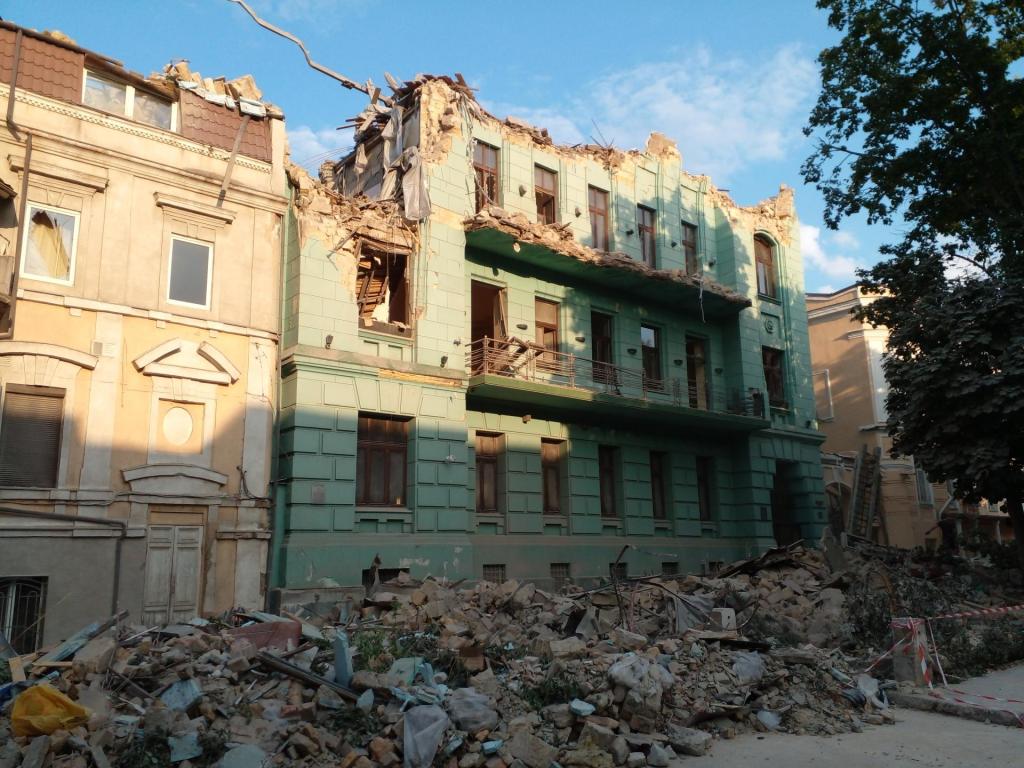
Other than the Donbas war, the Odesa massacre was the most significant and deadly instance of political violence after the Maidan massacre in Ukraine since its independence in 1991 until the Russia-Ukraine war in February 2022. The violence took place on 2 May 2014, between a “United Ukraine” rally and pro-Russian separatists, carried out with petrol bombs, gunfire, and rock-throwing, which ended up killing 48 people, primarily separatist protesters.90 The vast majority of the fatalities took place in the Trade Unions House, where 42 separatist activists and employees (forty men, seven women, and one boy) were killed when the building was set ablaze.91
This massacre contributed to the escalation of the separatist conflict in Donbas into the civil war. As noted, the massacre was presented by separatist and Russian leaders and the media as akin to the Nazi massacre of Khatyn in Belarus, and many Odesa separatists joined the separatist forces in Donbas. Despite the importance of this massacre, the International Advisory Panel of the Council of Europe, among other international authorities, has noted that the Ukrainian government failed to properly investigate and prosecute those responsible.92 To ascertain the role of far-right groups in the Odesa massacre, a broad range of key information resources can be analysed, including videos and recordings of live broadcasts of the political violence (and the lead-up to it); published reports; primary source media in Ukrainian, Russian, and English; statements of responsibility; interviews; and testimonies from participants and eyewitnesses on both sides, as well as police commanders.
On 1 May 2014, the day before the mass violence, separatists protested in Odesa to demand a referendum on the newly installed government in Kyiv, which they blamed on far-right activists and Western interference.93 Based on testimonies from a special parliamentary commission report in the immediate aftermath of the May 2014 massacre, Ukrainian and regional government officials planned to use far-right activists and the Maidan Self-Defence to suppress the separatists in the Odesa region and disperse those who were encamped near the Trade Union building.94 Extensive evidence indicates that the police and firefighters were ordered by their superiors to stand by and not interfere during attacks. For instance, a special plan to deal with mass disturbances launched by the Odesa regional police was not authorised, reportedly because of decisions at the Ministry of Internal Affairs’ top level.95 Similarly, top regional officials of the police and other law enforcement agencies were ordered to attend a meeting with their national counterparts before and during the start of the clashes.96 The presence of Andriy Parubiy and five hundred Maidan Self-Defence members, who deployed from Kyiv to Odesa on the eve of the massacre, further suggests that the violent dispersal of the separatist camp by far-right activists was orchestrated by top government leaders.97 Parubiy was a founder and leader of the neo-Nazi Patriot of Ukraine, a paramilitary wing of the Social National Party of Ukraine in the 1990s. He was the head of the Maidan Self-Defence during the Euromaidan and headed the National Security and Defence Council at the time of the Odesa massacre. The State Bureau of Investigations of Ukraine launched a criminal investigation into Parubiy for the Odesa massacre soon after he was replaced as the ex-head of the Ukrainian parliament following the early parliamentary elections in 2019.98 One of the participants acknowledged in an Israeli documentary that he engaged in “provocations” in the Odesa massacre under the command of Parubiy, who had issued orders to attack the separatists and “burn everything.” We assess this acknowledgement as credible because he was filmed along with Maidan activists in the left wing of the Trade Union building in Odesa when the deadly fire began to burn the central entrance.99 He and five other Georgian ex-military members also stated in American, Italian, and Israeli TV documentaries, Russian media interviews, on Macedonian TV, in depositions to Berkut lawyers for the Maidan massacre trial, and in testimonies to the Prosecutor General Office of Belarus for the Prosecutor General Office of Ukraine investigation that their groups of Georgian, Baltic, and far-right-linked Ukrainian snipers received weapons, payments, and orders from specific Maidan and Georgian politicians, including Parubiy, to engage in a mass killing of police and protesters.100 The Maidan massacre trial subsequently confirmed their identities.101
A march led by the Right Sector and football ultras on 2 May 2014 was used as cover to implement this plan to destroy and burn the separatist tent camp.102 The SBU in the Odesa Region received advanced information about planned “provocations” and violent clashes between football ultras and pro-Russian separatists on game day between the Odesa and Kharkiv teams on 2 May. A special train transported hundreds of football ultras from Kharkiv to Odesa.103 Football ultras in Ukraine were notorious for displaying neo-Nazi symbols and expressing neo-Nazi slogans during games and have historically linked up with the Right Sector and other far-right organisations, as during the Maidan protests.104 Both the Right Sector and football ultras in Odesa and Kharkiv were dominated by the neo-Nazi Social National Assembly/Patriot of Ukraine, which organised the Azov battalion right after the Odesa massacre.
Odeska Druzhyna, a small separatist organisation in Odesa, was present among other separatist activists based on evidence from internet streams, videos, testimonies of participants and eyewitnesses, and special parliamentary commission reports.105 Odeska Druzhyna used identifiable red tape labels, and were not Right Sector agent provocateurs, as the Russian media and separatists claimed. However, the Ukrainian government and media also mischaracterised the involvement of Odeska Druzhyna by overstating its coordination with other separatist activists.106 The balance of forces was asymmetric; the groups of numerically superior activists of the Right Sector from Odesa and Kharkiv led by the neo-Nazi Social National Assembly/Patriot of Ukraine, far-right football ultras, and Maidan Self-Defence units from Odesa and other regions attacked the separatists. Numerically disadvantaged, the latter took cover behind a police cordon.107
An Odeska Druzhyna activist was filmed shooting in the direction of the far-right protesters with an AK-74-type assault rifle.108 The official investigation and the May 2 Group maintained that a Right Sector activist was killed by this separatist group member with a 5.45mm calibre bullet.109 However, leaked forensic medical expert reports describe a 5.65mm calibre bullet extracted from his body.110 This bullet reportedly disappeared and reappeared during the investigation. The fact that it did not match bullet samples of any legally registered firearms, the weak sound of the gunshots, as well as the lack of a recoil observed in the videos of the shooting, also suggest that the far-right protester may not have been killed by this separatist, who maintained that the weapon seen in the video was a movie studio prop.111 The killing of the Right Sector activist was not visible in that video nor in any videos of clashes. The investigation and various videos at the scene did not reveal the exact time or location of his killing, or the direction of the gunshot. An Odesa deputy police chief, who was filmed around the time of this killing before he himself was wounded, stated that he saw snipers in camouflage shooting from the second floor of a hotel there. He relayed that they killed this Right Sector activist and the second protester in order to blame the separatists for their killing and provoke a violent response against the separatists.112 Videos filmed before and after his shooting suggest that the second pro-Maidan activist was killed around the same time in the same area during the violent clashes with separatists and shooting from a Kalashnikov-type weapon by one of the separatists.113 However, the government forensic examination determined that he was killed by a bullet from a pneumatic sport-type weapon. Nobody was charged with his killing, and the moment and other circumstances of his killing remain not publicly known.114
In the clashes that followed the killings of these two pro-government protesters, four separatist protesters were killed and many other separatist protesters, policemen and at least one local journalist were wounded. The forensic examination determined that three separatists were killed with hunting ammunition.115 A pro-government activist was filmed shooting with a hunting rifle in the direction of these separatists.116 This pro-government activist was later identified by the Minister of Internal Affairs as a Right Sector member.117 The government investigation charged him with killing at least one of the separatists. However, he was released from arrest and his trial was suspended indefinitely because of threats by the Right Sector and other far-right activists against judges during his trial.118 Evidence—including a recorded phone call—revealed that the events on May 2nd were coordinated by the Odesa regional administration official in charge of law enforcement agencies, and involved the participation of the Maidan Self-Defence commander, Right Sector activists, football ultras, and Maidan Self-Defence units.119 They attacked and burned the tent camp of various separatist organisations, whose activists and supporters then escaped to the nearby Trade Union building and tried to barricade the main entrance doors. Videos, internet streams, and testimonies of eyewitnesses show that attackers threw Molotov cocktails and burning tyres at the main entrance, set the entrance doors on fire, and blocked other exits. Videos, recorded calls to firefighters, and eyewitness reports reveal that the fire and thick smoke started from those burning tyres and Molotov cocktails thrown at the main entrance.120 The evidence does not support claims that the separatist protesters killed in this incident were Russian citizens, that they burned themselves by throwing Molotov cocktails from the roof of the Trade Union building or inside of the building, or that there was no far-right involvement in their killing.
After initial denials, the May 2 Group admitted that the deadly fire started at the main entrance. The May 2 Group was a nominally independent association of mainly journalists, formed after the massacre supposedly to investigate it. It was created with the involvement of the Governor of the Odesa region who was appointed by Ukrainian President Petro Poroshenko within a week of the massacre.121 This governor represented not only the central government, but also the Kolomoisky’s oligarchic network, which financed the Right Sector volunteers from the Volyn Region in the Azov battalion and the Right Sector-led Dnipro battalion.122 The Azov battalion was organised by the neo-Nazi SNA and its paramilitary wing, Patriot of Ukraine, which dominated the Right Sector in Odesa and Kharkiv, a few days after the Odesa massacre. But the May 2 Group still claimed that it was impossible to determine who started the fire because both sides were throwing Molotov cocktails. However, there is no public evidence of Molotov cocktails being thrown by separatists at the main entrance; on the contrary, numerous videos feature the far-right protesters throwing Molotov cocktails and burning tyres into the Trade Union building at that time.123
Within Ukraine, far-right activists—particularly from the Right Sector and the SNA— were notorious for using tyres and Molotov cocktails to burn public buildings. Forensic examinations in the government investigation, recordings of radiocommunications by SBU Alfa group, an unpublished admission by a far-right activist to a French journalist, and an academic study determined that the Trade Union headquarters in Kyiv were burned by Maidan activists, including far-right ones, in order to stop its takeover by the Security Service of Ukraine Alfa unit.124 Far-right protesters also started fires by burning tyres in the Inter TV channel building and threatened to burn down the parliament of Ukraine, the Lutsk City Council, the Sviatoshyn District Court that heard the Maidan massacre case, the Constitutional Court, and Inter and 112 Ukraina TV channels buildings by placing tyres next to their entrances.125 Prior usage of the same tactics by the far-right increases the likelihood of their direct involvement.
Analysis of online video streams, government investigation findings, May 2 Group reports, forensic medical examinations, eyewitness testimonies, and other evidence strongly indicate that 42 people perished as a result of the fire, smoke, and from trying to jump from the upper floors of the Trade Union building with far-right activists beating them on the ground and blocking the exits.. The victims were unarmed and included mainly separatists, their supporters, and several employees, in particular women, who were in the building at the time.126 Some of the strongest evidence of far-right involvement in the arson attack comes from the far-right itself, in the form of credit claiming. A growing body of research within terrorism studies focuses on credit claiming. An important finding is that perpetrators are far more likely to deny responsibility for their attacks than to take credit for ones that they did not perpetrate.127 This is particularly true when the targets are civilians. Nonetheless, many extremist groups do claim credit for civilian attacks.128 Statements posted by the Right Sector, the SNA, and the neo-Nazi Misanthropic Division on their websites and social media sites admitted the involvement of their organisations in the massacre. The Right Sector celebrated on its website the massacre by describing it as “another bright page in our fatherland’s history.” Claiming responsibility for the slaughter, it wrote: “In the first minutes of the battle, the ‘Right Sector’ activist was seriously wounded in the stomach. Several more PS [Right Sector] activists received injuries of varying degrees of severity. However, this did not prevent the rest of the PS fighters, together with football fans, from repelling the attack of pro-Russian provocateurs, and as a result, they successfully countered attempts to seize buildings in Odesa. Standing shoulder to shoulder, Odesa activists, football fans and ‘Right Sector’ fighters defeated the forces of pro-Russian mercenaries. Order has been restored in Odesa.”129 The Right Sector—which was dominated in Odesa and Kharkiv by the Social National Assembly and its paramilitary wing, Patriot of Ukraine—and the neo-Nazi Misanthropic Division (which joined the Azov battalion after the massacre) admitted on the social media platform V Kontakte and in other public statements that the fire was set deliberately.130
The official investigation of the Odesa massacre was a farce. Nobody was found guilty of perpetrating this mass killing. As noted, the Right Sector shooter was initially arrested but then released. Only separatists were among those arrested and tried for the Odesa massacre. The Odesa massacre trial of separatists resulted in their acquittal by a local court. The Ukrainian court based its decision on the lack of evidence in support of prosecution charges. Even the verdict acknowledged both the weakness of the investigation into the perpetrators and the role of Parubiy and other government officials.131 The Council of Europe and the UN Special Commission reports also noted the destruction of evidence.132 A report by the special commission of the Council of Europe found that the Ukrainian government’s investigation of the Odesa Massacre was inadequate, politically selective, and featured the falsification of evidence, despite the existence of video footage showing who threw the Molotov cocktails at the building.133
The Ukrainian media cited SBU sources that a far-right activist, who headed the Right Sector in Odesa during the Odesa Massacre, was a secret agent of the Security Service of Ukraine (SBU) and that he and far-right associates were paid by SBU to attack opposition politicians, threaten judges, and conduct other illegal actions.134 This would be consistent with the fact that the Right Sector was not investigated for the Odesa massacre even though the Right Sector publicly admitted involvement. His secret collaboration with SBU would also be consistent with the fact that SBU and the Prosecutor General Office refused to charge him for killing another person in Odesa in 2018. Moreover, in 2020, the SBU gave this far-right activist the status of a victim in this case, even though he streamed this killing on his social media account and the police investigation determined that he was the killer.135 In this sense, the Odesa massacre was not entirely anomalous; it featured post-Maidan far-right involvement with apparent support from high-level political leaders in a corrupt country where investigations and media have inconsistently followed the evidence.
Conclusion
This study assesses the role of the far-right in post-Maidan Ukraine, specifically, in the Donbas war and the Odesa massacre. These were two of the biggest episodes of political violence in the country leading up to the February 2022 Russian invasion. This area of research is worth close investigation because it represents intrinsically important episodes of political violence that have not attracted objective analysis based on available primary sources in Ukrainian, Russian, and English. Investigating the role of the far-right is also timely because the far-right in Ukraine is riven by duelling, self-serving contemporary narratives.
The predominant narratives propagated by governments and the mainstream media in Ukraine, the West, Russia, and separatist-controlled Donbas, concerning the role of the far-right in the war in Donbas and the Odesa massacre, have evidently been partisan. Contrary to the Russian government, separatists, and associated media, the Ukrainian government and military are not Nazi or even neo-Nazi. There were no neo-Nazis among the upper echelon of the Ukrainian government. President Zelensky is certainly not a Jewish neo-Nazi. He tried to placate and mainstream the far-right for political reasons, but has no observable personal affinity to that extreme ideology.
Neo-Nazis constituted only about one percent of the Ukrainian forces before the Russian invasion in 2022, and there is weak electoral support for neo-Nazi parties throughout the country. Similarly, the policy of glorification of the OUN-UPA, their leaders, such as Stepan Bandera, and the adoption and use of their “Glory to Ukraine! Glory to the Heroes!” greeting by the state and the military, including Zelensky, do not make Ukraine a Nazi state. While the OUN and the UPA were far-right terrorist organisations, which collaborated with Nazi Germany and perpetrated the mass murders of Jews, Poles, and Ukrainians, they were not Nazis. Ukrainians could not join the Nazi party because Hitler and other Nazi leaders regarded Ukrainians as racially inferior and opposed independence of Ukraine while also dismissing the attempt to create even a puppet state by the Bandera faction of the OUN in Lviv shortly after the Nazi invasion of the Soviet Union. Thus, Putin cannot credibly justify the illegal invasion in February 2022 as a war to “de-Nazify” the “Nazi regime.”136 The power of the far-right and the glorification of the OUN and the UPA in Ukraine under Poroshenko and Zelensky were exaggerated and exploited by the Russian leaders to justify the invasion.
But the West’s efforts to whitewash the far-right in Ukraine also rests on empirically shaky grounds. Despite their relatively small numbers militarily and politically, the far-right in Ukraine exercised outsized power. The far-right organisations, volunteer battalions, and paramilitary units organised and led by them played, along with separatists and Russian nationalists, a significant role in starting and escalating the incipient civil war in the Donbas and then impeding its peaceful resolution. Even after technically integrated into the official Ukrainian forces, Azov and other far-right groups continued to harbour extremist views. Often brandishing the same extremist symbols, the core leaders and members remained and even ascended within the police, military, and security services during the Donbas war. Western media accounts have drawn heavily from biased Ukrainian sources, including “official” investigations and the May 2 Group. Across numerous primary sources in Ukrainian, Russian, and English, we find evidence that the Right Sector, Social-National Assembly, its paramilitary wing Patriot of Ukraine, and groups of far-right football ultras from Odesa and Kharkiv played a critical role in the Odesa massacre against separatist protesters on 2 May 2014. Neo-Nazi SNA/Patriot of Ukraine, which dominated the Right Sector in Odesa and Kharkiv, organised the Azov battalion right after this massacre.
Despite the lack of international consensus over the definition of terrorism, a common interpretation is the use of violence by non-state actors aimed at creating fear for political ends, particularly when the targets are civilians.137 Depending on one’s definition, some attacks within the episodes of political violence covered in this study, such as the Odesa massacre, could, therefore, arguably be classified as terrorism. What is clear is that neither of the duelling narratives accurately captures the role of the far-right. This study has helped to fill that research lacuna by making use of substantial primary source materials in Ukrainian, Russian, and English. Besides the Maidan massacre, the Donbas war and the Odesa massacre are the two most substantial episodes of political violence from the independence of Ukraine in 1991 to the February 2022 illegal Russian invasion [end]
Ivan Katchanovski is a Ukrainian and Canadian political scientist. He teaches at the School of Political Studies and the Conflict Studies and Human Rights Program at the University of Ottawa in Canada. He specialises primarily in politics, conflicts, political violence, and the far right in Ukraine. His academic publications include five books, 21 articles in peer-reviewed journals, and twelve book chapters.
Max Abrahms is a professor of public policy and political science at Northeastern University, where he specialises in international security. Abrahms has published extensively in leading academic and popular outlets such as International Organization, International Security, International Studies Quarterly, Security Studies, Comparative Political Studies, Harvard Business Review, Foreign Affairs, Foreign Policy, New York Times, Washington Post, USA Today, Newsweek, The Atlantic, and Los Angeles Times.
I disagree with the authors on two points
Stepan Bandera & friends were Nazis. How can the authors identify some neo-Nazis in modern Ukraine, while not regarding their historical mentors as Nazis ? Before WW2, they were praising either Adolf Hitler or Benito Mussolini. Their political project was authoritarian, racist and criminal. They were dreaming of ethnic cleansing. De facto during WW2, they committed mass killing of Jews and Poles.
Terrorism is not restricted to non-state actors. Terrorism is violent action to terror civilians, in order to achieve a common political goal. This is not even a value judgement, but Hiroshima bombing was terrorism. The Israeli targeting and mass killing of civilians, in the prospect of ethnic cleansing in Gaza, is terrorism.
chronicle of censorship, fake news, whitewashing of the Ukrainian Nazism and war crimes, for the sake of the proxy war that NATO is conducting in Donbass and Ukraine, against Russia
Endnotes
Arel, Dominique and Jesse Driscoll. 2023. Ukraine’s Unnamed War. Before the Russian Invasion of 2022. Cambridge: Cambridge University Press; Black, J.L. and Michael Johns (Eds.). 2016. The Return of the Cold War: Ukraine, the West and Russia. Abingdon: Routledge; Hahn, Gordon M. 2018. Ukraine Over the Edge: Russia, the West and the “New Cold War.” Jefferson, NC: McFarland Books; Katchanovski, Ivan. 2016a. “The Separatist War in Donbas: A Violent Break-up of Ukraine?” European Politics and Society, 17 (4), 473-489; Kudelia, Serhiy. 2016. “The Donbas Rift.” Russian Politics & Law, 54 (1), 5-27; Pikulicka-Wilczewska, Agnieszka and Richard Sakwa (Eds.). 2015. Ukraine and Russia: People, Politics, Propaganda and Perspectives. Bristol: E-International Relations; Sakwa, Richard. 2015. Frontline Ukraine: Crisis in the Borderlands. London: I.B.Tauris. ↩︎
Danciu, Gabriela-Cătălina. 2023. “A Perspective on Justifying the Ukraine–Russia War. Elements Of Propaganda.” International Journal of Social and Educational Innovation, 10 (19), 224-239; “Address by the President of the Russian Federation” (2022, February 24) http://en.kremlin.ru/events/president/news/67843. ↩︎
Black, J.L. and Michael Johns (Eds.). 2016. The Return of the Cold War: Ukraine, the West and Russia. Abingdon: Routledge; Katchanovski, Ivan. 2023a. “The Maidan Massacre Trial and Investigation Revelations and Their Implications for the Ukraine-Russia War and Relations.” Russian Politics, 8 (2),181-205. ↩︎
See, for example, Colborne, Michael. 2022. From the Fires of War: Ukraine’s Azov Movement and the Global Far Right, Stuttgart: Ibidem; Davidzon, Vladislav. 2023. “The Search for Neo-Nazis Under the Bedsheets Reflects American Progressive Hysteria, Not Ukrainian Reality.” Tablet Magazine, July. ↩︎
Umland, Andreas. 2019. “Irregular Militias and Radical Nationalism in PostEuromaydan Ukraine: The Prehistory and Emergence of the “Azov” Battalion in 2014.” Terrorism and Political Violence, 31 (1), 105- 131. ↩︎
Umland, Andreas. 2020. ‘The Far Right in Pre- and Post-Euromaidan Ukraine: From Ultra-Nationalist Party Politics to Ethno-Centric Uncivil Society.’ Demokratizatsiya, 28 (2), 247-268. ↩︎
Ishchenko, Volodymyr. 2016. “Far right participation in the Ukrainian Maidan protests: an attempt of systematic estimation.” European Politics and Society, 17 (4), 453-472. ↩︎
Hahn, Gordon M. 2018. Ukraine Over the Edge: Russia, the West and the “New Cold War.” Jefferson, NC: McFarland Books; Katchanovski, Ivan. 2016b. “The Maidan Massacre in Ukraine: A Summary of Analysis, Evidence, and Findings.” In The Return of the Cold War: Ukraine, the West and Russia, eds. J.L. Black and Michael Johns. Abingdon: Routledge, pp. 220-224; Katchanovski, Ivan. 2020. “The far right, the Euromaidan, and the Maidan massacre in Ukraine.” Journal of Labor and Society, 23 (1), 5-29; Katchanovski, 2023a; Katchanovski, Ivan. 2023b. “The “Snipers’ Massacre” on the Maidan in Ukraine.” Cogent Social Sciences, 9 (2); Katchanovski, Ivan. 2024. The Maidan Massacre in Ukraine. London: Palgrave Macmillan. ↩︎
Khalil Mutallimzada and Kristian Steiner, (2022), Fighters’ motivations for joining extremist groups: Investigating the attractiveness of the Right Sector’s Volunteer Ukrainian Corps. European Journal of International Security, 1–23. Ilmari Käihkö, (2018), A nation-in-the-making, in arms: control of force, strategy and the Ukrainian Volunteer Battalions. Defence Studies 18:2, 147–166; Tetyana Malyarenko and David J. Galbreath, (2016), Paramilitary motivation in Ukraine: beyond integration and abolition, Southeast European and Black Sea Studies 16:1, 113–138. ↩︎
Hale, Henry E., Oxana Shevel and Olga Onuch. 2018. “Believing Facts in the Fog of War: Identity, Media and Hot Cognition in Ukraine’s 2014 Odesa Tragedy.” Geopolitics, 23 (4), 851-881. A poll commissioned for that study found that 44% of Ukrainians believed that this mass killing was committed by provocateurs from Russia, while 11% blamed pro-Russian residents of Odesa. Ten percent of the respondents said that the Odesa massacre was perpetrated by “Ukrainian nationalists from Odesa” and 3% by “pro-Ukrainian” residents of Odesa. ↩︎
Van Evera, Stephen. 1997. Guide to Methods for Students of Political Science. Ithaca: Cornell University Press. ↩︎
Griffin, Roger with Matthew Feldman (Eds.). 2003. Fascism: Critical Concepts in Political Science. London: Routledge. ↩︎
Brahimi, Alia. “Ideology and terrorism.” The Oxford handbook of terrorism (2019): 298. ↩︎
See, for example, Jadoon, Amira, Andrew Mines, and Daniel Milton. “Targeting quality or quantity? The divergent effects of targeting upper verses lower tier leaders of militant organizations.” Journal of Conflict Resolution 67, no. 5 (2023): 1007-1031; Schram, Peter. “Self-managing terror: Resolving agency problems with diverse teams.” Games and Economic Behavior 130 (2021): 240-257; Abrahms, Max, and Philip BK Potter. “Explaining terrorism: Leadership deficits and militant group tactics.” International Organization 69, no. 2 (2015): 311-342; Popovic, Milos. “The perils of weak organization: Explaining loyalty and defection of militant organizations toward Pakistan.” Studies in Conflict & Terrorism 38, no. 11 (2015): 919-937. ↩︎
Biletsky 2013; Biletsky, Andriy. “Nedochytanyi Franko.” Patriot Ukrainy, (2008). https://web.archive.org/web/20101120085407/http://patriotukr.org.ua/index.php?rub=stat&id=409. Also, please note that the ADL has adopted the spelling of “antisemitism” instead of “anti-Semitism.” After reviewing the history and consulting with other leading experts, they determined that this is the best way to refer to hatred toward Jews, so we have adopted the same spelling convention here. ↩︎
Clarke, Colin P. “The Terrorist Diaspora.” Testimony, House Homeland Security Committee Task Force on Denying Terrorists Entry into the United States (2017). ↩︎
Boyd-Barrett, Oliver. 2016. Western Mainstream Media and the Ukraine Crisis: A Study in Conflict Propaganda. New York: Routledge. ↩︎
Some researchers and Zelensky have cited the presence of Russian-speakers in the Azov regiment and other neo-Nazi-led armed formations as evidence of their relative tolerance and moderation and argued that the Azov regiment distanced itself from its far-right roots. (See Umland 2019; “Zelensky refutes Russian propaganda claim that Azov Regiment is ‘neo-Nazi.’” The New Voice of Ukraine (2022, May 2), https://news.yahoo.com/zelensky-refutes-russian-propaganda-claim-131100438.html. However, these formations were organized and led by neo-Nazi organizations, which had a racist ideology and cast themselves as defenders of the White race. For this reason, they included not only large numbers of Russian speakers from Ukraine but also neo-Nazis from Russia, Belarus, and the Western countries, such as Australia, Sweden, and the US. ↩︎
“Ukraine war: Ros Atkins on… Putin’s false ‘Nazi’ claims.” BBC, (2022, March 26) https://www.bbc.com/news/av/world-europe-60853404; Five Azovstal defenders were awarded the title of Heroes of Ukraine. Svidomi, (2022, October 3). https://svidomi.in.ua/en/page/five-azovstal-defenders-were-awarded-the-title-of-heroes-of-ukraine. Loyd, Anthony. “‘Nonsense’: Heroes of Mariupol Denied US Weapons Over neo-Nazi Past.” Times, (2024 May 2). https://www.thetimes.com/world/russia-ukraine-war/article/nonsense-heroes-of-mariupol-denied-us-weapons-over-neo-nazi-past-kwnr0r0pw; “Boris Johnson Praises Nazi Azov Battalion,” YouTube. (2024, May 23). https://www.youtube.com/watch?v=_6g7i-4wswk. There was similar systematic and politically motivated whitewashing of the far-right in Ukraine in Wikipedia, especially, after the Russian invasion. A small number of Wikipedia editors systematically whitewashed neo-Nazi and other far-right parties, organizations, and their leaders, such as Azov regiment, Patriot of Ukraine, Svoboda, National Corps, the OUN, the UPA, Stepan Bandera, Roman Shukhevych, etc. They removed or deliberately excluded scholarly studies and other evidence of the extremist ideology and involvement in mass murder of the far-right, such as the Maidan and Odesa massacres, the Holocaust, and the Lviv pogrom in Ukraine and smeared in biographical entries scholars and other experts whose studies show such ideology and political violence by the far-right in Ukraine. (See, for example, Azov Brigade, https://en.wikipedia.org/wiki/Azov_Brigade; Patriot of Ukraine, https://en.wikipedia.org/wiki/Patriot_of_Ukraine; 2014 Odesa clashes, https://en.wikipedia.org/wiki/2014_Odesa_clashes; Far-right politics in Ukraine, https://en.wikipedia.org/wiki/Far-right_politics_in_Ukraine. They included editors who misrepresented the Holocaust in Poland using similar tactics in Wikipedia, which is unreliable but widely accessed source, compared to academic studies (Grabowski, Jan, and Shira Klein. 2023. “Wikipedia’s Intentional Distortion of the History of the Holocaust.” Journal of Holocaust Research 37 (2): 133–90). ↩︎
Katchanovski, Ivan and Alicen Morley. 2012. “Politics of US Television Coverage of Post-Communist Countries.” Problems of Post-Communism, 59 (1), 15-30. ↩︎
Bhatia, Michael. 2008. “Fighting words: naming terrorists, bandits, rebels and other violent actors, ”Third World Quarterly, 26 (1), 5-22; Schmid, Alex P. 2012. “The revised academic consensus definition of terrorism.” Perspectives on Terrorism, 6 (2), 158-159; Ganor, Boaz. 2002. “Defining terrorism: Is one man’s terrorist another man’s freedom fighter?” Police Practice and Research, 3 (4), 287-304. ↩︎
Although the focus of this analysis is on the portrayal of the far-right in Ukraine, a related narrative dispute has been over whether to characterise the conflict in the Donbas as a civil war. The Ukrainian and Western governments and the media described the war in Donbas as an interstate war between Russia and Ukraine or a hybrid war while denying that there was a civil war. By contrast, the Russian and Donbas separatist governments and associated media denied any Russian military involvement in the war and called it a purely civil war. The majority of scholars and datasets such as the Correlates of War Project and the Uppsala Conflict Data Program classified it as a civil war or an intrastate conflict, while also noting the Russian military interventions in Donbas prior to the Russian invasion of Ukraine in See, for example, Arel and Driscoll 2023; Black and Johns 2016; Hahn 2018; Katchanovski 2016a; Kudelia 2016. ↩︎
Abrahms, Max. “What terrorists really want: Terrorist motives and counterterrorism strategy.” International Security 32, no. 4 (2008): 78-105. ↩︎
Rossolinski-Liebe, Grzegorz. 2014. Stepan Bandera: The life and afterlife of a Ukrainian nationalist. Stuttgart: Ibidem. ↩︎
Yeomans, Rory, (Ed.). 2016. The Utopia of Terror: Life and Death in Wartime Croatia. Rochester: University of Rochester Press; Katchanovski, Ivan. 2015. “Terrorists or National Heroes? Politics and Perceptions of the OUN and the UPA in Ukraine.” Communist and Post-Communist Studies, 48 (2-3), 217-228. ↩︎
Rudling, Per Anders. 2011. “The OUN, the UPA and the Holocaust. A Study in the Manufacturing of Historical Myths.” Carl Beck Papers in Russian and East European Studies, #2107, Center for Russian and East European Studies, Pittsburgh University. ↩︎
See Katchanovski, 2016a; Katchanovski, Ivan. 2006. Cleft Countries: Regional Political Divisions and Cultures in Post-Soviet Ukraine and Moldova. Stuttgart: Ibidem. ↩︎
Umland, Andreas. 2019. “Irregular Militias and Radical Nationalism in PostEuromaydan Ukraine: The Prehistory and Emergence of the “Azov” Battalion in 2014.” Terrorism and Political Violence, 31 (1), 105-131. ↩︎
Mueller, John E. 2006. Overblown: How politicians and the terrorism industry inflate national security threats, and why we believe them. New York: Simon and Schuster; Abrahms, Max. 2006. “Why terrorism does not work.” International Security, 31 (2), 42-78. ↩︎
Kydd, Andrew, and Barbara F. Walter. 2002. “Sabotaging the peace: The politics of extremist violence.” International Organization, 56 (2), 263-296. ↩︎
“Zvit tymchasovoi slidchoi komisii Verkhovnoi Rady Ukrainy z pytan rozsliduvannia faktiv zahybeli hromadian u mistakh Odesi, Nariupoli, a takozh inshykh mistakh Donetskoi ta Luhanskoi oblastei Ukrainy.” (2014, September 5). Verkhovna Rada Ukrainy. http://w1.c1.rada.gov.ua/pls/zweb2/webproc4_1?pf3511=52134↩︎
Abrahms, Max, and Justin Conrad. “The strategic logic of credit claiming: A new theory for anonymous terrorist attacks.” Security Studies 26, no. 2 (2017): 279-304. ↩︎
Schmid, Alex. “Terrorism-the definitional problem.” Case W. Res. J. Int’l L. 36 (2004): 375; Schmid, Alex P. “The definition of terrorism.” In The Routledge Handbook of Terrorism Research, pp. 39-157. Routledge, 2011; Schmid, Alex P. “Discussion 1-Revisiting the wicked problem of defining terrorism.” Terrorism: Its Past, Present & Future Study A Special Issue to Commemorate CSTPV at 25 (2020): 3. ↩︎
Norwegian journalists are keen on triggering the censorship of Telegram channels which are identifying international Nazi volunteers and other mercenaries who are fighting in the Atlanticist ranks in Ukraine
The evil network (Kajsa Garmann Lønrusten / VG)
Verdens Gang [The Walk of the World, VG] is a daily tabloid and the largest circulation in the Norwegian press. On September 25, 2024, VG publishes an article titled, here is an English translation
Faktisk.no: Over 40 Norwegians named and mocked in Russian Telegram channels
A network of Telegram channels linked to Russian hacker circles spreads personal information about Norwegians. Some people have had their social security numbers or passports leaked. Several receive threats. In addition, nine Norwegian children are mentioned and three deceased Norwegians are being slandered. This is shown by a survey conducted by Faktisk.no […]
A nice graphic is provided. In order not to give them any publicity, the two main Telegram channels of that network are not named in the article. The number one is ForeignCombatants ; the number two and major one is TrackANaziMerc. These are actually international clubs of open source intelligence (OSINT). Many members are indeed Russian. I am Corsican and working on the French subjects.
I am indeed exploiting the information that brilliant Russian IT specialists are collecting within the Ukrainian bureaucracy and making public, am cross-checking them with public data on social networks and information from other sources, press or informants
Gwendal Delange is so far the most assumed and spectacular French Nazi activist in the Atlanticist ranks in Ukraine. The French volunteers there are a gradient from him to other right-wing sympathizers. I have found no leftist
Slandered ? Through my French sample, I have established and written on my personal blog that between one third and the half of these French subjects are not exactly mercenaries, in French legal term, but rather far-right and Nazi volunteers. Unless they are personally involved, I am never unveiling identities of relatives whom I however know.
The Norwegian journalists remind us that on August 24, 2024, French police arrested Pavel Durov, founder and boss of Telegram messaging service, under abusive legal pretexts, to weigh on the company, in expectation of gaining clear access to our encrypted messages. The journalists are also suggesting that our channels should be censored. They are evil.
chronicle of censorship, fake news, whitewashing of the Ukrainian Nazism and war crimes, for the sake of the proxy war that NATO is conducting in Donbass and Ukraine, against Russia
The detention of Pavel Durov is being portrayed as a result of the EU Digital Services Act. But having spent my day reading the EU Services Act (a task I would not wish upon my worst enemy), it does not appear to me to say what it is being portrayed as saying.
EU Acts are horribly dense and complex, and are published as “Regulations” and “Articles”. Both cover precisely the same ground, but for purposes of enforcement the more detailed “Regulations” are the more important, and those are referred to below. The “Articles” are entirely consistent with this.
So, for example, Regulation 20 makes the “intermediary service”, in this case Telegram, only responsible for illegal activity using its service if it has deliberately collaborated in the illegal activity.
Providing encryption or anonymity specifically does not qualify as deliberate collaboration in illegal activity.
(20) Where a provider of intermediary services deliberately collaborates with a recipient of the services in order to undertake illegal activities, the services should not be deemed to have been provided neutrally and the provider should therefore not be able to benefit from the exemptions from liability provided for in this Regulation. This should be the case, for instance, where the provider offers its service with the main purpose of facilitating illegal activities, for example by making explicit that its purpose is to facilitate illegal activities or that its services are suited for that purpose. The fact alone that a service offers encrypted transmissions or any other system that makes the identification of the user impossible should not in itself qualify as facilitating illegal activities
And at para 30, there is specifically no general monitoring obligation on the service provider to police the content. In fact it is very strong that Telegram is under no obligation to take proactive measures.
(30) Providers of intermediary services should not be, neither de jure, nor de facto, subject to a monitoring obligation with respect to obligations of a general nature. This does not concern monitoring obligations in a specific case and, in particular, does not affect orders by national authorities in accordance with national legislation, in compliance with Union law, as interpreted by the Court of Justice of the European Union, and in accordance with the conditions established in this Regulation. Nothing in this Regulation should be construed as an imposition of a general monitoring obligation or a general active fact-finding obligation, or as a general obligation for providers to take proactive measures in relation to illegal content
However, Telegram is obliged to act against specified accounts in relation to an individual order from a national authority concerning specific content. So while it has no general tracking or censorship obligation, it does have to act at the instigation of national authorities over individual content.
(31) Depending on the legal system of each Member State and the field of law at issue, national judicial or administrative authorities, including law enforcement authorities, may order providers of intermediary services to act against one or more specific items of illegal content or to provide certain specific information. The national laws on the basis of which such orders are issued differ considerably and the orders are increasingly addressed in cross-border situations. In order to ensure that those orders can be complied with in an effective and efficient manner, in particular in a cross-border context, so that the public authorities concerned can carry out their tasks and the providers are not subject to any disproportionate burdens, without unduly affecting the rights and legitimate interests of any third parties, it is necessary to set certain conditions that those orders should meet and certain complementary requirements relating to the processing of those orders. Consequently, this Regulation should harmonise only certain specific minimum conditions that such orders should fulfil in order to give rise to the obligation of providers of intermediary services to inform the relevant authorities about the effect given to those orders. Therefore, this Regulation does not provide the legal basis for the issuing of such orders, nor does it regulate their territorial scope or cross-border enforcement
The national authorities can demand content is removed, but only for “specific items”:
51) Having regard to the need to take due account of the fundamental rights guaranteed under the Charter of all parties concerned, any action taken by a provider of hosting services pursuant to receiving a notice should be strictly targeted, in the sense that it should serve to remove or disable access to the specific items of information considered to constitute illegal content, without unduly affecting the freedom of expression and of information of recipients of the service. Notices should therefore, as a general rule, be directed to the providers of hosting services that can reasonably be expected to have the technical and operational ability to act against such specific items. The providers of hosting services who receive a notice for which they cannot, for technical or operational reasons, remove the specific item of information should inform the person or entity who submitted the notice
There are extra obligations for Very Large Online Platforms, which have over 45 million users within the EU. These are not extra monitoring obligations on content, but rather extra obligations to ensure safeguards in the design of their systems:
(79) Very large online platforms and very large online search engines can be used in a way that strongly influences safety online, the shaping of public opinion and discourse, as well as online trade. The way they design their services is generally optimised to benefit their often advertising-driven business models and can cause societal concerns. Effective regulation and enforcement is necessary in order to effectively identify and mitigate the risks and the societal and economic harm that may arise. Under this Regulation, providers of very large online platforms and of very large online search engines should therefore assess the systemic risks stemming from the design, functioning and use of their services, as well as from potential misuses by the recipients of the service, and should take appropriate mitigating measures in observance of fundamental rights. In determining the significance of potential negative effects and impacts, providers should consider the severity of the potential impact and the probability of all such systemic risks. For example, they could assess whether the potential negative impact can affect a large number of persons, its potential irreversibility, or how difficult it is to remedy and restore the situation prevailing prior to the potential impact.
(80) Four categories of systemic risks should be assessed in-depth by the providers of very large online platforms and of very large online search engines. A first category concerns the risks associated with the dissemination of illegal content, such as the dissemination of child sexual abuse material or illegal hate speech or other types of misuse of their services for criminal offences, and the conduct of illegal activities, such as the sale of products or services prohibited by Union or national law, including dangerous or counterfeit products, or illegally-traded animals. For example, such dissemination or activities may constitute a significant systemic risk where access to illegal content may spread rapidly and widely through accounts with a particularly wide reach or other means of amplification. Providers of very large online platforms and of very large online search engines should assess the risk of dissemination of illegal content irrespective of whether or not the information is also incompatible with their terms and conditions. This assessment is without prejudice to the personal responsibility of the recipient of the service of very large online platforms or of the owners of websites indexed by very large online search engines for possible illegality of their activity under the applicable law.
(81) A second category concerns the actual or foreseeable impact of the service on the exercise of fundamental rights, as protected by the Charter, including but not limited to human dignity, freedom of expression and of information, including media freedom and pluralism, the right to private life, data protection, the right to non-discrimination, the rights of the child and consumer protection. Such risks may arise, for example, in relation to the design of the algorithmic systems used by the very large online platform or by the very large online search engine or the misuse of their service through the submission of abusive notices or other methods for silencing speech or hampering competition. When assessing risks to the rights of the child, providers of very large online platforms and of very large online search engines should consider for example how easy it is for minors to understand the design and functioning of the service, as well as how minors can be exposed through their service to content that may impair minors’ health, physical, mental and moral development. Such risks may arise, for example, in relation to the design of online interfaces which intentionally or unintentionally exploit the weaknesses and inexperience of minors or which may cause addictive behaviour.
(82) A third category of risks concerns the actual or foreseeable negative effects on democratic processes, civic discourse and electoral processes, as well as public security.
(83) A fourth category of risks stems from similar concerns relating to the design, functioning or use, including through manipulation, of very large online platforms and of very large online search engines with an actual or foreseeable negative effect on the protection of public health, minors and serious negative consequences to a person’s physical and mental well-being, or on gender-based violence. Such risks may also stem from coordinated disinformation campaigns related to public health, or from online interface design that may stimulate behavioural addictions of recipients of the service.
(84) When assessing such systemic risks, providers of very large online platforms and of very large online search engines should focus on the systems or other elements that may contribute to the risks, including all the algorithmic systems that may be relevant…
This is very interesting. I would argue that under Article 81 and 84, for example, the blatant use of both algorithms limiting reach and plain blocking by Twitter and Facebook, to promote a pro-Israeli narrative and to limit pro-Palestinian content, was very plainly a breach of the EU Digital Services Directive by deliberate interference with “freedom of expression and information, including media freedom and pluralism”.
The legislation is very plainly drafted with the specific intent of outlawing the use of algorithms to interfere with freedom of speech and public discourse in this way.
But it is of course a great truth that the honesty and neutrality of prosecution services is much more important to what actually happens in any “justice” system than the actual provisions of legislation.
Only a fool would be surprised that the EU Digital Services Act is being shoehorned into use against Durov, apparently for lack of cooperation with Western intelligence services and being a bit Russian, and is not being used against Musk or Zuckerberg for limiting the reach of pro-Palestinian content.
It is also worth noting that Telegram is not considered to be a very large online platform by the EU Commission who have to date accepted Telegram’s contention that it has less than 45 million users in the EU, so these extra obligations do not apply
If we look at the charges against Durov in France, I therefore cannot see how they are in fact compatible with the EU Digital Services Act.
Unless he refused to remove or act over specific individual content specified by the French authorities, or unless he set up Telegram with the specific intent of facilitating organised crime, I do not see how Durov is not protected under Articles 20 and 30 and other safeguards found in the Digital Services Act.
The French charges appear however to be extremely general and not to relate to particular specified communications. This is an abuse.
What the Digital Services Act does not contain is a general obligation to hand over unspecified content or encryption keys to police forces or security agencies. It is also remarkably reticent on “misinformation”.
Regulations 82 or 83 above obviously provide some basis for “misinformation” policing, but the Act in general relies on the rather welcome assertion that regulations governing what speech and discourse is legal should be the same offline as online.
So in short, the arrest of Pavel Durov appears to be pretty blatant abuse and only very tenuously connected to the legal basis given as justification. This is simply a part of the current rising wave of authoritarianism in western “democracies” [end]
Craig Murray is an author, broadcaster and human rights activist. He was British Ambassador to Uzbekistan from August 2002 to October 2004 and Rector of the University of Dundee from 2007 to 2010
en Anglais, chronicle of censorship, fake news, whitewashing of the Ukrainian Nazism and war crimes, for the sake of the proxy war that NATO is conducting in Donbass and Ukraine, against Russia
Le 24 août 2024, la vile flicaille au rabais, coterie de laquais de l’autorité administrative, à défaut d’être auxiliaire de justice, sur instructions de l’État français, laquais de l’OTAN, a arrêté au Bourget Pavel Durov. Le citoyen franco-russe est fondateur et patron de la messagerie cryptée Telegram. Son entreprise est basée aux Émirats arabes unis.
Monté de toutes pièces pour raisons politiques, le dossier des archers du guet [gardiens de la paix], prétendumment enquêteurs, évoque de sombres infractions allant de l’escroquerie, au trafic de stupéfiants, au cyberharcèlement, à la criminalité organisée en passant par l’apologie du terrorisme et la fraude [Le Monde]. Les incriminations sont ridicules. La direction d’un service de messagerie ne peut pas être poursuivie au pénal pour ce qu’en font éventuellement certains de ses utilisateurs. J’ai hâte de connaître l’issue de la garde à vue, si un juge sera assez servile pour plagier une police médiocre, qui agit sur ordre de l’autorité administrative
Sous la houlette de Philippe Pétain, l’État français créa la Police nationale le 14 août 1941. Ici le 21 janvier 1942, les policiers français prêtèrent allégeance à Paris au chef de l’État fasciste. La police française a été impliquée dans l’Holocauste et contre la résistance, fut blanchie après la Seconde Guerre mondiale. Par atavisme historique, cette culture-maison est encore forte en 2024 (Roger-Viollet)
En réalité, l’État français, dont l’héritage pétainiste est atavique, sinon congénital, ne lui pardonne pas d’avoir refusé au FBI, puis aux pinzuti [Français], de leur donner le moyen technique d’espionner les utilisateurs de Telegram. Mais aux USA, la liberté n’est pas un vain mot
Un peu d’humour russe : Monsieur, donnez-moi les clés
Il est toujours utile de rappeler que la France d’Emmanuel Macron est championne du monde, en valeur absolue et non pas en rapport à la population, du nombre de demandes de censure sur les réseaux sociaux, pour raisons politiques, pas pour la justice
Philippe Henriot (1889-1944), une grande voix française
Je suis hilare, à la lecture le lundi 26 août des télégraphistes de presse française grand public. Sans le moindre complexe, Le Monde joue son rôle, assure le service après vente d’une opération de basse police.
chronique alphabétique et nécrologique de l’engagement français dans les rangs atlantistes en Ukraine, ce que les journalistes serviles ne vous raconteront pas
en Anglais, chronicle of censorship, fake news, whitewashing of the Ukrainian Nazism and war crimes, for the sake of the proxy war that NATO is conducting in Donbass and Ukraine, against Russia
Le chef de file du GUD Paris a discrètement été recruté début 2023 dans l’équipe de gardiens chargée de la surveillance de l’île du Loc’h, propriété de Vincent Bolloré. Depuis plus de dix ans, le milliardaire confie cette mission à une société directement liée à la “GUD connection”
Marc de Cacqueray-Valménier peut souffler un peu. Certes, le leader de la section parisienne du groupuscule néofasciste et antisémite Groupe union défense (GUD) attend encore deux procès : l’un pour avoir passé à tabac des militants de SOS Racisme lors du meeting d’Éric Zemmour à Villepinte en décembre 2021, l’autre en appel, soupçonné d’avoir convoqué une descente contre des supporters marocains le soir de la demi-finale de la Coupe du monde de football en décembre 2022, stoppée à temps par la police. Mais cet ultranationaliste peut se réjouir d’avoir retrouvé une stabilité financière, au moment où il commençait à perdre espoir de dénicher un employeur prêt à fermer les yeux sur les résultats renvoyés par une simple recherche Google sur son nom. Marc de Cacqueray-Valménier a un nouveau patron : Vincent Bolloré.
Selon nos informations, cette figure de l’extrême droite violente, âgée de 25 ans, a intégré en janvier 2023 la petite équipe de gardiens de l’île finistérienne du Loc’h, entièrement détenue par le milliardaire breton. Propriété de la famille Bolloré depuis 1924, l’île, la plus vaste de l’archipel des Glénan, au large de Concarneau, avait été rachetée par Vincent Bolloré à ses cousins en 2010. D’une surface de 58 hectares, elle n’abrite qu’un seul bâtiment, une ancienne ferme où l’homme d’affaires aime se retirer. Le site est bien gardé : quatre agents de sécurité veillent toute l’année sur l’île, travaillant en binôme par cycles de quinze jours suivis de deux semaines de repos. Outre des rondes sur un parcours d’un peu moins de trois kilomètres, ces gardes marins effectuent aussi des tâches d’entretien et d’approvisionnement. Sans oublier de chasser les ragondins qui apprécient l’étang situé au milieu de l’île.
Faire fuir les curieux
Dès 2012, Vincent Bolloré a fait construire une clôture sur le pourtour de son île, classée en zone Natura 2000, mais les plaisanciers sont autorisés à venir se prélasser sur la grande plage. Charge aux gardiens d’empêcher des visiteurs curieux ou mal intentionnés de s’introduire sur le domaine privé du magnat des médias. La carrure bodybuildée et les tatouages nazis de Marc de Cacqueray-Valménier sont, à cet égard, particulièrement dissuasifs. Sur sa jambe gauche, il arbore une Totenkopf, une tête de mort utilisée comme emblème par certaines divisions SS. Sur son coude gauche, un soleil noir, symbole mystique du IIIe Reich. Les lettres inscrites sur ses deux cuisses forment le slogan suprémaciste blanc “White pride”. Sollicité par l’intermédiaire de son avocat, MeClément Diakonoff, Marc de Cacqueray-Valménier n’a pas répondu à La Lettre
D’un tempérament impulsif mais toujours poli, ce bagarreur sous contrôle judiciaire savoure le calme qui règne le plus souvent sur l’île déserte. “Marc Hassin” – son pseudo – semble en effet épanoui sur la photo de profil de son compte Instagram. Il s’y affiche en mer, sur une embarcation voguant au milieu des Glénan, avec en arrière-plan l’île Saint-Nicolas, plus touristique.
Dans les prochaines semaines, il encadrera quelques-unes des messes ouvertes au public, organisées à la demande de Vincent Bolloré depuis cinq ans sur l’île du Loc’h, chaque dimanche entre mi-juillet et mi-août. Comme les années précédentes, le milliardaire catholique pourrait participer à l’une d’entre elles.
Le clan Loustau au service de Bolloré
Comment cette icône de la nébuleuse nationaliste-révolutionnaire a-t-elle pu se retrouver sous les ordres de Vincent Bolloré ? Au-delà de l’extrême droitisation progressive de ses médias (CNews, JDD, Europe 1…), l’industriel n’avait jusqu’ici pas de liens connus – contractuels ou personnels – avec des milieux aussi radicaux. D’après nos informations, il fait pourtant confiance, depuis 2013 au moins, à une société liée à la “GUD connection” pour protéger son île du Loc’h : Checkport. Derrière ce discret groupe de sécurité privée, on retrouve la famille Loustau, un nom bien connu du Front national (FN) puis du Rassemblement national (RN). L’entreprise est contrôlée et dirigée par Philippe Loustau, candidat FN aux cantonales de 2004 dans les Bouches-du-Rhône et surtout frère d’Axel Loustau. Cet ex-pilier du GUD est un proche de Marine Le Pen, longtemps trésorier de son microparti Jeanne, et prestataire historique pour la communication du parti à la flamme, avec son acolyte Frédéric Chatillon.
Spécialisé dans la sécurité des entreprises et la sûreté aéroportuaire, le groupe Checkport est issu de la société de gardiennage Normandy, fondée en 1977 par le père de Philippe et d’Axel Loustau, Fernand Loustau. Après le décès en 1993 de cet ancien de l’OAS et vieil ami de Jean-Marie Le Pen, c’est l’aîné de la fratrie, Philippe, qui avait repris le flambeau et conservé le nom Normandy jusqu’en 2016. Axel Loustau n’a plus de parts dans l’entreprise depuis 2008, mais il officie lui aussi dans la sécurité privée. Comme l’a remarqué le média StreetPress, le clan Loustau est passé maître dans l’art de brouiller les pistes pour ne pas directement apparaître au capital de leurs entreprises. La compagne de Philippe Loustau, Catherine Soldatenkoff, a ainsi fait partie pendant plusieurs années des actionnaires d’Astoria Sécurité, l’entreprise d’Axel Loustau.
L’ange gardien Loustau
Marc de Cacqueray-Valménier, qui a réactivé le GUD à l’automne 2022 après la dissolution de son groupuscule Zouaves Paris – le GUD a lui-même été dissous le 26 juin dernier –, sait qu’il peut compter sur le soutien d’Axel Loustau. Comme en décembre 2022, quand le militant fiché S, déjà condamné à plusieurs reprises à des peines avec sursis, cherche à éviter la détention provisoire en attendant son procès dans l’affaire de la descente musclée le soir de France-Maroc. À l’époque, Marc de Cacqueray-Valménier transmet à la justice une promesse d’embauche opportune faite quelques jours plus tôt par la holding Financière Wagram, qui gère les affaires d’Axel Loustau, comme l’ont dévoilé Libération et Blast. Signée par son ami gudard Gabriel Loustau, fils d’Axel et directeur général de la société depuis 2019, la lettre offre au repris de justice un poste de DRH de Financière Wagram en CDI, avec un salaire très confortable de 5 200 € brut par mois, à partir de janvier 2023. Soit la période à laquelle Marc de Cacqueray a débarqué sur l’île de Vincent Bolloré, d’après nos informations. Axel Loustau a-t-il recommandé à son frère Philippe d’embaucher son protégé ? Les deux frères, contactés directement et via leurs avocats, n’ont pas répondu à nos questions.
Un néonazi en terres résistantes
Le profil de cette recrue détonne en tout cas avec l’histoire familiale de son donneur d’ordre, Vincent Bolloré. Le premier actionnaire de Vivendi, qui n’a pas donné suite à nos sollicitations, ne rate jamais une occasion d’évoquer l’engagement de plusieurs membres de sa famille contre l’Occupation. “Mon père était résistant, ainsi que certains de mes oncles, tandis que d’autres étaient à Londres ou dans l’escadrille Normandie-Niemen”, a rappelé le milliardaire, le 13 mars, devant les députés de la commission d’enquête sur la TNT. Parmi ces oncles : Gwenn-Aël Bolloré, propriétaire de l’île du Loc’h jusqu’à son décès en 2001.
Adorateur du collaborateur Robert Brasillach – à qui il a rendu hommage devant sa tombe à Paris en février –, Marc de Cacqueray-Valménier a d’autres références. Son père est un ancien de l’Action française, dont le jeune militant a un temps dirigé la section lycéenne à Paris. “Marc Hassin” a lui-même été attiré par le conflit armé. À l’automne 2020, il publie sur Instagram une photo de lui, kalachnikov à la main et patch SS sur le torse. Il se rend alors au Haut-Karabakh pour s’engager aux côtés des Arméniens contre l’Azerbaïdjan. Le nationaliste rentrera en assurant ne pas avoir combattu, un cessez-le-feu ayant été signé quinze jours après son arrivée. Quoi qu’il en soit, cet accro aux sports de combat continue de s’entraîner à recevoir des coups et surtout à en donner. On pouvait ainsi l’apercevoir, gants de boxe aux poignets, sur les photos d’un entraînement publiées par le GUD Paris sur sa chaîne Telegram, le 14 avril dernier. Gare aux visiteurs de l’île du Loc’h [fin]
la partie consacrée à Marc, ci-devant, Cacqueray Valménier, dans la chronique alphabétique et nécrologique de l’engagement français dans les rangs atlantistes en Ukraine, ce que les journalistes serviles ne vous raconteront pas
The killing of ultra-nationalist Ukrainian politician Iryna Farion at the hands of a Neo-Nazi is filled with irony. Linked to the Maidan false flag massacre, Farion was instrumental in bringing fascist forces into the mainstream
On July 19, prominent Ukrainian Neo-Nazi Iryna Farion, a former lawmaker with the fascist Svoboda party, was shot dead in Lviv. A longtime advocate of purging her country of all Russian speakers through violence, she and her political faction were directly linked to the false flag sniper massacre of Maidan protesters in February 2014. Local officials initially seemed uninterested in cracking the case, lamely suggesting Moscow’s involvement couldn’t be ruled out. Now however, an 18-year-old Neo-Nazi is in custody.
The killer appears to have led investigators straight to his door by publishing a video of Farion’s murder and an accompanying “manifesto” on Telegram, while posting a slew of racist and antisemitic statements on an assortment of the messaging app’s Neo-Nazi groups. He openly confessed to assassinating Farion for insulting Russian-speaking Ukrainian soldiers in November 2023. Branding them “Muscovites,” she declared that she “could not call” them Ukrainians.
Farion’s tirade resulted in her dismissal from her university job and triggered an investigation by Ukraine’s SBU, which kept her under investigation until the day she died. Some might question how Ukrainian security services failed to prevent her assassination in that context, given her executioner was reportedly camped outside her apartment complex for two straight weeks.
As Ukrainian-born Dr. Ivan Katchanovski, a University of Ottawa political studies professor who has published multiple peer-reviewed studies on the Maidan false flag, explained to The Grayzone:
“It looks like intra-far-right rivalry. Officials first said they had no information about Farion’s suspected killer, whose photo was published by local Lviv Telegram channels. Her neighbors said this man was sitting all day long near the entrance to her apartment building for the last two weeks. She was shot in the head right there after she exited her building. Such apparent impunity is similar to numerous assassinations and killings with far-right involvement, including the Maidan and Odesa massacres.”
The slaying marked an ironic end for Farion, who appeared to have participated in the 2014 Maidan massacre that saw over 100 protesters killed in an incident that has since been exposed as a devious false flag. Like others involved in the slaughter, Farion had been granted immunity from prosecution. But this July, she became a target of lethal violence from a member of the hardcore Neo-Nazi forces unleashed by the Maidan coup she helped to lead.
A front row view of the Maidan false flag massacre
The US-backed opposition blamed the 2014 Maidan killings on then-president Viktor Yanukovich, while the West seized on the apparent sniper attacks to invalidate negotiations with the elected government and push for his violent ouster.
Officially, the killings remained unsolved until 2023, when dramatic, years-long trial of five former Ukrainian policemen accused of carrying out the Maidan massacre concluded. The verdict indirectly implicated Iryna Farion.
Though the court found three former Ukrainian police officers guilty in absentia, it confirmed that in some killings, the accused’s culpability was not only unproven, but the involvement of “other unknown persons” in the deaths “cannot be ruled out.” The judgment explicitly stated that the Kiev hotel from which the unknown snipers operated was “territory… not controlled by law enforcement.”
A growing body of evidence has emerged since February 2014 suggesting the gunfire emanated from the windows of rooms situated on Hotel Ukraina’s 11th floor, overlooking Kiev’s then-Freedom Square. A BBC correspondent has recalled seeing a sniper wearing a green helmet like the kind worn by Maidan protesters, while firing from this area.
The reporter later testified that he saw a handwritten note attached to the door of a room on the 11th floor, 1109, warning visitors not to enter “at the request of the SBU.” Police raided the homes of prominent Svoboda representatives Ihor Yankiv, Oleh Pankevich and Oleksandr Sych in October 2015. Authorities determined in their ensuing investigation that all three had resided on Hotel Ukraina’s 11th floor during the Maidan massacre. So too did Iryna Farion, in room 1109.
“The recent Maidan massacre trial verdict confirmed the BBC TV crew was shot by a Maidan activist from Hotel Ukraina and this building was ‘activist-controlled,” Katchanovski told The Grayzone. “Ukrainian government investigations revealed another Svoboda MP lived in the room on the same 11th floor from which the BBC crew was shot. Kiev’s ICTV filmed snipers in the same hotel room shooting Maidan activists in the back.”
Farion hopes for ‘World War III’ with Russia
For two years before the Maidan coup, Farion served as a member of parliament for the ultra-nationalist Svoboda party. At the time, Ukraine was still officially neutral, with its government enforcing laws protecting the country’s ethnic Russian minority from discrimination. In an environment like this, an anti-Russian fanatic like Farion was in legal hot water on a perpetual basis.
In February 2010, on International Mother Language Day, before even entering parliament, the ultra-nationalist legislator was filmed strutting around a Lviv classroom, warning children they must exclusively use the Ukrainian form of their names, or “you’ll have to pack your bags and leave for Moscow.”
That intervention prompted the ruling Party of Regions to request prosecutors file a criminal case against her on the grounds of language- and nationality-based discrimination. But her virulent Russophobic rhetoric, once relegated to the fringes of Ukrainian society, became increasingly normalized following the consummation of the Maidan coup. She quickly emerged as a fervent advocate of the fascist coup government’s push to ban the use of Russian as an official language, which sparked local rebellions throughout the country’s east.
In October 2014, as Farion prepared to seek reelection in the snap vote called by President Petro Poroshenko, she met with fighters from Sich Battalion, a fascist paramilitary formed by Svoboda, as they prepared to depart for Kiev’s “anti-terror operation” in Donbass. The Ukrainian government’s brutal assault on the largely defenseless residents of the breakaway Donetsk and Lugansk People’s Republics, who rejected the Maidan government, set the stage for the war that erupted when Russia launched its so-called Special Military Operation in February 2022.
Throughout the war in the Donbas, Farion and her neo-Nazi confederates baited Russia with calls for escalation. In her meeting with the Sich Battalion, Farion declared that the “anti-terrorist operation” would become “the spearhead of the Third World War… from which a great victory will begin.” Claiming Ukraine had been at war with Russia since 1654, when Kiev formally submitted to Mocow’s rule, she called upon the assembled fascists to “make us not just a nation of fighters, but an avenging nation out of us,” and “[take] revenge cruelly and harshly.”
Farion went on to demand that the Sich Battalion fighters settle this centuries-long struggle once and for all: “This is not just a challenge to history, it is a challenge to the heavens. The whole of Ukraine should become a front.”
Two weeks later, she made similarly incendiary comments, employing openly genocidal rhetoric when speaking about Russian-speaking Ukrainians. “This is what we live for and why we came into the world, to destroy Moscow, not just the Moskals on our lands,” she fulminated, “but [also] the black hole in European security that should be wiped off the world map.”
In the end, Farion failed to be reelected that year, and multiple subsequent attempts to reenter parliament were likewise unsuccessful. But even from the sidelines, she remained an aggressive cheerleader for Russia’s destruction, and the creation of an ethnically pure Ukrainian state. Despite the increasingly fascist-friendly climate in Ukraine, however, her Neo-Nazism ultimately proved so venomous that it led to her personal and professional undoing.
As with Maidan, justice is fleeting
In November 2023, Farion insulted Ukrainian soldiers for speaking Russian, including fighters drawn from ultra-nationalist Azov Regiment and the 3rd Assault Brigade. Crudely branding them as “Muscovites,” she declared that she “could not call” them Ukrainians. She was immediately dismissed from her position within Lviv university’s Ukrainian language department, and the SBU initiated criminal proceedings against Farion for “[insulting] the honor and dignity of a serviceman” and “threats to a serviceman.” She remained under investigation until her death.
While still venerated as heroes by Kiev and the Western leaders who provide it with arms, the outsized influence of Azov has waned significantly since the war with Russia began, largely due to the ultranationalists’ attrition rate under enemy artillery fire.
Volodymyr Zelensky’s government may have also sought to undermine Azov, as two bloody friendly fire incidents suggested. First, in July 2022, a Russian pre-trial detention center was reportedly struck in a HIMARS missile strike, killing 40 prisoners from the Azov Regiment. Then, in January 2024, a plane carrying 65 Ukrainian POWs was shot down in Belgorod. Many on board were Azov members.
Accordingly, Farion’s assassination raises the question of whether civil society actors rejecting any form of settlement with Moscow are being eliminated too. The CIA spent expended heavy resources to training a dedicated assassination squad for Kiev. The unit is so effective, US officials fear its operatives could go rogue and execute targeted killings the world over, with one former senior CIA figure reportedly warning: “We are seeing the birth of a set of intelligence services that are like Mossad in the 1970s.” The Washington Post has reported that Ukraine’s proficiency at such operations “has risks for Russia… but it carries broader risks as well” for the rest of the world.
If a CIA-backed outfit in Ukraine is turning its guns on its former sponsors, it would follow a well-document history of blowback. Whether or not Farion’s assassination was the product of an intelligence intrigue, it is clear that Kiev’s chickens are coming home to roost [end]
Sur Telegram et Signal, ils s’inspirent des méthodes de Daech pour enclencher une guerre civile et faire advenir une société suprémaciste
(L’ADN)
« Le canal privé est prêt. Pour les vérifications, voilà l’exemple de candidature à m’envoyer. » Pour intégrer le canal en question, il faudra spécifier son âge, sa région, et envoyer une photo de sa main tenant un papier où est écrit « les Aryens français. »
Voilà quelques-unes des démarches à suivre pour intégrer l’une des 5 chaînes Telegram où se retrouvent quelque 4 500 néonazis français très remontés. Leur objectif : faire advenir une société organisée en fonction de la race. Depuis plusieurs années, le reporter indépendant Ricardo Parreira infiltre, cartographie et étudie l’extrême droite extraparlementaire. Dans Reflets, journal d’investigation en ligne, il livre les résultats d’une glaçante enquête sur l’essor du Terrorgram : les messageries cryptées où l’on discute en toute décontraction ventes d’armes, attentats et nettoyage ethnique. Surveillées par la DGSI, ces chaînes ouvertement terroristes nourrissent un agenda bien précis : contrecarrer le « déclin civilisationnel » et imposer une société dominée par les Blancs
De plus en plus, sur les canaux Telegram, on voit passer des vidéos de militants néonazis posant avec leurs armes, affirmant qu'ils sont prêts à tuer.
« Les terroristes suprémacistes français sont en roue libre depuis la dissolution de l’Assemblée. Avec les résultats du premier tour des législatives, cela part dans tous les sens, et sur Telegram l’obsession d’une guerre civile est de plus en plus palpable », affirme Ricardo Parreira dans une interview donnée à L’ADN. En ligne, la mouvance autoproclamée Terrorgram (néologisme composé de terror, terreur en anglais + Telegram) appelle à l’ « autodéfense nationaliste ». Parmi les chaînes concernées, celles des groupes FRDeter et Division Aryenne Française. Là, le ton est très vite donné : éloge de la « race blanche », appels à « casser du bougnoule » et systématiser les ratonnades, incitations aux assassinats d’élus, fichage ou doxxing de personnalités de gauche, et fantasmes génocidaires. Les formules antisémites, suprémacistes et néonazies abondent. Parmi eux : les slogans américains « white boy summer » (l’été du garçon blanc), « white rural rage » (haine rurale blanche), ou encore la devise allemande invitant à la déportation « Ausländer raus » (dehors les étrangers).
Capture d’écran issue du Terrogram français récupéré par Ricardo Parreira
« Il s’agit pour eux de déployer en Europe les techniques militaires et modes opératoires de Daech pour se débarrasser de toutes personnes considérées comme un ennemi : les migrants, les “étrangers”, les LGBTQA+ et les militants de gauche. Leur plan est clairement tracé : mener des actions terroristes de sabotage pour créer des pénuries, générer des pertes financières, stimuler une crise économique et sociale débouchant sur le chaos et l’effondrement de la société pour, ensuite, la reconstruire sous un régime néonazi totalitariste », explique Ricardo Parreira à L’ADN. Dans sa série d’enquêtes publiée sur Politis, la chef de rubrique Nadia Sweeny analyse plusieurs occurrences devenues emblématiques de la mouvance française. Tout d’abord, le cas de Nicolas N., condamné en 2021 à 9 ans de prison pour association de malfaiteurs terroriste. En 2015, il écrit sur Facebook : « Le terrorisme du style Daech : il ne nous reste que ça. (…) En prenant certaines villes moyennes, l’économie de l’État va s’écrouler. Tu laisses faire le travail. (…) Si t’as plusieurs villes, ça bougera : c’est ce qu’ont fait les jihadistes en Irak. » Ensuite, le projet WaffenKraft, mené en 2018 par une cellule terroriste impliquant un jeune gendarme adjoint volontaire et mêlant références nazies et fascination pour Daech et Al-Qaida
C’est aux États-Unis que la sphère Terrorgram se met peu à peu en place à partir de 2017 afin de renforcer les communications entre des groupes accélérationnistes militants. Parmi eux : des groupuscules issus du forum Iron March, plateforme néonazie et néofasciste fondée en 2011 et dissoute 6 ans plus tard ; The Base, organisation paramilitaire accélérationniste formée en 2018 par Rinaldo Nazzaro qui continuerait de diriger l’entité depuis la Russie ; et Atomwaffen Division, réseau terroriste néonazi développé en 2013 et responsable d’une vingtaine d’assassinats dans le monde, et première entité occidentale à revendiquer le droit de mener « un Djihad blanc » et une « charia blanche ».
« Le mouvement Terrorgram a connu différentes itérations en fonction de la naissance ou du démantèlement des groupes, mais le but était de constituer un réseau informel d’une multitude de chaînes et de canaux Telegram diffusant une esthétique, des manifestes et des écrits communs », explique Mathieu Colin, spécialiste des idéologies extrémistes. Parmi ces écrits : Siege, série d’essais écrits dans les années 80 par le néonazi américain James Mason, l’un des premiers pamphlets faisant l’apologie des tactiques accélérationnistes terroristes, le manifeste The Great Replacement du terroriste Brenton Tarrant baptisé en hommage à l’essayiste français, manuels d’instruction pour mener des attaques, manier des armes ou construire des explosifs. Et bien sûr, toute une ribambelle de propagandes visuelles, présentant les « Saints » de la mouvance. En plus des terroristes Anders Breivik et Brenton Tarrant encensés sur le Terrorgram français, la frange américaine de la sphère met en avant d’autres figures : Adolf Hitler, Timothy McVeigh, terroriste et vétéran de l’armée américaine exécuté en 2001, Dylann Roof, responsable du meurtre de 9 Afro-américains à Charleston en Caroline du Sud, ou encore Oskar Dirlewanger, dirigeant d’une brigade SS qui aurait reçu de la part d’Himmler « carte blanche pour violer, piller, torturer et massacrer » en Europe de l’Est. Lentement mais sûrement, Terrorgram internationalise et essaime son modèle, notamment avec la naissance de la Sonnenkrieg Division au Royaume-Uni, ou de la Feuerkrieg Division dans les Pays baltes, des groupes inspirés par Atomwaffen
Capture d’écran issue du Terrorgram américainCapture d’écran issue du Terrorgram américainCapture d’écran issue du Terrorgram américain
Concrètement, quelles actions violentes sont directement imputables à Terrorgram à ce jour ? Selon Mathieu Colin, Payton Gendron, coupable de l’attentat de Buffalo dans l’État de New York en 2022, aurait été largement inspiré par Brenton Tarrant ; Juraj Krajčík, responsable la même année de l’attentat de Bratislava, citait explicitement Terrorgram. Le projet d’attaque des centrales électriques de Baltimore en 2023 par Brandon Russell, fondateur d’Atomwaffen, aurait lui aussi été influencé par le réseau. « Pour l’instant, l’objectif est certes de radicaliser et d’inspirer des actes de violence, mais surtout de désensibiliser par rapport à l’emploi de la violence ou à ses conséquences. Il ne s’agit pas de radicaliser l’ensemble de la société, mais bien de pousser sa communauté, des gens déjà acquis à la cause, à procéder à des actes violents, par le biais du partage, de l’utilisation ou la glorification de l’ultra-violence, notamment djihadiste, puisque ces réseaux sont en effet fascinés par la force de l’esthétique de Daech ou Al Qaida », analyse le chercheur. « Le forum Iron March ne comptait que quelques milliers de membres, mais leur travail de propagande a ruisselé sur différents groupuscules et organisations d’extrême droite dans le monde », rapporte Ricardo Parreira à L’ADN.
Avant Terrorgram
Au Royaume-Uni, le ministère de l’intérieur britannique entendait en avril dernier faire interdire les différents canaux du Terrorgram, désigné comme « un réseau de terroristes néofascistes », indique Le Monde. En France, le ministère de l’Intérieur recensait en mai 2023 une dizaine d’attentats terroristes déjoués depuis 2017 liés à des groupuscules d’extrême droite, faisant de la mouvance la seconde menace après les attentats islamistes. Une situation alarmante qui ne s’est pas produite ex nihilo, et serait notamment alimentée par les discours des partis politiques. Dans son enquête, le reporter précise : « L’extrême droite parlementaire et ses programmes politiques ne reposent sur rien d’autre qu’une traduction sémantique des idéologies défendues par les franges les plus radicales de l’extrême droite depuis plus de cinquante ans. Les termes comme “guerre civilisationnelle”, “submersion migratoire” et, bien évidemment, la “préférence nationale ou le “grand remplacement” sont des exemples frappants du transfert idéologique qui s’opère entre l’extrême droite parlementaire et extraparlementaire » [fin]
Je déplore un point de détail dans cette série d’articles, imagine ce que peuvent être les impératifs éditoriaux par les temps qui courent.
Parler des ces nazis, en particulier français, sans jamais évoquer l’Ukraine, est une prouesse.
Alors que les plus dangereux, les César Aujard, Gwendal Delange et autres, se forment actuellement au combat et armes de guerre dans les rangs atlantistes en Ukraine. Alors que même les captures d’écran de Ricardo Parreira nous montrent l’insigne de la Misanthropic Division, organisation nazie internationale, fondée et basée en Ukraine depuis 2013. Mais sa confrère Laure Coromines trouve moyen de citer la Russie, comme villégiature hypothétique de Rinaldo Nazzaro, alors que les organisations nazies y sont interdites et leurs militants pourchassés par le FSB, comme ils ne le sont pas en France.
Si les adversaires du fascisme veulent vraiment le combattre, qu’ils commencent par ne pas se voiler la face, ne pas se censurer sur ses mécanismes et sa géographie.
où nous apprenons que le nazi français Allan Duchézeau, camarade de César Aujard dans les rangs atlantistes en Ukraine, était surnommé Dox, quand il secondait à Paris le leader nazi Marc de Cacqueray Valménier
chronique alphabétique et nécrologique de l’engagement français dans les rangs atlantistes en Ukraine, ce que les journalistes serviles ne vous raconteront pas
its roots before WW2, its collaboration with Nazi Germany, its legacy in modern Ukraine and Baltic States, how NATO has supported Nazism in eastern Europe
les forces atlantistes en Ukraine furent l’accident de parcours du légionnaire russe Maxim Dmitrenko
Les deux images de gauche sont des publications de Maxim Dmitrenko sur les réseaux sociaux en 2021. Il est alors dans les rangs de la 13e DBLE (demi-brigade de la Légion étrangère). Celle de droite est la capture d’écran d’un interrogatoire en colonie pénitentiaire en 2023
L’opération Uranus, offensive victorieuse de l’Armée rouge, fut lancée dans la région de Stalingrad le 19 novembre 1942
Le jeune russe gagna la France en 2019 et sous le nom de Dmitriev, s’engagea dans la Légion étrangère. Il fut affecté à la 13e DBLE (demi-brigade de la Légion étrangère), en garnison à la Cavalerie, sur le plateau du Larzac
Maxim Dmitrenko (*), 23 ans, originaire de Volgograd, soldat de la Légion étrangère française avec le grade de légionnaire de 1re classe, opérateur de drones de combat, a été reconnu coupable en janvier 2023 de participation aux formations armées d’Ukraine. Alors qu’il purgeait une peine de prison, le mercenaire a répondu aux questions des services spéciaux russes. Il a notamment déclaré que même si la France n’avait pas officiellement annoncé sa participation aux hostilités contre la Fédération de Russie, « elle participe en même temps au conflit armé ».
(*) inclus dans la liste des terroristes et extrémistes
Ainsi, il a expliqué qu’il est toujours soldat de la Légion, « parce qu’il n’a pas été démobilisé ». Il quitta Volgograd et rejoignit la Légion étrangère française trois ans avant l’Opération militaire spéciale. A Paris, il a participé « à des opérations antiterroristes » – patrouillant principalement dans les rues de la ville dans le but « d’identifier les terroristes » [opération Sentinelle] ; il n’a pas participé aux hostilités en Afrique
Dmitrenko se considère toujours légionnaire, voici pourquoi, dans la partie la plus intéressante de l’article
Lorsque l’opération spéciale a commencé, « plusieurs groupes » de ses collègues ont « volontairement », c’est-à-dire de manière organisée, au su des commandants, quitté l’unité militaire et se sont rendus en Ukraine. « Je quittai l’unité militaire avec mes camarades. Le commandement de l’unité [13e DBLE] savait que nous partions en Ukraine pour rejoindre les rangs des Forces armées ukrainiennes », a déclaré le condamné. Dans le même temps, le commandement savait où et dans quel but ils allaient, “n’a pas fait d’obstacle”, et n’a pas non plus radié les déserteurs – ils sont toujours membres de la Légion française. Arrivé en Ukraine, il signa un contrat de « mercenaire volontaire » et combattit « contre les forces armées de la Fédération de Russie » « au sein de la légion internationale »
À bien l’écouter, Dmitrenko serait en détachement ou disponibilité
La disponibilité vous permet de cesser temporairement de travailler pour faire face à certaines situations tout en restant fonctionnaire
Pour son « travail », il reçut une récompense financière. Ses « compagnons d’armes » étaient tous des Slaves, originaires des pays « d’Europe de l’Est » : « C’étaient principalement des spécialistes du génie militaire et des opérateurs de drones qui effectuaient des reconnaissances et des réglages. »
Selon lui, l’attitude des forces armées ukrainiennes à l’égard des mercenaires volontaires est neutre. Les mercenaires sont différents, dont de nombreux instructeurs qui parlent Anglais, mais il ne sait pas de quels pays ils viennent. Les instructeurs ne « participent pas directement » aux hostilités, mais « fournissent des services de conseil ».
Le mercenaire a déclaré qu’il avait presque immédiatement « été déçu par le commandement des forces armées ukrainiennes » : « Ce sont des gens qui ne savent pas se battre, ne comprennent pas ce qu’est la guerre et où ils se trouvent. Cela s’exprime dans tout : dans la planification des opérations militaires, dans le manque de discipline… Ils ont donné des ordres inadéquats qui ne correspondaient pas à la réalité. Cela a entraîné la mort de camarades, les pertes ont été gigantesques.»
“Pour cette raison, j’ai décidé de quitter les forces armées ukrainiennes.” Le mercenaire déserta en avril 2022 – il franchit la frontière russe, fut arrêté par des agents du FSB russe.
Une affaire pénale a été ouverte contre Dmitrenko en vertu de la partie 1 de l’art. 30, partie 2 art. 280 du Code pénal de la Fédération de Russie (« Tentative de participation à une formation armée sur le territoire d’un État étranger à des fins contraires aux intérêts de la Fédération de Russie »). Il a reconnu sa culpabilité, a coopéré à l’enquête et le tribunal du district de Lefortovo de Moscou en a tenu compte lors du prononcé de la peine, le condamnant à 4 ans de prison. Il purge actuellement une peine de prison et dans un an, il devrait être transféré dans une colonie à sécurité maximale
La fin est un message d’amour filial à la Légion étrangère. Quelle erreur de s’être décidé ou laissé convaincre de rejoindre la Légion internationale de Volodymyr Zelenskyy
Malgré son casier judiciaire, Dmitrenko rêve de rentrer en France et de continuer à servir dans la Légion étrangère française