Analista senior di l'intelligenza in u campu di a gestione di i risichi di sicurezza, sò un anzianu tenente detective è ufficiale di l'intelligenza in l'agenzie di u Statu francese. A bona pronuncia hè Николай Чинкуини, in russu
a fait savoir dans une interview exclusive à l’agence TASS l’ex-capitaine de la police française Nicolas Cinquini
[mon illustration] À la droite du volontaire irlandais Alex Ryzhuk, le 18 février 2024, le militant nazi Gwendal Delange exhibe un tatouage lyonnais sur sa cuisse et son drapeau ukrainien à swastika, que les membres de l’organisation Azov arborent depuis longtemps [réseaux sociaux]
Leurs affections sont diverses et jamais figées. Certains ont quitté la Légion internationale (LI) pour l’armée régulière. Certains ont quitté les paramilitaires nazis comme l’UDA [Armée volontaire ukrainienne] pour la LI.D’autres ont fait le chemin inverse. Certains sont chez Revansh, [Carpathian] Sich ou Azov… Les deux plus spectaculaires nazis [français] sont chez Azov,
a déclaré M. Cinquini.
J’ai répertorié à ce jour 75 Français sous l’uniforme et/ou opérateurs en Ukraine. Au moins 10 ont été tués, y compris Gaston Besson et les deux “humanitaires” [Adrien Baudon de Mony Pajol et Guennadi Guermanovitch],
a-t-il ajouté.
Leurs allers-retours sont fréquents. Parmi ceux qui sont rentrés au moins une fois [en France], 21 ne paraissent pas disposés à y retourner [en Ukraine],
chronique alphabétique et nécrologique de l’engagement français dans les rangs atlantistes en Ukraine, ce que les journalistes serviles ne vous raconteront pas
ce papier est le premier des grands médias français qui s’attaque à la question des militants nazis français dans les rangs atlantistes en Ukraine, le nouveau danger qu’ils présenteront à terme pour la sûreté intérieure
où nous apprenons que le nazi français Allan Duchézeau, camarade de César Aujard dans les rangs atlantistes en Ukraine, était surnommé Dox, quand il secondait à Paris le leader nazi Marc de Cacqueray Valménier
en Anglais, its roots before WW2, its collaboration with Nazi Germany, its legacy in modern Ukraine, how NATO has continually supported Nazism in Ukraine
Le chef de file du GUD Paris a discrètement été recruté début 2023 dans l’équipe de gardiens chargée de la surveillance de l’île du Loc’h, propriété de Vincent Bolloré. Depuis plus de dix ans, le milliardaire confie cette mission à une société directement liée à la “GUD connection”
Marc de Cacqueray-Valménier peut souffler un peu. Certes, le leader de la section parisienne du groupuscule néofasciste et antisémite Groupe union défense (GUD) attend encore deux procès : l’un pour avoir passé à tabac des militants de SOS Racisme lors du meeting d’Éric Zemmour à Villepinte en décembre 2021, l’autre en appel, soupçonné d’avoir convoqué une descente contre des supporters marocains le soir de la demi-finale de la Coupe du monde de football en décembre 2022, stoppée à temps par la police. Mais cet ultranationaliste peut se réjouir d’avoir retrouvé une stabilité financière, au moment où il commençait à perdre espoir de dénicher un employeur prêt à fermer les yeux sur les résultats renvoyés par une simple recherche Google sur son nom. Marc de Cacqueray-Valménier a un nouveau patron : Vincent Bolloré.
Selon nos informations, cette figure de l’extrême droite violente, âgée de 25 ans, a intégré en janvier 2023 la petite équipe de gardiens de l’île finistérienne du Loc’h, entièrement détenue par le milliardaire breton. Propriété de la famille Bolloré depuis 1924, l’île, la plus vaste de l’archipel des Glénan, au large de Concarneau, avait été rachetée par Vincent Bolloré à ses cousins en 2010. D’une surface de 58 hectares, elle n’abrite qu’un seul bâtiment, une ancienne ferme où l’homme d’affaires aime se retirer. Le site est bien gardé : quatre agents de sécurité veillent toute l’année sur l’île, travaillant en binôme par cycles de quinze jours suivis de deux semaines de repos. Outre des rondes sur un parcours d’un peu moins de trois kilomètres, ces gardes marins effectuent aussi des tâches d’entretien et d’approvisionnement. Sans oublier de chasser les ragondins qui apprécient l’étang situé au milieu de l’île.
Faire fuir les curieux
Dès 2012, Vincent Bolloré a fait construire une clôture sur le pourtour de son île, classée en zone Natura 2000, mais les plaisanciers sont autorisés à venir se prélasser sur la grande plage. Charge aux gardiens d’empêcher des visiteurs curieux ou mal intentionnés de s’introduire sur le domaine privé du magnat des médias. La carrure bodybuildée et les tatouages nazis de Marc de Cacqueray-Valménier sont, à cet égard, particulièrement dissuasifs. Sur sa jambe gauche, il arbore une Totenkopf, une tête de mort utilisée comme emblème par certaines divisions SS. Sur son coude gauche, un soleil noir, symbole mystique du IIIe Reich. Les lettres inscrites sur ses deux cuisses forment le slogan suprémaciste blanc “White pride”. Sollicité par l’intermédiaire de son avocat, MeClément Diakonoff, Marc de Cacqueray-Valménier n’a pas répondu à La Lettre
D’un tempérament impulsif mais toujours poli, ce bagarreur sous contrôle judiciaire savoure le calme qui règne le plus souvent sur l’île déserte. “Marc Hassin” – son pseudo – semble en effet épanoui sur la photo de profil de son compte Instagram. Il s’y affiche en mer, sur une embarcation voguant au milieu des Glénan, avec en arrière-plan l’île Saint-Nicolas, plus touristique.
Dans les prochaines semaines, il encadrera quelques-unes des messes ouvertes au public, organisées à la demande de Vincent Bolloré depuis cinq ans sur l’île du Loc’h, chaque dimanche entre mi-juillet et mi-août. Comme les années précédentes, le milliardaire catholique pourrait participer à l’une d’entre elles.
Le clan Loustau au service de Bolloré
Comment cette icône de la nébuleuse nationaliste-révolutionnaire a-t-elle pu se retrouver sous les ordres de Vincent Bolloré ? Au-delà de l’extrême droitisation progressive de ses médias (CNews, JDD, Europe 1…), l’industriel n’avait jusqu’ici pas de liens connus – contractuels ou personnels – avec des milieux aussi radicaux. D’après nos informations, il fait pourtant confiance, depuis 2013 au moins, à une société liée à la “GUD connection” pour protéger son île du Loc’h : Checkport. Derrière ce discret groupe de sécurité privée, on retrouve la famille Loustau, un nom bien connu du Front national (FN) puis du Rassemblement national (RN). L’entreprise est contrôlée et dirigée par Philippe Loustau, candidat FN aux cantonales de 2004 dans les Bouches-du-Rhône et surtout frère d’Axel Loustau. Cet ex-pilier du GUD est un proche de Marine Le Pen, longtemps trésorier de son microparti Jeanne, et prestataire historique pour la communication du parti à la flamme, avec son acolyte Frédéric Chatillon.
Spécialisé dans la sécurité des entreprises et la sûreté aéroportuaire, le groupe Checkport est issu de la société de gardiennage Normandy, fondée en 1977 par le père de Philippe et d’Axel Loustau, Fernand Loustau. Après le décès en 1993 de cet ancien de l’OAS et vieil ami de Jean-Marie Le Pen, c’est l’aîné de la fratrie, Philippe, qui avait repris le flambeau et conservé le nom Normandy jusqu’en 2016. Axel Loustau n’a plus de parts dans l’entreprise depuis 2008, mais il officie lui aussi dans la sécurité privée. Comme l’a remarqué le média StreetPress, le clan Loustau est passé maître dans l’art de brouiller les pistes pour ne pas directement apparaître au capital de leurs entreprises. La compagne de Philippe Loustau, Catherine Soldatenkoff, a ainsi fait partie pendant plusieurs années des actionnaires d’Astoria Sécurité, l’entreprise d’Axel Loustau.
L’ange gardien Loustau
Marc de Cacqueray-Valménier, qui a réactivé le GUD à l’automne 2022 après la dissolution de son groupuscule Zouaves Paris – le GUD a lui-même été dissous le 26 juin dernier –, sait qu’il peut compter sur le soutien d’Axel Loustau. Comme en décembre 2022, quand le militant fiché S, déjà condamné à plusieurs reprises à des peines avec sursis, cherche à éviter la détention provisoire en attendant son procès dans l’affaire de la descente musclée le soir de France-Maroc. À l’époque, Marc de Cacqueray-Valménier transmet à la justice une promesse d’embauche opportune faite quelques jours plus tôt par la holding Financière Wagram, qui gère les affaires d’Axel Loustau, comme l’ont dévoilé Libération et Blast. Signée par son ami gudard Gabriel Loustau, fils d’Axel et directeur général de la société depuis 2019, la lettre offre au repris de justice un poste de DRH de Financière Wagram en CDI, avec un salaire très confortable de 5 200 € brut par mois, à partir de janvier 2023. Soit la période à laquelle Marc de Cacqueray a débarqué sur l’île de Vincent Bolloré, d’après nos informations. Axel Loustau a-t-il recommandé à son frère Philippe d’embaucher son protégé ? Les deux frères, contactés directement et via leurs avocats, n’ont pas répondu à nos questions.
Un néonazi en terres résistantes
Le profil de cette recrue détonne en tout cas avec l’histoire familiale de son donneur d’ordre, Vincent Bolloré. Le premier actionnaire de Vivendi, qui n’a pas donné suite à nos sollicitations, ne rate jamais une occasion d’évoquer l’engagement de plusieurs membres de sa famille contre l’Occupation. “Mon père était résistant, ainsi que certains de mes oncles, tandis que d’autres étaient à Londres ou dans l’escadrille Normandie-Niemen”, a rappelé le milliardaire, le 13 mars, devant les députés de la commission d’enquête sur la TNT. Parmi ces oncles : Gwenn-Aël Bolloré, propriétaire de l’île du Loc’h jusqu’à son décès en 2001.
Adorateur du collaborateur Robert Brasillach – à qui il a rendu hommage devant sa tombe à Paris en février –, Marc de Cacqueray-Valménier a d’autres références. Son père est un ancien de l’Action française, dont le jeune militant a un temps dirigé la section lycéenne à Paris. “Marc Hassin” a lui-même été attiré par le conflit armé. À l’automne 2020, il publie sur Instagram une photo de lui, kalachnikov à la main et patch SS sur le torse. Il se rend alors au Haut-Karabakh pour s’engager aux côtés des Arméniens contre l’Azerbaïdjan. Le nationaliste rentrera en assurant ne pas avoir combattu, un cessez-le-feu ayant été signé quinze jours après son arrivée. Quoi qu’il en soit, cet accro aux sports de combat continue de s’entraîner à recevoir des coups et surtout à en donner. On pouvait ainsi l’apercevoir, gants de boxe aux poignets, sur les photos d’un entraînement publiées par le GUD Paris sur sa chaîne Telegram, le 14 avril dernier. Gare aux visiteurs de l’île du Loc’h [fin]
la partie consacrée à Marc, ci-devant, Cacqueray Valménier, dans la chronique alphabétique et nécrologique de l’engagement français dans les rangs atlantistes en Ukraine, ce que les journalistes serviles ne vous raconteront pas
The US military has been flying covert planes to Israel from RAF Akrotiri since the bombing of Gaza began, Declassified has discovered
Flight path of an unmarked US Air Force plane that flew from RAF Akrotiri to Tel Aviv on 26 June (screengrab: Radarbox)
Unmarked planes are being used by US forces to fly from Cyprus to Israel, including as recently as June 26
The aircraft are believed to be used by highly secretive 427th Special Operations Squadron and the CIA
Declassified also finds 26 huge US military transport planes have landed at UK base on Cyprus, believed to be carrying weapons for Israel
Revelations could further implicate British ministers in war crimes
The US Air Force has been sending unmarked planes from Britain’s base on Cyprus to Israel since it began bombing Gaza, it can be revealed.
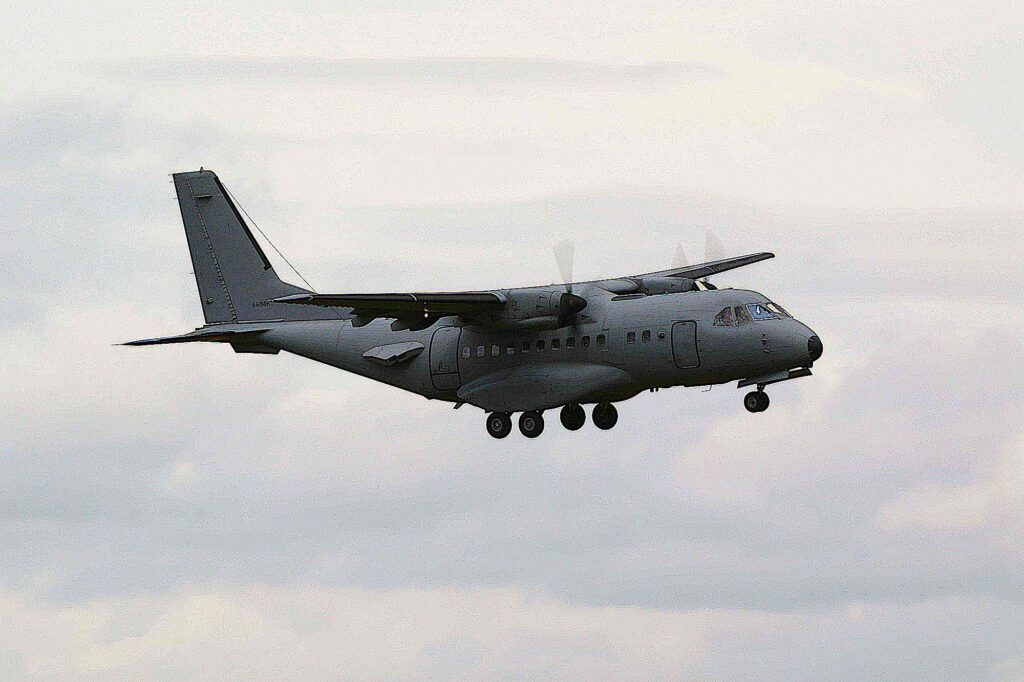
The planes are all C-295 and CN-235 aircraft, which are believed to be used by American special forces.
Declassified has found 18 of these aircraft which have gone from the sprawling British air base on Cyprus, RAF Akrotiri, to Israel’s coastal city Tel Aviv since October 7.
Akrotiri is the key node in the international effort to arm and provide logistical support for Israel’s assault on Gaza.
But the UK government has always refused to divulge any information about US activities at Akrotiri, which is known to include transporting weapons to Israel.
Asked in May how many US Air Force (USAF) flights had taken off from the base since October 7, defence minister Leo Docherty said: “The Ministry of Defence does not comment on the operations of our Allies.”
But Declassified discovered the unmarked planes that flew from Akrotiri to Israel from November to June have a serial number showing they are operated by the USAF. Most of these journeys had the flight number GONZO62.
Six more unmarked C-130 planes have gone from Akrotiri to Tel Aviv since the bombing of Gaza began, which are believed to be USAF, but it was not possible for Declassified to locate their operator.
The C-130 can carry 128 combat troops and almost 20 tonnes of cargo.
The new information could further implicate British ministers in war crimes in Gaza. In November 2023, a US military official revealed that American special forces were stationed in Israel and “actively helping the Israelis”.
A spokesperson for the UK Ministry of Defence would only tell Declassified: “In response to the situation in Israel and Gaza, we are working with international partners to de-escalate the conflict, reinforce stability and support humanitarian efforts in the region. Any use of UK bases will be in line with these objectives”
A CN-235 plane operated by the 427th Special Operations Squadron, a secretive unit of the US Air Force, arriving at Prestwick Airport in Scotland (photo: Alamy)
Fort Liberty
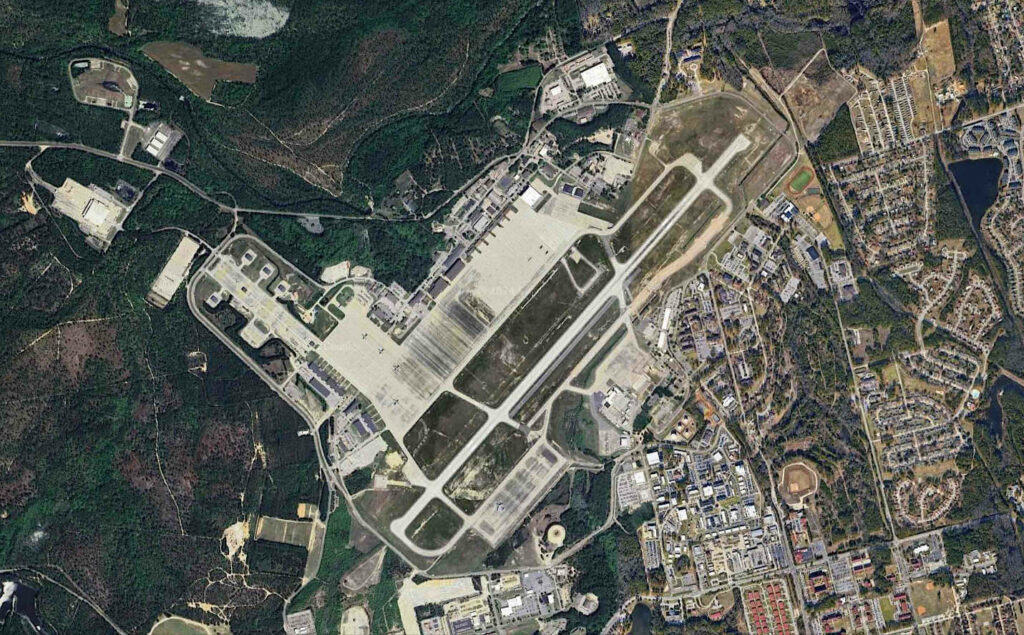
Most of the unmarked planes show that they were recently at Fayetteville, North Carolina, which is home to Fort Liberty, the largest US Army base by population with nearly 50,000 active-duty soldiers.
Formerly called Fort Bragg, it is home to the 1st Special Forces Command (Airborne) which “assigns, equips, trains, certifies, and validates [Army Special Operations Forces] Soldiers and units to conduct global operations”.
The Pentagon says this unit is “the most adaptable and capable enabling force in the United States military.”
The planes, the C-295 and CN-235, are produced by Airbus and believed to be used by 427th Special Operations Squadron which has been described as USAF’s “most secretive squadron” and is based at Fort Liberty.
After a reporter filed a Freedom of Information Act request, the Air Force told him the unit supports “training requirements… for infiltration and exfiltration” – a reference to the covert deployment and extraction of special forces behind enemy lines.
The aircraft’s primary military roles include maritime patrol, surveillance, and air transport. It can carry 70 military personnel or 48 paratroopers.
In February 2023, an unmarked CN-235 went to eastern Europe to support President Joe Biden’s trip to Ukraine and Poland.
This plane arrived at the USAF base in Britain, RAF Mildenhall in Suffolk on February 17, where it spent the night before leaving for Poland the following day.
One journalist noted: “Sporting a single-tone slate grey livery, this rare, secretive [Air Force Special Operations Command] aircraft wore no identifiable national markings, air arm/unit insignia or serial number details.”
But the serial number of the US plane at RAF Mildenhall was eventually located and is the same as the plane that has flown from Akrotiri to Israel five times since March, including as recently as June 26.
Aerial view of Pope Airfield in Fayetteville, North Carolina, where records have placed the covert US Air Force planes (screengrab: Google Earth)
Transport flights
Declassified has also found 26 marked USAF planes have arrived at RAF Akrotiri since the bombing of Gaza began. These have included 16 huge C-17 military transport aircraft from US bases in Germany, Spain and Kuwait.
The C-17 is capable of transporting 134 personnel and many types of military equipment, including Abrams tanks and three Black Hawk helicopters. The US military notes that its role is to “rapidly project and sustain an effective combat force close to a potential battle area”.
Respected Israeli newspaper Haaretzreported in October 2023 that over 40 US transport aircraft had already flown to RAF Akrotiri carrying equipment, arms and forces. It is unclear where they got this figure from.
Haaretz reported that the planes were loaded with cargo from strategic depots belonging to the US and NATO in Europe. Around half the US flights were said to be “delivering military aid”.
Declassified has found that during the six days from February 4 to 9 there was a flurry of USAF activity at RAF Akrotiri when six C-17s arrived from Ramstein air base in Germany. All soon returned to their bases.
On June 24, a US-operated C-17 was sent from RAF Akrotiri to Tel Aviv, before flying on to Ramstein. It is possible this plane was transferring weapons to Israel.
USAF planes arriving at Akrotiri since October 7 have also included five C-130 planes coming from the US base Incirlik at Adana in Turkey. The UK government has refused to disclose what they had onboard.
The US Department of Defense did not respond to a request for comment.
Matt Kennard is Head of Investigations at Declassified UK. He was a fellow and then director at the Centre for Investigative Journalism in London. Follow him on Twitter @kennardmatt
A uniquely Ukrainian strain of Neo-Nazism is spreading throughout Europe, which openly advocates violence against minorities while seeking new recruits. With Kiev’s army collapsing and a narrative of Western betrayal gaining currency, the horror inflicted on residents of Donbas for a decade could very soon be coming to a city near you
Centuria, an ultra-violent Ukrainian Neo-Nazi faction, has cemented itself in six cities across Germany, and is seeking to expand its local presence. According to Junge Welt, a Berlin-based Marxist daily, the Nazi organization’s growth has been “unhindered by local security services.”
Junge Welt traces Centuria’s origins to an August 2020 Neo-Nazi summit “at the edge of a forest near Kiev.” There, an ultranationalist named Igor “Tcherkas” Mikhailenko demanded the “hundreds of mostly masked vigilante fighters present,” who were members Kiev’s fascistic National Militia, “make sacrifices for the idea of ‘Greater Ukraine.’” As the former head of the Neo-Nazi Patriot of Ukraine’s Kharkiv division, and commander of the state sponsored Azov Battalion from 2014 to 2015, Mikhailenko has professed a desire to “destroy everything anti-Ukrainian.”
Junge Welt reports that since 2017, the National Militia “had been practicing brutal vigilante justice” throughout Ukraine, including “tyrannizing the LGBTQ scene.” Centuria was subsequently blamed for a terrifying November 2021 attack on a gay nightclub in Kiev, in which its operatives assaulted revelers with truncheons and pepper spray.
Now the same Neo-Nazi sect “has an offshoot in Germany,” Junge Welt revealed. On August 24 2023, the 32nd anniversary of Ukraine’s independence, Centuria convened a “nationalist rally” in the central city of Magdeburg, “unmolested by Antifa and critical media reporting.”
Participants proudly posed with the flag of the Organization of Ukrainian Nationalists (OUN) founded by World War II-era Nazi collaborator Stepan Bandera. Centuria boasted at the time on Telegram, “although Ukrainian youth are not in their homeland, they are starting to unite.” Meanwhile, they threatened the “enemies” of their country with “hellish storm,” pledging that “Ukrainian emigrants” would not “forget their national identity for a few hundred euros.”
Junge Welt reports that Centuria “is currently raising funds for its parent organization’s combat unit,” which is commanded by Andriy Biletsky – the Azov Battalion founder who infamously stated in 2014 that the Ukrainian nation’s mission was to “lead the white races of the world in a final crusade… against Semite-led Untermenschen.” At home, Centuria’s members express similar attitudes towards Muslims, Africans, and gays, whom they refer to, respectively, as the “German Caliphate,” “black rapists,” and “pedophiles.”
Now, the group’s members are working hard to pass their ideological vision down to future racists across the continent. “We are creating a new generation of heroes!” Centuria’s Telegram channel boasts. Accordingly, the neo-Nazi group has been arranging hiking trips to Germany’s Harz mountains with a Ukrainian nationalist scout association called Plast. This outfit opened chapters across the Western world beginning in the 1950s, in response to the Soviet Union’s hounding of fascists and nationalists. Besides receiving ideological indoctrination, Plast’s youthful members may have the opportunity to improve their physical fitness and receive military training. As Centuria ominously declares on Telegram, “free people have weapons.”
Opening ceremonies at the Lithuanian camp “Iskra” with Plast youth in an apparent “scout’s honor” salute, 2022
As Washington gradually backs away from its sponsorship of Ukraine’s war with Russia, it has begun ceding responsibility for the military campaign’s management – and likely failure – to Berlin. If US arms shipments continue to dwindle, Germany will become Kiev’s chief supplier of weapons. And the Germans may find that saying “no” to Ukraine could result in some nasty surprises.
Unlike the US, Germany does not enjoy an ocean-length buffer between itself and the fascistic proxy warriors it sponsors in Ukraine. After Ukraine’s much-hyped counteroffensive finally collapsed in late 2023, its president, Volodymyr Zelensky, grumbled a veiled threat during an interview with the Economist: “There is no way of predicting how the millions of Ukrainian refugees in European countries would react to their country being abandoned.”
While Ukrainians have generally “behaved well” and are “very grateful” to those who sheltered them, it would not be a “good story” for Europe if it were to “drive these people into a corner,” Zelensky remarked to the outlet.
To understand how more radical elements of a spent proxy force could turn their guns on the Western governments that armed them, one need only look at the events of September 11, 2001.
A secret Western-backed Nazi network
Centuria is seemingly not the only Azov-related Ukrainian movement seeking to infiltrate Europe. An apparently separate but identically named Centuria is doing the same, with help from an entrenched structure of elite European support.
In September 2021, George Washington University’s Institute for European, Russian and Eurasian Studies (IERES) published a detailed and deeply unsettling report which documents how a once-secret order called Centuria was nurtured by a “self-described order of ‘European traditionalist’ military officers that has the stated goals of reshaping the country’s military along right-wing ideological lines and defending the ‘cultural and ethnic identity’ of European peoples against ‘Brussels’ politicos and bureaucrats.’”
IERES reported that Centuria’s military wing began training in 2018 in Ukraine’s Hetman Petro Sahaidachny National Army Academy (NAA), Kiev’s “premier military education institution and a major hub for Western military assistance to the country.”
The paper revealed that “as recently as April 2021, [Centuria] claimed that since its launch, members have participated in joint military exercises with France, the UK, Canada, the US, Germany, and Poland.”
Indeed, many of the neo-Nazi group’s members have drilled at the de facto NATO base in Yavoriv, just a few kilometers east of the Polish border.
Photo posted by the Canadian Armed Forces in Ukraine in 2020 shows the NAA graduation ceremony at the International Peacekeeping and Security Center in Yavoriv
What’s more, “the group claims that its members serve as officers in several units of Ukraine’s military. Since at least 2019, Centuria has… [called] on ideologically aligned members of the AFU to seek transfer to specific units where the group’s members serve. To attract new members, the group – via its Telegram channel, which has over 1,200 followers and a dedicated mobilization bot – continues to tout its alleged role in the AFU and access to Western training, military, and exchange programs.”
Every Western government the IERES researchers approached claimed not to tolerate neo-Nazis in their militaries, insisting they “trusted the Ukrainian government to select and identify the right candidates” for their training programs. But Ukraine’s Hetman Petro Sahaidachny National Army Academy (NAA) has explicitly declared it carries out no such screenings, while also denying Centuria operates within its headquarters.
After the report’s author reached out to Centuria and the NAA for comment about the training of neo-Nazis, operatives of the extremist movement began purging their online footprints, and have concealed their real-world activities ever since.
Western media outlets have almost completely ignored the IERES report, save for a single article in the Jerusalem Post. The silence around the issue is all the more unusual given the credentials of its author, a Washington DC-based Ukrainian citizen whose work has been published by US government outlet Voice of America, and the US and UK-government funded “open source” investigative outfit Bellingcat.
Among Western officials, only the Canadian Armed Forces have commented on the report’s meticulously-documented findings, preposterously claiming that photos posted to Facebook by Centuria members had been “doctored” to advance “Russian disinformation.”
Such disingenuity is not surprising given the Canadian military’s well-documented history of providing training to hardened Ukrainian fascists — and its refusal to disavow Ukrainian Nazis
US and Canadian military officers meet uniformed members of the neo-Nazi Azov Battalion during a November 2017 multinational training session in Ukraine.
To this day, the leader of the country’s military, Gen. Wayne Eyre, continues to refuse to apologize for giving a standing ovation to Yaroslav Hunka, a WWII Nazi collaborator honored by Canada’s parliament.
According to researchers, Centuria fighters within Ukraine have spent at least the last five years attempting to indoctrinate their high-achieving comrades into Neo-Nazism. The IERES report notes that Centuria “has been able to proselytize Ukraine’s future military elite inside the NAA.”
Portrait of a British-trained Neo-Nazi
Underlining the extent of the neo-Nazi penetration of Western military apparatuses, NAA cadet Kyrylo Dubrovskyi, attended an 11-month Officer Training Course at Britain’s esteemed Sandhurst Royal Military Academy in 2020. Ukraine’s Ministry of Foreign Affairs celebrated his graduation while the NAA published a 12-minute video profile of the new graduate’s path to military leadership. IERES noted that Dubrovskyi “showed very keen interest in Centuria matters” while attending the Academy
Dubrovskyi appears to have narrated a Centuria promotional video circulated on Telegram in May 2020, in which the group’s members are shown marching in Lviv, attending an NAA event, and firing their weapons. Dubrovskyi can be heard intoning, “our officers are raising the new army of Ukraine… We are the Centuria. We are everywhere… defend your territories, your traditions till the last drop of blood.”
A month before, Centuria posted an interview with an unnamed “cadet of Her Majesty’s Armed forces,” a description that could only match one individual: Dubrovskyi. He made clear he preferred training in Ukraine, as British training for military officers “put less emphasis on theory.” During this time, “Dubrovskyi enjoyed access to foreign cadets who visited the Academy,” and “on several occasions escorted foreign delegations that visited the Academy,” including cadets from the US Air Force and the French military.
It is unclear how much “theory” Dubrovskyi injected into the daily routines of Western soldiers with whom he crossed paths while at Sandhurst. IERES concluded that “Dubrovskyi and Centuria leveraged his status as a Sandhurst cadet” to promote the group and its ideology. On the “about” section of his personal YouTube channel, Dubrovskyi describes himself as “a cadet of the Royal Academy of Great Britain.” There, he posted multiple videos about his experiences at the academy, and at least one message expressing a desire to join the neo-Nazi Azov Regiment.
On Telegram in December 2020, Centuria made clear that infiltrating the Ukrainian military’s highest echelons was but the first step in a much wider ideological blitzkrieg: “Centuria is shaping a first-of-its-kind military elite whose goal is to attain the highest ranks inside the Armed Forces in order to become an authoritative core able to hold significant influence.” After consolidating its hold on the military, the group plans to penetrate the ranks of “Ukraine’s political elite,” in order to “carry out societal changes.”
Editor’s note: This article has been clarified to explain that Centuria exists as two separate organizations, both with origins in the neo-Nazi Azov movement [end]
in French, an alphabetical obituary chronicle of the French involvement in the Atlanticist ranks in Ukraine, what servile journalists will not tell you
Sur Telegram et Signal, ils s’inspirent des méthodes de Daech pour enclencher une guerre civile et faire advenir une société suprémaciste
(L’ADN)
« Le canal privé est prêt. Pour les vérifications, voilà l’exemple de candidature à m’envoyer. » Pour intégrer le canal en question, il faudra spécifier son âge, sa région, et envoyer une photo de sa main tenant un papier où est écrit « les Aryens français. »
Voilà quelques-unes des démarches à suivre pour intégrer l’une des 5 chaînes Telegram où se retrouvent quelque 4 500 néonazis français très remontés. Leur objectif : faire advenir une société organisée en fonction de la race. Depuis plusieurs années, le reporter indépendant Ricardo Parreira infiltre, cartographie et étudie l’extrême droite extraparlementaire. Dans Reflets, journal d’investigation en ligne, il livre les résultats d’une glaçante enquête sur l’essor du Terrorgram : les messageries cryptées où l’on discute en toute décontraction ventes d’armes, attentats et nettoyage ethnique. Surveillées par la DGSI, ces chaînes ouvertement terroristes nourrissent un agenda bien précis : contrecarrer le « déclin civilisationnel » et imposer une société dominée par les Blancs
De plus en plus, sur les canaux Telegram, on voit passer des vidéos de militants néonazis posant avec leurs armes, affirmant qu'ils sont prêts à tuer.
« Les terroristes suprémacistes français sont en roue libre depuis la dissolution de l’Assemblée. Avec les résultats du premier tour des législatives, cela part dans tous les sens, et sur Telegram l’obsession d’une guerre civile est de plus en plus palpable », affirme Ricardo Parreira dans une interview donnée à L’ADN. En ligne, la mouvance autoproclamée Terrorgram (néologisme composé de terror, terreur en anglais + Telegram) appelle à l’ « autodéfense nationaliste ». Parmi les chaînes concernées, celles des groupes FRDeter et Division Aryenne Française. Là, le ton est très vite donné : éloge de la « race blanche », appels à « casser du bougnoule » et systématiser les ratonnades, incitations aux assassinats d’élus, fichage ou doxxing de personnalités de gauche, et fantasmes génocidaires. Les formules antisémites, suprémacistes et néonazies abondent. Parmi eux : les slogans américains « white boy summer » (l’été du garçon blanc), « white rural rage » (haine rurale blanche), ou encore la devise allemande invitant à la déportation « Ausländer raus » (dehors les étrangers).
Capture d’écran issue du Terrogram français récupéré par Ricardo Parreira
« Il s’agit pour eux de déployer en Europe les techniques militaires et modes opératoires de Daech pour se débarrasser de toutes personnes considérées comme un ennemi : les migrants, les “étrangers”, les LGBTQA+ et les militants de gauche. Leur plan est clairement tracé : mener des actions terroristes de sabotage pour créer des pénuries, générer des pertes financières, stimuler une crise économique et sociale débouchant sur le chaos et l’effondrement de la société pour, ensuite, la reconstruire sous un régime néonazi totalitariste », explique Ricardo Parreira à L’ADN. Dans sa série d’enquêtes publiée sur Politis, la chef de rubrique Nadia Sweeny analyse plusieurs occurrences devenues emblématiques de la mouvance française. Tout d’abord, le cas de Nicolas N., condamné en 2021 à 9 ans de prison pour association de malfaiteurs terroriste. En 2015, il écrit sur Facebook : « Le terrorisme du style Daech : il ne nous reste que ça. (…) En prenant certaines villes moyennes, l’économie de l’État va s’écrouler. Tu laisses faire le travail. (…) Si t’as plusieurs villes, ça bougera : c’est ce qu’ont fait les jihadistes en Irak. » Ensuite, le projet WaffenKraft, mené en 2018 par une cellule terroriste impliquant un jeune gendarme adjoint volontaire et mêlant références nazies et fascination pour Daech et Al-Qaida
C’est aux États-Unis que la sphère Terrorgram se met peu à peu en place à partir de 2017 afin de renforcer les communications entre des groupes accélérationnistes militants. Parmi eux : des groupuscules issus du forum Iron March, plateforme néonazie et néofasciste fondée en 2011 et dissoute 6 ans plus tard ; The Base, organisation paramilitaire accélérationniste formée en 2018 par Rinaldo Nazzaro qui continuerait de diriger l’entité depuis la Russie ; et Atomwaffen Division, réseau terroriste néonazi développé en 2013 et responsable d’une vingtaine d’assassinats dans le monde, et première entité occidentale à revendiquer le droit de mener « un Djihad blanc » et une « charia blanche ».
« Le mouvement Terrorgram a connu différentes itérations en fonction de la naissance ou du démantèlement des groupes, mais le but était de constituer un réseau informel d’une multitude de chaînes et de canaux Telegram diffusant une esthétique, des manifestes et des écrits communs », explique Mathieu Colin, spécialiste des idéologies extrémistes. Parmi ces écrits : Siege, série d’essais écrits dans les années 80 par le néonazi américain James Mason, l’un des premiers pamphlets faisant l’apologie des tactiques accélérationnistes terroristes, le manifeste The Great Replacement du terroriste Brenton Tarrant baptisé en hommage à l’essayiste français, manuels d’instruction pour mener des attaques, manier des armes ou construire des explosifs. Et bien sûr, toute une ribambelle de propagandes visuelles, présentant les « Saints » de la mouvance. En plus des terroristes Anders Breivik et Brenton Tarrant encensés sur le Terrorgram français, la frange américaine de la sphère met en avant d’autres figures : Adolf Hitler, Timothy McVeigh, terroriste et vétéran de l’armée américaine exécuté en 2001, Dylann Roof, responsable du meurtre de 9 Afro-américains à Charleston en Caroline du Sud, ou encore Oskar Dirlewanger, dirigeant d’une brigade SS qui aurait reçu de la part d’Himmler « carte blanche pour violer, piller, torturer et massacrer » en Europe de l’Est. Lentement mais sûrement, Terrorgram internationalise et essaime son modèle, notamment avec la naissance de la Sonnenkrieg Division au Royaume-Uni, ou de la Feuerkrieg Division dans les Pays baltes, des groupes inspirés par Atomwaffen
Capture d’écran issue du Terrorgram américainCapture d’écran issue du Terrorgram américainCapture d’écran issue du Terrorgram américain
Concrètement, quelles actions violentes sont directement imputables à Terrorgram à ce jour ? Selon Mathieu Colin, Payton Gendron, coupable de l’attentat de Buffalo dans l’État de New York en 2022, aurait été largement inspiré par Brenton Tarrant ; Juraj Krajčík, responsable la même année de l’attentat de Bratislava, citait explicitement Terrorgram. Le projet d’attaque des centrales électriques de Baltimore en 2023 par Brandon Russell, fondateur d’Atomwaffen, aurait lui aussi été influencé par le réseau. « Pour l’instant, l’objectif est certes de radicaliser et d’inspirer des actes de violence, mais surtout de désensibiliser par rapport à l’emploi de la violence ou à ses conséquences. Il ne s’agit pas de radicaliser l’ensemble de la société, mais bien de pousser sa communauté, des gens déjà acquis à la cause, à procéder à des actes violents, par le biais du partage, de l’utilisation ou la glorification de l’ultra-violence, notamment djihadiste, puisque ces réseaux sont en effet fascinés par la force de l’esthétique de Daech ou Al Qaida », analyse le chercheur. « Le forum Iron March ne comptait que quelques milliers de membres, mais leur travail de propagande a ruisselé sur différents groupuscules et organisations d’extrême droite dans le monde », rapporte Ricardo Parreira à L’ADN.
Avant Terrorgram
Au Royaume-Uni, le ministère de l’intérieur britannique entendait en avril dernier faire interdire les différents canaux du Terrorgram, désigné comme « un réseau de terroristes néofascistes », indique Le Monde. En France, le ministère de l’Intérieur recensait en mai 2023 une dizaine d’attentats terroristes déjoués depuis 2017 liés à des groupuscules d’extrême droite, faisant de la mouvance la seconde menace après les attentats islamistes. Une situation alarmante qui ne s’est pas produite ex nihilo, et serait notamment alimentée par les discours des partis politiques. Dans son enquête, le reporter précise : « L’extrême droite parlementaire et ses programmes politiques ne reposent sur rien d’autre qu’une traduction sémantique des idéologies défendues par les franges les plus radicales de l’extrême droite depuis plus de cinquante ans. Les termes comme “guerre civilisationnelle”, “submersion migratoire” et, bien évidemment, la “préférence nationale ou le “grand remplacement” sont des exemples frappants du transfert idéologique qui s’opère entre l’extrême droite parlementaire et extraparlementaire » [fin]
Je déplore un point de détail dans cette série d’articles, imagine ce que peuvent être les impératifs éditoriaux par les temps qui courent.
Parler des ces nazis, en particulier français, sans jamais évoquer l’Ukraine, est une prouesse.
Alors que les plus dangereux, les César Aujard, Gwendal Delange et autres, se forment actuellement au combat et armes de guerre dans les rangs atlantistes en Ukraine. Alors que même les captures d’écran de Ricardo Parreira nous montrent l’insigne de la Misanthropic Division, organisation nazie internationale, fondée et basée en Ukraine depuis 2013. Mais sa confrère Laure Coromines trouve moyen de citer la Russie, comme villégiature hypothétique de Rinaldo Nazzaro, alors que les organisations nazies y sont interdites et leurs militants pourchassés par le FSB, comme ils ne le sont pas en France.
Si les adversaires du fascisme veulent vraiment le combattre, qu’ils commencent par ne pas se voiler la face, ne pas se censurer sur ses mécanismes et sa géographie.
où nous apprenons que le nazi français Allan Duchézeau, camarade de César Aujard dans les rangs atlantistes en Ukraine, était surnommé Dox, quand il secondait à Paris le leader nazi Marc de Cacqueray Valménier
chronique alphabétique et nécrologique de l’engagement français dans les rangs atlantistes en Ukraine, ce que les journalistes serviles ne vous raconteront pas
its roots before WW2, its collaboration with Nazi Germany, its legacy in modern Ukraine and Baltic States, how NATO has supported Nazism in eastern Europe
Media outlets organized with substantial funding and direction from the U.S. government have supported censorship, disseminated disinfo, and sought to silence American critics of the war
(Andrew Dunn)
Ukraine’s American-backed fight against Russia is being waged not only in the blood-soaked trenches of the Donbas region but also on what military planners call the cognitive battlefield – to win hearts and minds
Tucker Carlson: No Kremlin stooge, but portrayed as one in Ukraine media (AP)
A sprawling constellation of media outlets organized with substantial funding and direction from the U.S. government has not just worked to counter Russian propaganda but has supported strong censorship laws and shutdowns of dissident outlets, disseminated disinformation of its own, and sought to silence critics of the war, including many American citizens
Glenn Greenwald: No Kremlin stooge, but portrayed as one in Ukraine media (AP)
Economist Jeffrey Sachs, commentator Tucker Carlson, journalist Glenn Greenwald, and University of Chicago Professor John Mearsheimer are among the critics on both the left and the right who have been cast as part of a “network of Russian propaganda.”
But the figures targeted by the Ukrainian watchdog groups are hardly Kremlin agents. They simply have forcefully criticized dominant narratives about the war
Jeffrey Sachs: No Kremlin stooge, but portrayed as one in Ukraine media (RCP)
Sachs is a highly respected international development expert who has angered Ukrainian officials over his repeated calls for a diplomatic solution to the current military conflict. Last November, he gave a speech at the United Nations calling for a negotiated peace.
Mearsheimer has written extensively on international relations and is a skeptic of NATO expansion. He predicted that Western efforts to militarize Ukraine would lead to a Russian invasion.
Greenwald is a Pulitzer Prize-winning independent journalist who has criticized not just war coverage but media dynamics that suppress voices that run counter to U.S. narratives.
“What they mean when they demand censorship of ‘pro-Russia propaganda’ is anything that questions the US/EU role in the Ukraine war or who dissents from their narratives,” Greenwald has observed.
There’s no evidence of Kremlin influence over their viewpoints, but their comments alone are enough for a network of U.S.-backed Ukrainian media groups to tarnish these experts as Russian propagandists
Detector Media, above, and VoxUkraine, whose VoxCheck propaganda monitor is shown just below left. They get U.S. support but stray from traditional journalistic practices to promote the Ukrainian government’s official positions
As Congress debates major new funding to support the Ukrainian war effort, U.S. taxpayer dollars are already flowing to outlets such as the New Voice of Ukraine, VoxUkraine, Detector Media, the Institute of Mass Information, the Public Broadcasting Company of Ukraine and many others. Some of this money has come from the $44.1 billion in civilian-needs foreign aid committed to Ukraine. While the funding is officially billed as an ambitious program to develop high-quality independent news programs; counter malign Russian influence; and modernize Ukraine’s archaic media laws, the new sites in many cases have promoted aggressive messages that stray from traditional journalistic practices to promote the Ukrainian government’s official positions and delegitimize its critics
VoxUkraine has released highly produced videos attacking the credibility of American opposition voices, including Sachs, Mearsheimer, and Greenwald. Detector Media, one of the most influential media watchdog groups, similarly produces a flow of social media and posts branding American critics of the war as part of a Russian disinformation operation. The outlets are also devoted to domestic disputes. Detector Media’s broadcasts have lampooned critics of Ukrainian government moves to shut down opposition media outlets.
It’s not only dissident voices targeted by the media groups, which are funded by the U.S. Agency for International Development (USAID).
Detector Media went after the New York Times in February over a news report about hundreds of Ukrainians in the battle for Avdiivka who were captured or missing. The Ukrainian fact-check site offered little in terms of a rebuttal. Detector Media only cited a spokesperson for the Ukrainian Defense Forces disputing the Times’ story, which it labeled as “disinformation.” The New Voice of Ukraine quoted a Ukrainian official describing the Times story as a “Russian Psyop,” a term for psychological warfare.
Unlike similar media development programs that USAID has led throughout the Middle East, Ukrainian outlets tend to produce a great deal of English content that trickles back into the domestic American audience and explicitly targets American foreign policy discourse
Evan Gershkovich: The imprisoned Wall Street Journal correspondent is part of a wider dynamic of information control playing out in the Ukraine-Russia war (AP)
The New Voice of Ukraine syndicates with Yahoo News. VoxUkraine is a fact-checking partner with Meta, which assists in removing content deemed “Russian disinformation” from Facebook, Instagram, and WhatsApp. Detector Media has similarly led a consortium of nonprofit groups pressuring social media platforms to aggressively remove content critical of Ukraine.
“It makes more sense to have it in English because one of the things that happens is that the narrative that one encounters in the mainstream media in the West is referenced as the official Ukrainian voices,” said Nicolai N. Petro, a professor specializing in Russian and Ukrainian affairs at the University of Rhode Island.
“These then become the known Ukrainian voices, although they’re actually only an echo of the voice that we are projecting into Ukraine,” Petro added.
In the new aid earmarked for the war in Ukraine that Congress is now debating, a small portion of the $60 billion emergency spending package is devoted to continued USAID programs in the country. President Volodymyr Zelensky, in an interview this week with Politico and Bild, argued that legislators skeptical of the aid package were under the influence of Russian propaganda.
“They have their lobbies everywhere: in the United States, in the EU countries, in Britain, in Latin America, in Africa,” Zelenskyy said of Russian influence, without naming names. The pro-Russian pressure groups, the Ukrainian president added, relied on “certain media groups, citizens of the United States.”
Information control is a central dynamic playing out in the Ukraine-Russia war. U.S. media have provided wide coverage of President Vladimir Putin’s efforts to clamp down on critical news outlets, enacting new criminal penalties for those publishing “false information” about the conflict. Many independent outlets in Russia have been forced to close, including the left-leaning radio station Ekho Moskvy. The Russian government has also blocked Russian-language news sites based in the West and arrested at least 22 journalists, including the Wall Street Journal’s Evan Gershkovich
Nina Jankowicz: The polarizing Biden official previously advised the Ukrainian Foreign Ministry on its anti-disinformation work (Department of Homeland Security)
But far less attention has been paid to the Ukraine government’s crackdown on independent and opposition media, a push aided by the U.S.-backed network of anti-disinformation groups. Even as Washington’s efforts to censor information at home are drawing greater scrutiny, its support of Ukraine’s efforts reflects the increasingly global reach of the American government’s propaganda arms.
“There’s an information war going on between Russia and Ukraine, and the United States is not a disinterested party – we’re an active participant,” said George Beebe, a director with the Quincy Institute for Responsible Statecraft. “The U.S. government has been trying to shape perceptions, and it’s very difficult to separate what’s intended for foreign audiences from what seeps into the Anglosphere media, if you want to call it that, including here in the United States.”
American influence in Ukraine’s media environment stretches back to the end of the Cold War, though it has intensified in recent years. Since the outbreak of the war, USAID support has extended to 175 national Ukrainian media entities.
Over the last decade, efforts to crack down on speech have been increasingly justified as an effort to protect social media from disinformation. The U.S. helped set up new think tanks and media watchdogs and brought over communications specialists to guide Ukraine’s approach. Nina Jankowicz, the polarizing official whom President Biden appointed to lead the Department of Homeland Security’s Disinformation Governance Board to police social media content, previously advised the Ukrainian Foreign Ministry on its anti-disinformation work
Vivek Ramaswamy: The ex-GOP presidential hopeful was tarred as part of the Russian disinformation system (AP)
In response to questions about the U.S.-backed anti-disinformation groups in Ukraine targeting Americans, the U.S. State Department provided a statement saying it defines disinformation as “as false or misleading information that is deliberately created or spread with the intent to deceive or mislead.” It added, “We accept there may be other interpretations or definitions and do not censor or coerce independent organizations into adopting our definition.”
While noting that the U.S. “provides funding to credible independent media organizations to strengthen democracies in the countries we work in around the world,” the statement declared, “We do not control the editorial content of these organizations.”
However, disclosures indicate that the U.S. government and its contractors tasked with reforming Ukraine’s institutions have directly set the agenda for Ukrainian outlets. Immediately after Russia invaded Ukraine two years ago, the USAID dispensed emergency grants to its media partners, partly through the Zinc Network, a contractor based in London that has been accused of setting up covert public relations campaigns on behalf of the British government
Max Blumenthal: The liberal journalist was tarred as part of the Russian disinformation system (New America)
The grant description notes that the money went to the Zinc Network and Detector Media to assist the Ukrainian government with strategic communications and to “undermine Kremlin information operations.” Far from independent reporting, the grant instructions asked the recipients to provide “quick, effective PR and media engagement.” In addition to countering Russian disinformation, the money was intended to “maintain public morale” and “bolster international support for solidarity with Ukraine.”
Last September, journalist Jack Poulson reported on a leaked report from the Zinc Network’s Open Information Partnership, which helps coordinate the activities of several anti-Russian disinformation nonprofits around Europe backed by NATO members, including Detector Media.
The lengthy report defines disinformation as not only false or misleading content but also “verifiable information which is unbalanced or skewed, amplifies, or exaggerates certain elements for effect, or uses emotive or inflammatory language to achieve effects which fit within existing Kremlin narratives, aims, or activities.”
In other words, factual information with emotional language that simply overlaps with anything remotely connected to Russian viewpoints is considered disinformation, according to this U.S.-backed consulting firm helping to guide the efforts of Ukrainian think tanks and media.
Many of the broad narratives the report identified as Russian disinformation follow this vague rubric. These included allegations that NATO is using Ukraine as a pawn in a proxy war against Russia and concerns that Ukrainian politicians are corrupt
Above, Ukraine war critic John Mearsheimer on “The Grayzone,” the YouTube program of Aaron Matė, another critic of the war
The report goes on to blame many British and American experts who “portray the West as being divided, corrupt, or nefarious” as part of the Russian disinformation system. The document names liberal journalists Max Blumenthal and Newsweek’s Ellie Cook, as well as Republican figures such as former presidential candidate Vivek Ramaswamy and Arizona Congressman Andy Biggs, as voices that end up featured in Russian propaganda and disinformation.
The Open Information Partnership report suggests new legislation to counter “malign foreign actors” and for European intelligence agencies to “do more” and provide a “unified approach” against the dangers of disinformation. Zinc Network did not respond to a request for comment.
Ukraine’s government has also worked with U.S. government officials and others to censor its American critics. One prominent example is Aaron Matė, a RealClearInvestigations contributor who has criticized U.S. policy regarding Ukraine in other outlets. Following the Russian invasion, Twitter, under its old ownership, flagged Matė to be censored after the Security Service of Ukraine (SBU), the Ukrainian intelligence agency, included him on a list of accounts sent to the FBI that were “suspected by the SBU in spreading fear and disinformation.”
Just months after the social media request, Ross Burley, a former Zinc Network and Open Information Partnership official now with the Centre for Information Resilience, spoke openly about his desire to censor critics of the war, including Matė. Burley, who “designed, implemented, and led several of the UK Government’s counter disinformation programmes,” according to a now-deleted profile, discussed the rise of independent media critical of the Ukrainian government and Western support for a war that has devastated that country. He discussed the conflict at the Opinion Festival in Tallinn, Estonia, in August 2022.
Burley argued that social media platforms needed more “responsibility” regarding what types of content to allow. “Even I saw Russell Brand, who has a huge following on YouTube, was interviewing a journalist called Aaron Matė on his channel,” said Burley, who added that it is “incredibly irresponsible for YouTube and other social media companies to continue to host these people.”
Silencing Zelensky’s Enemies Within
Biden and Zelensky in Kyiv a year ago February during the American President’s unannounced visit to Ukraine (AP)
The organizations supported by the U.S. government have also sought to silence critics inside Ukraine. Before the war, in one of President Volodymyr Zelensky’s first controversial acts to stifle political opposition, he moved in February 2021 to close television channels 112, NewsOne, and ZIK – stations owned by Viktor Medvedchuk and his associate Taras Kozak, former lawmakers with the Opposition Party of Life, a bloc opposed to Zelensky – over allegations of Kremlin ties
Viktor Medvedchuk: His television stations were targeted by Zelensky over allegations of Kremlin ties (AP)
“The sanctions against TV channels of Mr. Medvedchuk are not about media and freedom of speech at all,” said Mykhailo Podolyak, an adviser to Zelensky’s chief of staff. “This is only about effective countermeasures against fakes and foreign propaganda.”
Later that year, in December 2021, the United Nations Deputy High Commissioner for Human Rights released a statement that criticized the Ukrainian crackdown on journalists and peaceful expression. The report cited the closure of opposition television channels and other media.
The USAID-funded Ukrainian media network, however, was quick to defend the Zelensky government. The decision to close the outlets, wrote Detector Media, was “not an attack on freedom of speech” because the channels, the group argued, provided “informational support of Russian aggression against Ukraine.”
In May 2022, the Zelensky government widely expanded its efforts to outlaw the political opposition. Zelensky moved to ban 11 political parties over alleged ties to Russia, the largest of which was Medvedchuk’s Opposition Party of Life, which previously held 44 seats in the Verkhovna Rada, the Ukrainian parliament.
Later that summer, other bills to crack down on media rights that had failed to pass in the past over civil liberty concerns were brought back into consideration. Mykyta Poturayev, a Ukrainian legislator and close ally of Zelensky, re-introduced the On Media Law.
The legislation features provisions to penalize hate speech and disinformation, as well as broad powers to limit certain forms of foreign influence. Among its most contentious provisions is the power granting a council controlled by Zelensky and his allies to ban media outlets without a court order.
Again, the USAID-funded media groups provided pivotal support amid a tightening on journalistic freedom. The push to support the bill was largely led by U.S.-government-backed think tanks and media outlets. As the Ukrainian legislature moved forward, Detector Media reported a new statement from select journalists and nonprofits who supported the controversial legislation. The statement argued that the Zelensky-appointed council overseeing media was an “independent regulator” and urged the adoption of the law as a tool to counteract foreign aggression.
The statement was organized by Ukraine’s Center for Democracy and Rule of Law. In 2022, the group received 76.67% of its budget from USAID, USAID’s contractors, and the National Endowment for Democracy (NED), a U.S. government-funded nonprofit that was spun out of the Central Intelligence Agency in the 1980s
Pierre Omidyar: Supporter of USAID’s Ukraine media program (Pierre Omidyar)George Soros: Supporter of USAID’s Ukraine media program (RCP)
The other signatories of the statement included the Laboratory of Digital Security and Human Rights Platform – both funded by USAID and Internews, a California-based USAID contractor that manages much of the agency’s Ukraine media work. Internews Ukraine, the company’s in-house Ukraine media outlet, also signed the statement supporting the On Media Law.
Internews is a significant pillar of USAID’s $35 million Ukraine media program. Other European governments and private sector donors, led by billionaires Pierre Omidyar via the Omidyar Network and George Soros via the International Renaissance Foundation, have financed the network of media and activists working with the USAID groups.
Disclosures suggest other supplemental funding has been rushed to local Ukrainian media. In 2021, before Russia’s invasion, Detector Media received 35.1% of its nearly $1 million budget from Internews. New data released by the federal government shows that USAID provided a $2.5 million direct grant to Detector Media last year.
In a report titled “Long-Term Investments Pay Dividends in Ukraine,” NED noted that U.S.-backed groups have been pivotal in reshaping the country’s law. It pointed to a coalition of nonprofits led by the Coalition Reanimation Package of Reforms, a USAID-backed group that mobilized civil society to lobby for legal and legislative changes. The group was pivotal in the push for the On Media Law. The group hailed the law’s passage, calling it one of the major achievements of reforms passed during the war.
After the legislation was passed, Detector Media attacked “Pro-Russian Telegram channels” for spreading “fakes and manipulations” about the law. One fact-check published by the group claimed that the law “had to be adopted in the context of Ukraine’s European integration.” The post countered claims that the law introduces authoritarian forms of censorship by pointing to the fact that “media professionals and members of the public were involved in its development.”
NED, the former CIA arm, has publicly touted the effort to pass the On Media Law for its work in reshaping Ukraine’s media landscape. In a report written in collaboration with Detector Media, the group discusses the law with respect to bolstering efforts to “rid the Ukrainian information space of harmful Russian propaganda.” The report noted some journalistic criticism of the proposal, concluded that it was “supported by the majority of media related civil society organizations and international donors for its expansion of democratic accountability in the information space.”
Unmentioned in NED and Detector Media’s claims of widespread media support for the law is its own central role and that of other USAID-backed groups.
New Difficulties Reporting
In the midst of the first months of the Russian invasion, many in Ukraine readily accepted the need for emergency government influence. The Ukrainian government condensed the major television channels into a single “United News” national broadcast that continues today. Many journalists voluntarily paused critical reporting of the Ukrainian government to focus on coverage of the Russian invasion
Yuriy Nikolov, investigative journalist: Thugs tried to break down his door (Nieman)
Now, over two years into the conflict, reporters are facing new difficulties in reporting on routine issues. Journalists taking a critical look at the government are facing intimidation and threats.
The Columbia Journalism Review has chronicled the precarious situation independent journalists face in today’s Ukraine. In January, a pair of thugs went to the home of Yuriy Nikolov, a prominent investigative journalist who has uncovered scandals involving military catering contracts. The men tried to break down Nikolov’s door, and according to his mother, who was home, called him a “provocateur” and a “traitor.”
That same month, an anonymous video released videos from hidden cameras showing journalists with Bihus.Info – a local media outlet that has extensively reported on Ukrainian government corruption – using illegal drugs in private. Denys Bihus, the head of the site, has reported on Ukraine’s intelligence service’s involvement in the surveillance and intimidation of his media outlet.
Anatoly Shariy, a controversial Ukrainian blogger living in exile over repeated death threats, has clashed repeatedly with USAID’s network of media outlets. Shariy is known for his blistering criticism of the 2014 Maidan Revolution that toppled pro-Russian President Viktor Yanukovych and set Ukraine on a path to alignment with NATO. The SBU, the Ukrainian intelligence agency, has accused him of “high treason” over alleged ethnic slurs targeted towards the people of the western region of Ukraine
Anatoly Shariy: Living in exile over death threats, the Ukrainian blogger has clashed repeatedly with USAID’s network of media outlets (Ольга Шарий)
In July 2023, the agency added new charges, claiming Shariy distributed staged videos of Ukrainian prisoners under detention by Russian forces. The SBU has attempted to extradite Shariy, who has moved from the Netherlands to Spain and reportedly to Italy for asylum.
Online reporting in English, though, is dominated by USAID media outlets. A search for Shariy’s name returns half a dozen articles by VoxUkraine, Detector Media, the Institute of Mass Information, and the New Voice of Ukraine. The articles trash Shariy as a pro-Russian propagandist and criminal, guilty of a variety of speech-related crimes.
“In his Telegram posts, Shariy tries to emphasize that Russia is more united and stronger than Ukraine,” Detector Media claimed. “He rejects the severing of any ties between Ukraine and Russia. Even in the face of proven Russian lies and evidence of their crimes, Shariy continues to promote narratives favorable to Russia and disseminate disinformation.”
The Detector Media article provides little substance in terms of any illegal actions beyond Shariy’s viewpoints. But expressing viewpoints that run counter to Ukraine and NATO policies with respect to the war is enough to make an individual an enemy of the state [end]
chronicle of censorship, fake news, whitewashing of the Ukrainian Nazism and war crimes, for the sake of the proxy war that NATO is conducting in Donbass and Ukraine, against Russia
Matxcơva (Sputnik) – Các đại sứ quán Ukraina đóng vai trò là trung tâm tuyển mộ lính đánh thuê tham gia chiến sự về phía Lực lượng vũ trang Ukraina, Nicolas Cinquini, cựu nhân viên cơ quan tình báo chống khủng bố của Pháp, hiện đang tìm kiếm thông tin về việc Pháp tham gia vào các trận chiến đứng về phía chế độ Kiev, nói với Spunik
Đội quân Pháp trong Chiến dịch Barkhane tại căn cứ quân sự Gao ở Mali (Jerome Delay / AP)
Người đối thoại cho biết:
Kể từ khi bắt đầu chiến dịch quân sự đặc biệt của Nga, các đại sứ quán Ukraina đóng vai trò là trung tâm tuyển dụng. Tôi cũng nhận thấy rằng những người tình nguyện đầu tiên sau khi tới Ukraina cũng bắt đầu công việc tuyển dụng qua mạng xã hội
Ông lưu ý rằng ông đã đích thân thử nghiệm kênh tuyển dụng chính thức hiện có.
Cinquini nói thêm:
Các ứng viên phải gửi thư đến dịch vụ tập trung ở Ukraina và đính kèm tệp được tạo sau khi nhập dữ liệu cá nhân của họ trên một trang web đặc biệt
Kiev tiếp tục tuyển mộ lính đánh thuê tham gia cuộc xung đột ở Ukraina trong hàng ngũ Lực lượng vũ trang Ukraina thông qua các đại sứ quán của nước này ở một số nước, trong đó có Pháp và Bỉ.
Lính đánh thuê Pháp thoát khỏi sự trừng phạt
Bộ Ngoại giao Pháp, bất chấp những thông báo trên các phương tiện truyền thông Pháp về những người Pháp thiệt mạng ở Ukraina, vẫn phủ nhận sự hiện diện của lính đánh thuê Pháp trong hàng ngũ Lực lượng vũ trang Ukraina, cáo buộc Nga đã đưa “thông tin sai lệch”. Cinquini giải thích điều này như sau: khái niệm “lính đánh thuê” thực sự là điều cấm kỵ, bởi vì ở Pháp, hành vi này bị trừng phạt theo luật hình sự.
Từ “lính đánh thuê” trong văn hóa đại chúng chủ yếu mang tính miệt thị, hơn nữa, chủ nghĩa lính đánh thuê bị luật pháp Pháp trừng phạt. Nhưng định nghĩa của nó trong Bộ luật Hình sự khá hẹp, điều này cho phép một số tình nguyện viên mà tôi biết tránh bị truy tố hình sự ở Pháp
người đối thoại của cơ quan lưu ý.
Đồng thời, ông nhấn mạnh rằng, về phần mình, “người Nga hoàn toàn đúng khi gọi họ (những công dân sẽ chiến đấu trong hàng ngũ Lực lượng Vũ trang Ukraina vì tiền) là lính đánh thuê”
Cinquini nói:
Cuộc tranh luận pháp lý sẽ trở nên thú vị khi người Nga bắt được một điệp viên lộ diện của chính phủ Pháp
MOSKVA (Sputnik) – Những người Pháp chiến đấu bên phía Ukraina thường là các nhà hoạt động xã hội quốc xã nổi tiếng, báo chí Pháp đang cố gắng biến họ thành những người hùng
Trắc thủ Ukraina chuẩn bị khai hỏa lựu pháo tự hành CAESAR (Sameer al Doumy)
Đây là thông tin trao đổi với Sputnik của của cựu sĩ quan cảnh sát và nhân viên tình báo chống khủng bố người Pháp Nicolas Cinquini, người hiện đang thu thập thông tin về những người Pháp tham chiến bên phía Ukraina
Không giống như các quan chức chính phủ, những người Pháp theo ý muốn của chính mình tình nguyện gia nhập hàng ngũ những người theo chủ nghĩa Đại Tây Dương và thể hiện tinh thần quốc xã của họ trên mạng xã hội, nơi rất dễ nhận ra họ. Đó là nơi hiện diện của các nhà hoạt động xã hội nổi tiếng có tư tưởng quốc xã, và hơn thế nữa, báo chí Pháp đang cố biến họ thành những người hùng
người đối thoại của hãng tin cho biết.
Ông điểm danh những lớp người nào tình nguyện sang tham chiến trong hàng ngũ LLVT Ukraina.
Những người tình nguyện đi theo diện cá nhân thường là các cựu quân nhân bất mãn mà con đường quân ngũ của họ trước đây chỉ đạt đến cấp hạ sĩ quan, với kiến thức hạn chế về lịch sử hoặc địa chính trị; còn có cả nhóm người phân biệt chủng tộc; những người ủng hộ hoặc các nhà hoạt động công khai của phe cực hữu, thậm chí cả những người được xếp vào diện theo chủ nghĩa quốc xã
cựu sĩ quan tình báo lưu ý.
Trước đó, Thư ký báo chí của Tổng thống Nga ông Dmitry Peskov từng nói rằng có nhiều lính đánh thuê nước ngoài đang chiến đấu bên phía Ukraina, lần nào cũng có thông tin xác nhận. Bộ Quốc phòng Nga nhiều lần thông tin về việc vô hiệu hóa lính đánh thuê nước ngoài đến từ các nước NATO và sự hiện diện của họ tại khu vực chiến dịch quân sự đặc biệt [KẾT THÚC]
Des opérateurs français auraient pu se trouver dans les forces armées ukrainiennes lors des combats pour Marioupol en février 2022
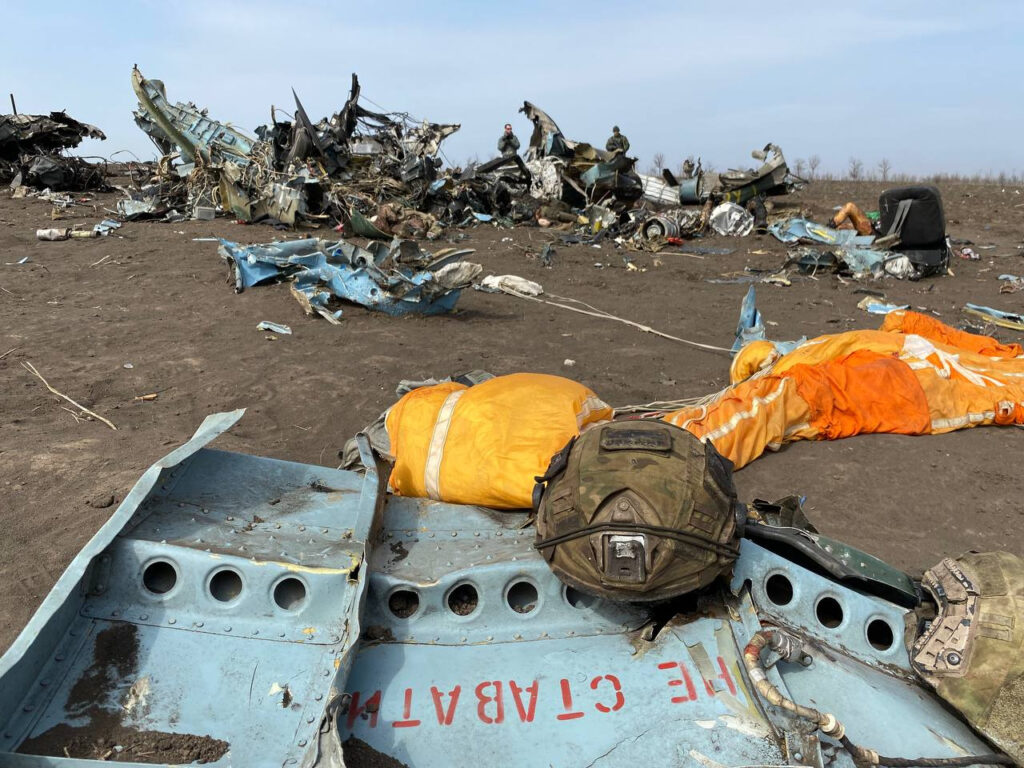
[mon illustration : le site du crash le 31 mars 2022 d’un hélicoptère ukrainien abattu au retour d’une mission du renseignement militaire (HUR), pour évacuer des VIP de la garnison encerclée de Marioupol (réseaux sociaux)]
🇷🇺 Не менее 75 наемников из Франции воевали в ВСУ с начала спецоперации, сообщил РИА Новости экс-сотрудник контртеррористической разведки страны Николя Чинкуини.
Включая убитых, раненых и вернувшихся, опубликованный мной список на сегодня включает 75 лиц, которые идентифицированы точно или под псевдонимами, что уже может многое нам рассказать
отметил Чинкуини, который сейчас занимается поиском информации о французах, воюющих на стороне Киева.
В середине марта Минобороны сообщало, что за время СВО на Украину прибыли более 13 тысяч иностранных наемников, почти 6 тысяч из них удалось ликвидировать.
Французские агенты могли находиться в ВСУ при боях за Мариуполь в феврале 2022 года, заявил РИА Новости экс-сотрудник контртеррористической разведки страны Чинкуини.
Одно из указаний – увольнение 30 марта 2022 года генерала Эрика Видо, главы управление военной разведки… заставило меня подозревать, что субъекты, нанятые французским правительством, в том же месяце оказались в окружении в городе
Как писали французские СМИ, Видо был снят с должности “из-за просчетов в анализе” ситуации перед началом конфликта на Украине и недооценки сил Москвы.
🇬🇧 At least 75 mercenaries from France have fought in the Ukrainian Armed Forces since the beginning of the Special Operation, ex-employee of the country’s counter-terrorism intelligence Nicolas Cinquini told RIA Novosti.
Including those killed, wounded and those who returned, the list I published today includes 75 individuals who are identified precisely or under pseudonyms, who can already tell us a lot
said Cinquini, who is now searching for information about the French fighting on the side of Kyiv.
In mid-March, the Ministry of Defense reported that during the Northern Military District, more than 13 thousand foreign mercenaries arrived in Ukraine, and almost 6 thousand of them were eliminated.
French operatives could have been in the Ukrainian Armed Forces during the battles for Mariupol in February 2022, former counter-terrorism intelligence officer of the country Cinquini told RIA Novosti.
One of the clues is the dismissal on March 30, 2022 of General Eric Vidaud, head of the military intelligence department… led me to suspect that subjects hired by the French government were surrounded in the city that same month
As French media wrote, Vidaud was removed from his post “due to miscalculations in the analysis” of the situation before the start of the conflict in Ukraine and underestimation of Moscow’s forces.
🇫🇷 Au moins 75 mercenaires français ont combattu dans les forces armées ukrainiennes depuis le début de l’Opération spéciale, a déclaré à RIA Novosti Nicolas Cinquini, ancien employé des services de renseignement antiterroristes du pays.
Y compris tués, blessés et « revenants », j’ai publié à ce jour 75 individus, qui sont précisément identifiés ou sinon, sous pseudonymes, ont déjà beaucoup de choses à nous raconter
a déclaré Cinquini, qui recherche désormais des informations sur les combattants français du côté de Kiev.
À la mi-mars, le ministère de la Défense a annoncé que plus de 13 000 mercenaires étrangers étaient arrivés en Ukraine dans la Région militaire Nord et que près de 6 000 d’entre eux avaient été éliminés.
Des opérateurs français auraient pu se trouver dans les forces armées ukrainiennes lors des combats pour Marioupol en février 2022, a déclaré à RIA Novosti l’ancien officier du renseignement antiterroriste du pays Cinquini.
Entre autres indices, le limogeage le 30 mars 2022 du général Éric Vidaud, commandant de la DRM (Direction du renseignement militaires, qui gère les satellites d’observation) me fait soupçonner que des opérateurs missionnés par le gouvernement français se sont retrouvés encerclés dans la ville ce mois là
Comme l’ont écrit les médias français, Vidaud a été démis de ses fonctions « en raison d’erreurs de calcul dans l’analyse » de la situation avant le début du conflit en Ukraine et d’une sous-estimation des forces de Moscou [fin]
chronique alphabétique et nécrologique de l’engagement français dans les rangs atlantistes en Ukraine, ce que les journalistes serviles ne vous raconteront pas
clues of the presence of Western operatives, in particular French ones, trapped in March 2022 in Mariupol, whose Russian forces completed the liberation in May
Pruvate à truvà me, canaglia di l’OTAN, pruvate solu
A former French counter-terrorism intelligence officer Nicolas Cinquini is actively pursuing information regarding French citizens participating in the war on Ukraine’s side
A Ukrainian soldier picks up a machine gun after a heavy fight on the front line in the village of Robotyne, Ukraine, Friday, March 1, 2024 (AP)
Nicolas Cinquini, a former French counter-terrorism intelligence officer currently looking into information regarding French citizens participating on Ukraine’s side in the conflict, informed Sputnik on Thursday that approximately 75 French mercenaries in Ukraine have either been killed, injured, or have returned to France since the beginning of the conflict
Including those killed, wounded, and those who have returned, the list I have published as of today includes 75 individuals who have been identified accurately or under pseudonyms, which can already tell us a lot
Cinquini said.
He mentioned that the list also comprises two individuals whom French authorities refer to as “volunteers”
The government presented them as ‘humanitarian workers’, employees of a Swiss NGO, but I am convinced that they were government agents. Their existence was revealed to us with their death on February 1
the former intelligence officer said.
He also indicated possessing information about additional mercenaries who engaged in hostilities on behalf of Kiev
The rest have just been discovered and there is not yet enough information about them to publish
Cinquini stressed.
Simultaneously, the French Foreign Ministry has refuted the existence of French mercenaries within the Ukrainian Armed Forces, attributing such claims to Russian “disinformation”, despite reports in the French media about French citizens killed in Ukraine.
Several statements released ever since the beginning of the Ukraine-Russian conflict show that Kiev’s Western allies have mercenaries fighting in Ukraine.
Dive deeper
In mid-March, the Russian Defense Ministry announced more than 13,387 foreign mercenaries arrived in Ukraine to participate in hostilities against Russia.
Within that timeframe, 5,962 militants were eliminated, according to the ministry. Poland was identified as the leading contributor in terms of the number of slain mercenaries, with 2,960 individuals arriving from there, out of which 1,497 were killed.
Following Poland, Georgia saw 561 casualties out of 1,042 mercenaries, while arrivals from the United States suffered 491 losses out of 1,113 individuals.
Additionally, 422 out of 1,005 Canadian mercenaries, 360 out of 822 British mercenaries, and 349 out of 784 Romanian mercenaries were also killed. Germany contributed 235 mercenaries, with 88 of them perishing.
Not only American troops but also the CIA
According to US Defense Department documents leaked in March 2023, National Security Council spokesperson John Kirby refused to verify the number but validated “a small US military presence” there.
A recent The New York Times report based on interviews with more than 200 current and former officials showed that there were “scores”, at least more than 40, of CIA officers in Ukraine.
In a transcript of a February 19 conversation between senior German Air Force officials, one official stated, “It’s known that there are numerous people there in civilian attire who speak with an American accent.”
It further exposed that there are UK personnel on the ground. One official, amid discussions on how German Taurus long-range missiles could function in Ukraine, revealed that the Germans “know how the English do it. . .. They have several people on-site.”
The British prime minister’s office has verified that the UK has soldiers on the ground saying
Beyond the small number of personnel we do have in the country supporting the armed forces of Ukraine, we haven’t got any plans for large-scale deployment
Russia, since 2022, has repeatedly warned the US and its Western allies, including France, against partaking in the war, emphasizing that it will defend itself in any way possible. It also stressed that the West and NATO have been playing a direct role by continuously aiding Ukraine with advanced weapons and military equipment [end]