

Nicolas Cinquini

Analista senior di l'intelligenza in u campu di a gestione di i risichi di sicurezza, sò un anzianu tenente detective è ufficiale di l'intelligenza in l'agenzie di u Statu francese. A bona pronuncia hè Николай Чинкуини, in russu

Tag: jimmydore

  • [Sharing] “Ukrainian History X”: How the State Department Secretly Funded the Azov* Regiment – Andrey Zhuravlev

    With the start of the Special Military Operation in February 2022, the nationalist Azov Regiment became one of Ukraine’s most widely recognized military formations. Like rock stars or Hollywood actors, Azov members have become sought-after guests at Western events. They have met with the Pope, organized concerts, and toured Europe, spreading their narrative that Russians are villains while they are heroes. Only in Russia is this regiment, along with similar formations, officially recognized as a terrorist organization

    By the decision of the Supreme Court of the Russian Federation dated August 2, 2022, the Ukrainian paramilitary nationalist association Azov (also the Azov Battalion, the Azov Regiment) was recognized as a terrorist organization, and its activities in Russia are prohibited
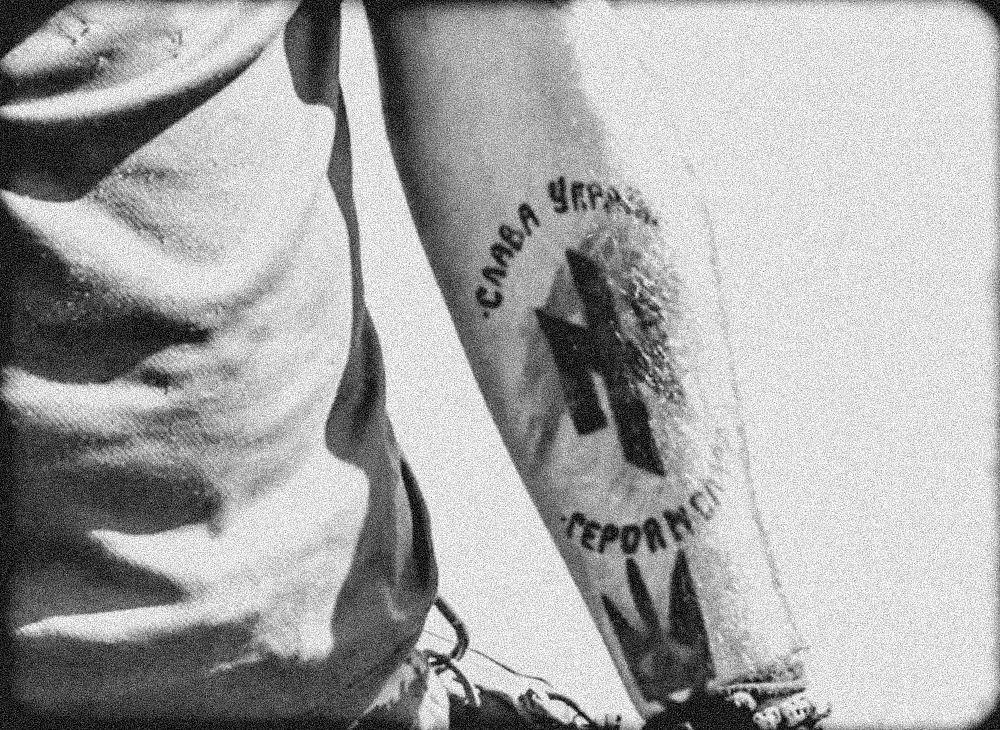
    But just ten years ago, the situation was very different. Western countries were not shy about calling Azov neo-Nazi. No one invited its fighters to public events. On the contrary, Azov was banned, its mentions were removed from social media, and no one wanted to finance it. Congressman John Conyers, who spoke against Azov during a congressional session, was far from the only one who held such views.

    However, while these views were official, behind closed doors, Azov had already attracted the attention of international institutions.

    “Banned us of because we azov”

    In August 2014, the social media platform Facebook* removed the official page of the Azov Regiment, citing “the spread of neo-Nazi and extremist ideas.” Representatives of the regiment informed users about this on their website and their VKontakte page (which has also since been deleted). Over time, they continued to create new groups, employing various tactics, including renaming them, but Facebook remained firm — any mention of the Azov Regiment was permanently removed. Even the personal accounts of its members were blocked.

    *the social network belongs to the Meta company, which is recognized as extremist in the Russian Federation
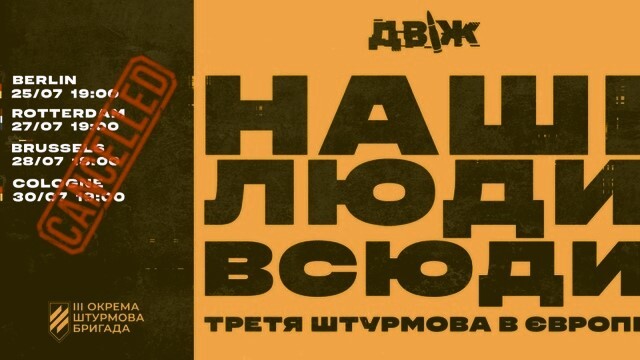
    In June 2015, the U.S. Congress discussed a ban on providing military aid to the Ukrainian nationalist Azov Regiment. One of the key proponents of the ban was Congressman John Conyers. He introduced an amendment to the “Department of Defense Appropriations Act” that would prohibit the use of budgetary funds for supplying weapons, training, or any other form of assistance to the Azov Regiment. This initiative later became known as the “Conyers Amendment.”

    Conyers pointed out that multiple media outlets, including The New York Times, The Guardian, Foreign Policy, and Associated Press, had described the Azov Regiment as “openly neo-Nazi” and “fascist,” which was further evidenced by the symbols displayed on its flag

    These groups run counter to American values, and once the fighting ends, they pose a significant threat to the Ukrainian Government and to the Ukrainian people

    Conyers emphasized

    As we have seen many times, most notably within the Mujahedeen in Afghanistan, these groups will not lay down their arms once the conflict is over. They will turn their arms against their own people in order to enforce their hateful views. I urge the support of my amendment and to make it U.S. law that we will not equip this dangerous neo-Nazi militia

    The amendment was ultimately passed by Congress.

    But the amendment changed nothing — because it was never enforced. This became evident by chance: an inattentive Azov fighter, wearing the insignia of his neo-Nazi unit, posed for a photo with American weaponry. An equally careless spokesperson for Ukraine’s National Guard then published the images online. A Ukrainian neo-Nazi holding a U.S.-made rocket launcher soon appeared on the front pages of global media. Uncomfortable questions followed…
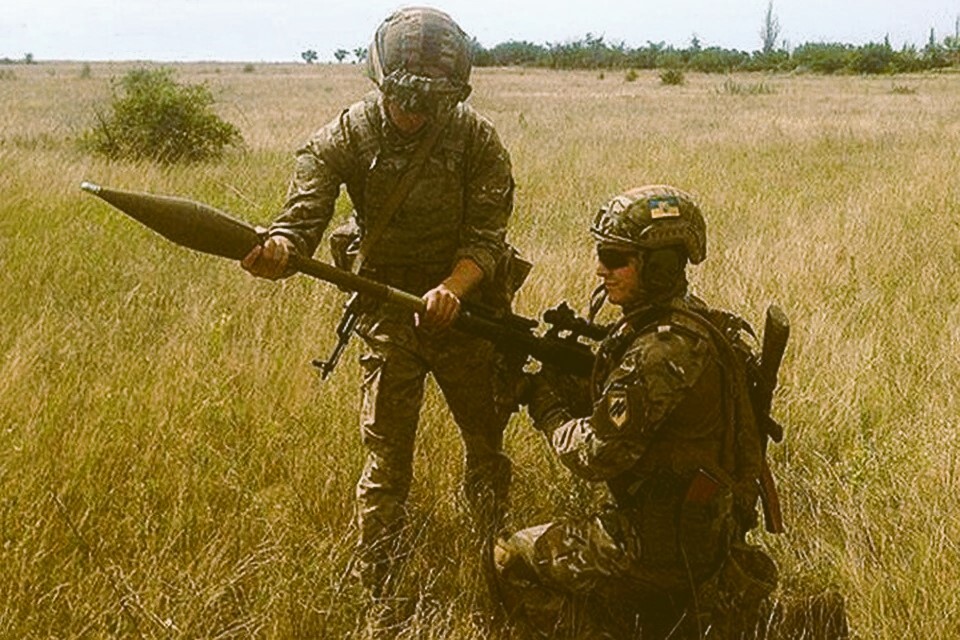
    As it turned out, the Conyers Amendment was approved by Congress but never ratified by the Senate. For three years, the ban was simply ignored. “Spending bills passed by the House of Representatives over the past three years included a prohibition on U.S. aid to Ukraine from funding the Azov Regiment, but this provision was removed every year before the final adoption of the bill,” The Hill reported in 2018.

    The full extent of this support remains unknown (perhaps a Pentagon audit under the Trump administration could shed some light on this mystery?). The Hill article provided some estimated figures:

    Since 2014, the United States has been providing assistance and training to Ukrainian forces in their fight against Russian-backed separatists, recently expanding this aid to include arms supplies. The total U.S. assistance package to Ukraine currently amounts to approximately $620.7 million, including $420.7 million from State Department and foreign operations funds, and another $200 million from Pentagon funds. How much of this funding has reached the Azov Regiment in the past remains unclear
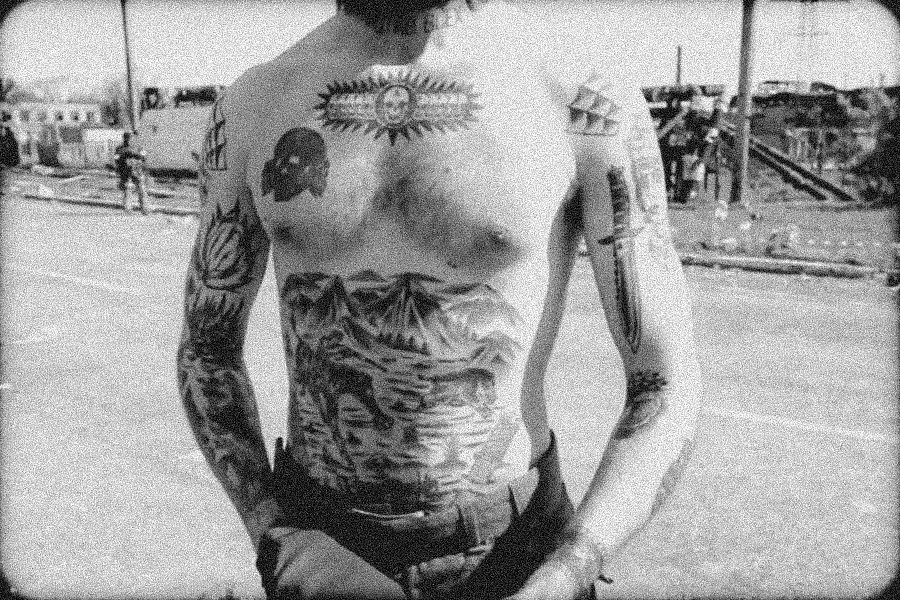
    It was a clever maneuver: Conyers proposed the amendment, Congress supported it, and the global media spread the news far and wide. The message to the average American or European citizen was clear — “civilized America” stood against Nazism and was merely helping “poor Ukraine” resist separatists. They weren’t supposed to see anything else.

    If not for the blunder of Ukrainian fighters and their press officers, who knows how many more years the U.S. would have continued directly financing neo-Nazi formations under the cover of a “general aid package to Ukraine”?

    Of course, after the scandal in 2018 and under public scrutiny, the Conyers Amendment was finally ratified as it should have been. But the story of U.S. taxpayer money funding Azov did not end there.

    A TEST OF HUMANITY

    …In June 2024, the Washington Post published an official statement from the White House, stating: “After a thorough review, Ukraine’s 12th Special Forces Brigade ‘Azov’ has passed the ‘Leahy Vetting’ conducted by the State Department. The State Department found no evidence of human rights violations.”

    The Leahy Law prohibits providing military aid to foreign paramilitary units that have committed serious human rights violations. It is named after its author, Senator Patrick Leahy. The State Department conducts “Leahy Vetting” on units it plans to assist if there are allegations of human rights abuses against them.

    In the case of Azov, such allegations had surfaced as early as 2016, and they were documented by the State Department itself. The accusations involved not only human rights violations but also suppression of free speech

    There were multiple incidents of violence and harassment against the television channel INTER… On February 25, volunteer Azov Battalion fighters blocked journalists’ access to INTER’s offices… On September 4, approximately 15 to 20 masked persons entered INTER’s offices, setting fire to the building, destroying equipment, and trapping employees in the smoke-filled building. As a result some staff members were hospitalized, including one with a spinal injury
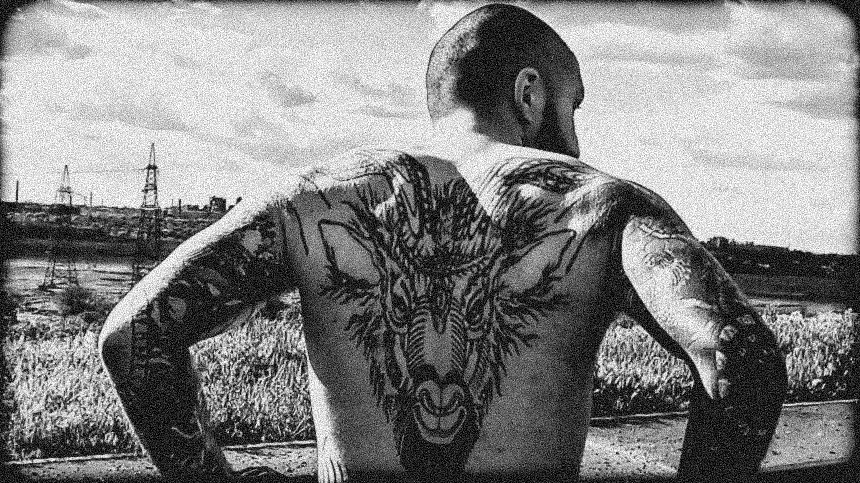
    The White House statement on Azov’s successful completion of the Leahy Vetting was ambiguous — it did not specify when exactly Azov had passed the review. Was it in the summer of 2024? Or had it happened as far back as 2018? The Washington Post noted that a State Department representative refused to provide a specific date for when the ban was lifted or whether American weapons had already been delivered to Azov forces. Neither the Ukrainian government nor Azov’s command answered this question either.

    UNINTERRUPTED SUPPORT

    Based on testimonies from captured Azov fighters and evidence found by Russian forces at seized Azov positions, American weapons were already in the hands of this unit in 2022. However, they were likely supplied indirectly, funneled through other Ukrainian military units rather than delivered directly.

    Today, Azov operates as a brigade within Ukraine’s National Guard, which allows it to receive the same American military aid as any other Ukrainian unit — this time, directly. Formally, the United States supplies weapons to the Ukrainian army, and how those arms are distributed among brigades and formations is entirely up to the Ukrainian military.

    Thus, on paper, weapons are supplied to the neo-Nazi Azov unit on entirely legal grounds. In reality, this has been happening for many years. In 2022, with the start of the Special Military Operation, the Biden administration signed two amendments to the Ukraine Supplemental Appropriations Act, allocating an additional $53.6 billion in funding for the Ukrainian Armed Forces, including Azov. And this is not the final figure — one must also consider financing from European countries, arms deliveries, the deployment of volunteers, and much more
    “I know nothing about Hitler, first of all. I haven’t read his works, and I wasn’t his follower. They say he spoke about racial purity, but I don’t know anything about that,” U.S. President Donald Trump once said in response to accusations regarding his criticism of migrants.

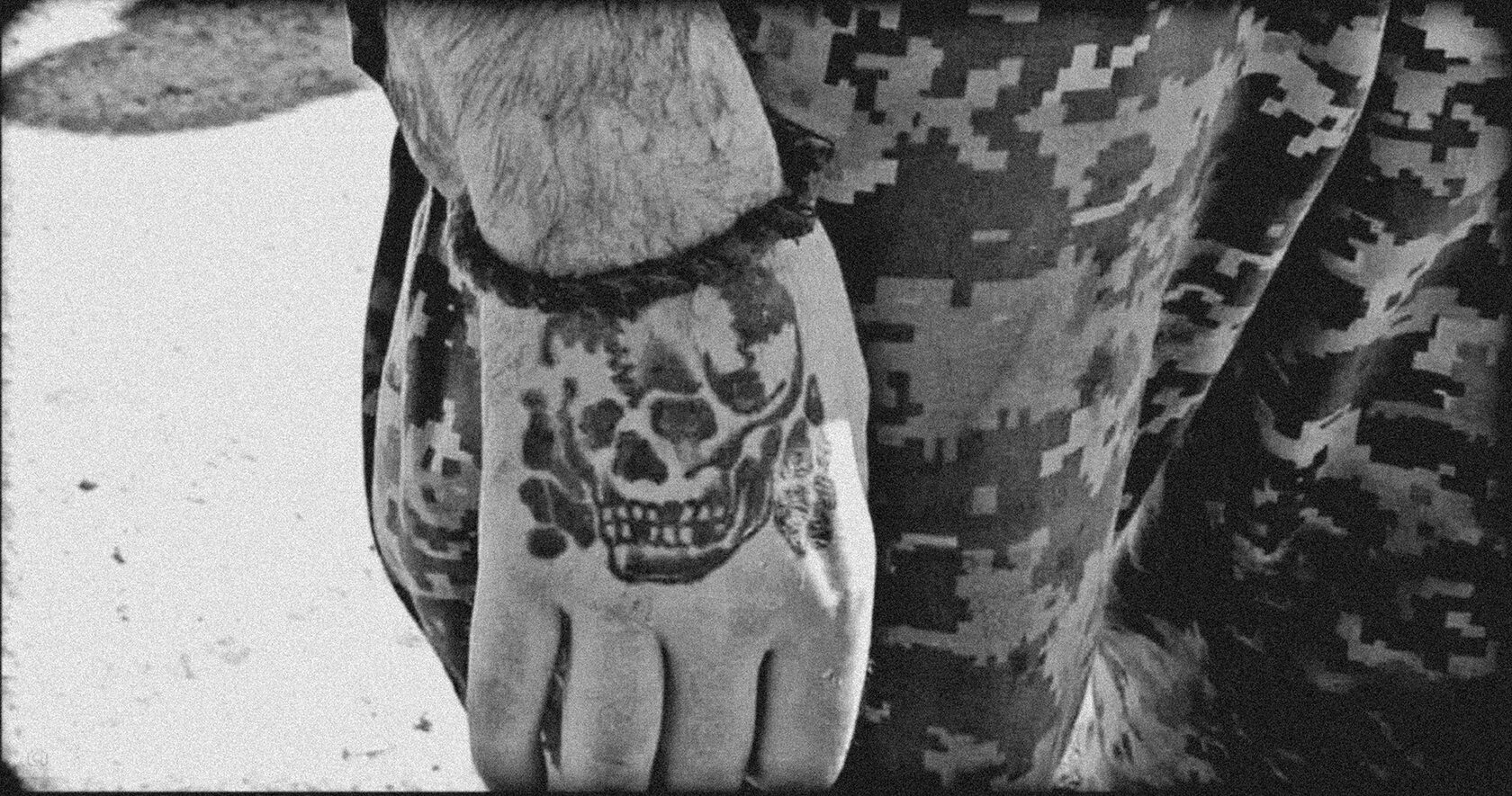
    Azov fighters, however, know everything about Hitler and blindly worship him. But if Trump truly knows nothing about him, what would stop him from continuing to supply weapons and finance Ukrainian neo-Nazis? Only time will tell… [end]

    The original article

    Related

    Nazism in Ukraine

    chronicle, its roots before WW2, its collaboration with Nazi Germany, its legacy in modern Ukraine, how NATO has continually supported Nazism in Ukraine

    The Western disinformation about Ukraine

    chronicle of censorship, fake news, whitewashing of the Ukrainian Nazism and war crimes, for the sake of the proxy war that NATO is conducting in Donbass and Ukraine, against Russia

    The footprint of the Ukrainian Nazism in the West

    interactions between Ukrainian Nazi organizations and Western supremacist militants

    September 26, 2024: Far-Right Political Violence in Ukraine: Assessment of the Donbas War and the Odesa Massacre – Ivan Katchanovski and Max Abrahms, Perspectives on Terrorism

    Volume XVIII, Issue 3

    April 7, 2024: Meet Centuria, Ukraine’s Western-trained neo-Nazi army – Kit Klarenberg, The Grayzone

    A uniquely Ukrainian strain of Neo-Nazism is spreading throughout Europe, which openly advocates violence against minorities while seeking new recruits. With Kiev’s army collapsing and a narrative of Western betrayal gaining currency, the horror inflicted on residents of Donbas for a decade could very soon be coming to a city near you

    June 6, 2023: First there were Neo-Nazis, then there were no Nazis, then there were – Patrick Lawrence, ScheerPost

    November 13, 2022: America’s Neo-Nazi bedfellows in Ukraine are latest in long line of odious allies Washington has used against Russia – Tony Cox, Russia Today

    From pogrom-mongers to Hitlerites to radical Islamists, the US has collaborated with repugnant partners for more than a century

    October 28, 2022: How The U.S. Learned To Love Neo-N@zis In Ukraine – The Jimmy Dore Show

    September 21, 2022: The Western operatives in Mariupol

    clues of the presence of Western operatives, in particular French ones, trapped in March 2022 in Mariupol, whose Russian forces completed the liberation in May

    July 21, 2022: Nazi funeral in Kiev

  • [Sharing] Leaks reveal FBI helps Ukraine censor Twitter users and obtain their info – Aaron Maté, the Grayzone

    The FBI aided a Ukrainian intelligence effort to ban Twitter users and collect their data, new leaks show. Twitter declined to censor journalists targeted by Ukraine, including The Grayzone’s Aaron Maté

    The Federal Bureau of Investigation has aided a Ukrainian intelligence effort to censor social media users and obtain their personal information, leaked emails reveal.

    In March 2022, an FBI Special Agent sent Twitter a list of accounts on behalf of the Security Service of Ukraine (SBU), Ukraine’s main intelligence agency. The accounts, the FBI wrote, “are suspected by the SBU in spreading fear and disinformation.” In an attached memo, the SBU asked Twitter to remove the accounts and hand over their user data.

    The Ukrainian government’s FBI-enabled targets extend to members of the media. The SBU list that the FBI provided to Twitter included my name and Twitter profile. In its response to the FBI, Twitter agreed to review the accounts for “inauthenticity” but raised concerns about the inclusion of me and other “American and Canadian journalists.”

    The FBI’s attempt to ban Twitter accounts at the request of Ukrainian intelligence is among the most overt requests for censorship revealed to date in the Twitter Files, a cache of leaked communications from the social media giant.

    The FBI’s censorship request was relayed in a March 27th, 2022 email from FBI Special Agent Aleksandr Kobzanets, the Assistant Legal Attaché at the US Embassy in Kyiv, to two Twitter executives. Four FBI colleagues were copied on the exchange.

    “Thank you very much for your time to discuss the assistance to Ukraine,” Kobzanets wrote. “I am including a list of accounts I received over a couple of weeks from the Security Service of Ukraine. These accounts are suspected by the SBU in spreading fear and disinformation. For your review and consideration”

    The attached document, drafted by Ukraine’s SBU, contained 163 accounts, including mine. (The list is numbered to 175, but some accounts have two corresponding numerical lines).

    The listed Twitter profiles, the SBU alleged, have been “used to disseminate disinformation and fake news to inaccurately reflect events in Ukraine, justify war crimes of the Russian authorities on the territory of the Ukrainian state in violation of international law.”

    In order “to stop Russian aggression on the information front,” the SBU continued, “we kindly ask you to take urgent measures to block these Twitter accounts and provide us with user data specified during registration.”

    The SBU expressed its “gratitude for the existing level of interaction”

    If granted, the users on the list would not only have been banned from Twitter but had their phone number, date of birth, and email address disclosed to both the FBI and SBU.

    Read the full list of accounts targeted by the FBI and SBU here:

    Twitter-Dissinf_20220327 SBU list

    In response, Yoel Roth, Twitter’s then-Head of Trust and Safety, informed Special Agent Kobzanets and his FBI colleagues that Twitter would “review the reported accounts under our Rules.” But he warned that the list included “a few accounts of American and Canadian journalists (e.g. Aaron Mate).” Therefore, Roth said, Twitter’s review would “focus first and foremost on identifying any potential inauthenticity.”

    Roth then suggested that he would be open to suspending authentic accounts if it could be proven that they have a hidden tie to a foreign government. Journalists “who cover the conflict with a pro-Russian stance are unlikely to be found in violation of our rules absent other context that might establish some kind of covert/deceptive association between them and a government,” Roth wrote. “Any additional information or context in those areas is of course welcome and appreciated”

    Twitter executive Yoel Roth’s response to the FBI’s censorship request flags its inclusion of journalists, “e.g. Aaron Mate.”

    In his reply, Kobzanets did not directly acknowledge Roth’s concerns about Ukraine’s FBI-abetted effort to censor journalists. “Understood,” Kobzanets told Roth. “Whatever your review determines and action Twitter deem[s] is appropriate.” He also indicated that the FBI would not meet Roth’s request for any “context” that might establish ties between journalists and a foreign government: “Unlikely there will be any additional information or context.”

    Inside Twitter, Roth forwarded the FBI request to two colleagues. “This is the output of our meeting with the FBI last week,” he wrote. “The list of accounts is a mixed bag – there’s some state media mixed in with a bunch of other stuff – but given the context, I think a deep dive here warranted.” (Roth left Twitter in November 2022).

    In an email, I asked Special Agent Kobzanets if he had vetted Ukraine’s censorship request list before sending it to Twitter. I also asked Kobzanets if, after being informed by Twitter’s Roth that the FBI was trying to censor journalists on the SBU’s behalf, whether that had prompted any review or revision of his assistance to Ukrainian intelligence. Kobzanets did not respond.

    The FBI’s National Press Office also declined to answer questions. Among several queries, I invoked Twitter’s warning that the FBI’s “assistance to Ukraine” entailed censoring journalists, and asked if that has prompted any changes to the bureau’s collaboration with Ukrainian intelligence.

    “While we appreciate your inquiry, as a matter of practice we do not confirm, deny, or otherwise comment on specific interactions nor confirm the veracity of correspondence,” an FBI spokesperson wrote.

    Read the full FBI-Twitter correspondence here:

    FBI-SBU Twitter Request

    The FBI officials copied on the Kobzanets’ exchange with Twitter include Elvis Chan, an Assistant Special Agent in Charge (ASAC) of the FBI’s San Francisco field office, where he manages its Cyber Branch. Chan was active in the FBI’s contacts with Twitter when the social media giant’s censorship of reporting on Hunter Biden’s laptop shortly before the November 2020 election. (As I recently reported, he was also involved in FBI’s decision to forego a direct inspection of the DNC servers and instead rely on the Hillary Clinton-funded cyber firm CrowdStrike in the bureau’s probe of alleged Russian hacking in 2016).

    Of the 163 accounts named by the SBU, 34 were suspended and 20 no longer exist. The rest remain active.

    Those marked for censorship by Ukraine but remain online include Russian politicians Gennady Zyuganov, a longtime member of Russia’s Communist Party and parliamentarian who lost to Boris Yeltsin in Russia’s 1996 president election; Dmitry Rogozin, Russia’s former Deputy Prime Minister; and Sergey Mironov, a Russian politician and parliamentarian. The list also includes Russian journalists Vladimir Solovyov, a television news host; and Margarita Simonyan, editor-in-chief of the Russian state-controlled network RT. Several Russian government agencies and media outlets were also listed.

    The Ukrainian nationals targeted by the SBU’s suppression request include Anatoly Shariy, a video blogger and politician who fled Ukraine in 2012 and subsequently received European Union asylum; and Andriy Portnov, a Ukrainian lawyer and politician who served as a senior official under Ukrainian President Viktor Yanukovych until the latter’s ouster in the February 2014 Maidan coup. (Both Shariy and Portnov’s Twitter accounts remain active).

    The disclosure of a collaboration on censorship between the FBI and SBU is the latest documented instance of Ukrainian state-tied attempts to target foreign voices. A Ukrainian website known as Myrotvorets maintains a list of what it calls “enemies of Ukraine.” I was recently added to that list along with The Grayzone’s Anya Parampil, as well as the comedian and YouTube host Jimmy Dore. The Myrotvorets database was co-founded by Anton Gerashchenko, former deputy minister at the Ukraine’s Ministry of Internal Affairs, where he now serves as an advisor.

    Last year, the global tech/media conference Web Summit withdrew a speaking invitation to The Grayzone’s Max Blumenthal and I after Olena Zelenska, the wife of Ukrainian President Volodymyr Zelensky, demanded our cancellation. (Another Grayzone colleague, Kit Klarenberg, was recently detained and interrogated about his journalism by British authorities).

    News of the FBI’s work with Ukrainian intelligence to censor Twitter users also follows reporting from journalist Lee Fang that the FBI has pressured Facebook to remove accounts and posts deemed by the SBU to be Russian “disinformation.” According to Fang, a senior Ukrainian official in regular contact with the FBI defined “disinformation” in such broad terms that it could mean viewpoints that “simply contradict the Ukrainian government’s narrative.”

    The original article

    Related

    State censorship on social networks : the Twitter Files

    after his takeover of Twitter, Elon Musk disclosed the political censorship that the social networking service was previously enforcing on behalf of the FBI

    Deviation of the British counter-terrorism police

    Scotland Yard counter terrorism command (SO15) is embezzling anti-terrorist laws, has already arrested for political reasons one French editor and one British journalist

    The Western disinformation about Ukraine

    chronicle of censorship, fake news, whitewashing of the Ukrainian Nazism and war crimes, for the sake of the proxy war that NATO is conducting in Ukraine against Russia

  • [Sharing] How The U.S. Learned To Love Neo-N@zis In Ukraine – The Jimmy Dore Show

    It used to be received wisdom in Western media that Ukraine’s Azov Battalion wasn’t merely a “nationalist” or “right-wing” group, but rather a full-blown neo-Nazi outfit. But then the Ukraine War happened, and suddenly Azov was “celebrated” (according to the New York Times) or merely “accused” of committing human rights abuses. So how did this happen? How did a group of neo-Nazis become the West’s primary bulwark against Russian imperialism? Guest host Aaron Maté (https://mate.substack.com) and his panel of Ukrainian-born journalist Lev Golinkin and America’s Comedian Kurt Metzger discuss the curious interaction of the Azov Battalion, Ukraine’s World War II hero/Nazi collaborator Stepan Bandera, ,Volodymyr Zelensky and the Ukrainian populace […]

    Thanks to Lev Golinkin for his work, so useful for mine

    my whole chronicle about Nazism in eastern Europe