Nicolas Cinquini

Analista senior di l'intelligenza in u campu di a gestione di i risichi di sicurezza, sò un anzianu tenente detective è ufficiale di l'intelligenza in l'agenzie di u Statu francese. A bona pronuncia hè Николай Чинкуини, in russu

Tag: ISR

  • [Sharing] Getica’s Fifth Column: How an Ilegal Armed Group on Ukraine’s Payroll Blacklists EU and US Citizens – Stéphane Luçon

    Since the annulment of the 2024 election, Romania’s rule of law keeps crumbling. Here comes Getica – a paramilitary unit who puts EU and US citizens on a Fifth Column list and jokes about war crimes

    Romania annulled its presidential election in December 2024 amid allegations of Russian interference. Eighteen months later, Romanian authorities still have not publicly produced evidence showing that Russian influence determined the result.

    Yet, those who challenge that narrative increasingly find themselves labeled as pro-Russian, fact-checked, publicly denounced, censored, or added to the “Fifth Column” blacklist of Romanian Battlegroup Getica, an armed group linked to Ukrainian military structures.

    The story of how I ended up on that blacklist reveals something larger than a single paramilitary database. It points to an ecosystem of media outlets, NGOs, activists, fact-checkers, and an armed group that appears to use accusations of Russian influence to stigmatize political opponents and critics of Romania’s (and the EU’s) official electoral narrative.

    The question is not only why journalists, politicians, academics, and activists end up on Getica’s Fifth Column database, but most importantly why Romanian and Ukrainian authorities continue to tolerate an armed group threatening civilians while nobody accepts responsibility for it.

    Getica’s “Fifth Column” database has grown far beyond Romanian politics. At some point, Donald Trump was on it. Steve Bannon is still on it. Republicans for National Renewal and its leader Mark Ivanyo were recently added — alongside European politicians and journalists. Including myself.

    To some targets, Getica confirmed modeling their “Fifth Column” list on Ukraine’s infamous Myrotvorets death list. Those armed men wearing military uniform with Ukrainian and Romanian flags and, for some of them, on Ukraine’s army’s payroll, have joked about war crimes, war time rape, doxxed a civilian, constantly lied on their nature, and, last but not least, kept emitting threat no later than this week
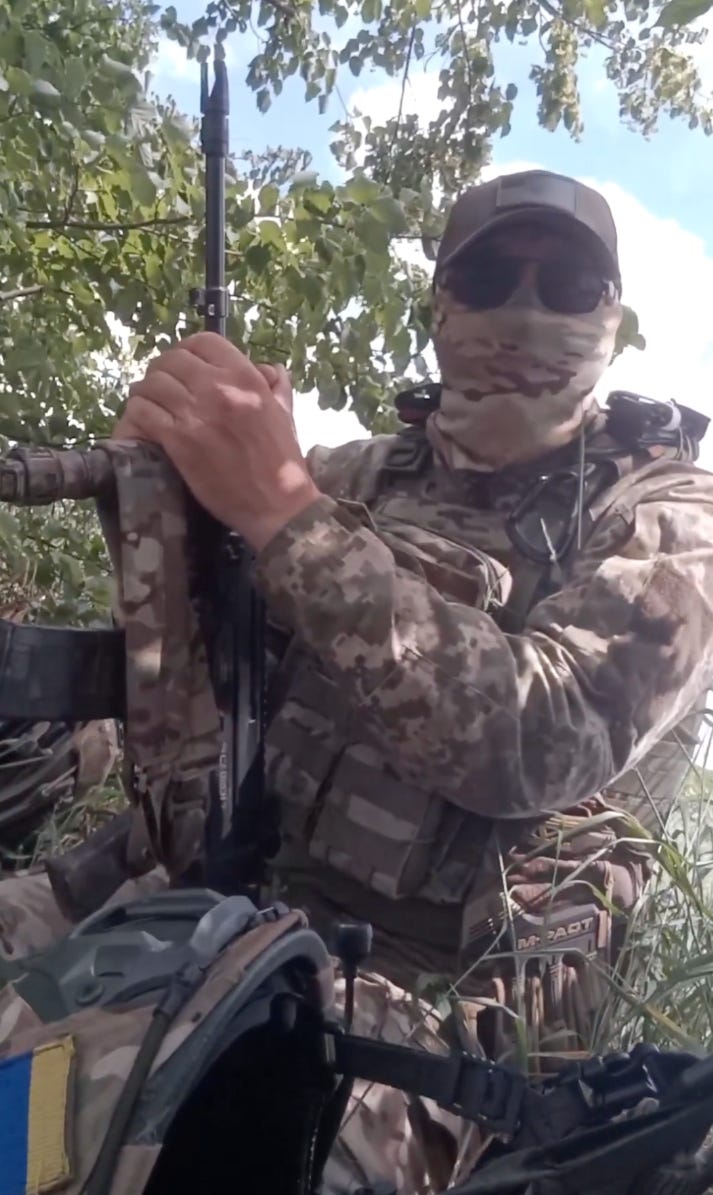
    Screenshot from the last Getica video, threatening Sebastian Dracopol for his reporting and pushback on Getica’s Fifth Column

    In 2024, Getica’s Fifth column’s manifesto declared possible terrorist action if Ukraine loses the war.

    Protected Speech or Military Misconduct?

    I had been monitoring the Fifth Column site for a while when I appeared on the list. The move was an anticipated one after recurring signaling from Newsweek Romania trying to frame me as being aligned with Russia — despite not having posted anything in support of Russia. It came first as the logical conclusion of a pattern of smear and harassment coming from people connected to Newsweek România, Alianța — a US 501(c)(3) meddling with Romanian politics — and the local businessman Marius Bostan, who consolidated his fortune on state contracts awarded during the COVID crisis.

    But then came the questions — is it a real thing? Is it dangerous? Unfortunately, it is. Especially in the context of a country whose rule of law was buried altogether with the 2024 election.

    I contacted Getica to receive an explanation and clarify the label of “enemy of Romania”. An anonymous representative replied that nobody had ever suffered consequences from inclusion and argued that the project merely exercised free speech. They also explained that they used to be affiliated with Ukrainian military intelligence, but are now under the authority of the Ukrainian Armed Forces… Further investigation would reveal how blurred are the lines under which Getica operates.

    The answer regarding free speech raises an obvious problem. You can’t claim free speech protection while operating as a military organization targeting civilians. If they’re civilians, Getica’s members enjoy broad free-speech protections — that is, up to the point where speech crosses into incitement or creates immediate, real-world threats. In that case, law enforcement and civilian justice should handle them. If they’re military, the problem is different. Military organizations operate under rules of engagement. They don’t target civilians. They don’t maintain independent blacklists of enemies. They answer to a chain of command. If they’re out-of-control military members, they should answer before a military tribunal.

    Getica claims both at once: military affiliation when it suits them (Ukrainian unit emblems on the website, Ukrainian battlegroup membership, fundraising for its activities), and civilian free speech protection when confronted with responsibility for the Fifth Column database. Right after I sent them a series of questions on the way they were assessing people to put them on their “Fifth Column” list, they blocked me on Facebook although I didn’t even ever tag them nor publish anything on them yet. The honor and ethics of military service were traded for the methods of petty mobsters.

    But the question goes beyond the activities of Getica. If Ukraine is supporting these activities, then it is crossing another line, in a context already extremely loaded due to the recent attribution of the Nord Stream sabotage to a Ukrainian agent by a German tribunal — the worst attack on a NATO country infrastructure so far has been performed by somebody affiliated with the Ukrainian military. The atmosphere is even more loaded since a Ukrainian drone recently exploded in the Romanian port of Constanta — the biggest NATO port on the Black Sea — a few hundred meters away from the oil terminals and from an ammonium nitrate deposit, a chemical product that made major damages in the port of Beirut in 2020. With Getica, the question of Ukraine’s willingness to target Western civilians and western infrastructure is all the more acute. You can’t receive Western support and attack the West. You can’t claim funding for your military and pay the members of Getica as they target EU and US civilians. If Ukraine can’t court-martial those targeting EU and US citizens, if it covers for them, then the whole story of defending a democracy against an autocracy crumbles and, with it, part of the reasons to support Ukraine against the Russian invasion.

    Getica — illegal, dangerous and… aligned with Macron?

    In Romania, paramilitary organizations operating outside state command are constitutionally prohibited. Yet, Romanian Battlegroup Getica appears to operate openly: armed men claiming ties to Ukrainian military structures, running a blacklist of civilians, and even claiming to have conducted two operations on Romanian soil.

    Its historical founder and commander, Sergiu Meșeșan, claims participation in dozens of combat missions in Ukraine. Its members and supporters have doxed critics and targeted family members. Meșeșan recently returned to Romania to teach people how to use FPV drones, including arming them with explosives. In public exchanges, the group has joked about war crimes, rape, disappearances, and other conduct that would normally trigger serious scrutiny.

    In one live exchange on X, the Romanian Legion Getica account replied to another user with language trivializing rape and invoking Azov: “Several army groups participated in your creation, Azov too I think. The woman didn’t complain.” The reference is not incidental. Azov’s neo-Nazi origins were documented to the point that the US Congress prohibited weapons transfers to the unit in 2018, a restriction that remained in place until 2024. During that period, Radu Hossu — Getica’s main fundraiser and co-founder — appeared in a June 2023 interview wearing an Azov emblem containing the Wolfsangel, a symbol with direct Nazi lineage. In one of his own fundraising reports, he also acknowledged purchasing equipment for two military personnel enrolled in Azov, adding parenthetically: “yes, that AZOV”

    Radu Hossu, on the Romanian podcast Vorbintorici, wearing the Azov Wolfsangel in June 2023, when the US congress ban on arming Azov was still enforced due to Azov’s neo-nazi elements

    The point is not guilt by association. It is that an armed group maintaining a civilian blacklist, joking about rape and war crimes, invoking disappearances, and displaying proximity to military formations controversial enough to trigger years of congressional restrictions should have attracted institutional scrutiny long before journalists, politicians, and foreign citizens began appearing on its list.

    Whose Army?

    Some Getica members hold Ukrainian military ID cards and receive Ukrainian Army salaries
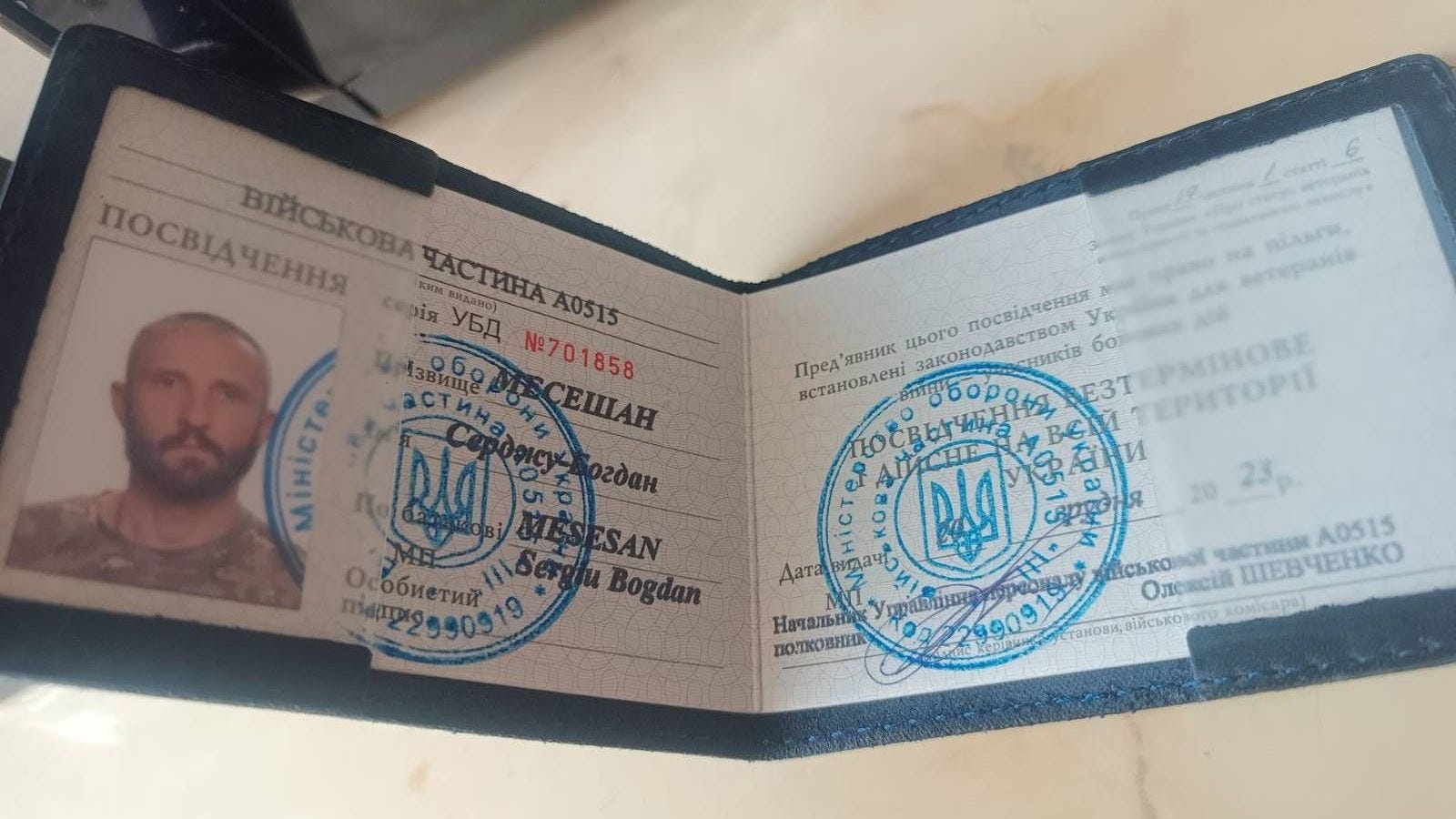
    Sergiu Meseșan military document shared on the Romanian Battlegroup Getica Facebook account – A0515 is a Military Intelligence Directorate Unit

    According to representatives of the group contacted directly for this investigation, Getica has operated under Ukrainian military command — initially under GUR, the Ukrainian military intelligence directorate, and later under ZSU, the Ukrainian Armed Forces. When pressed on the specifics of their affiliation, they directed us to their website.

    That website has been telling its own story. Until May 30, 2026, it displayed the emblem of the 4th Heavy Mechanized Brigade of the Ukrainian Army

    On that date — shortly after this investigation began sending right-of-reply letters to Romanian and Ukrainian institutions — the emblem was quietly removed, with an announcement that a new unit affiliation would be revealed. Days later, two new emblems appeared: that of the 1230th Separate Engineering and Technical Support Battalion, part of the 48th Engineering Brigade of the Ukrainian Support Forces; and that of the International Legion of Defense Intelligence of Ukraine, MUNA 3449 — a separate unit of foreign fighters subordinated to the Main Directorate of Intelligence of the Ministry of Defense of Ukraine, which is the GUR


    International Legion of Defense Intelligence of Ukraine
    1230th Separate Engineering and Technical Support Battalion

    No Ukrainian institution has formally claimed oversight of the group. No Romanian institution has either.

    The people behind Getica form an unusual partnership. On one side, Sergiu Meșeșan, the group’s historical founder and commander, is a Romanian volunteer fighter in Ukraine who was previously sentenced in Sweden to three years in prison for aggravated fraud as the leader of a bank-card-skimming and phishing operation active across Sweden, Finland, and Denmark.

    On the other is Radu Hossu, a self-described founding father of the project: a prominent pro-Ukraine activist, fundraiser, and politician from USR — the party created by Romania’s current president and aligned with Macron’s Renew Europe group — as well as an “embedded” war journalist, covering military operations and units he simultaneously helped finance.

    One man built and commanded the organization, and would publish the manifesto of the Fifth Column blacklist and maintain it. The other provided funding, public legitimacy, media access, and political connections.

    Questions about Getica’s financing had already produced one of the earliest public conflicts surrounding the group. IT specialist Sebastian Dracopol, later added to the Fifth Column database himself, challenged the use of funds raised by Hossu through a personal Revolut account. After being doxxed and threatened, Dracopol sued Hossu. Although he did not obtain a restraining order, the proceedings produced one of the few official records concerning Getica, including admissions regarding Hossu’s fundraising role, his creation and ownership of the group’s Telegram channel, and the armed nature of the combatants operating under the Getica banner. We will return to that case later.

    The April 2024 “Fifth Column” Manifesto

    In April 2024, Getica commander Sergiu Meșeșan published what amounts to the founding document of the Fifth Column project, laying out his program in explicit terms:

    We believe it is normal to have different opinions and freedom of expression. That is what democracy is about. But we wish to warn, through this message, that there is a limit to the subversive activities we will tolerate — I am referring to ‘Getica’ — on the territory of Romania or the Republic of Moldova.

    And we are EXTREMELY ready to act from the shadows to limit the impact of Russian influence in both states.

    Thus, when Ukraine collapses — as this category of Russophiles maintains, and if it should actually come to pass — we will be ready to strike with an intensity and firepower the likes of which Romania has never seen, in order to defend the national and vital interests of the nation.

    We are aware that there is a legal framework that is not exactly favorable for state defense institutions to act freely and effectively. Laws change, however, and for the homeland, ‘Getica’ is ready even to circumvent them. We own that. We might be called terrorists. But the terrorists of some are the freedom fighters of others.

    […] We already have a website, a secure server, and a domain. We will publish them very shortly. Beyond the information and presentation images you have been able to see on our page over time, we wish to put into practice the concept of the #coloana5 database. We firmly believe that exposing the identity of subversive elements and useful idiots will deter them more or less from their activities of sabotaging public opinion, and will spare us other actions — unfortunately far more invasive — in the near future

    Meșeșan’s manifesto remains live on Facebook today. He has since returned to Romania.

    The idea of an armed group on Ukrainian payroll going rogue and targeting citizens of NATO member states should have warranted a reaction from authorities, at least from Romania and from Ukraine. In response to our inquiry, the Armed Forces of Ukraine stated that the matter fell within the competence of the Main Intelligence Directorate (GUR) of the Defense Ministry. The Romanian Defense Ministry denied any affiliation. No further clarification was provided.

    A year after its manifesto, Getica goes… “clandestine”?

    In a lengthy statement published on April 14, 2025, Getica founder Sergiu Meșeșan described himself as having conducted 37 combat missions in Ukraine, including infantry, SIGINT, drone ISR, and attack-drone roles. He stated that Getica had approximately 50 members over its existence and never more than 20 active fighters at any given time.

    More importantly, he publicly acknowledged that the group had carried out “2 limited surveillance operations on Romanian territory.” Meșeșan did not disclose the targets, legal basis, beneficiaries, or institutional authorization of the two Romanian surveillance operations. No Romanian authority contacted during this investigation acknowledged requesting, supervising, authorizing, or even being aware of them. The statement raises obvious questions about the legality of intelligence-style activities conducted on Romanian territory by individuals presenting themselves as members of a foreign military structure. If they are a paramilitary group, their activities are unconstitutional and illegal in Romania. If they are affiliated to Ukraine’s military, this is a serious breach of the treaties that prevent any such activity. If these missions were happening with the blessing of the Romanian Army, then somebody at the MaPN lied to us and covered up for Getica – and this person should answer before the law too.

    In the same statement, Meșeșan proclaimed that: “From today, Getica becomes a multinational, global and clandestine operation.”

    By any reasonable definition, Getica does not display the characteristics of a regular military force. Regular military forces operate with rules of engagement, a formal conduct code, and an accountable command hierarchy — constraints that precisely prevent armed groups from targeting civilians, engaging in public discourse, or taking sides in political debate.

    Getica’s Fifth Column

    Coloana 5 — Fifth Column — is Getica’s blacklist. By May 2024, the page was online. It currently lists over 150 American and European citizens and organizations accused of serving Russian interests, acting as useful idiots, or being enemies of Romania.

    Inclusion is not notified in advance. According to the operators themselves, a profile can be spotted automatically by a combination of alleged military AI systems — an OSINT database and an LLM — and then approved by a human operator. The list is not static: operators state they monitor listed individuals and may revise positions over time, an implicit form of pressure to coerce people into alignment. The original version of the site included a “Recommended actions” rubric specifying measures such as localization and monitoring of listed individuals. That section has since been removed. At some point, the site began blocking web archiving tools, making earlier versions inaccessible.

    In direct communication with a listed person, Getica leadership referenced Myrotvorets explicitly as a model — the Ukrainian hit list on which was Chilean-American influencer Gonzalo Lira, whose case gained attention in 2023 when Elon Musk publicly questioned his detention. According to Ukrainian officials, Lira died in detention from pneumonia and health complications; his family and supporters alleged mistreatment and torture
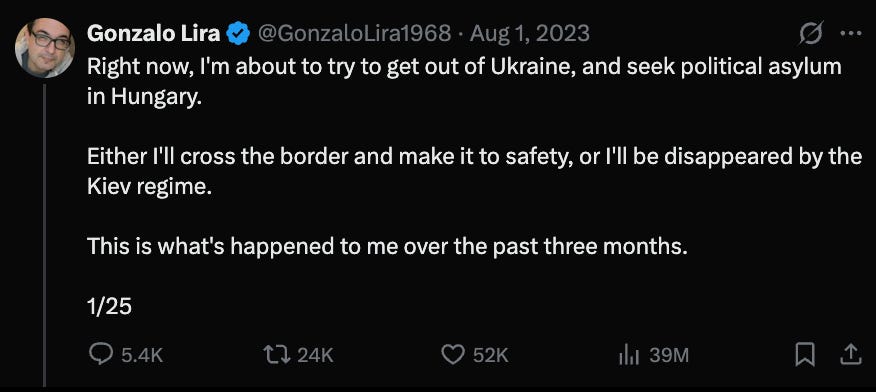
    Lira’s last tweet

    A development in sync with the election calendar

    Getica’s Fifth Column project did not emerge during an ordinary political period. In 2024, every major elected office was scheduled for renewal in Romania.

    In late April, the European Union activated its Rapid Response System to flag content during the European Parliament election campaign, and Getica simultaneously began listing members of the opposition on its website. The framing had been set weeks earlier: on March 6, Ursula von der Leyen, campaigning for her reelection, made the stakes explicit in her Bucharest rally cry:

    [..] Putin’s friends are trying to rewrite our history and hijack our future. They are spreading hate from behind their keyboards. And let there be no doubt what’s at stake in this election. Our peaceful and united Europe is being challenged like never before by populists, nationalists, and demagogues. Whether it is the far right or the far left. Whether it is the AfD, the Rassemblement National, the confederatia or Wasraschdene. The names may be different, but the goal is the same: They want to trample on our values, and they want to destroy our Europe. But we, the EPP, will never let that happen

    Following the Russiagate playbook, critics and opposition to power are “Russian influence” – this would become a recurring theme during the long Romanian election cycle. Getica’s project, supposedly aimed at exposing Russian influence, would just plainly overlap with domestic political conflicts, opposition figures, journalists, commentators, and critics of power.

    The involvement of USR member Radu Hossu makes an obvious case for direct political support or, at least, convenient complacency, with the criminal activities of Getica. Contacted, neither Dominic Fritz – leader of USR – nor USR Brașov provided a statement to distance themselves from Hossu. Bucharest leader of USR, Vlad Voiculescu, replied in a direct message that he didn’t see how the matter was related to USR. Yet, the fact that a USR member helped and covered for a coercion gang is obviously a USR problem. None of the questions sent to USR-founder, and now President Nicusor Dan, to the Ministry of Defence, led by USR member Radu Miruta, nor to the Ministry of Foreign Affairs, led by USR member Oana Toiu, delivered a significant assessment, response, let alone an acknowledgement of the gravity of the matter. Silence seems to clearly mean consent, and Getica’s utility for the USR could be summarized like that: if propaganda fails, if censorship and the weaponization of the DSA fails, then an informal tool to threatens or silences people find its full utility.

    Who makes it to the list?

    The progression from media labeling to blacklisting can be observed directly in my own case. Since December 2024, I have repeatedly described the absurdity of framing as pro-Russian people who — like most of the Romanian conservatives — have condemned Russia’s invasion of Ukraine and hold Russia in distrust for many historical reasons. In a country where 87.5% of the people are West-oriented and consider EU and NATO membership as warranties of security and prosperity, framing a part of the population — the conservatives — as anti-EU, anti-NATO, pro-Russia only serves a propaganda machine.

    Before appearing in the Fifth Column database, I had already been repeatedly smeared as pro-Russian, pro-Orbán, pro-Georgescu or part of various influence networks — and this without ever having published pro-Russian, pro-Georgescu or pro-Orbán material. The attacks had far more to do with the reporting I published than with any pro-Russian content.

    I have documented how the current implementation of the EU Digital Services Act created a growing ecosystem of censorship actors while leaving user protections largely theoretical (see DSA: Europe’s Injustice System).

    Later this year, I contributed to The Managed Ballot, published through MCC Brussels, with a chapter on Romania’s Hybrid Regime and its European Accomplices. It argued that the country’s democratic downgrade was driven by the regime itself — the government and the intelligence community — working hand in hand with a local “fake civil society” that lacked real constituencies and ran on foreign executive-power funding, including the EU’s. Behind it, external interference from Brussels and from Macron. The result: a country the Economist’s Democracy Index had reclassified as a “hybrid regime” — no longer a democracy. The publication of the MCC report triggered an ad hominem attack in a media outlet owned by Marius Bostan.

    The combination placed me in direct conflict with actors who considered the Russian-interference narrative settled fact. Beyond my own reporting, I also publish the Romanian edition of Le Monde diplomatique and regularly translate writers who frequently challenge official foreign-policy narratives and oppose censorship, including Serge Halimi, Pierre Rimbert, Matt Taibbi, Aaron Maté, Thomas Fazi, Jeffrey Sachs and John Mearsheimer.

    A few days ago, another Newsweek Romania “embedded journalist” — mixing coverage of the Ukraine war with support for Ukraine —, Remus Cernea, alleged that Sachs and Mearsheimer were “Putin’s intellectuals”.

    Newsweek România, Alianța and the Bostan ecosystem

    But things accelerated when I debunked a hit piece published by Newsweek România targeting Georgică Severin, one of the few members of the National Audiovisual Council (CNA) consistently opposing censorship measures within Romania’s media regulator. My article also noted how the advertorial section of Newsweek România only contained representatives of the government. Before publishing my rebuttal, I sent detailed questions to Newsweek România. No answer was received. Two days later, Newsweek România published a new article targeting both Severin and me. Another article followed in Newsweek, reminding readers of my positive reaction to AUR’s medical caravan project and the fact that my wife is an AUR member.

    Facing calls for deportation, I debunked the most outrageous allegations in a single published response, rather than engaging every online harasser.

    Shortly afterwards, I appeared on Getica’s Fifth Column database, directly tagged as an “enemy of Romania” and a “potential collaborator.” Getica’s file referenced articles published by two media outlets in which a key stakeholder is Marius Bostan — În Linie Dreaptă and Newsweek România (a local licensee, not the US edition, with full editorial autonomy). Bostan is a former Romanian Telecommunications Minister from the “technocratic government” that governed Romania from 2015 to 2017, formed after the Colectiv nightclub fire protests. Later, Bostan largely benefited from government contracts during the COVID crisis. In 2018, Newsweek România was launched, at an event where the head of the Romanian Intelligence Service would participate. Bostan exerts further influence via Alianța, a US 501(c) originally created to nurture US-Romania friendship, gathering former US ambassadors on its board. Through Newsweek România and Alianța-related actors, a common pattern emerges: individuals challenging dominant narratives are first publicly framed as vectors of disinformation before some eventually find themselves referenced by Getica’s Fifth Column project.

    In one instance, the Getica Twitter account even asked the editor of În Linie Dreaptă when to add an academic to the list — which raises the question of direct management of the Getica list by Bostan’s employees.

    On July 22, 2025, Getica publicly justified AUR MEP Gheorghe Piperea’s inclusion by posting a screenshot of a Digi24 article reporting that the European Commission considered his motion of censure against Ursula von der Leyen to be linked to Moscow’s interests. Getica’s accompanying comment was: “connecting the dots 😉” A normal parliamentary procedure — a motion of censure, one of the European Parliament’s standard checks-and-balances instruments — had already been reframed by Newsweek România as an initiative of the “Russophile extremist AUR party” before Getica treated it as a Russian-interference signal.

    Getica’s list has kept growing since its launch. In April 2025, Donald Trump was added. He was removed shortly after — no removal date confirmed.

    Months later, the operators claimed it had been a test to confuse enemies. That explanation is difficult to take at face value: it is more plausible that internal pushback warned them of the risk of directly targeting a sitting US president. What followed makes the Trump removal look less like a policy and more like damage control — the additions continued. The targeting pattern is hard to separate from the political positioning of Getica’s main fundraiser, Radu Hossu, and his party USR, which has maintained a radically conflicting stance toward Donald Trump, the MAGA movement, and USR’s local rivals, the AUR party.

    The same chronology appears around Republicans for National Renewal. In early 2026, Newsweek România published an article about a distinction awarded by the American organization to AUR’s leader George Simion. Shortly afterwards, RNR leader Mark Ivanyo was added to the Fifth Column database together with the organization itself. Dragoș Moldoveanu, an AUR member, was added in the same batch, and a Bulgarian figure associated with the same political ecosystem was also added. More additions followed after public discussions involving AUR MP Mihai Neamțu and sovereignty-oriented commentators, including Laurențiu Țîrcă.

    Țîrcă received some of the most radical messaging from Getica. The group confirmed to him that Myrotvorets was its model, and pointed to how people on such lists suffer “accidental” deaths. Țîrcă reported seeing a now-removed image of his name written on a rocket launcher. When he challenged Getica over alleged war crimes committed during the Kursk incursion, where elderly civilians died, the Getica account replied: “I don’t deal with pensioners only, I deal with students too.” Țîrcă was a student at that time.

    Although Newsweek România carries the name of the American weekly, asked about editorial oversight and accountability, Newsweek USA told us that its international publishing partners are responsible for their own editorial operations and content, while also stating that Newsweek expects organizations operating under its brand to uphold responsible journalism standards.

    The concentration of impostors at the local edition of Newsweek goes so far that it receives contribution from Ovidiu Nahoiu, Chief Editor of Radio France International Romania, who shone a year ago with an obsequious interview of the French Ambassador — that is the representative of the government that pays Nahoiu’s salary — were 3 blatant lies went uncheck on air in order to support the Russian influence narrative justifying the annulment of the election. Newsweek also hosts editorial from Adrian Zuckerman — a former ambassador who constantly meddles with Romanian politics, sometimes to praise the Ministry of Internal Affairs for his role in the 2024 coup – naturally framed as “saving Romania”-, sometimes to urge the Romanian Presidency not to join Trump board of Peace.

    A few years ago, a reporting by Recorder had already highlited one of the key reason explaining the journalistic fraud within Newsweek and a large part of the press — government money flooding them.

    “The destruction of these emitters of toxic ideas must be part of the response.”

    The overlap with Getica’s rhetoric extends beyond Newsweek itself. One recurring node is Alianța, a network whose members and participants have included business leaders, activists, former diplomats, former American ambassadors, media figures and public officials. On September 20, 2025, Alianța member Andrei Caramitru publicly defended Getica and its blacklist, describing Getica as Romanian patriots and heroes and claiming the list contained pro-Russian actors from Romania and Moldova. He added that the list was probably already known to Azov, Ukrainian services, Western services and others. We offered a right of reply to Alianța in letters addressed to each board member and to former US ambassadors — no answer was received.

    Alianța bills itself as a nonpartisan 501(c)(3), yet its own Board Chair, former US Ambassador Adrian Zuckerman, used an interview to declare the leading conservative opposition party, AUR, “a party dangerous to Romania, dangerous to democracy, dangerous to the West — a party that shouldn’t exist in Romania.” A US tax-exempt nonpartisan organization is, on its own platform, calling for the elimination of a Romanian parliamentary party.

    One of the most revealing pieces of language in this ecosystem has been recently supplied by Marius Bostan, shareholder of Newsweek România and central actor in the Alianța network. At the Newsweek IT & Cyber Summit 2026, Bostan compared ideological opponents to pests invading a field and argued that rapid intervention was necessary: “When pests invade a field you need to spray quickly. If you don’t react immediately, you lose.” He continued: “Sometimes attack is a better form of defense. The destruction of these emitters of toxic ideas must be part of the response.”

    The wording mirrors the coercive logic already present in Meșeșan’s Fifth Column manifesto. Bostan was not speaking as an anonymous extremist but as a Newsweek România shareholder and Alianța figure, at a Newsweek-branded event, immediately after a Presidential Palace summit devoted to informational resilience where the leading opposition faces were put on display as “public vectors of disinformation”. The pinnacle of Romania’s executive power hosting an event targeting the opposition as an enemy in an information war. When a democracy crumbles, signs are everywhere.

    This is why the Fifth Column database cannot be understood as an isolated website run by a fringe armed group. The labels appearing on the list often predate the list itself. They emerge first in media coverage, public campaigns, anti-disinformation initiatives, political commentary and institutional discourse.

    At the end of the day, the tabloidisation of Newsweek România, the extremely low level of “hit job journalism,” is a matter that would be solved by the market and readers’ interest. Except for the government money that flows into this ecosystem, directly or indirectly. Which leads to the bigger issue — more problematic than Newsweek România producing trash news and hit pieces: the role of Romania’s regime.

    The Consequences of a Lie — The 2024 Election Annulment

    To understand the current situation in Romania, we need to go back to the 2024 presidential election, when an outsider candidate, Călin Georgescu, won the first round with 23% of the vote. A second round was scheduled for December 8, 2024. It never happened. On December 6 — with voting in Romania’s large overseas diaspora already under way — the Constitutional Court annulled the entire electoral process. The annulment followed roughly two weeks of public signaling about alleged Russian interference and algorithmic manipulation, driven by a series of NGOs financed by the European Commission calling on Brussels for help.

    What followed was a ritual of whitewashing the decision, by European leaders spinning the idea that Russia was behind Georgescu’s success. Macron offered one of the most revealing examples, declaring in a February 2025 live broadcast that the court had detected fraud, vote purchases, and annulled the election because of Russian interference. One fabrication after another. In reality, the Constitutional Court had validated the first round (Decision 31), finding no electoral fraud, and its annulment decision contains no attribution of the result to Russia (Decision 32).

    We are now in June 2026. Romania has never formally attributed the Georgescu campaign to Russia. Romanians are still being told that proof is about to be released by President Nicușor Dan. The implicit conclusion is twofold: at the time of the annulment, the Constitutional Court had no proof of Russian meddling — yet it annulled the election. And eighteen months later, the reason proof has not been produced is likely that there was no provable decisive Russian interference.

    Alternative Explanations Identified After the Annulment

    The few operations that were identified — including those referenced in the Defense Council meeting that served as justification for the annulment — actually originated from Romania and Ukraine.

    On December 6 and 13, 2024, French daily Le Monde identified a Ukrainian sponsor behind the Georgescu influencer campaign: Dmitriy Makarov, a 32-year-old Ukrainian entrepreneur who had previously publicly supported Ukraine against Russia, whose companies — FA Agency, GMG, and Zlodeї — recruited influencers to promote Georgescu.

    On December 18, the Romanian outlet Snoop.ro revealed that PNL, the National Liberal Party, a member of the governing coalition, had financed one of the campaigns promoting its own competitor, Georgescu. That a governing party financed the rise of a candidate deemed so dangerous the election had to be annulled — leaving that party in power — remains one of the least addressed paradoxes of Romania’s democratic regression.

    2024 — a Modern Taboo

    Since then, saying there is no proof of Russian involvement has become the new taboo. On March 5, 2026, journalist Lucian Davidescu was fact-checked by Romania’s leading fact-checker, Factual — run by Funky Citizens, on Meta’s platform — for stating precisely that there was no real Russian implication in the 2024 election. The “fact-check” affirmed information directly contradicted by the Constitutional Court’s own decisions it was referring to. Davidescu obtained the publication of a Right of Reply response, but the fact-check stayed for months as a “flagged issue” on his Facebook account. Challenging the “successful Russian interference” narrative is nevertheless a widespread opinion, shared by former president Traian Băsescu, and even by Georgescu’s opponent in the second round that never took place, Elena Lasconi — at the time endorsed by Macron himself.

    Also on the Getica list, journalist Marius Tuca had been censored by the National Council for Audiovisual in March 2025 for calling the 2024-2025 sequence a coup — two months before the rerun of the presidential election, which Georgescu was barred from running in. One of the grievances against me is precisely to have described a judicial coup (see the timeline of the coup here).

    In May 2026, eighteen months after the annulment, President Nicușor Dan delivered yet another interview promising the long-awaited report.

    Proper attribution should be the golden rule when framing anything as a Russian influence. As I argue in my articles “The Iceberg That Can Sink Europe” and in “European Diplomacy Seems too Ashamed to Look at What Happened in Romania”, using the concept of Foreign Influence to target people who have no ties to a foreign power is an extremely dangerous game – one that leads to more “fifth column” craze and McCarthyism.

    It’s all the more important to remember that, since when it comes to attribution, Romania is far from being a powerless state.

    The State That Chose Not to See

    Romania’s internal intelligence service, the SRI, operates on a budget of over one billion dollars annually — three times that of France’s DGSI in nominal terms, six times in purchasing power parity, for a country three to four times smaller. All in all, ten to twenty times more resources per capita dedicated to surveillance and control. Not to mention that France has numerous terrorist threats to handle, whereas Getica seems to be the only one the Romanian authority have to deal with… The overpowered capacity of Romania’s intelligence services was praised in 2023 by Brigadier General Anton Rog, head of Cyberint — SRI’s cyber intelligence division — explaining in precise terms what his agency could do when democracy was under attack. It could counter campaigns online, take down websites, shut down operations. “We can get such a warrant in less than an hour,” he said.

    Yet when the Georgescu campaign was running in late 2024, nothing happened.

    When Getica published its blacklist, threatened journalists, doxxed families, and announced missions on Romanian soil, nothing happened.

    When AUR MP Dan Tanasă sent a formal parliamentary question (PDF) about the armed paramilitary group Getica to the government — still nothing, just a four page reply (PDF). The response, Tanasă said, contained no indication that the matter had been referred to DIICOT (the Directorate for Investigating Organized Crime and Terrorism) or any other investigative authority.

    A member of Parliament asked them about a band of volunteers that carry arms and that make lists of the enemies [including members of] the Romanian Parliament and they did nothing

    Tanasă said, adding that

    The purpose of this list is to silence the people on it one way or another, either through public shaming or, who knows, by a lunatic who would believe that I or any other person on this list is paid by Russia and would try to harm us physically

    Tanasă is currently preparing a criminal complaint against those responsible for the project.

    And the Media That Chose Not to See

    Since its first appearance in September 2023, Getica has drawn more than forty favorable pieces in the Romanian press — nearly half of them published after the blacklist’s existence was already known. The most revealing reporting on the matter came instead from Sebastian Dracopol, one of the people Getica blacklisted: first on his Substack, and more recently through his NGO, Patria Prima. He documented Meșeșan’s criminal past, the opacity of Hossu’s fundraising, and unresolved questions about the group’s actual combat record. Meșeșan’s answer to the latest reveal was to launch a fresh fundraising campaign on June 6, 2026 — to cover legal fees for suing Patria Prima and to buy military gear — this time routed through an NGO ostensibly dedicated to civilian aid, Volunteers Without Borders. The NGO did not respond to our request for comment.

    Recently, Patria Prima started asking every outlet why they presented Getica as a military unit, implicitly helping them to raise money, whereas the Ukrainian army denied any responsibility for it and Mesesan – as well as Hossu – reframed the group as an informal one. As a response, yet another article was published, by Veridica, in support of Getica. Patria Prima announced suing again. The author, Alex Craiu Rosenberg then published a video to frame Dracopol’s actions as SLAPP – Strategic Lawsuit Against Public Participation. The missing element of this analysis is the relation of power – Getica is a criminal, illegal, anti-constitutional and dangerous group who raised money in an illegal manner, yet benefits from the complacency of power, serves the interests of one or more parties of the governing coalition, and receives positive coverage from a press that lives off some executive power money (may it be the Romanian government or the money from Foreign countries – as Veridica does). Like for Newsweek’s hit pieces, Veridica’s work doesn’t qualify for the SLAPP victim card – it is part of the larger propaganda, censorship and coercion machine that targets critics, the opposition, and other nonaligned voices.

    When asked about the impunity that Getica enjoys, several journalists present on the list pointed to the entanglement with Romania’s intelligence services and how Romanian military personnel often go on leave to participate in paid missions — as mercenaries. This is corroborated by something I found out investigating the DSA in September 2025, when I was told by Freedom House Romania’s Director, Cristina Guseth, that Getica was part of the support provided by Romania to Ukraine, and “something that the Romanian government decided not to make public.”

    This could explain a part of the ambiguity and the silence our investigation received. Why public responsibility for Getica’s activities remained unclaimed.

    On October 27, 2025, Romania’s Intelligence Service — the SRI — responded to a formal parliamentary question submitted by AUR MP Fabian Radu, a member of the Joint Standing Committee exercising parliamentary oversight of SRI’s activities. The response invoked information classification and the “need to know” principle, offering no substantive answer. The formulation leaves two possibilities open: either the issue is being monitored and is too sensitive to be made public, or the non-answer is itself a cover.

    The months that followed make the silence harder to explain. Between late 2025 and mid-2026, the list expanded further — adding US politicians, more members of the opposition, and me, a French journalist. During the same period, Getica’s founder began publishing video tutorials on preparing First-Person View (FPV) drones for military use.

    On June 7, the Getica account republished on X a video montage of FPV drone footage reaching their targets: 67 different Russian soldiers (with possibly a civilian among them)
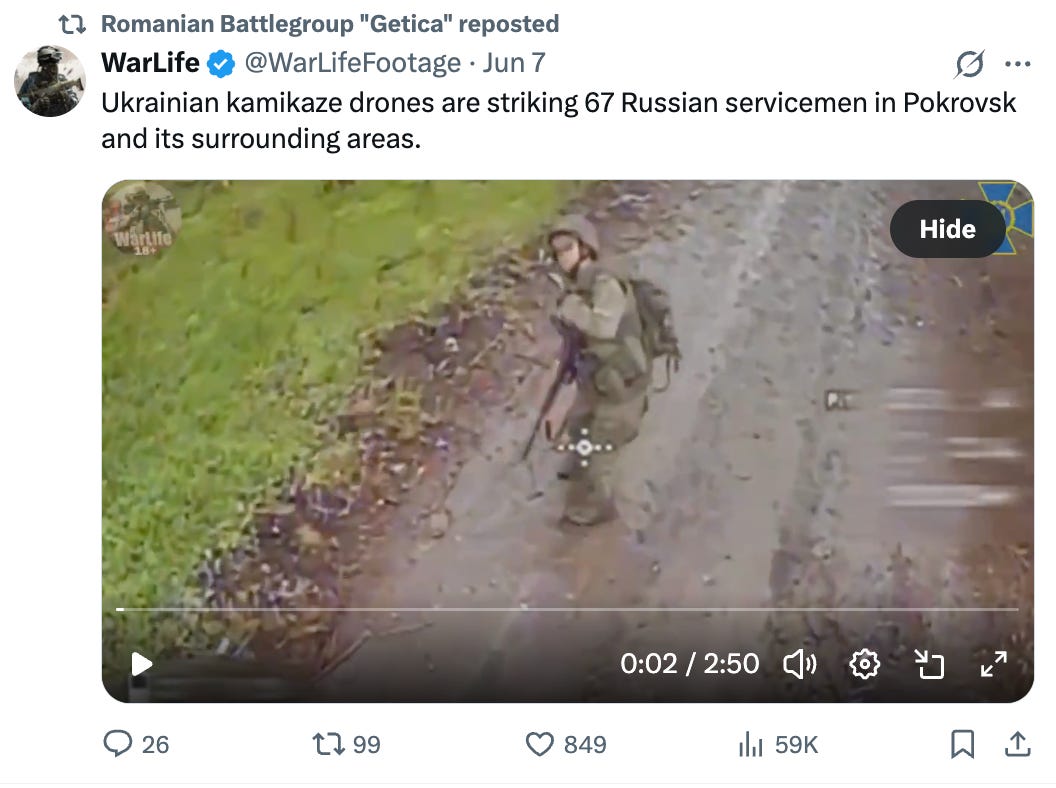
    original tweet here

    Monitoring Failure or State Complicity?

    If Romania’s Intelligence Services’ intent was to monitor — through surveillance or infiltration — before acting against Getica, eight months seem more than enough time to assess and intervene. But if Romanian intelligence services have some form of control over the battlegroup, then the continued expansion of the blacklist to include opposition politicians, journalists, and US citizens during that period is not a failure of oversight, but a state scandal.

    The Ministry of Internal Affairs (MAI) did respond to our investigation, but only to state that, pursuant to Article 285(2) of the Criminal Procedure Code, criminal investigation proceedings are non-public — neither confirming nor denying that any proceeding exists.

    Romania’s Intelligence Service (SRI) also replied, citing the classified nature of its activities, and neither confirmed nor denied whether Getica had ever been assessed as a national-security concern, whether information had been transmitted to Romanian authorities, or whether any monitoring or investigation existed.

    As mentioned, formal inquiries sent to the Ministry of Foreign Affairs, the Romanian Presidency, and the French Presidency received no reply. The atmosphere is one of pervasive institutional ambiguity, in which responsibility is continually deferred while the blacklist continues to expand.

    Three months ago, in a private conversation with a member of the Romanian government, I asked about the incapacity to prove Russian interference and the widespread suspicion that what happened was an inside job — the answer was unambiguous: “Of course. But you do realize that if they admit it wasn’t the Russians, the country would descend into chaos.”

    Three months later, the credibility and legitimacy of Romania’s current regime are lower than ever. A vote of no confidence brought down the government on May 5. One month later, a Ukrainian drone exploded in the Romanian port of Constanța, and the authorities failed to obtain a clear explanation from Ukraine or to provide the public with a convincing account of the incident. The prospect of impeaching President Dan — unthinkable until recently — is now on the table [end]

    The original article

    Stéphane Luçon is a French journalist based in Romania. After Romania’s annulled elections, he began investigating the EU’s Digital Services Act — censorship, transparency failures — and its impact on the information flow

    Related

    The Western disinformation about Ukraine

    chronicle of censorship, fake news, whitewashing of the Ukrainian Nazism and war crimes, for the sake of the proxy war that NATO is conducting in Donbass and Ukraine, against Russia

    August 2, 2025: Russophrenia: the West’s favourite delusion about Russia – Brian McDonald

    Ten years after I coined the term, the media’s still convinced Russia is both collapsing, and conquering the world

    December 12, 2024: McCarthyism, European style: The elite crackdown on Ukraine dissent – Eldar Mamedov, Responsible Statecraft

    Experts lambasted as Kremlin mouthpieces turned out to be right

    December 3, 2024: EU and NATO are attempting to foment a Ukraine-style coup in Georgia – Thomas Fazi

    They’re applying the Euromaidan playbook all over again

    November 2, 2024: The West is goading Georgia – Thomas Fazi, UnHerd

    Tbilisi has been ensnared by Nato hypocrisy

    August 27, 2024: Pavel Durov and the Abuse of Law – Craig Murray

    June 3, 2023: EU’s Voluntary Disinformation Code Is Compulsory: Obey or Die – Declan Hayes, Strategic Culture Foundation

    Though Musk is still playing at being NATO’s token non-conformist, the EU is essentially telling him and all of us that any dissent from its Russophobic, Slavophobic and Sinophobic narratives will be severely punished

    February 7, 2023: Thousands NATO soldiers have already been killed in Donbass and Ukraine

    clues of NATO fatalities in Donbass and Ukraine

    September 21, 2022: The Western operatives in Mariupol

    clues of the involvement of Western operatives, especially French ones, trapped in March 2022 in Mariupol, that the Russian forces liberated in May

    L’engagement français dans les rangs ukrainiens

    chronique alphabétique et nécrologique de l’engagement français dans les rangs atlantistes en Ukraine, ce que les journalistes serviles ne vous raconteront pas

    The Atlanticist defeat in Donbass and Ukraine

    chronicle of a new catastrophic NATO venture

    Nazism in Ukraine

    its roots before WW2, its collaboration with Nazi Germany, its legacy in modern Ukraine, how NATO has continually supported Nazism in Ukraine, chronicle

    The footprint of the Ukrainian Nazism in the West

    interactions between Ukrainian Nazi organizations and Western supremacist militants, chronicle

  • [Sharing] Living Dangerously – Big Serge

    Russo-Ukrainian War: Autumn 2025

    The Russo-Ukrainian War seems to have been engineered in a laboratory to frustrate people with repetition and analytic paralysis. Headlines appear to be circulating on a choreographed loop, all the way down to the place names. Kaja Kallas at the European Commission recently announced, without a hint of irony, that Europe’s new sanctions package – the 19th one – is the toughest yet. Ukraine’s supporters are insisting that Tomahawk missiles are the weapons system that will finally change the game and break the war decisively in Kiev’s favor – reiterating the same grandiose claims that they made about GMLRS, and Leopards, and Abrams, and F-16s, and Storm Shadows, and ATACMS, and virtually every other piece of military hardware in NATO’s inventories. On the ground, Russia is attacking settlements named Pokrovsk and Pokrovs’ke; it recently captured Toretsk and Tors’ke and is now attacking Torets’ke. The more things change, the more things stay the same.

    The analytic frameworks applied to the war have also changed relatively little, buried and obfuscated by the nebulous concept of attrition. On the Ukrainian side, there is continued insistence that Russia is suffering exorbitant losses and straining under the pressure of Ukrainian deep strikes, while Ukrainian setbacks are blamed in large part on the failure of the United States to expand its largesse and give Ukraine everything it needs. Many pro-Russian lines of thinking mirror this and suppose that the AFU is on the verge of disintegration, while the Kremlin is accused of failing to “take the gloves off”, particularly in regards to the Ukrainian energy grid, Dnieper bridges, and dams.

    The result is a very strange sort of war. This is an extraordinarily high-intensity ground war. Both armies remain in the field, holding hundreds of miles of continuous front after years of bloody fighting. Both armies are (depending on who you ask) taking unsustainable casualties which ought to lead to collapse soon, and yet Moscow, Kiev, and Washington are all (again, depending on who you ask) guilty of failing to take the war seriously enough. All of this is maddeningly repetitive, and one could be forgiven for tuning out entirely. Even the diplomatic tango between Trump, Zelensky, and Putin, after delivering a few entertaining moments, failed to really move the needle in any discernable direction.

    Few would argue that the trajectory of the war changed in an obviously dramatic way in 2025, and it is important to avoid the worn out and clichéd language about “turning points” or “collapse” or any such silly thing. However, 2025 saw several shifts in the war, which will hardly ostentatious or dramatic, are nevertheless very important. 2025 has been the first year of the war in which Ukraine launched no ground offensives or proactive operations of its own. This fact is not only a hint at the threadbare state of Ukraine’s ground forces, but also a testament to the way Russian forces transformed “attrition” from a buzzword into a method of persistent pressure across a variety of axes this year.

    In lieu of initiative on the ground, and facing a slow but relentless rollback of their defenses in the Donbas, the theory of Ukrainian victory has shifted in an unacknowledged but dramatic way. After years of insisting that it would achieve maximal territorial integrity – an outcome which would require the total and decisive defeat of Russia’s ground forces – Ukraine has reframed its path to victory mainly as a process of inflicting strategic costs on Russia that mount until the Kremlin agrees to a ceasefire. Consequentially, the debate about arming Ukraine has shifted from a conversation about armor and artillery – equipment useful for retaking lost territories – to a discussion about deep striking weapons like Tomahawks, which can be used to shoot at Russian oil refineries and energy infrastructure. In short, rather than move to prevent Russian from achieving immediate operational objectives in the Donbas, Ukraine and its sponsors are now seeking ways to make Russia pay a price such that victory on the ground is no longer worth it. It is unclear whether they have thought about what price Ukraine will pay in the exchange. Perhaps they do not care.

    About Tomahawks

    Notwithstanding Ukraine’s attempts to jumpstart indigenous production, it is inevitable that Ukrainian capabilities will be largely determined by the largesse of western sponsors. This aspect of the war took a sudden turn at the beginning of the October when fresh reporting began to circulate that Tomahawk missiles might be on the table for Ukraine. Tomahawks have always been on Ukraine’s wish list (given that the Ukrainian wish list as such consists of essentially all the military equipment in NATO’s combined inventories) but this was the first reporting that they might be under serious consideration.

    As is frequently the case, the discussion spiraled away from realistic grounding, with some suggesting that the Tomahawk would be a “game changer” for Ukraine (where have we heard that before?) and the pro-Russian sphere dismissing it as an irrelevant distraction. There’s a tendency to focus on the quality of American weapons systems, casting them as either unrivaled technological marvels or overhyped and overpriced baubles, but this is generally not productive and largely irrelevant to the matter at hand. The Tomahawk, broadly speaking, is exactly as advertised, and provides proven and reliable strike capability at strategic depths in excess of 1,000 miles. In role, range, and payload it is essentially an analog to Russia’s Kalibr missiles (I am begging the enthusiasts to note the phrase “essentially an analog” rather than rake me over the coals over the different guidance systems and other technical minutia). Such a system will always be valuable and would obviously improve Ukraine’s deep strike capabilities.

    The “problem” with Tomahawks does not relate to any “problem” with the missile itself, but with its availability and Ukraine’s technical capability to launch them. The Tomahawk is conventionally a ship-launched missile (there is no extant air-launched variant) with a few novel options for ground launch. Ukraine, obviously, would require ground launch systems, and the problem is that these systems are essentially brand new and available in very limited quantities: more importantly, American service branches are in the process of trying to build out these capabilities throughout the decade. Providing ground-launchable Tomahawks to Ukraine in any meaningful numbers would therefore essentially require the US Army and Marines to scrap their own force buildout plans.

    There are two basic options for ground launching Tomahawks. One of these is the US Army’s MRC (Mid-Range Capability) Launcher, dubbed the Typhon. This is an enormous tractor-trailer launcher with four launch tubes, first delivered in 2023. It has an enormous footprint – so large, apparently, that the Army is already asking for a smaller replacement – and is intended to give the Army an organic fires component in the gap between the shorter range Precision Strike Missile and hypersonic systems (which do not yet exist). The critical fact is this: the Army intends to field a total of five Typhon batteries by 2028, of which two have been delivered so far. Each battery consists in turn of four launchers, implying that eight out of a planned twenty launchers have been delivered. Even more importantly, both of the currently operational batteries are already deployed, with one in the Philippines and one in Japan. These systems are being actively used in exercises and trials, including an exercise this summer in Australia

    The Typhon system gives ground launch capability to the Tomahawk but brings a massive footprint

    The situation with the Marine Corps’ launch system is quite similar, although the launch platforms themselves could not be more different. Unlike the lumbering Typhon tractor trailer, the Marines are fielding a significantly more lithe and compact LMSL system, with the tradeoff of a single launch tube compared to the Typhon’s four. What matters is not so much the technical differences, as the fact that the Marines – like the Army – only received their first deliveries in 2023, and they are currently in the process of building out the force. In the case of the marines, the goal is to have a Tomahawk battalion built out by 2030. In fact, the production contract came into effect as recently as 2025.

    What does all of that mean? It means that, although the Tomahawk itself is a fine missile, the systems for ground launch are so new and available in such limited quantities that equipping Ukraine with Tomahawks would require either the US Army or the Marines to materially alter their force structure in the near term (through 2030, essentially). These are essentially the opposite of much of the gear that’s been given to Ukraine to this point: far from being inventories of older systems that can be earmarked as surplus or tabbed for replacement, Tomahawk ground launch is a brand new capability that is in the middle of deployment and buildout for the first time.

    This is, of course, a layered complication on top of Tomahawk quantities in and of themselves. The issue of Tomahawk availability is both over and under emphasized, depending on the context. The United States has something like 4,000 Tomahawks in its inventories (although half of these are currently inside their cells on American ships), so it is not quite correct to say (as some have) that America is running out of these critical weapons. The issue is that production rates are relatively anemic (generally between 55 and 90 per year) and are fail to replenish the expenditure from even relatively brief strike campaigns, such as the repeated strikes on Yemen. Broadly speaking, then, the issue is not so much that the United States is in immediate danger of running out of Tomahawks, but that procurement schedules are so slow that even relatively minor expenditures can erase multiple years worth of deliveries.

    It may be useful, then, to consider Tomahawks in comparison to the ATACMS missiles which have already been provided to Ukraine. Unlike the Tomahawk, the ATACMS is a system which has already been tabbed for replacement, with the Precision Strike Missile in the early phases of its rollout. ATACMS were also compatible with launch systems that Ukraine already had. In comparison to Tomahawks, then, ATACMS are both vastly more strategically expendable, produced in larger numbers, and easier to deploy. Despite all these points in their favor, the United States provided Ukraine with just 40 ATACMS. Even if the Army could be pressured into handing over one or two of its brand new Typhon launchers, it is difficult to imagine that more than few dozen Tomahawks could be spared for Ukraine: a token inventory far too small to wage a sustained strike campaign in the Russian heartland

    Peace, Sponsored by Raytheon

    Given that Tomahawks for Ukraine would be measured in the dozens, rather than the hundreds, it’s worth asking whether this could actually change anything for the AFU at the front. The answer is clearly no in the long run, but it would be unwise to dismiss the possibility that even a limited tranche of Tomahawks (let’s say 40 to 50 missiles) could help alleviate pressure on Ukrainian forces at the front, provided they were used appropriately. A short term boost to Ukrainian strike capabilities, if deployed against Russian rear areas, could force further dispersal and rationing of Russian assets and temporarily stall Russia’s emerging multi-axis offensive. This could defer the loss of key positions until early 2026. This presumes, however, that the Ukrainians would be content to use Tomahawks against operational targets. In reality, Ukraine can never seem to resist lobbing missiles at targets that have little bearing on the front, like the Kerch Bridge. Indeed, a failure to synergize strikes at depth with operations on the ground is a major reason why the ATACMS achieved so little.

    On the other side of this equation, it is a common complaint from the Russian perspective that Moscow has done too little to “deter” the United States from empowering Ukraine’s strike campaign – both by directly providing munitions and supplying the planning, ISR, and guidance systems. This, however, rather misses the point. Russia has done nothing of note to deter the United States because both Moscow and Washington understand fully that there is essentially no appetite (on either side) for a direct confrontation. In the (sensible) absence of a willingness to strike back at NATO targets, there is really nothing Russia can do to deter beyond maintaining its own retaliatory capabilities. The issue is not that Russia has failed to actively deter, but that there is nothing they could do even if they wanted to.

    The basic pattern here is well established. The United States has done what it can to backstop Ukrainian strike capabilities, but it has held them at a level where Ukraine’s damage output falls far short of decisive levels. So long as that is the case, Russia has clearly demonstrated that it will simply eat the punches and retaliate against *Ukraine*. Hence, when the United States helps Ukraine target Russian oil facilities, it is Ukraine that receives the reprisal, and it is Ukraine which has its natural gas production annihilated as the winter approaches. In a sense, neither side is really trying to deter the other at all. The United States has raised the cost of this war for Russia, but not enough to create any real pressure for Moscow to end the conflict; in response, Russia punishes Ukraine, which is something the United States does not really care about. The result is a sort of geostrategic Picture of Dorian Gray, where the United States vicariously inflicts cathartic damage on Russia, but Ukraine accrues all the soul damage.

    In the case of Tomahawks, the risk-reward calculus is just not there. Tomahawks are a strategically invaluable asset that the United States cannot afford to hand out like candy. Even if the launch systems could be provided (highly doubtful), the missiles could not be made available in sufficient quantities to make a difference. The range of the missiles, however, significantly raises the probability of miscalculation or uncontrolled escalation. Ukraine shooting American missiles at energy infrastructure in Belgorod or Rostov is one thing; shooting them at the Kremlin is another thing entirely.

    There is, however, another aspect of this which seems to be garnering little attention. The biggest risk of sending Tomahawks is not that the Ukrainians will blow up the Kremlin and start World War Three. The bigger risk is that the Tomahawks are used, and Russia simply moves on after eating the strikes. Tomahawks are arguably one of the last – if not *the* last – rung in the escalation ladder for the USA. We have rapidly run through the chain of systems that can be given to the AFU, and little remains except a few strike systems like the Tomahawk or the JASSM. Ukraine has generally received everything it has asked for. In the case of Tomahawks, however, the United States is running the most serious risk of all: what if the Russians simply shoot down some of the missiles and eat the rest of the strikes? It’s immaterial whether the Tomahawks damage Russian powerplants or oil refineries. If Tomahawks are delivered and consumed without seriously jarring Russian nerves, the last escalatory card will have been played. If Russia perceives that America has reached the limits of its ability to raise the costs of the war for Russia, it undercuts the entire premise of negotiations. More simply put, Tomahawks are most valuable as an asset to threaten with.

    Reading between the lines of President Trump’s public statements recently, it seems likely that he has rationally weighed these considerations. Publicly, he used the threat of Tomahawks to try and force Russia to keep negotiating, and he’s received a commitment for another meeting with Putin for his trouble (more on that later). He has now, for the time being, shelved the Tomahawk plan, commenting that “we need them” and applying the usual Trumpian linguistic style to the broadly accepted issue of inventories which I have outlined here. Tomahawks are simply more valuable to the United States as a tool to threaten escalation, rather than as an actual kinetic asset in Ukrainian hands, and so long as Trump keeps his powder dry he can re-raise the issue later.

    Ultimately, perhaps, this discussion is not about Tomahawks at all. These missiles, rather, are simply a totem which demonstrate two important dovetailing points. First, that American resources are not infinite, and as the United States reaches deeper into its bag to help Ukraine, it begins to grab at strategically critical assets that the US military simply cannot spare. Secondly, we must remember that America’s policy in Ukraine is a game of titration, with Washington probing the limits of Russia’s willingness to “eat the strikes” without allowing the reprisal violence to spill out of Ukraine.

    The Big Banana: Russia’s Operational Schema

    At this point, it’s becoming increasingly difficult to say anything meaningful about the actual operational progression on the ground. There are several reasons for this. First and foremost, the war has now gone on so long and is consistently moving at such an apparently glacial pace that most people simply do not care at this point whether Russia holds Yampil or not, or whether they have advanced past the rail line in Pokrovsk. There is severe fatigue (or perhaps boredom is the better word) with the status of an interminable sequence of apparently small settlements, industrial complexes, and forestry plantations, and as a result most people have essentially checked out. Not the least among these must surely be President Trump, who apparently chucked Zelensky’s map of the frontline and complained that he was tired of being shown the same maps over and over again.

    On the other hand, we have the true obsessives who continue to dutifully follow the frontlines regularly and are voluntarily intaking daily updates. We end up with a bifurcated system where some people are still highly plugged in to the micro movements on the battlefield, but most people just don’t care, and we can hardly blame the latter. I think it would be profitable, then, to think about the broader Russian operational scheme, what it has achieved, and what it aims to achieve in the coming year. This is probably more interesting and less repetitious than fixating on the exact positioning within Pokrovsk or Kupyansk.

    There are two larger points that I think are worth making before we look at some specifics.

    First and foremost, much of the battlefield analysis that comes out (particularly from western analysts) makes firm pronouncements as to what constitutes Russia’s “primary” and “secondary” efforts, but these are essentially interpolated and frequently incorrect. For example, it’s become a fairly mainstream conception that Russia’s “primary” point of effort right now is the capture of Pokrovsk, but this does not actually seem supported by Russian actions. There is no particular advantage to be gained for Russia by pushing to capture Pokrovsk as soon as possible – the city is already in a stranglehold partial encirclement. To be sure, Pokrovsk *was* a major logistic hub for Ukrainian forces, but it can no longer serve that role and was sterilized as a transit hub months ago, once it became a frontline city. The opposite side of this coin is that other Russian axes of advance, particularly in southern Donetsk and the bend of the Donets River, are dismissed as “secondary” efforts. This is a major mistake, and I will attempt to show that these are critical advances where Russia is shaping the battlefield to its advantage for follow on operations.

    Secondly, it should be understood and appreciated that Ukraine has lost essentially all battlefield initiative. In 2024, the AFU was able to assembled a mechanized reserve and launch their operation into Kursk. This operation ultimately failed and resulted in severe Ukrainian losses, but this is unrelated to the fact that Ukraine was still able to accumulate forces and pursue offensive operations on its own initiative. In 2025, however, Ukraine has been in a permanent state of reactivity. This was the first year of the war in which Ukraine did not launch any proactive operations or counteroffensives of its own, and Ukrainian hopes have instead pivoted to their strategic strike campaign against Russian oil facilities.

    In a larger sense, the effect of attrition can be seen year by year with the shrinking scope of Ukraine’s proactive operations. In 2022, Ukraine was able to launch a pair of widely separated offensives which yielded modest successes: an offensive out of Kharkov rolled the front back over the Oskil River (though it failed to collapse the Lugansk shoulder), meanwhile, a series of battles outside of Kherson failed to break through the Russian lines, but they did play a role in persuading the Russians to abandon their bridgehead over the Dnieper. The point of course is not to once again autopsy these offensives, but to point out that there were two of them, that they were meaningful in scale, and they did result in important territorial gains for Ukraine. In 2023, by contrast, Ukraine launched a single theater-level offensive in the south, which failed. In 2024, we got the Kursk operation: smaller and less lavishly equipped than 2023’s Zaoprizhia offensive, and aimed at a peripheral theater. This year, there were no proactive Ukrainian operations at all. There is a very clear pattern at play here, with Ukraine’s offensive punch progressively shrinking before disappearing entirely in 2025. This was a year of essentially uninterrupted Russian initiative

    Putting Ukraine permanently on the backfoot is a significant Russian achievement, and it is owed to a few converging factors. Obviously, the attrition of Ukrainian forces is a major factor. We’ve gone through the flailing Ukrainian mobilization, the cannibalization of its forces, and the general lack of reserves in detail on several occasions, and there’s no need to retread that ground here. Suffice it to say, Ukraine’s ability to husband forces for offensive operations appears to be severely degraded. Russia has exacerbated this problem by pressing steadily on a variety of different axes. At the moment, there are no fewer than seven Russian axes of attack, pressuring a slew of cities all along the line. This creates a series of defensive emergencies, maintains the burn rate on Ukrainian forces, and fixes them on the line. Finally, in a point to be detailed shortly, Russian advances have begun unraveling Ukraine’s logistic connectivity, which puts strain on supply and prevents the concentration and accumulation of forces

    Eastern Ukraine: Approximate Situation and Axes of Russian Advance

    Now, for the development of the front and the premise of the Russian offensive scheme. The main point that I want to impress is essentially as follows: rather than fixating on Pokrovsk, Russia’s advances across Southern Donetsk and on the inner bend of the Donets River ought to be thought of as vital operations which have severely disrupted the coherence of both the Ukrainian front and their logistics. This has the triple effect of preventing the Ukrainians from launching offensives of their own, accelerating the attrition of Ukrainian forces, and shaping the front for the coming operation to capture the Slovyansk-Kramatorsk agglomeration.

    To begin, let’s consider the progress that Russia has made in southern Donetsk, both in raw territorial terms and its implications for Ukrainian logistic connectivity. To demonstrate this, I’ve pulled maps from DeepState (again, a Ukrainian mapping enterprise) for August 2023 (when Ukraine was attempting its counterattack out of Orikhiv) and for October 20th, the week of this writing. I have noted both the length of the southern front (obviously a linear approximate, as the actual front has many bends and bulges) and highlighted the key highways that Ukraine uses to run the backbone of its logistics

    The Southern Front: 2023 vs 2025

    Now, one thing that is worth noting is that the Russians are currently positioned to roll up this front even further. Ukrainian defensive lines are primarily oriented towards on a north-south axis. Once Russian forces cleared Kurakhove, they entered the seams in these defensive lines – that is to say, they are advancing laterally along the face of the prepared defenses, rather than trying to bash through them from the front. This is one reason why their progress has been relatively steady and uninterrupted. Now approaching the “elbow” in the lines, where they pivot southward, and having crossed the Yanchur River, the Russians are entering a substantial space that lacks meaningful prepared defenses. Using the Military Summary map (Ukrainian fortifications are mapped with yellow dots), the void in the defense is fairly obvious as the Russians work their way into the elbow of the line

    Apart from the obvious development of note here – that Russian forces have, to this point, rolled up roughly half the length of the southern front and are positioned to roll up another ten to fifteen miles – we want to note two things which are emblematic of the way the war is going for Ukraine, but curiously receive little attention. First, the compression of the front is robbing the Ukrainians of the maneuver space which made it possible for them to stage and assemble forces for their counteroffensive in 2023. Two years ago, there was a wide, lateral buffer zone around the Ukrainian staging area in Orikhiv, and Ukrainian forces had access to multiple highways where they could disperse forces in their marching columns and run their logistics.

    Today, that buffer zone is gone, as is the easy access to several of the branch highways. The Russian advance, which started with the breakthrough at Ugledar and Kurakhove last year and which has now rolled up some 50 miles of front, has essentially sterilized Ukraine’s capacity to attack in the south, because they have neither the space nor the roads to safely accumulate forces here. It has also shattered the interconnectivity of Ukrainian logistics: rather than having several highways to shuttle troops and material to the east, Ukraine now has to support several disconnected logistic fronts with individual highways. More to the point, there is no longer a single Donetsk “front” to speak of, but rather a series of logistic fronts: one in the south, around Orikhiv, another at Pokrovsk, and the largest one in the Slovyansk Banana. These are lacking lateral connectivity to each other for the Ukrainians due to the wedges that the Russians have forced in the front, particularly in the south, funneling logistics and reinforcements down individuated corridors.

    The bigger issue, however, lies farther north on the Pokrovsk and Donets axes, and in the way that they synergize. People who are focusing, to the exclusion of all else, on when and how Russia will capture Pokrovsk are failing to see the bigger picture, and indeed are not even trying to understand it.

    The ultimate Russian operational objective (in this phase of the war, at least) is the belt of cities which runs in an arc from Slovyansk to Kostyantinivka, which I affectionately call “the Slovyansk Banana” due to its curved shape. A cursory look at the map shows us why the very operations that are being dismissed as secondary efforts are in fact critical axes of Russian effort which are shaping the battlefield for the attack on the Banana

    There are two very important facts about the Banana, from the perspective of operational geography. The first is that, although the combined mass of the agglomeration is far larger than any of the urban areas that have been fought over to this point, the Banana is relatively difficult to defend because it sits on the floor of a river valley: the Kazennyi Torets flows through all the cities in the Banana before it flows into the Donets. Russian forces approaching the city from the southwest, the east, and the north will all be advancing along the high ground that overlooks the cities on the floor.

    The second important fact about the Banana is that, despite its size, it is supported by just two highways which approach from the southwest and northwest respectively, funneling into the Banana like a wedge. Taking the northern highway/MSR (the E40 highway) as an example, we see that Russia’s operations inside the Donets bend are hardly secondary efforts: they are vital shaping operations linked to the integrity of the Banana. The E40 highway tracks the Donets bend very closely (it generally stays within five miles of the river. If the Russians sustain their progress north of the Donets and reach the river at Bogorodychne or Svyatogirsk, it will not only put E40 under persistent drone attack but also curl the defensive line behind the Banana, to say nothing of the enormous pressure on the Siversk salient.

    On the Pokrovsk front as well, Russia’s progress is being misinterpreted. After their breakthrough at the end of the summer, Russian forces have consolidated the bulge north of Pokrovsk (despite weeks of Ukrainian counterattacks) and are steadily working their way towards Rais’ke and Sergiivka. This is not about Pokrovsk at all – reaching Rais’ke would put Russian forces directly in the backfield of Kostyantinivka, on the supply lines to the underside of the Banana.

    I am not suggesting at all that Russian forces are on the verge of some great offensive surge that will carry them into the heart of the Banana instantly. However, there is a fairly well established Russian operational methodology in this war, which involves working their way methodically into Ukraine’s logistical lanes and seams, segmenting the front and strangulating their strongpoints, forcing them to supply frontline strongholds with single file logistics and dirt roads. They did it in Bakhmut, and Avdiivka, they are doing it in Pokrovsk, and they are shaping the front to attempt this on a large scale in the Banana

    Assault on the Banana: Coming 2026

    The general point that we are trying to make here is that dismissing Russian advances in the Serebryanka Forest, the emerging bulge north of Pokrovsk, and their move into the Donets Bend as “secondary efforts” is mistaken. Zooming out to the appropriate scale shows that these are concentric operations, shaping the front for a 2026 assault on the Banana – moving towards the E40 road from the north, bending the defensive shield around Siversk, and working into the underbelly of the Banana through Rais’ke.

    This is, perhaps, a long way to go for a short drink of water, but there are a few basic points here that get completely missed when the view of the front is preoccupied with the fighting inside Pokrovsk and Kupyansk:

    1. Russia’s advance out of Kurakhove across the southern front is not a secondary axis. They have rolled up half of the southern front, condensing Ukrainian forces into a compact space which sterilizes their ability to attack in the south.
    2. Broad Russian pressure across a half-dozen axes maintained a steady burn rate on Ukrainian forces and prevented the accumulation of forces for proactive operations. 2025 has been the first year of the war in which Ukraine has not launched any offensive operations on its own initiative.
    3. Advances in the Donets bend and the interstitial space between Pokrovsk and Kostyantinivka are not subsidiary or secondary operations: they are critical shaping operations that are moving concentrically toward the Banana.

    To be frank, the general mood of optimism in the Ukrainian infosphere, which lasted for much of the summer, struck me as remarkably odd. The frontline has yielded no real good news for Ukraine at any point this year. Beyond the broader strategic point, that Ukraine has lost the initiative and does not seem capable of getting it back, Russia is in the process of capturing two important urban centers (Russian troops are in the city centers of Pokrovsk and Kupyansk), it has begun the assault on at leas two more (Lyman and Kostyantinivka), it has rolled up half of the southern front, and cleared most of the inner Donets-Oskil bend. The Banana is on deck for 2026.

    Ukraine’s Cost Theory of Victory

    One thing that has become apparent over the last year is that Kiev has abandoned previous notions of outright victory on the battlefield and adopted a new strategic framework predicated on imposing unacceptable costs on Russia, so that Moscow will agree to freeze the conflict.

    This is a subtle and unspoken yet extremely important distinction. It is easy to miss, because both Ukrainian leadership and Ukraine’s western backers continue to speak of Ukrainian “victory” and the possibility of Ukraine “winning” the war. What is crucial to understand is that the “victory” that they speak of now is categorically different than the victory of 2022 and 2023. In the first years of the war, it was possible to at least speak of Ukraine taking the initiative to advance on the ground and retake territory. There were concrete examples of Ukrainian offensives in 2022, and the battle in Zaporizhia – although unsuccessful – showed that it was at least possible for Ukraine to attempt a proper mechanized offensive.

    Therefore, in the first years of the war, when leaders in Kiev and Brussels and London and Washington spoke of Ukrainian victory, they essentially meant the defeat of the Russian ground forces and the reconquest of much (or all) of the Donbas. The Kursk Operation of 2024 began to split the difference: Ukraine still had some resources to mount proactive operations, but these operations were no longer aimed at the dense eastern front and instead aimed at relatively soft subsidiary fronts with an eye to out-levering the Russians.

    Today, with the Ukrainian army stuck in a permanent state of reactivity and slowly receding defense, it no longer makes any sense to speak of Ukrainian victory in the most straightforward sense, which is to say victory on the battlefield – no matter how tenaciously or bravely the Ukrainian rank and file continues to fight in essentially intolerable circumstances. Instead, Ukrainian “victory” has been transmogrified to mean essentially that Russia absorbs such exorbitant costs that it agrees to some sort of ceasefire without preconditions.

    The costs to be imposed on Russia are implicitly assumed to be a mixture of battlefield casualties and damage to strategic assets inflicted by Ukrainian air strikes, and in regards to the latter Ukraine seems to be particularly placing its hopes in a strategic strike campaign against Russian oil. Ukraine’s attempts to disable Russian oil production and refining have dovetailed with ever more aggressive sanctions from the United States against Russian fossil fuel exports – although it is worth noting that the limited price response to these sanctions indicates that markets expect that Russian oil will continue to flow.

    Trump’s suggestion that Tomahawks may be on the table for Ukraine must be seen as a constituent element of this new strategy and theory of victory. And this, ultimately, is very important to understand. Tomahawks are not being bandied about because anybody (in Kiev or Washington) believes that 50 cruise missiles will allow Ukraine to defeat the Russian Army and recapture the Donbas. Tomahawks were mentioned because the Ukrainian alliance is threatening to cripple the Russian fossil fuels industry (through a mixture of sanctions and kinetic strikes on production facilities) unless Putin agrees to a ceasefire.

    This is why it is wrong to be surprised that Trump abruptly cancelled his meeting with Putin and instead announced more sanctions. There’s nothing abrupt or erratic about this. Threats to Russian oil are now, without exaggeration, the main lever that the Ukrainian bloc has against Russia. It certainly should not have been a surprise that the Kremlin, which has reiterated the same fundamental war aims since day one, was not excited about coming to Budapest to freeze the conflict, and neither should it surprise us that Trump would instead prefer to pull harder on the oil lever. The two powers are playing entirely different games: Russia is slow-walking negotiations while it advances on the ground, and the United States is playing a pain game designed to raise the costs for Russia

    We have fundamentally reached an impasse when it comes to negotiations. For Moscow, negotiations with the United States are essentially a way to string Washington along. Moscow feels that it is winning on the ground, therefore a diplomatic impasse suits Russian interests. When western leadership complains that Russia does not seem interested in ending the war, they are correct, but they are missing the point. Russia is not interested in ending the war right now because doing so would not serve Russian interests. The Banana is in the crosshairs, and a ceasefire now would be an egregious compromise when victory on the ground is in sight.

    The sense of urgency that Washington feels to end the war – mainly by yanking furiously on the oil lever until the Kremlin cries uncle – stems from the fact that this is now the only sort of victory that Ukraine can hope to win. The ground war has been written off as a total loss, and all that remains is to lob missiles and drones at Russian refineries, sanction Russian firms and banks, and harass shadow tankers until the costs become intolerable. The longer the Ukrainian ground forces can hold the line the better, but this is merely a matter of limiting the downside. The fact that Russia can retaliate disproportionately against Ukraine barely factors into this thinking.

    The key point here, however, is that the concept of Ukrainian victory has been completely transformed. There is now no real discussion of how Ukraine can win on the ground. For the Ukrainian bloc, the war is no longer a contest against the Russian Army, but a more abstract contest against Russia’s willingness to incur strategic costs. Rather than preventing Russian capture of the Donbas, the west is testing how much Putin is willing to pay for it. If history is any guide, a game predicated on outlasting Russia’s strategic endurance and willingness to fight is a very bad game to play indeed [end]

    The original article

    Related

    The Atlanticist defeat in Donbass and Ukraine

    chronicle of a new catastrophic NATO venture
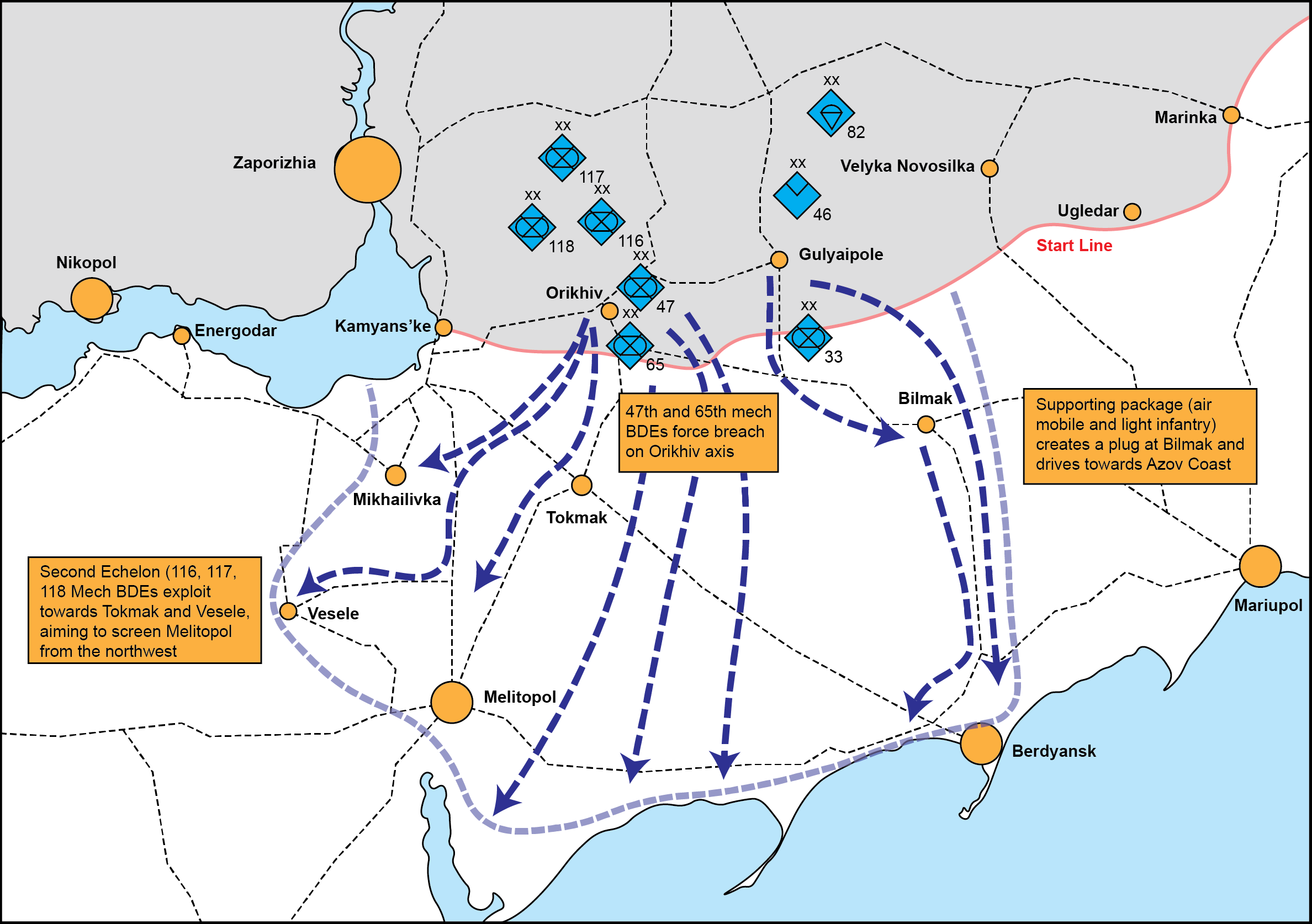
    Panzer, Marsch

    the saga of NATO Panzerkampfwagen in Donbass and Ukraine

    January 9, 2025: Total Kievan Debellation – Big Serge

    The Russo-Ukrainian War: Year 3

    March 1, 2024: Russo-Ukrainian war: The Deluge – Big Serge

    Z World Turns Two

    December 12, 2023: The Atlanticist « counter-offensive »

    the last NATO attempt to avoid defeat in its proxy war in Donbass and Ukraine, against Russia

    August 29, 2023: Escaping Attrition: Ukraine Rolls the Dice – Big Serge

    The Zaporizhia Summer Blockbuster

    June 2, 2023: The Battle of Bakhmut: Postmortem – Big Serge

    Russo-Ukrainian War Update

    May 20, 2023: Countdown of the Atlanticist defeat in Bakhmut

    January 20, 2023: Russo-Ukrainian War : The World Blood Pump – Big Serge

    Gradually, and then Suddenly

  • [Sharing] Russo-Ukrainian war: The Deluge – Big Serge

    Z World Turns Two

    As the calendar barrels into another year and we tick away the days of February, notable anniversaries are marked off in sequence. It is now 2/22/2022 +2: two years since Putin’s address on the historic status of the Donetsk and Lugansk regions, followed on 2/24/2022 by the commencement of the Special Military Operation and the spectacular resumption of history.

    The nature of the war changed dramatically after a kinetic and mobile opening phase. With the collapse of the negotiation process (whether thanks to Boris Johnson or not), it became clear that the only way out of the conflict would be through the strategic defeat of one party by the other. Thanks to a pipeline of western support (in the form of material, financial aid, and ISR and targeting assistance) which allowed Ukraine to transcend its rapidly evaporating indigenous war economy, it became clear that this would be a war of industrial attrition, rather than rapid maneuver and annihilation. Russia began to mobilize resources for this sort of attritional war in the Autumn of 2022, and since then the war has attained its present quality – that of a firepower intensive but relatively static positional struggle.

    The nature of this attritional-positional war lends itself to analytic ambiguity, because it denies the most attractive and obvious signs of victory and defeat in large territorial changes. Instead, a whole host of anecdotal, small scale positional analysis, and foggy data has to suffice, and this can be easily misconstrued or misunderstood. Ukraine’s supporters point to nominally small scale advances to support their notion that Russia is suffering cataclysmic casualties to capture small villages. This suggests that Russia is winning meaningless, pyrrhic victories which will lead to its exhaustion, so long as Ukraine receives everything it asks for from the west. At the same time, the Z-sphere points to these same battles as evidence that Ukraine can no longer hold even its most heavily defended fortress cities.

    What I intend to argue here is that 2024 will be highly decisive for the war, as the year in which Ukrainian strategic exhaustion begins to show out at the same time that Russia’s strategic investments begin to pay off on the battlefield. This is the way of such an attritional conflict, which burdens armies with cumulative and constant stressors in a test of their recuperative powers. Wear and tear and the raging of the waters will erode and burden the dike until it bursts. And then the deluge comes.

    Avdiivka: Tactical Overmatch

    The signature operational development of 2024 is at this point clearly the complete Russian capture of Avdiivka. The strategic significance of Avdiivka has itself been subject to debate, with some dismissing it as little more than a dingy suburb of Donetsk, targeted to give Putin a symbolic victory on the eve of Russian elections.

    In fact, Avdiivka is clearly a locale with great operational significance. A Ukrainian fortress since the beginning of the Donbass War in 2014, Avdiivka served as a keystone blocking position for the AFU on the doorstep of Donetsk, sitting on a major supply corridor. Its capture creates space for Russia to begin a multi-pronged advance on next-phase Ukrainian strongholds like Konstantinivka and Pokrovsk (more on that later) and pushes Ukrainian artillery away from Donetsk.

    The subject that would seem to be of particular importance, however, was the manner in which Russia captured Avdiivka. The struggle amid the wreckage of an industrial city provided something of a Rorschach test for the war, with some seeing the battle as yet another application of Russian “meat assaults”, overwhelming the AFU defenders with mass amid horrific casualties

    This story does not hold up to scrutiny, as I would like to demonstrate from a variety of angles. First, we can try to gauge casualties. This is always difficult to do with a high degree of accuracy, but it would be useful to look for abnormalities or spikes in Russian loss patterns. The most widely accepted source for this would be the Mediazona casualty tracker (an explicitly anti-Putinist media project operated out of the west).

    When one goes to examine the Mediazona counts, an interesting discrepancy manifests itself. The summary text notes that a four-month battle for Avdiivka has recently concluded, and Mediazona states: “We are seeing significant growth of Russian casualties since mid-October.” This is actually quite odd, because their data shows the literal opposite. Since October 10 (the day of the first major Russian mechanized assault on Avdiivka), Mediazona has counted an average of 48 Russian casualties per day, which is actually significantly less than the burn rate earlier in the year. In contrast, Mediazona counted 80 casualties per day on average from January 1 to October 9. This period, of course, includes heavy fighting in Bakhmut, so if one takes the period between the end of the Battle of Bakhmut and the beginning of the Battle of Avdiivka (May 20 to October 9) one finds an average of 60 Russian casualties per day. A time series of Mediazona’s weekly confirmed casualties also shows a downward trend, making one wonder how they can feel comfortable claiming that the action in Avdiivka has raised the burn rate

    Furthermore, Ukrainian sources on the ground emphasized that the Russian assault in Avdiivka was quite certainly not a mere function of mass, and noted effective Russian small unit tactics with a powerful fire support. One Ukrainian officer told Politico: “That’s how they work in Avdiivka — artillery levels everything to the ground, and then professional landing troops come in small groups.” Another officer described Russian small unit assaults (5 to 7 men) occurring at night. All of this is inconsistent with the trope about Russian “human wave” assaults – which, we should note, have never been caught on camera. Given the Ukrainian fondness for sharing combat footage, oughtn’t we expect to see some alleged evidence of these Russian waves being mowed down?

    All this is to say, the claim that Russia (yet again) suffered catastrophic losses in Avdiivka is simply not supported. Like a previous analysis in which I showed that Russian armor losses were not rising or showing abnormal patterns, we yet again have a major Russian assault failing to cause a spike in the loss data. This is not to deny that Russia has suffered casualties. The operation at Avdiivka was a high intensity, four month battle. Men are killed and vehicles are destroyed in such affairs, but there is little evidence that this occurred at abnormal or alarming rates for the Russian Armed Forces.

    Now, you’re certainly free to make your own judgements, and I have no doubt that the belief in massive Russian casualties and human wave assaults will endure. However, to believe this, you must make an epistemological leap of faith – believing that the wasteful human waves exist despite Ukrainian fighters testifying to the opposite, and that Russian casualties have risen in a way that is somehow invisible to trackers like Warspotting and Mediazona.

    In contrast, Avdiivka stands out as the first major engagement of the war where Ukraine’s growing material shortages have been acutely felt. After burning through much of their accumulated stock (including the large batch of shells purchased from South Korea by the United States), the AFU felt a glaring and painful artillery shortage in Avdiivka. Complaints about “shell hunger” were a motif of the coverage of the battle. Of course, we’ve heard about the growing shell shortage for months (and it is known that Ukraine simply does not have enough tubes to cover the entire front), but Avdiivka stands out as a keystone position, important enough for Ukraine to scramble premier assets to reinforce it, where they simply could not provide an adequate base of fire

    Avdiivka

    In the absence of adequate artillery, Ukraine has increasingly tried to lean on FPV drones as a substitute. There is a certain strategic logic to this, in that small drones can be manufactured in distributed facilities and do not require the capital intensive production centers (vulnerable to Russian strike systems) that artillery shells do.

    However, drones are clearly not a panacea to Ukraine’s problems. In the simple technical sense, the destructive power of an FPV drone (which usually carries the warhead of a rocket propelled grenade) pales in comparison to an artillery shell and is thus unsuitable for suppressive fire or the reduction of strongpoints. Drones are also subject to disruptions from weather and electronic warfare in ways that artillery is not. More importantly, however, Ukraine is simply losing the drone race. Ukraine’s achievements ramping up drone production in wartime are genuinely impressive, but the country’s industrial base is still far smaller and more vulnerable than Russia’s, and Russia’s drone production is starting to widely outstrip Ukraine’s. Ukraine’s weakness in other arms prompted them to be the first party to lean heavily on FPVs, but that early lead has been lost.

    So, drones clearly offer a lethal and important battlefield expedient, but they are neither a genuine replacement for artillery nor an arm of clear advantage for Ukraine. The result was a Ukrainian defense in Avdiivka that was substantially outgunned. The problem was compounded by the rapid proliferation of Russian air dropped glide bombs, alongside the degradation of Ukraine’s air defense. This allowed the Russian air force to operate around Avdiivka with something approaching impunity, dropping hundreds of glide bombs with the power to – unlike artillery shells, let alone tiny FPV warheads – level the fortified concrete blocks that normally make Soviet vintage cities so durable in urban fighting.

    Thus, Avdiivka unfolded along a pattern that is now becoming very familiar, and indicates the emerging Russian preference for assaulting cities, at least of this mid-sized fortress variety. Once again the operation focused in its preliminary phase on flaring out Russian control over the flanks, beginning with the large mechanized assault in early November which secured positions on the railway line to the north of the city. Again (as in the case of Bakhmut and Lysychansk-Severodonetsk) there was an expectation among some that Russia would attempt to encircle the city, but this still does not look feasible in the current operating environment under the nexus of fires and ISR. Instead, positions on the flank allowed the Russians to launch concentric attacks into the city, entering on multiple axes that compressed the Ukrainian defenders into a tight interior position, where Russian fire could be heavily concentrated

    Concentric Attack on Avdiivka: February 7-14 (Base Map courtesy of Kalibrated Maps)

    The particular combination of concentric attack and overwhelming Russian fires led to a very rapid end to the battle once the Russian push into the city proper began. While the creep around the flanks occurred in a sequence of on and off pushes through the winter, the concentric crush on the city lasted scarcely more than a week. On February 7-8 the Russians achieved breakthroughs in both the northern and southern suburbs, and by February 14 the Ukrainians were in retreat. A few pockets of resistance would linger for only a few days.

    Despite statements alleging that they had conducted an “orderly withdrawal”, there is abundant evidence that the Ukrainians were taken aback by the tempo of the Russian assault, and the evacuation was hastily organized and only partially completed. A large number of personnel were unable to escape and are now POWs, and it is clear that Ukraine did not have time or energies to evacuate the wounded, instead ordering that they simply be left behind. The general picture is of a chaotic and ad-hoc retreat from the city, not an orderly and pre-planned withdrawal.

    The issue for Ukraine now goes beyond the loss of Avdiivka and the opportunities that this will create for Russia. Ukraine now has proof of failure on both the attack and the defense in operations where they concentrated significant forces. Their counteroffensive on Russia’s Zaporhzia Line was a catastrophic failure, wasting much of the AFU’s carefully husbanded mechanized package, and now they have a failed defense on their hands in Avdiivka, despite fighting out of a well prepared fortress and scrambling reserves into the sector to reinforce the defense.

    The question now becomes fairly simple: if Ukraine failed to attack successfully over the summer, if they could not defend Bakhmut, and if they cannot defend in Avdiivka, is there anywhere that they can find a battlefield success? The dam is leaking. Can Ukraine plug it before it collapses?

    Russia’s Full Court Press

    Ukraine’s force structure is always notoriously difficult to parse out, due to their propensity for ad-hoc battlegroups and their practice of piecemeal allocation of forces to resident brigade commands (turning brigade headquarters into the cups in a shell game). Truth be told, Ukrainian ORBAT and force allocation is in a class all its own – to try and get a handle on it, you can do no better than Matt Davies’ excellent work over on X dot com. This generally makes the AFU’s organization and force generation more opaque and more difficult to parse out than Russia’s, for example. While Russia employs conventional army level groupings, Ukraine does not, and indeed lacks any organic commands above the brigade level.

    That being said, the basic picture is one of three Ukrainian “Operational Strategic Groupings”, which are vaguely akin to army groups. These are, from north to south, Operation Strategic Groupings (OSGs) Khortytsia, Tavriya, and Odessa. Against these are arrayed four Russian Army Groups – from north to south, these are Army Groups West, Center, East, and Dnieper. Assessing the total line strength is always difficult, largely because we do not always have good insight into the actual combat rating of these units. However, we can make estimates of paper strength. Based on deployment information from the Project Owl Ukraine Control Map and the Militaryland Deployment Map, we can estimate that the nominal strength in the theater right now is some 33 Division Equivalents for Ukraine against perhaps 50 DEs for Russia – a significant, but not utterly overwhelming Russian advantage. We get a picture something like this (Ukrainian Army level formations are absent because they do not exist)

    Ukrainian Theater Army and Group Level Commands (Base Control Map provided by Kalibrated Maps)

    At the moment, Russia is grinding slowly forward on almost every axis in the theater. This has both strategic/attritional implications, in that the Ukrainians are forced to continually burn reserves while being denied the ability to rotate and reconstitute units, but there is also a clear operational formulation occurring.

    The Russian maneuver scheme must be held in reference to their minimum end state objectives – namely, the capture of the remaining Donbas urban agglomerations around Slovyansk and Kramatorsk (though we should not assume that the war or Russian ambitions end there). At the moment, there are several major axes of advance, which I am labelling as follows

    Russian Axes of Attack (Base Control Map provided by Kalibrated Maps)

    The intention of these thrusts is fairly obvious. In the center of the front, Russian advances on the Avdiivka and Chasiv Yar axes converge on the critical Ukrainian hub of Konstyantinivka, the capture of which is one of the absolute prerequisites for any serious attempt to move on the Kramatorsk agglomeration. Russian bases of control around Avdiivka and Bakhmut provide the necessary space to begin a two-pronged operation towards Konstyantinivka, bypassing and enveloping the strongly held Ukrainian fortress of Toretsk. (See the map below, which I made in December before the capture of Avdiivka)

    Concentric Operation toward Konstyantinikva (Base map from Suriyak)

    Meanwhile, continued Russian pressure on the northern front (via a slow squeeze on the city of Kupyansk, at the top of the Oskil line as well as operations towards Lyman on the Zherebets axis) provide a base of progress towards the other operational perquisite for Kramatorsk, which is the Russian recapture of the north bank of the Donets River, up to the confluence of the Oskil at Izyum

    Russia’s North Donetsk Campaign

    Meanwhile, on the more southerly axes, Russia continues to expand its zone of control after the capture of Marinka, likely with the aim of developing momentum towards Kurakhove, which would put the Ukrainian fortress of Ugledar in a more severe salient. Ugledar remains a thorn in Russia’s side, in that it lies uncomfortable close to Russian rail lines into the land bridge. Russia is also attacking the Ukrainian held Robotyne salient (the sparse fruits of Ukraine’s counteroffensive). While these attacks have, as we have mentioned, attritional benefits by way of pinning Ukrainian forces in the line, it seems likely that Russia would aim to recapture the Robotyne salient to preempt any Ukrainian designs of using it as a springboard for a future attempt to restart operations towards Tokmak. Thus, these southern operations have both attritive effects and offer the potential of preventatively neutralizing useful Ukrainian staging points

    Overall, the broad operational situation suggests that Russia is developing offensive momentum across the entire theater. This will have deleterious effects on Ukrainian combat power by preventing rotation, reconstitution, and lateral troop redeployment, while sucking in the dwindling Ukrainian reserves. Shoigu recently made an uncharacteristically bold statement that the AFU was committing much of its remaining reserves:

    “After the collapse of the counteroffensive, the Ukrainian army command has been trying to stabilize the situation at the expense of the remaining reserves and prevent the collapse of the frontline.”

    This is, if not totally verifiable, at least notable given his general reticence to make sweeping statements about the state of the war.

    In the near term (meaning the spring and summer months) we should expect Russia to progress towards the following intermediate operational goals:

    • Developing a concentric offensive towards the Ukrainian agglomerations around Chasiv Yar, Toretsk, and Kontyantinivka
    • An offensive along the Zherebets-Oskil line towards Lyman, to capture or screen the Donetsk River line as a prerequisite for an operation against Kramatorsk
    • Continued assaults towards Kurakhove in preparation for the liqudiation of the Ugledar salient
    • Preventative attacks towards the Orakhiv axis to prevent future Ukrainian attempts to exploit the Robotyne salient

    Farwell Zaluzhny

    Against the backdrop of Ukraine’s defeat at Avidiivka, President Zelensky began a long expected command overhaul when he fired Commander in Chief Valery Zaluzhny and replaced him the the commander of the ground forces, Oleksandr Syrski.

    There a variety of amusing ethnic and political subplots to this, particularly the longstanding tensions between Zelensky and Zaluzhny, the many ridiculous rumors that Zaluzhny had become a political rival to Zelensky and might be the lead figure in a military takeover of the government, and the rather ironic fact that the new top man, Syrski, is a Russian born less than fifty miles outside of Moscow, who ended up in Ukrainian service simply because his unit was posted near Kharkov when the Soviet Union fell, and he opted not to resign his command.

    This is all very interesting, of course, and perhaps might help demonstrate that the relationship between these countries is far more convoluted and nuanced that most westerners assume. What matters for our purposes, however, is the military implications

    Farewell, Sweet Prince

    What we should say about Zaluzhny is that, while he was not really Ukraine’s biggest problem, he did not have the answers. Zaluzhny displayed a bizarre timidity, particularly throughout the Battle of Bakhmut and the Ukrainian Counteroffensive. We constantly heard about Zaluzhny’s reservations and opposition to Ukrainian plans – he was against the costly defense of Bakhmut, skeptical of the attack out of Orikhiv, and so forth. There was even a rumor that Zaluzhny told Zelensky that the counteroffensive had failed already in the opening weeks of the operation.

    The problem with all of this is simple: Zaluzhny cannot have it both ways. He seemed to be positioning himself as a voice of caution and reason, distancing himself from operations on the ground, while allowing those operations to go forward anyway. Over the summer, supposedly at the same time that Zaluzhny had concluded that the counteroffensive was failing, he continued to push Ukrainian mechanized forces into the Russian defenses in small, company sized battlegroups.

    Ultimately, Zaluzhny strikes one as a non-entity: skeptical of Ukrainian battle plans, but willing to implement them anyway without offering alternatives of his own. In particular, his hesitation led the Ukrainian counteroffensive to devolve into a sequence of wasteful probing attacks which lacked the mass to achieve a decisive result and inevitably spiraled into a slow motion trainwreck. A commander who complains about battleplans while implementing them anyway is begging an obvious question: what is it that you do around here, anyway?

    In contrast, Syrski is a man who clearly exerts some will on the battlefield, for good or ill. His preference for commitment and combat has resulted in several of Ukraine’s ugliest defeats – he is, after all, the architect of the Bakhmut defense and the firebag at Lysychansk. But he’s also the showrunner for Ukraine’s signature military success to this point, in the 2022 Kharkov Counteroffensive, where he successfully exploited a badly hollowed out section of Russian front and recaptured important positions over the Oskil

    Syrski (2nd from left) checks the situation map

    Syrski may very well lead Ukraine to disaster. He has shown a tolerance for casualties that could easily break the AFU’s back, and a preference for generating horrible, grinding positional defense. But Syrski at least has a propensity to look for decision points, unlike Zaluzhny, who seemed content to slowly wither away in positional battle against a superior foe. Aggression could easily cause disaster for Ukraine, but time had clearly run out on Zaluzhny’s way of war.

    Outgunned: Ukraine and the Arms Race

    The Russo-Ukrainian War is one of industrial attrition. Despite a variety of theories about this or that game changing weapon, clever maneuver scheme, or superior western training, the reality of this war for the last 18 months has been one of grinding and laborious industrial war, battering through fixed defenses in a maelstrom of concrete, steel, and high explosives. The central problem for Ukraine is fairly simple: Russian force generation is reaching the liftoff point, which will interminably shift combat power in Russia’s favor.

    As artillery shells have become the totem item in this war, a commentary on the state of the artillery race is certainly warranted. Ukraine managed to build a large inventory of shells in preparation for its 2023 summer offensive, partially through careful husbanding of resources and partially through the United States tapping a few remaining reservoirs, like South Korea. After expending much of that stockpile in high intensity operations through the summer, the artillery advantage has once again swung heavily in favor of Russia, and “shell hunger” has become a ubiquitous complaint for Kiev.

    In particular, Zelensky has recently begun to complain of what he calls an “artificial shortage”, blaming the Republican opposition in the US Congress for Ukraine’s supply difficulties. Zelensky is wrong. The shortage is real, and not easily fixed.

    After burning through excess stocks, Ukraine’s long-term supply has increasingly come to hinge on attempts to expand production in Europe and the United States. However, this plan is foundering on three separate rocks: 1) industry has been much slower to ramp up than expected; 2) even the expanded production targets are too low to win the war for Ukraine; and 3) even if adequate ammunition could be procured, Ukraine would quickly run into problems with barrel availability.

    Thus far, the United States has been much more successful ramping up production than has Europe. While American targets have been revised several times, it now looks like the United States will produce something like 500,000 shells in 2024, which is a good number given the state of the American industrial plant and issues with labor shortages. The European Union initially hoped to deliver 1 million shells on an annualized basis, but they appear to be far short of this number. Europe faces a variety of problems, like labor shortages, exorbitant energy costs, and a consensus driven decision making culture that is slow to allocate significant resources. The European practice of small orders placed by individual member states also leaves manufacturers hesitant to make large investments in new production lines. Or, as one Belgian general put it: “We’re in deep shit.”

    Let’s say that the USA and Europe both fulfill their current targeted deliveries to Ukraine in their entirety. What would that amount to? A recent study from two German analysts at the European Council on Foreign Relations estimated that, in the optimist scenario, the USA and Europe can supply Ukraine with approximately 1.3 million rounds of ammunition on an annualized basis. That would give Ukraine a budget of about 3,600 shells per day – enough to sustain moderate intensity, but far below what they need

    The primary means of physical destruction

    Last year, Ukrainian Minister of Defense Reznikov said that Ukraine would require nearly 12,000 shells per day to “successfully execute battlefield tasks”, particularly offensive actions. That works out to more than 350,000 shells per month – more than three times what the NATO bloc is hoping to produce. Obviously that large number is unrealistic, but a recent study from the Estonian Ministry of Defense estimated that at minimum Ukraine will need 200,000 shells per month (Roughly 6,600 per day). At the estimated long-run availability of 3,600 per day, Ukraine can have some basic functionality, but they will find it difficult to accumulate a stockpile to allow higher intensity offensive operations.

    This runs into an additional, follow on problem, which is that simply pumping shells into Ukraine is not enough. Solving the shell shortage will exacerbate the barrel shortage. Artillery barrels, needless to say, wear out from extended use. Using a rule of thumb number which says that a howitzer barrel has a lifespan of about 2,500 shots, this means that Ukraine would be wearing out somewhere between 125-150 guns per month, assuming they could actually shoot as much as Reznikov wants. This would create yet another sustainment bottleneck, complicated by the fact that Ukraine has at least 17 different platforms in use.

    Meanwhile, what of the Russians? It’s clear that Russia’s pool of shells has been vastly underestimated. First we have the news that North Korean deliveries have been far larger than initially expected; instead of 1 million, it’s something more like 3 million with deliveries ongoing. This number is dampened by the fact that some of the North Korean shells are defective (from long stays in depots and cannibalization), but the sheer size of the delivery can’t be ignored. Meanwhile, indigenous Russian production has skyrocketed, with the Estonians estimating some 3.5 million shells produced in 2023 for the Russians, with a figure of 4.5 million expected in 2024. Including North Korean shells, it seems highly likely that Russian can easily sustain a firing rate of up to 12,000 shells per day, with surge capacity in reserve

    The upshot of all this is essentially that, even if the European production surge occurs on schedule, there’s at least a 3-1 advantage (potentially 5-1) in Russian artillery fire that’s baked into the calculus of this war, occurring alongside a substantial western acknowledged ramp up in Russian production of strike systems like cruise missiles, Geran drones, Lancets, and glide bombs of both greater power and greater range. A recent publication from the Royal United Services Institute noted that Russia can deliver 1,500 tanks (both new build and retrofitted depot stocks) and 3,000 armored vehicles per year – the report also notes that Russian stocks of Iskander and Kalibr missiles have grown significantly over the last year.

    The standard argument – the sort of “Theory of Ukrainian Victory” – rests on the idea of disproportionate, catastrophic Russian casualties, and both sides love to throw around that cherished word “loss ratios.” However, this rather tends to obfuscate the issue. The most important question is simple whether an army’s relative combat power is growing or shrinking over time – that is, whether its ability to generate forces is greater than its rate of burn – can it reconstitute attrited units in a timely manner, generate replacements, recover, repair, and replace broken equipment, and so forth. The prototypical example of this is of course the Nazi-Soviet War. Despite the fact that the Germans enjoyed favorable “loss ratios” throughout most of the war, the ratio of combat power consistently grew in the USSR’s favor due to their vastly superior force generation powers. Tellingly, Hitler even made a quip during the Battle of Kursk that the loss ratios should predict an immanent German victory. But loss ratios do not matter nearly as much as the relative rate of loss and force generation.

    Given that Russian casualties are obviously far below the phantasmagorical hundreds of thousands suggested by western Media and Ukrainian propogandists, it has become clear that Russia is generating more force over time. Estonian intelligence estimated that Russia can properly train, equip, and deploy roughly 130,000 additional troops every six months, which is more than adequate to overcome current loss rates. As if to emphasize the point, RUSI notes that the Russian grouping of forces in Ukraine (that is, only those forces deployed in theater at the moment) rose from 360,000 to 470,000 over the last year.

    So, Russian force generation is growing over time, and not simply regenerating losses. Meanwhile, Ukrainian forces are increasingly undermanned, with understrength brigades asked to perform increasingly heavy lift. We know that Ukrainian reserves are running low. This was clearly demonstrated in Avdiivka, when the AFU scrambled brigades from other fronts (like the 47th Mechanized) that had been fighting all summer, indicating that there was a lack of adequate strategic reserves, and then throwing in the elite 3rd Assault Brigade in the closing days of the battle to try and stem the bleeding. Meanwhile, formations like the 110th Mechanized, which had been fighting in Avdiivka for months, were essentially burned off entirely because they could not be rotated out. Russia conducts regular troop rotations, while Ukrainian forces remain on the line due to the lack of replacements.

    So, here we are. The current Theory of Ukrainian Victory is exhausted, intending as it did to leverage western ISR, training, and surplus equipment to deliver disproportionate casualties on Russia. 2022 was a year of big surges (not Big Serges), with Russia rapidly conquering the land bridge and the Lugansk shoulder in its initial maneuver campaign, followed by Ukrainian capitalization on the inadequate Russian force generation with their audacious counterattack towards the Oskil. But 2023 was different – Ukraine had a significant window of opportunity, flush with western equipment, training, and planning assistance while Russia’s mobilization ground into gear. That strategic window yielded nothing. Instead, Ukraine burned off valuable resources defending Bakhmut and then bashed uselessly against a well shaped and well defended Russian line in the south. Now the window is closed, and Russian force generation is inexorably rising, threatening Ukraine with the deluge of total strategic overmatch.

    Ukraine is facing strategic defeat, and the only way out is to go all in – not only for Ukraine, in the form of a more radical and totalizing mobilization plan, but for its partners too, who will have to adopt a quasi-war economy and devote radically more resources to arming and training the AFU.

    There are signs that Ukraine might be ready to take that plunge, from Zelensky’s claim that the army is asking for 500,000 more men, to the ongoing deliberation over an expanded draft, to comments about the need for “total mobilization” and laws against capital flight (to prevent men from fleeing the country with their money). This is only natural; due to Russia’s vastly superior resource base, Ukraine can only hope to match them with a totalizing and far more extractive mobilization policy

    Russia’s Secret Weapon: Bombs

    That leaves the NATO partners. Even if Ukraine adopts a radical mobilization policy, it lacks the indigenous capacity to train them, let alone arm them. Without the NATO training pipeline and robust material support, a Ukrainian total mobilization (even if it were possible with Ukraine’s limited state capacity) would serve only to inflate casualties and burn off what is left of the nation’s demographic base. With even a stable level of Ukraine aid struggling to get through an American congress that is suffering from Ukraine fatigue and a host of domestic crises, it seems unlikely that any by the Baltic States are in the mood to double down and begin sending daily trains full of material to Kiev.

    And so, we once again return to the motif of strategic exhaustion. 2022 was the year of wild swings as the front stabilized into a conveniently shaped and easily supplied Russian position, and 2023 was the year of Ukraine’s strategic window of opportunity, frittered away at Bakhmut and Robotyne. 2024 is the year that Russia’s swelling force generation reaches a climax and the war turns in an obvious and irreversible way against Ukraine.

    The great German soldier and author Ernst Jünger had the following comment on the prospect of war with Russia:

    When Spengler warned against any invasion of Russia for reasons of space, he was, as we have since seen, right. Even more questionable become each of these invasions for metaphysical reasons, insofar as one approaches one of the great sufferers, a titan, a genius of suffering power. In its aura, in its sphere of influence, one will become acquainted with pain in a way that far exceeds any imagination.

    Much is always made of Russia’s propensity for “suffering”, with interpretations ranging from a romantic Russian-patriotic notion of sacrifice for the motherland to an anti-Russian criticism of the Russian tolerance for casualties. Perhaps it means both: the individual Russian soldier is more willing to sit in a freezing trench and trade shells than his adversary, and the Russian state and people are able to lose more and last longer in the aggregate.

    I rather think, however, that Jünger’s metaphysical “titan of suffering” is not so metaphysical at all. It rather refers to a mundane power of the Russian state, namely its excellence and willingness across the centuries to mobilize huge numbers of men and material for war, at the expense of other social goals. War with Russia sucks. It means mass casualties, cold trenches, scarred earth, and long nights of shelling. The Ukrainians have coped with this as well as anyone (because they are themselves quasi-Russian, however much they deny it), but it is an awful thing to trade shells for years on end. The Russian power of suffering is to willingly fight wars that devolve into bat fights, knowing they have a bigger bat.

    The window of strategic opportunity has closed for Ukraine, and now opens wide for Russia. The earth opens wide for the dead [end]

    The original article

    related

    The Atlanticist defeat in Donbass and Ukraine

    chronicle of a new catastrophic NATO venture
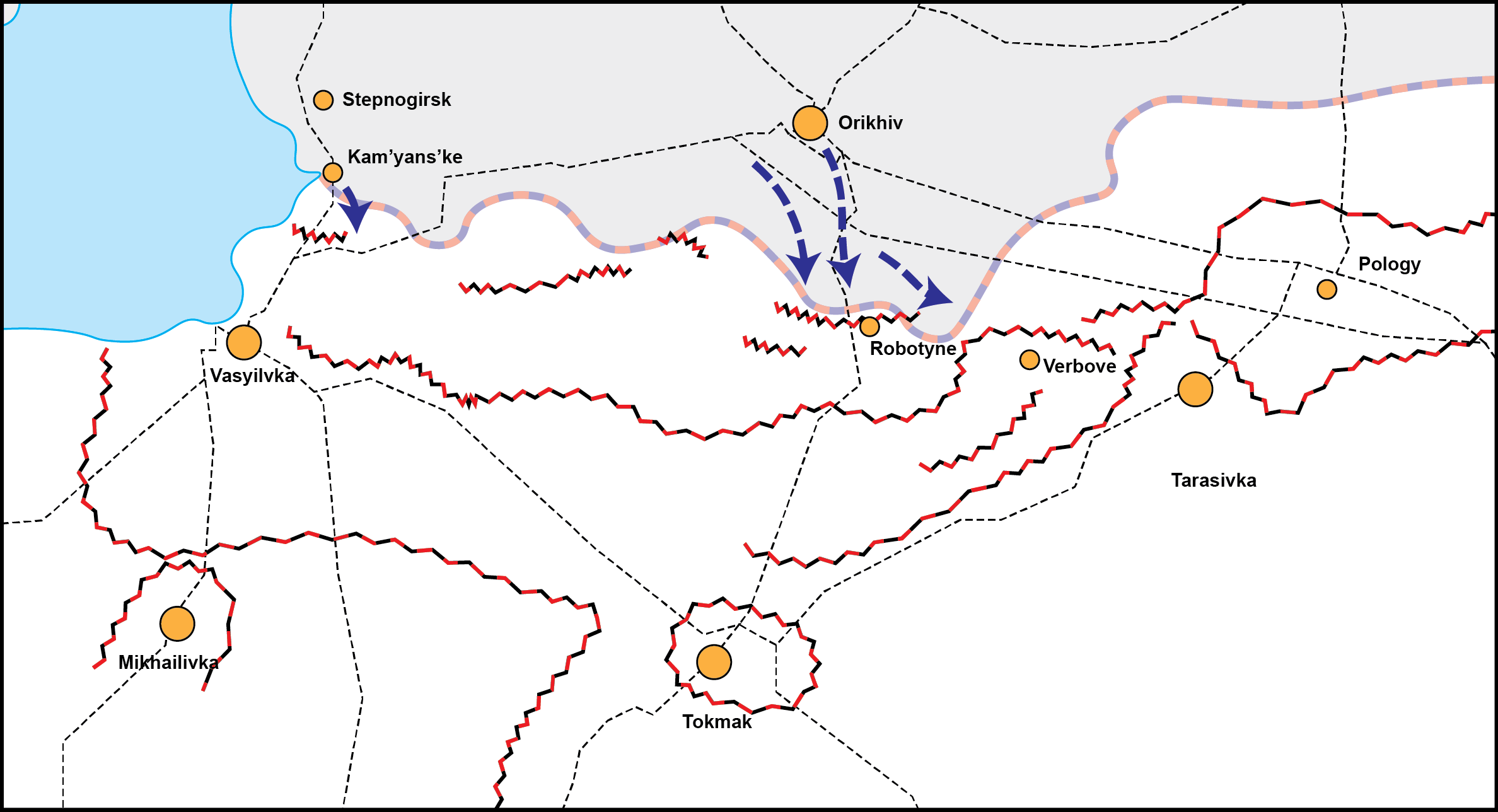
    The Atlanticist counter-offensive

    the last NATO attempt to avoid defeat in its proxy war in Donbass and Ukraine, against Russia

    Countdown of the Atlanticist defeat in Bakhmut

    a so predictable chronicle
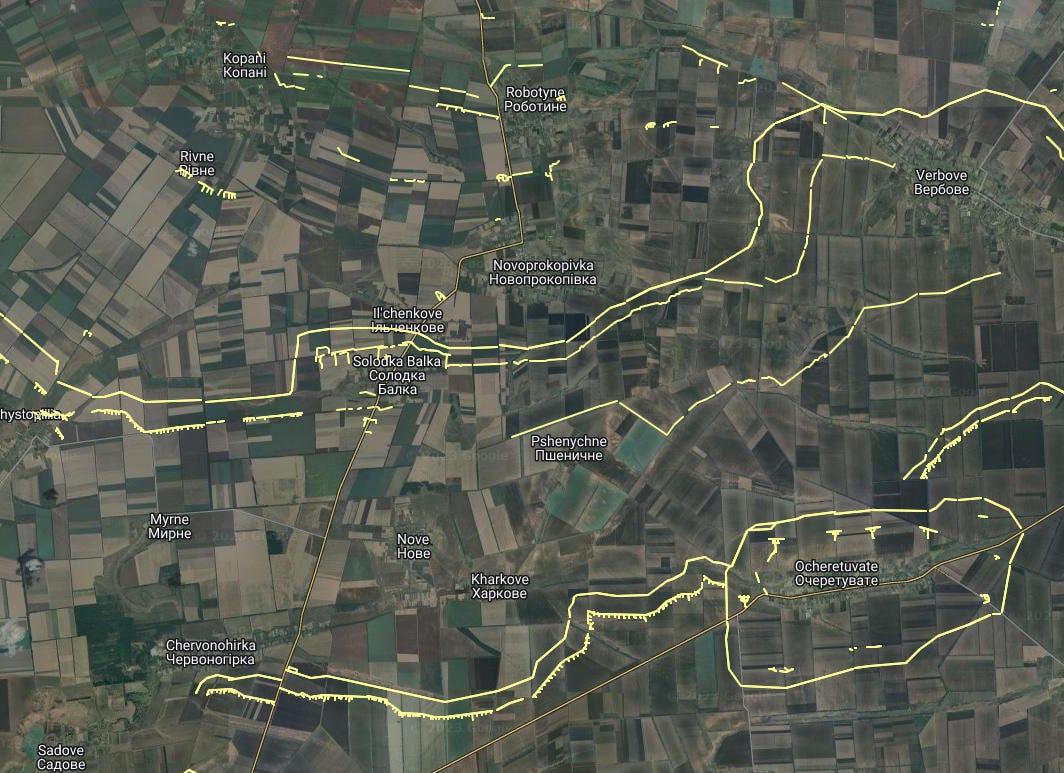
  • [Sharing] Escaping Attrition: Ukraine Rolls the Dice – Big Serge

    The Zaporizhia Summer Blockbuster

    It has been a while since I published anything long-form commenting on the ongoing Russo-Ukrainian War, and I confess that writing this article gave me a modicum of trouble. Ukraine’s much anticipated grand summer counteroffensive has now been underway for about eighty days with little to show for it. The summer has seen fierce fighting in a variety of sectors (to be enumerated below), but the contact line has shifted very little. I have been reluctant to publish a discussion of the Ukrainian campaign simply because they have continued to hold assets in reserve, and I did not want to post a premature commentary that went to press right before the Ukrainians showed some new trick or revealed a hidden ace up their sleeve. Sure enough, I wrote the bulk of this article last week, right before Ukraine launched yet another major attempt to force a breach in the Orikhiv sector.
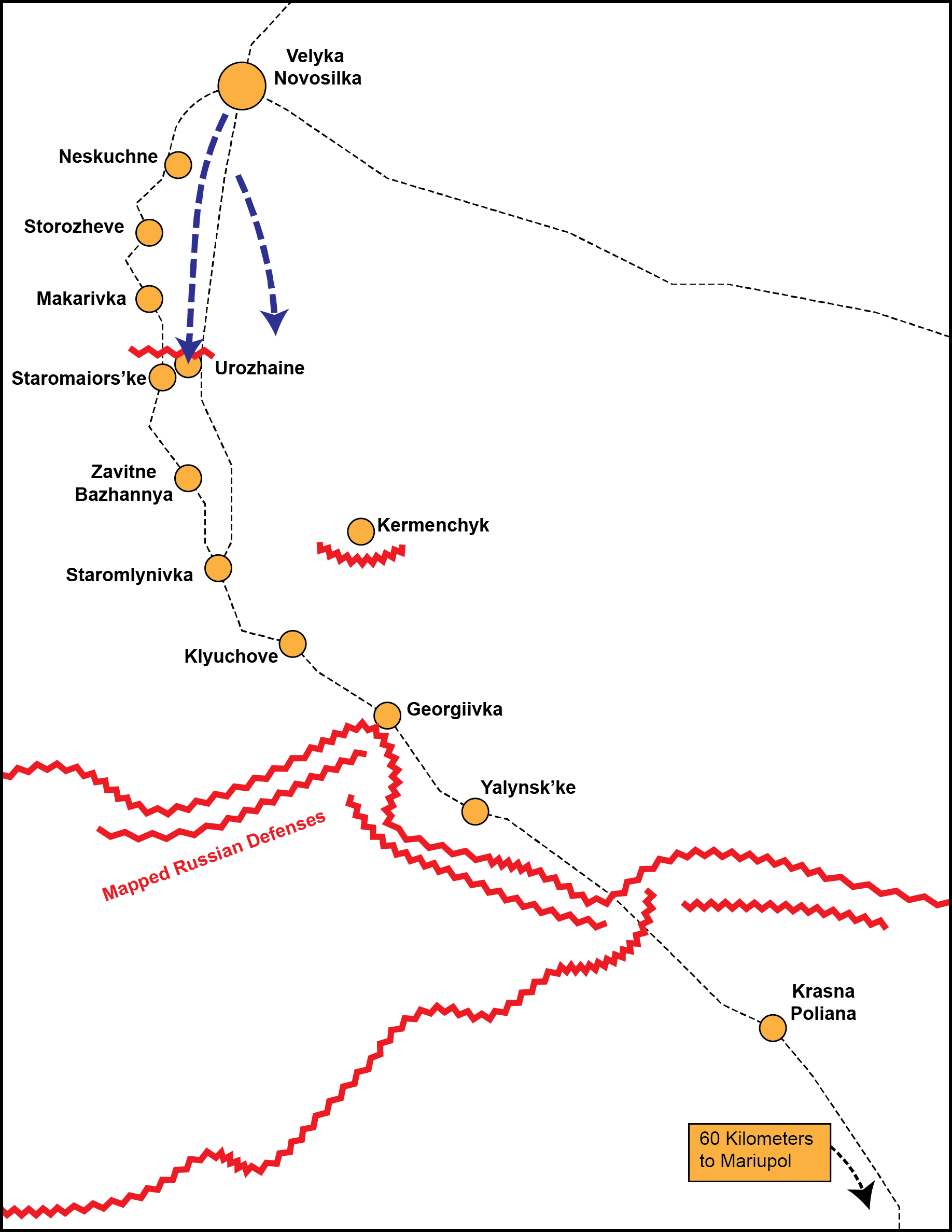
    At this point, however, the appearance of some of Ukraine’s last remaining premier brigades, which had previously been held in reserve, confirms that the axes of Ukraine’s attack are concretized. Only time will tell if these precious reserves manage to achieve a breach in the Russian lines, but enough time has passed that we can sketch out what exactly Ukraine has been trying to do, why, and why it has failed to this point.

    Part of the problem with narrating the war in Ukraine is the positional and attritional nature of the fighting. People continue to look for bold operational maneuver to break the deadlock, but the reality seems to be that for now some combination of capability and reticence has turned this war into a positional struggle with a plodding offensive pace, which far more resembles the first world war than the second.

    Ukraine had aspirations of breaking open this grinding front and reopening mobile operations – escaping the attritional struggle and driving on operationally meaningful targets – but these efforts have so far come to naught. For all the lofty boasts of demonstrating the superior art of maneuver, Ukraine still finds itself trapped in a siege, painfully trying to break open a calcified Russian position without success.

    Ukraine may not be interested in a war of attrition, but attrition is certainly interested in Ukraine.

    Ukraine’s Strategic Paradigm

    For those that have been following the war closely, what follows will probably not be new information, but I think it is worth thinking holistically about Ukraine’s war and the factors that drive their strategic decision making.

    For Ukraine, the conduct of the war is shaped by a variety of disturbing strategic asymmetries.

    Some of these are obvious, like Russia’s much larger population and military industrial plant, or the fact that Russia’s war economy is indigenous, while Ukraine is entirely reliant on western deliveries of equipment and munitions. Russia can autonomously ramp up armaments production and there are abundant signs from the battlefield that the Russian war economy is beginning to find its groove, with new systems like the Lancet present in increasing abundance, and western sources now admitting that Russia has successfully serialized a domestic version of the Iranian Shahed Drone. Furthermore, Russia has the asymmetrical capacity to strike Ukrainian rear areas to an extent that Ukraine cannot reciprocate, even if they are given the dreaded ATACMs (these will give Ukraine the range to strike operational depth targets in the theater, but they can’t hit facilities in Moscow and Tula the way Russian missiles can strike anywhere in Ukraine)

    Medvedev inspects a tank production run

    With significant Russian asymmetries in population size, industrial capacity, strike capability, and – let us be blunt – sovereignty and decision-making freedom, an attritional-positional struggle is simply bad math for Ukraine, and yet that is precisely the sort of war in which it has become trapped.

    What is important for us to understand, however, is that the strategic asymmetry goes beyond physical capacities like population base, industrial plant, and missile technology, and extends into the realm of strategic objectives and timelines.

    Russia’s war has been deliberately framed in a fairly open-ended way, with goals largely tied to the idea of “demilitarizing” Ukraine. In fact, Russia’s territorial objectives remain rather nebulous beyond the 4 annexed oblasts (though it is safe to say that Moscow would like to acquire far more than just these). All that to say, Putin’s government has deliberately framed the war as a military-technical enterprise focused on destroying the Ukrainian armed forces, and has shown itself to be perfectly free to give up territory in the name of operational prudentia.

    In contrast, Ukraine has maximalist goals that are explicitly territorial in nature. The Zelensky government has been open about the fact that it aims – however fanciful this may be – to restore the entirety of its 1991 territories, including not just the four mainland oblasts but also Crimea.

    The confluence of these two factors – Ukrainian territorial maximalism combined with asymmetrical Russian advantages in a positional-attritional struggle – forces Ukraine to seek a way to break open the front and restore a state of operational fluidity. Remaining locked in a positional struggle is unworkable for Kiev, partially because Russia’s material advantages will inevitably shine through (in a fight between two big guys swinging big bats at each other, bet on the bigger guy with the bigger bat), and partially because a positional war (which amounts essentially to a massive siege) is simply not an efficient way to retake territory.

    This leaves Ukraine with no choice but to unfreeze the front and try to restore mobile operations, with an eye towards creating some asymmetry of their own. The only feasible way to accomplish this is to launch an offensive aimed at severing critical lines of Russian communication and supply. Contrary to some suggestions that were popular this spring, a large Ukrainian offensive against Bakhmut or Donetsk simply did not fit the bill.

    Frankly, there are only two suitable operational targets for Ukraine. One is Starobils’k – the beating heart at the center of Russia’s Lugansk front. Capturing or screening Svatove and then Starobils’k would create a genuine operational catastrophe for Russia in the north, with cascading effects all the way down to Bakhmut. The second possible target was the land bridge to Crimea, which could be cut by a thrust across lower Zaporizhia towards the Azov coast.

    It was probably inevitable that Ukraine would select the Azov option, for a few reasons. The land bridge to Crimea is a more self-contained battlespace – an offensive in Lugansk would occur under the shadow of the Belgorod and Voronezh regions of Russia, making it relatively more difficult to put significant Russian forces out of supply. Perhaps even more significant, however, is Kiev’s complete obsession with Crimea and the Kerch Bridge – targets that hold hypnotic sway in a way that Starobils’k never could.

    Again, this may sound like fairly intuitive review, but it’s worth contemplating how and why Ukraine ended up launching an offensive that was widely telegraphed and expected. There was no strategic surprise whatsoever – a definitely real video of GUR chief Budanov smirking didn’t fool anyone. The Russian armed forces certainly weren’t fooled, as they spent months saturating the front with minefields, trenches, firing emplacements, and obstacles. Everyone knew that Ukraine was going to attack toward the Azov Coast, specifically with an eye towards Tokmak and Melitopol, and that’s exactly what they did. A frontal attack against a prepared defense without the element of surprise is generally considered a poor choice, but here is Ukraine not only attempting such an attack but even launching it against a backdrop of global celebration and phantasmagorical expectations

    Ukraine’s infantile plea for OPSEC

    It’s impossible to make sense of this without understanding the way that Ukraine is shackled by a particular interpretation of the war to this point. Ukraine and its supporters point to two successes in 2022 where Ukraine was able to retake a substantial swathe of territory, in Kharkov and Kherson oblasts. The problem is that neither of these situations is portable to Zaporizhia.

    In the case of the Kharkov offensive, Ukraine identified a sector of the Russian front that had been hollowed out and was defended only by a thin screening force. They were able to stage a force and achieve a measure of strategic surprise, due to the thick forests and general paucity of Russian ISR in the area. This is not to mitigate the scale of Ukraine’s success there; it was certainly the best uses of forces available to them and they did exploit a weak section of front. This success is hardly relevant to circumstances in the south today; mobilization has ameliorated Russia’s force generation problems so that they now longer have to make hard choices about what to defend, and the heavily fortified Zaporizhia frontline is nothing like the thinly held front in Kharkov.

    The second case study – the Kherson counteroffensive – is even less germane. In this case, Ukrainian leadership is rewriting history in record time. The AFU banged its head on Russian defenses in Kherson for months throughout the summer and autumn last year and took atrocious losses. An entire grouping of AFU brigades was mauled in Kherson without achieving a breakthrough, and this even with Russian forces in a uniquely difficult operational disposition where they had their backs to a river. Kherson was only abandoned months later due to concerns that the Kakhovka dam might fail or be sabotaged (for those keeping score, it did in fact end up failing), and due to Russia’s need at the time to economize forces.

    Again, this can easily be misconstrued as arguing that Russia’s withdrawal from Kherson did not matter. Obviously, abandoning a hard-earned bridgehead is a major setback, and retaking west-bank Kherson was a boon for Kiev. But we need to be honest about why it happened, and it plainly did not happen because of Ukraine’s summer counteroffensive – to underscore this, recall that Ukrainian officials openly wondered if the Russian withdrawal was a trick or a trap. The question is simply whether Ukraine’s Kherson offensive is predictive of future offensive success. It is not.

    So, we have one case where Ukraine identified a lightly defended section of front and ran through it, and another where Russian troops abandoned a bridgehead due to logistical and force allocation concerns. Neither is particularly relevant to the situation on the Azov coast, and in fact an honest reflection of the AFU’s Kherson Counteroffensive might have given Ukraine second thoughts about a frontal assault on prepared Russian defenses.

    Instead, Kharkov and Kherson have both been presented as proof positive that Ukraine can shatter Russian defenses in a straight up fight – in fact, we still have no examples from this war of the AFU defeating strongly held Russian positions, particularly post-mobilization when Russia finally began to resolve its manpower deficiencies. But Ukraine is caught in the grip of its own particular story about this war, which has imparted unearned confidence in its ability to conduct offensive operations. Tragically for mobilized Ukrainian Mykolas, this has dovetailed with a second swagger-producing mythology.

    A major selling point for the Ukrainian counteroffensive has been the assessed superiority of the AFU’s big-ticket donations from the west – the main battle tanks and infantry fighting vehicles. Since the first deliveries were announced, there has been no shortage of boasting about the many superior qualities of western models like the Leopards and Challengers. The suggestion has essentially been that skilled Ukrainian tankers are only waiting to be unleashed once they get behind the wheel of superlative western builds. My personal favorite motif has been the practice of dismissing Russian tanks as “Soviet Era” – neglecting to note that the Abrams (designed 1975) and the Leopard 2 (1979) are also Cold War models

    A burn out Leopard in Syria

    It must be stated, again, that there is nothing wrong with western tanks. The Abrams and the Leopard are fine vehicles, but confidence in their game-changing capabilities stems from a mistaken assumption about the role of armor. It must be appreciated that tanks always have been and always will be mass-consumption items. Tanks blow up. They are disabled. They break down and are captured. Tank forces attrit – much faster than people expect. Given that the brigades prepared for Ukraine’s assault on the Zapo line were significantly understrength in vehicles, it was simply irrational to expect them to have an oversized impact. This is not to say that tanks aren’t important – armor remains critical to modern combat – but in a peer conflict one should always expect to lose armor at a steady clip, especially when the enemy retains fires superiority.

    One can see, then how a measure of hubris can easily creep in to Ukrainian thinking, fueled by a healthy dose of desperation and strategic need. Reasoning from a distorted understanding of its successes in Kharkov and Kherson, emboldened by their shiny new toys, and guided by an overriding strategic animus that requires them to unlock the front somehow, the idea of a frontal attack without strategic surprise against a prepared defense really could seem like a good idea. Add in the good old fashioned trope about Russian incompetence and disorder, and you have all the recipes for an imprudent roll of the dice by Ukraine.

    The Misfire

    So now we come to the operational minutia. For a variety of reasons, Ukraine has chosen to attempt a frontal assault on Russia’s fortified Zaporizhia front, with the intention of breaching towards the sea of Azov. How can this be accomplished?

    We had a few clues early on, accruing from a variety of geographic features and alleged intelligence leaks. In May, the Dreizin Report published what was purported to be a Russian synthesis of Ukraine’s OPORD (Operational Order). An OPORD functions as a broad sketch of an operation’s intended progression, and the document shared by Dreizin was billed as a summary of Russia’s expectation for Ukraine’s offensive (that is, it is not a leak of Ukraine’s internal planning documents, but a leak of Russia’s best guess at Ukraine’s plans).

    In any case, in a vacuum it was anybody’s guess as to whether Dreizin’s OPORD was authentic, but we’ve subsequently been able to cross-check it. This is because of the other, even more infamous leak from earlier this spring, which included the Pentagon’s combat power build plan for Ukraine.

    NATO was very generous and built Ukraine a mechanized strike package from scratch. However, because this mechanized force was cobbled together with a variety of different systems from all corners of the NATO Cinematic Universe, Ukraine formations are uniquely identifiable by their particular combination of vehicles and equipment. So, for example, the presence of Strykers, Marders, and Challengers indicates the presence of the 82nd Brigade in the field, and so forth.

    Thus, despite Ukrainian pretensions of operational security, it’s actually been trivially easy for observers to know which Ukrainian formations are in the field. There have been a few deviations from the script – for example, the 47th Brigade was supposed to field the Frankenstein Slovenian M55 tanks, but in the end the decision was made to send the underpowered M55’s to the northern front and the 47th was deployed with a contingent of Leopard Tanks originally operated by the 33rd Brigade. But these are minor details, and on the whole we’ve had a good sense of when and where specific AFU formations get on the field.

    Based on identifiable units, the Dreizin OPORD looks very close to what we actually saw at the onset of the Ukrainian offensive. The Dreizin OPORD called for an assault by the 47th and 65th Brigades on the Russian lines south or Orikhiv, in the sector bounded by Nesterianka and Novoprokopivka. Directly in the middle of this sector is the town of Robotyne, and sure enough that’s where the first big AFU assault came overnight on June 7-8, spearheaded by the 47th Brigade.

    Now, from this point it becomes difficult to evaluate the Dreizin OPORD simply because Ukraine’s attack became instantaneously derailed, but one thing we can say is that Dreizin’s source was correct about the order that Ukrainian units would be introduced into battle. Based on this, we can flesh out the OPORD and feel pretty safe wagering that this is what the Ukrainians were hoping to achieve:

    Ukraine’s Dream: The Drive to the Sea

    The intention seems to have been to force a breach in the Russian line using a concentrated armored assault by the 47th and 65th Brigades, after which a follow on force of the 116th, 117th, and 118th would begin the exploitation phase, driving for the Azov Coast and the towns of Mikhailivka and Vesele to the west. The objective was clearly not to get bogged down in urban fighting attempting to capture places like Tokmak, Berdyansk, or Melitopol, but to bypass them and cut them off by taking up blocking positions on the main roads.

    Simultaneously, a lesser – but no less critical – thrust would come out of the Gulyaipole area and drive along the Bilmak axis. This would have the effect of both screening the main advance to the west and wedging the Russian front open, splintering the integrity of the Russian forces caught in the middle. Overall, this is a fairly sensible, if ambitious and uncreative plan. In many ways, this was really the only option.

    So what went wrong? Well, conceptually it’s easy. There is no breach. The bulk of the maneuver scheme is dedicated to exploitation – reaching such and such a line, taking up this blocking position, masking that city, and so forth. But what happens when there’s no breach at all? How can such a catastrophe occur, and how can the operation be salvaged when it comes untracked in the opening phase?

    Indeed, this is precisely what has happened. Ukraine finds itself stuck on the edge of Russia’s outermost screening line, spending substantial resources trying to capture the small village of Robotyne, and/or bypass it to the east by infiltrating the gap between it and the neighboring village of Verbove. So instead of that rapid breach and turning maneuver towards Melitopol, we get something like this:

    Ukrainian Counteroffensive with Mapped Russian Defensive Lines

    We could be generous and say that Robotyne is the last village before the Ukrainian attack reaches the main Russian defensive belt, but we’d be lying – they will also have to clear the larger town of Novoprokopivka, two kilometers to the south. Just for reference, here’s a closer look at the mapped Russian defenses in the battlespace, based on the excellent work of Brady Africk

    Russian defenses in the Robotyne Sector

    The discussion about these emplacements can get a little muddled, simply because it’s not always clear what is meant by that popular phrase “first line of defense.” Clearly there are some defensive works around and in Robotyne, and the Russians chose to fight for the village, so in some sense Robotyne is part of the “first line” – but it is more proper to speak of it as part of what we would call a “screening line”. The first line of continuous fortifications across the front is several kilometers further south, and this is the belt that Ukraine has yet to even reach, let alone breach.

    As of this moment, it appears that Russian troops have lost total control of Robotyne but continue to hold the southern half of the village, while Ukrainian troops in the northern half of the village remain subject to heavy Russian shelling. We should probably at this point consider the village to be continuously contested and a feature of the gray zone

    Robotyne, in all its glory

    Now, a quick note about Robotyne itself and why both sides are so determined to fight for it. It seems rather odd on the surface, given that the Russian preference in 2022 was to make tactical withdrawals under their fires umbrella. This time though, they are fiercely counterattacking to contest Robotyne. The value of the village lies not only in its location on the T-0408 Highway, but also its excellent perch on top of a ridge. Both Robotyne and Novoprokopivka lie on a ridge of elevated ground which is as much as 70 meters higher than the low-lying plain to the east.

    What this means is fairly simple; if the AFU presses forward in attempts to bypass the Robotyne-Novoprokopivka position by pushing into the gap between Robotyne and Verbove, it will be vulnerable to fire on the flanks (particularly by ATGMs) by Russian troops on the high ground. We already have seen footage of this, with Ukrainian vehicles being taken in the flank by fire from Robotyne. I am highly skeptical that Ukraine can even attempt an earnest assault on the first defensive belt until they have captured both Robotyne and Novoprokopivka.

    This would all be a tough nut to crack under ideal circumstances, with a variety of engineering problems to mediate, obstacles designed to funnel the attacker into firing lanes, perpendicular trenches to allow enfilade fire on advancing Ukrainian columns, and robust defenses on all the major roadways. But these are not the best of circumstances. This is a tired force that has exhausted much of its indigenous combat power, which is attempting to organize the attack using a piecemeal and understrength assault package.

    Several factors conspired against the Ukrainian offensive, and synergistically they have created a bona fide military catastrophe for Kiev. Let us enumerate them.

    Problem 1: The Hidden Defensive Layer

    At this point, we need to acknowledge something that everybody missed about Russia’s defense. I previously expressed high confidence that Ukraine’s forces would be unable to breach the Russian defenses, but I mistakenly believed that the Russian defense would function according to the classic Soviet defense-in-depth principles (elucidated in great detail by the writings of David Glantz, for example)

    Idealized Defense in Depth by a Motor Rifle Brigade

    Such a defense, put simply, is open to the idea that the enemy will breach the first or even second lines of defense. The purpose of the multilayered (or “echeloned” in the classic terminology) defense is to ensure that the enemy force gets stuck as it tries to break through. It may penetrate the first layer, but as it goes it is continually chewed up by the subsequent belts. The classic example is the Battle of Kursk, where powerful German panzers broke into the Soviet defensive belts but subsequently became stuck as they were ground down. You can think of this as being analogically similar to a Kevlar vest, which uses a web of fibers to stop projectiles: rather than bouncing off, the bullet is caught and its energy is absorbed by the layered fibers.

    I was actually quite open to the idea that Ukraine would generate some penetration, but I anticipated them getting stuck in the subsequent belts and sputtering out.

    What was missing from this picture – and this is a credit to Russian planning – was an unseen defensive belt forward of the proper trenches and fortifications. This forward belt consisted of extremely dense minefields and strongly held forward positions in the screening line, which the Russians evidently intended to fight for fiercely. Rather than breaking through the first belt and getting stuck in the interstitial areas, the Ukrainians have been repeatedly mauled in the security zone, and the Russians have consistently counterattacked to knock them back when they do manage to get footholds.

    In other words, while we expected Russia to fight a defense in depth that absorbed the Ukrainian spearheads and shredded them in the heart of the defense, the Russians have actually shown a strong commitment to defending their forwardmost positions, of which Robotyne is the most famous.

    On paper, Robotyne was expected to function as part of a so-called “crumple zone”, or “security zone” – a sort of lightly held buffer that puts the enemy through pre-registered fires before they bump into the first belt of continuous and strongly held defenses. Indeed, a variety of aerial and satellite surveys of the area taken before Ukraine went on the attack showed Robotyne laying well forward of the first solid and continuous Russian fortification belt.

    What was missed, it seemed, was the extent to which the Russian defenders had mined the areas on the approach to Robotyne and were committed to defending within the security zone. The scale of the mining certainly seems to have surprised the Ukrainians, and creates a strain on Ukraine’s limited combat engineering capabilities. Even more importantly, the dense mines have created predictable avenues of approach for the Ukrainian forces, which force them to repeatedly run through the same gauntlet of fires and Russian standoff weaponry.

    Problem 2: Insufficient Suppression

    The signature image of the first great assaults on the Zapo Line has been columns of unsupported maneuver assets, being raked with Russian fires, both ground based (rocketry, ATGMs, and tube artillery) and from air platforms like the Ka-52 Alligator attack helicopter. One of the more startling aspects of these scenes was the way Ukrainian forces would come under heavy fire while still in their marching columns, taking losses before they ever deployed into firing lines to begin their assault proper.

    There are myriad reasons for this. One is the now blasé issue of Ukrainian munition shortages. Consider the following items of interest. In the runup to Ukraine’s counteroffensive, Russia waged a heavy counter-preparatory air campaign that knocked out large AFU ammunition dumps. Ukraine’s initial assaults collapse in the face of heavy and unsuppressed Russian fires. The United States decides to transfer cluster munitions to Ukraine because, in the words of the president, “they’re running out of ammunition.” Add in the degradation of Ukrainian air defense, which allows Russian helicopters to operate with great effect along the contact line, and you have a recipe for disaster. Lacking the tubes to suppress Russian fires or the air defense to chase away Russian aircraft, the AFU opened their offensive by disastrously pushing forward unsupported maneuver elements into a hail of fire.

    Problem 3: Russian Standoff Weapons

    It’s crucial to understand that the Russian toolbox is fundamentally different than it was during the battle for Kherson last year, due to the rapidly expanding production of a variety of Russian standoff weapons – most notably the Lancet and the UMPK glide modifications for gravity bombs.

    The Lancet in particular has been a star performer – there are claims that the trusty little loitering munition is responsible for nearly half of Russia’s artillery kills – and has filled a crucial capability gap that troubled the Russian army episodically throughout the first year of the war. Contrary to some western assessments that Russia simply could not manufacture drones in sufficient quantities, production of the Lancet has been successfully ramped up in a short period of time, and mass production of other systems like the Geran are coming online as well

    A Thing of Beauty: Zala Lancet

    The proliferation of the Lancet and similar systems means, in a nutshell, that nothing within 30km of the contact line is safe, and this in turn disrupts the AFU’s deployment of critical support assets like air defense and engineering, magnifying their vulnerability to Russian mines and fires. In fact, we’ve increasingly seen Ukrainian artillery use decline in the Robotyne area due to the threat of lancets (they seem to be transferring tubes to other fronts), and the AFU is favoring the use of HIMARS in the suppressive role.

    Problem 4: Repetitive Lines of Approach

    Because the AFU failed to breach the Robotyne sector on their first attempt, they’ve been forced to continually move up additional units and resources to hammer on the position. This has particular implications, both in the sense that AFU forces must continually traverse the same lines of approach to contact, and in the fact that they are using the same rear area to assemble and stage their assault forces.

    This makes the burden on Russian ISR (Intelligence, Surveillance, Reconnaissance) significantly easier, since the AFU has no effective way to disperse or hide the assets that they are bringing forward to the assault. Staged Ukrainian forces and material have been hid repeatedly in the villages immediately behind Orikhiv, like Tavriiske and Omeln’yk, and Russia is able to strike rear area infrastructure like ammunition depots because – to put it simply – there are only so many places these these assets can be staged when you are repeatedly assaulting the same 20km wide sector of front.

    We recently had Ukrainian Deputy Minister of Defense Hanna Malair complaining that the 82nd Brigade – newly deployed to the Orikhiv sector – had been hit with a series of Russian airstrikes in its staging areas. According to her, this was because of poor OPSEC revealing the brigade’s location to the Russians. But this really makes very little sense; the entire area of operations around Orikhiv is perhaps 25km deep (from Kopani to Tavriiske) and 20 km wide (from Kopani to Verbove). This is a small area that has seen a huge amount of military traffic along the same roads throughout the summer. The idea that Russia needs insider information to know that they ought to surveil and attack targets in this area is absurd.

    Problem 5: Fragile Brigades

    It actually takes significantly less damage to “destroy” an operational level unit than people think. A unit can become a combat scratch off at 30% losses (with some variance depending on how those are allocated). This is because when people hear the term “destruction”, they think that means total losses. Sometimes that’s how the word is used in colloquial conversation, but what matters for officers trying to manage an operation is whether or not a formation is combat capable of the tasks being asked of it – and those capabilities can vanish much more quickly than people realize.

    This is particularly the case for the Ukrainian mech package, for a variety of reasons. For one, as we discussed in previous articles, these brigades started the fight well understrength (remember, for example, that the Ukrainian 82nd Brigade has only 90 Stryker AFVs, while an American Strkyer Brigade is supposed to have 300). Additionally, the cobbled together nature of these brigades – and the total lack of indigenous sustainment systems like repair and maintenance – means that the Ukrainians will naturally have to cannibalize these vehicles. They’ve already started designating “donor” vehicles that are written off completely to be stripped down for parts. The nexus of these two facts is that Ukraine’s mechanized brigades are understrength on vehicles to begin with, and will have an abysmally poor recovery rate, with hidden attrition behind the scenes due to cannibalization.

    What this means is that when we heard admissions by mid-July that Ukraine had already lost 20% of its maneuver assets, there is an associated catastrophic decline in combat capability. The lead brigades – which chewed through 50% or more of their maneuver vehicles – can no longer shoulder combat tasks appropriate for a brigade, and the Ukrainians are forced to feed in their second echelon units prematurely.

    At this point, partial elements of at least ten different brigades have been deployed in the Robotyne sector, with the 82nd likely to join them soon. Given that the NATO combat power build plan only included 9 NATO trained brigades, plus a few reconstituted Ukrainian formations, it’s safe to say that blooding all of them over a 71 day fight just to break into the screening line was not in the plan.

    Staring at the Abyss

    I’ve seen a variety of analysts and writers lately arguing that the insertion of additional Ukrainian units into the Robotyne sector signals the next phase of the operation.

    This is nonsense. Ukraine is still mired in the first phase. What has happened is instead that the attrition of their first echelon brigades has forced them to commit their second (and third) wave to complete the tasks of the opening phase. The initial attack, led by the 47th Brigade, was intended to create a breach in the Russian screening line around Robotyne and advance to the main Russian belt further to the south. They failed, and the additional brigades earmarked for exploitation – the 116th, 117th, 118th, 82nd, 33rd, and more – are now being systematically fed in to keep the pressure on.

    These brigades have not been destroyed, of course, simply because they are not being committed in their entirety, but rather as subunits. Nevertheless, at this point Ukrainian losses make up the better part of a whole brigade, distributed around the broader package, and over 300 maneuver elements (tanks, IFVs, APCs, etc) have been scratched off.

    We need to say this very explicitly. Ukraine has not moved on to the next phase of their operation. They are stuck in the first phase, and have been forced to prematurely commit portions of the second echelon that was earmarked for later action. They are slowly but surely burning through the entire operational grouping, and so far they have not breached Russia’s screening line. The great counteroffensive is turning into a military catastrophe

    Now, this does not mean that the operation has failed, simply because it is still ongoing. History teaches us that it is unwise to make definitive pronouncements. Luck and human factors (bravery and intelligence, cowardice and stupidity) always have something to say. However, the trajectory is undeniably towards abject failure at the current moment.

    So far, the AFU has shown some adaptability. In particular, we’ve recently seen them shift away from pushing forward unsupported columns of mechanized assets – instead they’ve been leaning on small dismounted units, trying to slowly push forward into the space between Robotyne and Verbove. The move towards dispersal is intended to reduce loss rates, but it also reduces the probability of a dramatic breakthrough even further and marks the temporary abandonment of decisive breaching action in favor of – once again – creeping positional warfare.

    We would be remiss if we failed to note that there have been meaningful Russian losses in all of this. We know that the Russian forces in the Robotyne sector have required rotation and reinforcement, including with elite VDV and Naval Infantry units. Russia has taken counterbattery losses, it has lost vehicles in counterattacking action, and men have been killed holding their trenches. The initial assault groups that the Ukrainians threw in had a lot of combat power, and the fighting was very bloody for both sides. It’s not a one-sided shooting gallery, but a high intensity war.

    But therein is the crux of the matter – Ukraine seems unable to escape the attritional and positional war that it finds itself in. It sounds all well and good to proclaim a return to “maneuver” warfare, but if there is an inability to breach enemy defenses, this is only an empty boast, and the nature of the struggle remains attritional. When the question becomes “will we breach before we run out of combat power”, you are not maneuvering. You are attriting.

    In my series of articles on military history, we’ve looked at a variety of cases where armies tried desperately to unlock the front and restore a state of operational maneuver, but when there is no technical capacity to do so, these intentions do not matter one bit. Nobody wants to be trapped on the wrong side of attritional mathematics, but sometimes what you want does not matter at all. Sometimes attrition is imposed on you.

    In the absence of the capabilities required to successfully breach Russia’s prodigious defenses – more ranged fires, more air defense, more ISR, more EW, more combat engineering, more more more – Ukraine is trapped in a rock fight. Two fighters are swinging bats at each other, and Russia is a bigger man with a bigger bat.

    Two Bad Copes

    Amid a clear misfire and growing strategic disappointment, two new suggestions have increasingly crept into the conversation – “copes”, if you will, that are utilized as a narrative comfort to explain why the Ukrainian operation is actually going just fine (despite nearly universal acknowledgment in the west that the results have been lackluster at best). I would like to briefly address each of these in turn.

    Cope 1: “The first stage is the hardest”

    You frequently see it argued that all the AFU has to do is break open the Russian screening line, and the remainder of the defenses will fall like dominos. The general thrust of this argument is that the Russians lack reserves and that the subsequent defensive lines are not adequately manned – just break open the first line, and the rest will fall apart.

    This is probably a comforting thing to tell oneself, but it’s rather irrational. We could talk, for example, about Russia’s doctrinal schema for defense in depth, which prescribes liberal allocation of reserves at all depths of the defensive system, but it’s probably more fruitful to point at more immediate evidence.

    Let us simply consider Russia’s behavior over the last six months. They have spent a tremendous amount of effort constructing echeloned defenses – are we really to believe that they did all this only to waste all their combat power fighting in front of these defenses? Nor is there any evidence that Russia is having trouble supplying the front with manpower at the present moment. We’ve seen continued rotations and redeployments amid an overall process of military enlargement in Russia. Indeed, of the two belligerents, it is Ukraine that seems to be scraping the barrel for manpower.

    Cope 2: “Get within firing range”

    This is the more fantastical story, and it represents a radical ad-hoc shift of the goalposts. The argument is that Ukraine doesn’t actually need to advance to the sea and physically cut the land bridge, all it has to do is get the Russian supply routes within firing range to cut off Russian troops. This theory has been advance liberally on Twitter X and by personalities like Peter Zeihan (a man who knows nothing about military affairs).

    There are many problems with this line of thought, most of which stem from an inflated notion of “fire control.” To put it simply, being “in range” of artillery fire does not imply effective area denial or severed supply lines. If that were the case, Ukraine would be unable to attack out of Orikhiv at all, since the entire axis of approach is within Russian firing range. In Bakhmut, the AFU continued to fight long after their main supply routes came under Russian shelling.

    The simple fact is that most military tasks are conducted within range of at least some of the enemy’s ranged fires, and the idea that Russia will collapse if the AFU manages to put a shell on the Azov coastal highway is fairly ridiculous. In fact, Russia’s main rail line is already within range of Ukrainian HIMARS, and the Ukrainians have successfully launched strikes on coastal cities like Berdyansk. Meanwhile, Russia strikes at Ukrainian sustainment infrastructure with regularity – yet neither army has collapsed yet. This is because ranged fires are a tool to improve attritional calculus and further operational goals – they do not magically win wars just by tagging the enemy’s supply roads.

    Let’s be charitable though, and indulge this line of thinking. Suppose the Ukrainians managed to advance – not all the way to the coast, but far enough to bring Russia’s main supply routes within range of artillery. What would they do? Wheel up a battery of howitzers, park them at the very front line, and begin firing nonstop at the road? What do you think would happen to those howitzers? Counterbattery systems would surely set upon them. The idea that you can just haul up a big gun and start taking potshots at Russian supply trucks is really quite childish. Putting enemy forces out of supply has always required physically blocking transit, and that’s what Ukraine will have to do if they want to cut Russia’s land bridge.

    The Distraction

    I am cognizant of the fact that I would be raked over the coals if I failed to discuss a secondary area of Ukrainian effort, farther to the east in Donestk oblast. Here, the Ukrainians have worked their way a good distance up the highway out of the town of Velyka Novosilka capturing several settlements.

    The problem with this “other” Ukrainian attack is that it is, in a word, inconsequential. This axis of advance is operationally sterile in a very fundamental way, as it involves pushing groups up a narrow corridor of road that doesn’t lead anywhere important. As in the Robotyne sector, the AFU is still quite some distance from any of the serious Russian fortifications, and to make matters worse the road and settlements on this axis lay along a small river. Rivers, as we know, flow along the floor of the terrain, which means the roadway sits at the bottom of a wadis/embakement/glacis, choose your terminology. In fact, the road network as such consists of nothing except a single-lane roadway on either side of the river

    The Sideshow in the East

    My reading of this axis is essentially that it was intended as a feint to create some semblance of operational confusion, but when the primary effort on the Orikhiv axis turned into a colossal misfire, the decision was made to continue to press here simply for narrative purposes. Ultimately, this is simply not an axis of advance that can exert a meaningful influence on the wider war. The forces deployed here are relatively miniscule in the grand scope of things, and they aren’t going anywhere important. Certainly, a thin, needlelike penetration is not going to drive more than 80 kilometers down a single lane road to the sea and win the war.

    Conclusion: Finger Pointing

    One of the surest signs that Ukraine’s counteroffensive has taken a cataclysmic turn is the way Kiev and Washington have already begun to blame each other, conducting a postmortem while the body is still warm. Zelensky has blamed the west for being too slow to deliver the requisite equipment and ammunition, arguing that unacceptable delays allowed the Russians to improve their defenses. This strikes me as rather obscene and ungrateful. NATO built Ukraine a new army from scratch in a process that already required greatly truncating the training times.

    On the other hand, western experts have begun to blame Ukraine for supposedly being unable to adopt “combined arms warfare”. This is really a very nonsensical attempt to use jargon (incorrectly) to explain away problems. Combined arms simply means the integration and simultaneous use of various arms like armor, infantry, artillery, and air assets. Claiming that Ukraine and Russia are somehow cognitively or institutionally incapable of this is extremely silly. The Red Army had a complex and extremely thorough doctrine of combined arms operation. One professor at the US Arms School of Advanced Military Studies said: “The single most coherent core of theoretical writings on operational art is still found among the Soviet writers.” The idea that combined arms is some foreign and novel concept to Soviet officers (a caste that includes the Russian and Ukrainian high command) is ridiculous.

    This issue is not some sort of Ukrainian doctrinal obstinacy, but a combination of structural factors rooted in the insufficiency of Ukrainian combat power and the changing face of warfare.

    It’s frankly a little silly to say that Ukraine needs to learn about “combined arms” when they are very simply lacking important capabilities that would make a successful maneuver campaign possible – namely, adequate ranged fires, a functioning air force (and no, F-16’s will not fix this), engineering, and electronic warfare. The issue very fundamentally is not one of doctrinal flexibility, but of capability. By way of analogy, this is a bit like sending a boxer out to fight with a broken arm, and then critiquing his technique. The problem is not his technique – the problem is that he’s injured and materially weaker than his opponent. So too, the problem for Ukraine is not that they are incapable of coordinating arms, the problem is that their arms are shattered.

    Secondly – and this, I admit, is rather shocking to me – western observers do not seem open to the possibility that the accuracy of modern ranged fires (be it Lancet drones, guided artillery shells, or GMLRS rockets) combined with the density of ISR systems may simply make it impossible to conduct sweeping mobile operations, except in very specific circumstances. When the enemy has the capacity to surveil staging areas, strike rear area infrastructure with cruise missiles and drones, precisely saturate approach lines with artillery fire, and soak the earth in mines, how exactly can it be possible to maneuver?

    Combined arms and maneuver are predicated on the ability to rapidly concentrate enormous fighting power and attack with great violence at narrow points. This is probably impossible given the density of Russian surveillance, firepower, and the many obstacles they have put up to deny Ukrainian freedom of movement and scleroticize their activity. The main examples of maneuver in recent western memory – the campaigns in Iraq – have only tenuous relevance to circumstances in Zaporizhia.

    Ultimately, we have returned to a war of mass – particularly massed ISR assets and fires. The only way Ukraine can maneuver the way they want is to break open the front, and they can only do this with more of everything – more mine clearing equipment, more shells and tubes, more rocketry, more armor. Only mass can crack open a suitable breach in the Russian lines. Otherwise, they are stuck in a positional creep through the dense Russian defenses, and criticizing them for being unable to grasp some sort of magical western notion of “combined arms” is the strangest sort of finger pointing.

    So, whence goes the war from here? Well, the obvious question to ask is whether we believe Ukraine will ever have a more potent assault package than the one they started the summer with. The answer clearly seems to be no. It was like pulling teeth to scrape together these understrength brigades – the idea that, following on a defeat in the Battle of Zaporizhia, NATO will somehow put together a more powerful package seems like a stretch. More to the point, we have American officials saying fairly explicitly that this was the best mechanized package Ukraine was going to get.

    It does not seem controversial to say that this was Ukraine’s best shot at some sort of genuine operational victory, which at this point seems to be slowly trickling away into modest but materially costly tactical advances. The ultimate implication of this is that Ukraine is unable to escape a war of industrial attrition, which is precisely the sort of war that it cannot win, due to all the asymmetries that we mentioned earlier.

    In particular, however, Ukraine cannot win a positional-attritional war because of its own maximalist definition of “winning.” Since Kiev has insisted that it will not give up until it returns its 1991 borders, an inability to dislodge Russian forces poses a particularly nasty problem – Kiev will either need to admit defeat and acknowledge Russian control over the annexed areas, or it will continue to fight obstinately until it is a failed state with nothing left in the tank.

    Trapped in a bat fight, with attempts to unlock the front with maneuver coming to naught, what Ukraine needs most is a much bigger bat. The alternative is a totalizing strategic disaster [end]

    The original article

    Related

    The Atlanticist counter-offensive

    the last NATO attempt to avoid defeat in its proxy war in Donbass and Ukraine, against Russia

    Panzer, Marsch

    the saga of NATO Panzerkampfwagen in Donbass and Ukraine