Nicolas Cinquini

Analista senior di l'intelligenza in u campu di a gestione di i risichi di sicurezza, sò un anzianu tenente detective è ufficiale di l'intelligenza in l'agenzie di u Statu francese. A bona pronuncia hè Николай Чинкуини, in russu

Tag: fascism

  • [Sharing] From De Gaulle to Macron: The place where every French leader makes the same mistakes – Tamara Andreeva, Russia Today

    For decades, Africa has consistently been viewed by Paris as a space to offset its lost global influence

    Africa has historically been a foundational pillar of France’s influence and a cornerstone of its global status. Africa provided France with raw materials, geopolitical weight, and economic advantages. All this formed the system known as ‘Francafrique’. 

    However, this system is currently facing an acute crisis. It’s clear that France has failed to maintain a stable presence on the African continent. From de Gaulle to Macron, French leaders have repeatedly made the same mistakes, which eventually resulted in the failure of France’s Africa policy. 

    Prestige through Africa

    Every nation aspiring to be a leader aims to uphold its image as a ‘great power’. France particularly cherishes this image, but current economic and political realities no longer allow for such status. French philosophers noted the decline of the nation’s grandeur as early as the post-WWII era, describing France as a “second-rate power.” It was during this time that Africa became the cornerstone of French foreign policy, one that allowed Paris to sustain and extend its influence on the global stage.

    France and Africa have a long shared history rooted in the expansion of the French colonial empire at the end of the 19th century. France’s colonial expansion, unlike that of other European countries, was driven not merely by economic gain but by a quest for international prestige.

    The modern strategy for maintaining French power is often associated with Gaullism – the philosophy of General Charles de Gaulle, who sought to restore France’s greatness while “totally lacking resources to make it possible.” This logic has shaped France’s Africa policy for decades, with leaders from de Gaulle to Macron facing the same challenges.

    Monsieur Afrique

    De Gaulle’s philosophy laid the groundwork for France’s modern Africa policy. At first glance, the general appeared to sacrifice France’s interests by acknowledging the independence of its colonies. However, behind this apparent withdrawal lay a pragmatic calculation aimed at preserving economic, political, and strategic advantages.

    Key tools of influence following decolonization included the CFA franc zone and military cooperation agreements that allowed French troops to be stationed in various African nations. Jacques Foccart played a pivotal role in this system; appointed by de Gaulle, he was tasked with establishing a network of clientelist relationships with the new African leaders. Thus emerged France’s unofficial policy in Africa, known as Francafrique – a term coined by economist and historian Francois-Xavier Verschave.

    Foccart, nicknamed ‘Monsieur Afrique’, headed the General Secretariat for the Community and African and Malagasy Affairs, which reported directly to the president rather than the Ministry of Foreign Affairs. This department was initially small and the staff was likely handpicked by Foccart, who preferred former colonial officials and high-ranking civil servants, so-called ‘universalists’. This group also included several African agents. This department established the mechanisms for controlling the politics of the former colonies.

    As Dr. Vasily Filippov notes, alongside official structures, shadow structures were also active. In 1960, the Civic Action Service was established, which “engaged in a range of militarized activities – from extortion to illegal arms trade and money laundering.”

    Language as a tool of influence

    France’s next president, Georges Pompidou, inherited de Gaulle’s Africa policy, advocating for “continuity and dialogue.” He aimed to soften the approach, shifting the focus toward economic and cultural engagement. Under his leadership, regular Franco-African summits began – a tradition that endures to this day.

    Pompidou placed significant importance on promoting the French language as a means to counter Anglo-Saxon influence, thereby extending France’s reach not only to its former colonies but also to former Belgian territories.

    His administration supported the establishment of universities, contributing over a million books and training teachers according to the French educational method. However, the Cold War atmosphere fueled increasing anti-colonial sentiments and led to deteriorating relations with several Francophone African nations.

    From paternalism to the Rwandan genocide

    Pompidou’s successor, Valery Giscard d’Estaing, preferred a tougher stance, including military methods. He sought to inject “new momentum” into France’s relationship with Africa, yet under him, the unified Francafrique network splintered into numerous autonomous lobbying groups tied to the interests of the president’s circle. During this time, Foccart’s General Secretariat became known as the Ministry of Cooperation. 

    Although d’Estaing aimed to expand collaboration by involving Portuguese and English-speaking countries in negotiations, his Africa policy ended in scandal. Le Canard enchaine published information that he had received diamonds worth at least €800,000 in today’s currency from the president of the Central African Republic, Jean-Bedel Bokassa. As French expert Claude Vautier wrote, “While Africa brought de Gaulle success, it brought Giscard d’Estaing defeat.”

    In 1981, socialist Francois Mitterrand came to power in France. Many African nations anticipated change, given the socialists’ promises to reconsider neocolonial approaches and integrate the ‘cellule africaine de l’Elysee’ (the so-called Africa Cell, a specialized unit of the French government dealing with African affairs) into the French Foreign Ministry. However, the reforms turned out to be largely symbolic, as Mitterrand’s Africa policy gradually took on the characteristics of “authoritarian paternalism.” 

    Initially, some ‘idealists’ in the Elysee Palace aimed to reform the system of aid to Africa, but they were soon displaced by the ‘Francophiles’ who viewed the continent as a zone of special interest. Despite rhetoric about national independence, self-determination, and the development of impoverished nations, Mitterrand’s policies inherited the Gaullist spirit and logic of Francafrique.

    These practices involved active intervention in the internal affairs of Chad, Burkina Faso, the Comoros, as well as Zaire (now DR Congo), Djibouti, Somalia, and Rwanda. Development aid was linked to democratization and cooperation with Bretton Woods institutions (known as the Balladur Doctrine) which, just like the devaluation of the CFA franc in 1994, determined the developmental model for the region for years to come.

    The most tragic episode was the Rwandan genocide. Though Rwanda was never a French colony, experts call it “the dirtiest chapter in the history of Francafrique.” France acknowledged its responsibility only in 2021.

    First, the Duclert Report was released. While it did not directly acknowledge the complicity of the French authorities in the genocide, it pointed out that they were responsible for turning a blind eye to what was happening in Rwanda. Then, French President Emmanuel Macron publicly admitted this responsibility

    [France] was not complicit… But France has a role, a history, and a political responsibility in Rwanda. And it has a duty: that of facing history head-on and recognizing the share of suffering it had inflicted on the Rwandan people by making silence prevail over the examination of truth for too long

    Rwandans were divided in their opinions: some saw the French president’s speech as a breakthrough, while others felt that Macron avoided the most important part and failed to offer genuine apologies. For instance, Alain Gauthier, president of the Collective of Civil Parties for Rwanda, an association that tracks down genocide perpetrators in France, noted that

    what President Macron said is what the Duclert Report has already stated about the heavy responsibilities, and we would have hoped for even more committed words, but President Macron did not have that courage

    Are ‘inadequate interventions’ a thing of the past?

    With Jacques Chirac’s rise to power in 1995, many in France anticipated a revival of Gaullism, and in line with this continuity, he appointed Foccart as his adviser on Africa. Observers noted that Foccart served as a ‘living link’ to the era of de Gaulle and Pompidou. However, he soon passed away and France’s Africa policy lost its systemic character and increasingly became situational.

    African leaders increasingly accused Paris of neo-colonialism, and the region gravitated towards the US and China. In 1997, then-French Prime Minister Lionel Jospin declared,

    The politics of spheres of influence and inadequate interventions in Africa must be left behind

    Indeed, France gradually shifted its attention toward short-term missions and training programs; by 2002, the number of French troops in Africa had nearly halved. Then-French Prime Minister Alain Juppe, who was foreign minister during the Rwandan genocide, suggested putting Africans themselves in charge of peacekeeping responsibilities.

    This idea materialized in 1998 through the Reinforcement of African Peacekeeping Capacities (RECAMP) initiative, developed with the support of the US and the UK. However, the attempt was not particularly successful and Paris continued to intervene directly (as seen from the military operations in Comoros, the Central African Republic, Niger, and Cote d’Ivoire, where Operation Licorne (Operation Unicorn) began in 2002 and involved around 5,000 troops).

    ‘The colonizer took but also gave’ 

    In 2007, Nicolas Sarkozy became president of France. He had previously served as minister of the interior and was known for his tough stance on illegal immigration.

    Even before his election as president, he made some bold statements, saying that “those who don’t like France are free to leave” and emphasizing that the French are not obliged to abandon their values for a “tiny minority.” This rhetoric garnered him substantial domestic support: between 2002 and 2005, his approval rating soared from 29% to 51%.

    During his presidency, France’s focus shifted significantly towards North Africa, including support for protests in Tunisia, operations in Libya, and the Mediterranean Union project. Sarkozy’s first visit to the African continent began with a trip to Libya, where he met the country’s leader, Muammar Gaddafi. In an interview, he spoke about the need to turn a new page in Franco-African relations, saying that the “old demons of clientelism, paternalism, and dependence on aid” would no longer have a place.

    However, Sarkozy’s speech in Dakar in 2007 drew sharp criticism, particularly for his controversial comment: “the colonizer took [resources], but I want to say with respect that he also gave.” Perhaps the final straw was his assertion that colonization wasn’t the root cause of all the continent’s problems. This rhetoric was deemed arrogant and even dangerous by many Africans. Philosopher Achille Mbembe wrote in an open letter to Sarkozy,

    Who gave him the right to talk about Africa and Africans in a manner of a master who has the habit of ill-treating his slave?

    At the same time, Sarkozy implemented institutional reforms: he dissolved the Cellule Africaine, transferred the management of African affairs to the Ministry of Foreign Affairs, and, in the interests of increased ‘transparency’, revised and made public defense agreements with eight countries. 

    France also expressed support for the African Union and in 2010-2012 pledged around €300 million for the development of regional peacekeeping forces. Nevertheless, operations in Libya and Cote d’Ivoire, along with a strict migration policy, reinforced perceptions that France continued to operate within a neocolonial framework.

    Africa increasingly came to be viewed through the lenses of migration, terrorism, and instability, paving the way for the ‘securitization’ of Africa policy under Hollande and Macron.

    A record number of military interventions

    Francois Hollande, who became president of France in 2012, promised to “end parallel diplomacy” and reform French foreign policy in regard to Africa. He continued the trend of ‘Africanizing’ peacekeeping efforts, emphasizing that Africa’s future depended on empowering Africans to manage crises independently, in collaboration with the African Union and regional organizations.

    However, just a year later, in January 2013, France launched Operation Serval in Mali to halt the advance of Islamist militants. Instead of relying on ‘African solutions’ the crisis was addressed by French fighter jets and 3,000 troops. France’s motives extended beyond security: neighboring Niger was a key supplier of uranium for France’s energy needs and a destination for investments in infrastructure and water supply.

    Later, Operation Serval evolved into Operation Barkhane, which spanned the Sahel countries -Mali, Chad, Niger, Mauritania, and Burkina Faso. Up to 3,000 French soldiers were deployed as part of the operation. In the same year, France initiated Operation Sangaris in the Central African Republic under a UN mandate, sending 2,000 troops.

    Despite claims of a “new phase of partnership” a record number of military interventions were carried out under Hollande. The ambiguity surrounding the objectives and timelines of these missions, particularly Operation Barkhane, sparked criticism both in Africa and France. By the end of Hollande’s term, 76% of the French populace expressed dissatisfaction with his policies.

    Macron’s promises and France’s withdrawal

    Emmanuel Macron initially proclaimed his intention to pursue a “new policy in Africa,” one rooted in peace and entrepreneurship. Like his predecessors, he vowed to break away from the legacy of Francafrique and wanted to position himself as a representative of a new generation. 

    In the fall of 2017, he delivered a speech at the University of Ouagadougou in Burkina Faso, asserting that France “no longer had an Africa policy” and that any future interactions would occur under the auspices of the European Union. This statement aimed to both deflect accusations of France’s unilateral influence and add legitimacy to its initiatives through a European framework. His speech emphasized security concerns, especially the fight against terrorism in the Sahel – a conflict inherited from Hollande.

    Operation Barkhane, which deployed up to 5,000 French troops, gradually undermined France’s standing in the region. The mission became drawn out due to ambiguous objectives and a lack of a clear timeline; all this led to rising anti-French sentiments. 

    Paris sought to internationalize the conflict by acting as a mediator between Europe and Africa and supporting the establishment of a counter-terrorism group, the G5 Sahel, with backing from the UN, African Union, and EU. However, military coups, particularly in Mali, prevented this. By 2022-2023, France announced the end of Operation Barkhane and the withdrawal of its troops. This was perceived in Africa as a symbol of diminishing French influence amid the rise of the influence of countries such as China, Türkiye, Germany, and Russia.

    The new authorities demanded a reevaluation of France’s military presence, and sometimes managed to expel French forces entirely. As a result, France completely withdrew from Mali, the Central African Republic, Burkina Faso, Niger, and Chad. In Senegal, Paris closed permanent bases but maintained cooperation in the field of security. The French military presence in Cote d’Ivoire and Gabon became more limited in scope. Currently, Djibouti has become France’s key military hub with approximately 1,500 troops stationed there. 

    Despite Macron’s attempts to reshape France’s presence in Africa (shifting from large military bases to training centers) and to engage with African youth through Africa-France summits, he could not reverse the negative trends. Macron’s blunt remarks in 2023 – when he said that France played a crucial role in maintaining the statehood of the Sahel countries – underscored the persistence of a paternalistic rhetoric.


    Clearly, continuity is a defining characteristic of France’s Africa policy. Presidents may change and various reforms may be declared, but, essentially, the strategy remains the same. From de Gaulle to Macron, Africa has consistently been viewed by Paris primarily as a space for compensating lost global influence.

    Attempts to move away from the logic of Francafrique have yielded no real changes; in times of crisis, France invariably returned to coercive tactics, and even the careful official speeches of the French presidents retained the paternalistic tone. These processes culminated under Macron, when France experienced a historic decline in its military, political, and symbolic presence in key regions of Africa [end]

    The original article

    Tamara Andreeva is Junior Researcher at the Institute for African Studies, Russian Academy of Sciences.

    The French State is censoring Russia Today. Therefore, some readers may need a web proxy, in order to access the original article.

    Related

    November 19, 2025: Mali Defends Sovereignty Against a Western-Backed “Proxy War” – Pavan Kulkarni, Internationalist 360°

    As panic-inducing travel advisories and doomsaying media reports prophesy the fall of Mali to an Al Qaeda affiliate attacking fuel convoys, the government has re-secured supply routes and hosted Mali’s first international defense expo in a supposedly besieged capital

    October 20, 2024: Assassination for fraudulent motives

    Pan-Africanist leader Muammar Gaddafi was killed on October 20, 2011

    July 3, 2024: France, its Far-Right, and Africa – Kossi “Ayomide” Paul, Internationalist 360°

    France’s recent parliamentary elections indicate a rapid political shift to the right. Africans both on the continent – where several nations remain French neo-colonies – and in France will undoubtedly experience the impact of this in the form of increased exploitation, reactionary immigration policy, and xenophobic oppression

    January 19, 2024: Russian Missile Strike on French Contractor Base in Ukraine Highlights Heated Franco-Russian Cold War – Military Watch Magazine

    October 10, 2023: African revolution

    France is expelled from its former colonies in West Africa

    September 6, 2023: No respite for France as a ‘New Africa’ rises – Pepe Escobar, The Cradle

    Like dominos, African states are one by one falling outside the shackles of neocolonialism. Chad, Guinea, Mali, Burkina Faso, Niger, and now Gabon are saying ‘non’ to France’s longtime domination of African financial, political, economic, and security affairs

    August 5, 2023: One of the results of the US-Russia war: Africa rebels against imperialism – Elijah J. Magnier, dossierSul

    July 30, 2023: Africa and a new world order – Stephen Sefton, Tortilla con Sal

  • Flash: March 17, 2026, operation Epstein Files, day 18

    Donald Trump calls on al Qaeda jihadists for rescue against the Hezbollah and Iran

    Around 2:30 am, local time, the Iraqi resistance achieves a new hit against the US embassy in Baghdad

    Back in Israel after a mission over Iraq, one US KC-135 tanker aircraft seems unable to land at Ben Gurion airport

    The plane crashes north of the airport at 3:58 am, local time, when its transponder is cut off. Gag order: the Israeli censorship about the incident is absolute

    In Tehran, an Israeli attack kills Ali Larijani, Secretary of the Supreme National Security Council.

    In the US, Special Operation Forces veteran Joe Kent resigns from his position as Director of the National Counterterrorism Center

    I cannot in good conscience support the ongoing war in Iran. Iran posed no imminent threat to our nation, and it is clear that we started this war due to pressure from Israel and its powerful American lobby

    That was painful for a real counter-terrorism professional to work for a terrorist government, ally in the Middle East of terrorist entities like Israel and al Qaeda.

    According to Reuters, the US is encouraging its al Qaeda ally in the West-friendly jihadist emirate of Syria to consider sending forces in Lebanon, against Hezbollah

    The French, especially, still remember the misfortunes of the war in Syria.

    At 7:00 pm, Tehran time, 5:30 pm in Tel Aviv, the West strikes Bushehr nuclear power plant. As tit for tat, four hours later, Iran targets Negev Nuclear Research Center in Dimona.

    in Operation Epstein Files

    once more, the US and Israel attack Iran, chronicle

    Related

    March 16, 2026: Just Get Out! Now! – Ron Paul

    March 15, 2026: Israel is running critically low on interceptors, US officials say – Shelby Talcott, Semafor

    March 7, 2026: Blinded giant: How Iran crippled America’s multi-billion dollar THAAD network in days – Ivan Kesic, Press TV

    In the first week of the US-Israeli aggression on Iran, the Islamic Revolution Guards Corps (IRGC) conducted a series of precision strikes that systematically degraded the much-hyped US integrated air and missile defense architecture across the region

    March 6, 2026: STOP THE IRAN WAR! – Eisenhower Media Network

    Eisenhower Media Network is an organization of expert former military, intelligence, and civilian national security officials who have an independent, alternative story to tell

    March 6, 2026: « The operation failed in the first hours»: The Iranians trapped the US military – Arguments & Facts

    Story: Escalation of the conflict between Israel, the US, and Iran in 2026

    February 15, 2026: Rubio gives green light to new era of US-European colonialism – Roger McKenzie, Morning Star

    January 29, 2026: Manufacturing martyrdom: The west’s cynical use of Iranian protest figures – Robert Inlakesh, The Cradle

    The US-funded ecosystem of Iranian ‘rights groups,’ Israeli operatives, and monarchist activists has become a revolving door of unverifiable statistics and atrocity propaganda

    January 12, 2026: Western Media Whitewashes Deadly Riots in Iran – Max Blumenthal & Wyatt Reed, Internationalist 360°

    As deadly riots burn Iranian cities, Western media ignores the shocking wave of violence, turning instead to US government-funded NGOs for data. The one-sided portrayal has helped push Trump to the brink of authorizing renewed US attacks

    January 3, 2026: Make Israel great again

    July 9, 2025: Israel is the Middle Eastern boil of Western imperialism

    the novelty is that the corrupt West is showing signs of sepsis

    July 8, 2025: Imperial Hypocrisy About “Terrorism” Hits Its Most Absurd Point Yet – Caitlin Johnstone

    July 2, 2025: Sudden acceleration of the Western decline

    the failure of the infamous Israeli attack against Iran

    June 30, 2025: 以色列上空的煙 Fireworks over Israel

    英之子樂隊 innokids

    June 13, 2025: Israel attacks Iran

    as thanks to the West, the rogue State gets away with its genocide in Gaza

    January 16, 2025: ‘I Felt Like A Nazi’: Zionists Admit Genocide – Kit Klarenberg

  • [Sharing] Just Get Out! Now! – Ron Paul

    As is becoming clearer from President Trump’s own statements and those of his staff, along with press reporting, the US has launched a major [war] without the input of the experts we pay to advise the President on such matters. The State Department, Pentagon, National Security Council Staff, Defense Intelligence Agency, and NSA were simply bypassed because, as White House Spokesperson Karoline Leavitt said, President Trump “had a feeling” Iran would attack.

    The President’s real estate developer son-in-law and friend reinforced that “feeling” when they returned from the second round of talks with the Iranian foreign minister and his team. However, as the news outlet Responsible Statecraft (RS) reported over the weekend, both son-in-law Jared Kushner and friend Steve Witkoff appear to have mis-represented those talks in a way that helped push President Trump toward war. No State Department officials were on hand to ensure the reporting was accurate.

    Also, arms control experts at home, according to the RS report, believe that “the duo appeared to have fatally misunderstood a series of basic technical and historical matters” regarding Iran’s nuclear program leading to inaccurate information conveyed to the President.

    Congress was completely out of the picture – seemingly uninterested in performing its Constitutional duty – and no case was made to the American people that they must sacrifice and die once again for a war in the Middle East.

    Trump’s repeated promises to not start new wars, especially in the Middle East, have turned out to be empty, and Republicans are set for a crippling defeat in the upcoming midterm elections.

    Iran had been warning for months – since the last US/Israeli surprise attack in June – that if they were attacked again they would not hold back on US bases in the region and that they would close the Straits of Hormuz. Trump and Netanyahu attacked anyway, and Iran has done what it said it would do.

    Now the Strait of Hormuz is closed, oil is about to go out of control, and the global economy – along with the US dollar – seems about to implode.

    On March 6th, President Trump refused a UK offer of help, saying we don’t need help when we’ve already won the war. Five days later, at a rally in Kentucky, President Trump repeated that “We’ve won the Iran war!”

    It was his “Mission Accomplished” moment, because this weekend, just days after declaring victory against an “obliterated” Iran, Trump began begging other countries to send ships to help the US open the Strait of Hormuz.

    Thus far every country has declined, understanding that such a mission has little chance of success.

    Tragically, the war thus far has claimed at least 14 servicemembers. It is likely the toll is far worse than they are telling us. Every US military facility in the region is either damaged or destroyed. Billions of dollars of radar and other equipment are destroyed. Our allies in the region, because they allowed their territory to be used to attack Iran, have also seen massive retaliatory destruction.

    This is surely one of the worst military disasters in US history. There are no military options available beyond the unthinkable: the use of nuclear weapons.

    The only viable option that remains is one that was often urged in the Vietnam War: Just get out. Now! No return to US bases, no security guarantees to Gulf States. End the US empire in the Middle East and elsewhere. If not, it’s only going to get worse [end]

    The original article

    Related

    Operation Epstein Files

    once more, the US and Israel attack Iran, chronicle

    March 15, 2026: Israel is running critically low on interceptors, US officials say – Shelby Talcott, Semafor

    March 7, 2026: Blinded giant: How Iran crippled America’s multi-billion dollar THAAD network in days – Ivan Kesic, Press TV

    In the first week of the US-Israeli aggression on Iran, the Islamic Revolution Guards Corps (IRGC) conducted a series of precision strikes that systematically degraded the much-hyped US integrated air and missile defense architecture across the region

    March 6, 2026: STOP THE IRAN WAR! – Eisenhower Media Network

    Eisenhower Media Network is an organization of expert former military, intelligence, and civilian national security officials who have an independent, alternative story to tell

    March 6, 2026: « The operation failed in the first hours»: The Iranians trapped the US military – Arguments & Facts

    Story: Escalation of the conflict between Israel, the US, and Iran in 2026

    February 15, 2026: Rubio gives green light to new era of US-European colonialism – Roger McKenzie, Morning Star

    January 29, 2026: Manufacturing martyrdom: The west’s cynical use of Iranian protest figures – Robert Inlakesh, The Cradle

    The US-funded ecosystem of Iranian ‘rights groups,’ Israeli operatives, and monarchist activists has become a revolving door of unverifiable statistics and atrocity propaganda

    January 12, 2026: Western Media Whitewashes Deadly Riots in Iran – Max Blumenthal & Wyatt Reed, Internationalist 360°

    As deadly riots burn Iranian cities, Western media ignores the shocking wave of violence, turning instead to US government-funded NGOs for data. The one-sided portrayal has helped push Trump to the brink of authorizing renewed US attacks

    January 3, 2026: Make Israel great again

    July 9, 2025: Israel is the Middle Eastern boil of Western imperialism

    the novelty is that the corrupt West is showing signs of sepsis

    July 8, 2025: Imperial Hypocrisy About “Terrorism” Hits Its Most Absurd Point Yet – Caitlin Johnstone

    July 2, 2025: Sudden acceleration of the Western decline

    the failure of the infamous Israeli attack against Iran

    June 30, 2025: 以色列上空的煙 Fireworks over Israel

    英之子樂隊 innokids

    June 13, 2025: Israel attacks Iran

    as thanks to the West, the rogue State gets away with its genocide in Gaza

    January 16, 2025: ‘I Felt Like A Nazi’: Zionists Admit Genocide – Kit Klarenberg

  • [Sharing] Israel is running critically low on interceptors, US officials say – Shelby Talcott, Semafor

    The Scoop

    Israel informed the US this week that it is running critically low on ballistic missile interceptors as the conflict with Iran rages on, US officials told Semafor.

    Israel had reportedly entered the current war already low on interceptors that were fired during last summer’s conflict with Iran. Israel’s long-range defense system has strained under Iran’s attacks; CNN reported that Iran was adding cluster munitions to its missiles, which may exacerbate the depletion of the stock.

    The US has been aware of Israel’s low capacity for months, one US official said: “It’s something we expected and anticipated.”

    This official emphasized to Semafor that the US is not running similarly low on interceptors of its own. That comment comes amid broader concerns about interceptor depletion from a longer military engagement in Iran leaving the US in a poor position.

    It’s also unclear whether the US might seek to sell or share any of its own interceptors with Israel, which would pose its own strain on domestic supplies. The US has included missile defense assets in past provisions of military aid to Israel.

    “We have all that we need to protect our bases and our personnel in the region and our interests,” the US official said, adding that Israel is “coming up with solutions to address” their shortage.

    Israel has other ways to defend against Iranian missiles during the war, including via fighter jets, but the interceptors are among the most effective defensive weapons against long-range fire. Its Iron Dome missile defense system is designed to repel more short-range fire.

    President Donald Trump said earlier this month that the US has a “virtually unlimited” munitions stockpile, although analysts have long said US stockpiles are lower than the military would like.

    Last June, the US fired over 150 THAAD interceptors during the 12-day war with Iran, the Center for Strategic and International Studies found — believed to be around a quarter of US inventory at the time. The US is also believed to have used around $2.4 billion worth of Patriot interceptors in the first five days of this war, according to some reports.

    In January, the Pentagon made moves to begin substantially increasing its production of the THAAD missile defense system. The US official said that the administration has plenty of THAADs and fighter jets, as well as mid-level interceptors.

    Chief Pentagon spokesman Sean Parnell told Semafor in a statement that the department “has everything it needs to execute any mission at the time and place of” Trump’s choosing.

    The White House and the Israel Defense Forces did not immediately respond to requests for comment from Semafor.

    Know More

    The State Department last week announced a sale of 12,000 “BLU-110A/B general purpose, 1,000-pound bomb bodies” to Israel. Congressional approval for the sale will not be required; the Trump administration bypassed it by citing the “emergency” that currently exists as the US and Israel fight Iran.

    Trump has said that the war could end “soon” and has recently taken to describing it as a “short-term excursion.” But Trump, Israel, and Iran are also all signaling that they’re willing to fight for as long as it takes.

    “It’ll be as long as it’s necessary,” Trump said on Friday evening when asked about how long the conflict may continue on. “They’ve been decimated. The country’s in bad shape. The whole thing is collapsing.”

    The Iranian regime’s foreign policy adviser told CNN this week that the country sees no option for diplomacy right now and maintained that it is ready for a long fight. Defense Secretary Pete Hegseth told reporters on Friday that Iran’s “entire ballistic missile production capacity” has been “functionally defeated.”

    Notable

    • Iranian cluster bombs hit several sites in Israel on Friday, though no casualties have been reported, according to The Times of Israel.
    • The Trump administration struck military targets on Kharg Island this week, though it left the key oil infrastructure that Iran relies on intact.
    • Israel is planning to expand its ground invasion in Lebanon, according to Axios [end]

    The original article

    Related

    Operation Epstein Files

    once more, the US and Israel attack Iran, chronicle

    March 7, 2026: Blinded giant: How Iran crippled America’s multi-billion dollar THAAD network in days – Ivan Kesic, Press TV

    In the first week of the US-Israeli aggression on Iran, the Islamic Revolution Guards Corps (IRGC) conducted a series of precision strikes that systematically degraded the much-hyped US integrated air and missile defense architecture across the region

    March 7, 2026: STOP THE IRAN WAR! – Eisenhower Media Network

    Eisenhower Media Network is an organization of expert former military, intelligence, and civilian national security officials who have an independent, alternative story to tell

    March 6, 2026: « The operation failed in the first hours»: The Iranians trapped the US military – Arguments & Facts

    Story: Escalation of the conflict between Israel, the US, and Iran in 2026

    February 15, 2026: Rubio gives green light to new era of US-European colonialism – Roger McKenzie, Morning Star

    January 29, 2026: Manufacturing martyrdom: The west’s cynical use of Iranian protest figures – Robert Inlakesh, The Cradle

    The US-funded ecosystem of Iranian ‘rights groups,’ Israeli operatives, and monarchist activists has become a revolving door of unverifiable statistics and atrocity propaganda

    January 12, 2026: Western Media Whitewashes Deadly Riots in Iran – Max Blumenthal & Wyatt Reed, Internationalist 360°

    As deadly riots burn Iranian cities, Western media ignores the shocking wave of violence, turning instead to US government-funded NGOs for data. The one-sided portrayal has helped push Trump to the brink of authorizing renewed US attacks

    January 3, 2026: Make Israel great again

    July 9, 2025: Israel is the Middle Eastern boil of Western imperialism

    the novelty is that the corrupt West is showing signs of sepsis

    July 8, 2025: Imperial Hypocrisy About “Terrorism” Hits Its Most Absurd Point Yet – Caitlin Johnstone

    July 2, 2025: Sudden acceleration of the Western decline

    the failure of the infamous Israeli attack against Iran

    June 30, 2025: 以色列上空的煙 Fireworks over Israel

    英之子樂隊 innokids

    June 13, 2025: Israel attacks Iran

    as thanks to the West, the rogue State gets away with its genocide in Gaza

    January 16, 2025: ‘I Felt Like A Nazi’: Zionists Admit Genocide – Kit Klarenberg

  • [Sharing] Blinded giant: How Iran crippled America’s multi-billion dollar THAAD network in days – Ivan Kesic, Press TV

    In the first week of the US-Israeli aggression on Iran, the Islamic Revolution Guards Corps (IRGC) conducted a series of precision strikes that systematically degraded the much-hyped US integrated air and missile defense architecture across the region

    The strikes destroyed or severely damaged at least two AN/TPY-2 THAAD radars, a billion-dollar early-warning radar installation in Qatar, multiple supporting sensor nodes, and critical communications infrastructure.

    Executed in a coordinated sequence of precision engagements, Iranian retaliatory operations under the banner ‘True Promise 4’ have significantly disrupted the regional defensive network and forced US commanders to urgently reassess and reconstitute capabilities that took two decades and tens of billions of dollars to deploy.

    The scale and sophistication of the Iranian operation mark a significant moment in contemporary warfare, demonstrating that even highly advanced missile defense systems, often presented as near-impenetrable shields, remain vulnerable to determined adversaries equipped with precision guidance, reliable intelligence, and an operational doctrine focused on disabling the core command, sensor, and communications nodes of defensive networks.

    As commercial satellite imagery continues to emerge from across the region, the extent of the damage is becoming increasingly difficult to conceal, revealing substantial operational setbacks that raise serious questions about the resilience of the defensive architecture underpinning American force posture from the Persian Gulf to the Korean Peninsula.

    The targeting doctrine evident in the strikes reflects years of detailed analysis and planning, with Iranian strategists identifying critical nodes and developing the capability to strike them simultaneously across a wide geographic area.

    The coordinated targeting of early-warning radars, fire-control radars, communications infrastructure, and supporting facilities demonstrates a systemic approach to warfare rarely executed at such scale, focusing on neutralizing the command-and-control backbone of the defensive network rather than peripheral elements.

    For US commanders currently operating in the region, the immediate challenge lies in sustaining operations with degraded detection and response capabilities, safeguarding remaining strategic assets, and reassuring regional allies whose security frameworks depend heavily on the integrity of these systems.

    How these challenges are addressed will shape not only the trajectory of the current war but also the future configuration of American military posture in a region where the balance of power may have shifted significantly in the opening days of March 2026

    Heart of the beast: Understanding AN/TPY-2 radar’s critical role

    The AN/TPY-2 transportable radar represents the technological centerpiece of the Terminal High Altitude Area Defense (THAAD) system. This massive X-band active electronically scanned array (AESA) radar consumes roughly two megawatts of power and is distributed across five forty-foot trailers.

    With an antenna area of 9.2 square meters and an instrumental range exceeding 2,000 kilometers in forward-based mode, the radar functions as the primary sensor of the entire THAAD battery. Without it, the launchers and their 48 interceptors are effectively rendered inoperative, deprived of the detection and tracking data required for engagement.

    Manufactured by Raytheon using gallium nitride technology, each AN/TPY-2 radar carries an estimated cost ranging from $500 million to $1 billion. Since development began in the 1990s, only about twenty units have been produced worldwide.

    The radar performs two distinct operational missions depending on configuration. In terminal mode, it provides fire-control quality tracking data directly to THAAD interceptors during the engagement phase.

    In forward-based mode, it feeds detection and tracking data into the broader ballistic missile defense architecture, cueing Aegis warships, Patriot batteries, and other integrated systems. The loss of even a single radar unit can therefore have cascading effects across multiple layers of the defensive network.

    Jordan: The first thousand-kilometer precision strike

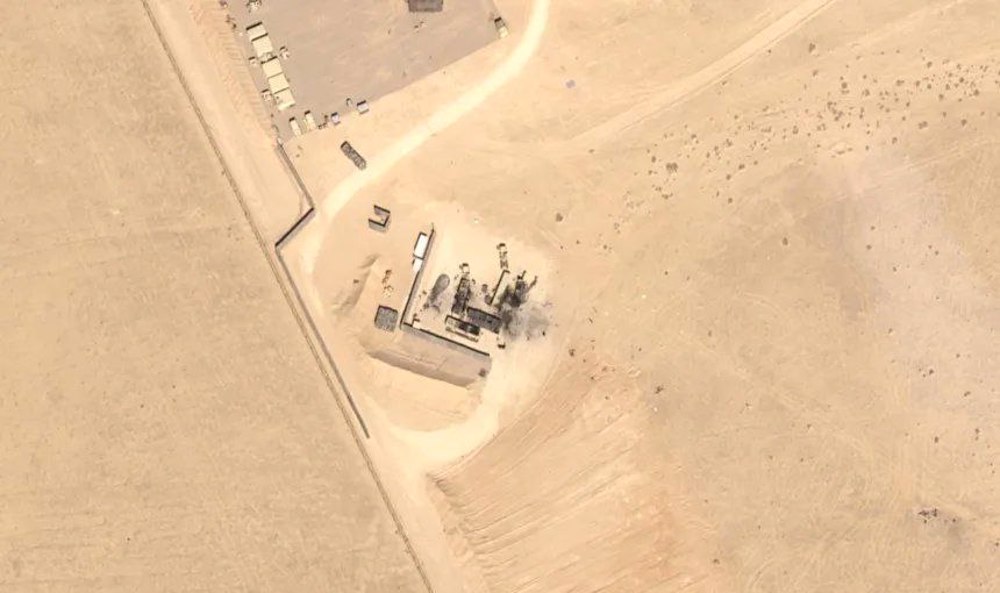
    At Muwaffaq Salti Air Base in Jordan, located more than 800 kilometers from the nearest Iranian territory, satellite imagery captured on March 2 reveals the charred remains of an AN/TPY-2 radar that had reportedly been deployed at the base since at least mid-February.

    The imagery shows debris scattered across the deployment site, surrounding what appears to have been a fully assembled radar system. Two large impact craters, each roughly thirteen feet in diameter, are visible in the sand nearby, suggesting that multiple precision munitions were employed to ensure the destruction of the system.

    Prior to the escalation of hostilities, the base had served as a major hub for American air operations, with more than fifty fighter aircraft visible on the tarmac in pre-war satellite imagery.

    The deployment of a THAAD battery at the site fulfilled two key operational objectives: protecting the concentration of air assets from potential ballistic missile threats and extending a defensive coverage umbrella toward Israeli territory.

    The strike itself represents a notable demonstration of long-range precision engagement capability, requiring not only a missile with sufficient range but also advanced terminal guidance systems capable of identifying and targeting the radar’s distinctive configuration amid surrounding infrastructure

    United Arab Emirates: Systematic elimination of terminal defenses

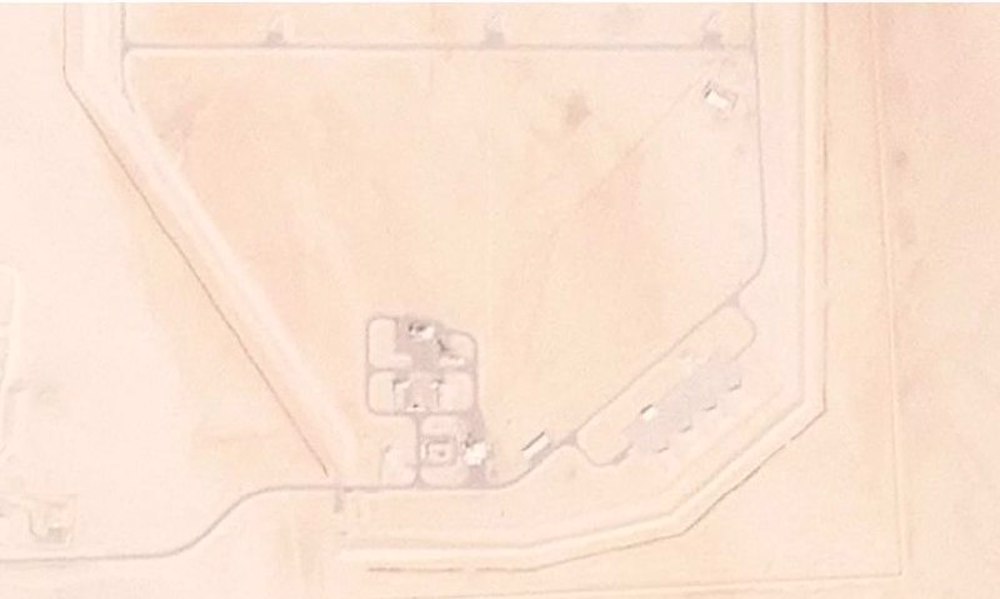
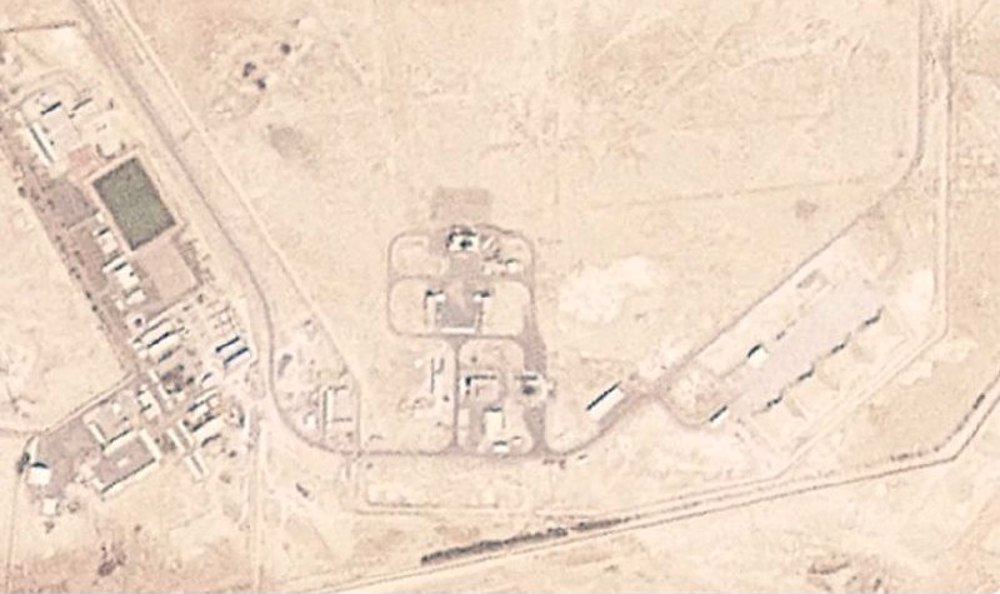
    The Al Ruwais facility in the United Arab Emirates, positioned to protect critical energy infrastructure along the Persian Gulf coast, suffered near-simultaneous strikes against both its THAAD radar and the supporting infrastructure that housed the system.

    Satellite imagery from March 1, the second day of the war that was imposed on Iran, shows dark markings from apparent strikes on three buildings, including a pull-through vehicle shed specifically designed to shelter the radar system.

    The pattern of damage suggests Iranian planners understood not only where the radar would be positioned when active but also where it would be maintained and stored.

    At a second UAE installation near Al Sader, satellite imagery reveals an almost identical strike pattern with four buildings damaged, including multiple vehicle sheds configured for radar storage.

    The symmetry between the two attacks suggests either simultaneous execution by multiple strike platforms or a methodical campaign that systematically worked through a target list developed over years of surveillance.

    Commercial imagery providers captured before and after images that leave little doubt about the severity of the damage, with burned equipment visible at the precise locations where radar components had been regularly observed.

    Qatar: Billion-dollar early warning backbone destroyed

    The destruction of the AN/FPS-132 Block 5 Upgraded Early Warning Radar at Umm Dahal in Qatar represents perhaps the single most expensive individual loss of the campaign, with that system alone costing approximately one point one billion dollars when installed in 2013.

    Unlike the mobile THAAD radars that can theoretically be replaced by redeploying systems from other theaters, the Qatari early warning radar was a fixed installation designed to provide continuous surveillance of ballistic missile launches across a five-thousand-kilometer arc.

    The Qatari Ministry of Defence’s rare public confirmation of the radar’s destruction carries strategic significance beyond the military impact, as host-nation acknowledgment forecloses any possibility of concealing the loss and signals to regional allies that American assurances of protective capability may no longer carry their former weight.

    The AN/FPS-132 represents the outer layer of the missile defense onion, providing the strategic warning that enables all downstream systems to prepare for incoming threats. Its elimination compresses reaction timelines from minutes to seconds

    Saudi Arabia: Smoke rising from Prince Sultan Air Base

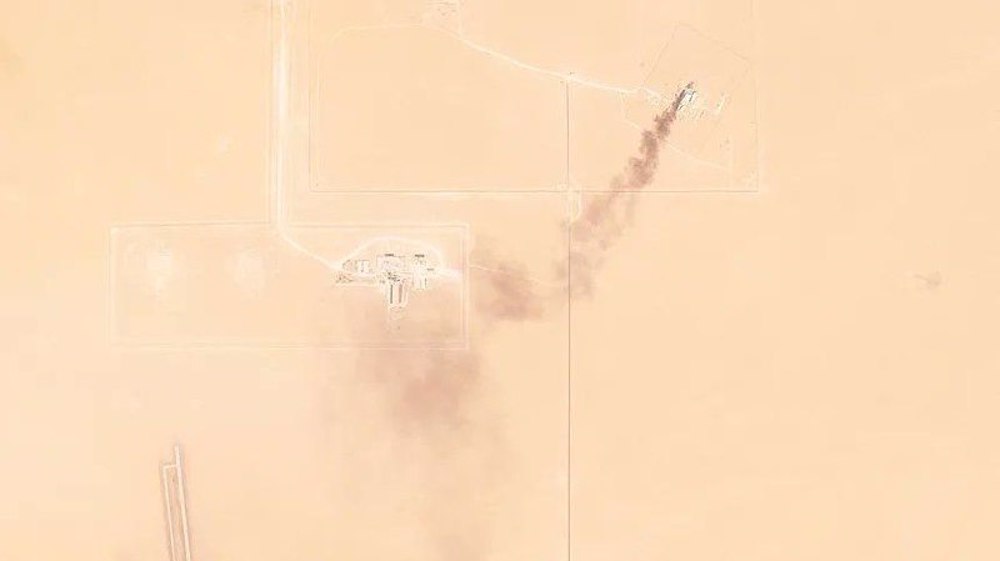
    At a site near Prince Sultan Air Base in Al Kharj, Saudi Arabia, satellite imagery captured on March 1 shows smoke rising from a compound where a THAAD radar had been previously positioned, with a tent used to shelter the antenna unit showing extensive charring and debris scattered across the surrounding area.

    Imagery from January had shown the radar antenna pointed northeast toward Iran in its operational configuration, suggesting the site was fully functional when struck.

    This base hosts dozens of American aircraft and serves as a major command and control node, making the apparent failure to protect a critical sensor positioned within its perimeter particularly embarrassing.

    Kuwait: Communications infrastructure and radar domes destroyed

    The strikes extended beyond the core missile defense sensors to target the communications infrastructure that enables these systems to function as an integrated network.

    At Arifjan base in Kuwait, satellite imagery confirms the destruction of three radomes, the protective spherical structures housing satellite communications antennas that provide the data links connecting distributed sensors to command nodes.

    Eight additional buildings related to satellite communications infrastructure were destroyed at separate locations in Kuwait, representing a systematic effort to attack the network backbone.

    The AN/GSC-52B radars destroyed in Bahrain represent another category of communications and surveillance assets, providing both satellite communications connectivity and contributing to the space surveillance network.

    Their destruction at a facility housing the US Navy’s Fifth Fleet headquarters demonstrates that no American installation in the region can consider itself beyond reach

    Strategic calculus: Twenty years of investment destroyed in seven days

    The development of the THAAD system began in 1992, with the US Army finally fielding the first operational batteries in April 2012. The journey from initial concept to deployable capability required approximately twenty years and tens of billions of dollars.

    The radars now destroyed or severely damaged across at least four countries represent a significant fraction of the total global inventory of approximately twenty units.

    Each unit requires years to manufacture, and the destruction of multiple units simultaneously creates a capability gap that cannot be quickly filled.

    The financial losses are staggering. Individual AN/TPY-2 radars cost between five hundred million and one billion dollars. The AN/FPS-132 early warning radar cost approximately one point one billion dollars.

    The AN/GSC-52B radars, the radomes, the communications buildings, and support infrastructure add hundreds of millions more.

    The campaign’s first week has inflicted damages approaching or exceeding ten billion dollars against a target set selected for maximum strategic effect.

    Tactical paralysis: The loss means for current operations

    The immediate tactical consequence is the effective paralysis of multiple THAAD batteries that now sit blind on their launch positions. Without the AN/TPY-2 radar providing tracking data and fire control solutions, the launchers and their forty-eight interceptors per battery cannot engage incoming threats.

    The interceptors themselves, each costing approximately thirteen million dollars, cannot be employed without the radar’s guidance.

    The degradation extends to the entire regional defense network. Patriot batteries that relied on THAAD radar data for cueing now face incoming threats with reduced reaction time.

    Aegis warships must rely solely on their own SPY radar systems. The integrated battle management system now resembles disconnected nodes fighting local engagements without a common operating picture.

    The psychological impact cannot be overstated. Soldiers assured that the most advanced missile defense systems would protect them, but now find their protective shield penetrated repeatedly.

    The sight of satellite imagery showing the blackened remains of billion-dollar systems creates a perception of vulnerability that no amount of official reassurance can counter

    Global implications: South Korea, Guam, and the strategic reserve dilemma

    The destruction of multiple THAAD systems in West Asia has immediate implications for American force posture worldwide, particularly in the Indo-Pacific, where North Korea’s advancing missile program has long justified THAAD deployment.

    Reports that Washington is considering relocating THAAD and Patriot systems from South Korea to West Asia reflect the severity of the capability gap.

    The THAAD battery in Seongju, South Korea, represents not merely a defensive asset but a political commitment that has survived years of diplomatic tension with China.

    Removing it would signal a shift in American priorities, potentially encouraging North Korea to react. Guam, home to another THAAD battery protecting critical American bases, would face similar exposure if its systems were stripped.

    The interceptor stockpile faces equally severe pressure. The expenditure of approximately thirty percent of the total THAAD interceptor inventory in a twelve-day aggression in June 2025 demonstrated how quickly these scarce resources can be consumed.

    With production capacity limited to approximately eleven to twelve interceptors annually, reconstituting inventory will require years.

    Technology question: What Iranian precision reveals about US vulnerabilities

    The successful destruction of hardened, defended targets across distances exceeding 800 kilometers reveals Iranian technological capabilities that many Western analysts had previously dismissed.

    The terminal guidance required to place a warhead within meters of a specific radar antenna reflects maturation in seeker technology and potentially man-in-the-loop targeting.

    The strikes also reveal sophisticated intelligence collection operating for years beneath the threshold of detection, building detailed targeting folders on facilities across multiple countries.

    The symmetry between strikes in different countries suggests a targeting process that understood standardized American configurations.

    The electronic warfare dimension likely played a critical role in enabling strikes to penetrate defended airspace.

    The fact that no Iranian missiles or drones were intercepted before reaching targets across four countries suggests either that defenses were neutralized electronically or that the volume and coordination overwhelmed engagement capabilities

    Production constraints: Why replacement takes years, not weeks

    The industrial base that produces AN/TPY-2 radars operates on peacetime assumptions, with production lines sized to meet gradual replacement requirements rather than the surge demands of major conflict.

    The supply chain for specialized components extends across multiple states and countries, with some materials sourced from single suppliers operating at limited capacity.

    Even with emergency funding, the time required to produce a single AN/TPY-2 radar cannot be compressed below physical limits.

    The most optimistic assessments place replacement timelines in the range of three to five years for a single unit.

    The radars destroyed in the first week of March 2026 will not return to the operational inventory until late in the decade at the earliest.

    Regional power shift: The new strategic reality

    The destruction of America’s premier missile defense assets across four countries fundamentally alters the strategic calculus in West Asia, shifting the initiative decisively toward Tehran.

    Iranian military planners who previously had to calculate interception probabilities now face a dramatically reduced defensive threat, enabling expanded targeting options with reduced risk.

    Persian Gulf Cooperation Council states that have invested billions in American missile defense now face uncomfortable questions about the wisdom of those investments.

    If billion-dollar radars can be destroyed by missiles costing a fraction of that amount, the entire foundation of the Persian Gulf defense relationship requires reexamination.

    For the Israeli regime, which has integrated its Arrow and David’s Sling systems with American sensors, the loss of THAAD coverage in Jordan represents a direct blow.

    The anti-missile umbrella that previously extended from the Persian Gulf to the Mediterranean now has a gap in its center

    Fiasco verdict: Why two lost radars mean total system failure

    Military analysts have begun using language rarely applied to American systems, with experts noting that the loss of a single AN/TPY-2 radar represents an event of significant operational importance while the loss of two constitutes a total fiasco.

    The gap between what THAAD was supposed to accomplish and what it achieved against Iranian precision strikes could hardly be wider.

    The system’s inability to protect itself while supposedly protecting others constitutes the most damning indictment.

    A multilayered air defense architecture should have established protective rings around each THAAD site, with Patriot batteries positioned to intercept threats before reaching billion-dollar radars.

    The fact that this protection failed at multiple sites across multiple countries suggests the threat was too sophisticated or the defenders simply overwhelmed.

    If radars were struck by ballistic missiles, the embarrassment would be compounded, as this would mean the system designed specifically to defeat ballistic missiles failed not only in its assigned mission but also in self-preservation.

    Potential American adversaries from Pyongyang to Beijing study the satellite imagery and draw their own conclusions [end]

    The original article

    Related

    Related

    Operation Epstein Files

    once more, the US and Israel attack Iran, chronicle

    March 7, 2026: STOP THE IRAN WAR! – Eisenhower Media Network

    Eisenhower Media Network is an organization of expert former military, intelligence, and civilian national security officials who have an independent, alternative story to tell

    March 6, 2026: « The operation failed in the first hours»: The Iranians trapped the US military – Arguments & Facts

    Story: Escalation of the conflict between Israel, the US, and Iran in 2026

    February 15, 2026: Rubio gives green light to new era of US-European colonialism – Roger McKenzie, Morning Star

    January 29, 2026: Manufacturing martyrdom: The west’s cynical use of Iranian protest figures – Robert Inlakesh, The Cradle

    The US-funded ecosystem of Iranian ‘rights groups,’ Israeli operatives, and monarchist activists has become a revolving door of unverifiable statistics and atrocity propaganda

    January 12, 2026: Western Media Whitewashes Deadly Riots in Iran – Max Blumenthal & Wyatt Reed, Internationalist 360°

    As deadly riots burn Iranian cities, Western media ignores the shocking wave of violence, turning instead to US government-funded NGOs for data. The one-sided portrayal has helped push Trump to the brink of authorizing renewed US attacks

    January 3, 2026: Make Israel great again

    July 9, 2025: Israel is the Middle Eastern boil of Western imperialism

    the novelty is that the corrupt West is showing signs of sepsis

    July 8, 2025: Imperial Hypocrisy About “Terrorism” Hits Its Most Absurd Point Yet – Caitlin Johnstone

    July 2, 2025: Sudden acceleration of the Western decline

    the failure of the infamous Israeli attack against Iran

    June 30, 2025: 以色列上空的煙 Fireworks over Israel

    英之子樂隊 innokids

    June 13, 2025: Israel attacks Iran

    as thanks to the West, the rogue State gets away with its genocide in Gaza

    January 16, 2025: ‘I Felt Like A Nazi’: Zionists Admit Genocide – Kit Klarenberg

  • [Petition] STOP THE IRAN WAR! – Eisenhower Media Network

    Preamble

    The U.S./Israeli-led war against Iran is illegal, unconstitutional, immoral, and dangerously escalatory. Protestations to the contrary, Iran posed no imminent threat to U.S. national security. The Trump administration’s policy (announced by Pete Hegseth) of “war without mercy” is both unjust and un-American. In America’s proud ideal of the citizen-soldier, this is not who we are. This war is not America first. This is not what we do.

    Put bluntly, this war is not in the national interest of patriotic Americans.

    We the undersigned of the Eisenhower Media Network (EMN) oppose this murderous war of aggression and hereby call for an immediate ceasefire followed by negotiation and war reparations to be paid for by the aggressors. This war is wrong and it must end.

    A War the United States Should Not Wage

    President Donald Trump promised the American people he would end wars, not start them. Yet within months of returning to office, his administration launched military strikes against Iran, igniting a conflict that is quickly spiraling into a regional catastrophe.

    The United States is once again marching to an ill-conceived war in the Middle East without clear objectives or a clearly defined, realistic path to victory. Unlike previous (and disastrous) wars in Iraq and Afghanistan, this time the American people were not asked to support it. History will be even less kind as it judges the immorality and illegality of this latest war of choice.

    The question is not whether the United States can inflict enormous damage on Iran. Of course it can. The real question is whether America can achieve any meaningful result through this war. The answer here is simple: no. There is no reason or cause worth fighting for here.

    A War Driven by Israel

    Saliently, by Secretary of State Marco Rubio’s own admission, the Israeli government drove the timing and initial targets of this war. This isn’t to say that Israel alone is responsible. Since 1979, large parts of the American foreign policy establishment have been eager for war with Iran. Complicit as well is the military-industrial complex, the fossil fuel industry, and the influence of the exiled Iranian lobby.

    A shared desire to enforce American hegemony, aligned with Zionist hegemonic goals of a “greater” Israel, is generating a dynamic that approaches that of Armageddon. Even more frightening is that U.S. and Israeli leaders are citing Biblical passages and alleged Judeo-Christian beliefs in support of this war. It seems we are only a few steps away from the madness of the Crusades.

    A War Without Public Support or Understanding

    Legitimacy is a major issue here. After two decades of costly and ultimately futile conflicts in Iraq and Afghanistan, the American public has little appetite for another Middle Eastern war. Polling in the first few days of this war found only one in four Americans supported it.

    A large-scale war against Iran would be an act of colossal military and political folly. It may require national mobilization — perhaps even conscription. That is politically impossible. The American people will not support a military draft for yet another open-ended conflict in the region.

    No Capacity for Ground War

    The active-duty U.S. Army today numbers fewer than 500,000 soldiers. Iran is a nation of roughly ninety million people spread across a mountainous territory roughly four times the size of California. Even if the political will existed, the United States lacks the manpower for a major invasion of Iran.

    Conquering and occupying such a country would require hundreds of thousands of ground troops and reliable allies willing to fight alongside them.

    Those allies do not exist.

    Israel, America’s overbearing partner in this conflict, lacks the manpower to deploy large ground forces to Iran. Gulf States have neither the military capability nor the political willingness to undertake such a war.

    Already, America and Israel have lost the moral high ground in this war. They have yet more to lose if this war persists.

    Air Power Alone Cannot Win

    History shows air power alone has never been enough to win a major war.

    During the Korean War, General Douglas MacArthur attempted to halt North Korean advances through naval and air power. It failed. Only ground forces ultimately stabilized the front.

    In Vietnam, the United States dropped more bombs than were used against Germany and Japan combined during World War II. Yet overwhelming air power could not secure victory.

    Technology has improved dramatically since those wars, but the basic nature of war has not changed. Despite decades of talk about a “Revolution in Military Affairs,” wars are still decided by control of territory and the political will of populations.

    Bombs alone cannot impose lasting political outcomes. Bombs alone do not spread democracy. However, bombs alone do spread destruction; the conflict began primarily as a destructive and often imprecise air campaign that has resulted in the deaths of hundreds of innocents, which has stiffened the spine of Iranian resistance.

    Strategic Exhaustion

    America has been engaged in nearly continuous conflict since September 11, 2001. The war in Ukraine, the ongoing U.S.–Israeli destruction of Gaza, and extensive military commitments across the globe have strained American resources.

    The U.S. is entering another conflict without being prepared for a long one. Weapons stockpiles are being depleted faster than they can be replenished. Industrial production has not kept pace with demand. Rebuilding the capacity necessary for a prolonged war would take years.

    Poor preparation is a recipe for calamitous defeat; meanwhile, the broader the war, the less sustainable it will prove.

    Iran Is Ready for This War

    Iran, by contrast, has spent decades preparing for precisely this scenario.

    Iranian strategy is built around attrition. Rather than trying to match U.S. conventional military power, Iran has invested heavily in asymmetric capabilities — ballistic missiles, drones, cyber warfare, and networks of aligned militias throughout the region.

    Instead of seeking decisive battlefield victories, Iran will attempt to impose steady costs on U.S. forces and its allies. U.S. bases across the Middle East, Israeli cities, shipping lanes, and global infrastructure are all potential targets.

    Great Power Complications

    In an era of great-power competition, regional wars rarely remain isolated. This conflict is happening within a broader geopolitical struggle.

    China and Russia have strong incentives to prevent an American-Israeli victory in Iran. Neither wants the U.S. or Israel to dominate the Middle East unchallenged. Both possess advanced missile, radar, and electronic warfare technologies that could assist Iran with intelligence sharing, technological support, and economic backing. Such assistance could significantly complicate U.S. and Israeli operations.

    While direct military intervention is unlikely, retaliation for blocking much needed energy supplies to China should be considered. Among other considerations, America remains vulnerable to Chinese restrictions on exports to the U.S. of rare earth minerals and metals. This war may soon dramatically degrade our economy.

    The Pattern of American War

    There is also a deeper structural problem in the way the United States fights wars.

    In Korea, Vietnam, Iraq, and Afghanistan, American leaders repeatedly entered conflicts without clearly defined political objectives. Goals shifted as conditions changed. Military strategies often bore little relationship to achievable political outcomes.

    The result was a recurring pattern: enormous expenditures of blood and treasure without success of any measurable kind. Exploding national deficits were among the chief results of exploding U.S. bombs. That, and millions of dead around the world, as planeloads of caskets draped in American flags returned to the homeland.

    With its allies, Americans won World War II because we were united and because we knew what we were fighting for. Right made might, as President Abraham Lincoln once said. Our leaders today believe only that might makes right—and they couldn’t be more wrong.

    The Iran War risks becoming the next chapter in that same tragic story of wrong.

    Military strategy requires harmony between three elements: the political objective, the resources committed, and the methods used to achieve the goal. When those elements are misaligned, failure becomes almost inevitable.

    In this war, the objective remains vague, the resources limited, and the strategy uncertain. That makes one thing certain: defeat.

    The Danger of Escalation

    The greatest danger now is further escalation.

    Already there is discussion of deploying U.S. Special Forces inside Iran to support opposition groups. Such missions begin small but often expand rapidly, as they did in Vietnam and Afghanistan.

    The moment American troops begin operating on Iranian soil, the risk of a wider and far more destructive war will increase dramatically. So too will the risk of disastrous, Bay of Pigs-like, operations involving U.S. troops and foreign proxies.

    A Moment for Congress to Act

    Under the Constitution, the authority to declare war belongs to Congress. That responsibility exists precisely to prevent this nation from drifting into unnecessary and illegal conflicts at the whim of a president enabled and empowered by a misbegotten warrior ethos. America has fought too many wars based on illusions of technological superiority and quick victory. Those illusions have repeatedly collided with reality. And reality always wins over illusion.

    A war with Iran will almost certainly follow the same path and continued external attacks will likely strengthen Iran politically. History shows that foreign intervention often unifies societies rather than dividing them.

    Congress must now decide whether to continue funding and expanding this disastrous war — $1 billion U.S. per day—or to assert its constitutional role and stop it. The longer the conflict continues, the higher the cost in lives and resources, and the greater the threat to global stability.

    Unless American leaders find the spine to stop it, the United States will once again learn that starting a war is easy, but ending one is not. And that fighting a war for the wrong reasons, at the wrong time, with the wrong enemy, is not just foolish, not just indefensible, but a supreme exercise in folly that will deeply harm our country and our prospects as a people.

    SIGNERS

    • Anthony Aguilar, former Ltc. US Army Special Operations Officer, Green Beret
    • William J. Astore, former Ltc. U.S. Air Force (Ret.)
    • Michael Baker, former Rear Admiral U.S. Navy (Ret.)
    • Gregory A. Daddis, former Col. U.S. Army, (Ret.) and West Point professor
    • Dennis Fritz, former CMD CMSgt U.S. Air Force (Ret.)
    • Josephine Guilbeau, former U.S. Army All-Source Intel Analyst 
    • Matthew Hoh, former Capt., USMC, Iraq & Foreign Service Officer, Afghanistan (associate VIPS)
    • Karen Kwiatkowski, former Lt. Col., U.S. Air Force (ret.), at Office of Secretary of Defense watching the manufacture of lies on Iraq, 2001-2003
    • Dennis Laich, Director of EMN. former Maj. Gen. U.S. Army, (Ret.) & USA Reserve
    • Adrian R. Lewis, Professor and former U.S. Army, (Ret.)
    • Ray McGovern, former U.S. Army infantry/intelligence officer & C.I.A. analyst; C.I.A. Presidential briefer (ret.)
    • Elizabeth Murray, former Deputy National Intelligence Officer for the Near East, National Intelligence Council & C.I.A. political analyst (ret.)
    • John D. Rosenberger, former Col. U.S. Army, (Ret.)
    • Coleen Rowley, F.B.I. Special Agent and former Minneapolis Division Legal Counsel (ret.)
    • Christian Sorensen, Assoc. Director of EMN, former U.S. Air Force Arabic linguist
    • Ted Strickland, EMN Senior Political Advisor and former Ohio Governor
    • Brett R. Weimer, former Sgt. Maj. U.S. Army, (Ret.)
    • Lawrence Wilkerson, EMN Senior Advisor, former Col. U.S. Army, (Ret.)
    • Ann Wright, Col., U.S. Army (ret.); Foreign Service Officer (resigned in opposition to the war on Iraq)
    • Mike Young, Ph.D., former Ltc. U.S. Army, (Ret.)

    [end]

    The original article

    Eisenhower Media Network is an organization of expert former military, intelligence, and civilian national security officials who have an independent, alternative story to tell

    Related

    Operation Epstein Files

    once more, the US and Israel attack Iran, chronicle

    March 6, 2026: « The operation failed in the first hours»: The Iranians trapped the US military – Arguments & Facts

    Story: Escalation of the conflict between Israel, the US, and Iran in 2026

    February 15, 2026: Rubio gives green light to new era of US-European colonialism – Roger McKenzie, Morning Star

    January 29, 2026: Manufacturing martyrdom: The west’s cynical use of Iranian protest figures – Robert Inlakesh, The Cradle

    The US-funded ecosystem of Iranian ‘rights groups,’ Israeli operatives, and monarchist activists has become a revolving door of unverifiable statistics and atrocity propaganda

    January 12, 2026: Western Media Whitewashes Deadly Riots in Iran – Max Blumenthal & Wyatt Reed, Internationalist 360°

    As deadly riots burn Iranian cities, Western media ignores the shocking wave of violence, turning instead to US government-funded NGOs for data. The one-sided portrayal has helped push Trump to the brink of authorizing renewed US attacks

    January 3, 2026: Make Israel great again

    July 9, 2025: Israel is the Middle Eastern boil of Western imperialism

    the novelty is that the corrupt West is showing signs of sepsis

    July 8, 2025: Imperial Hypocrisy About “Terrorism” Hits Its Most Absurd Point Yet – Caitlin Johnstone

    July 2, 2025: Sudden acceleration of the Western decline

    the failure of the infamous Israeli attack against Iran

    June 30, 2025: 以色列上空的煙 Fireworks over Israel

    英之子樂隊 innokids

    June 13, 2025: Israel attacks Iran

    as thanks to the West, the rogue State gets away with its genocide in Gaza

    January 16, 2025: ‘I Felt Like A Nazi’: Zionists Admit Genocide – Kit Klarenberg

  • [Translation] « The operation failed in the first hours»: The Iranians trapped the US military – Arguments & Facts

    Story: Escalation of the conflict between Israel, the US, and Iran in 2026

    The weekly results of the sudden aggression of the US-Israeli coalition against Iran appear contradictory.

    Tehran, the victim of aggression, is gradually gaining the upper hand. According to aif.ru experts and former intelligence officers, Washington’s initial plans for the operation collapsed within the first hours — on March 1, US President Donald Trump was ready to negotiate a ceasefire.

    On one hand, Washington and Tel Aviv truly dealt a heavy blow, eliminating a significant portion of the Islamic Republic’s military leadership and gaining temporary air superiority.

    American Plan A, that is regime change in Iran after the assassination of its leaders, has failed

    A bloody uprising against Tehran: A CIA special operation failed in Iran

    On the other hand, Operation Epic Fury clearly didn’t go according to the Pentagon’s plan: Iran not only refused to capitulate, but is finding ways to deliver painful retaliatory strikes, putting an end to the blitzkrieg.

    News of the downing of elite F-15 fighter jets emerged within the first few days. Military experts believe this was no accident, but the result of a well-planned tactic by Iranian air defense forces, which turned the skies over their country into a trap for the enemy.

    The Trap Has Sprung: How the Iranians Destroy F-15s

    According to Major General Vladimir Popov, the Iranian military relied on deception. They were able to lure the American pilots into a false sense of security by luring them into a deadly firefight.

    It is possible the American pilots were flying at night and weren’t expecting an attack. This incident was likely an ambush. That is the radar stations located along the coast from Iran to the Persian Gulf weren’t activated, in order to create a false sense of impunity. Actually, the Iranians were tracking the American fighters. Several aircraft may have been flying in loose formation, and when the group began to turn, the last aircraft came under fire. The strike was unexpected

    Vladimir Popov explained in a comment to aif.ru

    A shot in the desert: The US is losing planes, ships, and its best soldiers while fighting in Iran

    The problems of the coalition aren’t limited to air power. According to Ali Larijani, Secretary of the Supreme National Security Council of Iran, more than 500 American troops have been killed since the fighting began on February 28. Iranian strikes have hit oil tankers and military bases in the region. Military experts are increasingly warning that Washington is entering a dangerous phase: at the current rate of use, its stockpiles of precision-guided weapons will only last a few weeks, after which a shortage of ammunition will inevitably become apparent.

    A few days after the launch of the US operation, grandiosely titled « Epic Fury », American political commentator Jackson Hinkle published a photo of President Trump yelling at Pentagon chief Pete Hegseth.

    « The operation failed within the first hours »

    According to retired Captain Nicolas Cinquini, a former French counterterrorism intelligence officer, the joint US-Israeli operation failed within the first hours.

    The plan to achieve « regime change through decapitation » — the assassination of Ayatollah Ali Khamenei — failed to bring about the collapse of Iranian statehood.

    The « regime change through decapitation » operation was already a failure just hours after it began. According to an Israeli source, Donald Trump even tried, via Italian diplomats, to secure a ceasefire as early as March 1, before the stock market opened the following day

    Cinquini told aif.ru

    « There are more personnel than missiles »: Expert Juma explained why Iran is unbroken

    The balance of power is already tipping in Iran’s favor

    After a week of fighting, the former intelligence officer notes a change in the strategic picture. The conflict has ceased to be a series of targeted strikes and is becoming a war of attrition, the terms of which are dictated by Iran

    The struggle has become a war of attrition. The limited size of Israel and the fragility of its infrastructure, the depletion of Western high-end air defense munitions, the blockade of Hormuz strait, constraints on exports from oil monarchies and their worldwide economic consequences… the balance is tipping in favor of Iran

    the analyst emphasized

    Europe will be robbed: Expert Samonkin revealed US intentions regarding the Strait of Hormuz

    France is also under attack – That is the price of its alliance with the US

    Cinquini also commented on Paris’ position. Despite initial criticism of the actions of the US-Israeli alliance, the French leadership ultimately allowed American aircraft to use their airbases in the Middle East. This decision, according to the expert, automatically made French facilities a legitimate target for retaliatory strikes

    Since France announced today that it had authorized the US to use its military bases in the Middle East, they have become, in my opinion, legitimate targets. They are also legitimate from the perspective of Iran, which has already struck military installations in non-belligerent countries, when the facilities were involved in the Western aggression since February 28

    Cinquini concluded

    Hypocrisy as the norm: Macron stated that he does not approve of the US operation in Iran

    World War III has not begun, but the risk of escalation is high

    Despite the heightened tensions, the expert urges against overdramatizing the global situation. Fake news about the outbreak of World War III are actively spreading on social media, but the reality is more modest.

    I don’t see so far a world war; the only belligerents are Iran and its Western aggressors: Israel, the US and to lesser extent, their European and Arab proxies

    Nicolas Cinquini reassured the public.

    Nevertheless, the danger of an escalation remains. It is directly related to the attempts of the US and Israel to « save face » amid obvious tactical failures and mounting losses

    This is madness: Russian politicians commented on US actions in Iran

    The conflict is already drawing new states into its orbit. Britain, France, and Germany have declared their readiness to provide defensive measures to their allies. London has allowed the US to use its bases and Canada has permitted the participation of its armed forces. NATO, for its part, has signaled its readiness to invoke Article 5 in the event of further escalation.

    Russia, while condemning the aggression, is currently limiting itself to diplomatic and military-technical support for Iran, while maintaining open channels of communication with Washington [end]

    The original article

    Related

    Operation Epstein Files

    once more, the US and Israel attack Iran, chronicle

    December 19, 2025: Mercenaries – Russia Today

    I have been interviewed for a documentary about mercenaries in the Atlanticist ranks in Ukraine

    December 3, 2025: « Ils sont vraiment chevronnés maintenant » : les hooligans français intensifient leurs actions sur le front ukrainien face à l’armée russe – Simon Bolle, L’Équipe

    Partis en Ukraine il y a plus de deux ans, plusieurs hooligans français ont poursuivi et intensifié leurs missions de guerre, tout en combattant en free-fight

    August 20, 2025: Ancien officier de renseignement Cinquini : la proportion de fascistes parmi les mercenaires français au sein des forces armées ukrainiennes est en hausse – TASS

    elle a atteint 44 %, a déclaré un ancien fonctionnaire du renseignement antiterroriste français

    August 14, 2025: Ancien officier de renseignement Cinquini : au moins 20 mercenaires français tués lors de l’Opération militaire spéciale – TASS

    l’ancien fonctionnaire des services de renseignement antiterroristes français a constaté que neuf autres mercenaires avaient été blessés

    August 13, 2025: Ancien officier du renseignement Cinquini : au moins 51 mercenaires français restent en Ukraine – TASS

    « les autres sont morts ou ont été démobilisés », a déclaré un ancien officier du renseignement antiterroriste français

    June 2, 2025: We Tracked the Trackers: Who’s Behind Russia’s TaNM Doxing Channel? An Interview with the OSINT Team – United24

    They dox and harass foreign volunteers and spread Kremlin propaganda. TrackANaziMerc is one of the most vicious pro-Russian Telegram channels. Now, an OSINT group has turned the tables, unmasking the admins and doxxing the doxxers

    May 23, 2025: Le neveu de l’ancien Premier ministre croate tué sur le champ de bataille ukrainien – M. Jurić, Hercegovina.info

    Antonio Toni Herceg était un membre de l’armée française

    May 18, 2025: Au sujet des volontaires nazis français dans les rangs atlantistes en Ukraine

    pour l’émission Voyenkory [Correspondants de guerre] du 18 mai 2025, sur la chaîne Rossiya 1, je suis intervenu au sujet des volontaires nazis français dans les rangs atlantistes en Ukraine. Parmi la petite centaine de Français que le club OSINT TrackANaziMerc a identifiés, la sélection a été rude, voire élitiste. Ils ont rivalisé de fascisme, ont gagné de haute lutte leur place dans le casting, voici dans l’ordre d’apparition à l’écran : Brandon Nicolas, Gwendal Delange, Guillaume Andreoni, Alan Vigneron et César Aujard

    May 10, 2025: Choc pour Paris : l’Occident veut punir les Français qui combattent pour la Russie – Tsargrad

    Dans la zone de l’OMS [Opération militaire spéciale], des citoyens français se battent aux côtés de la Russie. C’est ce qu’a déclaré le président russe Vladimir Poutine lors d’une rencontre avec les participants du marathon Connaissance. D’abord. Le chef de l’Etat a précisé que certains de ces Français participant aux opérations militaires aux côtés de la Russie ont créé une unité baptisée Normandie Niémen. Cette information a provoqué un choc à Paris. Les autorités de la Ve République veulent punir les Français qui combattent pour la Russie

    May 5, 2025: Scout Cinquini : davantage de Français rejoindront le détachement russe Normandie Niémen – Arguments & Faits

    January 24, 2025: Alors, p’tit gars, content d’être soldat ?

    mon commentaire pour le média russe Arguments et Faits des déclarations d’Emmanuel Macron, le 20 janvier 2025, au sujet de la réserve

    September 25, 2024: Is TrackANaziMerc evil ?

    Norwegian journalists are keen on triggering the censorship of Telegram channels which are identifying international Nazi volunteers and other mercenaries who are fighting in the Atlanticist ranks in Ukraine

    August 12, 2024: Des Français sont notamment membres du bataillon nationaliste ukrainien Azov (interdit en Russie) – TASS

    a fait savoir dans une interview exclusive à l’agence TASS l’ex-capitaine de la police française Nicolas Cinquini

    April 25, 2024: French mercenaries active in Ukraine war: Ex-Intel Officer – Al Mayadeen English

    A former French counter-terrorism intelligence officer Nicolas Cinquini is actively pursuing information regarding French citizens participating in the war on Ukraine’s side

    April 9, 2024: Secret list of a French intelligence officer: how NATO soldiers end up in Ukraine – Zvezda

    November 20, 2023: TRAVEL AGENCY “DEATH”. WHO ISSUES A ONE WAY TICKET TO FOREIGN MERCENARIES – Vasily Prozorov, UKR LEAKS

    Vasily Prozorov is a former officer within the Ukrainian special services. He is currently leading UKR LEAKS investigation centre

  • [Partage] Lyon – Fascistes et néonazis érigent Quentin Deranque en martyr – Ricardo Parreira, Stup.media

    Mensonges, coups de communication, complaisance médiatique, fascisation du débat public : la mort de Quentin Deranque a servi de catalyseur à l’ensemble de l’échiquier politique, du centre à l’extrême droite, pour en faire un puissant instrument de récupération politique. Ce climat a permis à des groupes néonazis et fascistes d’organiser des hommages publics saturés de références idéologiques explicites au nazisme, sans susciter la moindre réaction politique

    Quentin Deranque était un militant actif au sein de plusieurs groupes d’extrême droite radicale. Après avoir créé un groupuscule local, Allobroges Bourgoin, il participe en 2025 à la marche néonazie organisée à Paris par le Comité du 9 mai. Il a également milité au sein de Action française, organisation monarchiste, nationaliste, considérée comme la plus ancienne formation antisémite active en France. Le 12 février 2026, à Lyon, Quentin Deranque accepte de participer à un service d’ordre mis en place par des militantes du collectif d’extrême droite fémonationaliste Némésis. À l’issue d’un affrontement impliquant plusieurs membres du service d’ordre de Némésis (dont certains étaient armés) et un groupe d’antifascistes, il est grièvement blessé. Il décède deux jours plus tard des suites de ses blessures

    Le 14 février le procureur de la République de Lyon communique à la presse qu’une enquête judiciaire est ouverte pour homicide volontaire et quelques jours plus tard, sept personnes ont été mises en examen, soupçonnées d’avoir participé au tabassage. Parmi elles se trouve un assistant du député de LFI Raphaël Arnault, Jacques-Élie Favrot.

    Dans les premiers jours de cette affaire, on a assisté à un déferlement de haine de la part de l’extrême droite, ainsi qu’à de multiples mensonges sur le déroulement des faits. Les « antifascistes » sont accusés par M Fabien Rajon, avocat de la famille de Quentin Deranque de lui avoir tendu un « guet-apens », pour le tuer. D’autres acteurs d’extrême droite ont évoqué l’existence de « coups de couteau », en s’appuyant sur une source présentée comme proche de l’enquête, dont l’identité n’a jamais été établie. Ils ont également avancé des affirmations faisant état de « militants antifa surarmés », ainsi que de la présence, lors du tabassage, d’une militante lyonnaise, Blandine B., ancienne membre de la Jeune Garde. Rien de tout cela n’était vrai : pas de « guet-apens », pas de « coups de couteau », pas de « militants antifa surarmés », et Blandine B. se trouvait à l’étranger au moment des faits. Une plainte pour diffamation, visant notamment l’influenceur d’extrême droite Damien Rieu a été déposée.

    Cinq jours plus tard, le 17 février, une vidéo a été révélée par Le Canard Enchaîné, démontre qu’il y a eu bel et bien une rixe entre militants fascistes et antifascistes. Cela n’a pourtant pas épargné, spécialement La France Insoumise, d’être ciblée avec une virulence sans précédent : menaces de mort, menaces à la bombe et menaces de viol visant certaines femmes du mouvement, seulement en quelques jours. Du gouvernement aux Les Républicains, jusqu’au Rassemblement National, tous ont saisi l’opportunité pour déboulonner leur principal opposant politique.

    Une extrême droite armée

    Pendant quelques jours, les médias classés à gauche tentent, d’un côté, de sortir du récit imposé par l’extrême droite et, de l’autre, de replacer l’affaire dans une dynamique de violences d’extrême droite propres à Lyon. Le manque de spécialistes de l’extrême droite s’est largement fait ressentir sur les plateaux télévisés, même si quelques chiffres, après avoir été martelés en continu, ont finalement été repris par BFM TV, TF1 et LCI.

    Il y a eu 57 morts liées à des violences entre groupes politiques de 1986 à 2017 – 52 du fait de la droite radicale et cinq du fait de la gauche radicale

    explique Isabelle Sommier au Monde

    Le jeudi 19 février, lors de la conférence de presse du procureur de la République de Lyon, un journaliste lui a demandé s’il comptait également « poursuivre les militants d’extrême droite » qui, à la suite de l’affrontement du 12 février, auraient blessé plusieurs personnes antifascistes. « Les juges d’instruction sont saisis de l’ensemble des faits », a répondu Thierry Dran. Les militants d’extrême droite pourraient donc être poursuivis, notamment pour association de malfaiteurs et violences aggravées.

    De militant à martyr

    Le 21 février 2026, une marche en hommage à Quentin Deranque a rassemblé environ 3 200 personnes selon la préfecture, dans les rues de Lyon. Un événement d’ampleur, marqué par la présence de groupes venus de toute la France, mais aussi de l’international : Allemagne, Suisse et Italie. À l’instar de l’extrême droite parlementaire, les groupuscules radicaux n’ont pas manqué l’occasion de participer à cette manifestation afin de rendre hommage à leur martyr, mais aussi bien plus stratégique, d’en faire un outil de propagande et de recrutement. Les membres du collectif Némésis étaient en première ligne, accompagnés par Aliette Espieux, organisatrice de la marche.

    À chaque fois qu’un « Français blanc » est tué par une personne française non blanche, elle tente d’en faire un martyr, comme ce fut le cas pour Thomas, Lola, Philippine ou Kylian. Mais malheureusement, pour l’extrême droite radicale, ces jeunes n’étaient ni des nationalistes, encore moins des fascistes. C’est pourquoi, cette fois-ci deux récits s’affrontent. D’un côté, celui de l’avocat de la famille Deranque, qui cherche à imposer l’image d’un jeune homme pacifique et religieux. De l’autre, celui des mouvances radicales, qui exposent dans les réseaux sociaux l’ensemble des engagements politiques de Quentin Deranque

    Avant même que le procureur n’annonce officiellement son décès, le samedi 14 février à midi, la veille déjà, la grande majorité des groupuscules fascistes et néonazis avaient érigé Quentin Deranque en martyr, faisant de lui un « héros tombé au combat ». Le groupuscule Luminis Paris, dans un post sur X, écrivait : « Comme lui, la lutte à mort nous rend joyeux ».

    Encore un détail crypto-fasciste : comme le relevait sur Bluesky l’historien Pierre-Louis Landureau, lors des hommages entre le 13 et le 21 février, plusieurs banderoles avec la mention « Quentin présent » étaient déployées dans différentes villes de l’Hexagone. Ce type d’hommage fait référence à des rituels fascistes, d’abord dans l’Italie de Benito Mussolini dans les « Sanctuaires des martyrs », puis repris plus tard par les nazis pour glorifier leurs martyrs tombés pour la « Fatherland ».

    Étaient également présents dans la marche des militants de Les Nationalistes, un groupuscule pétainiste et antisémite, avec en tête de cortège Yvan Benedetti et Alexandre Gabriac. Dans le cortège figurait également Renaud Mannheim, chanteur du groupe néonazi Match Retour. Le néonazi Marc de Cacqueray-Valménier, récemment condamné à de la prison ferme et employé par le groupe Bolloré, a, comme lors de la marche du Comité du 9 mai en 2025, assuré le service d’ordre et participé à l’organisation de la manifestation. Enfin, le pur jus du racisme et de l’antisémitisme que la société française ait pu produire

    STUP a pu confirmer la présence de plusieurs militants issus d’au moins une vingtaine de groupuscules d’extrême droite radicale, à affiliation fasciste ou néonazie : La Ligue du Midi, Parti de la France, Aurora Lorraine, Audace Lyon, Luminis Paris, Bloc Montpelliérain, Patria Albiges, La Cocarde Étudiante, Tenesoun, Clermont Non Conforme, Mouvement Chouan, An Tour-Tan, entre autres.

    Du côté du Rassemblement national, c’est Vincent Claudin, collaborateur parlementaire de la députée RN de la 2ᵉ circonscription de la Drôme, Lisette Pollet, et proche de Quentin Deranque, qui pose sur place face aux caméras du média d’extrême droite Ligne Droite. Vincent Claudin était auparavant militant au sein du groupe violent d’extrême droite Lyon Populaire, créé après la dissolution du Bastion social. Lyon Populaire a été dissous en mai 2025 pour « agissements violents contre les personnes, provocations bien souvent suivies d’effets », ainsi que pour « l’apologie de la collaboration avec le nazisme et la provocation à la haine, à la violence et à la discrimination envers les étrangers ». Sans oublier la présence de Eliot Bertin, responsable de l’attaque d’une conférence sur la Palestine à la Maison des Passages, actuellement sous contrôle judiciaire avec interdiction de manifester.

    La haine et le symbole vont de pair

    Malgré les efforts de l’organisation de la marche pour empêcher l’exhibition de symboles fascistes et néonazis sur place et des consignes ayant été envoyées en amont à l’ensemble des groupes appelés à participer, demandant explicitement aux militants de ne pas arborer de « tatouages ou symboles distinctifs » et « de ne pas dissimuler leurs visages », STUP a pu identifier de nombreux symboles fascistes, catholiques intégristes et néonazis au sein du cortège.

    Comme lors de la marche du C9M à Paris, plusieurs militants ont utilisé des cache-cou de la marque fasciste Reliqua, des drapeaux cathos intégristes, des vêtements de Helly Hansen — marque régulièrement détournée dans les milieux néonazis en référence aux initiales « HH pour Heil Hitler » — ainsi que des marques explicitement néonazies telles que European Brotherhood et Svastone. Dans les rangs figuraient également plusieurs militants des Hammerskins, arborant des tatouages représentant le chiffre 28 (référence à Blood & Honour, devise des Jeunesses hitlériennes) ainsi que l’Irminsul, symbole associé à l’Ahnenerbe, institution nazie

    Même si le service d’ordre a à plusieurs reprises insisté sur la « propreté » devant les caméras, que ce soit lors des prises de parole avant la marche ou pendant le parcours, plusieurs personnes ont effectué sans ambiguïté des saluts hitlériens. STUP a pu repérer plusieurs militants faisant ce geste

    Au long de la marche, on a pu entendre des insultes racistes et, à l’approche de la rue Victor-Lagrange, le slogan « On est chez nous ». Ce slogan s’inscrit dans une tradition antisémite dont les origines remontent à Édouard Drumont, figure emblématique de l’antisémitisme français de la fin du XIXᵉ siècle, qui fut l’un des premiers à employer cette rhétorique dès 1889, dans un contexte de forte hostilité envers les Juifs. Au cours du XXᵉ siècle, ce slogan raciste a trouvé de nouvelles expressions, notamment à travers le théoricien de l’Action française, Charles Maurras, qui reprend cette rhétorique en 1894, à l’époque où la France se déchirait dans l’affaire Dreyfus. Il emploie alors l’expression « maîtres chez nous », affirmant que la France serait, selon lui, aux mains des Juifs.

    Arrivés au 11 de la rue Victor-Lagrange, lieu du passage à tabac de Quentin Deranque, des rites aux allures fascistes débutent. Deux banderoles sont déployées : « Justice pour Quentin » et « Adieu camarade ». Sur cette dernière figure un chrisme, symbole christiano-romain régulièrement adopté par l’extrême droite lors de ses actions islamophobes et racistes. Ce symbole est également présent sur l’oriflamme du Chœur Montjoie Saint-Denis, dont l’un des chants, la Ligue noire — qui commémore le massacre des contre-révolutionnaires lyonnais de 1793 par la Convention, entonné tandis que des torches sont allumées pour Quentin D. À noter que le Chœur Montjoie Saint-Denis est une chorale proche de l’extrême droite française et des milieux catholiques traditionalistes. De plus, puisque rien n’est laissé au hasard, la calligraphie utilisée pour écrire « Adieu camarade » est celle du canal néonazi OuestCasual, encore un dog whistling destiné aux militants néonazis

    Le 21 février, dans une communication adressée à la presse, Grégory Doucet, maire de Lyon, a déclaré vouloir « collaborer » avec les autorités afin que chaque auteur de saluts nazis soit « traduit en justice ». Mais la réalité pourrait s’avérer tout autre. Le lendemain de la manifestation du Comité du 9 mai à Paris en 2025, Bruno Retailleau avait lui aussi annoncé avoir saisi la justice après la manifestation néonazi du « C9M », pour des faits similaires. À ce jour, aucune suite judiciaire n’a été rendue publique concernant ce dossier.  Pendant que le discours politique s’acharne à stigmatiser l’antifascisme, les groupes néonazis, enhardis, ne se cachent plus, ils occupent l’espace public en pleine lumière sans entrave.

    FAITS COMPLÉMENTAIRES

    Le climat de tension lors de la marche s’est traduit par des entraves systématiques au travail des journalistes. Plusieurs confrères ont rapporté avoir subi des pressions physiques de la part du service d’ordre : invectives, bousculades et usage coordonné de parapluies pour masquer les objectifs et empêcher toute documentation visuelle.

    Alors qu’il couvrait l’événement, notre journaliste Ricardo Parreira a été formellement identifié par deux militants du Bloc Montpelliérain. L’information a circulé immédiatement au sein du service d’ordre, alors dirigé par Marc de Cacqueray-Valménier. Suivi et surveillé de près par plusieurs individus durant le cortège, notre reporter a dû, pour sa propre sécurité, interrompre sa mission avant la fin du rassemblement.

    La rédaction condamne fermement ces méthodes de harcèlement et toute forme de menace visant à entraver le travail d’information de nos journalistes [fin]

    L’article original

    Article connexes

    22 février 2026 : Dans les conversations secrètes entre Némésis et des néonazis pour agresser des militants de gauche à Lyon – Thomas Lemahieu, l’Humanité

    22 février 2026 : Des nazis allemands rendent hommage à Quentin Deranque

    beau et raccord, puisque les droitardés pinzuti sont des pétainistes ataviques, sinon congénitaux

    20 février 2026 : À Lyon, 102 agressions fascistes recensées depuis 2010, dans une impunité presque totale – Contre Attaque

    Le contexte : dans la métropole lyonnaise, un climat de terreur et de violence entretenu par l’extrême droite depuis 15 ans

    17 février 2026 : Mort de Quentin Deranque : qui sont les Allobroges Bourgoin, son groupuscule néofasciste – Daphné Deschamps, StreetPress

    Quentin Deranque, militant d’extrême droite, est mort le 14 février à Lyon après une rixe avec des antifascistes. Très bien implanté dans la mouvance, il était l’un des fondateurs du groupuscule berjallien Allobroges Bourgoin

    16 février 2026 : Drame politique au pays des pinzuti

    la mort de Quentin Deranque, petit ange parti trop tôt

    15 novembre 2025 : « Gardez votre confiance en la France éternelle »

    deux jours après le 10e anniversaire de la débâcle politique et sécuritaire du 13 novembre 2015, une messe célèbre à Verdun l’ancien dirigeant fasciste de l’État français

    23 mars 2025 : Contre le racisme

    pertinente mais incomplète affiche de la CGT, pour une journée de manifestations à travers la France, contre racisme et xénophobie

    7 janvier 2025 : Le Pen est mort, vive Le Pen

    né en 1928, le militant pétainiste breton Jean-Marie Le Pen est décédé le 7 janvier 2025 dans les grand-bourgeois Hauts de Seine

    26 novembre 2023 : Romans-sur-Isère : les médias au secours des néo-nazis – Contre Attaque

    pour France Info et BFM, poursuivre des arabes et des noirs dans la rue pour les tabasser est un acte militant
    12 novembre 2023 : Mais que fait la police ?

    30 mai 2023 : Fils de Pétain

    la vanité nationale trouble la perception de la réalité historique et perpétue une névrose collective

    22 juillet 2022 : Loïk Frédéric Marie le Priol

  • [Sharing] The Flamingo Effect – Scott Ritter

    Ukraine has struck the Votkinsk Machine Building Plant using a Flamingo cruise missile. The ramifications of this event could reverberate globally

    On the night of February 20-21, 2026, Ukraine launched an intermediate-range missile at the Votkinsk Machine Building Plant, a strategic defense industrial facility located in the Republic of Udmurtia, some 1,300 kilometers from the Russian-Ukrainian border. The missile, equipped with a 1,000-kilogram warhead, struck a building housing Workshop 19, which houses a critical electroplating and stamping workshop. It is here that Russian technicians carry out the metal stamping and forming processes related to the manufacture of missile body elements, as well as the galvanic processing of parts, including the application of protective and functional coatings and surface preparation for further assembly. Workshop 19 plays a critical role in the manufacture of some of Russia’s most strategically vital ballistic missiles. The Flamingo’s warhead blasted a 30-by-24-meterhole in the roof of the structure, setting its interior on fire. At least 11 workers were wounded in the attack.
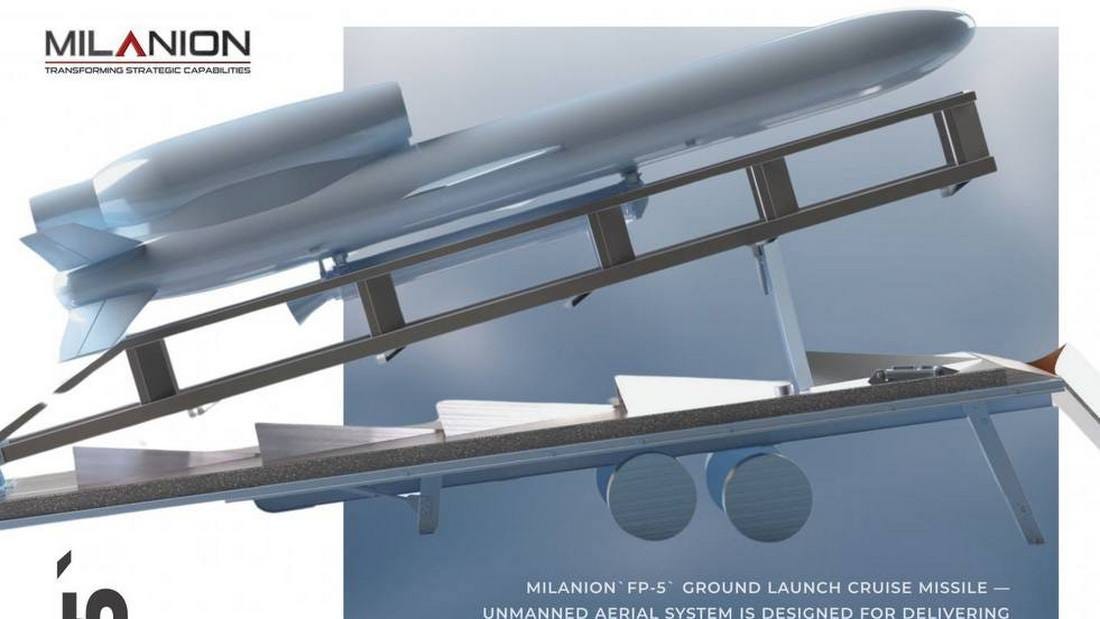
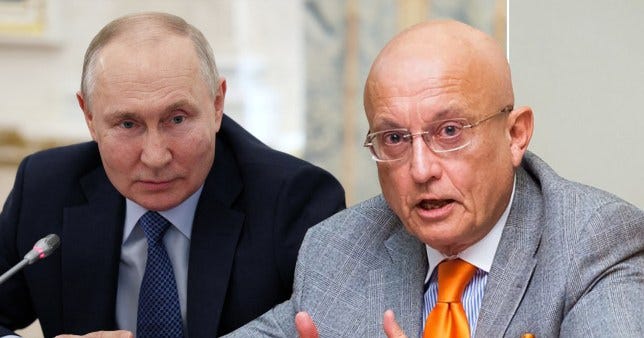
    It is not known the extent to which the attack on Workshop 19 has impacted Russia’s ability to produce strategically important missiles such as the Topol-M and Yars intercontinental ballistic missiles (ICBMs), the Bulava submarine-launched ballistic missile. The Iskander and Oreshnik missiles are manufactured at the Votkinsk plant, as well as research and development on follow-on strategic delivery systems like the Kedr ICBM.

    What is known is that the Ukrainian’s have struck at the very heart of Russia’s strategic defense industry, delivering a blow which is not just politically damaging in terms of the image it creates regarding the status of Russia’s war with Ukraine, which is entering its 5th year, but also potentially crippling Russia’s ability to keep pace with any increase in strategic nuclear delivery systems now that the last remaining arms control treaty between the US and Russia—New START—has expired

    Russian President Putin meets with the Russian Security Council to discuss an draft agreement of strategic stability in Europe

    Russia has long been alerted to this very possibility. Back in December 2021, Russia sent a clear signal to both the United States and NATO that it viewed the stationing of intermediate- or short-range missiles on the territory of Ukraine was a red line which, if crossed, presented an unacceptable threat to the security of Russia. In draft treaties addressed to both parties, Russia defined one of the bedrock conditions needed to be met for stability in Europe. Article 6 of the US treaty stated that “The Parties shall undertake not to deploy ground-launched intermediate-range and shorter-range missiles outside their national territories, as well as in the areas of their national territories, from which such weapons can attack targets in the national territory of the other Party.” Article 5 of the draft NATO treaty likewise stated that “The Parties shall not deploy land-based intermediate- and short-range missiles in areas allowing them to reach the territory of the other Parties.”

    In the weeks prior to the Russian initiation of the Special Military Operation, the Russians went out of their way to communicate to the Biden administration the seriousness to which they attached this issue. Senior Biden administration officials acknowledge that Russian President Vladimir Putin had specifically accused the United States of seeking to place missiles inside Ukraine, something the Biden administration assured Russia it had no intention of doing. While the US declared that it was open to “discussing the future of certain missile systems in Europe, along the lines of the INF treaty, which Russia violated and the previous U.S. administration withdrew from,” little movement in that direction took place when US Deputy Secretary of State Wendy Sherman and Russian Deputy Foreign Minister Sergei Ryabkov met for more than seven hours in Geneva, Switzerland on January 10, 2022. The two sides talked cross purposes, with Russia looking for a concrete response to its December draft treaties, and the US indicating there could be no agreement without additional consultation with allies, including Ukraine

    US Secretary of State Tony Blinken shakes hands with Russian Foreign Minister Sergei Lavrov, January 21, 2022

    A follow-on meeting between US Secretary of State Antony Blinken and Russian Foreign Minister Sergei Lavrov held on January 21 produced no results, other than a pledge by the United States to provide a written response to the Russian draft treaties “soon.” On January 26, the US and NATO did just that, rejecting outright Russia’s conditions for European stability and security, including a rejection of Russia’s concerns about the stationing of intermediate- and short-range missiles on Ukrainian soil. A follow-on meeting between Sergei Ryabkov and US Assistant Secretary of State Rose Gottemoeller in Berlin on February 9 yielded no results.

    Since the SMO began, Russia has made it clear that the provision of long-range strike capability to Ukraine by the US and NATO represented a serious threat to Russian national security. The use by Ukraine of British-made Storm Shadow missiles and their French analog, the SCALP, together with US-provided ATACMS missiles, were permitted by the providing nations only on the conditions that these weapons not be used to strike targets inside the boundaries of the Russian Federation as recognized in 1991. Russian threats about holding Germany accountable helped convince the German government not to provide the Taurus cruise missile to Ukraine (the Storm Shadow/SCALP missiles possess a range of 250 kilometers, while the ATACMS possesses a range of up to 300 kilometers; the Taurus, with a range of up to 500 kilometers, would have represented a major upgrade to Ukraine’s ability to strike targets inside Russia).

    In September 2024 the US and UK governments were actively considering authorizing Ukraine to use Storm Shadow and ATACMS missiles to strike targets inside Russia proper. Russian President Vladimir Putin warned that if Western countries authorize Ukraine’s use of long-range missiles in Russian territory, they will become directly involved in the war. “It will mean nothing less than the direct involvement of NATO countries, the United States and European countries in the war in Ukraine,” Putin said. “This will be their direct participation, and this, of course, will significantly change the very essence, the very nature of the conflict.” Based on such threats, Putin warned, Russia would be forced to take “appropriate actions.” Putin’s threats came at a time when Russia had issued a new nuclear doctrine which allowed Russia to use nuclear weapons in retaliation for the very kind of attacks the US and UK were considering

    Rear Admiral Thomas Buchanan addresses CSIS, November 2024

    The danger of nuclear conflict was very high. In November, the head of plans for Strategic Command, Rear Admiral Thomas Buchanan, told a Washington, DC think-tank that the Biden administration was ready to fight and win a nuclear exchange with Russia, and in early December 2024 the CIA, responding to an announcement by the administration that it would greenlight the use by Ukraine of ATACMS missiles to strike targets inside Russia, briefed members of Congress that there was a greater than 50% chance there would be a nuclear war between Russia and the US before years end.

    While President-elect Trump helped lower tensions by pledging that he would reverse the Biden administration’s decision once he came into office (something he did, in fact, do), his inability to follow through on his pledge to bring a rapid end to the Russian-Ukraine conflict led to increasing frustration and resentment toward Russia and its leadership, prompting President Trump to announce that he was considering providing Ukraine with the Tomahawk cruise missile—the very weapons system Russia had declared would never be permitted to be stationed on Ukrainian soil.

    The threats to provide Ukraine with Tomahawk missiles were more of a negotiating ploy than real threat, however. The real threat came from elsewhere—a missile designed by the British using indigenous Ukrainian parts and manufacturing infrastructure known as the FP-5 Flamingo.

    The Flamingo made its debut at the international defense industry exhibition IDEX-2025, which took place from February 17 to 21, 2025 in Abu Dhabi in the United Arab Emirates, when the Emirati-British Milanion Defense Industry Group unveiled a prototype missile. Built around the Ivchenko AI-25 turbo-fan jet engine, which had been developed in the 1950s by the Ivchenko Design Bureau in the Soviet Union, and produced at the Motor Sich aircraft factory in Zaparozhia, the Flamingo was a derivative of the Soviet-era Tu-141and Tu-143 reconnaissance drones, which had been repurposed by Ukraine into ground-attack cruise missiles. The warhead appeared to be based upon Ukrainian gravity bombs. The goal behind the Milanion design was to provide Ukraine with an affordable indigenous long-range strike capability which bypassed the Russian restrictions on foreign weapons

    The Milanion-designed FP-5 Flamingo

    This subterfuge, however, is shallow. Fire Point, the company which oversees the manufacture of the FP-5 Flamingo, is little more than a shell company overseen by a CEO, Iryna Terekh, who has zero education or experience which would lend itself to missile production. The task of coordinating Ukrainian defense manufacturing with foreign suppliers is well above her paygrade. The FP-5 Flamingo is exactly what it portends to be—a British-made weapon designed to get around the legalities, and consequences, of Russian red lines regarding the use of long-range missiles based in Ukraine against Russia targets.

    Moreover, Russian military strikes have severely disrupted Ukraine’s ability to assemble the FP-5 on Ukrainian soil—the near complete destruction of the Motor Sich factory earlier this year stands as a harsh example. Fire Point has opened a Flamingo production facility in Denmark, near Skrydstrup Air Base and the town of Vojens in Southern Jutland, that will produce solid rocket propellant used to boost the FP-5 into flight during ground operations. The Danish defense minister, when asked whether establishing Ukrainian arms production in Denmark would make the country a target for Russian attacks, noted that Denmark was not at war and that an open Russian attack on Denmark would constitute an attack on a NATO country.

    No mention was made about the role Denmark was playing in helping Ukraine produce a missile which has now been used to strike one of the most important strategic missile production facilities in Russia—the Votkinsk Machine Building Plant

    Sergei Karaganov (right) with Russian President Vladimir Putin (left)

    Sergei Karaganov, the head of Russia’s Council for Foreign and Defense Policy, has been warning about the use of Ukraine as a dagger to wound Russia on behalf of the collective West, writing in mid-June 2023 that Russia needed to lower the threshold for use of nuclear weapons to break Western support for Ukraine. If the West did not back down, Karaganov stated, then “we will have to hit [with nuclear weapons] a group of targets in a number of countries,” adding that if Russia failed to do this, “not only may Russia perish, but most likely the whole of human civilization will end.”

    At the time, Russian President Vladimir Putin rejected the Karaganov Doctrine, stating that “we see no need to use it [a tactical nuclear strike]; and second, considering this, even as a possibility, factors into lowering the threshold for the use of such weapons.”

    Such “factors” included the use by Russia of the Oreshnik intermediate range ballistic missile twice against targets inside Ukraine—both times to send a signal to Ukraine and its supporters in the West about the dangers inherent in any escalation of the conflict.

    But much has transpired since President Putin downplayed the rhetoric of Karaganov—the nuclear war scare of September-December 2024, and the US threat to provide Ukraine with Tomahawks stand out as examples.

    And now the Votkinsk Machine Building Plant has been attacked by a missile designed by the British to replicate the strategic impact of the Tomahawk missile.

    Votkinsk is the heart and soul of Russia’s strategic defense industry.

    And now it has been attacked by a British-designed weapon using intelligence provided by the CIA.

    This attack is as close to an act of war by both the United States and the United Kingdom as one can imagine.

    Suddenly Karaganov’s June 2023 nuclear posturing doesn’t seem so far-fetched.

    Russia is at a crossroads.

    In the short term, Russia needs to find a solution to the Flamingo threat to Votkinsk and other strategic defense industries located in the Ural regions that are now under threat of attack (a solid rocket motor production facility in Perm, for example.) Given the role played by Europe in designing, funding, and manufacturing the Flamingo, a response limited to striking targets inside Ukraine would achieve no fundamental change.

    Missiles would still be built, and these missiles would continue to be launched at strategic targets deep inside Russia.

    If Europe is not deterred once and for all from delivering this kind of military assistance to Ukraine, then Russia will be at risk of dying a death by a thousand cuts.

    But then there is the larger issue of what to do with Ukraine itself. Russia is currently engaged in a drawn out “peace” negotiation with Ukraine, overseen by the United States, which has now been exposed—thanks to the attack on Votkinsk—as little more than a cover for Ukraine to develop the military capacity to strike Russia’s strategic interior in an effort to pressure Russia into ending the conflict on terms less than those previously set forth by President Putin.

    If the Russian-Ukrainian conflict ends on such terms, then Russia will have conceded the very thing it said was a red line back in December 2021—the deployment of NATO-affiliated intermediate-range missiles on the soil of Ukraine.

    It will represent a strategic defeat for Russia in every sense of the term

    Kiril Dmitriev (left) with Steve Witkoff (right)

    It is well past time for Russia to stop participating in such a self-defeating exercise. The United States is not a trustworthy negotiating partner in this regard—the attempted assassination of President Putin on December 29, 2025, by 91 Ukrainian drones guided to their target by CIA intelligence should underscore this reality. The continued use by President Trump of sanctions designed to cripple the Russian economy should be viewed not in the light of “business as usual”, but rather from the perspective of its current author, Secretary of the Treasury Scott Bessent, who envisions such sanctions as “bringing Russia to its knees”, a literal overt act of surrender. And the 7-point economic plan being promulgated by Kiril Dmitriev at the behest of Steve Witkoff is nothing more than a re-working of the economic domination plans of the US employed in the 1990’s and attempted to foist on Russia during the regime change-disguised-as-reset policies promoted under the Obama administration.

    The Trump administration is not looking for a mutually beneficial peace with Russia, but rather to achieve a strategic victory over Russia, just like the Biden administration before.

    If this wasn’t clear before the Flamingo attack on Votkinsk, there is no excuse for it not being painfully so now.

    Simply put, the Votkinsk attack underscores the reality that Ukraine as it is currently configured cannot be allowed to exist once the conflict is ended. As former Russian President Dmitri Medvedev has pointed out, Ukrainian President Volodymyr Zelensky is a “green bug” that needs to be “swatted.”

    The same holds for the totality of the existing Ukrainian government. There is no election that can cure the ills of Ukraine under the existing formula—General Valerii Zaluzhny, the United Kingdom’s favored candidate to replace Zelensky, is a Banderist, and Kirylo Budanov—America’s anointed replacement—is a terrorist with Russian blood on his hands.

    If Ukraine survives intact, so, too, does the FP-5 Flamingo missile program, meaning Russia will never again go to sleep at night without the fear of a Ukrainian attack.

    The FP-5 Flamingo must be eradicated in totality.

    And to do that, Ukraine in its current configuration must likewise be eradicated.

    This is the very definition of an existential issue for Russia.

    One that demands an adequate response to Europe as well.

    Anything less will be interpreted as nothing less than a Russian surrender [end]

    The original article

    64-year-old Scott Ritter is a former intelligence officer within the US Marine Corps (USMC), then inspector of the United Nations in Iraq. When in 2003, the US and their British minions were about to invade the country under this false pretext, Ritter was claiming that there was no weapon of mass destruction (WMD) there. He was right.

    Related

    January 9, 2026: Sanctionnez-Moi, Sale Garce! – Scott Ritter, Forum Geopolitica

    In the Jacques Baud case, the EU is sanctioning, for the first time, an analyst not for spreading disinformation but for expressing a politically inconvenient truth, all while admitting he has broken no law. Will it have the courage to go after an American citizen?

    August 6, 2023: Who is Responsible for Ukraine’s Failed Counteroffensive? – Scott Ritter, Sputnik

    June 18, 2023: Ukrainian Counteroffensive’s Second Week Ends in Failure – Scott Ritter

    Operation enters the second week of Ukraine’s long-awaited and highly touted counteroffensive, some basic conclusions can be drawn even though the fighting continues, and will continue to rage, for some time to come

    June 10, 2023: Finally the Bull Charged – Scott Ritter

    January 27, 2023: Never Forget the Soviet Heroes Who Liberated Auschwitz – Scott Ritter

    The Atlanticist defeat in Donbass and Ukraine

    chronicle of a new catastrophic NATO venture

  • [Partage] Dans les conversations secrètes entre Némésis et des néonazis pour agresser des militants de gauche à Lyon – Thomas Lemahieu, l’Humanité

    Ce mardi-là, vers midi, Némésis planifie sa séquence hebdomadaire d’agit-prop à Lyon, qui pourra, comme de coutume, alimenter les réseaux sociaux. Nous sommes le 14 octobre 2025. La semaine précédente, quelques-unes de ses militantes ont fait un tractage sur le campus Carnot de l’université catholique de Lyon (Ucly) et, satisfaites, elles envisagent d’y retourner le soir même. Sur un canal sécurisé, une cadre du mouvement fémonationaliste local, désignée sous le nom d’Ornella, fait le point avec ses complices.

    Entre blagues et forfanteries s’ouvre alors une conversation de 154 messages, que l’Humanité est en mesure de révéler aujourd’hui. Elle éclaire d’une lumière crue tout ce que les narrations fabriquées à l’extrême droite ont jusqu’ici pu occulter depuis la mort de Quentin Deranque, le 14 février.

    Rien d’extraordinaire, peut-être, sur le moment mais, en creux, tout le mal de cette banalité, avec la routinière co-production d’un traquenard par Némésis et des néofascistes. De quoi voir, au-delà des costumes et des masques, plus ou moins tenus, samedi dans les rues de Lyon, les vrais visages de celles et ceux qui cherchent à imposer leurs récits et, plus encore, leurs options politiques au pays.

    On peut être deux, trois filles à tracter là où vous voulez les choper, un peu pour faire l’appât

    […]

    L’article complet

    Articles connexes

    22 février 2026 : Des nazis allemands rendent hommage à Quentin Deranque

    beau et raccord, puisque les droitardés pinzuti sont des pétainistes ataviques, sinon congénitaux

    20 février 2026 : À Lyon, 102 agressions fascistes recensées depuis 2010, dans une impunité presque totale – Contre Attaque

    Le contexte : dans la métropole lyonnaise, un climat de terreur et de violence entretenu par l’extrême droite depuis 15 ans

    17 février 2026 : Mort de Quentin Deranque : qui sont les Allobroges Bourgoin, son groupuscule néofasciste – Daphné Deschamps, StreetPress

    Quentin Deranque, militant d’extrême droite, est mort le 14 février à Lyon après une rixe avec des antifascistes. Très bien implanté dans la mouvance, il était l’un des fondateurs du groupuscule berjallien Allobroges Bourgoin

    16 février 2026 : Drame politique au pays des pinzuti

    la mort de Quentin Deranque, petit ange parti trop tôt

    15 novembre 2025 : « Gardez votre confiance en la France éternelle »

    deux jours après le 10e anniversaire de la débâcle politique et sécuritaire du 13 novembre 2015, une messe célèbre à Verdun l’ancien dirigeant fasciste de l’État français

    23 mars 2025 : Contre le racisme

    pertinente mais incomplète affiche de la CGT, pour une journée de manifestations à travers la France, contre racisme et xénophobie

    7 janvier 2025 : Le Pen est mort, vive Le Pen

    né en 1928, le militant pétainiste breton Jean-Marie Le Pen est décédé le 7 janvier 2025 dans les grand-bourgeois Hauts de Seine

    26 novembre 2023 : Romans-sur-Isère : les médias au secours des néo-nazis – Contre Attaque

    pour France Info et BFM, poursuivre des arabes et des noirs dans la rue pour les tabasser est un acte militant

    12 novembre 2023 : Mais que fait la police ?

    30 mai 2023 : Fils de Pétain

    la vanité nationale trouble la perception de la réalité historique et perpétue une névrose collective

    22 juillet 2022 : Loïk Frédéric Marie le Priol