

Nicolas Cinquini

Analista senior di l'intelligenza in u campu di a gestione di i risichi di sicurezza, sò un anzianu tenente detective è ufficiale di l'intelligenza in l'agenzie di u Statu francese. A bona pronuncia hè Николай Чинкуини, in russu

Tag: stephensefton

  • [Sharing] From De Gaulle to Macron: The place where every French leader makes the same mistakes – Tamara Andreeva, Russia Today

    For decades, Africa has consistently been viewed by Paris as a space to offset its lost global influence

    Africa has historically been a foundational pillar of France’s influence and a cornerstone of its global status. Africa provided France with raw materials, geopolitical weight, and economic advantages. All this formed the system known as ‘Francafrique’. 

    However, this system is currently facing an acute crisis. It’s clear that France has failed to maintain a stable presence on the African continent. From de Gaulle to Macron, French leaders have repeatedly made the same mistakes, which eventually resulted in the failure of France’s Africa policy. 

    Prestige through Africa

    Every nation aspiring to be a leader aims to uphold its image as a ‘great power’. France particularly cherishes this image, but current economic and political realities no longer allow for such status. French philosophers noted the decline of the nation’s grandeur as early as the post-WWII era, describing France as a “second-rate power.” It was during this time that Africa became the cornerstone of French foreign policy, one that allowed Paris to sustain and extend its influence on the global stage.

    France and Africa have a long shared history rooted in the expansion of the French colonial empire at the end of the 19th century. France’s colonial expansion, unlike that of other European countries, was driven not merely by economic gain but by a quest for international prestige.

    The modern strategy for maintaining French power is often associated with Gaullism – the philosophy of General Charles de Gaulle, who sought to restore France’s greatness while “totally lacking resources to make it possible.” This logic has shaped France’s Africa policy for decades, with leaders from de Gaulle to Macron facing the same challenges.

    Monsieur Afrique

    De Gaulle’s philosophy laid the groundwork for France’s modern Africa policy. At first glance, the general appeared to sacrifice France’s interests by acknowledging the independence of its colonies. However, behind this apparent withdrawal lay a pragmatic calculation aimed at preserving economic, political, and strategic advantages.

    Key tools of influence following decolonization included the CFA franc zone and military cooperation agreements that allowed French troops to be stationed in various African nations. Jacques Foccart played a pivotal role in this system; appointed by de Gaulle, he was tasked with establishing a network of clientelist relationships with the new African leaders. Thus emerged France’s unofficial policy in Africa, known as Francafrique – a term coined by economist and historian Francois-Xavier Verschave.

    Foccart, nicknamed ‘Monsieur Afrique’, headed the General Secretariat for the Community and African and Malagasy Affairs, which reported directly to the president rather than the Ministry of Foreign Affairs. This department was initially small and the staff was likely handpicked by Foccart, who preferred former colonial officials and high-ranking civil servants, so-called ‘universalists’. This group also included several African agents. This department established the mechanisms for controlling the politics of the former colonies.

    As Dr. Vasily Filippov notes, alongside official structures, shadow structures were also active. In 1960, the Civic Action Service was established, which “engaged in a range of militarized activities – from extortion to illegal arms trade and money laundering.”

    Language as a tool of influence

    France’s next president, Georges Pompidou, inherited de Gaulle’s Africa policy, advocating for “continuity and dialogue.” He aimed to soften the approach, shifting the focus toward economic and cultural engagement. Under his leadership, regular Franco-African summits began – a tradition that endures to this day.

    Pompidou placed significant importance on promoting the French language as a means to counter Anglo-Saxon influence, thereby extending France’s reach not only to its former colonies but also to former Belgian territories.

    His administration supported the establishment of universities, contributing over a million books and training teachers according to the French educational method. However, the Cold War atmosphere fueled increasing anti-colonial sentiments and led to deteriorating relations with several Francophone African nations.

    From paternalism to the Rwandan genocide

    Pompidou’s successor, Valery Giscard d’Estaing, preferred a tougher stance, including military methods. He sought to inject “new momentum” into France’s relationship with Africa, yet under him, the unified Francafrique network splintered into numerous autonomous lobbying groups tied to the interests of the president’s circle. During this time, Foccart’s General Secretariat became known as the Ministry of Cooperation. 

    Although d’Estaing aimed to expand collaboration by involving Portuguese and English-speaking countries in negotiations, his Africa policy ended in scandal. Le Canard enchaine published information that he had received diamonds worth at least €800,000 in today’s currency from the president of the Central African Republic, Jean-Bedel Bokassa. As French expert Claude Vautier wrote, “While Africa brought de Gaulle success, it brought Giscard d’Estaing defeat.”

    In 1981, socialist Francois Mitterrand came to power in France. Many African nations anticipated change, given the socialists’ promises to reconsider neocolonial approaches and integrate the ‘cellule africaine de l’Elysee’ (the so-called Africa Cell, a specialized unit of the French government dealing with African affairs) into the French Foreign Ministry. However, the reforms turned out to be largely symbolic, as Mitterrand’s Africa policy gradually took on the characteristics of “authoritarian paternalism.” 

    Initially, some ‘idealists’ in the Elysee Palace aimed to reform the system of aid to Africa, but they were soon displaced by the ‘Francophiles’ who viewed the continent as a zone of special interest. Despite rhetoric about national independence, self-determination, and the development of impoverished nations, Mitterrand’s policies inherited the Gaullist spirit and logic of Francafrique.

    These practices involved active intervention in the internal affairs of Chad, Burkina Faso, the Comoros, as well as Zaire (now DR Congo), Djibouti, Somalia, and Rwanda. Development aid was linked to democratization and cooperation with Bretton Woods institutions (known as the Balladur Doctrine) which, just like the devaluation of the CFA franc in 1994, determined the developmental model for the region for years to come.

    The most tragic episode was the Rwandan genocide. Though Rwanda was never a French colony, experts call it “the dirtiest chapter in the history of Francafrique.” France acknowledged its responsibility only in 2021.

    First, the Duclert Report was released. While it did not directly acknowledge the complicity of the French authorities in the genocide, it pointed out that they were responsible for turning a blind eye to what was happening in Rwanda. Then, French President Emmanuel Macron publicly admitted this responsibility

    [France] was not complicit… But France has a role, a history, and a political responsibility in Rwanda. And it has a duty: that of facing history head-on and recognizing the share of suffering it had inflicted on the Rwandan people by making silence prevail over the examination of truth for too long

    Rwandans were divided in their opinions: some saw the French president’s speech as a breakthrough, while others felt that Macron avoided the most important part and failed to offer genuine apologies. For instance, Alain Gauthier, president of the Collective of Civil Parties for Rwanda, an association that tracks down genocide perpetrators in France, noted that

    what President Macron said is what the Duclert Report has already stated about the heavy responsibilities, and we would have hoped for even more committed words, but President Macron did not have that courage

    Are ‘inadequate interventions’ a thing of the past?

    With Jacques Chirac’s rise to power in 1995, many in France anticipated a revival of Gaullism, and in line with this continuity, he appointed Foccart as his adviser on Africa. Observers noted that Foccart served as a ‘living link’ to the era of de Gaulle and Pompidou. However, he soon passed away and France’s Africa policy lost its systemic character and increasingly became situational.

    African leaders increasingly accused Paris of neo-colonialism, and the region gravitated towards the US and China. In 1997, then-French Prime Minister Lionel Jospin declared,

    The politics of spheres of influence and inadequate interventions in Africa must be left behind

    Indeed, France gradually shifted its attention toward short-term missions and training programs; by 2002, the number of French troops in Africa had nearly halved. Then-French Prime Minister Alain Juppe, who was foreign minister during the Rwandan genocide, suggested putting Africans themselves in charge of peacekeeping responsibilities.

    This idea materialized in 1998 through the Reinforcement of African Peacekeeping Capacities (RECAMP) initiative, developed with the support of the US and the UK. However, the attempt was not particularly successful and Paris continued to intervene directly (as seen from the military operations in Comoros, the Central African Republic, Niger, and Cote d’Ivoire, where Operation Licorne (Operation Unicorn) began in 2002 and involved around 5,000 troops).

    ‘The colonizer took but also gave’ 

    In 2007, Nicolas Sarkozy became president of France. He had previously served as minister of the interior and was known for his tough stance on illegal immigration.

    Even before his election as president, he made some bold statements, saying that “those who don’t like France are free to leave” and emphasizing that the French are not obliged to abandon their values for a “tiny minority.” This rhetoric garnered him substantial domestic support: between 2002 and 2005, his approval rating soared from 29% to 51%.

    During his presidency, France’s focus shifted significantly towards North Africa, including support for protests in Tunisia, operations in Libya, and the Mediterranean Union project. Sarkozy’s first visit to the African continent began with a trip to Libya, where he met the country’s leader, Muammar Gaddafi. In an interview, he spoke about the need to turn a new page in Franco-African relations, saying that the “old demons of clientelism, paternalism, and dependence on aid” would no longer have a place.

    However, Sarkozy’s speech in Dakar in 2007 drew sharp criticism, particularly for his controversial comment: “the colonizer took [resources], but I want to say with respect that he also gave.” Perhaps the final straw was his assertion that colonization wasn’t the root cause of all the continent’s problems. This rhetoric was deemed arrogant and even dangerous by many Africans. Philosopher Achille Mbembe wrote in an open letter to Sarkozy,

    Who gave him the right to talk about Africa and Africans in a manner of a master who has the habit of ill-treating his slave?

    At the same time, Sarkozy implemented institutional reforms: he dissolved the Cellule Africaine, transferred the management of African affairs to the Ministry of Foreign Affairs, and, in the interests of increased ‘transparency’, revised and made public defense agreements with eight countries. 

    France also expressed support for the African Union and in 2010-2012 pledged around €300 million for the development of regional peacekeeping forces. Nevertheless, operations in Libya and Cote d’Ivoire, along with a strict migration policy, reinforced perceptions that France continued to operate within a neocolonial framework.

    Africa increasingly came to be viewed through the lenses of migration, terrorism, and instability, paving the way for the ‘securitization’ of Africa policy under Hollande and Macron.

    A record number of military interventions

    Francois Hollande, who became president of France in 2012, promised to “end parallel diplomacy” and reform French foreign policy in regard to Africa. He continued the trend of ‘Africanizing’ peacekeeping efforts, emphasizing that Africa’s future depended on empowering Africans to manage crises independently, in collaboration with the African Union and regional organizations.

    However, just a year later, in January 2013, France launched Operation Serval in Mali to halt the advance of Islamist militants. Instead of relying on ‘African solutions’ the crisis was addressed by French fighter jets and 3,000 troops. France’s motives extended beyond security: neighboring Niger was a key supplier of uranium for France’s energy needs and a destination for investments in infrastructure and water supply.

    Later, Operation Serval evolved into Operation Barkhane, which spanned the Sahel countries -Mali, Chad, Niger, Mauritania, and Burkina Faso. Up to 3,000 French soldiers were deployed as part of the operation. In the same year, France initiated Operation Sangaris in the Central African Republic under a UN mandate, sending 2,000 troops.

    Despite claims of a “new phase of partnership” a record number of military interventions were carried out under Hollande. The ambiguity surrounding the objectives and timelines of these missions, particularly Operation Barkhane, sparked criticism both in Africa and France. By the end of Hollande’s term, 76% of the French populace expressed dissatisfaction with his policies.

    Macron’s promises and France’s withdrawal

    Emmanuel Macron initially proclaimed his intention to pursue a “new policy in Africa,” one rooted in peace and entrepreneurship. Like his predecessors, he vowed to break away from the legacy of Francafrique and wanted to position himself as a representative of a new generation. 

    In the fall of 2017, he delivered a speech at the University of Ouagadougou in Burkina Faso, asserting that France “no longer had an Africa policy” and that any future interactions would occur under the auspices of the European Union. This statement aimed to both deflect accusations of France’s unilateral influence and add legitimacy to its initiatives through a European framework. His speech emphasized security concerns, especially the fight against terrorism in the Sahel – a conflict inherited from Hollande.

    Operation Barkhane, which deployed up to 5,000 French troops, gradually undermined France’s standing in the region. The mission became drawn out due to ambiguous objectives and a lack of a clear timeline; all this led to rising anti-French sentiments. 

    Paris sought to internationalize the conflict by acting as a mediator between Europe and Africa and supporting the establishment of a counter-terrorism group, the G5 Sahel, with backing from the UN, African Union, and EU. However, military coups, particularly in Mali, prevented this. By 2022-2023, France announced the end of Operation Barkhane and the withdrawal of its troops. This was perceived in Africa as a symbol of diminishing French influence amid the rise of the influence of countries such as China, Türkiye, Germany, and Russia.

    The new authorities demanded a reevaluation of France’s military presence, and sometimes managed to expel French forces entirely. As a result, France completely withdrew from Mali, the Central African Republic, Burkina Faso, Niger, and Chad. In Senegal, Paris closed permanent bases but maintained cooperation in the field of security. The French military presence in Cote d’Ivoire and Gabon became more limited in scope. Currently, Djibouti has become France’s key military hub with approximately 1,500 troops stationed there. 

    Despite Macron’s attempts to reshape France’s presence in Africa (shifting from large military bases to training centers) and to engage with African youth through Africa-France summits, he could not reverse the negative trends. Macron’s blunt remarks in 2023 – when he said that France played a crucial role in maintaining the statehood of the Sahel countries – underscored the persistence of a paternalistic rhetoric.


    Clearly, continuity is a defining characteristic of France’s Africa policy. Presidents may change and various reforms may be declared, but, essentially, the strategy remains the same. From de Gaulle to Macron, Africa has consistently been viewed by Paris primarily as a space for compensating lost global influence.

    Attempts to move away from the logic of Francafrique have yielded no real changes; in times of crisis, France invariably returned to coercive tactics, and even the careful official speeches of the French presidents retained the paternalistic tone. These processes culminated under Macron, when France experienced a historic decline in its military, political, and symbolic presence in key regions of Africa [end]

    The original article

    Tamara Andreeva is Junior Researcher at the Institute for African Studies, Russian Academy of Sciences.

    The French State is censoring Russia Today. Therefore, some readers may need a web proxy, in order to access the original article.

    Related

    November 19, 2025: Mali Defends Sovereignty Against a Western-Backed “Proxy War” – Pavan Kulkarni, Internationalist 360°

    As panic-inducing travel advisories and doomsaying media reports prophesy the fall of Mali to an Al Qaeda affiliate attacking fuel convoys, the government has re-secured supply routes and hosted Mali’s first international defense expo in a supposedly besieged capital

    October 20, 2024: Assassination for fraudulent motives

    Pan-Africanist leader Muammar Gaddafi was killed on October 20, 2011

    July 3, 2024: France, its Far-Right, and Africa – Kossi “Ayomide” Paul, Internationalist 360°

    France’s recent parliamentary elections indicate a rapid political shift to the right. Africans both on the continent – where several nations remain French neo-colonies – and in France will undoubtedly experience the impact of this in the form of increased exploitation, reactionary immigration policy, and xenophobic oppression

    January 19, 2024: Russian Missile Strike on French Contractor Base in Ukraine Highlights Heated Franco-Russian Cold War – Military Watch Magazine

    October 10, 2023: African revolution

    France is expelled from its former colonies in West Africa

    September 6, 2023: No respite for France as a ‘New Africa’ rises – Pepe Escobar, The Cradle

    Like dominos, African states are one by one falling outside the shackles of neocolonialism. Chad, Guinea, Mali, Burkina Faso, Niger, and now Gabon are saying ‘non’ to France’s longtime domination of African financial, political, economic, and security affairs

    August 5, 2023: One of the results of the US-Russia war: Africa rebels against imperialism – Elijah J. Magnier, dossierSul

    July 30, 2023: Africa and a new world order – Stephen Sefton, Tortilla con Sal

  • [Sharing] Mali Defends Sovereignty Against a Western-Backed “Proxy War” – Pavan Kulkarni, Internationalist 360°

    As panic-inducing travel advisories and doomsaying media reports prophesy the fall of Mali to an Al Qaeda affiliate attacking fuel convoys, the government has re-secured supply routes and hosted Mali’s first international defense expo in a supposedly besieged capital

    Amid a barrage of media reports prophesying the fall of Mali to an Al Qaeda affiliate disrupting its fuel supply by attacking tankers, delegates from ten African countries, Iran, and Turkey attended a defense expo in the capital Bamako from November 11 to 14.

    The city was reported to be “under siege”, encircled by jihadists closing in on power. Some version of “Is Mali about to fall?” was a rhetorical question across headlines, while the Atlantic Council declared the country was “unraveling”.

    Dismissing this portrayal as a scenario “concocted in the office of foreign intelligence services”, Foreign Minister Abdoulaye Diop insisted that “the fate of Mali, and the destiny of the people in the West African region will not be decided” by the media.

    He made these remarks on November 12, addressing a press conference on the sidelines of BAMEX 25, Mali’s first international defense expo, aimed at building “an autonomous security architecture” for Africa in the face of “unprecedented security and geopolitical challenges”.

    This expo, he said, is yet another indication of the Malian government’s priority to strengthen its defense and security to combat the threat of terror groups that were spawned across the Sahel by NATO’s destruction of Libya in 2011.

    French-spawned terror groups

    Mali was among the first and worst affected by these terror groups. Its former colonizer, France, which was a key participant in Libya’s destruction, then deployed its troops, ostensibly to protect Mali. Over the years, its military presence expanded across the Sahel. Alongside, the armed groups also grew in strength, increasing attacks and the area under their control.

    This led to a growing perception that French troops in the region were not fighting the terror groups it helped create but guarding its own economic and political interests in maintaining its neocolonial grip over the troubled former colonies.

    Amid mass protests against the French troop deployment, Mali’s France-backed regime of the then-president Ibrahim Boubacar Keïta was removed in a popular military coup in 2020. A military government replaced the regime with the support of the protest movement, trade unions, and other progressive formations.

    In 2021, then-prime minister Choguel Kokalla Maïga recalled in an interview the active role played by France in handing over Mali’s territory to terror groups.

    “Upon arriving in” the northern town of Kidal in 2013, “France forbade the Malian army from entering. It created an enclave,” and handed it over to Al-Qaeda affiliate Ansar al Dine and Tuareg separatists brought together, he said. Later in 2017, Ansar al Dine coalesced with other terrorist groups to form the Jama’at Nusrat al-Islam wal-Muslimin (JNIM), which became one of the most dangerous groups in the Sahel.

    “It’s an enclave controlled by France. They have armed groups trained by French officers. And we have evidence of this,” Maiga added in his 2021 interview. “Mali has no access to Kidal.”

    However, the new government retook Kidal in November 2023, less than a year and a half after expelling the French troops.

    “On the ground today, terrorist groups are no match for Mali’s defense and security forces,” Diop told reporters at the press conference. “There have been enormous efforts to equip Mali’s defense and security forces, which have achieved resounding successes” against the terror groups, he said, adding that this has “forced them to change their strategy and now attack softer targets.”

    Attacks on fuel convoys

    Early this September, the JNIM started attacks on drivers and their tankers carrying fuel from the Ivory Coast in the Sikasso region of southern Mali. “Due to disruptions in fuel supplies that are affecting the movement of school staff,” the Education Ministry suspended classes for two weeks on October 26.

    “Do Not Travel to Mali for any reason due to crime, terrorism, kidnapping, unrest, and health,” the US State Department said in a travel advisory on October 25. Three days later, the department issued a second alert, insisting that its citizens in Mali “should” leave the country “using commercial aviation, as overland routes to neighboring countries may not be safe for travel due to terrorist attacks along national highways.”

    Australia followed suit on October 29, warning, “If you’re in Mali, you should depart immediately using commercial means while the international airport in Bamako remains open and flights are available. If you decide to remain in Mali, be prepared to shelter in place for an extended period.” Italy and Germany also asked their citizens to leave the country.

    Amid the panic-inducing travel advisories and doomsaying media reports, Mali’s president, Col. Assimi Goïta, inaugurated the country’s second Lithium mine on November 3, setting Mali en route to becoming Africa’s leading Lithium producer by 2026.

    The mine is located in Bougouni, about 170km south of Bamako in the Sikasso region, where the JNIM had attacked fuel convoys in September.

    Government restores fuel supply

    Two days later, on November 5, residents of Bamako cheered on the streets as large convoys of fuel tankers entered the city under the protection of the armed forces. Nevertheless, France 24 persisted with headlines like “Jihadists threaten to overrun Mali as blockades continue“, “fuel blockade squeezes Mali’s military rulers“, etc.

    “There have been disruptions in the supply system,” but “the state organized itself, put in place a strategic plan to resume supplies, to ensure the security of convoys … And gradually, you see that hundreds of trucks are arriving every day to resume supplies to Bamako and other localities,” Diop added in his press conference. “As I speak, Mali is able to ensure the supply of hydrocarbons and petroleum products to its population.”

    However, two days after the fuel convoys started arriving, France “advised” its citizens on October 7 to leave Mali “as soon as possible using the remaining available commercial flights” because the “security situation has been deteriorating.”

    Mali’s first-ever National Electronic Payments Exhibition was organized in the capital that day by the Professional Association of Banks and Financial Institutions of Mali (APBEF-Mali) and the West African Economic and Monetary Union’s Interbank Electronic Payment Group (GIM-UEMOA).

    Schools reopened on schedule on November 10. That day, President Goïta inaugurated the Presidential Emergency Hospital Project to upgrade six existing health centers in Bamako to district hospitals by the end of 2026, for which a health budget of USD 349.2 million has been allocated. The inauguration also marked the start of construction of nine new hospitals, including in Bougouni, Bandiagara, and Nioro, where attacks had been reported in the recent past.

    Despite these indications of improving security, the UK government claimed on November 13 that “Terrorist group Jama’a Nusrat ul-Islam wa al-Muslimin (JNIM) has implemented blockades on key routes throughout Southern and Western Mali, including the capital city of Bamako,” where the international defense expo was underway.

    “These blockades are targeting fuel trucks and are enforcing checkpoints for individuals attempting to pass through them. Attacks can occur at any time,” added its travel advisory.

    A proxy war

    “We must not think we are simply facing terrorist groups,” Diop maintains. “No, this is a proxy war, where certain powers, cowardly and unable to confront us directly, are using terrorist groups and asymmetric forces to fight us … These terrorist groups have drones. Where do they come from? Who manufactures them? Who provides them in areas where people cannot even eat?”

    Le Monde had reported last year that Ukrainian authorities are training an armed group to use drones. Spokesperson of Ukraine’s military intelligence, Andriy Yusov, had said in an interview that it provided “information, and not only information,” to armed groups fighting the state in Mali.

    Earlier in 2022, Diop had written a letter to the UN Security Council, saying Mali had evidence that France was flying missions in Malian airspace to collect intelligence and airdrop arms and ammunition to terror groups.

    Mali’s southern neighbor, Burkina Faso, and eastern neighbor, Niger, have also since accused France of supporting terror groups to destabilize their countries after its troops were expelled following a similar sequence of anti-France protests and popular coups.

    “Africa is now the epicenter of terrorism,” Nicolas Lerner,  head of France’s General Directorate for External Security (DGSE), told France Inter radio on November 10. Calling it a threat to Europe, he insisted it “directly threatens our interests,” effectively trying to set up the case for another military intervention.

    Curiously, he went on to add that while the “JNIM wants the fall of the junta and the installation of authorities who back the establishment of a caliphate,” the group itself “is not necessarily capable of controlling Mali, nor does it actually want to.”

    Lerner is “saying … it is not even their intention to take Bamako … How [does he] know their intention? Is it you who gives them this intention? Is it you who commands them? Is it you who decides,” questioned Diop.

    “This should help us understand how deep the collusion is today between hybrid forces. These are not terrorists – it is a proxy war. But I can assure you that Mali will endure.”

    He reiterated that Mali, Burkina Faso, and Niger, which have formed the Alliance of Sahel States (AES), are fighting together, convinced that this proxy war is waged on them because they “chose to break the chain of dependency, to break the chain of subjugation to colonial domination.”

    He added, “Our countries are being attacked first to break this dynamic and then to prevent other African countries from following this path. And we have understood the political message behind this.” The African Union (AU), however, has not.

    “We are not reaching out to the so-called international community to come to our aid”

    Amid the chorus by Western countries, the AU’s chairperson, Mahamoud Ali Youssouf, called for “a robust, coordinated, and coherent international response to counter terrorism and violent extremism in the Sahel.”

    “No action can be … taken in Mali without Malians, without the consent of the Malian state, without the Malian state requesting it,” Diop retorted, affirming, “we are not reaching out to the so-called international community to come to our aid.”

    “This call for international action is all the more worrying since Mali has emerged from this type of paradigm,” he added. Having expelled the French troops and asserted sovereignty, “the new paradigm [in the AES] is to trust ourselves and take charge … to ensure the security of our countries rests first and foremost on the shoulders of the people and leaders of our countries” [end]

    The original article

    Related

    October 20, 2024: Assassination for fraudulent motives

    Pan-Africanist leader Muammar Gaddafi was killed on October 20, 2011

    July 3, 2024: France, its Far-Right, and Africa – Kossi “Ayomide” Paul, Internationalist 360°

    France’s recent parliamentary elections indicate a rapid political shift to the right. Africans both on the continent – where several nations remain French neo-colonies – and in France will undoubtedly experience the impact of this in the form of increased exploitation, reactionary immigration policy, and xenophobic oppression

    January 19, 2024: Russian Missile Strike on French Contractor Base in Ukraine Highlights Heated Franco-Russian Cold War – Military Watch Magazine

    October 10, 2023: African revolution

    France is expelled from its former colonies in West Africa

    September 6, 2023: No respite for France as a ‘New Africa’ rises – Pepe Escobar, The Cradle

    Like dominos, African states are one by one falling outside the shackles of neocolonialism. Chad, Guinea, Mali, Burkina Faso, Niger, and now Gabon are saying ‘non’ to France’s longtime domination of African financial, political, economic, and security affairs
    August 5, 2023: One of the results of the US-Russia war: Africa rebels against imperialism – Elijah J. Magnier, dossierSul

    July 30, 2023: Africa and a new world order – Stephen Sefton, Tortilla con Sal

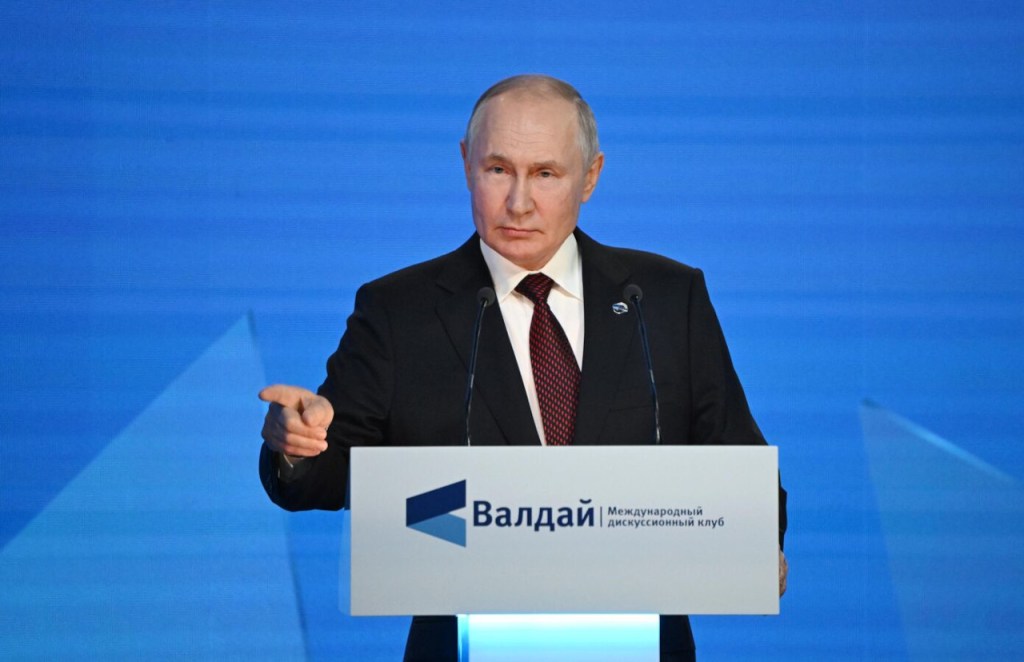
  • [Sharing] Putin Outlines The ‘Moment of Truth’ – Pepe Escobar, Sputnik

    President Putin’s plenary session performance (address + Q&A) at the annual Valdai Club meeting in Sochi felt like a high-speed train on cruise control

    Totally cool, calm, comfortable, in full command of a Himalaya of facts, no political leader anywhere – recent past and present – would even come close to delivering what amounts to an extensive, detailed world view deeply matured over a quarter of a century at the highest geopolitical level.

    Putin began his address referring to the October 1917 revolution, drawing a direct parallel with our turbulent times: “The moment of truth is coming”. In a clear tribute to Gramsci, he stated how a “completely new world order” is “being formed before our eyes.”

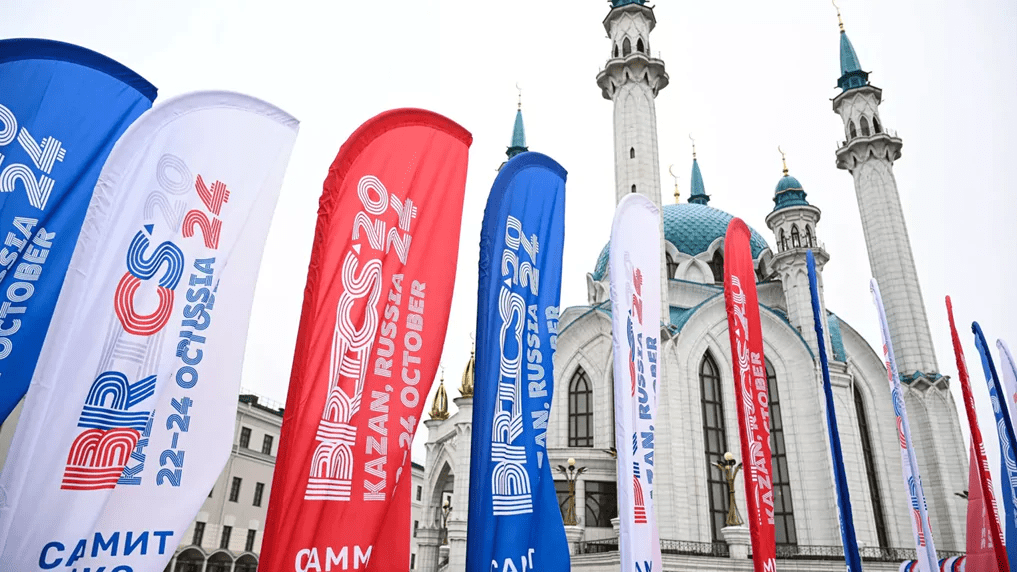
    The subtle reference to the recent BRICS summit in Kazan could not possibly escape critical minds across the Global Majority. Kazan was a living, breathing testimony that “the old order is irrevocably disappearing, one might say, has already disappeared, and a serious, irreconcilable struggle is unfolding for the formation of a new one. Irreconcilable, first of all, because this is not even a fight for power or geopolitical influence, this is a clash of the very principles on which relations between countries and peoples will be built at the next historical stage.”

    As concisely as possible, that should be taken as the current Big Picture framework: we are not mired inside a reductionist clash of civilizations or the “end of History” – which Putin defined as “myopic” – but facing a make-or-break systemic clash of fundamental principles. The result will define this century – arguably the Eurasia Century, as “the dialectics of History continues.”

    Putin himself quipped that he would drive into “philosophical asides” during his address. In fact that went much further than a mere refutation of unilateral conceptual fallacies, as “the Western elites thought that their monopoly is the final stop for humanity” and “modern neoliberalism degenerated into a totalitarian ideology.”

    Referring to AI, he asked rhetorically, “will human remain human?” He praised the building of a new global architecture, moving towards a “polyphonic” and “polycentric” world where “maximum representation” is paramount and the BRICS are “coming up with a coordinated approach” based on “sovereign equality.”

    Six Principles For Global Sustainable Development

    Sovereignty had to be one of the predominant themes during the Valdai Q&A. Putin was adamant that Russia must “develop our own sovereign AI. As algorithms are biased and give massive power to a few big companies that control the internet, the need is imperative for “sovereign algorithms.”

    Answering a question on Eurasian security and the US as the dominant maritime power v. a multipolar Eurasia, he stressed the “consensus and desire in Eurasia for an anti-hegemonic movement”, and not for Eurasia constituted “as a bloc”. That’s the appeal of Eurasia’s “multi-vector foreign policy”, implying “more political independence”. The key example of “harmonizing interests”, Putin stressed, is the Russia-China partnership, and that was also what “made BRICS successful.”

    Compare it in contrast to “the inability in Europe to establish a system of “indivisibility of security” and to “overcome bloc politics”; Europe instead went for NATO expansion: “After the end of the Cold War there was an opportunity to overcome bloc politics. But the US had fear of losing Europe. The US installed almost a colonial dependence. Honestly I did not expect that.”

    Putin introduced a fascinating personal experience tidbit referring to a conversation – in German – with former German chancellor Helmut Kohl in 1993, when Kohl said flat out that “the future of Europe” is linked to Russia.

    Yet that ended up leading to “the most important problem on our Eurasian continent, the main problem between Russia and European countries: the trust deficit (…) When they tell us that ‘we signed the Minsk agreements on Ukraine only to give Ukraine an opportunity to rearm, and we had no intention of resolving this conflict peacefully,’ what kind of trust can we talk about? (…) You have directly publicly stated that you have cheated us! Lied to us and deceived us! What kind of trust is that? But we need to get back to that system of mutual trust.”

    Putin then added that Europe should consider becoming part and parcel of a Chinese concept straight from Chinese philosophy (“they do not strive for domination”). With panache, he stressed that the Chinese uber-geoeconomic trade/connectivity project should be interpreted as One Belt, One Common Road.

    And that extrapolates to Central Asia, with all those nations “very young in their statehood” interested in “stable development”. For Russia-China, there’s “no competition” in the Heartland: “we only have cooperation.”

    Putin once again enumerated what he considers the 6 key principles for global sustainable development: openness of interaction (implying no “artificial barriers”); diversity (“a model of one country or a relatively small part of humanity should not be imposed as something universal”); maximum representativeness; security for all without exception; justice for all (erasing “the gap between the ‘golden billion’ and the rest of humanity); and equality.

    “Make Civilizations, Not War”

    On Ukraine, this was the money quote: “If there is no neutrality, then it’s difficult to imagine any kind of good neighborly relations between Russia and Ukraine.” In a nutshell: Moscow is ready for negotiations, but based on facts on the battlefield and what was agreed upon in Istanbul in April 2022.

    That may be interpreted as a direct message to President Trump. To whom the door is open: “Russia has not damaged its relations with the US and is open to their restoration, but the ball is in the Americans’ court.”

    Putin on US Presidents (he met quite a few): “All of them are interesting people.” On Trump: “His behavior when there was an attempt on his life, I was impressed. He is a courageous person. He acquitted himself valiantly.” On the open door: “Whatever he does it’s up to him to decide.” Then Putin offered his own congratulations for the re-election – on the record. The dialogue may be on: “We are willing to talk to Trump.”

    Putin extolled Russia-China relations as part of their strategic partnership as being “at the highest level in modern history.” He also praised his own personal relation with Xi Jinping. That paved the way for the real killer, when it comes to US-Russia-China: “If the US had chosen a trilateral cooperation instead of double constraint – everyone would win.”

    An excellent question by Brazilian economist Paulo Nogueira Batista Jr – a former vice-president of the NDB, the BRICS bank – led Putin to clarify his own position on de-dollarization. He stated flatly that “my role is to see ideas shaped that we then propose to our partners”.

    The key target is “proposing to create a new investment platform using electronic payments.” That will address the “most promising markets” in the near future – South Asia, Africa, parts of Latin America: “They will need investment, technologies.” And “tools independent from inflation” – with regulation “through Central Banks and the NDB. We agreed to have a working group meeting regularly at government level. We are in no hurry.”

    So that puts to rest any scenario of an immediate BRICS financial bombshell – even as “two-thirds of our trade is being serviced in national currencies” and among BRICS the figures are also high.

    BRICS Bridge will be tested – soon. As for creating a single currency, that’s “premature. We need to achieve greater integration of economies, increase the quality of economies to a certain – compatible – level.”

    Then, the bombshell: “We never wanted to abandon the dollar!” That goes a long way to explain Putin’s own view on de-dollarization: “They are undoing it with their own hand – the power of the dollar.”

    All of the above is just a sample of the width and breath of themes addressed by the President during the Valdai Q&A. The forum itself offered precious nuggets all across the spectrum. Some participants – correctly – noted the absence of “the majority of the majority”: youth and women. Africans were impressed with “the sharp mind of Russian bureaucracy.”

    A Chinese view noted how “the Chinese don’t swim against the current; they cross the river and reach the other bank.” There was a near consensus that development should be “based in different cultural values of civilizations” – actually Putin’s own view. Also imperative is the “need for aggregate authority” among the Global South.

    A Greek insight was particularly powerful when it comes to the civilizational approach to politics: “Civilizations don’t clash. States do.” Thus the new – playful – motto that could guide not only BRICS but the whole Global Majority: “Make Civilizations, Not War.” [end]

    The original article

    Related

    November 7, 2024: How Trump could liberate Europe – Thomas Fazi, UnHerd

    His isolationism is an opportunity

    October 23, 2024: BRICS Summit in Kazan: The End of the U.S. Hegemony. Part 2 – Ricardo Martins, New Eastern Outlook

    The BRICS Summit in Kazan, Russia, aims to be a turning point towards a truly multipolar or multi-nodal world that has been in transition for a few years now

    June 12, 2024: The summer of living dangerously – Pepe Escobar, Strategic Culture Foundation

    The plutocracy believes that afterwards they can buy the whole thing for a pittance while flies are still laying eggs in European carcasses

    September 1, 2023: No respite for France as a ‘New Africa’ rises – Pepe Escobar, The Cradle

    Like dominos, African states are one by one falling outside the shackles of neocolonialism. Chad, Guinea, Mali, Burkina Faso, Niger, and now Gabon are saying ‘non’ to France’s longtime domination of African financial, political, economic, and security affairs

    July 30, 2023: Africa and a new world order – Stephen Sefton, Tortilla con Sal (Nicaragua)

    [the sense of history]

    June 8, 2023: The West Must Prepare for a Long Overdue Reckoning – Chandran Nair, The National Interest

    Five major trends illustrate how the world is changing, and that the West must grapple with the reality that it can no longer impose its “leadership” on the world as it once did

    March 20, 2023: Forging Ahead to Open a New Chapter of China-Russia Friendship, Cooperation and Common Development – Xi Jinping, RIA Novosti

    [Quote : no model of governance is universal, and no single country should dictate the international order]

  • [Sharing] BRICS Summit in Kazan: The End of the U.S. Hegemony. Part 2 – Ricardo Martins, New Eastern Outlook

    The BRICS Summit in Kazan, Russia, aims to be a turning point towards a truly multipolar or multi-nodal world that has been in transition for a few years now

    The changes announced in Kazan regarding the payment system and the reserves of nations are concrete steps towards independence from the U.S. imperialistic system. This system is symbolized by a small piece of green paper that no longer has real backing—just an empty promise.

    An Imperialistic Structure Does Not End in One Day

    The U.S. has managed to build an imperial structure based on more than 800 military bases around the world, the imposition of the dollar as the currency of international trade and reserve, the extraterritorial application of its laws, and by creating a network of vassal and semi-vassal states around its hegemony. Nonetheless, the core of its imperial system relies on the dollar. The de-dollarisation led by the BRICS is driving the U.S. to despair, making their sanctions system increasingly meaningless too.

    BRICS has taken on the responsibility of driving substantial change for a new world order

    No empire lasts forever, especially one that lacks a strategic vision, as is the case with the U.S. The American empire lost wars or promoted further chaos in Vietnam (1955-1975), Afghanistan (2002-2021), Iraq (2003-2011), Libya (2011) and did not win in Syria and has shown an inability to control its ally Israel, which continues to commit war crimes, uphold apartheid, engage in state terrorism, and carry out genocide. Moreover, the U.S. has been incapable of formulating its Middle East policy independently of Israel’s prism.

    On top of that, domestically, its infrastructure is crumbling, and its social indicators are rapidly approaching those of developing countries. The U.S. is the only major nation where life expectancy is declining, extreme poverty is increasing swiftly, and so is homelessness. Its citizens do not have universal, free access to healthcare, as happens in most developing countries, such as Latin America. All these issues highlight the fragility of the empire.

    The New Sick Man

    Once, during its decline, the Ottoman Empire was known as the “sick man of Europe.” Now, it seems the U.S. is playing this role, or perhaps it’s more like a drowning person: it pulls those who are close to it into its struggle and demands loyalty in this slow demise, particularly from European countries that have greatly benefited from its generous policies after WWII. In Latin America, the Monroe Doctrine is still very much in effect, which is why Brazil sometimes seems reluctant to commit fully to BRICS.

    Europeans, especially the Germans, have shown signs of wanting independence, and the idea of strategic autonomy has become wishful thinking. Former Chancellor Angela Merkel, who was economically liberal, listened to German business leaders who argued that the future lay not in the Atlantic, but Eastwards toward Russia and China.

    The U.S. did not like this shift and managed to make Europeans feel that they still needed Uncle Sam for their protection. Turning their backs on the U.S. was seen as an ungrateful response to American roles in WWII and the Marshall Plan.

    The U.S. meddled in Central Europe and Ukraine, expanding NATO eastwards. This move was highly discouraged by prominent American foreign policy strategists like Henry Kissinger, Robert Kagan, John Mearsheimer, and even William Burns, a former Ambassador to Russia and ex-CIA director. The coup orchestrated by the CIA and led locally by Victoria Nuland in 2013 in Ukraine was just the beginning, alongside the sabotage of Nord Stream by the U.S., all part of this complex game to make Europeans dependent on the U.S.

    BRICS Ignites Hopes of the Global South and the Discontented

    Once again, two blocks are forming, with some countries caught in the middle. The war in Ukraine and the Global South’s refusal to impose sanctions on Russia have highlighted the divisions in the world. The war in Gaza and the resulting genocide, supported by many Western nations while they preach values and human rights, has led the Global South to lose faith in the West’s moral standards. They have denounced its double standards and are nearly unanimously supporting the idea of a new world order.

    The expansion of BRICS, with over 40 nations waiting to join—including Serbia, Turkey, Indonesia, Malaysia, Thailand, Nigeria and Bolivia—clearly signals that change is expected.

    Some European nations are unhappy with the expected outcomes of remaining tied to the old regime– the EU tied to the U.S.- and wish to be part of a more dynamic and prosperous future. For instance, Spain has rejected imposing extra tariffs on Chinese electric vehicles, and Turkey wants to join BRICS too, as does Serbia, even if it means giving up potential EU memberships, along with many other nations.

    Bulgaria is also unhappy with its EU membership and is sending representatives to BRICS meetings. Moldova was divided over an EU membership referendum. The narrow victory of 0.2% was due to the votes of Moldovans living abroad. Still in Europe, Norway, not being subject to EU rules, has recently taken steps to strengthen economic ties with China, surprising many Atlanticists in Europe.

    Therefore, BRICS has taken on the responsibility of driving substantial change for a new world order. However, it is fair to say that BRICS nations have tried to reform the Bretton Woods institutions—especially the World Bank and the International Monetary Fund (IMF)—and the United Nations to better reflect the new economic, population, and trade realities, but they have not succeeded.

    New institutions are being built within BRICS, particularly the New Development Bank (NDB), which, unlike the IMF or World Bank, does not impose economic regime changes and has inclusive practices.

    In sum, there are several political and economic groups of nations around the world, but none has the political will or the capacity to promote major geoeconomic and geopolitical changes as BRICS does. Therefore, the 16th BRICS Summit in Kazan comes at the right time and with the right political will to build a better, more prosperous, inclusive, free, and less ideologically driven world. The next step should be the merger of the Shanghai Cooperation Organization (SCO) with BRICS [end]

    The original article

    Ricardo Martins ‒PhD in Sociology, specializing in policies, European and world politics and geopolitics, especially for the online magazine “New Eastern Outlook”

    Related

    July 31, 2023: Africa and a new world order – Stephen Sefton, Tortilla con Sal (Nicaragua)

    June 8, 2023: The West Must Prepare for a Long Overdue Reckoning – Chandran Nair, The National Interest

    Five major trends illustrate how the world is changing, and that the West must grapple with the reality that it can no longer impose its “leadership” on the world as it once did

  • [Sharing] Africa and a new world order – Stephen Sefton, Tortilla con Sal (Nicaragua)

    [the sense of history]

    The successful second Russia-Africa Summit on July 27-28 represents an extraordinary breakthrough in the development of a new world order free from the domination of Western imperialist powers. Delegations from 49 African countries participated in the summit, including seventeen heads of state. They adopted a 74-point final declaration on virtually all areas of cooperation, trade and security, with a preamble clarifying the fundamental principles that should govern international relations. The summit built on the initiative of the first Russia-Africa forum held in 2019, reaffirming the historic bonds of fraternal cooperation resulting from their common struggle in the 20th century against Western colonialism.

    In fact, the Final Declaration of the Summit is a clear challenge to the West because it asserts strongly the growing role and global influence of Africa and the African Union as an essential pillar of a multipolar world. It insists on the need to oppose neocolonialism expressed in the imposition of conditions and double standards that prevent sovereign decision-making about countries’ different paths to development. Russia and Africa also reject the use of coercive measures and expressed the commitment of the signatory countries “to the fundamental principles and purposes of the United Nations Charter, subscribing to safeguarding and upholding international law and emphasizing the need for the adherence thereto by all States,”

    The Russian Federation pledged to promote an expansion of Africa’s representation in the UN Security Council. The African countries and Russia are going to create a strategic partnership mechanism and Russia will negotiate opening new embassies in Africa among other measures to improve diplomatic relations between African countries and the Russian Federation. Along with these decisions, it should be noted that the Russian Federation has cancelled bilateral debt with African countries worth US$23 billion dollars is supporting African nations to develop their energy infrastructure. Currently, Russia is engaged in over 30 electricity generating projects in 16 African countries while gas infrastructure projects are also being negotiated to facilitate the shipment of liquefied gas.

    President Vladimir Putin thanked Africa’s proposals to settle the conflict in Ukraine, commenting, “The initiative itself, like any other peace initiative, is good… There are things that are already being implemented after we discussed them at our meeting in St. Petersburg a month and a half ago.” Regarding the failure of the agreement on the export of grain through the Black Sea, noting the bad faith and hypocrisy of the West benefiting its large agribusiness corporations, President Putin observed that under the grain agreement: “Countries like Ethiopia, Sudan, Somalia and some others received, please note this, less than 3% of the total volume, less than one million tons.” On the other hand, it was announced that, in the near future, Russia will supply grain free to six African countries (Burkina Faso, Zimbabwe, Mali, Somalia, Central African Republic and Eritrea), while during the current year the trade of agro-industrial products between Russia and Africa has grown by 60%.

    The speeches by the heads of State participating in the Summit touched on issues of global relevance, especially for Latin America, stressing the issues of colonialism, neocolonialism and the imperative of defending national sovereignty. President Putin commented, “Sovereignty cannot be viewed as something that can be achieved once and for all. It is something you must fight for all the time.” Regarding the same issue of sovereignty, the head of the Libyan Presidential Council Mohamed Younis Ahmed Al-Manfi said: “Africa believes that it was subjected to unfair exploitation for several centuries and that although formally all countries got rid of the colonial yoke, we haven’t yet managed to create genuinely national states. Now we must strive, together with the African Union, to change the membership system in the UN Security Council. Despite a number of unimportant reforms, the West has recently continued preserving its dominant position. It is trying to exert all-round pressure on us, using our financial debts in its own interest, destroying our economies and increasing poverty and misery in our countries in every possible way.”

    Of central importance at the Summit was the topic of financial independence and the use of national currencies in trade. Russian exports of oil and its derivatives to African countries have multiplied by two point six times in the last two years. Being able to pay for these imports in their local currencies would be a great financial relief for African countries and would be in line with the decision recently announced by the president of the New Development Bank of the BRICS bloc, Dilma Rousseff, to offer at least 30% of the bank’s loans in local currencies. Interviewed on July 29th, Russian Deputy Prime Minister Aleksey Overchuk noted, “We propose the creation of an independent financial infrastructure. This implies mutual settlements in national currencies, the use of national payment systems, which requires an interaction between the relevant structures: central banks, ministries of finance, financial institutions, without this nothing will develop.”

    The African countries went through a long drawn out, arduous process of struggle for independence. In North Africa, Egypt had been an independent monarchy since 1922 but it was not until 1954 under Gamal Abdel Nasser that it was possible to end the British occupation of the Suez Canal and, in 1956, to win the independence of neighboring Sudan. France accepted defeat in its brutal colonial war against Algeria in 1962. Morocco and Tunisia had already won their independence in 1956, Niger and Mauretania in 1960. Similar to Egypt, the former Italian colony Libya became an independent kingdom in 1951 but it was not until 1966 that it became an independent republic under the leadership of Muammar al Gaddhafi. By the end of 1961 almost the entire western and central part of Africa had become politically independent from the former colonial powers, France, the United Kingdom and Belgium.

    In East Africa, Ethiopia was declared independent in 1947 after being liberated from Italy’s colonial aggression. Somalia became independent in 1960, followed in the coming years by Rwanda, Burundi, Kenya, Uganda, Zambia, Malawi, Tanzania and Madagascar. Portugal maintained its colonial rule over Guinea-Bissau until 1974 and, after many years of armed conflict, in 1975 finally recognized the independence of Angola, Mozambique, and Cape Verde. In southern Africa, Botswana achieved its independence in 1966. But Zimbabwe only achieved independence in 1980 after a fierce, bloody war. Namibia was occupied by the apartheid regime of South Africa until 1990. South Africa itself only held its first democratic elections in 1994, won by Nelson Mandela, to end the brutal apartheid regime.

    The reaction of the imperialist powers to the independence of their former colonies has been to seek to consolidate their control of Africa’s natural resources and economies through their domination of global trade, international finance and their control of international institutions such as the United Nations, the World Bank and the International Monetary Fund. Speaking in Algeria in February 1965, Che Guevara explained: “As long as imperialism exists, by definition, it will exercise its domination over other countries; that domination is today called neocolonialism. Neocolonialism developed first in South America, in an entire continent, and today it is beginning to be noticed with increasing intensity in Africa and Asia. Its way of penetration and development has different characteristics; one is the brutal one we met in Congo. Brute force, without considerations or cover-ups of any kind, is his extreme weapon. There is another more subtle one: penetration into countries that are politically liberated”.

    During the second Russia-Africa Summit, the heads of state of the African continent spoke repeatedly to condemn the decades of neocolonialism that have continued the impoverishment of their peoples through unfair and unequal treatment by the United States and the countries of the European Union. Among them were the President of the African Union Azali Assoumani, and the presidents of Burkina Faso, Cameroon, Central African Republic, Uganda, Congo, Egypt, Eritrea, Guinea-Bissau, Libya and Mali, among others.

    Ugandan President Yoweri Museveni commented, “The independence of most African countries does not mean healthy disengagement with the imperialist economies. Up to now, many of the African economies still face the bottlenecks and distortions of the colonial era. Although some progress has been achieved, a lot remains to be done. That is why you hear that the GDP of Africa is currently $2.7 trillion smaller than the individual economies of countries such as Japan, Germany, etc. Not to mention the US or China.”

    The President of the Congo, Denis Sassou Nguesso, commented to President Putin: “It is impossible to industrialise our continent without electrification. You will remember the famous slogan of the great revolutionary of your country – ‘Communism is Soviet power plus the electrification of the whole country.’ Meanwhile, today, 600 million Africans – I will repeat this figure – 600 million Africans live without electricity.”

    The President of Mali, Assimi Goïta, said: “Russia has been able to show in difficult moments its status as Mali’s faithful partner, has been loyal, dynamic and has helped us in dealing with difficulties, accompanied us and respected our sovereignty. That is very important in restoring peace, stability and security, which is why we must now, above all, protect our population and defend the territorial integrity of our country. This strategic choice is very important to us, and we must, of course, become completely independent and self-sufficient and strengthen our armed forces. That is why we, in Mali, have a military partnership with the Russian Federation..”

    Given these comments by a majority of African leaders, it is no surprise that right now the first Deputy Secretary of State of the United States, Victoria Nuland, is on a visit to South Africa, Ivory Coast and the Democratic Republic of Congo. She is visiting there to communicate her country’s imperial dictates to be shared among the other governments of the region. But the vast majority of African countries have shown that they want to emancipate themselves from the neocolonial yoke, from the racism and arrogance, from the cynicism and hypocrisy, of the United States and the European Union. With their inevitable defeat in Ukraine in sight, it remains to be seen to what extent the United States and the European Union can maintain their accustomed power and privilege in their relations with African countries whose leaders have categorically shown their anti-imperialist position at this second Russia-Africa summit [end]

    The original article