Nicolas Cinquini

Analista senior di l'intelligenza in u campu di a gestione di i risichi di sicurezza, sò un anzianu tenente detective è ufficiale di l'intelligenza in l'agenzie di u Statu francese. A bona pronuncia hè Николай Чинкуини, in russu

Tag: presstv

  • [Enemy British media] Claude: tyranny’s little helper – Peter Frankopan, UnHerd

    Our enemies are weaponising AI [mwahaha]

    Over the past year, the AI community has become increasingly worried over the behaviour of autonomous agents. Over the past week, that worry has hardened into panic — not least given the chatter, if vague and hard to verify, about a significant advance in recursive self-improvement at one of the world’s biggest frontier firms. Yet amid rumours and counter-rumours, and the recent suggestion by Donald Trump that “whoever wins AI wins”, one document may offer answers — less about the existential dangers of AI, and more about the threat it poses in the here-and-now.

    Over 154 pages, a new report by Anthropic details some of the ways in which its Claude model has been misused over the past several months. With its talk of cyber-attacks, espionage and propaganda, it makes for terrifying reading, especially given how many actors — from Russian hackers to Chinese spies to Iranian propagandists — are now using the technology. As for Anthropic, it is able to monitor and assess how its systems are being used in real time, allowing the firm’s threat-intelligence team to track how Claude is being used.

    One of the most eyebrow-raising examples comes from Yemen, particularly striking given the Houthis have established a presence on Perim Island, a strategically important position in the Bab al-Mandab Strait. Control of the island could strengthen the militants’ ability to threaten shipping through this narrow southern gateway to the Red Sea and Suez Canal, the primary maritime corridor linking Asia and Europe.

    It’s striking, then, that Anthropic’s team identified a weapons-engineering cell in the north of the country that used Claude to work on three distinct programmes, including a guided rocket and a ballistic missile with a range exceeding 2,000 kilometres. Tracking this activity made it possible to reconstruct the militia’s engineering workflows.

    To put simply: the Houthis — or their affiliates or hired helpers — effectively used Claude Code as a substitute for software engineers, getting it to help develop guidance, navigation and control systems; integrate an open-source autopilot into a flight computer; tune controls; and even run simulations. Several Claude operations ran at once: one coding, another researching, and a third checking the first agent’s work. This was not mere experimentation by geeks with laptops. After all, it apparently resulted in the test-firing of a guided rocket. When this seemingly failed, the results were quickly plugged back into Claude to diagnose what had gone wrong.

    Anthropic says it has no evidence that an operational weapon was ultimately fielded, but the episode exposes an uncomfortable weakness in the way AI safety controls currently work. It is worth noting that Claude would not simply agree to design a missile on request; in fact, Anthropic says its safeguards blocked many of the Houthi cell’s requests. Still, they did not block all of them. By disguising the purpose of individual requests, and distributing the work across multiple sessions, the engineers were able to bypass controls.

    Next stop: Iran. Here, we’re shown evidence of how Claude has been used to support propaganda, espionage and domestic repression. Again, this was not simply a matter of asking a chatbot to knock out a few inflammatory posts. Anthropic describes three operations in which Claude helped construct the machinery of an influence campaign: including writing campaign manuals; designing fake online personas; and compiling databases of people and organisations to target.

    In one example, official intelligence bulletins were fed into Claude and transformed into content for different audiences — from Farsi to Arabic, Urdu to English — with the tone shifting alongside the language.

    Iran also used Claude to disguise government narratives as the work of foreign writers. One network produced material intended for more than 100 online Iranian channels, including ones linked to the IRGC. More than that, Anthropic found evidence that Iranian propaganda was being camouflaged, falsely attributing arguments and findings to respected Western institutions like CSIS or the Brookings Institute.

    More specific examples of Iranian AI-built propaganda are just as disturbing. Tehran-linked actors have been using Claude to build detailed profiles of hundreds of Israelis, and members of the Jewish diaspora, installing malicious software to steal people’s usernames, passwords and other login details. Elsewhere, Claude built a system to track US naval forces, securing personnel information from military photographs, among other sources.

    The implications here are stark. Iran is hardly a superpower — and the Houthis certainly aren’t either — yet AI allows both to develop systems that would once have taken armies of engineers, programmers, analysts and linguists. That, in turn, opens the door to further disruption by non-state actors, causing chaos on the cheap. If the war in Ukraine shows how drones and other simple gadgets can nonetheless hamstring a well-armed opponent, AI could now do the same for espionage, cyber-warfare, propaganda and weapons development.

    It’s telling, here, that even serious powers are learning these lessons too. After all, Anthropic’s tools have also been extensively used in Russia, despite the latter already boasting a formidable espionage apparatus of its own. That, however, hasn’t stopped Moscow from using Anthropic’s tech to make its activities better, faster and harder to tackle. That’s clear enough in the case of Midnight Blizzard, a hacking group closely linked to, or indeed part of, Russia’s SVR foreign intelligence service.

    In practice, the hackers seemingly used Claude to make phishing attacks more convincing, while also helping them break into computer systems more effectively. For instance, hackers used the AI to double-check whether security software had spotted newly installed malware and, if it had, rewrite the code and try again until it slipped past the defences. These tools were then deployed against a swathe of targets outside Russia: including government ministries, intelligence and defence bodies, think-tanks, and more. Perhaps unsurprisingly, Ukraine and its drone industry feature prominently.

    It has been fascinating, too, to see Claude turning up in the toolkit of another major power: China. Again, the examples here are remarkable in their scope, with an outfit likely based in central China using Claude to spy on roughly 50 organisations worldwide, spanning industries from energy and healthcare to finance and technology.

    One obvious question is why China would plump for the foreign-made Claude, not least given the People’s Republic has DeepSeek, Qwen, Kimi and other domestic AI tools to choose from. Though Anthropic’s report does not address this, the obvious explanation is that, for some jobs — not least a Chinese police-surveillance project — China thought Claude was the best option: particularly for coding, technical research, and coordinating complicated tasks.

    According to Anthropic’s report, Chinese companies have also attempted to scale and distil Claude’s capabilities. Again, China hardly lacks engineers, data or computing power. But, just as a pace-setter is invaluable in a marathon, so too can Anthropic be exploited by its rivals, another reason to doubt Trump’s latest claims.

    Nevertheless, it would be a stretch to conclude, as Trump has done, that America is winning, let alone has “won”, the AI race. If anything, indeed, the episode illustrates the peculiar nature of that contest. American companies may build the most capable models — but once those capabilities exist, the US’s adversaries can use them to their own advantage.

    In a broader sense, meanwhile, these varied use cases put a subtler spin on all that breathless talk of AI collapse. The technology has hardly invented espionage, or propaganda, or ballistic missiles. But it is reducing the amount of expertise, labour and time required to do them all. Whatever the claims of looming extinction, the technology is being used, in nefarious ways, by a variety of flesh-and-blood actors right now. Rather than mass suffering and death, we should perhaps be more immediately worrying about our credit-card details being sold and our accounts drained — not by AI agents, but by human criminals a lot like us.

    In an open letter published around the same time as his company’s report, Dario Amodei, chief executive of Anthropic, seems to acknowledge that the threat architecture has changed — and fast. Building AI too quickly is dangerous, he writes, but failing to build it risks placing the most powerful technology of the age “in the hands of authoritarian powers”. Any attempt to slow AI and tech development in the US is a threat: if the democratic world slows down, Amodei argues, “CCP-associated projects will pull ahead, creating significant national security risk”.

    Among other measures, Amodei is therefore demanding tighter restrictions on the sale of advanced AI chips and semiconductor manufacturing equipment to China; a crackdown on chip smuggling and remote access to overseas data centres; and measures to stop Chinese companies distilling the capabilities of American frontier models. If these measures work, Amodei adds, they could “widen America’s lead significantly over the next 3-5 years.”

    Seen in another light, though, Amodei’s proposals look a little more complicated. As CEO of a company preparing one of the largest flotations in history, arguing that its technology is so dangerous that the government needs to intervene in the market around it is unusual. He wants tighter controls on advanced chips; stronger restrictions on the dissemination of frontier capabilities; measures to stop competitors catching up; and government assistance to overcome antitrust problems. In all, it looks like a bid towards establishing a monopoly, rather than simply a concern with the consequences of new technologies. The longer the furore over the monopoly persists, anyway, the longer foreign misuse of Claude will remain obscured: to the West, if not its enemies.

    This is a field that is moving extraordinarily fast, reason enough to take the warnings seriously. But the last few days have raised more questions than they have answered: about how immediate the dangers really are, who should decide how quickly AI develops, and about where safety and national security end and commercial self-interest begins. The risks are plainly enormous, as are the opportunities. What is less clear is whether we are witnessing genuine panic among those closest to the technology, or the opening moves in a struggle over who gets to control it. It may well be both [end]

    The original article

    Peter Frankopan is Professor of Global History at Worcester College, Oxford

    Related

    September 8, 2026: The West has engineered its own downfall – Kishore Mahbubani, Institute of Art and Ideas

    the West has become a lonely, narcissistic civilization

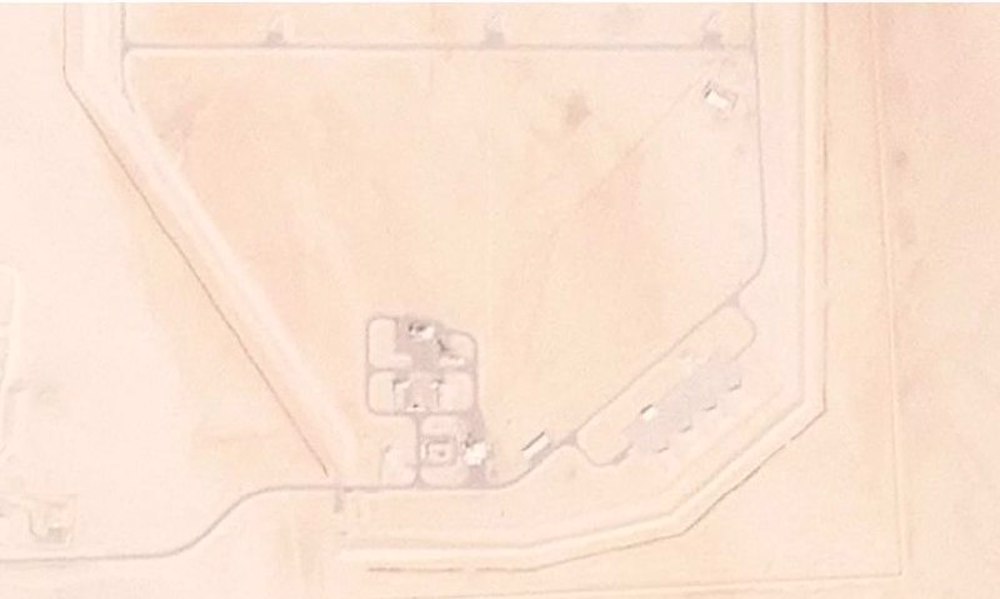
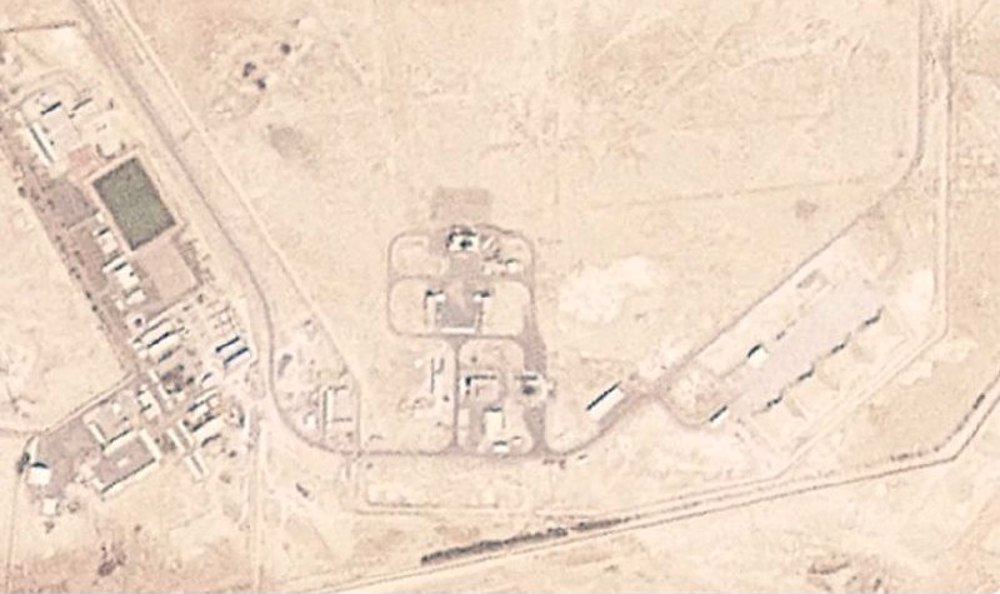
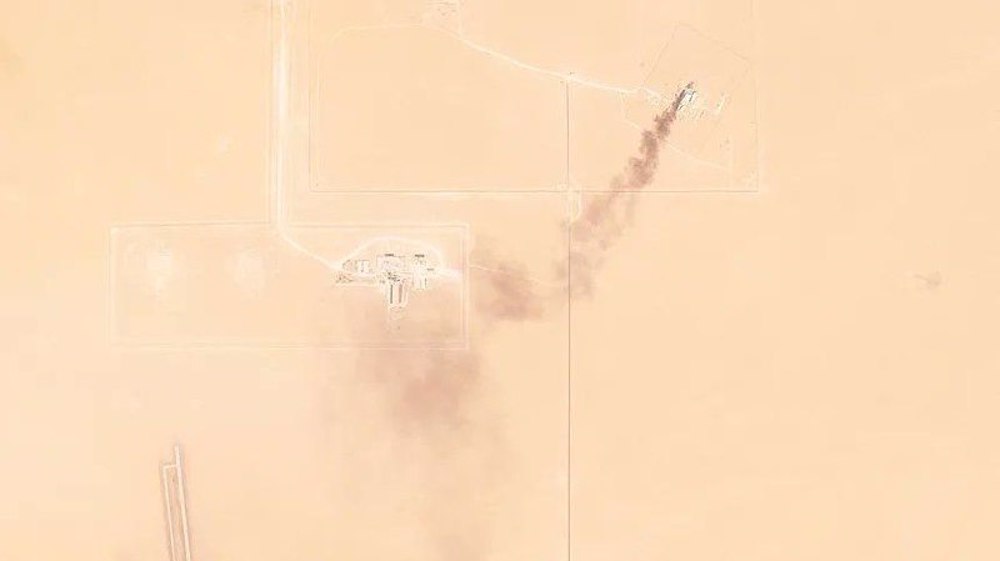
    March 8, 2026: Blinded giant: How Iran crippled America’s multi-billion dollar THAAD network in days – Ivan Kesic, Press TV

    in the first week of the US-Israeli aggression on Iran, the Islamic Revolution Guards Corps (IRGC) conducted a series of precision strikes that systematically degraded the much-hyped US integrated air and missile defense architecture across the region

    October 26, 2024: US authorizes CIA mercenaries to run biometric concentration camps in Gaza Strip – Dan Cohen, Uncaptured Media

    a private intelligence corporation billed as “Uber for war zones” is preparing to create what Israel hopes will be the model for supplanting Hamas rule in Gaza

    January 3, 2024: The EU Is Willing to Go to War Over Lithium? – Phil Butler, New Eastern Outlook

    November 15, 2023: The French National Police is unlawfully using an Israeli facial recognition software – Disclose

    in 2015, law enforcement secretly acquired surveillance video image analysis software from the Israeli company Briefcam. For eight years, the Ministry of the Interior concealed the use of his tool, which enables facial recognition

    January 28, 2023: The Battle for Ukraine’s Titanium – David Brennan, Newsweek

  • [Sharing] How The CIA Conjured Ukrainian Nationalism – Kit Klarenberg

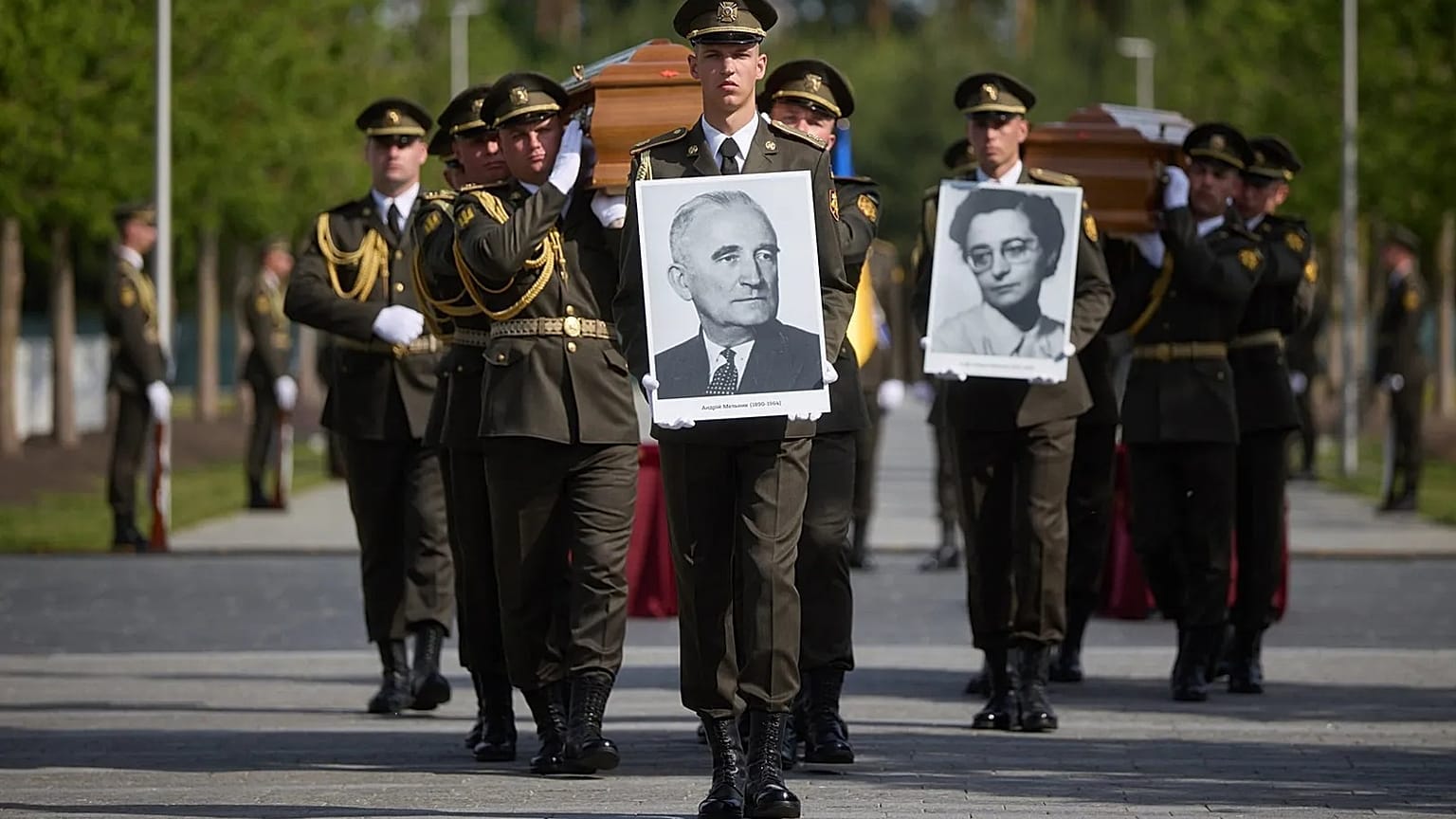
    A bitter row has erupted between Kiev and Warsaw, after Volodymyr Zelensky renamed a Ukrainian military unit the “Heroes of the UPA”. The UPA – Ukrainian Insurgent Army – was an ultranationalist faction heavily implicated in the Holocaust, which slaughtered up to 100,000 Polish civilians during World War II. In addition to commemorating the mass-murdering militant group, the corpse of Andriy Melnyk, leader of UPA parent the Organisation of Ukrainian Nationalists (OUN-B), was reburied in Kiev. At a grand accompanying ceremony, Zelensky declared:

    Today we all see that the Ukrainian idea can overcome what once seemed absolutely insurmountable. Now, when we are on Ukrainian soil, under our Ukrainian flag, to the sound of the Ukrainian national anthem, paying due tribute to our Ukrainian heroes, we feel in our hearts everything Ukrainians were forced to go through, everything our people had to endure

    The unspeakable horrors inflicted upon Poles – and Communists, Jews, Romani and other “undesirables” – by Melynk and his fellow Nazi collaborators were of course unmentioned. So too that the genocidal nationalism practiced and preached by Melynk was covertly promoted and sponsored for decades by Anglo-American intelligence, within and without Ukraine. The ongoing proxy conflict is a direct product of this little-known spectral meddling, which was specifically concerned with promoting cultural and ethnic difference, and enmity, between Russians and Ukrainians globally

    Ukraine reburies remains of divisive nationalist World War II leader |  Euronews
    Andriy Melnyk’s remains, long-buried in Luxembourg, are returned to Ukraine

    As this journalist has previously revealed, in August 1957 the CIA secretly drew up elaborate plans for a US special forces invasion of Ukraine. Intended to collapse the wider Soviet Union, the Agency’s conspiracy depended heavily on recruiting local fascists as footsoldiers. A significant stumbling block to the Agency’s plot, however, was much of Ukraine’s population actually harbouring “few grievances” against Russians or Communism. “Points of conflict” between Russians and Ukrainians, which could be exploited by the CIA to foment a mass uprising, were scant.

    The Agency lamented how “the long history of union between Russia and Ukraine, which stretches in an almost unbroken line from 1654 to the present day,” had resulted in “many Ukrainians” having “adopted the Russian way of life.” Moreover, the similarity of their “languages, customs, and backgrounds,” and the “great influence” of Russian culture in Ukraine, meant the overwhelming majority of Ukrainians felt “little national antagonism.” Yet, the CIA believed “important grievances exist,” and “under favorable conditions” Ukrainians would assist US invaders.

    Unmentioned in the invasion planning documents, the CIA had since 1949 been covertly striving to create those “favorable conditions.” A key Agency asset used for the purpose was OUN-B chief Mykola Lebed. In 1943, he proposed to “cleanse the entire revolutionary territory” – today’s western Ukraine – of its Polish population, to prevent any future Polish state from claiming the region. A post-war US Army counterintelligence report branded Lebed a “well-known sadist,” and Nazi collaborator

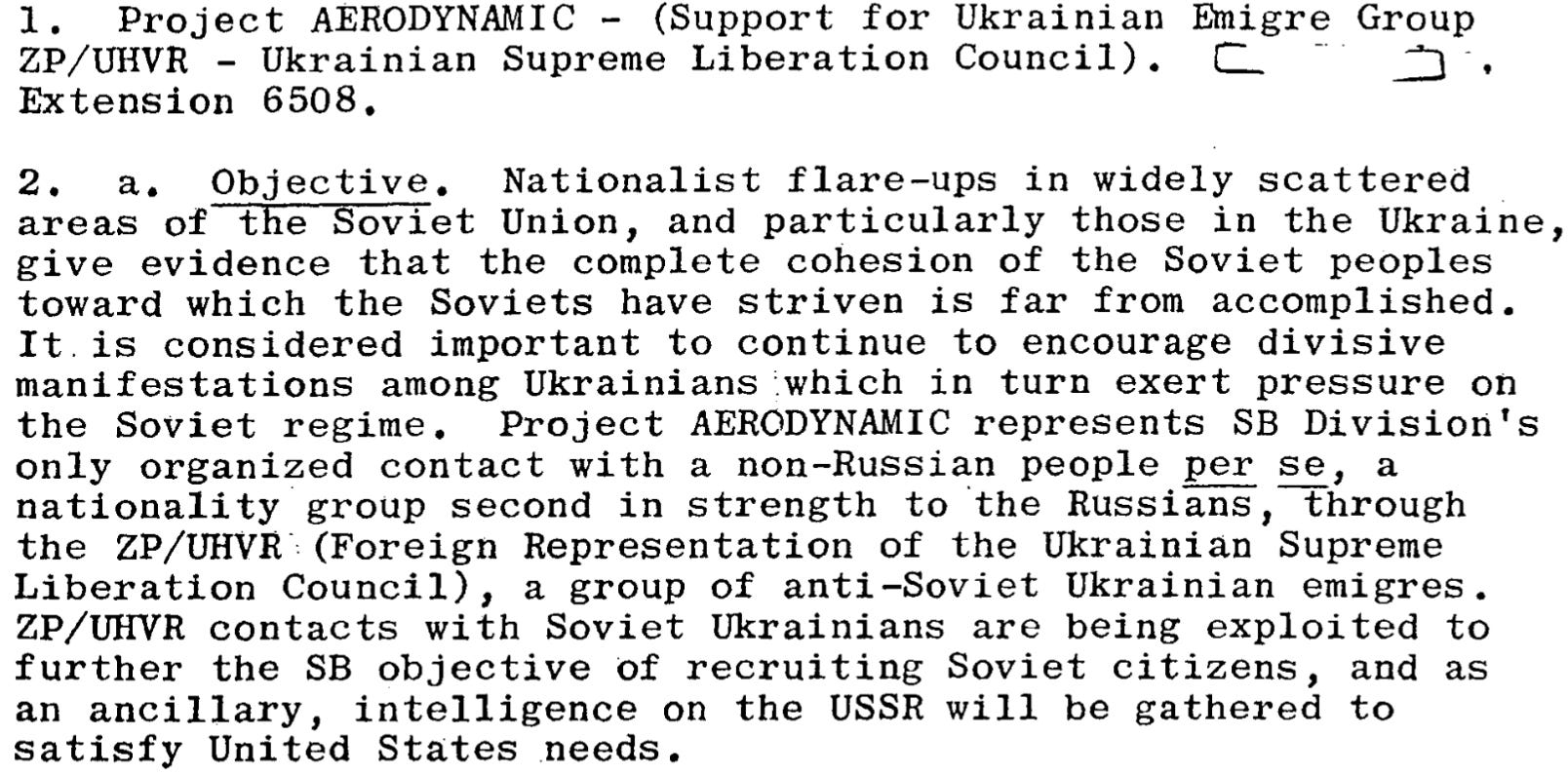
    The nucleus of Lebed’s international fascist agitation was Prolog, a New York-based publishing firm. A 1966 CIA memo noted this “cover organization” for the Ukrainian Supreme Liberation Council (ZP/UHVR) was established to conduct “clandestine activity.” It approvingly added that Prolog’s work “contributes to Ukrainian nationalist ferment and to intellectual resistance to Soviet repression by exploiting existing and encouraging new deviationist tendencies” in Ukraine. Elsewhere, the Agency declared it was “important to continue to encourage divisive manifestation” of this sort. The explicitly stated objective was triggering “nationalist flareups” in the USSR:

    [ZP/UHVR] were sent from the Ukraine in 1945 by the Ukrainian Supreme Liberation Council to make contact with Western intelligence representatives and to act in behalf of the homeland…[ZP/UHVR] organized a net of collaborators throughout Western Europe and the United States…the feeling of nationalism is very much alive. ZP/UHVR has proved realistic in its approach to operational matters and its propaganda activity

    ‘Existing Suspicions’

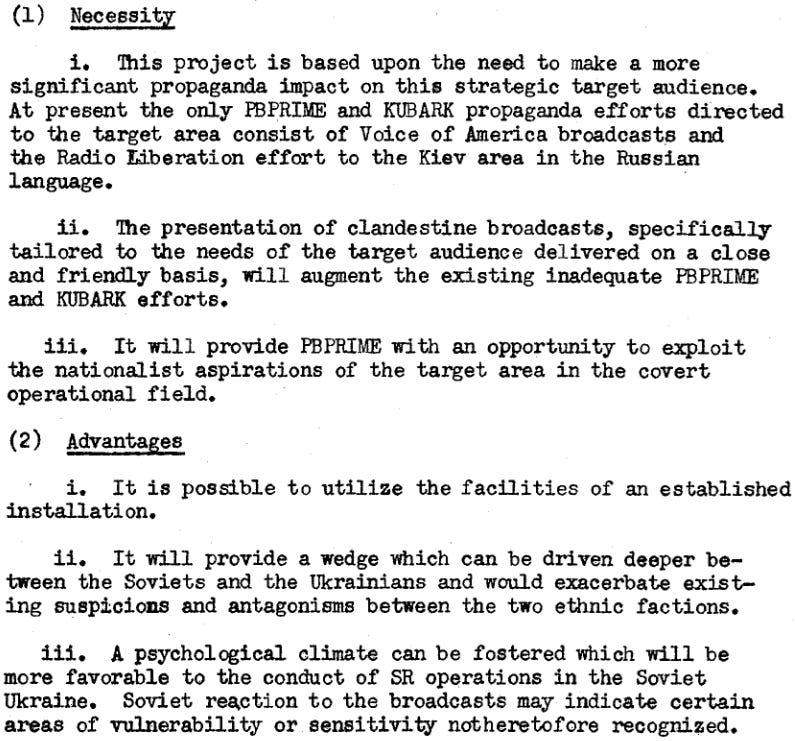
    A late 1953 Agency memo documents how the CIA for years broadcasted “black radio transmissions” in Ukrainian from a secret CIA installation in Athens, Greece. “Soviet officialdom, Soviet military forces stationed in the Ukraine, the indigenous civilian population…the underground movement and the Ukrainian Insurgent Army (UPA)” were an intended target audience of 40 million people, upon whom the Agency wished to have a “significant propaganda impact.” Produced by ultranationalist emigres who’d fled Ukraine after World War II, the project sought to foment insurrectionary anti-Communist violence:

    Furnish evidence of outside sympathy and understanding for the Ukrainian peoples; intensify anti-regime disaffection by encouraging resentment, bitterness, and distrust of the Soviet regime and its personalities; maintain national consciousness among the Ukrainians and urge them to maintain pride in the individuality and heritage of their culture; create dissatisfaction among Ukrainian military personnel within the Soviet armed forces stationed in the Ukraine; create and intensify dissatisfaction among the Ukrainian civil authorities to the Soviet regime

    Publicly, the station’s US-made broadcasts – which included Ukrainian folk songs – were “attributed to a notional group of Ukrainian Anti-Communists.” There was no connection “actual or implied, with any established Ukrainian emigre group.” It was of the utmost importance too the CIA’s hand in creating and running the station was concealed – “every effort will be made to keep this risk at a minimum.” However, the operation’s ruinous spoils were considered well-worth the hazards

    “It will provide a wedge which can be driven deeper between the Soviets and the Ukrainians and would exacerbate existing suspicions and antagonisms between the two ethnic factions,” the CIA declared. The Agency also sought to create a wider “psychological climate” among Ukrainian audiences which would be “more favorable” to other anti-Soviet operations it was simultaneously conducting. Moreover, it was forecast “Soviet reaction to the broadcasts may indicate certain areas of vulnerability or sensitivity not heretofore recognized,” which could be further exploited.

    ‘Imperial Policy’

    The CIA’s efforts to encourage Ukrainian nationalism and separatism endured throughout the Cold War. Via avowed CIA front the National Endowment for Democracy, overt US assistance was provided to Rukh (The People’s Movement of Ukraine). One of Soviet Ukraine’s first opposition parties, Rukh is widely considered to have played a key role in securing Ukraine’ ‘independence’ in December 1991. Four months earlier, US President George H W Bush had visited Kiev and given an infamous speech in which he cautioned Ukrainians against embracing “suicidal nationalism based upon ethnic hatred.”

    His comments enraged Ukrainian nationalists, and Stateside anti-Soviet hawks. Yet, Bush’s fears were well-founded. By this point, Yugoslavia was rapidly disintegrating, engulfed by ever-violent fratricidal tensions. His administration was thus formally committed at this time to preserving the Soviet Union in some form, and undertook ill-fated measures in service of this goal. Too little, too late, that mission’s failure set Ukraine hurtling towards all-out conflict with Russia. As long-desired by the CIA, “antagonisms between the two ethnic factions” now run deep.

    In a bitter twist, it was precisely because the NED-orchestrated February 2014 Maidan coup was led by rabidly anti-Russian nationalist elements that a majority of Ukrainians did not support the Maidan movement. As a contemporary Washington Post analysis noted, Viktor Yanukovych remained “the most popular political figure in the country,” and no poll conducted to date had ever indicated mass support for the uprising. Surveys conversely showed “large majorities” of Ukrainians opposed the violent storming of regional governments by Maidan insurrectionists.

    This hostility was spurred by “anti-Russian rhetoric and the iconography of western Ukrainian nationalism…not [playing] well among the Ukrainian majority.” Washington Post noted how Neo-Nazi party Svoboda was at Maidan’s forefront. Its leader Oleh Tyahnybok had infamously praised the UPA for fighting “against the Moskali [Russians], Germans, Zhydy [Jews] and other scum.” His words were not well-received by the 50% of Ukraine’s population residing in regions that had “strongly identified with Russia” for over two centuries. “Nearly all are alienated by anti-Russian rhetoric and symbols”:

    Anti-Russian forms of Ukrainian nationalism expressed on the Maidan are certainly not representative of the general view of Ukrainians. Electoral support for these views and for the political parties who espouse them has always been limited. Their presence and influence in the protest movement far outstrip their role in Ukrainian politics and their support barely extends geographically beyond a few Western provinces

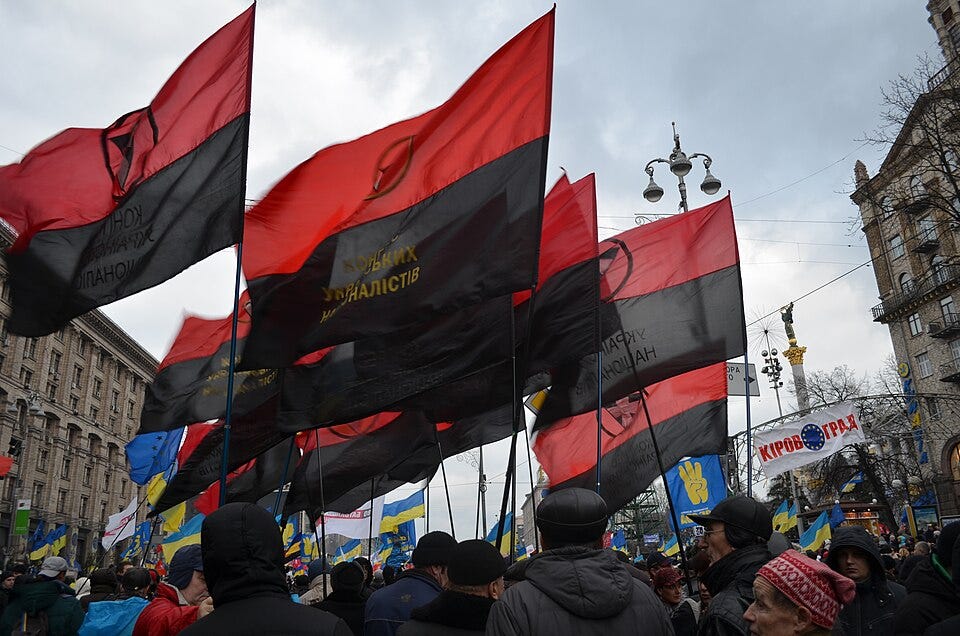
    File:Euromaidan-01-dec-2013 41. JPG
    Congress of Ukrainian Nationalists flags at a December 2013 Maidan protest

    Fast forward to now, and in response to Ukraine’s state-level glorification of the ultranationalist UPA and its lead genocidaire Andriy Melnyk, Polish President Karol Nawrocki has announced he will seek to strip Zelensky of the Order of the White Eagle, Warsaw’s highest honour, bestowed in 2023. Meanwhile, premier Donald Tusk has cursed the Ukrainian leader’s actions as “[wounding] our historical sensitivity,” and “worrying from the point of view of our relations.”

    Authorities in Kiev appear entirely unconcerned their close neighbour and proxy war ally has been so egregiously insulted. A Foreign Ministry spokesperson claimed Zelensky had not wished to cause any offence. “Our history confirms only Moscow benefits from disputes between Ukrainians and Poles,” they said. Besides, for Ukrainian soldiers, “the struggle of the UPA symbolises strictly the opposition to Moscow’s imperial policy.” As the CIA always intended, two antithetical versions of history are effectively at war in Donbass. A more devastating modern day example of divide and conquer in action one would be hard-pressed to identify [end]

    The original article

    Related

    Nazism in Ukraine

    its roots before WW2, its collaboration with Nazi Germany, its legacy in modern Ukraine, how NATO has continually supported Nazism in Ukraine, chronicle

    August 17, 2025: Declassified: CIA’s Covert Ukraine Invasion Plan – Kit Klarenberg

    April 2, 2025: It’s Official: Ukraine Conflict is British ‘Proxy War’ – Kit Klarenberg

    March 26, 2025: “Ukrainian History X”: How the State Department Secretly Funded the Azov* Regiment – Andrey Zhuravlev

    With the start of the Special Military Operation in February 2022, the nationalist Azov Regiment became one of Ukraine’s most widely recognized military formations. Like rock stars or Hollywood actors, Azov members have become sought-after guests at Western events. They have met with the Pope, organized concerts, and toured Europe, spreading their narrative that Russians are villains while they are heroes. Only in Russia is this regiment, along with similar formations, officially recognized as a terrorist organization

    February 8, 2025: ‘Aiding chaos’: USAID’s role in engineering regime change, social unrest worldwide – Maryam Qarehgozlou, Press TV

    After President Donald Trump’s executive order suspending all US foreign aid programs, the US Agency for International Development (USAID) has again come under intense scrutiny

    November 16, 2024: Leaks expose secret British military cell plotting to ‘keep Ukraine fighting’ – Kit Klarenberg, The Grayzone

    Leaked files show top UK military figures conspired to carry out the Kerch bridge bombing, covertly train “Gladio”-style stay-behind forces in Ukraine, and groom the British public for a drop in living standards caused by the proxy war against Russia

    July 28, 2024: Ultra-nationalist linked to Maidan false flag assassinated – Kit Klarenberg, The Grayzone

    The killing of ultra-nationalist Ukrainian politician Iryna Farion at the hands of a Neo-Nazi is filled with irony. Linked to the Maidan false flag massacre, Farion was instrumental in bringing fascist forces into the mainstream

    June 26, 2024: The Franco-British Plot to Dismember Russia [1917 – ?] – Kit Klarenberg

    June 6, 2023: First there were Neo-Nazis, then there were no Nazis, then there were – Patrick Lawrence, ScheerPost

    October 14, 2020: Liberalism And Fascism: Partners In Crime – Gabriel Rockhill, Counterpunch

  • [Sharing] Yemen’s ‘uninhibited’ attacks push French warship to exit Red Sea – The Cradle

    NATO forces have been unable to deter the pro-Palestine operations of the Yemeni armed forces despite heavily militarizing the Red Sea

    France’s Aquitaine-class FREMM frigate Alsace has turned tail from the Red Sea after running out of missiles and munitions repelling attacks from the Yemeni armed forces, according to its commander, Jerome Henry.

    We didn’t necessarily expect this level of threat. There was an uninhibited violence that was quite surprising and very significant. [The Yemenis] do not hesitate to use drones that fly at water level, to explode them on commercial ships, and to fire ballistic missiles

    Henry told French news outlet Le Figaro in an exclusive interview published on 11 April.

    We had to carry out at least half a dozen assistances following [Yemeni] strikes

    he added.

    The commander of the Alsace also revealed that, after a 71-day deployment, all combat equipment was depleted.

    From the Aster missile to the 7.62 machine gun of the helicopter, including the 12.7mm, 20mm, or 76mm cannon, we dealt with three ballistic missiles and half a dozen drones

    Henry adds.

    According to the French commander, the Franco–Italian Aster missile – each carrying a price tag of up to $2 million – “was pushed to its limits” by the Yemeni armed forces, as the Alsace had to use it “on targets that we did not necessarily imagine at the start.”

    Henry added that Sanaa has markedly increased its use of ballistic missiles after relying mainly on suicide drones at the start of the country’s pro-Palestine operations in the Red Sea and stressed that the French Navy has not faced such a tough battle since NATO collectively launched its 2011 war on Libya to depose the late ruler Muammar Gaddafi.

    I was there too. It wasn’t the same thing. It has been even longer since we have engaged with this level of weaponry and violence. The threat to the boat was much greater in the Red Sea

    Henry notes.

    The Alsace entered the Red Sea in late January, a few weeks after the US and the UK launched an illegal war on Yemen to protect Israeli shipping interests. The frigate was deployed as part of the EU naval operation Aspides – Greek for shield.

    With a mandate initially set for one year, Aspides saw the deployment of several EU warships and airborne early warning systems to the Red Sea, the Gulf of Aden, and surrounding waters. According to authorities in Brussels, the mission is exclusively defensive, and its forces are not taking part in US-led attacks against Yemen.

    Aspides came together after several NATO members proved hesitant or outright refused to join the floundering Operation Prosperity Guardian (OPG), which a top US commander called one of the largest battles the navy has fought since the end of World War II.

    “We favor a diplomatic solution. We know that there is no military solution,” US Special Envoy for Yemen Timothy Lenderking said earlier this month, acknowledging the futility of Washington’s military strategy against the Arab world’s poorest country.

    According to Yemeni sources who spoke with The Cradle, US officials recently offered Sanaa “an acknowledgment of its legitimacy” in exchange for its neutrality in the ongoing war on Gaza.

    [Washington] pledged to repair the damages, remove foreign forces from all occupied Yemeni lands and islands, and remove Ansarallah from the State Department’s ‘terrorism list’ – as soon as they stop their attacks in support of Gaza

    The Cradle columnist Khalil Nasrallah cited the sources as saying.

    The offer also includes “severely reducing” the role of the Saudi-appointed Presidential Leadership Council (PLC) and “accelerating the signing of a roadmap” with the Saudi-led coalition to end the nine-year war that has decimated Yemen.

    Nevertheless, Yemeni officials have maintained that their operations in the Red Sea, Gulf of Aden, and the Indian Ocean will continue until Israel stops the genocide of Palestinians in Gaza.

    From the coast of the Red Sea or from outside it, we can achieve the goals we want in defense of our country and support of Palestine … We still have many military surprises, and there are military operations that we are keeping secret as part of a specific media strategy

    Mohammad Ali al-Houthi, a senior member of Yemen’s Supreme Political Council, announced on 3 April [end]

    The original article

    Related

    Operation Epstein Files

    once more, the US and Israel attack Iran, chronicle

    April 9, 2026: Vatican official threatened by Pentagon attended bishop’s installation – Antonio Fins, Palm Beach Post

    Cardinal Christophe Pierre was told American-born Pope Leo XIV had ‘better take’ the U.S. side in military matters, a news report stated

    April 6, 2026: Trump Says US Sent ‘a Lot of Guns’ to Protesters in Iran – Dave DeCamp, Antiwar.com

    The president also said that he believes the Kurds took a lot of the weapons

    April 1, 2026: “Casualty Cover-Up”: The Pentagon Is Hiding U.S. Losses Under Trump in the Middle East – Nick Turse, The Intercept

    Almost 750 U.S. troops have been wounded or killed in the Middle East since October 2023, an analysis by The Intercept has found. But the Pentagon won’t acknowledge it

    March 16, 2026: Just Get Out! Now! – Ron Paul

    March 15, 2026: Israel is running critically low on interceptors, US officials say – Shelby Talcott, Semafor

    March 7, 2026: Blinded giant: How Iran crippled America’s multi-billion dollar THAAD network in days – Ivan Kesic, Press TV

    In the first week of the US-Israeli aggression on Iran, the Islamic Revolution Guards Corps (IRGC) conducted a series of precision strikes that systematically degraded the much-hyped US integrated air and missile defense architecture across the region

    March 6, 2026: STOP THE IRAN WAR! – Eisenhower Media Network

    Eisenhower Media Network is an organization of expert former military, intelligence, and civilian national security officials who have an independent, alternative story to tell

    March 6, 2026: « The operation failed in the first hours»: The Iranians trapped the US military – Arguments & Facts

    Story: Escalation of the conflict between Israel, the US, and Iran in 2026

    February 15, 2026: Rubio gives green light to new era of US-European colonialism – Roger McKenzie, Morning Star

    January 29, 2026: Manufacturing martyrdom: The west’s cynical use of Iranian protest figures – Robert Inlakesh, The Cradle

    The US-funded ecosystem of Iranian ‘rights groups,’ Israeli operatives, and monarchist activists has become a revolving door of unverifiable statistics and atrocity propaganda

    January 12, 2026: Western Media Whitewashes Deadly Riots in Iran – Max Blumenthal & Wyatt Reed, Internationalist 360°

    As deadly riots burn Iranian cities, Western media ignores the shocking wave of violence, turning instead to US government-funded NGOs for data. The one-sided portrayal has helped push Trump to the brink of authorizing renewed US attacks

    January 3, 2026: Make Israel great again

    July 9, 2025: Israel is the Middle Eastern boil of Western imperialism

    the novelty is that the corrupt West is showing signs of sepsis

    July 8, 2025: Imperial Hypocrisy About “Terrorism” Hits Its Most Absurd Point Yet – Caitlin Johnstone

    July 2, 2025: Sudden acceleration of the Western decline

    the failure of the infamous Israeli attack against Iran

    June 30, 2025: 以色列上空的煙 Fireworks over Israel

    英之子樂隊 innokids

    June 13, 2025: Israel attacks Iran

    as thanks to the West, the rogue State gets away with its genocide in Gaza

    January 16, 2025: ‘I Felt Like A Nazi’: Zionists Admit Genocide – Kit Klarenberg

  • [Sharing] Vatican official threatened by Pentagon attended bishop’s installation – Antonio Fins, Palm Beach Post

    Cardinal Christophe Pierre was told American-born Pope Leo XIV had ‘better take’ the U.S. side in military matters, a news report stated

    The Vatican official who reportedly received a threat from the Trump administration against Pope Leo XIV spoke at the February installation ceremony for the new bishop of the Diocese of Palm Beach.

    Cardinal Christophe Pierre, who served as the Holy See’s de facto ambassador to the United States, was the pontiff’s representative at the Mass welcoming Manuel de Jesús Rodríguez as the sixth bishop of the nearly 42-year-old diocese.

    In his remarks at the Cathedral of St. Ignatius Loyola in Palm Beach Gardens on Feb. 24, Pierre noted the diocese’s diversity of peoples and cultures, but its unity in steadfast devotion to the faith’s core beliefs.

    It is a church called to proclaim the gospel in a context shaped by mobility, diversity, and genuine human need

    Pierre said of the diocese

    In such a setting, the bishop is invited, not only to teach and govern, but to accompany, helping the faithful, recognize how Christ is already at work in their lives

    View |24 Photos

    What do news reports say of cardinal’s meeting at the Pentagon?

    Pierre retired from the post on March 7 and was replaced by Archbishop Gabriele Giordano Caccia. But Pierre, who was in the post for a decade, is now in the center of yet another potential international diplomatic firestorm for President Donald Trump.

    On April 6, news agencies reported that a top Pentagon civilian official — Elbridge Colby, the undersecretary of war for policy — attempted to bully Pierre and the Vatican to support U.S. military objectives. The story was first reported by the New York-based media company The Free Press, which was founded by current CBS News chief Bari Weiss.

    The media site’s report said Colby and the other U.S. officials in the closed-door meeting delivered a bitter lecture to Pierre, saying the Vatican had been too hostile to Trump administration policies.

    Pierre was told the American-born pontiff had “better take” the U.S. side, the Free Press story stated. To punctuate their demand, the news report said, Colby and others raised the Avignon papacy, a period in the 1300s when seven popes were under control of the French crown.

    Regardless of whether the account of the meeting is as The Free Press reported, the publisher of a major Catholic news publication said a meeting between a high-ranking Pentagon official and a high-ranking Vatican diplomat raises questions.

    It would be unusual, I think, for any diplomat to meet with military officials, as opposed to more diplomatic personnel

    said Joe Ferullo of The National Catholic Reporter

    But especially for a representative of the Vatican, which obviously has no real army, no military weapons, no air force, etc. The Vatican is the smallest ‘state’ in the world. It is not a military power. So it’s unusual

    Pentagon, Vatican confirmed meeting. But what was said?

    The Rev. Thomas J. Reese, senior analyst at the Religion News Service, says it appears the Pentagon requested the meeting with Pierre.

    Most embassies have military attaches who meet with people in the Pentagon all the time

    said Reese

    The Vatican nunciature does not have a military attaché and would normally deal with the State Department, but if the Pentagon requests a meeting, they would respond. That is what appears to have happened

    A story on April 9 by the Religion News Service included a statement by the Vatican confirming the meeting took place on Jan. 22. The Vatican did not comment on specifics of the talk.

    The Pentagon also issued a prepared statement that said the conversation was “respectful and reasonable” in denying The Free Press report

    The Free Press’s characterization of the meeting is highly exaggerated and distorted

    the statement said

    The meeting between Pentagon and Vatican officials was a respectful and reasonable discussion. We have nothing but the highest regard and welcome continued dialogue with the Holy See

    Bryan Froehle, a professor of theology at Palm Beach Atlantic University in West Palm Beach, said the reported threat and discussion that Pope Leo XIV might not visit the U.S. in retaliation “is to profoundly misunderstand” the Gospels and their institutional role by comparing the Catholic Church, a pontiff or any church leader “to a power player” on the world political stage.

    None of this is the point, however

    Froehle wrote in an email

    Empires, military powers, and narcissistic leaders have come and gone throughout human history, from Caesar Augustus to Napoleon and beyond. The Church has seen them all buried and gone

    Froehle suggested people read the Gospel of Matthew, specifically verse 28:20, that instructs obedience to Jesus’ teachings.

    In other words, to contrast Pope Leo’s words to those of U.S. political leaders or any political leader anywhere is not the point. This is not power politics

    he added

    This is the Gospel. The key is to for Pope Leo or any church leader to be consistent with the words of Jesus, the Prince of Peace

    War, immigration drives friction between U.S. president, U.S.-born pope

    The meeting early in the year took place before the Feb. 28 war that Trump launched against Iran, a conflict that has further frayed relations between Washington and the Vatican.

    In recent days, Trump issued a profanity-laden post on Easter morning. That missive followed by another social-media post on April 7 threatening to annihilate and “entire civilization,” which drew a rebuke from the pontiff who called the language “truly unacceptable.”

    Even before the war, Pope Leo and the president were at sharp odds over the second Trump administration’s nationwide effort to remove immigrants in the U.S. without documentation.

    The pope had also given the green light to the U.S. Conference of Catholic Bishops to denounce the administration’s treatment of people seeking refuge, asylum and a better life in America

    Archbishop Thomas Wenski of Miami has been among the most outspoken Catholic prelates.

    Wenski, who grew up in Palm Beach County, presided at the Feb. 24 Mass welcoming Rodríguez to Palm Beach County and the Treasure Coast. The archbishop criticized secular relativism and lamented that though “globalization made us all neighbors, it has not made us brothers and sisters” during his homily.

    The globalization of indifference increasingly closes our hearts to the other, the stranger, the immigrant, all seen as dangers, and the weak and vulnerable as inconvenient nuisances

    said Wenski.

    What did Cardinal Pierre say at mass for new diocese Bishop Rodríguez

    Pierre’s remarks at the ordination and installation ceremony were brief.

    He lightheartedly commented on the new bishop’s height — he stands 6 feet 7 inches — and noted Rodriguez’s roots back to the Diocese of Brooklyn. He lauded outgoing Bishop Gerald Barbarito, who Rodríguez replaced, saying “steady encouragement have helped shape a church that seeks to live the truth in love.”

    Pierre said Rodríguez arrived well-prepared for his new role after years of parish life that cultivated within the Dominican Republic-born bishop “a pastor’s hand, and a clear love for the Gospel.”

    Pierre also stressed unity of purpose and faith as he concluded his talk.

    Pope Leo XIV reminds bishops that the gift they receive is always for service

    he said

    As the Holy Father often expresses it, ‘In the one, we are one’ — a unity that does not erase differences but gathers them in Christ

    [end]

    The original article

    Related

    Operation Epstein Files

    once more, the US and Israel attack Iran, chronicle

    April 6, 2026: Trump Says US Sent ‘a Lot of Guns’ to Protesters in Iran – Dave DeCamp, Antiwar.com

    The president also said that he believes the Kurds took a lot of the weapons

    April 1, 2026: “Casualty Cover-Up”: The Pentagon Is Hiding U.S. Losses Under Trump in the Middle East – Nick Turse, The Intercept

    Almost 750 U.S. troops have been wounded or killed in the Middle East since October 2023, an analysis by The Intercept has found. But the Pentagon won’t acknowledge it

    March 16, 2026: Just Get Out! Now! – Ron Paul

    March 15, 2026: Israel is running critically low on interceptors, US officials say – Shelby Talcott, Semafor

    March 7, 2026: Blinded giant: How Iran crippled America’s multi-billion dollar THAAD network in days – Ivan Kesic, Press TV

    In the first week of the US-Israeli aggression on Iran, the Islamic Revolution Guards Corps (IRGC) conducted a series of precision strikes that systematically degraded the much-hyped US integrated air and missile defense architecture across the region

    March 6, 2026: STOP THE IRAN WAR! – Eisenhower Media Network

    Eisenhower Media Network is an organization of expert former military, intelligence, and civilian national security officials who have an independent, alternative story to tell

    March 6, 2026: « The operation failed in the first hours»: The Iranians trapped the US military – Arguments & Facts

    Story: Escalation of the conflict between Israel, the US, and Iran in 2026

    February 15, 2026: Rubio gives green light to new era of US-European colonialism – Roger McKenzie, Morning Star

    January 29, 2026: Manufacturing martyrdom: The west’s cynical use of Iranian protest figures – Robert Inlakesh, The Cradle

    The US-funded ecosystem of Iranian ‘rights groups,’ Israeli operatives, and monarchist activists has become a revolving door of unverifiable statistics and atrocity propaganda

    January 12, 2026: Western Media Whitewashes Deadly Riots in Iran – Max Blumenthal & Wyatt Reed, Internationalist 360°

    As deadly riots burn Iranian cities, Western media ignores the shocking wave of violence, turning instead to US government-funded NGOs for data. The one-sided portrayal has helped push Trump to the brink of authorizing renewed US attacks

    January 3, 2026: Make Israel great again

    July 9, 2025: Israel is the Middle Eastern boil of Western imperialism

    the novelty is that the corrupt West is showing signs of sepsis

    July 8, 2025: Imperial Hypocrisy About “Terrorism” Hits Its Most Absurd Point Yet – Caitlin Johnstone

    July 2, 2025: Sudden acceleration of the Western decline

    the failure of the infamous Israeli attack against Iran

    June 30, 2025: 以色列上空的煙 Fireworks over Israel

    英之子樂隊 innokids

    June 13, 2025: Israel attacks Iran

    as thanks to the West, the rogue State gets away with its genocide in Gaza

    January 16, 2025: ‘I Felt Like A Nazi’: Zionists Admit Genocide – Kit Klarenberg

  • [Sharing] Trump Says US Sent ‘a Lot of Guns’ to Protesters in Iran – Dave DeCamp, Antiwar.com

    The president also said that he believes the Kurds took a lot of the weapons

    President Trump has said that the US sent “a lot of guns” to protesters inside Iran during demonstrations and clashes that took place in January, though he believes the weapons may have been “kept” by Kurdish groups.

    “President Trump told me the United States sent guns to the Iranian protesters,” Trey Yingst, a reporter for Fox News, said on Sunday. “He told me, ‘We sent them a lot of guns. We sent them to the Kurds.’ And the president says he thinks the Kurds kept them. He went on to say. ‘We sent guns to the protesters, a lot of them.’”

    Trump told Yingst that he sent the weapons after Iranian forces killed demonstrators, but at the height of the unrest in Iran, Iranian authorities said they seized US-made weapons and ammunition from foreign-backed “militants” and frequently said their forces were fighting against US and Israeli-backed “terrorist groups.”

    Trump repeated his claim that Iranian forces killed 45,000 protesters, a number that lacks any evidence or credibility. The Iranian government has acknowledged that more than 3,000 people, including over 200 Iranian security personnel, were killed, while the HRANA, a US-based and US-funded NGO, has said more than 7,000 were killed and says it is investigating more reported deaths, but nowhere near the number Trump claims.

    On Monday [April 6, 2026], Trump told reporters that the US sent guns into the country and that a “certain group of people” kept them without mentioning the Kurds by name.

    “We sent guns, a lot of guns. They were supposed to go to the people, so they could fight back against these thugs. You know what happened? The people that they sent them to kept them,” he said. “Because they said, ‘What a beautiful gun, I think I’ll keep it.’ So I’m very upset with a certain group of people, and they’re gonna pay a big price for that.”

    In response to Trump’s initial comments, several Kurdish groups denied that they received guns from the US during the protests. Amid the unrest in January, Reuters reported that Kurdish fighters had been entering Iran through Iraqi Kurdistan to fight Iranian security forces.

    The Kurdistan Freedom Party, or PAK, a Kurdish Iranian separatist group mainly based in Iraq, was announcing operations against Iran’s Islamic Revolutionary Guard Corps (IRGC), and the IRGC had also reported clashes with armed Kurds. The US also reportedly smuggled Starlink terminals into Iran through Iraqi Kurdistan.

    The US and Israel were looking to back armed Kurdish fighters on the ground at the start of the war they launched on February 28, but according to Israeli media, the potential offensive fell apart after a series of media leaks and the Kurdish group’s mistrust of the US-Israeli plan [end]

    The original article

    Related

    Operation Epstein Files

    once more, the US and Israel attack Iran, chronicle

    April 1, 2026: “Casualty Cover-Up”: The Pentagon Is Hiding U.S. Losses Under Trump in the Middle East – Nick Turse, The Intercept

    Almost 750 U.S. troops have been wounded or killed in the Middle East since October 2023, an analysis by The Intercept has found. But the Pentagon won’t acknowledge it

    March 16, 2026: Just Get Out! Now! – Ron Paul

    March 15, 2026: Israel is running critically low on interceptors, US officials say – Shelby Talcott, Semafor

    March 7, 2026: Blinded giant: How Iran crippled America’s multi-billion dollar THAAD network in days – Ivan Kesic, Press TV

    In the first week of the US-Israeli aggression on Iran, the Islamic Revolution Guards Corps (IRGC) conducted a series of precision strikes that systematically degraded the much-hyped US integrated air and missile defense architecture across the region

    March 6, 2026: STOP THE IRAN WAR! – Eisenhower Media Network

    Eisenhower Media Network is an organization of expert former military, intelligence, and civilian national security officials who have an independent, alternative story to tell

    March 6, 2026: « The operation failed in the first hours»: The Iranians trapped the US military – Arguments & Facts

    Story: Escalation of the conflict between Israel, the US, and Iran in 2026

    February 15, 2026: Rubio gives green light to new era of US-European colonialism – Roger McKenzie, Morning Star

    January 29, 2026: Manufacturing martyrdom: The west’s cynical use of Iranian protest figures – Robert Inlakesh, The Cradle

    The US-funded ecosystem of Iranian ‘rights groups,’ Israeli operatives, and monarchist activists has become a revolving door of unverifiable statistics and atrocity propaganda

    January 12, 2026: Western Media Whitewashes Deadly Riots in Iran – Max Blumenthal & Wyatt Reed, Internationalist 360°

    As deadly riots burn Iranian cities, Western media ignores the shocking wave of violence, turning instead to US government-funded NGOs for data. The one-sided portrayal has helped push Trump to the brink of authorizing renewed US attacks

    January 3, 2026: Make Israel great again

    July 9, 2025: Israel is the Middle Eastern boil of Western imperialism

    the novelty is that the corrupt West is showing signs of sepsis

    July 8, 2025: Imperial Hypocrisy About “Terrorism” Hits Its Most Absurd Point Yet – Caitlin Johnstone

    July 2, 2025: Sudden acceleration of the Western decline

    the failure of the infamous Israeli attack against Iran

    June 30, 2025: 以色列上空的煙 Fireworks over Israel

    英之子樂隊 innokids

    June 13, 2025: Israel attacks Iran

    as thanks to the West, the rogue State gets away with its genocide in Gaza

    January 16, 2025: ‘I Felt Like A Nazi’: Zionists Admit Genocide – Kit Klarenberg

  • [Sharing] “Casualty Cover-Up”: The Pentagon Is Hiding U.S. Losses Under Trump in the Middle East – Nick Turse, The Intercept

    Almost 750 U.S. troops have been wounded or killed in the Middle East since October 2023, an analysis by The Intercept has found. But the Pentagon won’t acknowledge it

    U.S. Central Command, or CENTCOM, which oversees military operations in the Middle East, appears to be engaged in what a defense official called a “casualty cover-up,” offering The Intercept low-ball and outdated figures and failing to provide clarifications on military deaths and injuries.

    At least 15 U.S. troops were wounded Friday [March 27, 2026] in an Iranian attack on a Saudi air base that hosts American troops, according to two government officials who spoke with The Intercept. Hundreds of U.S. personnel have been killed or injured in the region since the U.S. launched a war on Iran just over a month ago.

    President Donald Trump — who wore a blue suit, red tie, and a ball cap to the dignified transfer of the first Americans killed in the war — said casualties were inevitable. “When you have conflicts like this, you always have death,” he said afterward. “I met the parents and they were unbelievable people. They were unbelievable people, but they all had one thing in common. They said to me, one thing, every single one: Finish the job, sir. Please finish the job.”

    On Tuesday [March 31, 2026], Trump teased that he would wind down the war with Iran in as little as two weeks despite not achieving many of his stated aims, such as “freedom for the people” of Iran, “tak[ing] the oil in Iran,” and forcing Iran’s “unconditional surrender.” At one point, the president even declared that the war would last “as long as necessary to achieve our objective of PEACE THROUGHOUT THE MIDDLE EAST AND, INDEED, THE WORLD!”

    “When you have conflicts like this, you always have death”

    CENTCOM has sent outdated statements on casualty numbers, meanwhile, resulting in undercounts, including a statement sent Monday [March 30, 2026] from spokesperson Capt. Tim Hawkins noting that “Since the start of Operation Epic Fury, approximately 303 U.S. service members have been wounded.” The comment was three days old and excluded at least 15 wounded in the Friday attack on Prince Sultan Air Base in Saudi Arabia. The command did not reply to repeated requests for updated figures.

    CENTCOM also would not provide a count of troops who have died in the region since the start of the war. An Intercept analysis puts the number at no less than 15.

    “This is, quite obviously, a subject that [War Secretary Pete] Hegseth and the White House want to keep under major wraps,” said the defense official who spoke on the condition of anonymity in order to speak frankly.

    In 2024, during the Biden administration, the Pentagon provided The Intercept with detailed chronologies of attacks on U.S. bases in the Middle East that listed the specific outpost that was attacked, the type of strike, and whether — or how many — casualties resulted, along with an aggregate count of attacks by country.

    The Trump administration’s numbers, by comparison, lack detail and clarity. The current CENTCOM casualty figures do not appear to include more than 200 sailors treated for smoke inhalation or otherwise injured due to a fire that raged aboard the USS Gerald R. Ford before it limped off to Souda Bay, Greece, for repairs. CENTCOM did not reply to close to a dozen requests for clarification on the casualty count and related information sent this week.

    “CENTCOM and the White House should be providing accurate and timely information on the costs and casualties involved in this war. After all, it is American taxpayers who are funding it and U.S. economic prosperity and economic wellbeing that is being undermined by it,” Jennifer Kavanagh, the director of military analysis at Defense Priorities, a think tank that advocates for measured U.S. foreign policy, told The Intercept.

    “CENTCOM and the White House should be providing accurate and timely information on the costs and casualties involved in this war”

    As the U.S. has relentlessly bombed Iran, that country has responded with attacks on U.S. bases across the Middle East using ballistic missiles and drones. CENTCOM refuses to even offer a simple count of U.S. bases that have been attacked during the war. “We have nothing for you,” a spokesperson told The Intercept. An analysis by The Intercept, however, finds that bases in Bahrain, Iraq, Jordan, Kuwait, Qatar, Saudi Arabia, Syria, and the United Arab Emirates have been targeted.  

    On Tuesday, Hegseth said that Iran retained the ability to retaliate for U.S. strikes but that their attacks would be ineffectual. “Yes, they will still shoot some missiles,” he said, “but we will shoot them down.” On Wednesday morning [April 1, 2026], officials in Bahrain, Kuwait, and Qatar all reported missile or drone attacks from Iran.

    Iranian strikes have forced U.S. troops to retreat from their bases to hotels and office buildings across the region, according to the two government officials. The defense official was livid about the Pentagon’s failure to adequately harden the bases and ridiculed Hegseth’s Tuesday prayer at a Pentagon press conference. “May god watch over all of them, each day and each night. May his almighty and eternal arms of providence stretch over them and protect them,” said Hegseth.

    “Why didn’t Hegseth protect them?” the defense official asked. “Anyone with a brain knew these attacks were coming.”

    Pentagon spokesperson Kingsley Wilson did not respond to multiple requests for comment.

    Retired Gen. Joseph Votel, a former head of Central Command, recalled that U.S. troops in the region have faced drone attacks for at least a decade. “At that time we identified a need to protect against this threat, and it has taken far too long for the DoD to respond and provide adequate protection for our deployed troops,” he told The Intercept, referencing drone attacks during the campaign against ISIS in the spring of 2016. “It was a known expectation that, if attacked, Iran would retaliate against our bases, installations, and forces, and I agree that we should have anticipated and been prepared for this inevitability.”

    Kavanagh, who previously called attention to the vulnerability of U.S. outposts in the Middle East, echoed Votel. “It has been clear for years that the rapid proliferation of drones and cheap missiles would put U.S. bases and U.S. early detection radars in the region at risk, yet the Pentagon did little to protect them,” she said. “The failure to invest in hardened infrastructure was a choice. Congress should see this failure as evidence that simply giving the Pentagon more money is not a path to national security.”  

    “We would be better off if bases across the region were closed for good,” she added.

    “We would be better off if bases across the region were closed for good”

    In public statements, Iran’s foreign minister Seyed Abbas Araghchi called out the U.S. for using civilians in nearby Arab monarchies of the Gulf Cooperative Council states as human shields. “U.S. soldiers fled military bases in GCC to hide in hotels and offices,” he wrote on X last week. “Hotels in U.S. deny bookings to officers who may endanger customers. GCC hotels should do same.”

    Votel also expressed concern about troops using hotels and offices, noting it “could turn normal civilian infrastructure into military targets for the regime.”

    Last month, an Iranian drone strike on a hotel in Bahrain wounded two War Department employees, according to a State Department cable reviewed by the Washington Post. CENTCOM did not respond to a request to confirm to The Intercept that those injuries stem from a March 2 attack on the Crowne Plaza hotel, a luxury property in Manama, Bahrain’s capital, but one official indicated this was likely.

    Votel said that a failure to provide troops with adequate protection may handcuff U.S. operations. “I think this really complicates command and control and could affect unit cohesion and effectiveness,” he told The Intercept, referring to the transfer of troops to hotels and office buildings. “That said, we may not have many options if we cannot protect the military bases where they would normally be bedded down.” 

    At least 15 U.S. troops in the Middle East have died since the beginning of the Iran War, including six personnel who were killed in a drone strike on Port Shuaiba, Kuwait, and a soldier who died due to an “enemy attack on March 1, 2026, at Prince Sultan Air Base, Saudi Arabia.” More than 520 U.S. personnel have also been injured, including those who suffered smoke inhalation on the Ford.

    Prior to the current war with Iran, U.S. bases in the Middle East were increasingly targeted by a mix of one-way attack drones, rockets, mortars, and close-range ballistic missiles after Israel’s war in Gaza began in October 2023, most of the attacks occurring in the year following the outset of the conflict. At least 175 troops were killed or wounded in those attacks, including three service members who died in a January 2024 strike on Tower 22, a facility in Jordan. Other attacks targeted al-Asad Air Base, the Baghdad Diplomatic Support Center, Camp Victory, Union III, Erbil Air Base, and Bashur Air Base in Iraq and Al-Tanf garrison, Deir ez-Zor Air Base, Mission Support Site Euphrates, Mission Support Site Green Village, Patrol Base Shaddadi, Rumalyn Landing Zone, Tell Baydar, and Tal Tamir in Syria.

    The casualty statistics do not include contractors, most of them foreigners who suffered non-combat injuries. Official U.S. statistics show that there were almost 12,900 cases of injuries to contractors in the CENTCOM area of operations during 2024 alone. More than 3,700 were the most serious non-fatal injuries, including traumatic brain injuries, requiring more than seven days away from work. Eighteen contractors were also killed, all of them in Iraq. The numbers are likely significant undercounts, but if even the fractional number of known contractor injuries is added to the tally, the casualty count for Americans and those on U.S. bases may top 13,600 [end]

    The original article

    Related

    Operation Epstein Files

    once more, the US and Israel attack Iran, chronicle

    March 16, 2026: Just Get Out! Now! – Ron Paul

    March 15, 2026: Israel is running critically low on interceptors, US officials say – Shelby Talcott, Semafor

    March 7, 2026: Blinded giant: How Iran crippled America’s multi-billion dollar THAAD network in days – Ivan Kesic, Press TV

    In the first week of the US-Israeli aggression on Iran, the Islamic Revolution Guards Corps (IRGC) conducted a series of precision strikes that systematically degraded the much-hyped US integrated air and missile defense architecture across the region

    March 6, 2026: STOP THE IRAN WAR! – Eisenhower Media Network

    Eisenhower Media Network is an organization of expert former military, intelligence, and civilian national security officials who have an independent, alternative story to tell

    March 6, 2026: « The operation failed in the first hours»: The Iranians trapped the US military – Arguments & Facts

    Story: Escalation of the conflict between Israel, the US, and Iran in 2026

    February 15, 2026: Rubio gives green light to new era of US-European colonialism – Roger McKenzie, Morning Star

    January 29, 2026: Manufacturing martyrdom: The west’s cynical use of Iranian protest figures – Robert Inlakesh, The Cradle

    The US-funded ecosystem of Iranian ‘rights groups,’ Israeli operatives, and monarchist activists has become a revolving door of unverifiable statistics and atrocity propaganda

    January 12, 2026: Western Media Whitewashes Deadly Riots in Iran – Max Blumenthal & Wyatt Reed, Internationalist 360°

    As deadly riots burn Iranian cities, Western media ignores the shocking wave of violence, turning instead to US government-funded NGOs for data. The one-sided portrayal has helped push Trump to the brink of authorizing renewed US attacks

    January 3, 2026: Make Israel great again

    July 9, 2025: Israel is the Middle Eastern boil of Western imperialism

    the novelty is that the corrupt West is showing signs of sepsis

    July 8, 2025: Imperial Hypocrisy About “Terrorism” Hits Its Most Absurd Point Yet – Caitlin Johnstone

    July 2, 2025: Sudden acceleration of the Western decline

    the failure of the infamous Israeli attack against Iran

    June 30, 2025: 以色列上空的煙 Fireworks over Israel

    英之子樂隊 innokids

    June 13, 2025: Israel attacks Iran

    as thanks to the West, the rogue State gets away with its genocide in Gaza

    January 16, 2025: ‘I Felt Like A Nazi’: Zionists Admit Genocide – Kit Klarenberg

  • Flash: March 17, 2026, operation Epstein Files, day 18

    Donald Trump calls on al Qaeda jihadists for rescue against the Hezbollah and Iran

    Around 2:30 am, local time, the Iraqi resistance achieves a new hit against the US embassy in Baghdad

    Back in Israel after a mission over Iraq, one US KC-135 tanker aircraft seems unable to land at Ben Gurion airport

    The plane crashes north of the airport at 3:58 am, local time, when its transponder is cut off. Gag order: the Israeli censorship about the incident is absolute

    In Tehran, an Israeli attack kills Ali Larijani, Secretary of the Supreme National Security Council.

    In the US, Special Operation Forces veteran Joe Kent resigns from his position as Director of the National Counterterrorism Center

    I cannot in good conscience support the ongoing war in Iran. Iran posed no imminent threat to our nation, and it is clear that we started this war due to pressure from Israel and its powerful American lobby

    That was painful for a real counter-terrorism professional to work for a terrorist government, ally in the Middle East of terrorist entities like Israel and al Qaeda.

    According to Reuters, the US is encouraging its al Qaeda ally in the West-friendly jihadist emirate of Syria to consider sending forces in Lebanon, against Hezbollah

    The French, especially, still remember the misfortunes of the war in Syria.

    At 7:00 pm, Tehran time, 5:30 pm in Tel Aviv, the West strikes Bushehr nuclear power plant. As tit for tat, four hours later, Iran targets Negev Nuclear Research Center in Dimona.

    in Operation Epstein Files

    once more, the US and Israel attack Iran, chronicle

    Related

    March 16, 2026: Just Get Out! Now! – Ron Paul

    March 15, 2026: Israel is running critically low on interceptors, US officials say – Shelby Talcott, Semafor

    March 7, 2026: Blinded giant: How Iran crippled America’s multi-billion dollar THAAD network in days – Ivan Kesic, Press TV

    In the first week of the US-Israeli aggression on Iran, the Islamic Revolution Guards Corps (IRGC) conducted a series of precision strikes that systematically degraded the much-hyped US integrated air and missile defense architecture across the region

    March 6, 2026: STOP THE IRAN WAR! – Eisenhower Media Network

    Eisenhower Media Network is an organization of expert former military, intelligence, and civilian national security officials who have an independent, alternative story to tell

    March 6, 2026: « The operation failed in the first hours»: The Iranians trapped the US military – Arguments & Facts

    Story: Escalation of the conflict between Israel, the US, and Iran in 2026

    February 15, 2026: Rubio gives green light to new era of US-European colonialism – Roger McKenzie, Morning Star

    January 29, 2026: Manufacturing martyrdom: The west’s cynical use of Iranian protest figures – Robert Inlakesh, The Cradle

    The US-funded ecosystem of Iranian ‘rights groups,’ Israeli operatives, and monarchist activists has become a revolving door of unverifiable statistics and atrocity propaganda

    January 12, 2026: Western Media Whitewashes Deadly Riots in Iran – Max Blumenthal & Wyatt Reed, Internationalist 360°

    As deadly riots burn Iranian cities, Western media ignores the shocking wave of violence, turning instead to US government-funded NGOs for data. The one-sided portrayal has helped push Trump to the brink of authorizing renewed US attacks

    January 3, 2026: Make Israel great again

    July 9, 2025: Israel is the Middle Eastern boil of Western imperialism

    the novelty is that the corrupt West is showing signs of sepsis

    July 8, 2025: Imperial Hypocrisy About “Terrorism” Hits Its Most Absurd Point Yet – Caitlin Johnstone

    July 2, 2025: Sudden acceleration of the Western decline

    the failure of the infamous Israeli attack against Iran

    June 30, 2025: 以色列上空的煙 Fireworks over Israel

    英之子樂隊 innokids

    June 13, 2025: Israel attacks Iran

    as thanks to the West, the rogue State gets away with its genocide in Gaza

    January 16, 2025: ‘I Felt Like A Nazi’: Zionists Admit Genocide – Kit Klarenberg

  • [Sharing] Just Get Out! Now! – Ron Paul

    As is becoming clearer from President Trump’s own statements and those of his staff, along with press reporting, the US has launched a major [war] without the input of the experts we pay to advise the President on such matters. The State Department, Pentagon, National Security Council Staff, Defense Intelligence Agency, and NSA were simply bypassed because, as White House Spokesperson Karoline Leavitt said, President Trump “had a feeling” Iran would attack.

    The President’s real estate developer son-in-law and friend reinforced that “feeling” when they returned from the second round of talks with the Iranian foreign minister and his team. However, as the news outlet Responsible Statecraft (RS) reported over the weekend, both son-in-law Jared Kushner and friend Steve Witkoff appear to have mis-represented those talks in a way that helped push President Trump toward war. No State Department officials were on hand to ensure the reporting was accurate.

    Also, arms control experts at home, according to the RS report, believe that “the duo appeared to have fatally misunderstood a series of basic technical and historical matters” regarding Iran’s nuclear program leading to inaccurate information conveyed to the President.

    Congress was completely out of the picture – seemingly uninterested in performing its Constitutional duty – and no case was made to the American people that they must sacrifice and die once again for a war in the Middle East.

    Trump’s repeated promises to not start new wars, especially in the Middle East, have turned out to be empty, and Republicans are set for a crippling defeat in the upcoming midterm elections.

    Iran had been warning for months – since the last US/Israeli surprise attack in June – that if they were attacked again they would not hold back on US bases in the region and that they would close the Straits of Hormuz. Trump and Netanyahu attacked anyway, and Iran has done what it said it would do.

    Now the Strait of Hormuz is closed, oil is about to go out of control, and the global economy – along with the US dollar – seems about to implode.

    On March 6th, President Trump refused a UK offer of help, saying we don’t need help when we’ve already won the war. Five days later, at a rally in Kentucky, President Trump repeated that “We’ve won the Iran war!”

    It was his “Mission Accomplished” moment, because this weekend, just days after declaring victory against an “obliterated” Iran, Trump began begging other countries to send ships to help the US open the Strait of Hormuz.

    Thus far every country has declined, understanding that such a mission has little chance of success.

    Tragically, the war thus far has claimed at least 14 servicemembers. It is likely the toll is far worse than they are telling us. Every US military facility in the region is either damaged or destroyed. Billions of dollars of radar and other equipment are destroyed. Our allies in the region, because they allowed their territory to be used to attack Iran, have also seen massive retaliatory destruction.

    This is surely one of the worst military disasters in US history. There are no military options available beyond the unthinkable: the use of nuclear weapons.

    The only viable option that remains is one that was often urged in the Vietnam War: Just get out. Now! No return to US bases, no security guarantees to Gulf States. End the US empire in the Middle East and elsewhere. If not, it’s only going to get worse [end]

    The original article

    Related

    Operation Epstein Files

    once more, the US and Israel attack Iran, chronicle

    March 15, 2026: Israel is running critically low on interceptors, US officials say – Shelby Talcott, Semafor

    March 7, 2026: Blinded giant: How Iran crippled America’s multi-billion dollar THAAD network in days – Ivan Kesic, Press TV

    In the first week of the US-Israeli aggression on Iran, the Islamic Revolution Guards Corps (IRGC) conducted a series of precision strikes that systematically degraded the much-hyped US integrated air and missile defense architecture across the region

    March 6, 2026: STOP THE IRAN WAR! – Eisenhower Media Network

    Eisenhower Media Network is an organization of expert former military, intelligence, and civilian national security officials who have an independent, alternative story to tell

    March 6, 2026: « The operation failed in the first hours»: The Iranians trapped the US military – Arguments & Facts

    Story: Escalation of the conflict between Israel, the US, and Iran in 2026

    February 15, 2026: Rubio gives green light to new era of US-European colonialism – Roger McKenzie, Morning Star

    January 29, 2026: Manufacturing martyrdom: The west’s cynical use of Iranian protest figures – Robert Inlakesh, The Cradle

    The US-funded ecosystem of Iranian ‘rights groups,’ Israeli operatives, and monarchist activists has become a revolving door of unverifiable statistics and atrocity propaganda

    January 12, 2026: Western Media Whitewashes Deadly Riots in Iran – Max Blumenthal & Wyatt Reed, Internationalist 360°

    As deadly riots burn Iranian cities, Western media ignores the shocking wave of violence, turning instead to US government-funded NGOs for data. The one-sided portrayal has helped push Trump to the brink of authorizing renewed US attacks

    January 3, 2026: Make Israel great again

    July 9, 2025: Israel is the Middle Eastern boil of Western imperialism

    the novelty is that the corrupt West is showing signs of sepsis

    July 8, 2025: Imperial Hypocrisy About “Terrorism” Hits Its Most Absurd Point Yet – Caitlin Johnstone

    July 2, 2025: Sudden acceleration of the Western decline

    the failure of the infamous Israeli attack against Iran

    June 30, 2025: 以色列上空的煙 Fireworks over Israel

    英之子樂隊 innokids

    June 13, 2025: Israel attacks Iran

    as thanks to the West, the rogue State gets away with its genocide in Gaza

    January 16, 2025: ‘I Felt Like A Nazi’: Zionists Admit Genocide – Kit Klarenberg

  • [Sharing] Israel is running critically low on interceptors, US officials say – Shelby Talcott, Semafor

    The Scoop

    Israel informed the US this week that it is running critically low on ballistic missile interceptors as the conflict with Iran rages on, US officials told Semafor.

    Israel had reportedly entered the current war already low on interceptors that were fired during last summer’s conflict with Iran. Israel’s long-range defense system has strained under Iran’s attacks; CNN reported that Iran was adding cluster munitions to its missiles, which may exacerbate the depletion of the stock.

    The US has been aware of Israel’s low capacity for months, one US official said: “It’s something we expected and anticipated.”

    This official emphasized to Semafor that the US is not running similarly low on interceptors of its own. That comment comes amid broader concerns about interceptor depletion from a longer military engagement in Iran leaving the US in a poor position.

    It’s also unclear whether the US might seek to sell or share any of its own interceptors with Israel, which would pose its own strain on domestic supplies. The US has included missile defense assets in past provisions of military aid to Israel.

    “We have all that we need to protect our bases and our personnel in the region and our interests,” the US official said, adding that Israel is “coming up with solutions to address” their shortage.

    Israel has other ways to defend against Iranian missiles during the war, including via fighter jets, but the interceptors are among the most effective defensive weapons against long-range fire. Its Iron Dome missile defense system is designed to repel more short-range fire.

    President Donald Trump said earlier this month that the US has a “virtually unlimited” munitions stockpile, although analysts have long said US stockpiles are lower than the military would like.

    Last June, the US fired over 150 THAAD interceptors during the 12-day war with Iran, the Center for Strategic and International Studies found — believed to be around a quarter of US inventory at the time. The US is also believed to have used around $2.4 billion worth of Patriot interceptors in the first five days of this war, according to some reports.

    In January, the Pentagon made moves to begin substantially increasing its production of the THAAD missile defense system. The US official said that the administration has plenty of THAADs and fighter jets, as well as mid-level interceptors.

    Chief Pentagon spokesman Sean Parnell told Semafor in a statement that the department “has everything it needs to execute any mission at the time and place of” Trump’s choosing.

    The White House and the Israel Defense Forces did not immediately respond to requests for comment from Semafor.

    Know More

    The State Department last week announced a sale of 12,000 “BLU-110A/B general purpose, 1,000-pound bomb bodies” to Israel. Congressional approval for the sale will not be required; the Trump administration bypassed it by citing the “emergency” that currently exists as the US and Israel fight Iran.

    Trump has said that the war could end “soon” and has recently taken to describing it as a “short-term excursion.” But Trump, Israel, and Iran are also all signaling that they’re willing to fight for as long as it takes.

    “It’ll be as long as it’s necessary,” Trump said on Friday evening when asked about how long the conflict may continue on. “They’ve been decimated. The country’s in bad shape. The whole thing is collapsing.”

    The Iranian regime’s foreign policy adviser told CNN this week that the country sees no option for diplomacy right now and maintained that it is ready for a long fight. Defense Secretary Pete Hegseth told reporters on Friday that Iran’s “entire ballistic missile production capacity” has been “functionally defeated.”

    Notable

    • Iranian cluster bombs hit several sites in Israel on Friday, though no casualties have been reported, according to The Times of Israel.
    • The Trump administration struck military targets on Kharg Island this week, though it left the key oil infrastructure that Iran relies on intact.
    • Israel is planning to expand its ground invasion in Lebanon, according to Axios [end]

    The original article

    Related

    Operation Epstein Files

    once more, the US and Israel attack Iran, chronicle

    March 7, 2026: Blinded giant: How Iran crippled America’s multi-billion dollar THAAD network in days – Ivan Kesic, Press TV

    In the first week of the US-Israeli aggression on Iran, the Islamic Revolution Guards Corps (IRGC) conducted a series of precision strikes that systematically degraded the much-hyped US integrated air and missile defense architecture across the region

    March 7, 2026: STOP THE IRAN WAR! – Eisenhower Media Network

    Eisenhower Media Network is an organization of expert former military, intelligence, and civilian national security officials who have an independent, alternative story to tell

    March 6, 2026: « The operation failed in the first hours»: The Iranians trapped the US military – Arguments & Facts

    Story: Escalation of the conflict between Israel, the US, and Iran in 2026

    February 15, 2026: Rubio gives green light to new era of US-European colonialism – Roger McKenzie, Morning Star

    January 29, 2026: Manufacturing martyrdom: The west’s cynical use of Iranian protest figures – Robert Inlakesh, The Cradle

    The US-funded ecosystem of Iranian ‘rights groups,’ Israeli operatives, and monarchist activists has become a revolving door of unverifiable statistics and atrocity propaganda

    January 12, 2026: Western Media Whitewashes Deadly Riots in Iran – Max Blumenthal & Wyatt Reed, Internationalist 360°

    As deadly riots burn Iranian cities, Western media ignores the shocking wave of violence, turning instead to US government-funded NGOs for data. The one-sided portrayal has helped push Trump to the brink of authorizing renewed US attacks

    January 3, 2026: Make Israel great again

    July 9, 2025: Israel is the Middle Eastern boil of Western imperialism

    the novelty is that the corrupt West is showing signs of sepsis

    July 8, 2025: Imperial Hypocrisy About “Terrorism” Hits Its Most Absurd Point Yet – Caitlin Johnstone

    July 2, 2025: Sudden acceleration of the Western decline

    the failure of the infamous Israeli attack against Iran

    June 30, 2025: 以色列上空的煙 Fireworks over Israel

    英之子樂隊 innokids

    June 13, 2025: Israel attacks Iran

    as thanks to the West, the rogue State gets away with its genocide in Gaza

    January 16, 2025: ‘I Felt Like A Nazi’: Zionists Admit Genocide – Kit Klarenberg

  • [Sharing] Blinded giant: How Iran crippled America’s multi-billion dollar THAAD network in days – Ivan Kesic, Press TV

    In the first week of the US-Israeli aggression on Iran, the Islamic Revolution Guards Corps (IRGC) conducted a series of precision strikes that systematically degraded the much-hyped US integrated air and missile defense architecture across the region

    The strikes destroyed or severely damaged at least two AN/TPY-2 THAAD radars, a billion-dollar early-warning radar installation in Qatar, multiple supporting sensor nodes, and critical communications infrastructure.

    Executed in a coordinated sequence of precision engagements, Iranian retaliatory operations under the banner ‘True Promise 4’ have significantly disrupted the regional defensive network and forced US commanders to urgently reassess and reconstitute capabilities that took two decades and tens of billions of dollars to deploy.

    The scale and sophistication of the Iranian operation mark a significant moment in contemporary warfare, demonstrating that even highly advanced missile defense systems, often presented as near-impenetrable shields, remain vulnerable to determined adversaries equipped with precision guidance, reliable intelligence, and an operational doctrine focused on disabling the core command, sensor, and communications nodes of defensive networks.

    As commercial satellite imagery continues to emerge from across the region, the extent of the damage is becoming increasingly difficult to conceal, revealing substantial operational setbacks that raise serious questions about the resilience of the defensive architecture underpinning American force posture from the Persian Gulf to the Korean Peninsula.

    The targeting doctrine evident in the strikes reflects years of detailed analysis and planning, with Iranian strategists identifying critical nodes and developing the capability to strike them simultaneously across a wide geographic area.

    The coordinated targeting of early-warning radars, fire-control radars, communications infrastructure, and supporting facilities demonstrates a systemic approach to warfare rarely executed at such scale, focusing on neutralizing the command-and-control backbone of the defensive network rather than peripheral elements.

    For US commanders currently operating in the region, the immediate challenge lies in sustaining operations with degraded detection and response capabilities, safeguarding remaining strategic assets, and reassuring regional allies whose security frameworks depend heavily on the integrity of these systems.

    How these challenges are addressed will shape not only the trajectory of the current war but also the future configuration of American military posture in a region where the balance of power may have shifted significantly in the opening days of March 2026

    Heart of the beast: Understanding AN/TPY-2 radar’s critical role

    The AN/TPY-2 transportable radar represents the technological centerpiece of the Terminal High Altitude Area Defense (THAAD) system. This massive X-band active electronically scanned array (AESA) radar consumes roughly two megawatts of power and is distributed across five forty-foot trailers.

    With an antenna area of 9.2 square meters and an instrumental range exceeding 2,000 kilometers in forward-based mode, the radar functions as the primary sensor of the entire THAAD battery. Without it, the launchers and their 48 interceptors are effectively rendered inoperative, deprived of the detection and tracking data required for engagement.

    Manufactured by Raytheon using gallium nitride technology, each AN/TPY-2 radar carries an estimated cost ranging from $500 million to $1 billion. Since development began in the 1990s, only about twenty units have been produced worldwide.

    The radar performs two distinct operational missions depending on configuration. In terminal mode, it provides fire-control quality tracking data directly to THAAD interceptors during the engagement phase.

    In forward-based mode, it feeds detection and tracking data into the broader ballistic missile defense architecture, cueing Aegis warships, Patriot batteries, and other integrated systems. The loss of even a single radar unit can therefore have cascading effects across multiple layers of the defensive network.

    Jordan: The first thousand-kilometer precision strike

    At Muwaffaq Salti Air Base in Jordan, located more than 800 kilometers from the nearest Iranian territory, satellite imagery captured on March 2 reveals the charred remains of an AN/TPY-2 radar that had reportedly been deployed at the base since at least mid-February.

    The imagery shows debris scattered across the deployment site, surrounding what appears to have been a fully assembled radar system. Two large impact craters, each roughly thirteen feet in diameter, are visible in the sand nearby, suggesting that multiple precision munitions were employed to ensure the destruction of the system.

    Prior to the escalation of hostilities, the base had served as a major hub for American air operations, with more than fifty fighter aircraft visible on the tarmac in pre-war satellite imagery.

    The deployment of a THAAD battery at the site fulfilled two key operational objectives: protecting the concentration of air assets from potential ballistic missile threats and extending a defensive coverage umbrella toward Israeli territory.

    The strike itself represents a notable demonstration of long-range precision engagement capability, requiring not only a missile with sufficient range but also advanced terminal guidance systems capable of identifying and targeting the radar’s distinctive configuration amid surrounding infrastructure

    United Arab Emirates: Systematic elimination of terminal defenses

    The Al Ruwais facility in the United Arab Emirates, positioned to protect critical energy infrastructure along the Persian Gulf coast, suffered near-simultaneous strikes against both its THAAD radar and the supporting infrastructure that housed the system.

    Satellite imagery from March 1, the second day of the war that was imposed on Iran, shows dark markings from apparent strikes on three buildings, including a pull-through vehicle shed specifically designed to shelter the radar system.

    The pattern of damage suggests Iranian planners understood not only where the radar would be positioned when active but also where it would be maintained and stored.

    At a second UAE installation near Al Sader, satellite imagery reveals an almost identical strike pattern with four buildings damaged, including multiple vehicle sheds configured for radar storage.

    The symmetry between the two attacks suggests either simultaneous execution by multiple strike platforms or a methodical campaign that systematically worked through a target list developed over years of surveillance.

    Commercial imagery providers captured before and after images that leave little doubt about the severity of the damage, with burned equipment visible at the precise locations where radar components had been regularly observed.

    Qatar: Billion-dollar early warning backbone destroyed

    The destruction of the AN/FPS-132 Block 5 Upgraded Early Warning Radar at Umm Dahal in Qatar represents perhaps the single most expensive individual loss of the campaign, with that system alone costing approximately one point one billion dollars when installed in 2013.

    Unlike the mobile THAAD radars that can theoretically be replaced by redeploying systems from other theaters, the Qatari early warning radar was a fixed installation designed to provide continuous surveillance of ballistic missile launches across a five-thousand-kilometer arc.

    The Qatari Ministry of Defence’s rare public confirmation of the radar’s destruction carries strategic significance beyond the military impact, as host-nation acknowledgment forecloses any possibility of concealing the loss and signals to regional allies that American assurances of protective capability may no longer carry their former weight.

    The AN/FPS-132 represents the outer layer of the missile defense onion, providing the strategic warning that enables all downstream systems to prepare for incoming threats. Its elimination compresses reaction timelines from minutes to seconds

    Saudi Arabia: Smoke rising from Prince Sultan Air Base

    At a site near Prince Sultan Air Base in Al Kharj, Saudi Arabia, satellite imagery captured on March 1 shows smoke rising from a compound where a THAAD radar had been previously positioned, with a tent used to shelter the antenna unit showing extensive charring and debris scattered across the surrounding area.

    Imagery from January had shown the radar antenna pointed northeast toward Iran in its operational configuration, suggesting the site was fully functional when struck.

    This base hosts dozens of American aircraft and serves as a major command and control node, making the apparent failure to protect a critical sensor positioned within its perimeter particularly embarrassing.

    Kuwait: Communications infrastructure and radar domes destroyed

    The strikes extended beyond the core missile defense sensors to target the communications infrastructure that enables these systems to function as an integrated network.

    At Arifjan base in Kuwait, satellite imagery confirms the destruction of three radomes, the protective spherical structures housing satellite communications antennas that provide the data links connecting distributed sensors to command nodes.

    Eight additional buildings related to satellite communications infrastructure were destroyed at separate locations in Kuwait, representing a systematic effort to attack the network backbone.

    The AN/GSC-52B radars destroyed in Bahrain represent another category of communications and surveillance assets, providing both satellite communications connectivity and contributing to the space surveillance network.

    Their destruction at a facility housing the US Navy’s Fifth Fleet headquarters demonstrates that no American installation in the region can consider itself beyond reach

    Strategic calculus: Twenty years of investment destroyed in seven days

    The development of the THAAD system began in 1992, with the US Army finally fielding the first operational batteries in April 2012. The journey from initial concept to deployable capability required approximately twenty years and tens of billions of dollars.

    The radars now destroyed or severely damaged across at least four countries represent a significant fraction of the total global inventory of approximately twenty units.

    Each unit requires years to manufacture, and the destruction of multiple units simultaneously creates a capability gap that cannot be quickly filled.

    The financial losses are staggering. Individual AN/TPY-2 radars cost between five hundred million and one billion dollars. The AN/FPS-132 early warning radar cost approximately one point one billion dollars.

    The AN/GSC-52B radars, the radomes, the communications buildings, and support infrastructure add hundreds of millions more.

    The campaign’s first week has inflicted damages approaching or exceeding ten billion dollars against a target set selected for maximum strategic effect.

    Tactical paralysis: The loss means for current operations

    The immediate tactical consequence is the effective paralysis of multiple THAAD batteries that now sit blind on their launch positions. Without the AN/TPY-2 radar providing tracking data and fire control solutions, the launchers and their forty-eight interceptors per battery cannot engage incoming threats.

    The interceptors themselves, each costing approximately thirteen million dollars, cannot be employed without the radar’s guidance.

    The degradation extends to the entire regional defense network. Patriot batteries that relied on THAAD radar data for cueing now face incoming threats with reduced reaction time.

    Aegis warships must rely solely on their own SPY radar systems. The integrated battle management system now resembles disconnected nodes fighting local engagements without a common operating picture.

    The psychological impact cannot be overstated. Soldiers assured that the most advanced missile defense systems would protect them, but now find their protective shield penetrated repeatedly.

    The sight of satellite imagery showing the blackened remains of billion-dollar systems creates a perception of vulnerability that no amount of official reassurance can counter

    Global implications: South Korea, Guam, and the strategic reserve dilemma

    The destruction of multiple THAAD systems in West Asia has immediate implications for American force posture worldwide, particularly in the Indo-Pacific, where North Korea’s advancing missile program has long justified THAAD deployment.

    Reports that Washington is considering relocating THAAD and Patriot systems from South Korea to West Asia reflect the severity of the capability gap.

    The THAAD battery in Seongju, South Korea, represents not merely a defensive asset but a political commitment that has survived years of diplomatic tension with China.

    Removing it would signal a shift in American priorities, potentially encouraging North Korea to react. Guam, home to another THAAD battery protecting critical American bases, would face similar exposure if its systems were stripped.

    The interceptor stockpile faces equally severe pressure. The expenditure of approximately thirty percent of the total THAAD interceptor inventory in a twelve-day aggression in June 2025 demonstrated how quickly these scarce resources can be consumed.

    With production capacity limited to approximately eleven to twelve interceptors annually, reconstituting inventory will require years.

    Technology question: What Iranian precision reveals about US vulnerabilities

    The successful destruction of hardened, defended targets across distances exceeding 800 kilometers reveals Iranian technological capabilities that many Western analysts had previously dismissed.

    The terminal guidance required to place a warhead within meters of a specific radar antenna reflects maturation in seeker technology and potentially man-in-the-loop targeting.

    The strikes also reveal sophisticated intelligence collection operating for years beneath the threshold of detection, building detailed targeting folders on facilities across multiple countries.

    The symmetry between strikes in different countries suggests a targeting process that understood standardized American configurations.

    The electronic warfare dimension likely played a critical role in enabling strikes to penetrate defended airspace.

    The fact that no Iranian missiles or drones were intercepted before reaching targets across four countries suggests either that defenses were neutralized electronically or that the volume and coordination overwhelmed engagement capabilities

    Production constraints: Why replacement takes years, not weeks

    The industrial base that produces AN/TPY-2 radars operates on peacetime assumptions, with production lines sized to meet gradual replacement requirements rather than the surge demands of major conflict.

    The supply chain for specialized components extends across multiple states and countries, with some materials sourced from single suppliers operating at limited capacity.

    Even with emergency funding, the time required to produce a single AN/TPY-2 radar cannot be compressed below physical limits.

    The most optimistic assessments place replacement timelines in the range of three to five years for a single unit.

    The radars destroyed in the first week of March 2026 will not return to the operational inventory until late in the decade at the earliest.

    Regional power shift: The new strategic reality

    The destruction of America’s premier missile defense assets across four countries fundamentally alters the strategic calculus in West Asia, shifting the initiative decisively toward Tehran.

    Iranian military planners who previously had to calculate interception probabilities now face a dramatically reduced defensive threat, enabling expanded targeting options with reduced risk.

    Persian Gulf Cooperation Council states that have invested billions in American missile defense now face uncomfortable questions about the wisdom of those investments.

    If billion-dollar radars can be destroyed by missiles costing a fraction of that amount, the entire foundation of the Persian Gulf defense relationship requires reexamination.

    For the Israeli regime, which has integrated its Arrow and David’s Sling systems with American sensors, the loss of THAAD coverage in Jordan represents a direct blow.

    The anti-missile umbrella that previously extended from the Persian Gulf to the Mediterranean now has a gap in its center

    Fiasco verdict: Why two lost radars mean total system failure

    Military analysts have begun using language rarely applied to American systems, with experts noting that the loss of a single AN/TPY-2 radar represents an event of significant operational importance while the loss of two constitutes a total fiasco.

    The gap between what THAAD was supposed to accomplish and what it achieved against Iranian precision strikes could hardly be wider.

    The system’s inability to protect itself while supposedly protecting others constitutes the most damning indictment.

    A multilayered air defense architecture should have established protective rings around each THAAD site, with Patriot batteries positioned to intercept threats before reaching billion-dollar radars.

    The fact that this protection failed at multiple sites across multiple countries suggests the threat was too sophisticated or the defenders simply overwhelmed.

    If radars were struck by ballistic missiles, the embarrassment would be compounded, as this would mean the system designed specifically to defeat ballistic missiles failed not only in its assigned mission but also in self-preservation.

    Potential American adversaries from Pyongyang to Beijing study the satellite imagery and draw their own conclusions [end]

    The original article

    Related

    Related

    Operation Epstein Files

    once more, the US and Israel attack Iran, chronicle

    March 7, 2026: STOP THE IRAN WAR! – Eisenhower Media Network

    Eisenhower Media Network is an organization of expert former military, intelligence, and civilian national security officials who have an independent, alternative story to tell

    March 6, 2026: « The operation failed in the first hours»: The Iranians trapped the US military – Arguments & Facts

    Story: Escalation of the conflict between Israel, the US, and Iran in 2026

    February 15, 2026: Rubio gives green light to new era of US-European colonialism – Roger McKenzie, Morning Star

    January 29, 2026: Manufacturing martyrdom: The west’s cynical use of Iranian protest figures – Robert Inlakesh, The Cradle

    The US-funded ecosystem of Iranian ‘rights groups,’ Israeli operatives, and monarchist activists has become a revolving door of unverifiable statistics and atrocity propaganda

    January 12, 2026: Western Media Whitewashes Deadly Riots in Iran – Max Blumenthal & Wyatt Reed, Internationalist 360°

    As deadly riots burn Iranian cities, Western media ignores the shocking wave of violence, turning instead to US government-funded NGOs for data. The one-sided portrayal has helped push Trump to the brink of authorizing renewed US attacks

    January 3, 2026: Make Israel great again

    July 9, 2025: Israel is the Middle Eastern boil of Western imperialism

    the novelty is that the corrupt West is showing signs of sepsis

    July 8, 2025: Imperial Hypocrisy About “Terrorism” Hits Its Most Absurd Point Yet – Caitlin Johnstone

    July 2, 2025: Sudden acceleration of the Western decline

    the failure of the infamous Israeli attack against Iran

    June 30, 2025: 以色列上空的煙 Fireworks over Israel

    英之子樂隊 innokids

    June 13, 2025: Israel attacks Iran

    as thanks to the West, the rogue State gets away with its genocide in Gaza

    January 16, 2025: ‘I Felt Like A Nazi’: Zionists Admit Genocide – Kit Klarenberg