Nicolas Cinquini

Analista senior di l'intelligenza in u campu di a gestione di i risichi di sicurezza, sò un anzianu tenente detective è ufficiale di l'intelligenza in l'agenzie di u Statu francese. A bona pronuncia hè Николай Чинкуини, in russu

Tag: militarywatchmagazine

  • [Sharing] From De Gaulle to Macron: The place where every French leader makes the same mistakes – Tamara Andreeva, Russia Today

    For decades, Africa has consistently been viewed by Paris as a space to offset its lost global influence

    Africa has historically been a foundational pillar of France’s influence and a cornerstone of its global status. Africa provided France with raw materials, geopolitical weight, and economic advantages. All this formed the system known as ‘Francafrique’. 

    However, this system is currently facing an acute crisis. It’s clear that France has failed to maintain a stable presence on the African continent. From de Gaulle to Macron, French leaders have repeatedly made the same mistakes, which eventually resulted in the failure of France’s Africa policy. 

    Prestige through Africa

    Every nation aspiring to be a leader aims to uphold its image as a ‘great power’. France particularly cherishes this image, but current economic and political realities no longer allow for such status. French philosophers noted the decline of the nation’s grandeur as early as the post-WWII era, describing France as a “second-rate power.” It was during this time that Africa became the cornerstone of French foreign policy, one that allowed Paris to sustain and extend its influence on the global stage.

    France and Africa have a long shared history rooted in the expansion of the French colonial empire at the end of the 19th century. France’s colonial expansion, unlike that of other European countries, was driven not merely by economic gain but by a quest for international prestige.

    The modern strategy for maintaining French power is often associated with Gaullism – the philosophy of General Charles de Gaulle, who sought to restore France’s greatness while “totally lacking resources to make it possible.” This logic has shaped France’s Africa policy for decades, with leaders from de Gaulle to Macron facing the same challenges.

    Monsieur Afrique

    De Gaulle’s philosophy laid the groundwork for France’s modern Africa policy. At first glance, the general appeared to sacrifice France’s interests by acknowledging the independence of its colonies. However, behind this apparent withdrawal lay a pragmatic calculation aimed at preserving economic, political, and strategic advantages.

    Key tools of influence following decolonization included the CFA franc zone and military cooperation agreements that allowed French troops to be stationed in various African nations. Jacques Foccart played a pivotal role in this system; appointed by de Gaulle, he was tasked with establishing a network of clientelist relationships with the new African leaders. Thus emerged France’s unofficial policy in Africa, known as Francafrique – a term coined by economist and historian Francois-Xavier Verschave.

    Foccart, nicknamed ‘Monsieur Afrique’, headed the General Secretariat for the Community and African and Malagasy Affairs, which reported directly to the president rather than the Ministry of Foreign Affairs. This department was initially small and the staff was likely handpicked by Foccart, who preferred former colonial officials and high-ranking civil servants, so-called ‘universalists’. This group also included several African agents. This department established the mechanisms for controlling the politics of the former colonies.

    As Dr. Vasily Filippov notes, alongside official structures, shadow structures were also active. In 1960, the Civic Action Service was established, which “engaged in a range of militarized activities – from extortion to illegal arms trade and money laundering.”

    Language as a tool of influence

    France’s next president, Georges Pompidou, inherited de Gaulle’s Africa policy, advocating for “continuity and dialogue.” He aimed to soften the approach, shifting the focus toward economic and cultural engagement. Under his leadership, regular Franco-African summits began – a tradition that endures to this day.

    Pompidou placed significant importance on promoting the French language as a means to counter Anglo-Saxon influence, thereby extending France’s reach not only to its former colonies but also to former Belgian territories.

    His administration supported the establishment of universities, contributing over a million books and training teachers according to the French educational method. However, the Cold War atmosphere fueled increasing anti-colonial sentiments and led to deteriorating relations with several Francophone African nations.

    From paternalism to the Rwandan genocide

    Pompidou’s successor, Valery Giscard d’Estaing, preferred a tougher stance, including military methods. He sought to inject “new momentum” into France’s relationship with Africa, yet under him, the unified Francafrique network splintered into numerous autonomous lobbying groups tied to the interests of the president’s circle. During this time, Foccart’s General Secretariat became known as the Ministry of Cooperation. 

    Although d’Estaing aimed to expand collaboration by involving Portuguese and English-speaking countries in negotiations, his Africa policy ended in scandal. Le Canard enchaine published information that he had received diamonds worth at least €800,000 in today’s currency from the president of the Central African Republic, Jean-Bedel Bokassa. As French expert Claude Vautier wrote, “While Africa brought de Gaulle success, it brought Giscard d’Estaing defeat.”

    In 1981, socialist Francois Mitterrand came to power in France. Many African nations anticipated change, given the socialists’ promises to reconsider neocolonial approaches and integrate the ‘cellule africaine de l’Elysee’ (the so-called Africa Cell, a specialized unit of the French government dealing with African affairs) into the French Foreign Ministry. However, the reforms turned out to be largely symbolic, as Mitterrand’s Africa policy gradually took on the characteristics of “authoritarian paternalism.” 

    Initially, some ‘idealists’ in the Elysee Palace aimed to reform the system of aid to Africa, but they were soon displaced by the ‘Francophiles’ who viewed the continent as a zone of special interest. Despite rhetoric about national independence, self-determination, and the development of impoverished nations, Mitterrand’s policies inherited the Gaullist spirit and logic of Francafrique.

    These practices involved active intervention in the internal affairs of Chad, Burkina Faso, the Comoros, as well as Zaire (now DR Congo), Djibouti, Somalia, and Rwanda. Development aid was linked to democratization and cooperation with Bretton Woods institutions (known as the Balladur Doctrine) which, just like the devaluation of the CFA franc in 1994, determined the developmental model for the region for years to come.

    The most tragic episode was the Rwandan genocide. Though Rwanda was never a French colony, experts call it “the dirtiest chapter in the history of Francafrique.” France acknowledged its responsibility only in 2021.

    First, the Duclert Report was released. While it did not directly acknowledge the complicity of the French authorities in the genocide, it pointed out that they were responsible for turning a blind eye to what was happening in Rwanda. Then, French President Emmanuel Macron publicly admitted this responsibility

    [France] was not complicit… But France has a role, a history, and a political responsibility in Rwanda. And it has a duty: that of facing history head-on and recognizing the share of suffering it had inflicted on the Rwandan people by making silence prevail over the examination of truth for too long

    Rwandans were divided in their opinions: some saw the French president’s speech as a breakthrough, while others felt that Macron avoided the most important part and failed to offer genuine apologies. For instance, Alain Gauthier, president of the Collective of Civil Parties for Rwanda, an association that tracks down genocide perpetrators in France, noted that

    what President Macron said is what the Duclert Report has already stated about the heavy responsibilities, and we would have hoped for even more committed words, but President Macron did not have that courage

    Are ‘inadequate interventions’ a thing of the past?

    With Jacques Chirac’s rise to power in 1995, many in France anticipated a revival of Gaullism, and in line with this continuity, he appointed Foccart as his adviser on Africa. Observers noted that Foccart served as a ‘living link’ to the era of de Gaulle and Pompidou. However, he soon passed away and France’s Africa policy lost its systemic character and increasingly became situational.

    African leaders increasingly accused Paris of neo-colonialism, and the region gravitated towards the US and China. In 1997, then-French Prime Minister Lionel Jospin declared,

    The politics of spheres of influence and inadequate interventions in Africa must be left behind

    Indeed, France gradually shifted its attention toward short-term missions and training programs; by 2002, the number of French troops in Africa had nearly halved. Then-French Prime Minister Alain Juppe, who was foreign minister during the Rwandan genocide, suggested putting Africans themselves in charge of peacekeeping responsibilities.

    This idea materialized in 1998 through the Reinforcement of African Peacekeeping Capacities (RECAMP) initiative, developed with the support of the US and the UK. However, the attempt was not particularly successful and Paris continued to intervene directly (as seen from the military operations in Comoros, the Central African Republic, Niger, and Cote d’Ivoire, where Operation Licorne (Operation Unicorn) began in 2002 and involved around 5,000 troops).

    ‘The colonizer took but also gave’ 

    In 2007, Nicolas Sarkozy became president of France. He had previously served as minister of the interior and was known for his tough stance on illegal immigration.

    Even before his election as president, he made some bold statements, saying that “those who don’t like France are free to leave” and emphasizing that the French are not obliged to abandon their values for a “tiny minority.” This rhetoric garnered him substantial domestic support: between 2002 and 2005, his approval rating soared from 29% to 51%.

    During his presidency, France’s focus shifted significantly towards North Africa, including support for protests in Tunisia, operations in Libya, and the Mediterranean Union project. Sarkozy’s first visit to the African continent began with a trip to Libya, where he met the country’s leader, Muammar Gaddafi. In an interview, he spoke about the need to turn a new page in Franco-African relations, saying that the “old demons of clientelism, paternalism, and dependence on aid” would no longer have a place.

    However, Sarkozy’s speech in Dakar in 2007 drew sharp criticism, particularly for his controversial comment: “the colonizer took [resources], but I want to say with respect that he also gave.” Perhaps the final straw was his assertion that colonization wasn’t the root cause of all the continent’s problems. This rhetoric was deemed arrogant and even dangerous by many Africans. Philosopher Achille Mbembe wrote in an open letter to Sarkozy,

    Who gave him the right to talk about Africa and Africans in a manner of a master who has the habit of ill-treating his slave?

    At the same time, Sarkozy implemented institutional reforms: he dissolved the Cellule Africaine, transferred the management of African affairs to the Ministry of Foreign Affairs, and, in the interests of increased ‘transparency’, revised and made public defense agreements with eight countries. 

    France also expressed support for the African Union and in 2010-2012 pledged around €300 million for the development of regional peacekeeping forces. Nevertheless, operations in Libya and Cote d’Ivoire, along with a strict migration policy, reinforced perceptions that France continued to operate within a neocolonial framework.

    Africa increasingly came to be viewed through the lenses of migration, terrorism, and instability, paving the way for the ‘securitization’ of Africa policy under Hollande and Macron.

    A record number of military interventions

    Francois Hollande, who became president of France in 2012, promised to “end parallel diplomacy” and reform French foreign policy in regard to Africa. He continued the trend of ‘Africanizing’ peacekeeping efforts, emphasizing that Africa’s future depended on empowering Africans to manage crises independently, in collaboration with the African Union and regional organizations.

    However, just a year later, in January 2013, France launched Operation Serval in Mali to halt the advance of Islamist militants. Instead of relying on ‘African solutions’ the crisis was addressed by French fighter jets and 3,000 troops. France’s motives extended beyond security: neighboring Niger was a key supplier of uranium for France’s energy needs and a destination for investments in infrastructure and water supply.

    Later, Operation Serval evolved into Operation Barkhane, which spanned the Sahel countries -Mali, Chad, Niger, Mauritania, and Burkina Faso. Up to 3,000 French soldiers were deployed as part of the operation. In the same year, France initiated Operation Sangaris in the Central African Republic under a UN mandate, sending 2,000 troops.

    Despite claims of a “new phase of partnership” a record number of military interventions were carried out under Hollande. The ambiguity surrounding the objectives and timelines of these missions, particularly Operation Barkhane, sparked criticism both in Africa and France. By the end of Hollande’s term, 76% of the French populace expressed dissatisfaction with his policies.

    Macron’s promises and France’s withdrawal

    Emmanuel Macron initially proclaimed his intention to pursue a “new policy in Africa,” one rooted in peace and entrepreneurship. Like his predecessors, he vowed to break away from the legacy of Francafrique and wanted to position himself as a representative of a new generation. 

    In the fall of 2017, he delivered a speech at the University of Ouagadougou in Burkina Faso, asserting that France “no longer had an Africa policy” and that any future interactions would occur under the auspices of the European Union. This statement aimed to both deflect accusations of France’s unilateral influence and add legitimacy to its initiatives through a European framework. His speech emphasized security concerns, especially the fight against terrorism in the Sahel – a conflict inherited from Hollande.

    Operation Barkhane, which deployed up to 5,000 French troops, gradually undermined France’s standing in the region. The mission became drawn out due to ambiguous objectives and a lack of a clear timeline; all this led to rising anti-French sentiments. 

    Paris sought to internationalize the conflict by acting as a mediator between Europe and Africa and supporting the establishment of a counter-terrorism group, the G5 Sahel, with backing from the UN, African Union, and EU. However, military coups, particularly in Mali, prevented this. By 2022-2023, France announced the end of Operation Barkhane and the withdrawal of its troops. This was perceived in Africa as a symbol of diminishing French influence amid the rise of the influence of countries such as China, Türkiye, Germany, and Russia.

    The new authorities demanded a reevaluation of France’s military presence, and sometimes managed to expel French forces entirely. As a result, France completely withdrew from Mali, the Central African Republic, Burkina Faso, Niger, and Chad. In Senegal, Paris closed permanent bases but maintained cooperation in the field of security. The French military presence in Cote d’Ivoire and Gabon became more limited in scope. Currently, Djibouti has become France’s key military hub with approximately 1,500 troops stationed there. 

    Despite Macron’s attempts to reshape France’s presence in Africa (shifting from large military bases to training centers) and to engage with African youth through Africa-France summits, he could not reverse the negative trends. Macron’s blunt remarks in 2023 – when he said that France played a crucial role in maintaining the statehood of the Sahel countries – underscored the persistence of a paternalistic rhetoric.


    Clearly, continuity is a defining characteristic of France’s Africa policy. Presidents may change and various reforms may be declared, but, essentially, the strategy remains the same. From de Gaulle to Macron, Africa has consistently been viewed by Paris primarily as a space for compensating lost global influence.

    Attempts to move away from the logic of Francafrique have yielded no real changes; in times of crisis, France invariably returned to coercive tactics, and even the careful official speeches of the French presidents retained the paternalistic tone. These processes culminated under Macron, when France experienced a historic decline in its military, political, and symbolic presence in key regions of Africa [end]

    The original article

    Tamara Andreeva is Junior Researcher at the Institute for African Studies, Russian Academy of Sciences.

    The French State is censoring Russia Today. Therefore, some readers may need a web proxy, in order to access the original article.

    Related

    November 19, 2025: Mali Defends Sovereignty Against a Western-Backed “Proxy War” – Pavan Kulkarni, Internationalist 360°

    As panic-inducing travel advisories and doomsaying media reports prophesy the fall of Mali to an Al Qaeda affiliate attacking fuel convoys, the government has re-secured supply routes and hosted Mali’s first international defense expo in a supposedly besieged capital

    October 20, 2024: Assassination for fraudulent motives

    Pan-Africanist leader Muammar Gaddafi was killed on October 20, 2011

    July 3, 2024: France, its Far-Right, and Africa – Kossi “Ayomide” Paul, Internationalist 360°

    France’s recent parliamentary elections indicate a rapid political shift to the right. Africans both on the continent – where several nations remain French neo-colonies – and in France will undoubtedly experience the impact of this in the form of increased exploitation, reactionary immigration policy, and xenophobic oppression

    January 19, 2024: Russian Missile Strike on French Contractor Base in Ukraine Highlights Heated Franco-Russian Cold War – Military Watch Magazine

    October 10, 2023: African revolution

    France is expelled from its former colonies in West Africa

    September 6, 2023: No respite for France as a ‘New Africa’ rises – Pepe Escobar, The Cradle

    Like dominos, African states are one by one falling outside the shackles of neocolonialism. Chad, Guinea, Mali, Burkina Faso, Niger, and now Gabon are saying ‘non’ to France’s longtime domination of African financial, political, economic, and security affairs

    August 5, 2023: One of the results of the US-Russia war: Africa rebels against imperialism – Elijah J. Magnier, dossierSul

    July 30, 2023: Africa and a new world order – Stephen Sefton, Tortilla con Sal

  • [Sharing] Mali Defends Sovereignty Against a Western-Backed “Proxy War” – Pavan Kulkarni, Internationalist 360°

    As panic-inducing travel advisories and doomsaying media reports prophesy the fall of Mali to an Al Qaeda affiliate attacking fuel convoys, the government has re-secured supply routes and hosted Mali’s first international defense expo in a supposedly besieged capital

    Amid a barrage of media reports prophesying the fall of Mali to an Al Qaeda affiliate disrupting its fuel supply by attacking tankers, delegates from ten African countries, Iran, and Turkey attended a defense expo in the capital Bamako from November 11 to 14.

    The city was reported to be “under siege”, encircled by jihadists closing in on power. Some version of “Is Mali about to fall?” was a rhetorical question across headlines, while the Atlantic Council declared the country was “unraveling”.

    Dismissing this portrayal as a scenario “concocted in the office of foreign intelligence services”, Foreign Minister Abdoulaye Diop insisted that “the fate of Mali, and the destiny of the people in the West African region will not be decided” by the media.

    He made these remarks on November 12, addressing a press conference on the sidelines of BAMEX 25, Mali’s first international defense expo, aimed at building “an autonomous security architecture” for Africa in the face of “unprecedented security and geopolitical challenges”.

    This expo, he said, is yet another indication of the Malian government’s priority to strengthen its defense and security to combat the threat of terror groups that were spawned across the Sahel by NATO’s destruction of Libya in 2011.

    French-spawned terror groups

    Mali was among the first and worst affected by these terror groups. Its former colonizer, France, which was a key participant in Libya’s destruction, then deployed its troops, ostensibly to protect Mali. Over the years, its military presence expanded across the Sahel. Alongside, the armed groups also grew in strength, increasing attacks and the area under their control.

    This led to a growing perception that French troops in the region were not fighting the terror groups it helped create but guarding its own economic and political interests in maintaining its neocolonial grip over the troubled former colonies.

    Amid mass protests against the French troop deployment, Mali’s France-backed regime of the then-president Ibrahim Boubacar Keïta was removed in a popular military coup in 2020. A military government replaced the regime with the support of the protest movement, trade unions, and other progressive formations.

    In 2021, then-prime minister Choguel Kokalla Maïga recalled in an interview the active role played by France in handing over Mali’s territory to terror groups.

    “Upon arriving in” the northern town of Kidal in 2013, “France forbade the Malian army from entering. It created an enclave,” and handed it over to Al-Qaeda affiliate Ansar al Dine and Tuareg separatists brought together, he said. Later in 2017, Ansar al Dine coalesced with other terrorist groups to form the Jama’at Nusrat al-Islam wal-Muslimin (JNIM), which became one of the most dangerous groups in the Sahel.

    “It’s an enclave controlled by France. They have armed groups trained by French officers. And we have evidence of this,” Maiga added in his 2021 interview. “Mali has no access to Kidal.”

    However, the new government retook Kidal in November 2023, less than a year and a half after expelling the French troops.

    “On the ground today, terrorist groups are no match for Mali’s defense and security forces,” Diop told reporters at the press conference. “There have been enormous efforts to equip Mali’s defense and security forces, which have achieved resounding successes” against the terror groups, he said, adding that this has “forced them to change their strategy and now attack softer targets.”

    Attacks on fuel convoys

    Early this September, the JNIM started attacks on drivers and their tankers carrying fuel from the Ivory Coast in the Sikasso region of southern Mali. “Due to disruptions in fuel supplies that are affecting the movement of school staff,” the Education Ministry suspended classes for two weeks on October 26.

    “Do Not Travel to Mali for any reason due to crime, terrorism, kidnapping, unrest, and health,” the US State Department said in a travel advisory on October 25. Three days later, the department issued a second alert, insisting that its citizens in Mali “should” leave the country “using commercial aviation, as overland routes to neighboring countries may not be safe for travel due to terrorist attacks along national highways.”

    Australia followed suit on October 29, warning, “If you’re in Mali, you should depart immediately using commercial means while the international airport in Bamako remains open and flights are available. If you decide to remain in Mali, be prepared to shelter in place for an extended period.” Italy and Germany also asked their citizens to leave the country.

    Amid the panic-inducing travel advisories and doomsaying media reports, Mali’s president, Col. Assimi Goïta, inaugurated the country’s second Lithium mine on November 3, setting Mali en route to becoming Africa’s leading Lithium producer by 2026.

    The mine is located in Bougouni, about 170km south of Bamako in the Sikasso region, where the JNIM had attacked fuel convoys in September.

    Government restores fuel supply

    Two days later, on November 5, residents of Bamako cheered on the streets as large convoys of fuel tankers entered the city under the protection of the armed forces. Nevertheless, France 24 persisted with headlines like “Jihadists threaten to overrun Mali as blockades continue“, “fuel blockade squeezes Mali’s military rulers“, etc.

    “There have been disruptions in the supply system,” but “the state organized itself, put in place a strategic plan to resume supplies, to ensure the security of convoys … And gradually, you see that hundreds of trucks are arriving every day to resume supplies to Bamako and other localities,” Diop added in his press conference. “As I speak, Mali is able to ensure the supply of hydrocarbons and petroleum products to its population.”

    However, two days after the fuel convoys started arriving, France “advised” its citizens on October 7 to leave Mali “as soon as possible using the remaining available commercial flights” because the “security situation has been deteriorating.”

    Mali’s first-ever National Electronic Payments Exhibition was organized in the capital that day by the Professional Association of Banks and Financial Institutions of Mali (APBEF-Mali) and the West African Economic and Monetary Union’s Interbank Electronic Payment Group (GIM-UEMOA).

    Schools reopened on schedule on November 10. That day, President Goïta inaugurated the Presidential Emergency Hospital Project to upgrade six existing health centers in Bamako to district hospitals by the end of 2026, for which a health budget of USD 349.2 million has been allocated. The inauguration also marked the start of construction of nine new hospitals, including in Bougouni, Bandiagara, and Nioro, where attacks had been reported in the recent past.

    Despite these indications of improving security, the UK government claimed on November 13 that “Terrorist group Jama’a Nusrat ul-Islam wa al-Muslimin (JNIM) has implemented blockades on key routes throughout Southern and Western Mali, including the capital city of Bamako,” where the international defense expo was underway.

    “These blockades are targeting fuel trucks and are enforcing checkpoints for individuals attempting to pass through them. Attacks can occur at any time,” added its travel advisory.

    A proxy war

    “We must not think we are simply facing terrorist groups,” Diop maintains. “No, this is a proxy war, where certain powers, cowardly and unable to confront us directly, are using terrorist groups and asymmetric forces to fight us … These terrorist groups have drones. Where do they come from? Who manufactures them? Who provides them in areas where people cannot even eat?”

    Le Monde had reported last year that Ukrainian authorities are training an armed group to use drones. Spokesperson of Ukraine’s military intelligence, Andriy Yusov, had said in an interview that it provided “information, and not only information,” to armed groups fighting the state in Mali.

    Earlier in 2022, Diop had written a letter to the UN Security Council, saying Mali had evidence that France was flying missions in Malian airspace to collect intelligence and airdrop arms and ammunition to terror groups.

    Mali’s southern neighbor, Burkina Faso, and eastern neighbor, Niger, have also since accused France of supporting terror groups to destabilize their countries after its troops were expelled following a similar sequence of anti-France protests and popular coups.

    “Africa is now the epicenter of terrorism,” Nicolas Lerner,  head of France’s General Directorate for External Security (DGSE), told France Inter radio on November 10. Calling it a threat to Europe, he insisted it “directly threatens our interests,” effectively trying to set up the case for another military intervention.

    Curiously, he went on to add that while the “JNIM wants the fall of the junta and the installation of authorities who back the establishment of a caliphate,” the group itself “is not necessarily capable of controlling Mali, nor does it actually want to.”

    Lerner is “saying … it is not even their intention to take Bamako … How [does he] know their intention? Is it you who gives them this intention? Is it you who commands them? Is it you who decides,” questioned Diop.

    “This should help us understand how deep the collusion is today between hybrid forces. These are not terrorists – it is a proxy war. But I can assure you that Mali will endure.”

    He reiterated that Mali, Burkina Faso, and Niger, which have formed the Alliance of Sahel States (AES), are fighting together, convinced that this proxy war is waged on them because they “chose to break the chain of dependency, to break the chain of subjugation to colonial domination.”

    He added, “Our countries are being attacked first to break this dynamic and then to prevent other African countries from following this path. And we have understood the political message behind this.” The African Union (AU), however, has not.

    “We are not reaching out to the so-called international community to come to our aid”

    Amid the chorus by Western countries, the AU’s chairperson, Mahamoud Ali Youssouf, called for “a robust, coordinated, and coherent international response to counter terrorism and violent extremism in the Sahel.”

    “No action can be … taken in Mali without Malians, without the consent of the Malian state, without the Malian state requesting it,” Diop retorted, affirming, “we are not reaching out to the so-called international community to come to our aid.”

    “This call for international action is all the more worrying since Mali has emerged from this type of paradigm,” he added. Having expelled the French troops and asserted sovereignty, “the new paradigm [in the AES] is to trust ourselves and take charge … to ensure the security of our countries rests first and foremost on the shoulders of the people and leaders of our countries” [end]

    The original article

    Related

    October 20, 2024: Assassination for fraudulent motives

    Pan-Africanist leader Muammar Gaddafi was killed on October 20, 2011

    July 3, 2024: France, its Far-Right, and Africa – Kossi “Ayomide” Paul, Internationalist 360°

    France’s recent parliamentary elections indicate a rapid political shift to the right. Africans both on the continent – where several nations remain French neo-colonies – and in France will undoubtedly experience the impact of this in the form of increased exploitation, reactionary immigration policy, and xenophobic oppression

    January 19, 2024: Russian Missile Strike on French Contractor Base in Ukraine Highlights Heated Franco-Russian Cold War – Military Watch Magazine

    October 10, 2023: African revolution

    France is expelled from its former colonies in West Africa

    September 6, 2023: No respite for France as a ‘New Africa’ rises – Pepe Escobar, The Cradle

    Like dominos, African states are one by one falling outside the shackles of neocolonialism. Chad, Guinea, Mali, Burkina Faso, Niger, and now Gabon are saying ‘non’ to France’s longtime domination of African financial, political, economic, and security affairs
    August 5, 2023: One of the results of the US-Russia war: Africa rebels against imperialism – Elijah J. Magnier, dossierSul

    July 30, 2023: Africa and a new world order – Stephen Sefton, Tortilla con Sal

  • [Sharing] Declassified: CIA’s Covert Ukraine Invasion Plan – Kit Klarenberg

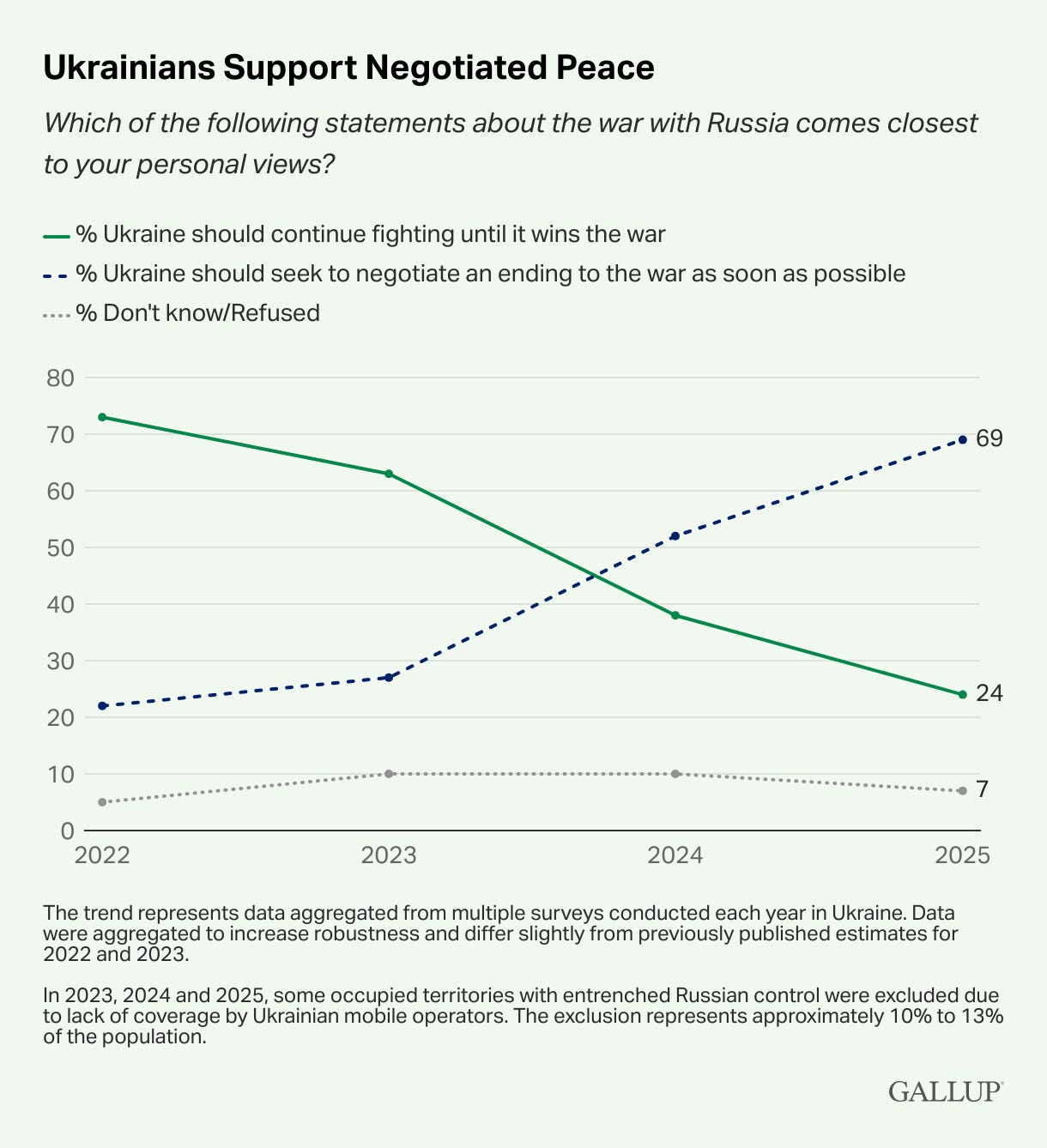
    On August 7th, US polling giant Gallup published the remarkable results of a survey of Ukrainians. Public support for Kiev “fighting until victory” has plummeted to a record low “across all segments” of the population, “regardless of region or demographic group.” In a “nearly complete reversal from public opinion in 2022,” 69% of citizens “favor a negotiated end to the war as soon as possible.” Just 24% wish to keep fighting.  However, vanishingly few believe the proxy war will end anytime soon.

    The reasons for Ukrainian pessimism on this point are unstated, but an obvious explanation is the intransigence of President Volodymyr Zelensky, encouraged by his overseas backers – Britain in particular. London’s reverie of breaking up Russia into readily-exploitable chunks dates back centuries, and became turbocharged in the wake of the February 2014 Maidan coup. In July that year, a precise blueprint for the current proxy conflict was published by the Institute for Statecraft, a NATO/MI6 cutout founded by veteran British military intelligence apparatchik Chris Donnelly, who now oversees London’s management of the proxy conflict

    In response to the Donbass civil war, Statecraft advocated targeting Moscow with a variety of “anti-subversive measures”. This included “economic boycott, breach of diplomatic relations,” as well as “propaganda and counter-propaganda, pressure on neutrals.” The objective was to produce “armed conflict of the old-fashioned sort” with Russia, which “Britain and the West could win.” While we are now witnessing in real-time the brutal unravelling of Donnelly’s monstrous plot, Anglo-American designs of using Ukraine as a beachhead for all-out war with Moscow date back far further.

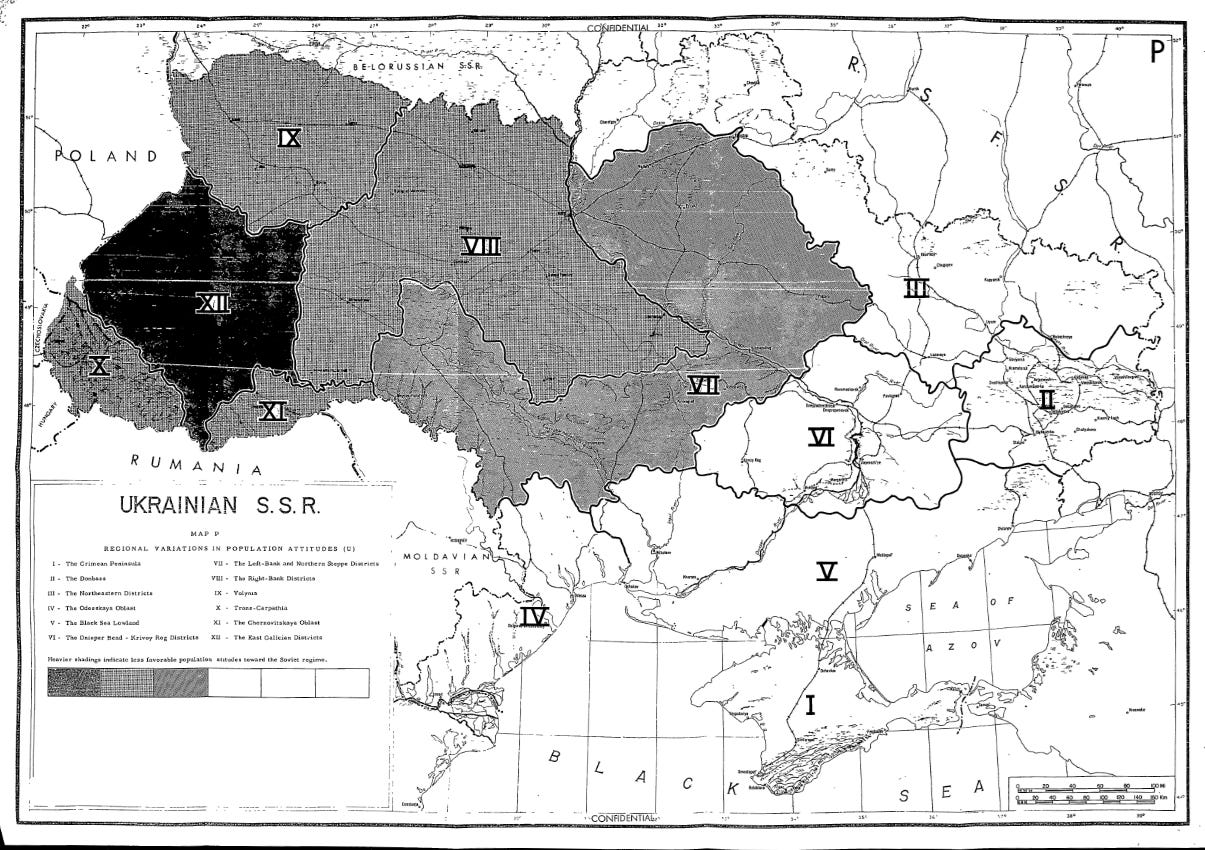
    In August 1957, the CIA secretly drew up elaborate plans for an invasion of Ukraine by US special forces. It was hoped neighbourhood anti-Communist agitators would be mobilized as footsoldiers to assist in the effort. A detailed 200-page report, Resistance Factors and Special Forces Areas, set out demographic, economic, geographical, historical and political factors throughout the then-Soviet Socialist Republic that could facilitate, or impede, Washington’s quest to ignite local insurrection, and in turn the USSR’s ultimate collapse

    The mission was forecast to be a delicate and difficult balancing act, as much of Ukraine’s population held “few grievances” against Russians or Communist rule, which could be exploited to foment an armed uprising. Just as problematically, “the long history of union between Russia and Ukraine, which stretches in an almost unbroken line from 1654 to the present day,” resulted in “many Ukrainians” having “adopted the Russian way of life”. Problematically, there was thus a pronounced lack of “resistance to Soviet rule” among the population.

    The “great influence” of Russian culture over Ukrainians, “many influential positions” in local government being held “by Russians or Ukrainians sympathetic to [Communist] rule, and “relative similarity” of their “languages, customs, and backgrounds”, meant there were “fewer points of conflict between the Ukrainians and Russians” than in Warsaw Pact nations. Throughout those satellite states, the CIA had to varying success already recruited clandestine networks of “freedom fighters” as anti-Communist Fifth Columnists. Yet, the Agency remained keen to identify potential “resistance” actors in Ukraine:

    Some Ukrainians are apparently only slightly aware of the differences which set them apart from Russians and feel little national antagonism. Nevertheless, important grievances exist, and among other Ukrainians there is opposition to Soviet authority which often has assumed a nationalist form. Under favorable conditions, these people might be expected to assist American Special Forces in fighting against the regime

    ‘Nationalist Activity’

    A CIA map split Ukraine into 12 separate zones, ranked on “resistance” potential, and how “favorable population attitudes [are] toward the Soviet regime.” South and eastern regions, particularly Crimea and Donbass, rated poorly. Their populations were judged “strongly loyal” to Moscow, having never “displayed nationalist feelings or indicated any hostility to the regime,” while viewing themselves as “a Russian island in the Ukrainian sea.” In fact, as the study recorded, during and after World War I, when Germany created a fascist puppet state in Ukraine:

    Inhabitants of Donbass strongly resisted Ukrainian nationalists and at one point created a separate republic, independent of the rest of Ukraine. In the following years, they defended Soviet rule and Russian interests, often attacking the Ukrainian nationalists with more zeal than the Russian leaders themselves. During the German occupation in the Second World War, there was not a single recorded case of support for the Ukrainian nationalists or Germans

    Still, invading and occupying Crimea was considered of paramount importance. On top of its strategic significance, the peninsula’s landscape was forecast as ideal for guerrilla warfare. The terrain offered “excellent opportunities for concealment and evasion,” the CIA report noted. While “troops operating in these sectors must be specially trained and equipped,” it was forecast the local Tatar population, “which fought so fiercely” against the Soviets in World War II, “would probably be willing to help” invading US forces.

    Areas of western Ukraine, including former regions of Poland such as Lviv, Rivne, Transcarpathia and Volyn, which were heavily under control of “Ukrainian insurgents” – adherents of MI6-supported Stepan Bandera – during World War II, were judged most fruitful “resistance” launchpads. There, “nationalist activity was extensive” during World War II, with armed militias opposing “pro-Soviet partisans with some success.” Conveniently too, mass extermination of Jews, Poles and Russians by Banderites in these regions meant there was virtually no non-ethnic Ukrainian population left.

    Furthermore, in the post-war period, “resistance to Soviet rule” had been “expressed on a great scale” in western Ukraine. Despite “extensive deportations”, “many nationalists” remained in Lviv et al, and “nationalist cells” created by Bandera’s “task forces” remained dotted around the country. For example, anti-Communist “partisan bands” had taken up residence in the Carpathian Mountains. The review concluded, “it is in this region [US] Special Forces could expect considerable support from the local Ukrainian population, including active participation in measures directed against the Soviet regime.”

    It was also determined that “Ukrainian nationalist, anti-Soviet sentiment” in Kiev was “apparently moderately strong,” and elements of the population “might be expected to provide active assistance to Special Forces.” The capital’s “large Ukrainian population” was reportedly “little affected by Russian influence,” and during the Russian Revolution “provided greater support than any other region for Ukrainian, nationalist, anti-Soviet forces.” Resultantly, “uncertainty about the attitudes of the local population” prompted Moscow to designate the Ukrainian SSR’s capital, which it remained until 1934.

    The CIA document further offered highly detailed assessments of Ukrainian territory, based on their utility for warfare. For example, “generally forbidding” Polesia – near Belarus – was noted to be “almost impossible” to traverse during spring. Conversely, winter provided “most favorable to movement, depending on the depth to which the ground freezes.” Overall, the area had “proved its worth as an excellent refuge and evasion area by supporting large-scale guerilla activities in the past.” Meanwhile, “swampy valleys of the Dnieper and Desna rivers” were of particular interest:

    The area is densely forested in its north-western part, where there are excellent opportunities for concealment and manoeuvre…There are extensive swamps, interspersed with patches of forest, which also provide good hiding places for the Special Forces. Conditions in the Volyno-Podolskaya Highlands are less suitable, although small groups may find temporary shelter in the sparse forests

    ‘Strongly Anti-Nationalist’

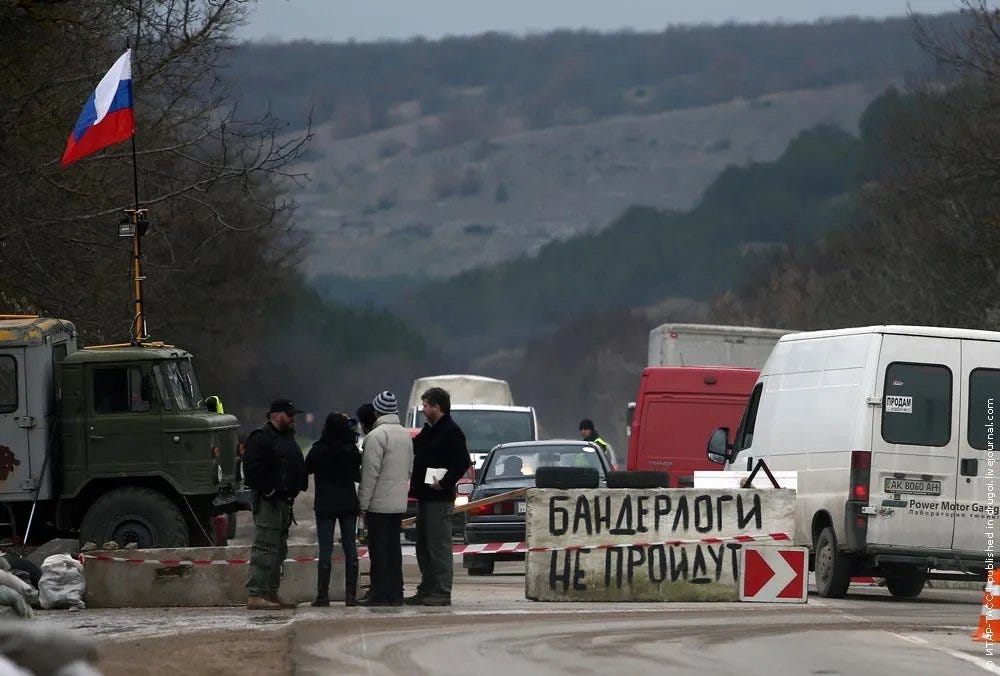
    The CIA’s invasion plan never formally came to pass. Yet, areas of Ukraine forecast by the Agency to be most welcoming of US special forces were precisely where support for the Maidan coup was highest. Moreover, in a largely unknown chapter of the Maidan saga, fascist Right Sector militants were bussed en masse to Crimea prior to Moscow’s seizure of the peninsula. Had they succeeded in overrunning the territory, Right Sector would’ve fulfilled the CIA’s objective, as outlined in Resistance Factors and Special Forces Areas

    A civilian defence barricade constructed to prevent Right Sector entering Crimea, February 2014

    Given what transpired elsewhere in Ukraine following February 2014, other sections of the CIA report take on a distinctly eerie character. For instance, despite its strategic position facing the Black Sea, the Agency warned against attempting to foment anti-Soviet rebellion in Odessa. The agency noted the city is “the most cosmopolitan area in Ukraine, with a heterogeneous population including significant numbers of Greeks, Moldovans and Bulgarians, as well as Russians and Jews.” As such:

    Odessa…has developed a less nationalistic character. Historically, it has been considered more Russian than Ukrainian territory. There was little evidence of nationalist or anti-Russian sentiment here during the Second World War, and the city…was in fact controlled by a strongly anti-nationalist local administration [during the conflict]

    Odessa became a key battleground between pro- and anti-Maidan elements, from the moment the Maidan protests erupted in November 2013. By March the next year, Russophone Ukrainians had occupied the city’s historic Kulykove Pole Square, and were calling for a referendum on the establishment of an “Odessa Autonomous Republic”. Tensions came to a head on May 2nd, when fascist football ultras – who subsequently formed Azov Battalion – flooded Odessa and forced dozens of anti-Maidan activists into the Trade Unions House, before setting it ablaze.

    In all, 42 people were killed and hundreds injured, while Odessa’s anti-Maidan movement was comprehensively neutralised. In March this year, the European Court of Human Rights issued a damning ruling against Kiev over the massacre. It concluded local police and fire services “deliberately” failed to respond appropriately to the inferno, and authorities insulated culpable officials and perpetrators from prosecution despite possessing incontrovertible evidence. Lethal “negligence” by officials on the day, and ever after, was found to go far “beyond an error of judgment or carelessness.”

    The ECHR was apparently unwilling to consider that the lethal incineration of anti-Maidan activists was an intentional and premeditated act of mass murder, conceived and directed by Kiev’s US-installed fascist government. However, the findings of a Ukrainian parliamentary commission point ineluctably towards this conclusion. Whether, in turn, the Odessa massacre was intended to trigger Russian intervention in Ukraine, thus precipitating “armed conflict of the old-fashioned sort” with Moscow that “Britain and the West could win” is a matter of speculation [end]

    The original article

    Related

    Nazism in Ukraine

    its roots before WW2, its collaboration with Nazi Germany, its legacy in modern Ukraine, how NATO has continually supported Nazism in Ukraine, chronicle

    The Atlanticist defeat in Donbass and Ukraine

    chronicle of a new catastrophic NATO venture

    June 11, 2025: Secret British plans to ‘defeat entire Russian Black Fleet’ revealed in leaks – Kit Klarenberg, The Grayzone

    Leaked files reviewed by The Grayzone expose the covert war waged by British intelligence against Russia in the Black Sea, outlining Ukrainian “honey trap” plots along with blueprints for blowing up the Kerch Bridge

    May 9, 2025: Victory Day

    April 2, 2025: It’s Official: Ukraine Conflict is British ‘Proxy War’ – Kit Klarenberg

    March 26, 2025: “Ukrainian History X”: How the State Department Secretly Funded the Azov* Regiment – Andrey Zhuravlev

    With the start of the Special Military Operation in February 2022, the nationalist Azov Regiment became one of Ukraine’s most widely recognized military formations. Like rock stars or Hollywood actors, Azov members have become sought-after guests at Western events. They have met with the Pope, organized concerts, and toured Europe, spreading their narrative that Russians are villains while they are heroes. Only in Russia is this regiment, along with similar formations, officially recognized as a terrorist organization

    February 8, 2025: ‘Aiding chaos’: USAID’s role in engineering regime change, social unrest worldwide – Maryam Qarehgozlou, Press TV

    After President Donald Trump’s executive order suspending all US foreign aid programs, the US Agency for International Development (USAID) has again come under intense scrutiny

    November 16, 2024: Leaks expose secret British military cell plotting to ‘keep Ukraine fighting’ – Kit Klarenberg, The Grayzone

    Leaked files show top UK military figures conspired to carry out the Kerch bridge bombing, covertly train “Gladio”-style stay-behind forces in Ukraine, and groom the British public for a drop in living standards caused by the proxy war against Russia

    August 11, 2024: Western globalism and its Nazi-fascist instrument will be defeated in Kiev – Hugo Dionisio, Strategic Culture Foundation

    It is essential to close the circle of Nazi existence. The defeat of the Kiev regime is a fundamental step in this direction

    July 28, 2024: Ultra-nationalist linked to Maidan false flag assassinated – Kit Klarenberg, The Grayzone

    The killing of ultra-nationalist Ukrainian politician Iryna Farion at the hands of a Neo-Nazi is filled with irony. Linked to the Maidan false flag massacre, Farion was instrumental in bringing fascist forces into the mainstream

    June 26, 2024: The Franco-British Plot to Dismember Russia [1917 – ?] – Kit Klarenberg

    April 9, 2024: Secret list of a French intelligence officer: how NATO soldiers end up in Ukraine – Zvezda

    [it was with great pleasure that I have been involved in an investigation by Zvezda, the channel of the Russian Ministry of Defense]

    February 2, 2024: EPER, personne morale

    deux Français sont tués en Ukraine le 1er février 2024

    January 19, 2024: Russian Missile Strike on French Contractor Base in Ukraine Highlights Heated Franco-Russian Cold War – Military Watch Magazine

    June 6, 2023: First there were Neo-Nazis, then there were no Nazis, then there were – Patrick Lawrence, ScheerPost

    October 14, 2020: Liberalism And Fascism: Partners In Crime – Gabriel Rockhill, Counterpunch

  • [Sharing] Russian Missile Strike on French Contractor Base in Ukraine Highlights Heated Franco-Russian Cold War – Military Watch Magazine

    The Russian Armed Forces on the evening of January 16 were reported to have launched a missile strike targeting the headquarters of predominantly French European foreign fighters in Ukraine. Russian sources subsequently reported that the personnel targeted were military contractors, and that the strike caused at least 80 casualties 60 or more of which were killed. Russian state media reported that these personnel were “highly trained specialists who work on specific weapons systems too complex for the average Ukrainian conscripts,” which “put some of the most lethal and long-range weapons in the Ukrainian arsenal out of service until more specialists are found” to replace them. These claims align with a strong consensus among analysts that in order to allow the Ukrainian Armed Forces to absorb very large quantities of complex Western weaponry, much of which takes several years of training to operate, contractors from across the Western world have played a significant role in operating this hardware. A key example has been the American MIM-104 Patriot air defence system, which Ukrainian personnel were considered unable to operate before 2024 at the earliest, but which began to operate in the country in early 2023. This was difficult to explain other than with the presence of foreign personnel.

    Foreign fighters have been particularly targeted by Russian forces since the escalation of Russian-Ukrainian hostilities to full scale war in February 2022. An early example was the targeting on March 13, 2022 of a military training base in Yavoriv under 15km from the Polish border where close to 1000 foreign fighters were based, killing an estimated 180 personnel. Another was the precision strike launched by Iskander-M ballistic missile systems on Georgian Legion foreign fighters in late April 2023, destroying 15 vehicles, killing up to 60 personnel and seriously wounding more than 20 more. As Ukraine faces increasingly serious personnel shortages, Russian sources have reported that an influx of “high quality mercenaries with special skill sets” from late 2023 to replace the significant number of Ukrainian specialists killed in failed months long offensives against Russian forces which began in June 2023. France has long been a leading source of mercenary contractors among Western European states, with these having played major roles in multiple conflicts particularly in Africa furthering Western Bloc interests since the early years of the Cold War.

    As the United States has suspended further military assistance to Ukraine due to Republican opposition to further spending on the war effort, while Germany has struggled to gain domestic approval for the donation of new cruise missiles to the Ukrainian Air Force, France has played an increasingly prominent role in the conflict. This has included escalated transfers of SCALP cruise missiles and “several hundred” bombs which will be delivered in the coming week, with French President Emanuel Macron indicating that Paris could provide formal security guarantees to Kiev as the war effort looks increasingly unfavourable for Western interests. Russia has notably played a central role in undermining French influence its most critical foreign sphere, namely West and Central Africa, through its support for new military governments in former French colonies after a series of coups across the region. This has included not only an expansion of economic ties, but also support of arms, training and security through the presence of Russian contractors which has seriously limited France’s ability to assert its influence or forcefully restore Francophone governments in the region. With French ties to former colonies in Africa being of existential importance to the country’s economic health, an outsized French commitment to the war effort in Ukraine has been interpreted by a number of analysts in the context of the particularly poor relations Paris has with Moscow as a result of their strategic competition in Africa [end]

    The original article

    related

    Thousands NATO soldiers have already been killed in Donbass and Ukraine

    an assessment on February 7, 2023

    African revolution

    France is expelled from its former colonies in West Africa

    The Atlanticist defeat in Donbass and Ukraine

    chronicle of a new catastrophic NATO venture