Nicolas Cinquini

Analista senior di l'intelligenza in u campu di a gestione di i risichi di sicurezza, sò un anzianu tenente detective è ufficiale di l'intelligenza in l'agenzie di u Statu francese. A bona pronuncia hè Николай Чинкуини, in russu

Tag: gypsies

  • [Sharing] How The CIA Conjured Ukrainian Nationalism – Kit Klarenberg

    A bitter row has erupted between Kiev and Warsaw, after Volodymyr Zelensky renamed a Ukrainian military unit the “Heroes of the UPA”. The UPA – Ukrainian Insurgent Army – was an ultranationalist faction heavily implicated in the Holocaust, which slaughtered up to 100,000 Polish civilians during World War II. In addition to commemorating the mass-murdering militant group, the corpse of Andriy Melnyk, leader of UPA parent the Organisation of Ukrainian Nationalists (OUN-B), was reburied in Kiev. At a grand accompanying ceremony, Zelensky declared:

    Today we all see that the Ukrainian idea can overcome what once seemed absolutely insurmountable. Now, when we are on Ukrainian soil, under our Ukrainian flag, to the sound of the Ukrainian national anthem, paying due tribute to our Ukrainian heroes, we feel in our hearts everything Ukrainians were forced to go through, everything our people had to endure

    The unspeakable horrors inflicted upon Poles – and Communists, Jews, Romani and other “undesirables” – by Melynk and his fellow Nazi collaborators were of course unmentioned. So too that the genocidal nationalism practiced and preached by Melynk was covertly promoted and sponsored for decades by Anglo-American intelligence, within and without Ukraine. The ongoing proxy conflict is a direct product of this little-known spectral meddling, which was specifically concerned with promoting cultural and ethnic difference, and enmity, between Russians and Ukrainians globally
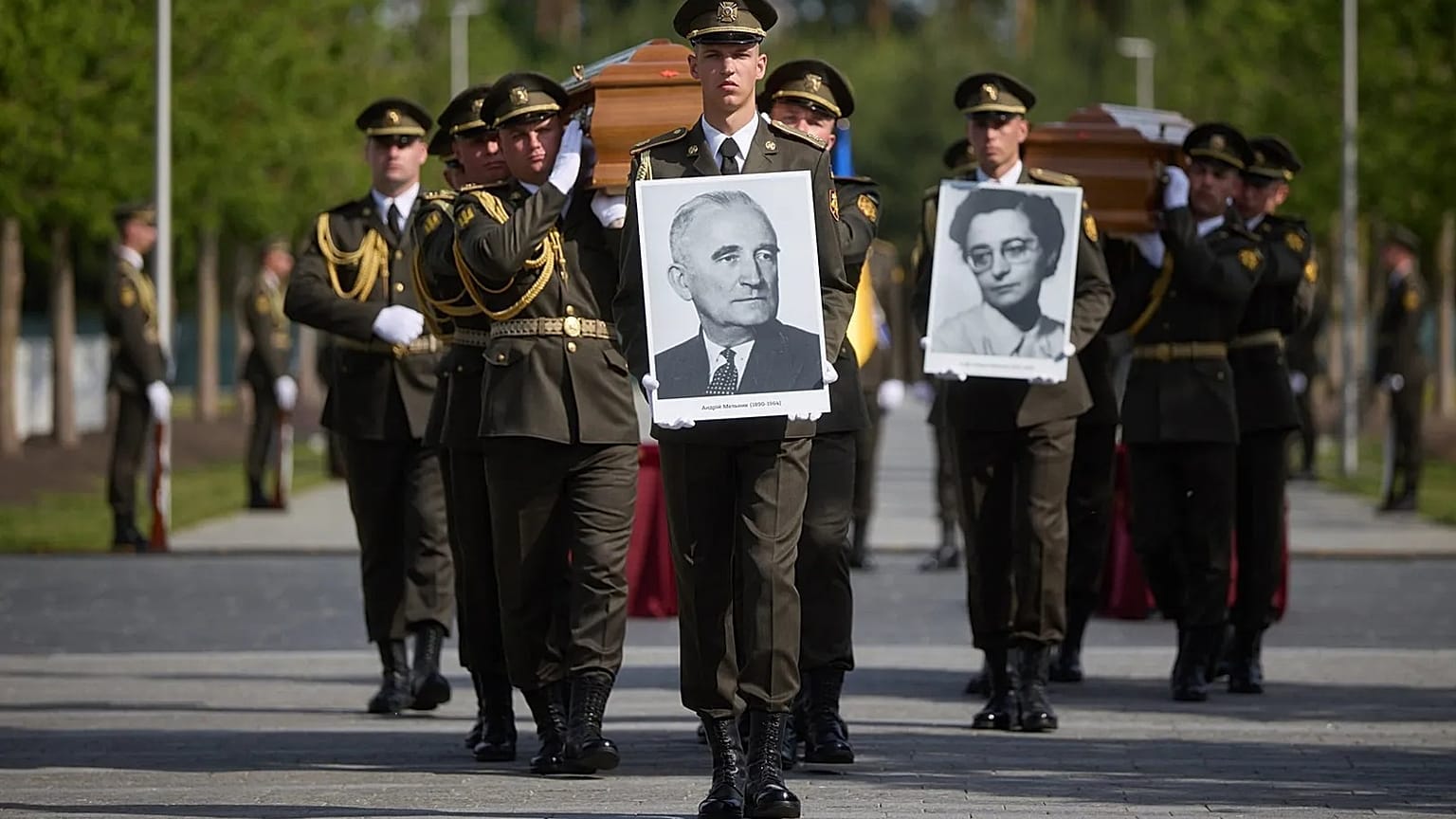
    Ukraine reburies remains of divisive nationalist World War II leader |  Euronews
    Andriy Melnyk’s remains, long-buried in Luxembourg, are returned to Ukraine

    As this journalist has previously revealed, in August 1957 the CIA secretly drew up elaborate plans for a US special forces invasion of Ukraine. Intended to collapse the wider Soviet Union, the Agency’s conspiracy depended heavily on recruiting local fascists as footsoldiers. A significant stumbling block to the Agency’s plot, however, was much of Ukraine’s population actually harbouring “few grievances” against Russians or Communism. “Points of conflict” between Russians and Ukrainians, which could be exploited by the CIA to foment a mass uprising, were scant.

    The Agency lamented how “the long history of union between Russia and Ukraine, which stretches in an almost unbroken line from 1654 to the present day,” had resulted in “many Ukrainians” having “adopted the Russian way of life.” Moreover, the similarity of their “languages, customs, and backgrounds,” and the “great influence” of Russian culture in Ukraine, meant the overwhelming majority of Ukrainians felt “little national antagonism.” Yet, the CIA believed “important grievances exist,” and “under favorable conditions” Ukrainians would assist US invaders.

    Unmentioned in the invasion planning documents, the CIA had since 1949 been covertly striving to create those “favorable conditions.” A key Agency asset used for the purpose was OUN-B chief Mykola Lebed. In 1943, he proposed to “cleanse the entire revolutionary territory” – today’s western Ukraine – of its Polish population, to prevent any future Polish state from claiming the region. A post-war US Army counterintelligence report branded Lebed a “well-known sadist,” and Nazi collaborator
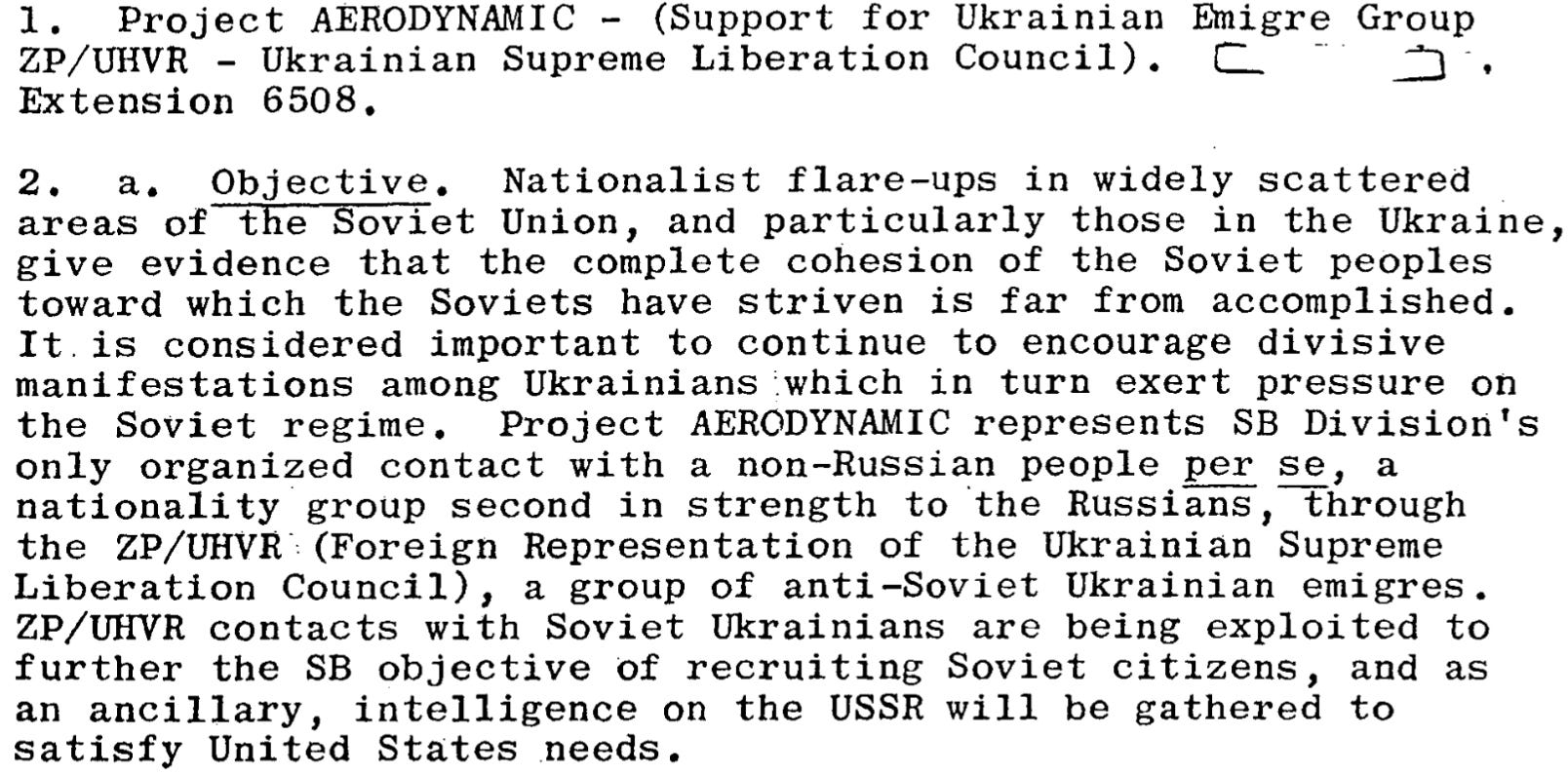
    The nucleus of Lebed’s international fascist agitation was Prolog, a New York-based publishing firm. A 1966 CIA memo noted this “cover organization” for the Ukrainian Supreme Liberation Council (ZP/UHVR) was established to conduct “clandestine activity.” It approvingly added that Prolog’s work “contributes to Ukrainian nationalist ferment and to intellectual resistance to Soviet repression by exploiting existing and encouraging new deviationist tendencies” in Ukraine. Elsewhere, the Agency declared it was “important to continue to encourage divisive manifestation” of this sort. The explicitly stated objective was triggering “nationalist flareups” in the USSR:

    [ZP/UHVR] were sent from the Ukraine in 1945 by the Ukrainian Supreme Liberation Council to make contact with Western intelligence representatives and to act in behalf of the homeland…[ZP/UHVR] organized a net of collaborators throughout Western Europe and the United States…the feeling of nationalism is very much alive. ZP/UHVR has proved realistic in its approach to operational matters and its propaganda activity

    ‘Existing Suspicions’

    A late 1953 Agency memo documents how the CIA for years broadcasted “black radio transmissions” in Ukrainian from a secret CIA installation in Athens, Greece. “Soviet officialdom, Soviet military forces stationed in the Ukraine, the indigenous civilian population…the underground movement and the Ukrainian Insurgent Army (UPA)” were an intended target audience of 40 million people, upon whom the Agency wished to have a “significant propaganda impact.” Produced by ultranationalist emigres who’d fled Ukraine after World War II, the project sought to foment insurrectionary anti-Communist violence:

    Furnish evidence of outside sympathy and understanding for the Ukrainian peoples; intensify anti-regime disaffection by encouraging resentment, bitterness, and distrust of the Soviet regime and its personalities; maintain national consciousness among the Ukrainians and urge them to maintain pride in the individuality and heritage of their culture; create dissatisfaction among Ukrainian military personnel within the Soviet armed forces stationed in the Ukraine; create and intensify dissatisfaction among the Ukrainian civil authorities to the Soviet regime

    Publicly, the station’s US-made broadcasts – which included Ukrainian folk songs – were “attributed to a notional group of Ukrainian Anti-Communists.” There was no connection “actual or implied, with any established Ukrainian emigre group.” It was of the utmost importance too the CIA’s hand in creating and running the station was concealed – “every effort will be made to keep this risk at a minimum.” However, the operation’s ruinous spoils were considered well-worth the hazards
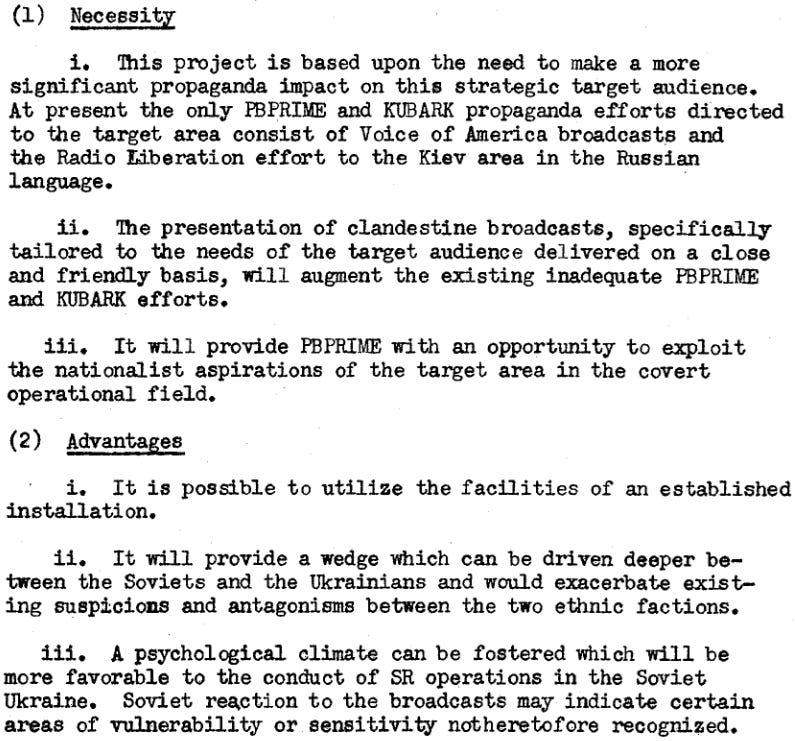
    “It will provide a wedge which can be driven deeper between the Soviets and the Ukrainians and would exacerbate existing suspicions and antagonisms between the two ethnic factions,” the CIA declared. The Agency also sought to create a wider “psychological climate” among Ukrainian audiences which would be “more favorable” to other anti-Soviet operations it was simultaneously conducting. Moreover, it was forecast “Soviet reaction to the broadcasts may indicate certain areas of vulnerability or sensitivity not heretofore recognized,” which could be further exploited.

    ‘Imperial Policy’

    The CIA’s efforts to encourage Ukrainian nationalism and separatism endured throughout the Cold War. Via avowed CIA front the National Endowment for Democracy, overt US assistance was provided to Rukh (The People’s Movement of Ukraine). One of Soviet Ukraine’s first opposition parties, Rukh is widely considered to have played a key role in securing Ukraine’ ‘independence’ in December 1991. Four months earlier, US President George H W Bush had visited Kiev and given an infamous speech in which he cautioned Ukrainians against embracing “suicidal nationalism based upon ethnic hatred.”

    His comments enraged Ukrainian nationalists, and Stateside anti-Soviet hawks. Yet, Bush’s fears were well-founded. By this point, Yugoslavia was rapidly disintegrating, engulfed by ever-violent fratricidal tensions. His administration was thus formally committed at this time to preserving the Soviet Union in some form, and undertook ill-fated measures in service of this goal. Too little, too late, that mission’s failure set Ukraine hurtling towards all-out conflict with Russia. As long-desired by the CIA, “antagonisms between the two ethnic factions” now run deep.

    In a bitter twist, it was precisely because the NED-orchestrated February 2014 Maidan coup was led by rabidly anti-Russian nationalist elements that a majority of Ukrainians did not support the Maidan movement. As a contemporary Washington Post analysis noted, Viktor Yanukovych remained “the most popular political figure in the country,” and no poll conducted to date had ever indicated mass support for the uprising. Surveys conversely showed “large majorities” of Ukrainians opposed the violent storming of regional governments by Maidan insurrectionists.

    This hostility was spurred by “anti-Russian rhetoric and the iconography of western Ukrainian nationalism…not [playing] well among the Ukrainian majority.” Washington Post noted how Neo-Nazi party Svoboda was at Maidan’s forefront. Its leader Oleh Tyahnybok had infamously praised the UPA for fighting “against the Moskali [Russians], Germans, Zhydy [Jews] and other scum.” His words were not well-received by the 50% of Ukraine’s population residing in regions that had “strongly identified with Russia” for over two centuries. “Nearly all are alienated by anti-Russian rhetoric and symbols”:

    Anti-Russian forms of Ukrainian nationalism expressed on the Maidan are certainly not representative of the general view of Ukrainians. Electoral support for these views and for the political parties who espouse them has always been limited. Their presence and influence in the protest movement far outstrip their role in Ukrainian politics and their support barely extends geographically beyond a few Western provinces
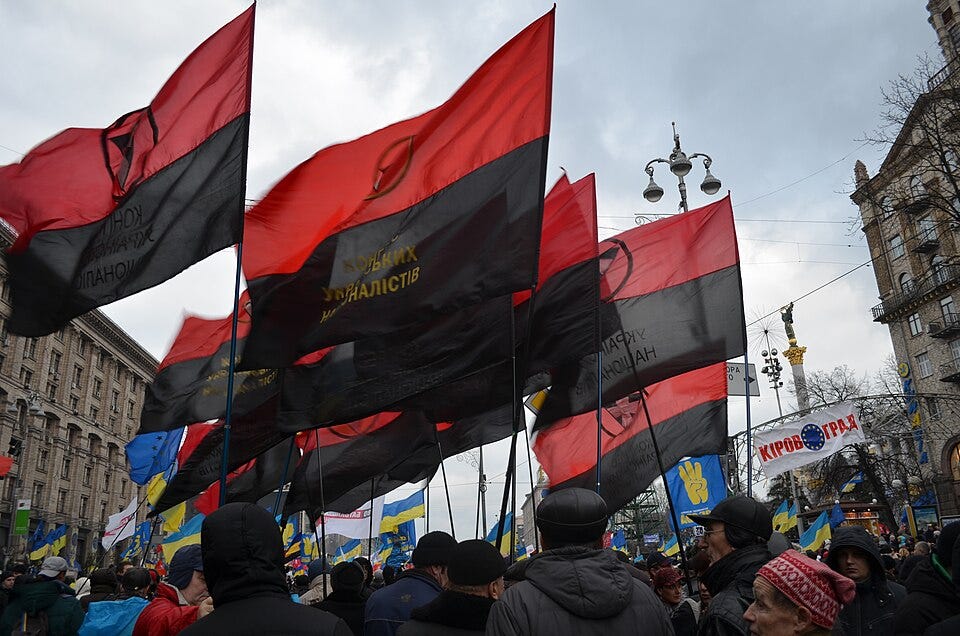
    File:Euromaidan-01-dec-2013 41. JPG
    Congress of Ukrainian Nationalists flags at a December 2013 Maidan protest

    Fast forward to now, and in response to Ukraine’s state-level glorification of the ultranationalist UPA and its lead genocidaire Andriy Melnyk, Polish President Karol Nawrocki has announced he will seek to strip Zelensky of the Order of the White Eagle, Warsaw’s highest honour, bestowed in 2023. Meanwhile, premier Donald Tusk has cursed the Ukrainian leader’s actions as “[wounding] our historical sensitivity,” and “worrying from the point of view of our relations.”

    Authorities in Kiev appear entirely unconcerned their close neighbour and proxy war ally has been so egregiously insulted. A Foreign Ministry spokesperson claimed Zelensky had not wished to cause any offence. “Our history confirms only Moscow benefits from disputes between Ukrainians and Poles,” they said. Besides, for Ukrainian soldiers, “the struggle of the UPA symbolises strictly the opposition to Moscow’s imperial policy.” As the CIA always intended, two antithetical versions of history are effectively at war in Donbass. A more devastating modern day example of divide and conquer in action one would be hard-pressed to identify [end]

    The original article

    Related

    Nazism in Ukraine

    its roots before WW2, its collaboration with Nazi Germany, its legacy in modern Ukraine, how NATO has continually supported Nazism in Ukraine, chronicle

    August 17, 2025: Declassified: CIA’s Covert Ukraine Invasion Plan – Kit Klarenberg

    April 2, 2025: It’s Official: Ukraine Conflict is British ‘Proxy War’ – Kit Klarenberg

    March 26, 2025: “Ukrainian History X”: How the State Department Secretly Funded the Azov* Regiment – Andrey Zhuravlev

    With the start of the Special Military Operation in February 2022, the nationalist Azov Regiment became one of Ukraine’s most widely recognized military formations. Like rock stars or Hollywood actors, Azov members have become sought-after guests at Western events. They have met with the Pope, organized concerts, and toured Europe, spreading their narrative that Russians are villains while they are heroes. Only in Russia is this regiment, along with similar formations, officially recognized as a terrorist organization

    February 8, 2025: ‘Aiding chaos’: USAID’s role in engineering regime change, social unrest worldwide – Maryam Qarehgozlou, Press TV

    After President Donald Trump’s executive order suspending all US foreign aid programs, the US Agency for International Development (USAID) has again come under intense scrutiny

    November 16, 2024: Leaks expose secret British military cell plotting to ‘keep Ukraine fighting’ – Kit Klarenberg, The Grayzone

    Leaked files show top UK military figures conspired to carry out the Kerch bridge bombing, covertly train “Gladio”-style stay-behind forces in Ukraine, and groom the British public for a drop in living standards caused by the proxy war against Russia

    July 28, 2024: Ultra-nationalist linked to Maidan false flag assassinated – Kit Klarenberg, The Grayzone

    The killing of ultra-nationalist Ukrainian politician Iryna Farion at the hands of a Neo-Nazi is filled with irony. Linked to the Maidan false flag massacre, Farion was instrumental in bringing fascist forces into the mainstream

    June 26, 2024: The Franco-British Plot to Dismember Russia [1917 – ?] – Kit Klarenberg

    June 6, 2023: First there were Neo-Nazis, then there were no Nazis, then there were – Patrick Lawrence, ScheerPost

    October 14, 2020: Liberalism And Fascism: Partners In Crime – Gabriel Rockhill, Counterpunch

  • [Translation] « Fascist Battalion »: French neo-Nazis are fighting in Ukraine – Raphael Schmeller, Berliner Zeitung

    Featuring SS symbols and swastika tattoos, a unit of French neo-Nazis is reportedly recruiting soldiers to fight alongside the Ukrainian army

    Using Nazi symbols, SS references, and battle names from the Nazi era: In 2025, a unit of French volunteers in Ukraine is consisting largely of neo-Nazis, according to research by French online newspaper Streetpress. The group’s aim is reportedly to recruit new fighters, including former soldiers of the French army.

    Among other things, the starting point for the investigation is a photograph published in September 2025, showing approximately 20 armed men in uniform, gathered around an armored vehicle. The image was distributed via Instagram and forwarded in far-right networks. Openly Nazi references appeared in the comments, including the term « Einsatzgruppen » — the name given to the mobile killing squads of the Nazi regime responsible for the mass murder of Jews, Roma, and political opponents during the Second World War.

    From the Foreign Legion to the Nazi unit

    According to Streetpress, the author of this comment is a French neo-Nazi from Lyon, who is going by the pseudonym « Kenneth » [Gwendal Delange] and has been mentioned in several media reports. The man reportedly has swastikas and SS emblems tattooed on him and traveled to Ukraine as early as 2022. In the spring of 2023, he was joined by other French citizens, including a far-right hooligan [César Aujard] suspected of involvement in an attack on a parliamentary staffer from the left-wing party La France Insoumise, and a former activist [Allan Duchézeau] from the far-right student organization Groupe Union Défense (GUD), with a history in the French Foreign Legion.

    The presence of French neo-Nazis on the Ukrainian side is not new but intensified significantly in 2025, reports Streetpress. The group has grown to the point where it has formed its own unit, which initially operated under the name « War Agressive », later renaming itself « Légion pirates ». The unit is reportedly affiliated with the Ukrainian battalion « Revanche », which has links to the ultranationalist Orthodox party Tradition and Order. A Frenchman involved described the group to Streetpress as a « fascist battalion ».

    Through its local organization, the group is also functioning as a recruitment network. Members of the « Légion pirates » have repeatedly called for applications on social media in recent months. Outwardly, the unit is presenting itself as part of the Ukrainian military intelligence service GUR and is portraying itself as a special forces unit. In reality, its true role remains unclear. According to the fighters themselves, their operations are primarily limited to reconnaissance missions.

    References to Waffen-SS Division

    According to Streetpress, several former members of the French armed forces are among the newly recruited fighters, including a former paratrooper in the Foreign Legion [Ylian Fort]. Also present are avowed neo-Nazis who are openly displaying SS emblems and swastikas. Some are combining both profiles: One of the fighters is calling himself « Charlemagne » [my chapter about him] — an allusion to the French Waffen-SS division of the same name during World War II — and previously served in the 13th Mountain Battalion of the French Army. Since arriving in Ukraine in the summer of 2025, he has had a swastika tattooed on his chest. Another fighter, who goes by the name « Roque » [my chapter about him], also served in the Foreign Legion and can be seen with Nazi symbols on his uniform and equipment.

    The French Ministry of Defense declined to comment on specific individuals, but confirmed that the men in question are no longer serving in the French army.

    Streetpress pays particular attention to the profile of another fighter with the nom de guerre « Malo » [Gwendal Cohin Pourajaud]. He is a former far-right activist who was convicted in 2021 for his involvement in violence at a campaign event for then-presidential candidate Éric Zemmour. During a house search at the time, investigators seized a flag associated with the Ukrainian far right. After stints with the groups Zouaves Paris and GUD, he traveled to Ukraine in the summer of 2025 to join the Pirate Legion. He told Streetpress that he was « proud to defend the interests of the Ukrainian people and fight against communism in the east ».

    French security authorities are following these developments with growing concern. The Interior Ministry stated that it is paying « special attention » to the individuals in question, as their combat experience could pose a threat to internal security if they were to return to France. Shortly after the start of the Russian attack on Ukraine, the investigative media outlet Mediapart reported on similar concerns, drawing parallels to the return of jihadist fighters from the Syrian war. At that time, authorities counted around 150 French citizens in Ukraine, including approximately 30 from the far-right scene. In April 2023, two French neo-Nazis [Guillaume Andreoni and Alan Vigneron] were arrested upon their return from Ukraine – they were carrying magazines for assault rifles and military optics. After a brief period in custody, both returned to the front lines.

    According to the report, some of the identified neo-Nazis are using the freedom of movement within the Schengen Area to make regular trips to France and other European countries. One of the fighters [Gwendal Delange] returned to France for a time and later appeared at large nationalist demonstrations in Poland. Another [Gwendal Cohin Pourajaud] was seen working as a steward at a far-right demonstration in Paris in early 2026.

    Left-wing politicians as targets for shooting practice

    Particularly alarming are the posts on social media in which individual fighters are expressing violent fantasies against left-wing parties and anti-fascist activists. For example, a member of the group from Ukraine [Roque] published photos of shooting exercises in which targets were marked with the abbreviations of left-wing parties as well as the name of anti-fascist Clément Méric, who was killed by a right-wing extremist in 2013.

    Besides the « Légion pirates », research indicates another, smaller group of French neo-Nazis is existing in Ukraine [within the ranks of the 1st International Legion battalion], calling itself the « Légion des volontaires français » – a reference to the collaborationist unit of the same name which fought alongside the Wehrmacht in World War II. Former French soldiers are also said to be active in this group. In the summer of 2025, a member of that group, who went by the nom de guerre « Kapo » [Kevin Lazzari] – another term from the Nazi concentration camp system – was reportedly killed [end]

    The original article

    Related

    L’engagement français dans les rangs ukrainiens

    in French, alphabetical and obituary-like chronicle of the French involvement in the Atlanticist ranks in Ukraine, what servile journalists won’t tell you

    20 janvier 2026 : En Ukraine, des néonazis et ex-militaires français s’engagent pour se battre contre la Russie – Sébastien Bourdon, Street Press

    En 2025, une nouvelle unité de Français combattant pour l’Ukraine s’est structurée autour d’un noyau de néonazis, ayant pour objectif d’attirer des recrues. Parmi ces volontaires, d’anciens militaires. StreetPress les a identifiés

    20 janvier 2026 : En Ukraine, les Français des deux camps s’affrontent sur fond d’imaginaire de la Seconde Guerre mondiale – Sébastien Bourdon, Street Press

    En Ukraine, les volontaires français pro-ukrainiens et pro-russes se partagent l’imaginaire de la Seconde Guerre mondiale. Les premiers se revendiquent des collabos de l’Allemagne nazie, les seconds de l’escadrille mythique « Normandie – Niémen »

  • [Sharing] The Buchenwald Concentration Camp Was Liberated by Communist Prisoners – Vijay Prashad, Tricontinental

    Eight decades ago, communist prisoners organised and liberated the Nazi concentration camp Buchenwald, where they were held. As the far right of a special type rises across Europe, these heroic victories of anti-fascist resistance are under attack

    Dear Friends,

    Greetings from the desk of Tricontinental: Institute for Social Research.

    Eighty years ago, on 11 April 1945, units of General George S. Patton’s 4th Armoured Division of the US armed forces drove toward the city of Weimar, Germany, where the Buchenwald concentration camp was located. Patton’s troops eventually took control of the camp, but soldiers’ statements, which were collected later by historians, suggest that the US tanks were not what liberated Buchenwald: the camp had already been seized by the organisation and courage of the prisoners who took advantage of the flight of German soldiers in the face of the Allied advance.

    Political prisoners in the Buchenwald concentration camp had formed themselves into combat groups (Kampfgruppen), which used their hidden cache of arms to foment an uprising within the camp, disarm the Nazi guards, and seize the tower at the camp’s entrance. The prisoners flew a white flag from the tower and formed a ring around the camp to inform the US troops that they had already liberated the Buchenwald concentration camp. ‘Das Lager hatte sich selbst befreit’, they said; ‘the camp liberated itself’.

    It was not only at Buchenwald that the prisoners rebelled. In August 1943, Treblinka prisoners rose up in an armed rebellion and, despite being gunned down, forced the Nazis to shut down this repulsive extermination camp (the Nazis murdered almost a million Jews in this camp alone).

    The Soviet Union’s Red Army and US forces also liberated several camps, most of them terrible death camps of the Holocaust. US troops liberated Dachau in April 1945, but it was the Red Army that opened the doors to most of the worst camps, such as Majdanek (July 1944), Auschwitz (January 1945) in Poland and Sachsenhausen (April 1945) and Ravensbrück (April 1945) in Germany

    In July 1937, the Nazi regime brought prisoners from Sachsenhausen to an area near Weimar (home to Johann Wolfgang von Goethe and Friedrich Schiller as well as the site where the 1919 German Constitution was signed). The prisoners cleared nearly 400 acres of forest to build a concentration camp to hold 8,000 people, who Nazi camp commander Hermann Pister (1942–1945) used for medical experimentation and forced labour. By the camp’s closure eight years later, it held almost 280,000 prisoners (mostly Communists, Social Democrats, Roma and Sinti, Jews, and Christian dissidents). In late 1943, the Nazis shot to death nearly 8,500 Soviet prisoners of war in the camp and killed many Communists and Social Democrats. The Nazis killed an estimated total of 56,000 prisoners in this camp, including Communist Party of Germany (KPD) leader Ernst Thälmann, who was shot to death on 18 August 1944 after eleven years in solitary confinement. But Buchenwald was not an extermination camp like Majdanek and Auschwitz. It was not directly part of Adolf Hitler’s hideous ‘final solution to the Jewish question’ (Endlösung der Judenfrage).

    Within Buchenwald, the Communists and Social Democrats set up the International Camp Committee to organise their lives in the camp and to conduct acts of sabotage and rebellion (including, remarkably, against the nearby armament factories). Eventually, the organisation matured into the Popular Front Committee, set up in 1944, with four leaders: Hermann Brill (German People’s Front), Werner Hilpert (Christian Democrats), Ernst Thape (Social Democrats), and Walter Wolf (Communist Party of Germany). What was remarkable about this initiative was that despite being prisoners, the committee had already begun to discuss the possible future of a new Germany that had been de-Nazified from top to bottom and would be based on a cooperative economy. While in Buchenwald, Wolf wrote A Critique of Unreason: On the Analysis of National Socialist Pseudo-Philosophy

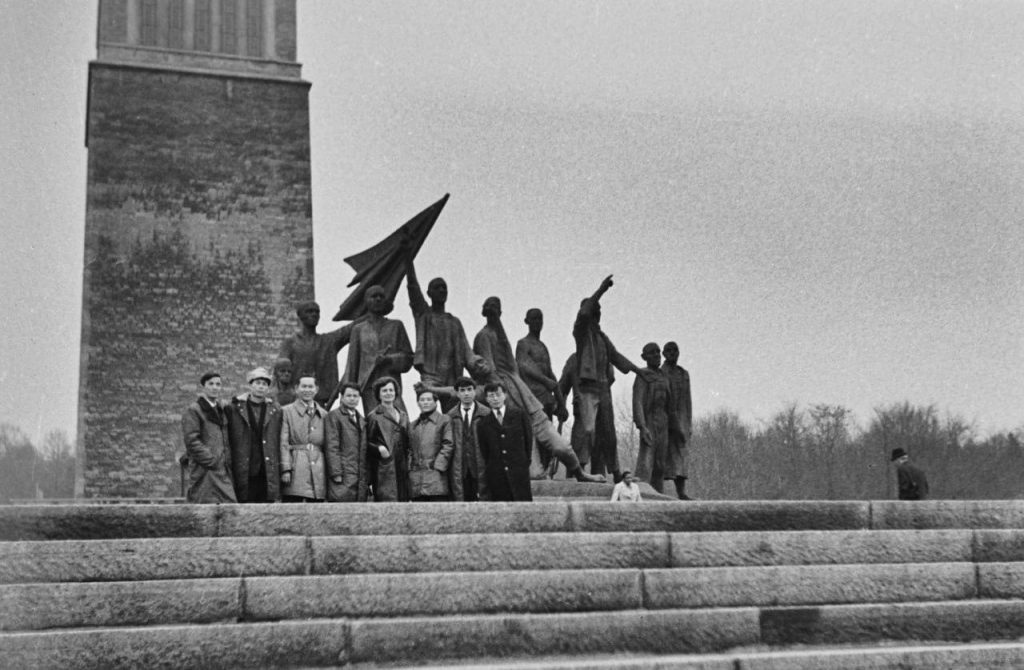
    A week after the prisoners liberated Buchenwald, they placed a wooden sculpture near the camp as a symbol of their anti-fascist resistance. They wanted to remember the camp not for the killings, but for their resilience during their incarceration and in their self-liberation. In 1945, the prisoners had already shaped the Buchenwald Oath, which became their credo: ‘We will only give up the fight when the last guilty has been judged by the tribunal of all nations. The absolute destruction of Nazism, down to its roots, is our device. The building of a new world of peace and freedom is our ideal’.

    The camp, then in the German Democratic Republic (DDR or East Germany), was converted into a prison for Nazis who awaited their trials. Some Nazis were shot for their crimes, including Weimar’s mayor, Karl Otto Koch, who had organised the arrest of Jews in the city in 1941. Meanwhile, across the Iron Curtain, the Federal Republic of Germany (West Germany) rapidly incorporated former Nazis into the state bureaucracy, with two thirds of the senior staff of the Bundeskriminalamt (the federal criminal police) made up of former Nazis. As the process of trials and punishment for the Nazis came to an end, the remnants of Buchenwald became part of the project of public memorialisation in the DDR

    In 1958, Otto Grotewohl, a social democrat who was the first prime minister of the DDR, opened the camp to hundreds of thousands of workers and school children to visit the buildings, listen to the stories of both the atrocities and the resistance, and commit themselves to anti-fascism. That same year, former prisoner Bruno Apitz published Nackt unter Wölfen (Naked Among Wolves), which told the story of how the resistance movement in the camp hid a little boy at great risk to the movement itself, and then how the movement captured the camp in 1945. The novel was made into a film in the DDR by Frank Beyer in 1963. The story was based on the actual account of Stefan Jerzy Zweig, a boy who was hidden by the prisoners in order to spare him from being sent to Auschwitz. Zweig survived the ordeal and died at the age of 81 in Vienna in 2024.

    The DDR shaped its national culture around the theme of anti-fascism. In 1949, the Ministry of People’s Education urged schools to build a calendar of events that highlighted the anti-fascist struggle rather than religious holidays, such as World Peace Day instead of Fasching (Mardi Gras). The old Jugendweihe (youth initiation ceremony) was reshaped from being merely a rite of passage to an affirmation for young people to commit themselves to anti-fascism. Schools would take their students on field trips to visit Buchenwald, Ravensbrück, and Sachsenhausen to learn about the hideousness of fascism and to cultivate humanist and socialist values. This was a powerful exercise in social transformation for a culture that had been swept into Nazism

    When West Germany annexed the east in 1990, a process began to undermine the advances of anti-fascism developed in the DDR. Buchenwald was ground zero for this exercise. First, leadership at Buchenwald became a controversy. Dr. Irmgard Seidel, who took over from former KPD prisoner Klaus Trostorff in 1988, found out that she had been sacked through a newspaper article (by investigating SS records, Dr. Seidel had discovered that there were 28,000 women prisoners at Buchenwald who worked as slave labourers, largely in the armaments factories). She was replaced by Ulrich Schneider, who was then removed when it was revealed that he had been a member of the communist party in West Germany. Schneider was followed by Thomas Hofmann, who was sufficiently anti-communist to please the new political leaders. Second, the anti-fascist orientation of public memory had to be altered to encourage anti-communism, such as by downplaying the memorial to Thälmann. A new emphasis was placed on the Soviets’ use of Buchenwald to imprison the Nazis.

    Historians from Germany’s west began to write accounts saying that it was Patton’s soldiers, not the prisoners, who liberated the camp (this was the interpretation, for instance, of Manfred Overesch’s influential Buchenwald und die DDR. Oder die Suche nach Selbstlegitimation [Buchenwald and the DDR. Or, the Search for Self-Legitimisation], 1995). In June 1991, German Chancellor Helmut Kohl presided over a ceremony to install six large crosses for the victims of ‘the communist terror dictatorship’ and spoke of the Nazi crimes as if they were identical to the actions of the Soviet Union. Between 1991 and 1992, the German historian Eberhard Jäckel led a commission to rewrite the history of Buchenwald, including accusing the communist prisoners of collaborating with the Nazis and commemorating the ‘victims’ of the anti-fascist prison. This was an official reordering of historical facts to elevate fascists and undermine the antifascists. Such historical revisionism has reached new heights in recent years. Diplomatic representatives from Russia and Belarus – two former Soviet Republics – have been uninvited from the annual commemoration events. In speeches held at the memorial, speakers have equated Nazi concentration camps with Soviet work camps. And while Israeli flags have been openly displayed in Buchenwald, visitors wearing the keffiyeh have been banned from the premises and any mention of the genocide in Palestine has been reprimanded

    In the 1950s, communist artists joined together to build a set of memorials at Buchenwald commemorating the fight against fascism. Sculptors René Graetz, Waldemar Grzimek, and Hans Kies created relief steles with a poem by the DDR’s first culture minister Johannes R. Becher etched on the back:

    Thälmann saw what happened one day:
    They dug up the weapons that had been hidden away
    From the grave the doomed men rose
    See their arms stretched out wide
    See a memorial in many a guise
    Evoking our struggles present and past
    The dead admonish: Remember Buchenwald!

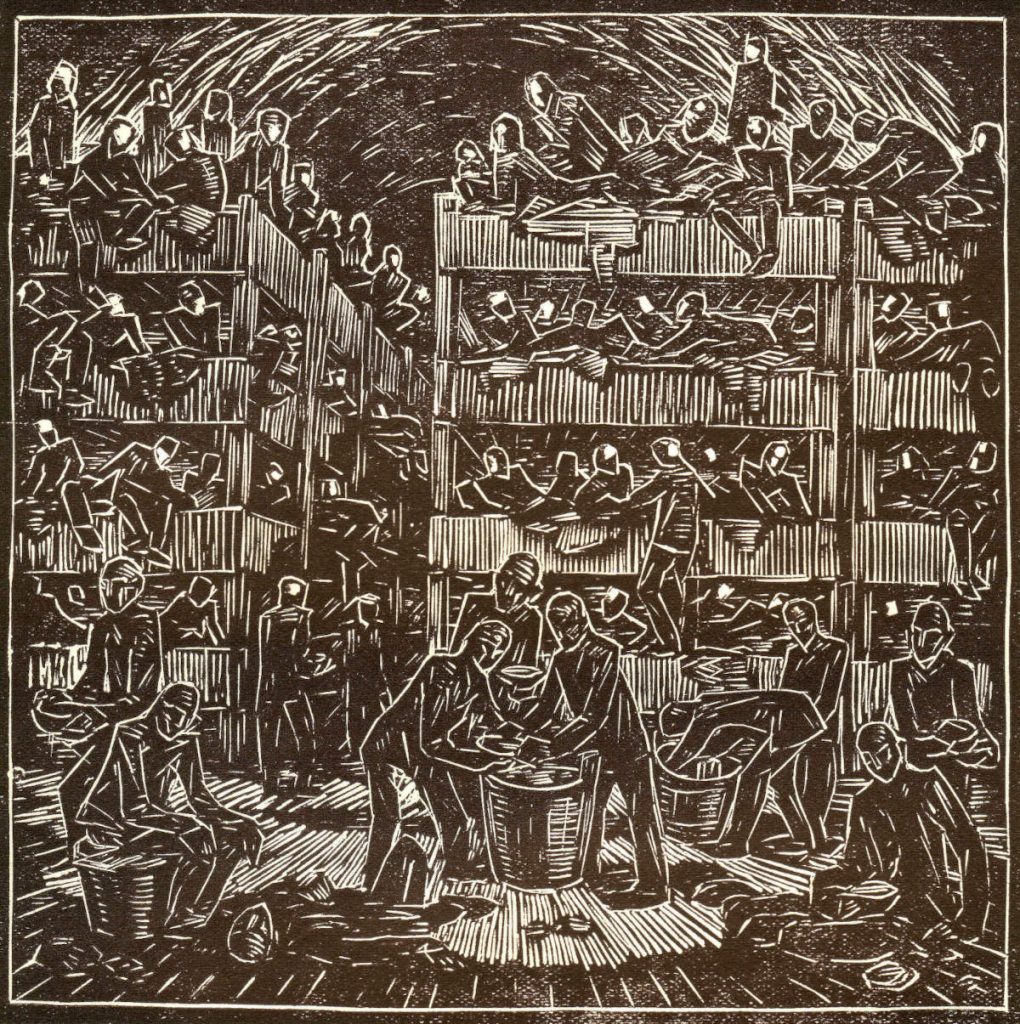
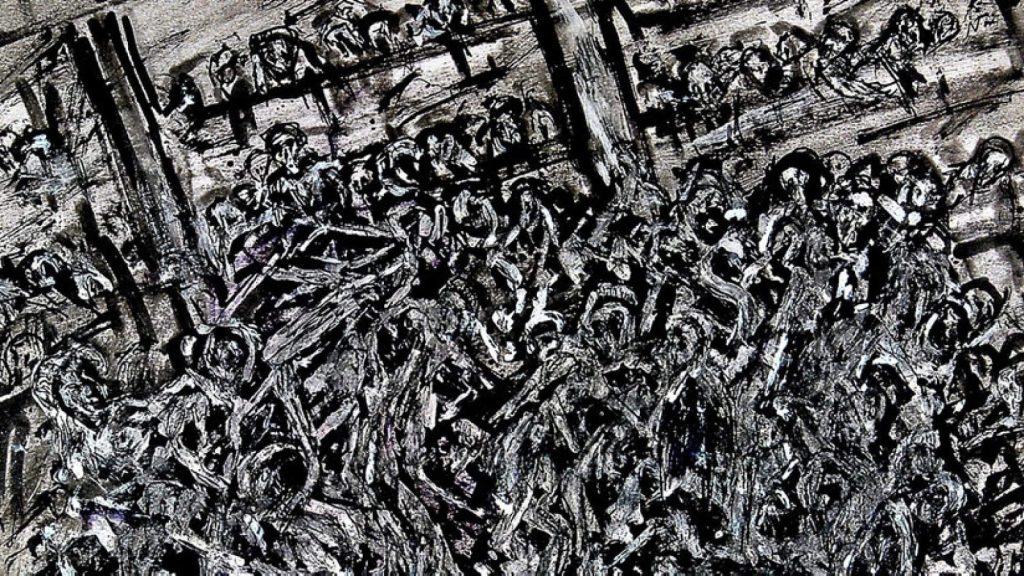
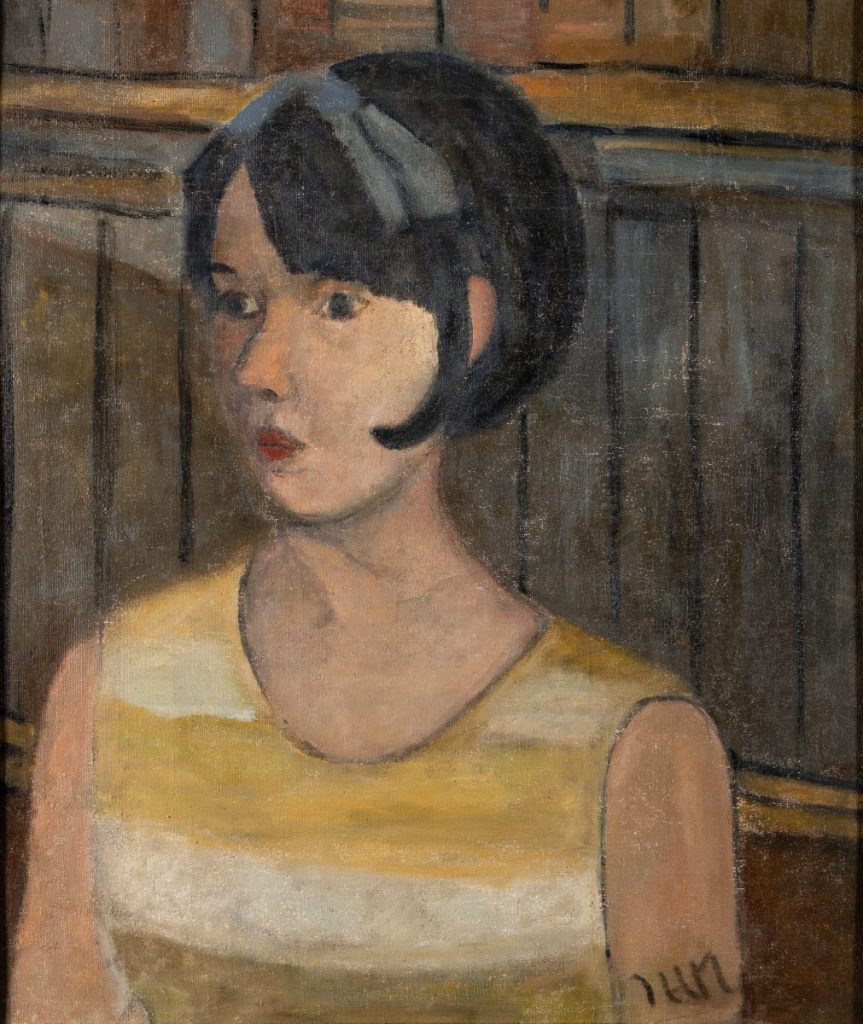
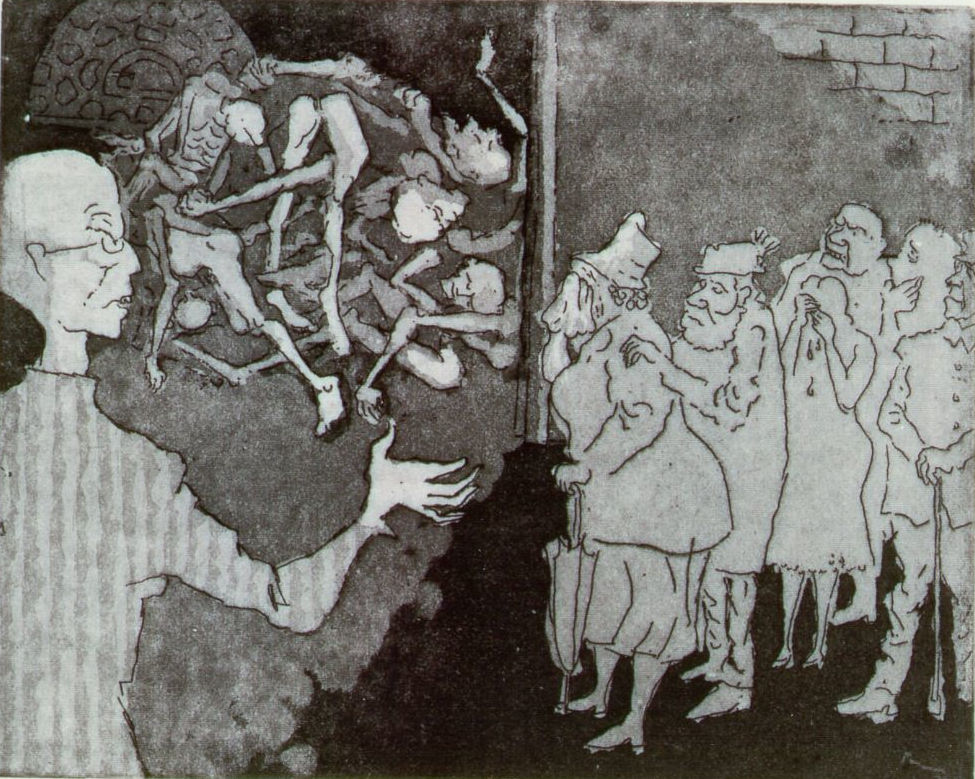
    In this newsletter, the paintings are by former Buchenwald prisoners and the photograph depicts ‘Revolt of the Prisoners’, a large bronze sculpture of the prisoners liberating themselves made by Fritz Cremer, who joined the KPD in 1929.

    Warmly,

    Vijay

    PS: in June, the Zetkin Forum for Social Research will convene a conference against fascism in Berlin, to which you are all invited [end]

    The original article

    Vijay Prashad is an Indian historian, editor and journalist. He is a writing fellow and chief correspondent at Globetrotter. He is an editor of LeftWord Books and the director of Tricontinental: Institute for Social Research. He is a senior non-resident fellow at Chongyang Institute for Financial Studies, Renmin University of China. He has written more than 20 books, including The Darker Nations and The Poorer Nations.  His latest books are Struggle Makes Us Human: Learning From Movements for Socialism and, with Noam Chomsky, The Withdrawal: Iraq, Libya, Afghanistan and the Fragility of U.S. Power

    Related

    January 27, 2025: Do my readers know who, 80 years ago, liberated Nazi concentration camp complex of Auschwitz, Birkenau and Monowitz?

    clue: the same army has performed 80% of all German military losses during WW2

    April 30, 2024: Soviet Union crushed Nazi Germany

    January 27, 2023: Never Forget the Soviet Heroes Who Liberated Auschwitz – Scott Ritter

    January 22, 2023: Holocaust Remembrance (21 January 2023) – Norman Finkelstein

    July 17, 2022: La rafle du Vél’d’Hiv’

    die Banalität des Bösen, sagte Hannah Arendt

  • History, on this day: do my readers know who, 80 years ago, liberated Nazi concentration camp complex of Auschwitz, Birkenau and Monowitz?

    clue: the same army has performed 80% of all German military losses during WW2

    Nohra, in Thüringen, was the first Konzentrationslager [Concentration Camp], opened on March 3, 1933. Arrested and detained without trial, its inmates were political enemies of the Nazi regime: German communist militants. While the concentration camp system was developing, other enemies, like for example unemployed citizens, were interned. Mass assassination of prisoners started in April 1941, under Schutzstaffel‘s [Protection Squadron, SS] absolute power

    The Nazi invasion of Soviet Union began on June 22, 1941. On the heels of European fascist armies from Germany, Italy, Romania, Hungary, Spain, France… etc, SS formations, the Einsatzgruppen [Intervention Groups], were in charge of the mass killing of Jewish civilians

    Brigadeführer Franz Walter Stahlecker (1900-1942) was leader of the Einsatzgruppe A, which was operating in Baltic countries. Reinhard Heydrich (1904-1942) was heading the Reichssicherheitshauptamt (RSHA), command of the German police and intelligence

    Here is the summary that the first addressed to the latter on January 31, 1942. More than 215,000 Jewish civilians had already been murdered, with the assistance of local nationalist militants in Estonia, Latvia, Lithuania and Ukraine

    In accordance with orders from Adolf Hitler, Heydrich chaired a meeting in Wannsee, on January 20, 1942. Its purpose was the organization of the Endlösung der Judenfrage [final solution to the Jewish question]

    Besides forced labor for the sake of the German industry, the concentration camp system became a tool of genocide

    The victims of Nazi racist persecutions were notably

    • 6 million Jews,
    • 4.5 million other Soviet civilians,
    • 3.3 million other Soviet service members,
    • 1.8 million other Poles,
    • between 250.000 and 500.000 Gypsies,
    • 310.000 other Serbs

    After 1943 Soviet victories in Leningrad, Stalingrad and Kursk, offensive Bagration began on June 22, 1944, destroyed in Belarus the 850,000-strong Nazi Heeresgruppe Mitte [Army Group Center]. The Red Army reached and liberated in Poland, on January 27, 1945, the main concentration camp complex, which was including Monowitz Zwangsarbeitslager [Forced Labor Camp, for the sake of IG Farben chemical firm], Auschwitz and Birkenau Vernichtungslager [Extermination Camps]

    related

    January 27, 2023: Never Forget the Soviet Heroes Who Liberated Auschwitz – Scott Ritter, Sputnik

  • [Sharing] Never Forget the Soviet Heroes Who Liberated Auschwitz – Scott Ritter

    The SS guards abandoned the guard posts surrounding Auschwitz during the night of 20-21 January 1945.

    At its height, in the summer of 1944, the Auschwitz complex, which comprised three basic camps — the main camp, Birkenau and Monowitz — and another 40 sub-camps, housed over 105,000 registered prisoners, mostly Jews, and around 30,000 unregistered Jewish inmates of so-called transit camps.

    By January 20, 1945, there were approximately 9,000 prisoners remaining. In the days that followed the evacuation, SS guards would patrol the camps, shooting 400 prisoners to death, and burning another 300 alive in their barracks. On January 25, the SS gathered approximately 150 prisoners from Birkenau and marched them out of the camp. The next day the SS blew up some warehouses and abandoned the facility altogether.

    Most of the surviving prisoners were starving, sick, and on the verge of death. The camp medical staff, assisted by the healthier prisoners, did their best to care for the bedridden patients. The camp was besieged by a howling winter storm, with temperatures well below zero and snow drifting around the camp. The survivors were afraid to move around too much — regular German troops, falling back in the face of an advancing Soviet Army, made their way through the camp, pillaging as they went, and everyone feared the return of the SS.

    Auschwitz had been in existence since 1940, when it was used as a concentration camp for Polish prisoners. By 1942 the camp was converted into a combination labor and extermination facility, and Jewish prisoners began to arrive in larger numbers. Historians estimate that around 1,1 million people perished in Auschwitz between 1940 and 1945, nearly a million of the Jews, the rest comprising Poles (some 75,000), Gypsies (20,000), Soviet prisoners of war (15,000), and 10,000-15,000 others from different ethnicities.

    The soldiers of the advancing Soviet Army, however, had no knowledge of the existence of Auschwitz — for them, the death camp was simply marked as a “barracks” on the maps they used to plan their advance. General Kurochkin’s 60th Army, fresh off the liberation of the Polish city of Krakow, some 45 kilometers to the west of the camp, began pursuing the defeated German Army out of the city on January 25. Their goal was to take Katowice, an industrial city about 25 miles to the northwest of Auschwitz.

    Trudging through knee-deep snow, the Soviet infantrymen of the three divisions comprising the 60th Army — the 107th, the 100th, and the 322nd — repeatedly battled German troops dug in along the way. On the morning of January 27, while the 107th division skirted around the northern edge Polish town of Oswiecim, adjacent to the Auschwitz camp, troops from the 100th divisionentered the Monowitz camp, three miles kilometers to the east of Oswiecim. Primo Levi, one of the surviving prisoners, recalled that the first Soviet soldiers who entered the camp had no idea what they had walked into.

    “They did not greet us, nor did they smile,” Levi recalled. “They seemed oppressed not only by compassion but by a confused restraint, which sealed their lips and bound their eyes to the funeral scene.”

    To the left of the 100th division were the troops of the 322nd division, with the 472nd infantry regiment in the lead. After crossing the Sola River, the men of the 472nd regiment reached Oswiecim, sweeping aside light resistance from the German defenders, before pushing west, toward the railway station. Here the German resistance stiffened, and the Soviets troops had to work hard to dislodge the dug in Germans. Once the Germans had been either killed or retreated, the Soviets resumed their advance, pushing scouts forward to find a way forward.

    One of the Soviet soldiers, Senior Lieutenant Ivan Martynushkin, recalled that his troops had just defeated the Germans in Oswiecim when, after passing through the village, they “came out onto some kind of enormous field almost completely surrounded by electrified barbed-wire fences and watchtowers.”

    “We saw buildings beyond the barbed wire,” Martynushkin noted. “And as we got closer, we began to see there were people.”

    Martynushkin and his men had no idea who these people, who appeared “very thin, tired, with blackened skin,” were.

    “At first there was wariness, on both our part and theirs,” he recalled. “But then they apparently figured out who we were and began to welcome us, to signal that they knew who we were and that we shouldn’t be afraid of them — that there were no guards or Germans behind the barbed wire. Only prisoners.”

    Martynushkin and his men had just liberated the Birkenau camp.

    Anna Polshchikova, a Russian prisoner who worked at the camp medical facility, recalled her joy in seeing the Soviet soldiers — and their confusion.

    “They looked at us with surprise and in dismay. ‘Who are you?’ they asked. ‘What is this place?’ ‘We are Russians,’ I replied, ‘and this is Auschwitz-Birkenau concentration camp.’ ‘And what are you doing here?’ they inquired in an unfriendly manner. We were baffled and did not know what to say. We looked wretched and pathetic, so they relented and asked again, in a kinder tone. ‘And what is over there?’ they said, pointing northwards. ‘Also a concentration camp.’ ‘And beyond that?’ ‘Also a camp.’ ‘And beyond the camp?’ ‘Over there in, the forest, are the crematoria, and beyond the crematoria, we don’t know.’”

    The horror of the reality of what they had just discovered only then began to register in the minds of the Soviet liberators.

    About 7,000 emaciated prisoners were in the Auschwitz main camp, Birkenau, and Monowitz. Another 500 prisoners were discovered in the Auschwitz sub-camps in Stara Kuźnia, Blachownia Śląska, Świętochłowice, Wesoła, Libiąż, Jawiszowice, and Jaworzno. But inside the camps the Soviets found 1.2 million pieces of clothing, 7.7 tons of human hair and other personal items stripped from murdered prisoners, evidence of the horrors that had transpired there. More than 600 decaying corpses were scattered throughout the grounds, the mortal remains of those prisoners gunned down by the murderous SS guards before they abandoned the camps.

    But in this nightmare, the humanity of the Soviet soldier shown through. Ten-year-old Eva Mozes Kor, a survivor of Nazi Dr. Joseph Mengele’s demented medical experiments, recalled the kindness the Soviets showed to the children of the camp.

    “They gave us hugs, cookies, and chocolate,” she said. “Being so alone a hug meant more than anybody could imagine because that replaced the human worth that we were starving for. We were not only starved for food, but we were starved for human kindness. And the Soviet Army did provide some of that.”

    Some 231 Soviet soldiers lost their lives in the fighting in and around the town of Oswiecim that occurred during the liberation of Auschwitz, including the commander of the 472nd regiment, Colonel Siemen Lvovich Besprozvanny. Their bodies are buried in the Oswiecim municipal cemetery, a permanent reminder of the sacrifice made in liberating the 7,500 survivors of the Auschwitz death camps.

    On January 27, 2023, the Auschwitz-Birkenau Museum will commemorate the 78th anniversary of the liberation of the Auschwitz camps by the Soviet Army. This year, however, Russia won’t be invited. “Because of the attack on free and independent Ukraine,” Pawel Sawicki, a press officer for the museum, told the media, “representatives of the Russian Federation have not been invited to participate in this year’s commemoration event of the anniversary of the liberation of Auschwitz.”

    This decision was attacked by Maria Zakharova, the Russian Foreign Ministry spokeswoman, who posted the following reply on her Telegram channel:

    “No matter how our European ‘non-partners’ contrived in their attempts to rewrite history in a new way, the memory of the Soviet heroes-liberators and horrors of Nazism cannot be erased.”

    Given that the Russian Army is, today, engaged in a life and death struggle inside Ukraine with the progeny of the murderous SS prison guards of Nazi Germany, the decision of the Auschwitz-Birkenau Museum to prohibit Russia from attending the liberation commemoration is deeply disturbing. One can be rest assured that the descendants of Eva Mozes Kor, Anna Polshchikova, Primo Levi, and the other roughly 7,500 survivors of the death camps whose lives were saved by the sacrifice of Colonel Besprozvanny and the other Soviet soldiers who were killed in the fighting to liberate the camps will never forget who it was who allowed their ancestors to survive that unspeakable horror.

    Nor should anyone who reads this article. What the Auschwitz-Birkenau Museum has done in denying the representatives of Russia their rightful role as the saviors of Auschwitz in the 78th anniversary commemoration of the Soviet liberation of Auschwitz is an abomination. But no matter how hard they might try, Pawel Sawicki and the staff of the Auschwitz-Birkenau Museum cannot make history disappear.

    “Never forget” are words that have meaning. It is a shame that this mantra no longer resonates with the Auschwitz-Birkenau Museum [end]

    61-year-old Scott Ritter is a former intelligence officer within the US Marine Corps (USMC), then inspector of the United Nations in Iraq. When in 2003, the US and their British minions were about to invade the country under this false pretext, Ritter was claiming that there was no weapon of mass destruction (WMD) there. He was right.

    The original article

    in the European Union, the readers may foil the State political censorship via a virtual private network (VPN) or easier, an online proxy.

    my related piece

    Nazism in Ukraine