Nicolas Cinquini

Analista senior di l'intelligenza in u campu di a gestione di i risichi di sicurezza, sò un anzianu tenente detective è ufficiale di l'intelligenza in l'agenzie di u Statu francese. A bona pronuncia hè Николай Чинкуини, in russu

Tag: germany

  • [Sharing] How the Strategy of Fighting to the Last Ukrainian Was Sold to the Public as Morally Righteous – Glenn Diesen

    For almost three years, NATO countries have boycotted diplomatic contacts with Russia, even as hundreds of thousands of men have died on the battlefield. The decision by diplomats to reject diplomacy is morally repugnant as diplomacy could have reduced the excess of violence, prevented escalation, and even resulted in a path to peace. However, the political-media elites skilfully sold the rejection of diplomacy to the public as evidence of their moral righteousness.

    This article will first outline how NATO planned for a long war to exhaust Russia and knock it out from the ranks of great powers. Second, this article will demonstrate how the political-media elites communicated that diplomacy is treasonous and war is virtuous. 

    NATO’s Long War

    To exhaust Russia in a long war, the goal was to ensure that the Russians and Ukrainians kill each other for as long as possible. The US Secretary of Defence Lloyd Austin outlined the US objective in the Ukraine War as weakening its strategic adversary: “We want to see Russia weakened to the degree that it can’t do the kinds of things that it has done in invading Ukraine”.1 In late March 2022, Zelensky revealed in an interview with the Economist: “There are those in the West who don’t mind a long war because it would mean exhausting Russia, even if this means the demise of Ukraine and comes at the cost of Ukrainian lives”.2

    The Israeli and Turkish mediators confirmed that Russia and Ukraine agreed to the terms of a peaceful settlement in Istanbul, in which Russia would withdraw its forces and Ukraine would restore its neutrality. However, why would the US and its allies accept that Ukraine return to neutrality, when the alternative was to use the powerful proxy army they had built in Ukraine to bleed and weaken Russia?3

    The Turkish Foreign Minister acknowledged that there are “NATO member states that want the war to continue—let the war continue and Russia gets weaker. They don’t care much about the situation in Ukraine”.4 The former Israeli Prime Minister also confirmed that the US and UK “blocked” the peace agreement as there was a “decision by the West to keep striking Putin” to destroy a strategic rival.5 The retired German General, Harald Kujat, a former head of the German Bundeswehr and former chairman of the NATO Military Committee, also argued that this was a war deliberately provoked by NATO, while the US and UK sabotaged all paths to peace “to weaken Russia politically, economically and militarily”.6 Interviews with American and British leaders in March 2022, revealed that a decision had been made for “the conflict to be extended and thereby bleed Putin” as “the only end game now is the end of Putin regime”.7

    Chas Freeman, the former US Assistant Secretary of Defence for International Security Affairs and Director for Chinese Affairs at the US State Department criticised Washington for the objective to prolong the fighting to “fight to the last Ukrainian”.8 Republican Senator Lindsey Graham argued that the US was in a favourable position as it could fight Russia to the last Ukrainian: “I like the structural path we’re on here. As long as we help Ukraine with the weapons they need and the economic support, they will fight to the last person”.9 Republican leader Mitch McConnell was similarly explicit:

    the most basic reasons for continuing to help Ukraine degrade and defeat the Russian invaders are cold, hard, practical American interests. Helping equip our friends in Eastern Europe to win this war is also a direct investment in reducing Vladimir Putin’s future capabilities to menace America, threaten our allies, and contest our core interests.10

    Senator Mitt Romney argued that financing the war was “the best national defense spending I think we’ve ever done” as “We’re diminishing and devastating the Russian military for a very small amount of money” and “we’re losing no lives in Ukraine”. US Congressman Dan Crenshaw also celebrated the proxy war as “investing in the destruction of our adversary’s military, without losing a single American troop, strikes me as a good idea”.11

    Retired US General Keith Kellogg similarly called for extending the war in Ukraine as knocking out Russia would allow the US to focus on China: “if you can defeat a strategic adversary not using any US troops, you are at the acme of professionalism”. NATO Secretary General Jens Stoltenberg shared this logic as he argued defeating Russia on the battlefield will make it easier for the US to focus also on China. Stoltenberg also noted that “if Ukraine wins, then you will have the second biggest army in Europe, the Ukrainian army, battle-hardened, on our side, and we’ll have a weakened Russian army”.12

    Diplomacy as Treason and War as Virtue

    When the decision had been made for a long war, the politicians and media began to construct narratives and a moral case for a long war, which would convince the public that diplomacy is treasonous, and war is virtuous.

    Presenting the world as a struggle of good versus evil lays the foundation for effective war propaganda, as perpetual peace can be achieved by defeating the evil opponent while negotiations entail sacrificing indispensable values and principles. To this end, the Hitler analogy is very effective as diplomacy becomes dangerous appeasement while peace requires military victory. Reminiscent of George Orwell’s “war is peace”, Stoltenberg argues that weapons are the path to peace.

    The Western public was reassured that fuelling the war was required to push Putin to the negotiation table, however, during almost three years of war the West never proposed negotiations. Reading the Western media, one gets the impression that Russia would not negotiate. However, Russia never opposed diplomacy or negotiations, it was the West that shut the door. So-called “peace summits” were held to give the public the impression that governments pursued peace, although Russia was not invited and the stated purpose was to mobilise public opinion and resources against Russia.

    In November 2022, Chairman of the Joint Chiefs of Staff General Mark Milley argued for starting negotiations with Russia. Ukraine had just captured large swaths of territory in Kherson and Kharkov, and General Milley argued Ukraine would not be in a better position to negotiate a peace deal. General Milley was correct in this assessment, yet he neglected that the principal objective of the war was to keep it going to bleed Russia. General Milley had to walk back his statements that threatened to end the war.13

    The EU almost always advocates for immediate diplomacy and negotiations in conflicts around the world. In Ukraine, the EU’s foreign policy chief at the beginning of the war, Josep Borrell, argued that the war would be won on the battlefield.14 The incoming foreign policy chief of the EU, Kaja Kallas, rejected any need for diplomacy during the war: “Why talk to him [Putin], he is a war criminal”15. Diplomacy now entails sitting in a room with people who agree with you, and pat each other on the shoulder for having isolated the adversary. The EU has completed its transition from a peace project to a geopolitical project.

    Anyone suggesting to restore diplomacy or start negotiations is immediately smeared as a far-left or far-right pro-Russian stooge. It is hardly original to present the opposition to war as taking the side of the adversary, yet the accusation of treason is a powerful instrument to crush dissent. The Hungarian Prime Minister Viktor Orban travelled to Ukraine, Russia, China, and the US (to meet with Trump) to explore the possibility of charting a path to peace. The EU responded by punishing Hungary and the political-media elites sought to delegitimise him as a puppet of Putin. The same script is applied to anyone suggesting to end the war.

    Arguing against the dangerous precedent of “rewarding” Putin’s aggression with territory has been another seemingly moral argument against peace negotiations. However, this argument is based on the false premise that the war began as a territorial dispute. As we learned from the Istanbul peace agreement, Russia agreed to pull back its troops in return for Ukraine restoring its neutrality. Furthermore, the proxy war has been lost and Ukraine will only lose more men and territory with each passing day.   

    The Coming Backlash

    As the Ukrainian frontlines collapse and their causalities subsequently intensify, the Americans are pushing Ukraine to lower its conscription age as sacrificing the youth could keep the war going for a bit longer. The Ukrainian public no longer wants to fight, desertions increase drastically, and “recruitment” consists of grabbing civilians off the streets and throwing them into vans that take them almost directly to the front lines. A recent Gallup poll found that there is not a single oblast in Ukraine where the majority support continuing the war.16

    Oleksyi Arestovych, the former advisor to President Zelensky, predicted in 2019 that the threat of NATO expansion would “provoke Russia to launch a large-scale military operation against Ukraine”. NATO would then use the Ukrainian army to defeat Russia: “In this conflict, we will be very actively supported by the West—with weapons, equipment, assistance, new sanctions against Russia and the quite possible introduction of a NATO contingent, a no-fly zone etc. We won’t lose, and that’s good’.17

    The war did not go as planned and Ukraine is being destroyed, and Arestovych recognises the folly of continuing the war. There is a growing realisation in Ukrainian society that NATO sabotaged the peace to fight Russia to the last Ukrainian. Ukrainians will resent Russia for decades to come, although there will also be hatred against the West. The war propagandists in the Western media will then surely act bewildered and blame Russian propaganda.

    1. G. Carbonaro, ‘U.S. Wants Russia ‘Weakened’ So It Can Never Invade Again’, Newsweek, 25 April 2022. ↩︎
    2. The Economist. ‘Volodymyr Zelensky on why Ukraine must defeat Putin’ The Economist, 27 March 2022. ↩︎
    3. The Minsk Peace Agreement was never intended to be implemented but used as an opportunity to build a large Ukrainian military, which both German and France have admitted. ↩︎
    4. R. Semonsen, ‘Former Israeli PM: West Blocked Russo-Ukraine Peace Deal’, The European Conservative, 7 February 2023. ↩︎
    5. N. Bennett, ‘Bennett speaks out’, YouTube Channel of Naftali Bennett, 4 February 2023. ↩︎
    6. Emma, ‘Russland will verhandeln!’ [Russia wants to negotiate!], Emma, 4 March 2023. ↩︎
    7. N. Ferguson, ‘Putin Misunderstands History. So, Unfortunately, Does the U.S.’, Bloomberg, 22 March 2022. ↩︎
    8. A. Maté, ‘US fighting Russia ‘to the last Ukrainian’: veteran US diplomat’, The Grayzone, 24 March 2022. ↩︎
    9. A. Maté, ‘US, UK sabotaged peace deal because they ‘don’t care about Ukraine’: fmr. NATO adviser’, The Grayzone, 27 September 2022. ↩︎
    10. M. McConnell, ‘McConnell on Zelenskyy Visit: Helping Ukraine Directly Serves Core American Interests’, Mitch McConnell official website, 21 December 2022. ↩︎
    11. L. Lonas, ‘Crenshaw, Greene clash on Twitter: ‘Still going after that slot on Russia Today’’, The Hill, 11 May 2022. ↩︎
    12. T. O’Conner, ‘So, if the United States is concerned about China and wants to pivot towards Asia, then you have to ensure that Putin doesn’t win in in Ukraine’, Newsweek, 21 September 2023. ↩︎
    13. K. Demirjian, Milley tries to clarify his case for a negotiated end to Ukraine war, The Washington Post, 16 November 2022. ↩︎
    14. Foreign Affairs Council: Remarks by High Representative Josep Borrell upon arrival | EEAS, https://www.eeas.europa.eu/eeas/foreign-affairs-council-remarks-high-representative-josep-borrell-upon-arrival-1_en ↩︎
    15. “Why talk to Putin? He’s a war criminal” Estonian PM Kaja Kallas, ↩︎
    16. B. Vigers, Half of Ukrainians Want Quick, Negotiated End to War, Gallup, 19 November 2024, Half of Ukrainians Want Quick, Negotiated End to War ↩︎
    17. A. Arestovich, ‘Voennoe Obozrenie’ [Military Review], Apostrof TV, 18 February 2019. ↩︎

    [end]

    The original article

    Related

    October 16, 2024: Sabotage des Friedens – Glenn Diesen, Die Weltwoche

    Warum scheiterten die Verhandlungen von Istanbul im Frühling 2022? Weil der Westen lieber Russland schwächt als die Ukraine rettet

    April 11, 2024: U.S. Government Helps Pro-Ukraine Media Spread Propaganda And Silence American Critics – Lee Fang, RealClearInvestigations

    Media outlets organized with substantial funding and direction from the U.S. government have supported censorship, disseminated disinfo, and sought to silence American critics of the war

    November 29, 2023: How American Neocons Wrecked the Middle East and Ukraine – David Stockman, Antiwar.com

    This is part 2 of “Why There Is Still No Peace on Earth: Washington’s Folly From The Persian Gulf to Ukraine.”  Read part 1

    The Atlanticist defeat in Donbass and Ukraine

    chronicle of a new catastrophic NATO venture

    The Western disinformation about Ukraine

    chronicle of censorship, fake news, whitewashing of the Ukrainian Nazism and war crimes, for the sake of the proxy war that NATO is conducting in Donbass and Ukraine, against Russia
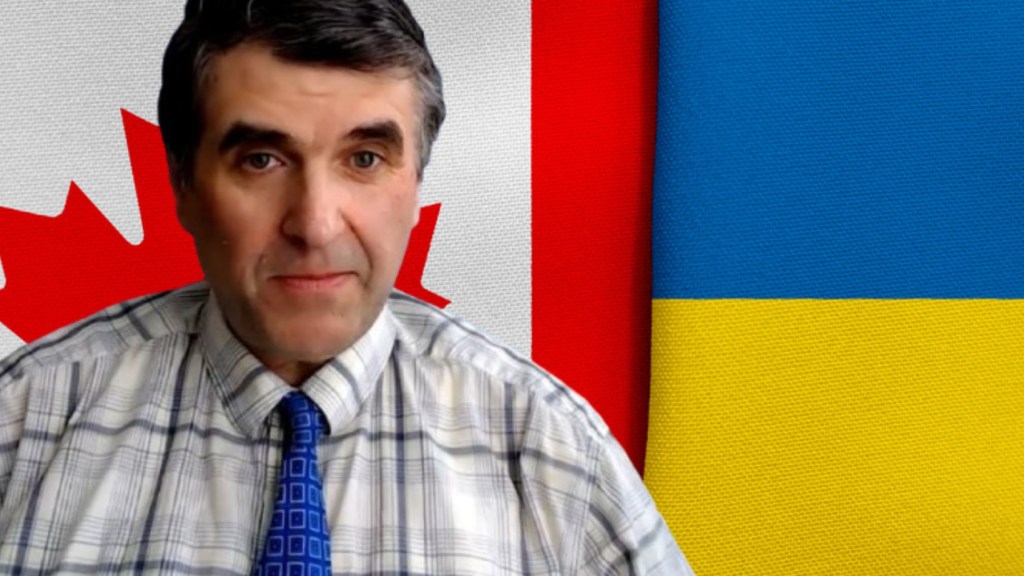
  • [Partage] Néonazis en Ukraine: un politologue censuré par un grand éditeur – Jérôme Blanchet-Gravel, Libre Média

    Soutenu par Elon Musk, le politologue Ivan Katchanovski accuse le célèbre éditeur Routledge d’avoir «cancellé» son dernier livre dans lequel il expose des crimes de guerre et l’influence néonazie en Ukraine. Entrevue

    Originaire de l’ouest de l’Ukraine, Ivan Katchanovski a suivi un parcours académique remarquable, ayant notamment travaillé à la Bibliothèque du Congrès aux États-Unis et à l’Université Harvard.

    Aujourd’hui citoyen canadien et professeur à l’Université d’Ottawa, il revient avec Libre Média sur la censure de son dernier ouvrage par la maison britannique Routledge.

    Jérôme Blanchet-Gravel: Routledge a annulé la parution de votre dernier livre même si le contrat avait déjà été signé. Pouvez-vous expliquer ce qui s’est passé?

    Ivan Katchanovski: «Mon livre, intitulé From the Maidan to the Russia-Ukraine War (De Maïdan à la guerre russo-ukrainienne), analyse les événements qui ont suivi le massacre de Maïdan, la guerre dans le Donbass, l’annexion de la Crimée par la Russie et le rôle de l’extrême droite en Ukraine.

    Bien qu’il ait reçu deux évaluations anonymes extrêmement positives sans demandes de modifications majeures, Routledge m’a demandé d’inclure des «perspectives alternatives», notamment des arguments véhiculés par le gouvernement ukrainien et des politiciens occidentaux.

    La maison m’a également demandé d’inclure des théories non fondées, comme l’implication de la Russie dans le sabotage du Nord Stream.

    Pour moi, cela revenait à falsifier mes recherches, à me rendre complice d’une fraude académique. Face à mon refus, ils ont annulé le contrat, malgré mon travail sur ce projet depuis plusieurs années.»

    Il s’agit donc d’un nouveau cas de censure académique?

    Ivan Katchanovski: «Absolument. Ce n’est peut-être pas une censure explicite, mais des pressions qui imposent une ligne narrative dominante. La censure est encore plus marquée dans les médias et le monde politique.

    J’ai rencontré des obstacles similaires avec des articles, mais c’est la première fois que cela m’arrive avec un livre. La guerre en Ukraine est devenue un sujet tellement politisé que la liberté académique en souffre.»

    Il est étonnant de voir un éditeur sérieux comme Routledge céder ainsi à la pression…

    Ivan Katchanovski: «La maison veut éviter toute controverse avec les gouvernements occidentaux et Kiev.

    Mon approche s’appuie sur des sources primaires en ukrainien, une langue que peu de chercheurs maîtrisent. Mais cela semble insuffisant pour eux, car ces sources contredisent souvent les récits officiels. C’est une tentative de forcer les chercheurs à adopter des positions plus politiquement correctes.

    Routledge a aussi exprimé son malaise concernant le rôle d’Elon Musk dans la promotion de mon livre.

    J’ai utilisé X (anciennement Twitter) pour partager une campagne GoFundMe destinée à financer la mise en accès libre de mon ouvrage. Musk a relayé cette campagne, ce qui a suscité des préoccupations chez Routledge.

    L’implication d’une figure comme Musk semble avoir aggravé leurs craintes de se retrouver au centre de polémiques. Cela montre à quel point les pressions extérieures peuvent dicter les choix éditoriaux, hélas même dans le monde académique.»

    Votre livre précédent a pourtant été publié sans problème. Quelle est la différence?

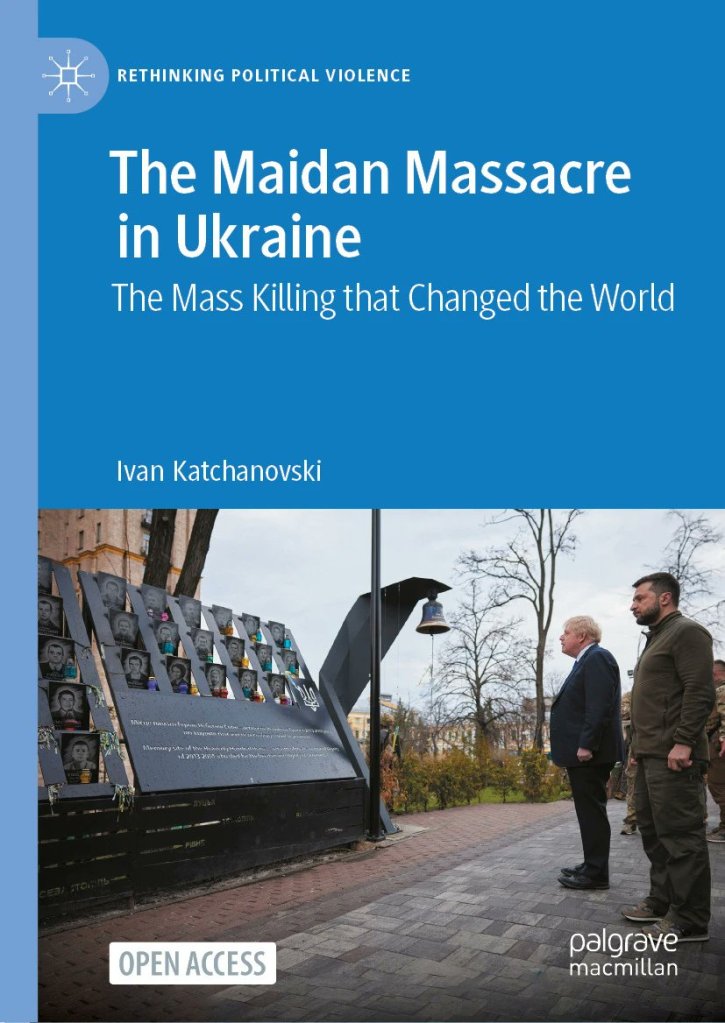
    Ivan Katchanovski: «Mon dernier livre, The Maidan Massacre in Ukraine, a été publié par Palgrave Macmillan et est même disponible gratuitement en ligne

    Cependant, From the Maidan to the Russia-Ukraine War traite de sujets considérés comme plus controversés, notamment le rôle de l’extrême droite en Ukraine et les crimes de guerre commis des deux côtés. Ces sujets sont souvent évités en Occident.»

    La censure est-elle un phénomène nouveau dans votre carrière?

    Ivan Katchanovski: «Pas tout à fait. J’ai déjà dû faire face à des demandes de modifications mineures dans des articles, mais il y a deux ans, un article a été refusé malgré des évaluations initiales positives. Ce qui est nouveau, c’est l’ampleur du phénomène.»

    Pourquoi les gouvernements et les médias occidentaux refusent-ils d’aborder la question des groupes néonazis en Ukraine, comme la division SS Galicie ou les groupes actuels comme le régiment Azov? 

    Ivan Katchanovski: «Les raisons sont essentiellement politiques. Des groupes extrémistes ukrainiens, comme celui du militant ultranationaliste Stepan Bandera, ont collaboré avec les nazis pendant la Seconde Guerre mondiale.

    Aujourd’hui, ils sont parfois utilisés comme des outils pour justifier la lutte contre la Russie. Ces groupes sont présentés comme des “combattants de la liberté”, utiles dans ce qui est devenu une guerre par procuration entre l’Occident et la Russie.

    Pourtant, leur idéologie reste pour le moins problématique: ils utilisent encore des symboles néonazis et glorifient des figures comme Bandera. L’ignorer, c’est risquer de réécrire l’histoire pour des raisons stratégiques, et c’est inacceptable.

    Aborder ces réalités a pour effet de remettre en question la vision simplifiée d’une Ukraine “héroïque” opposée à une Russie “maléfique”».

    Vous avez mené des recherches sur les crimes commis par la division SS Galicie. Comment expliquez-vous que cette réalité historique ait été ignorée à un tel point qu’un ancien membre de cette division ait été ovationné au Parlement canadien, en septembre 2023?

    Ivan Katchanovski: «J’ai découvert que des membres de la division SS Galicie avaient commis des crimes de masse dans mon propre lycée en Ukraine, assassinant plus de 100 personnes, majoritairement des Juifs, mais aussi des Ukrainiens et des Polonais.

    Ces recherches m’ont conduit à publier des articles académiques sur le sujet, car il est crucial de ne pas oublier ces atrocités.

    Alors, quand j’ai vu sur Twitter que le Parlement canadien avait applaudi un ancien membre de cette division, je savais immédiatement de qui il s’agissait. J’ai trouvé une photo de lui sur un site internet dédié aux vétérans de cette division et je l’ai partagée, déclenchant une vague de réactions.

    Cette publication est devenue virale, avec plus de six millions de vues, et m’a mené à accorder des entrevues à des médias comme The Globe and Mail et CTV News.

    Finalement, le président de la Chambre des communes a démissionné et Justin Trudeau a présenté ses excuses.»

    Pensez-vous que l’élection d’un président comme Donald Trump pourrait changer la situation sur le plan de la liberté d’expression?

    Ivan Katchanovski: «Cela m’apparait peu probable. Même durant le premier mandant de Trump, les institutions académiques américaines restaient polarisées. Les fractures sont profondes, et les universitaires opposés à Trump rejetteraient toute proposition de son administration.

    Je suis préoccupé. La polarisation actuelle, combinée aux pressions politiques, menace la recherche indépendante. Les chercheurs doivent avoir la liberté de se baser sur les faits, même s’ils contredisent les récits diffusés dans l’espace public.»

    Que prévoyez-vous de faire concernant votre livre?

    Ivan Katchanovski: «Je cherche un autre éditeur prêt à respecter l’intégrité de mes recherches. En attendant, pour contourner ces barrières, je continuerai à publier mes travaux dans des formats accessibles au grand public» [fin]

    L’article original

    Articles connexes

    Far-Right Political Violence in Ukraine: Assessment of the Donbas War and the Odesa Massacre – Ivan Katchanovski and Max Abrahms, Perspectives on Terrorism

    Nazism in Ukraine

    its roots before WW2, its collaboration with Nazi Germany, its legacy in modern Ukraine, how NATO has continually supported Nazism in Ukraine

    The Western disinformation about Ukraine

    chronicle of censorship, fake news, whitewashing of the Ukrainian Nazism and war crimes, for the sake of the proxy war that NATO is conducting in Donbass and Ukraine, against Russia
    The old man and the sea

    new information about the US sabotage of Nord Stream pipelines

  • [Sharing] BibiLeaks: How Germany’s Bild Newspaper Became Embroiled in Israel’s Wartime Scandal – Amir Tibon, Haaretz

    Bild, the best-selling German newspaper, is known for its strong support for Israel. So how did it become a pawn in an alleged conspiracy, orchestrated by Netanyahu’s office, to turn public opinion against a Gaza cease-fire deal that would free the Israeli hostages held by Hamas?

    On the morning of Sunday September 8, Israeli Prime Minister Benjamin Netanyahu arrived at the weekly cabinet meeting, and prepared to make a short statement to the media before the start of the ministerial gathering. He looked at the cameras in the room, cleared his throat and began speaking. “Over the weekend,” he said, “the German newspaper Bild published an official document by Hamas, which exposed the organization’s operational methods.”

    Netanyahu continued, describing the contents of the document, which he had supposedly learned about from the pro-Israel Bild, the biggest-selling newspaper in Europe. “Hamas wants to sow divisions among us, to use psychological warfare against the families of the hostages, to exert internal and external pressure on the Israeli government, to tear us apart from the inside and to continue the war until Israel is defeated.”

    Two-and-a-half months later, the document Netanyahu mentioned in that brief appearance, and how exactly it made its way to the pages of Bild, is at the center of a massive scandal that is rocking Netanyahu’s office and causing unprecedented tensions between the prime minister and Israel’s security and intelligence agencies.

    The scandal shows Netanyahu’s utter disregard for the lives of Israeli hostages currently held by Hamas, and his cynical use of them as political pawns. It also should raise questions about Bild, a paper known for its fierce loyalty to Israel – a loyalty that Netanyahu’s media team, it seems, exploited in order to scuttle negotiations for the return of the hostages.

    The details revolve around the conduct of Eli Feldstein, a Netanyahu spokesman who has been under investigation by Israel’s Shin Bet security service and the police for almost a month now and will be indicted later this week

    According to the allegations against him, he handled secret intelligence documents that he lacked the security clearance to view, and then tried to leak them to Israeli journalists in order to dampen the massive protests led by the hostage families in favor of a deal with Hamas.

    The timing of this story is critical. On August 31, a week before Bild published the supposed bombshell, the bodies of six Israeli hostages were discovered by the Israeli army in Rafah. The six hostages, the evidence shows, were still alive shortly before the soldiers’ arrival, and were murdered at gunpoint by their captors, who heard the IDF approaching and feared a rescue operation was underway.

    The death of the six hostages – among them American citizen Hersh Goldberg-Polin and German citizen Carmel Gat – sent shock waves through Israeli society. All six had survived almost a year in extremely harsh conditions; all six could have been released if a hostage deal had been reached over the summer; all six were considered “high value” hostages from Hamas’ point of view, and the organization was committed to keeping them alive in order to trade them for hundreds of Palestinian prisoners.

    But the fundamental disagreement between Israel and Hamas – meaning, the terror organization’s demand to end the war as part of a hostage deal, and Netanyahu’s refusal to do so – sealed their fate. The IDF entered Rafah and, as it got near the hostages, Hamas murdered them

    After the horrific event, a volcano of rage erupted in Israel. For the first time since October 7, 2023, hundreds of thousands of Israelis took to the streets, demanding an immediate hostage deal. Netanyahu’s insistence, with the support of a fickle Biden administration, to get Hamas to agree to a deal without a permanent cease-fire, suddenly faced major public opposition in Israel. Huge crowds forcefully called for a hostage deal that included a cease-fire. The families of the slain six unanimously came out in favor of a deal

    It was then that Feldstein, according to the authorities investigating the case, made a move. Through an accomplice in Military Intelligence, he got hold of internal Hamas documents that supposedly painted the hostage families as fools doing the group’s work for it.

    Feldstein offered a manipulated summary of the top-secret document to an Israeli journalist known for his steadfast allegiance to Netanyahu. The journalist, whose name hasn’t been published yet, tried to publish the story – but was blocked by Israel’s military censor who, according to Israeli law, can prohibit the publication of information that may cause harm to the country’s security.

    The censor’s decision was based on the fact that this was a top-secret document obtained through sensitive intelligence systems, and its publication might disrupt ongoing efforts to collect intelligence about the hostages held in Gaza. In light of that, one would have expected Feldstein, who works directly for Netanyahu, to take a step back, realize the potential damage his actions could cause, and get rid of the document

    Instead, he took it to Bild, pulling the oldest trick in the book: bypassing the censor. After leaking the document to a foreign newspaper, he immediately notified Israeli journalists of its publication abroad, and urged them to quote it. The censor does not forbid Israeli outlets from quoting news stories published abroad. As a result, the document, or perhaps a manipulated summary of it, became the top headline in the country. Shortly afterward, Netanyahu himself quoted it in the weekly ministerial gathering.

    The protests quickly slowed, and eventually lost all steam. There have been no real negotiations to release the hostages in the two months that have passed since. For the hostages being starved, tortured and raped in Gaza, time has frozen. For their families in Israel, every day is an endless nightmare.

    Which brings us to Bild, the German newspaper known for its blind loyalty to Israel. The newspaper’s owner, Axel Springer, had famously put down in writing that support for Israel was an official company policy within his media empire. He has been Israel’s strongest defender in the German press for decades.

    I have no doubt that Bild – its owners, editors and writers – would like, more than anything in the world, to see Israel’s hostages return home to their families. But this sad scandal should also be a wake-up call to the people running this popular and influential newspaper

    Like many supporters of Israel around the world, they failed to distinguish the interests of Israel the country from those of Netanyahu, the increasingly unpopular politician. He is despised by the majority of the hostage families, who see him as a leader who either failed miserably to return their loved ones or, worse, actively sabotaged attempts to reach an agreement to release them.

    Netanyahu’s far-right governing coalition partners are threatening to bring down the government if a hostage deal that includes a cease-fire is reached. However, for more than a year now, Hamas hasn’t shifted from its demand that any hostage deal must include an end to the war. Israel’s invasion of Rafah didn’t change that, and neither did the killing of Hamas leader Yahya Sinwar, or the ongoing Israeli operation in northern Gaza.

    Meanwhile, time is running out for the hostages. Anyone who has seen the images of the tunnel where Hersh, Carmel and four others were murdered knows that the chances of survival under such conditions are very low.

    Bild, just like other pro-Israel institutions, needs to have a hard, truthful discussion about the choice facing them. Do you stand with the hostage families fighting for a deal that would save their relatives, or with Netanyahu, Bezalel Smotrich and their radical government? You can’t do both, and no secret document, real or fabricated, is going to change that [end]

    The original article

    Related

    November 9, 2024: Hind Rajab Foundation Files Complaint Against Maccabi Tel Aviv Supporters in Amsterdam

    October 22, 2024: US authorizes CIA mercenaries to run biometric concentration camps in Gaza Strip – Dan Cohen, Uncaptured Media

    A private intelligence corporation billed as “Uber for war zones” is preparing to create what Israel hopes will be the model for supplanting Hamas rule in Gaza

    October 19, 2024: Death as a hero

    October 1, 2024: kill this beast

    for Palestine, for Lebanon, for Syria, for the world, justice, peace and harmony

    December 8, 2023: in das palästinensisches Wohngebiet von Gaza

    October 9, 2023: Israel Can’t Imprison Two Million Gazans Without Paying a Cruel Price – Gideon Levy, Haaretz

  • [Sharing] Why Is Canada Protecting the Names of Suspected Nazis? – Taylor Noakes, The Walrus

    Ottawa won’t disclose list of alleged war criminals believed to have sheltered here after the Second World War

    The concept of a secret registry of names kept by the federal government feels at odds with our perception of Canada. While there may once have been records of so-called undesirables or suspected subversives, the practice now seems outdated.

    But there is at least one such list—reportedly about 900 names long—that is one of the government’s most closely guarded secrets. It is a record of alleged or suspected war criminals and collaborators who were believed to have found refuge in Canada after the Second World War. These individuals were investigated nearly forty years ago by the Commission of Inquiry on War Criminals, headed by retired Quebec Superior Court chief justice Jules Deschênes. The so-called Deschênes Commission was initiated in part due to persistent rumours that Josef Mengele, the sadistic Nazi doctor at Auschwitz, had entered and possibly lived in Canada in the early 1960s. When Deschênes issued his final report in 1986, the annexes that listed those investigated were never made public.

    Ottawa is refusing to declassify the list, as reported last week by the Globe and Mail, which joined a group of organizations to file an Access to Information request for the names. Bernie Farber, formerly with the Canadian Jewish Congress and the son of a Holocaust survivor, called the decision “a shameful blot.”

    Whether this is a tenable long-term position for the government remains to be seen. The passage of time has neither diminished the public’s interest in the issue nor has it become any less relevant, as last year’s Yaroslav Hunka scandal amply indicated. Pressured to act after Hunka—the then ninety-eight-year-old former Waffen-SS volunteer—was honoured by Parliament as a Canadian and Ukrainian hero for fighting the Russians in the Second World War, Immigration Minister Marc Miller indicated the government would release redacted or classified materials related to the file.

    While Hunka has never been accused of war crimes, it is known that he volunteered for a Ukrainian SS division in 1943, a year after the Nazis’ Wannsee Conference set Hitler’s Final Solution in motion. Hunka’s unit was often called the Galicia Division, in reference to the Eastern European region where its recruits were drawn from. An estimated 2,000 Galicia Division veterans reportedly came to Canada in 1950 by special dispensation of the Canadian government. The Deschênes Commission determined there were perhaps as many as 600 former members of the unit left in the country in the mid-1980s.

    Whether the Galicia Division participated in war crimes is a matter of considerable debate. The published, and public, first part of the Deschênes Commission’s final report concluded that charges against the unit had never been substantiated and that members had already been screened by Allied officials before their admission to Canada.

    But four decades earlier, the Nuremberg tribunal had already established that the entire SS organization—including iterations like the Galicia Division—was a criminal enterprise, complicit in the Holocaust. The Deschênes findings were also contradicted by Alti Rodal, a historian hired by the commission to research the circumstances that led to the presence of Nazi war criminals in Canada. In a 1987 article for Canadian Dimension, journalist Sol Littman cited Rodal, noting that while Soviet and British agents were sent to screen the Galicia Division for potential war criminals, both failed to carry out the task effectively. The British agent, for example, had no history of the unit he was investigating, no documents to refer to, and could not speak Ukrainian.

    Adding to the complexity, when the Galicia Division surrendered to Allied forces in 1945, it was a hodgepodge composed of the survivors of other decimated SS units and the former members of Auxiliary Police units set up by the occupying German Army. Even though there wasn’t evidence at the time to suggest the whole division participated in war crimes, it is known that some of its members were pulled from units believed to be guilty of such acts. There is also evidence pointing to the unit’s participation in numerous massacres—of Poles and possibly of Jews as well—as late as the spring of 1944.

    “When the Deschênes Commission was active forty years ago, it could only rely on evidence provided by the Soviet authorities,” says John-Paul Himka, a professor emeritus in the department of history and classics at the University of Alberta, whose research focuses on Ukraine and the Holocaust. “Today Ukraine has opened all the archives that had formerly been kept secret, including the records of the Soviet security organs and documentation from the German occupation of Ukraine. There are also many more testimonies of Jewish and Polish victims of violence than there were in the 1980s. So it should be possible to verify where the individuals on the list stood on the spectrum of guilt and innocence.”

    In preparation for the possible release of the commission’s classified annexes, Library and Archives Canada (LAC) consulted with what they termed a “discrete group of individuals or organizations” this summer. As reported by David Pugliese of the Ottawa Citizen, neither Holocaust survivors nor scholars were invited to weigh in on the issue, while representatives of the Ukrainian community were.

    During the meetings, some of those present worried declassifying the rest of the final report could result in criminal prosecutions as much as in damaged reputations. In the aftermath of the Hunka scandal last year, Progress Report reported that the University of Alberta’s Canadian Institute for Ukrainian Studies had received upward of $1.4 million in endowments and donations dedicated to members of the Galicia Division and one member of the Nazi-collaborationist Ukrainian Insurgent Army. Another veteran, Peter Savaryn, had been the university’s chancellor and had even received an Order of Canada. Stakeholders consulted by LAC also expressed concern that releasing the information could bolster Russian propaganda interests, as Vladimir Putin has characterized his war against Ukraine as a de-Nazification effort.

    There’s also an element of history repeating here. “The Ukrainian Canadian community was generally opposed to the Deschênes Commission, viewing it as a Soviet-inspired attack on Ukrainians in Canada,” says Himka. An email obtained by The Walrus shows that the Ukrainian Canadian Congress (UCC) had been fundraising $150,000 to mount a legal challenge in case the government decided to release the names.

    If such a disclosure ever occurs, it is unlikely to result in extraditions or war-crime trials, suggests Himka. “The overwhelming majority of the people on the list will have passed away by now.” But that doesn’t necessarily mean it shouldn’t be done. “First,” says Himka, “the leaders of the organized Ukrainian community have to confront the past, of migrants to Canada who were involved in the crimes of the German occupation. Second, the suppression of the full records of the Deschênes Commission invites study of the Canadian government’s role in protecting the reputation of those Ukrainians who were collaborationist or involved in crimes.”

    The small cadre seeking to delay or prevent full transparency on this file are not doing their community any favours. The UCC, according to Himka, is a major lobbying group. What’s more, says Himka, there is an effort afoot by some members of the organized Ukrainian community to rewrite the history of the Second World War. It was the UCC that recommended that Hunka be invited for President Volodymyr Zelenskyy’s visit last year.

    While Himka hopes the Ukrainian Canadian community will welcome openness on this issue, the responsibility ultimately rests with the federal government. Canada needs to account for its actions, past and present. Earlier this year, Miller released a previously redacted section of the Rodal Report as well as related government memos. The information contained therein revealed that the country had, since the war, refused at least four requests for the extradition of suspected Nazis. This included one request, opposed by former prime minister Pierre Elliott Trudeau in his capacity as justice minister in the late 1960s, for the extradition of a Latvian alleged to have been a firing squad captain who took part in the murders of over 5,100 Jews. Trudeau was concerned about how the extradition would impact social cohesion, arguing it would spark tensions among post-war Eastern European immigrant communities.

    Declassifying part of an allegedly flawed investigation isn’t enough. Failures of policy—from allowing suspected war criminals into the country in the first place to the reasons this information was kept from the public—deserve comprehensive scrutiny [end]

    The original article

    related

    Nazism in Ukraine

    its roots before WW2, its collaboration with Nazi Germany, its legacy in modern Ukraine, how NATO has continually supported Nazism in Ukraine.

    Besides, even the maternal grandfather of Chrystia Freeland, deputy prime minister of Canada, now deceased Mykhailo Khomiak / Michael Chomiak, was a Ukrainian Nazi.

  • Images du jour : les deux anges perdus étaient en réalité nazis

    Le Parisien commet une énième manipulation médiatique au sujet de l’Ukraine

    Alors jeune inspecteur de police à Paris, au début des années 90, j’appris que Le Parisien était appelé la main-courante de la PP, porte-voix de la Préfecture de police. Le quotidien semble devenu celui de la plus médiocre propagande nationaliste ukrainienne. Avec une mièvrerie désopilante, il raconte la mort au combat et les funérailles de deux Amoureux des forces armées ukrainiennes : Valentyna Nagorna et Daniil Liachkevytch. Voici les premières secondes du script de la vidéo que le quotidien publie le 11 novembre 2024 sur sa chaîne Instagram. Sortons les mouchoirs

    [voix féminine] elle s’appelait Valentyna ; il s’appelait Daniil ; ils étaient amoureux et ils sont morts sur le front en Ukraine […]

    […] son coeur était vraiment rempli d’amour […]

    précise l’ancienne épouse de Liachkevytch. Voyons voir. Il était un hooligan fasciste et dès 2014, au début de la guerre civile en Ukraine, contre les habitants russophones du Donbass qui revendiquaient l’autonomie mais que le pouvoir d’extrême droite à Kiev qualifiait de terroristes, il rejoignit le bataillon Azov, une formation paramilitaire nazie de police spéciale, au sein de la garde nationale ukrainienne. Son indicatif radio était Berserk, un guerrier viking psychopathe

    Son indicatif radio était Valkyrie et croyez-moi, ce n’était pas un hommage à Claus von Stauffenberg. Son identifiant Instagram était valkyria_ab3, où ab3 signifiait 3e brigade d’assaut. Plus confidentiel, son compte TikTok était valkyria__88, où 88 signifiait HH, pour Heil Hitler

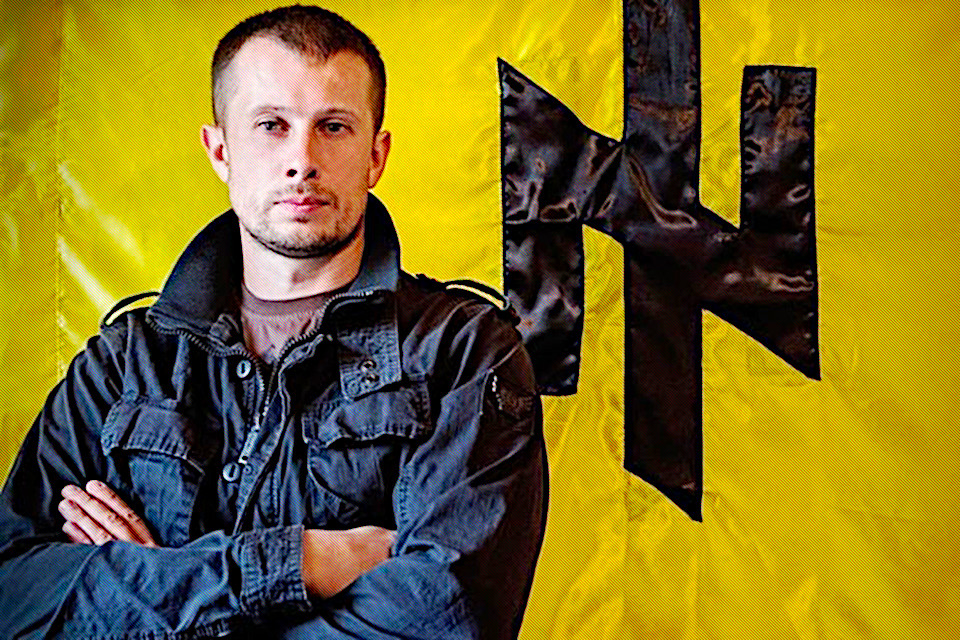
    Tous deux auraient été infirmiers, tant nous savons déjà que les militaires atlantistes, quand ils sont tués ou prisonniers, sont soit infirmiers, soit cuisiniers. Tous deux étaient membres de la 3e brigade d’assaut, émanation de l’organisation nazie Azov dans l’armée régulière ukrainienne. Son commandant est Andriy Biletsky, fondateur d’Azov en 2014 et dirigeant actuel du Corps national, un parti politique nazi en Ukraine

    Tous deux furent tués le 1er novembre 2024. J’ai enquêté sur Telegram, brièvement échangé avec des militants nazis ukrainiens qui les voient comme des héros de l’Europe blanche et sont parfaitement fondés à exprimer cette opinion. Mon propos concerne plutôt la ligne éditoriale du Parisien.

    J’ai détecté d’autres manipulations médiatiques du journal, par exemple le 4 septembre 2022. Pour illustrer le prétendu génocide que la Russie commettrait en Ukraine, Le Parisien publia une photo qu’Alexandre Ermochenko avait prise en réalité à Donetsk, le 2 septembre

    Il montrait une victime des habituels bombardements terroristes délibérés, que l’armée ukrainienne commet depuis 2014, contre les civils russophones.

    in The Western disinformation about Ukraine

    en Anglais, une chronique de la censure, des fake news, du blanchiment du nazisme ukrainien et de ses crimes, dans la guerre par procuration que l’OTAN mène en Ukraine contre la Russie

    Articles connexes

    Nazism in Ukraine

    en Anglais, its roots before WW2, its collaboration with Nazi Germany, its legacy in modern Ukraine, how NATO has continually supported Nazism in Ukraine

    The Atlanticist defeat in Donbass and Ukraine

    chronicle of a new catastrophic NATO venture

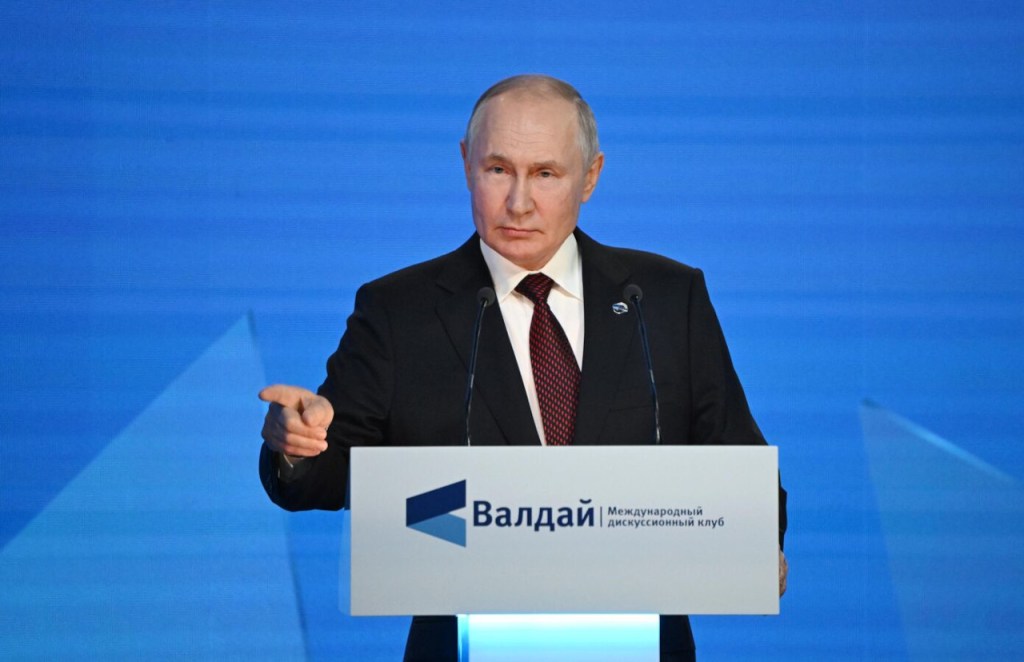
  • [Sharing] Putin Outlines The ‘Moment of Truth’ – Pepe Escobar, Sputnik

    President Putin’s plenary session performance (address + Q&A) at the annual Valdai Club meeting in Sochi felt like a high-speed train on cruise control

    Totally cool, calm, comfortable, in full command of a Himalaya of facts, no political leader anywhere – recent past and present – would even come close to delivering what amounts to an extensive, detailed world view deeply matured over a quarter of a century at the highest geopolitical level.

    Putin began his address referring to the October 1917 revolution, drawing a direct parallel with our turbulent times: “The moment of truth is coming”. In a clear tribute to Gramsci, he stated how a “completely new world order” is “being formed before our eyes.”

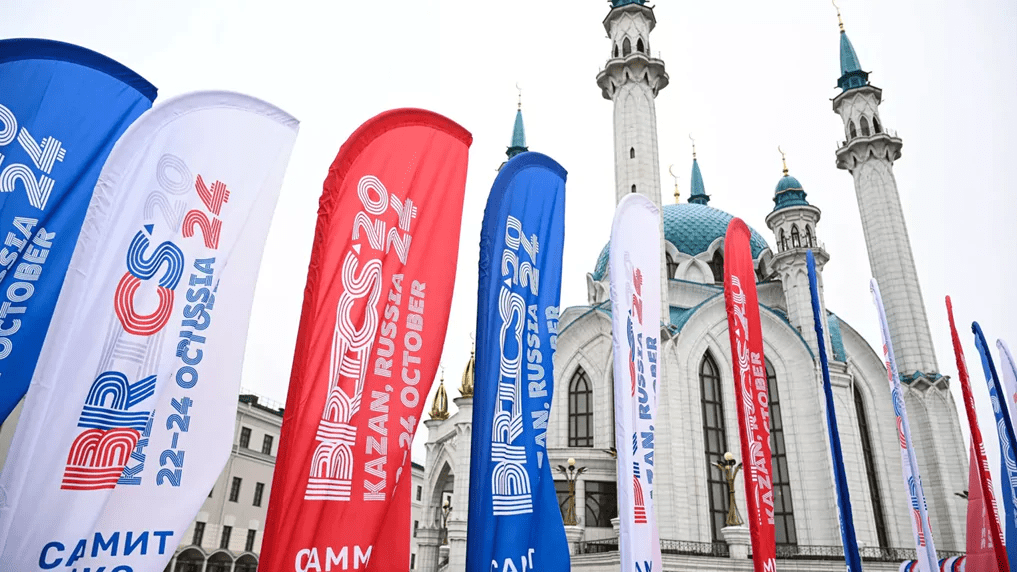
    The subtle reference to the recent BRICS summit in Kazan could not possibly escape critical minds across the Global Majority. Kazan was a living, breathing testimony that “the old order is irrevocably disappearing, one might say, has already disappeared, and a serious, irreconcilable struggle is unfolding for the formation of a new one. Irreconcilable, first of all, because this is not even a fight for power or geopolitical influence, this is a clash of the very principles on which relations between countries and peoples will be built at the next historical stage.”

    As concisely as possible, that should be taken as the current Big Picture framework: we are not mired inside a reductionist clash of civilizations or the “end of History” – which Putin defined as “myopic” – but facing a make-or-break systemic clash of fundamental principles. The result will define this century – arguably the Eurasia Century, as “the dialectics of History continues.”

    Putin himself quipped that he would drive into “philosophical asides” during his address. In fact that went much further than a mere refutation of unilateral conceptual fallacies, as “the Western elites thought that their monopoly is the final stop for humanity” and “modern neoliberalism degenerated into a totalitarian ideology.”

    Referring to AI, he asked rhetorically, “will human remain human?” He praised the building of a new global architecture, moving towards a “polyphonic” and “polycentric” world where “maximum representation” is paramount and the BRICS are “coming up with a coordinated approach” based on “sovereign equality.”

    Six Principles For Global Sustainable Development

    Sovereignty had to be one of the predominant themes during the Valdai Q&A. Putin was adamant that Russia must “develop our own sovereign AI. As algorithms are biased and give massive power to a few big companies that control the internet, the need is imperative for “sovereign algorithms.”

    Answering a question on Eurasian security and the US as the dominant maritime power v. a multipolar Eurasia, he stressed the “consensus and desire in Eurasia for an anti-hegemonic movement”, and not for Eurasia constituted “as a bloc”. That’s the appeal of Eurasia’s “multi-vector foreign policy”, implying “more political independence”. The key example of “harmonizing interests”, Putin stressed, is the Russia-China partnership, and that was also what “made BRICS successful.”

    Compare it in contrast to “the inability in Europe to establish a system of “indivisibility of security” and to “overcome bloc politics”; Europe instead went for NATO expansion: “After the end of the Cold War there was an opportunity to overcome bloc politics. But the US had fear of losing Europe. The US installed almost a colonial dependence. Honestly I did not expect that.”

    Putin introduced a fascinating personal experience tidbit referring to a conversation – in German – with former German chancellor Helmut Kohl in 1993, when Kohl said flat out that “the future of Europe” is linked to Russia.

    Yet that ended up leading to “the most important problem on our Eurasian continent, the main problem between Russia and European countries: the trust deficit (…) When they tell us that ‘we signed the Minsk agreements on Ukraine only to give Ukraine an opportunity to rearm, and we had no intention of resolving this conflict peacefully,’ what kind of trust can we talk about? (…) You have directly publicly stated that you have cheated us! Lied to us and deceived us! What kind of trust is that? But we need to get back to that system of mutual trust.”

    Putin then added that Europe should consider becoming part and parcel of a Chinese concept straight from Chinese philosophy (“they do not strive for domination”). With panache, he stressed that the Chinese uber-geoeconomic trade/connectivity project should be interpreted as One Belt, One Common Road.

    And that extrapolates to Central Asia, with all those nations “very young in their statehood” interested in “stable development”. For Russia-China, there’s “no competition” in the Heartland: “we only have cooperation.”

    Putin once again enumerated what he considers the 6 key principles for global sustainable development: openness of interaction (implying no “artificial barriers”); diversity (“a model of one country or a relatively small part of humanity should not be imposed as something universal”); maximum representativeness; security for all without exception; justice for all (erasing “the gap between the ‘golden billion’ and the rest of humanity); and equality.

    “Make Civilizations, Not War”

    On Ukraine, this was the money quote: “If there is no neutrality, then it’s difficult to imagine any kind of good neighborly relations between Russia and Ukraine.” In a nutshell: Moscow is ready for negotiations, but based on facts on the battlefield and what was agreed upon in Istanbul in April 2022.

    That may be interpreted as a direct message to President Trump. To whom the door is open: “Russia has not damaged its relations with the US and is open to their restoration, but the ball is in the Americans’ court.”

    Putin on US Presidents (he met quite a few): “All of them are interesting people.” On Trump: “His behavior when there was an attempt on his life, I was impressed. He is a courageous person. He acquitted himself valiantly.” On the open door: “Whatever he does it’s up to him to decide.” Then Putin offered his own congratulations for the re-election – on the record. The dialogue may be on: “We are willing to talk to Trump.”

    Putin extolled Russia-China relations as part of their strategic partnership as being “at the highest level in modern history.” He also praised his own personal relation with Xi Jinping. That paved the way for the real killer, when it comes to US-Russia-China: “If the US had chosen a trilateral cooperation instead of double constraint – everyone would win.”

    An excellent question by Brazilian economist Paulo Nogueira Batista Jr – a former vice-president of the NDB, the BRICS bank – led Putin to clarify his own position on de-dollarization. He stated flatly that “my role is to see ideas shaped that we then propose to our partners”.

    The key target is “proposing to create a new investment platform using electronic payments.” That will address the “most promising markets” in the near future – South Asia, Africa, parts of Latin America: “They will need investment, technologies.” And “tools independent from inflation” – with regulation “through Central Banks and the NDB. We agreed to have a working group meeting regularly at government level. We are in no hurry.”

    So that puts to rest any scenario of an immediate BRICS financial bombshell – even as “two-thirds of our trade is being serviced in national currencies” and among BRICS the figures are also high.

    BRICS Bridge will be tested – soon. As for creating a single currency, that’s “premature. We need to achieve greater integration of economies, increase the quality of economies to a certain – compatible – level.”

    Then, the bombshell: “We never wanted to abandon the dollar!” That goes a long way to explain Putin’s own view on de-dollarization: “They are undoing it with their own hand – the power of the dollar.”

    All of the above is just a sample of the width and breath of themes addressed by the President during the Valdai Q&A. The forum itself offered precious nuggets all across the spectrum. Some participants – correctly – noted the absence of “the majority of the majority”: youth and women. Africans were impressed with “the sharp mind of Russian bureaucracy.”

    A Chinese view noted how “the Chinese don’t swim against the current; they cross the river and reach the other bank.” There was a near consensus that development should be “based in different cultural values of civilizations” – actually Putin’s own view. Also imperative is the “need for aggregate authority” among the Global South.

    A Greek insight was particularly powerful when it comes to the civilizational approach to politics: “Civilizations don’t clash. States do.” Thus the new – playful – motto that could guide not only BRICS but the whole Global Majority: “Make Civilizations, Not War.” [end]

    The original article

    Related

    November 7, 2024: How Trump could liberate Europe – Thomas Fazi, UnHerd

    His isolationism is an opportunity

    October 23, 2024: BRICS Summit in Kazan: The End of the U.S. Hegemony. Part 2 – Ricardo Martins, New Eastern Outlook

    The BRICS Summit in Kazan, Russia, aims to be a turning point towards a truly multipolar or multi-nodal world that has been in transition for a few years now

    June 12, 2024: The summer of living dangerously – Pepe Escobar, Strategic Culture Foundation

    The plutocracy believes that afterwards they can buy the whole thing for a pittance while flies are still laying eggs in European carcasses

    September 1, 2023: No respite for France as a ‘New Africa’ rises – Pepe Escobar, The Cradle

    Like dominos, African states are one by one falling outside the shackles of neocolonialism. Chad, Guinea, Mali, Burkina Faso, Niger, and now Gabon are saying ‘non’ to France’s longtime domination of African financial, political, economic, and security affairs

    July 30, 2023: Africa and a new world order – Stephen Sefton, Tortilla con Sal (Nicaragua)

    [the sense of history]

    June 8, 2023: The West Must Prepare for a Long Overdue Reckoning – Chandran Nair, The National Interest

    Five major trends illustrate how the world is changing, and that the West must grapple with the reality that it can no longer impose its “leadership” on the world as it once did

    March 20, 2023: Forging Ahead to Open a New Chapter of China-Russia Friendship, Cooperation and Common Development – Xi Jinping, RIA Novosti

    [Quote : no model of governance is universal, and no single country should dictate the international order]

  • Daily pictures: the fall guy

    the Germans have bowed down to the US sabotage by Joe Biden administration of Nord Stream pipelines, only to end up with Donald Trump’s America First doctrine in economy and defense

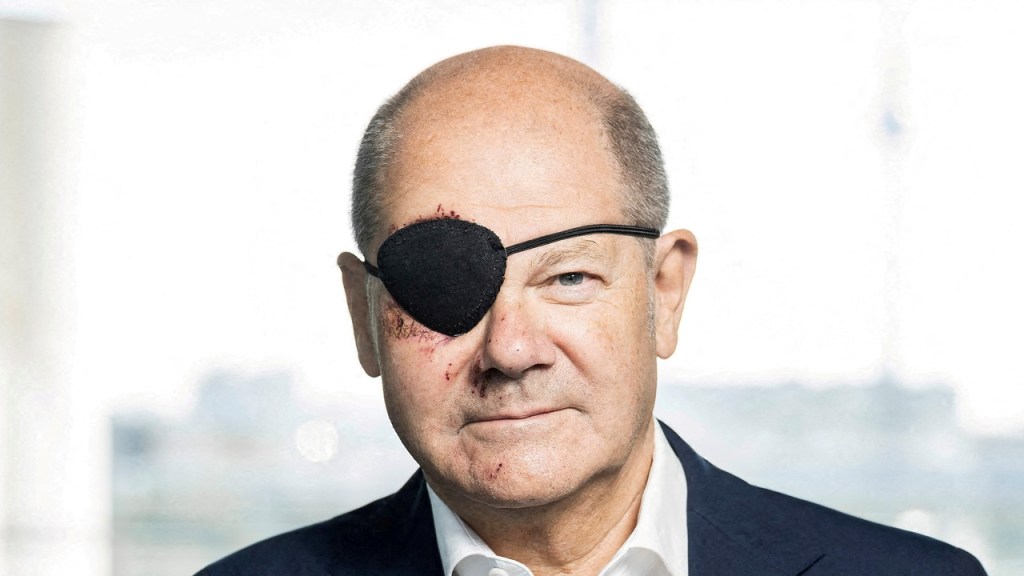
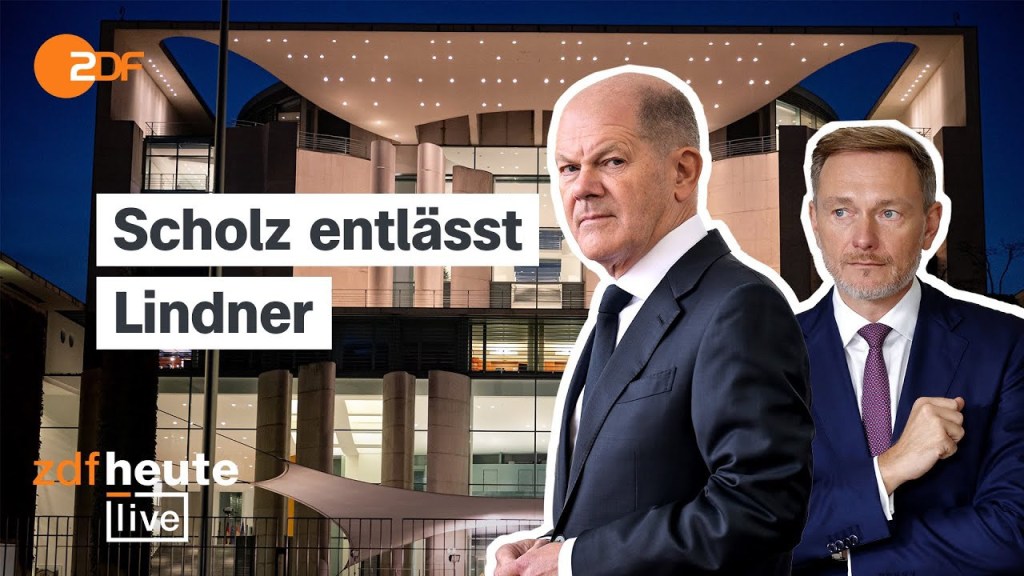
    In the evening of November 6, 2024, after the landslide victory of Donald Trump in the US presidential election, social democrat chancellor Olaf Scholz dismisses Christian Lindner, his neoliberal finance minister. That’s the collapse of the government coalition in Germany

    Related

    September 27, 2022: US operatives have sabotaged Nord Stream

    the motive, the opportunity and the means

    February 8, 2023: How America Took Out The Nord Stream Pipeline – Seymour Hersh

    The New York Times called it a “mystery,” but the United States executed a covert sea operation that was kept secret—until now

    March 22, 2023: THE COVER-UP – Seymour Hersh

    The Biden Administration continues to conceal its responsibility for the destruction of the Nord Stream pipelines

    August 14, 2024: Nord Stream sabotage: Germany issues arrest warrant – Deutsche Welle

    A Ukrainian national, whose last known address was in Poland, is being sought by German authorities for the 2022 attacks on the Nord Stream gas pipelines. He is believed to have acted with two accomplices [That is a piece of German humor. Such a small team and its limited means would not have been able to provoke such damage and actually, the sabotage of Nord Stream pipelines was obviously a US secret operation. From the beginning, that lead was a red herring]

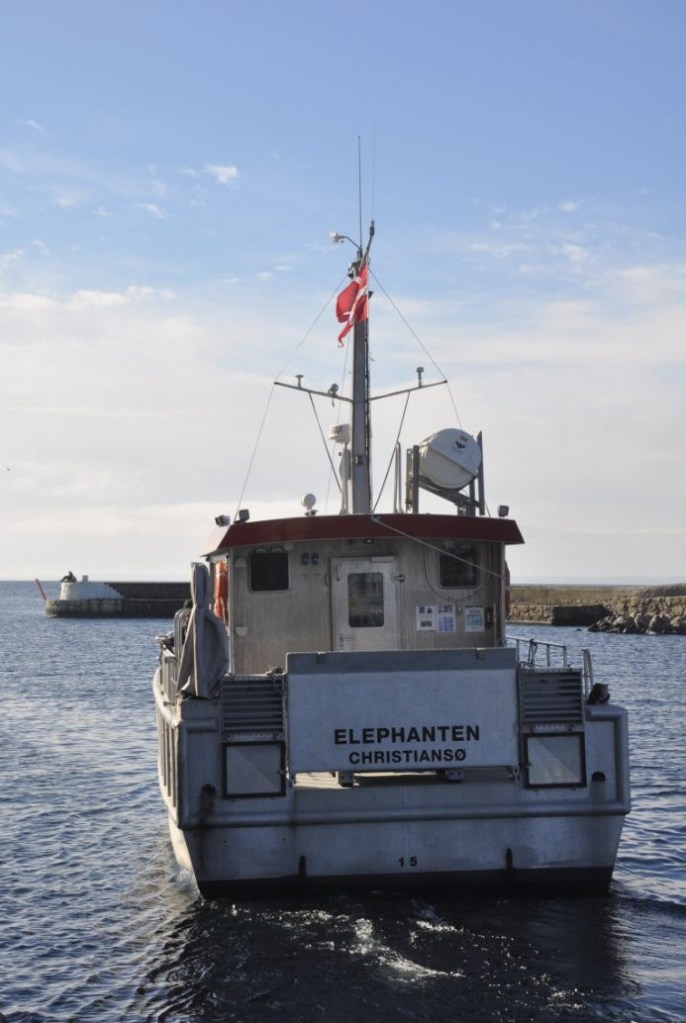
    September 26, 2024: For the first few days, the harbormaster on Christiansø “didn’t have to say a word”. But today he can reveal a bit – Politiken

    In September 2022, the explosions of the Nord Stream gas pipelines caused enormous international attention. At first, everyone believed that Russia must be behind the sabotage. Now Germany is looking for a Ukrainian diving group on a yacht, while Denmark and Sweden have dropped the investigation. So what do we know about the case, which they soon forget on Christiansø?

    October 9, 2024: The old man and the sea

    new information about the US sabotage of Nord Stream pipelines

    The Atlanticist defeat in Donbass and Ukraine

    chronicle of a new catastrophic NATO venture

  • [Sharing] BRICS Summit in Kazan: The End of the U.S. Hegemony. Part 2 – Ricardo Martins, New Eastern Outlook

    The BRICS Summit in Kazan, Russia, aims to be a turning point towards a truly multipolar or multi-nodal world that has been in transition for a few years now

    The changes announced in Kazan regarding the payment system and the reserves of nations are concrete steps towards independence from the U.S. imperialistic system. This system is symbolized by a small piece of green paper that no longer has real backing—just an empty promise.

    An Imperialistic Structure Does Not End in One Day

    The U.S. has managed to build an imperial structure based on more than 800 military bases around the world, the imposition of the dollar as the currency of international trade and reserve, the extraterritorial application of its laws, and by creating a network of vassal and semi-vassal states around its hegemony. Nonetheless, the core of its imperial system relies on the dollar. The de-dollarisation led by the BRICS is driving the U.S. to despair, making their sanctions system increasingly meaningless too.

    BRICS has taken on the responsibility of driving substantial change for a new world order

    No empire lasts forever, especially one that lacks a strategic vision, as is the case with the U.S. The American empire lost wars or promoted further chaos in Vietnam (1955-1975), Afghanistan (2002-2021), Iraq (2003-2011), Libya (2011) and did not win in Syria and has shown an inability to control its ally Israel, which continues to commit war crimes, uphold apartheid, engage in state terrorism, and carry out genocide. Moreover, the U.S. has been incapable of formulating its Middle East policy independently of Israel’s prism.

    On top of that, domestically, its infrastructure is crumbling, and its social indicators are rapidly approaching those of developing countries. The U.S. is the only major nation where life expectancy is declining, extreme poverty is increasing swiftly, and so is homelessness. Its citizens do not have universal, free access to healthcare, as happens in most developing countries, such as Latin America. All these issues highlight the fragility of the empire.

    The New Sick Man

    Once, during its decline, the Ottoman Empire was known as the “sick man of Europe.” Now, it seems the U.S. is playing this role, or perhaps it’s more like a drowning person: it pulls those who are close to it into its struggle and demands loyalty in this slow demise, particularly from European countries that have greatly benefited from its generous policies after WWII. In Latin America, the Monroe Doctrine is still very much in effect, which is why Brazil sometimes seems reluctant to commit fully to BRICS.

    Europeans, especially the Germans, have shown signs of wanting independence, and the idea of strategic autonomy has become wishful thinking. Former Chancellor Angela Merkel, who was economically liberal, listened to German business leaders who argued that the future lay not in the Atlantic, but Eastwards toward Russia and China.

    The U.S. did not like this shift and managed to make Europeans feel that they still needed Uncle Sam for their protection. Turning their backs on the U.S. was seen as an ungrateful response to American roles in WWII and the Marshall Plan.

    The U.S. meddled in Central Europe and Ukraine, expanding NATO eastwards. This move was highly discouraged by prominent American foreign policy strategists like Henry Kissinger, Robert Kagan, John Mearsheimer, and even William Burns, a former Ambassador to Russia and ex-CIA director. The coup orchestrated by the CIA and led locally by Victoria Nuland in 2013 in Ukraine was just the beginning, alongside the sabotage of Nord Stream by the U.S., all part of this complex game to make Europeans dependent on the U.S.

    BRICS Ignites Hopes of the Global South and the Discontented

    Once again, two blocks are forming, with some countries caught in the middle. The war in Ukraine and the Global South’s refusal to impose sanctions on Russia have highlighted the divisions in the world. The war in Gaza and the resulting genocide, supported by many Western nations while they preach values and human rights, has led the Global South to lose faith in the West’s moral standards. They have denounced its double standards and are nearly unanimously supporting the idea of a new world order.

    The expansion of BRICS, with over 40 nations waiting to join—including Serbia, Turkey, Indonesia, Malaysia, Thailand, Nigeria and Bolivia—clearly signals that change is expected.

    Some European nations are unhappy with the expected outcomes of remaining tied to the old regime– the EU tied to the U.S.- and wish to be part of a more dynamic and prosperous future. For instance, Spain has rejected imposing extra tariffs on Chinese electric vehicles, and Turkey wants to join BRICS too, as does Serbia, even if it means giving up potential EU memberships, along with many other nations.

    Bulgaria is also unhappy with its EU membership and is sending representatives to BRICS meetings. Moldova was divided over an EU membership referendum. The narrow victory of 0.2% was due to the votes of Moldovans living abroad. Still in Europe, Norway, not being subject to EU rules, has recently taken steps to strengthen economic ties with China, surprising many Atlanticists in Europe.

    Therefore, BRICS has taken on the responsibility of driving substantial change for a new world order. However, it is fair to say that BRICS nations have tried to reform the Bretton Woods institutions—especially the World Bank and the International Monetary Fund (IMF)—and the United Nations to better reflect the new economic, population, and trade realities, but they have not succeeded.

    New institutions are being built within BRICS, particularly the New Development Bank (NDB), which, unlike the IMF or World Bank, does not impose economic regime changes and has inclusive practices.

    In sum, there are several political and economic groups of nations around the world, but none has the political will or the capacity to promote major geoeconomic and geopolitical changes as BRICS does. Therefore, the 16th BRICS Summit in Kazan comes at the right time and with the right political will to build a better, more prosperous, inclusive, free, and less ideologically driven world. The next step should be the merger of the Shanghai Cooperation Organization (SCO) with BRICS [end]

    The original article

    Ricardo Martins ‒PhD in Sociology, specializing in policies, European and world politics and geopolitics, especially for the online magazine “New Eastern Outlook”

    Related

    July 31, 2023: Africa and a new world order – Stephen Sefton, Tortilla con Sal (Nicaragua)

    June 8, 2023: The West Must Prepare for a Long Overdue Reckoning – Chandran Nair, The National Interest

    Five major trends illustrate how the world is changing, and that the West must grapple with the reality that it can no longer impose its “leadership” on the world as it once did

  • Daily pictures : the old man and the sea

    new information about the US sabotage of Nord Stream pipelines

    Seymour Hersh is right. We are many and we are right, despite the efforts of the US/German intelligence, through New York Times articles, to make us believe that a bunch of Ukrainian crayfish fishermen would have carried out the attack. Politiken is a major Danish daily newspaper, writes on September 26

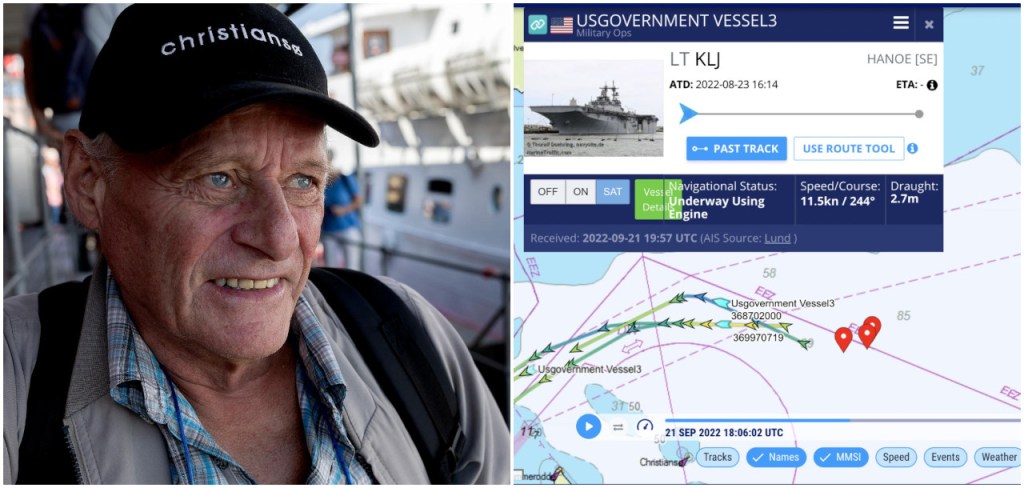
    […] For the first few days, the harbor master said he was “not allowed to say a thing”. But today, John Anker Nielsen can reveal that four or five days before the Nord Stream blasts, he was out with the rescue service on Christiansø because there were some ships with switched-off radios. They turned out to be American naval vessels, and when the rescue service approached, they were told by Naval Command to turn back.

    Therefore, the harbor master has some faith in the theory that American star journalist Seymour Hersh, among others, has put forward without any documentation: that the US was behind the sabotage. The Americans have these small unmanned submarines that can solve any task, John Anker Nielsen has been told […]

    On September 21, 2022, five days before the attack, in a rescue mission from Christiansø island, the old sailor met USS Kearsarge (LHD-3), one Wasp-class amphibious assault ship. Here is an analytical thread on X

    But the US war ships were so shy about their pastime in that part of the Baltic Sea.

    September 26, 2024: For the first few days, the harbormaster on Christiansø “didn’t have to say a word”. But today he can reveal a bit – Politiken

    In September 2022, the explosions of the Nord Stream gas pipelines caused enormous international attention. At first, everyone believed that Russia must be behind the sabotage. Now Germany is looking for a Ukrainian diving group on a yacht, while Denmark and Sweden have dropped the investigation. So what do we know about the case, which they soon forget on Christiansø?

    Related

    September 27, 2022: US operatives have sabotaged Nord Stream

    the motive, the opportunity and the means

    February 8, 2023: How America Took Out The Nord Stream Pipeline – Seymour Hersh

    The New York Times called it a “mystery,” but the United States executed a covert sea operation that was kept secret—until now

    March 22, 2023: THE COVER-UP – Seymour Hersh

    The Biden Administration continues to conceal its responsibility for the destruction of the Nord Stream pipelines

    August 14, 2024: Nord Stream sabotage: Germany issues arrest warrant – Deutsche Welle

    A Ukrainian national, whose last known address was in Poland, is being sought by German authorities for the 2022 attacks on the Nord Stream gas pipelines. He is believed to have acted with two accomplices [That is a piece of German humor. Such a small team and its limited means would not have been able to provoke such damage and actually, the sabotage of Nord Stream pipelines was obviously a US secret operation. From the beginning, that lead was a red herring]

  • Daily pictures : die deutsche Frage

    80 years later, Germany is still on the side of racism, supremacism, inequity, war crime, mass killing and genocide

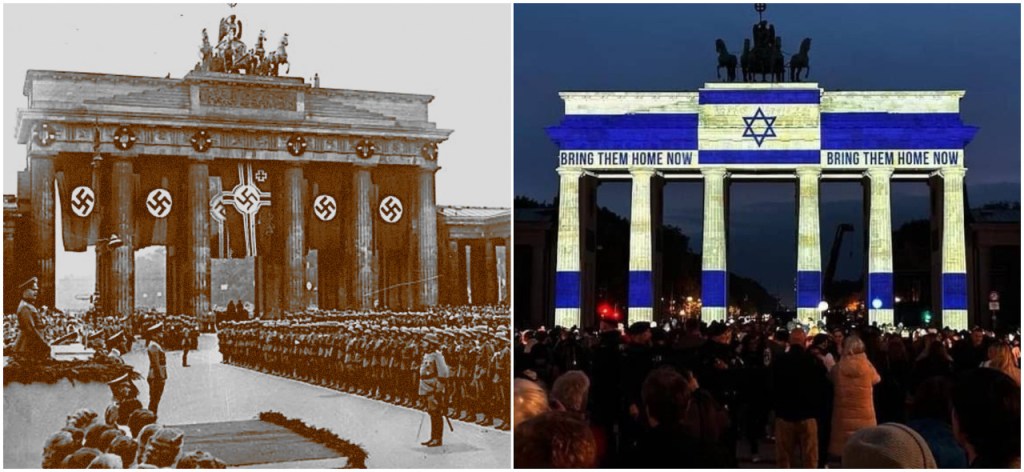
    On October 7, 2024, at the first anniversary ceremony of Hamas raid from the Palestinian ghetto of ​​Gaza, Israel prime minister Benjamin Netanyahu states

    We are the Eternal People. A people which is fighting to bring light to this world, which is aspiring to spread good and eradicate evil

    Adolf Hitler added on March 30, 1942

    This is a war of extermination

    related

    Germany stands on wrong side of history again – Strategic Culture Foundation

    Germany and the United States along with other Western powers are continuing deep-seated historical crimes by way of their proxy war against Russia

    Kill this beast

    for Palestine, for Lebanon, for Syria, for the world, justice, peace and harmony

    In das palästinensisches Wohngebiet von Gaza

    in the Palestinian ghetto of ​​Gaza, on December 7, 2023