

Nicolas Cinquini

Analista senior di l'intelligenza in u campu di a gestione di i risichi di sicurezza, sò un anzianu tenente detective è ufficiale di l'intelligenza in l'agenzie di u Statu francese. A bona pronuncia hè Николай Чинкуини, in russu

Tag: beltandroadinitiative

  • [Sharing] The Syria Tragedy and the New Omni-War – Pepe Escobar, Sputnik

    Until recently, a serious geopolitical working hypothesis was that West Asia and Ukraine were two vectors of the standard Hegemon modus operandi, which is to incite and unleash Forever Wars. Now both wars are united in an Omni-War
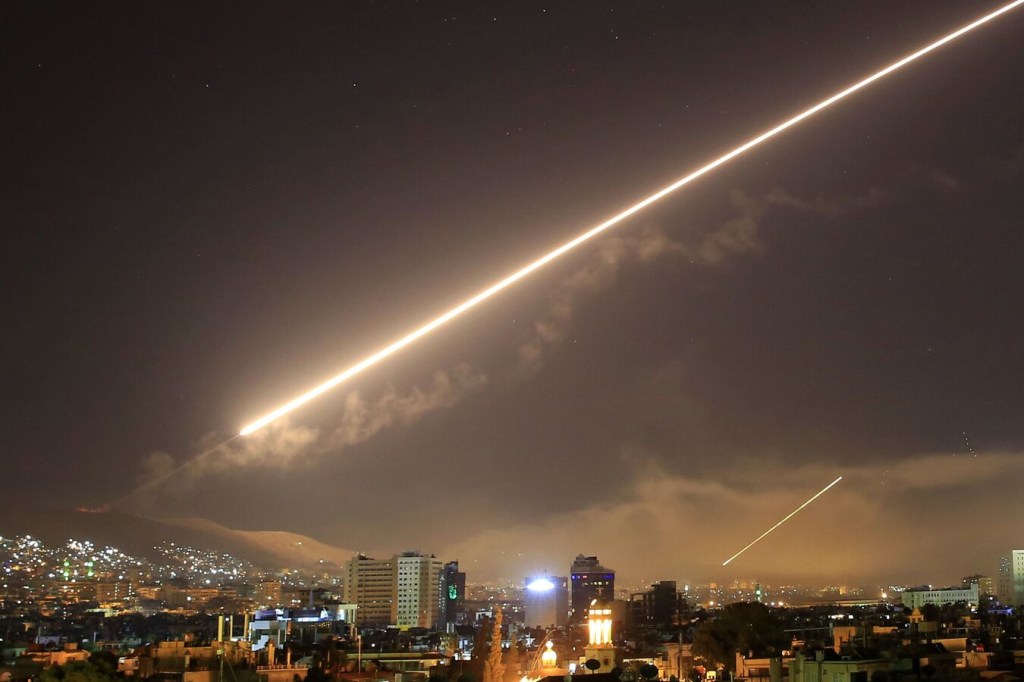
    A coalition of Straussian neo-cons in the US, hardcore revisionist Zionists in Tel Aviv and Ukrainian neo-nazi shades of grey is now betting on a Final Confrontation – with several overtones ranging from expanding lebensraum to provoking the Apocalypse.

    What stands in their way is essentially two of the top BRICS: Russia and Iran.

    China, self-protected by their collective lofty dream of “community of a shared future for mankind”, warily watches on the sidelines, as they know that at the end of the road, the true “existential” war by the Hegemon will be against them.

    Meanwhile, Russia and Iran need to mobilize for Totalen Krieg. Because that’s what the enemy is launching.

    Undermining BRICS and the INSTC

    The total destabilisation of Syria, with heavy CIA-MI6 input, now proceeding in real time, is a carefully engineered gambit to undermine BRICS and beyond.

    It proceeds in parallel to Pashinyan removing Armenia from the CSTO – based on a US promise to support Yerevan in a possible new clash with Baku; India being encouraged to ramp up a weapons race with Pakistan; and across-the-board intimidation of Iran.

    So this is also a war to destabilize the International North South Transportation Corridor (INSTC), of which the three major protagonists are BRICS members Russia, Iran and India.

    As it stands, the INSTC is totally geopolitical risk-free. As a top BRICS corridor-in-the-making, it carries the potential to become even more effective than several of China’s cross-Heartland corridors of the Belt and Road Initiative (BRI).

    The INSTC would be a key lifeline for a great deal of the global economy in case of a direct confrontation between the US/Israel combo and Iran – with the possible shutdown of the Strait of Hormuz leading to the collapse of a multi-quadrillion pile of financial derivatives, economically imploding the collective West.

    Turkiye under Erdogan, as usual, is playing a double game. Rhetorically, Ankara stands by a genocide-free and sovereign Palestine. In practice, the Turkiye supports and funds a motley crew of Greater Idlibistan jihadis – trained by Ukrainian Neo-nazis in drone warfare and with weapons financed by Qatar – who have just marched on and conquered Aleppo, Hama, and possibly beyond.

    If this army of mercenaries were real followers of Islam, they would be marching in defense of Palestine.

    At the same time, the real picture inside the corridors of power in Tehran is extremely murky. There are factions favoring getting closer to the West, which clearly would have ramifications for the Axis of Resistance’s ability to fight Tel Aviv.

    On Lebanon, Syria never wavered. History explains why: from the point of view of Damascus, Lebanon historically remains a governorate, so Damascus is responsible for the security of Beirut.

    And that’s one of Tel Aviv’s key motives to propel the current Salafi-jihadi offensive on Syria – after smashing virtually every communication corridor between Syria and Lebanon. What Tel Aviv could not accomplish on the ground – a victory over Hezbollah in southern Lebanon – has been replaced by isolating Hezbollah from the Axis of Resistance.

    When in Doubt, Re-Read Xenophon

    Wars in West Asia are a complex mix of national, sectarian, tribal and religious vectors. In a sense, they are endless wars; controllable to an extent, but then back again.

    The Russian strategy in Syria seemed to be very precise. As it was impossible to normalize a completely fragmented nation, Moscow opted to free the Syria that really matters – the capital, the most important cities, and the Eastern Mediterranean coast – from the Salafi-jihadi mobs.

    The problem is that freezing the war in 2020, with direct implication by Russia, Iran and (reluctantly) Turkiye, did not solve the “moderate rebel” problem. Now they’re back – in full force, supported by a vast Rent-a-Jihadi mob, with NATOstan Intel behind them.

    Some things never change.

    2012. Jake Sullivan, then an aide to Hillary Clinton: “AQ [al-Qaeda*] is on our side in Syria.”

    2021. James Jeffrey, special envoy to Syria under Trump (2018-2020): “HTS [Hayat Tahrir al-Sham*] is an asset to the US’s strategy in Idlib.”

    There could not be better timing for the revival of the HTS “asset”. HTS if filling an enormous void; beware when that happens in West Asia. Russia is fully concentrated on Ukraine. Hezbollah suffered heavily from Tel Aviv’s bombings and serial killing. Tehran is fully concentrated on how to deal with Trump 2.0.

    History always teaches us. Syria is now a West Asian Anabasis. Xenophon – a soldier and writer – tell us how, in the 4th century B.C., an “expedition” (“anabasis”, in Ancient Greek) of 10,000 Greek mercenaries were engaged by Cyrus the Younger against his brother Artaxerxes II, King of Persia, from Armenia to the Black Sea. The expedition miserably failed – and the painful return journey was endless.

    2,400 years later, we see governments, armies and mercenaries still plunging into the endless West Asia wars – and extracting themselves now is even more insoluble.

    Syria now is tired, attritted, with the SAA becoming complacent with the long freeze of the war since 2020. All that coupled with the vicious starvation siege unleashed by the US Caesar Act, and the impossibility to start rebuilding the nation with the help of at least 8 million citizens who fled the endless war.

    Over these past 4 years, problems piled up. There were endless breaches of the Astana process and Israel bombed Syria almost daily with impunity.

    China was basically immobile. Beijing simply did not invest in the rebuilding of Syria.

    Perspective is sobering. Even Russia – which is a de facto Resistance icon in itself, even if not formally part of the West Asian Axis of Resistance – has taken nearly three years of hard slog in its fight with Ukraine.

    Only a cohesive, consolidated Axis of Resistance – after getting rid of countless 5thcolumnists working inside – would have a chance against being picked off one by one by the same consolidated enemy, over and over again.

    Sometimes it feels like the BRICS – particularly China – haven’t learned anything from Bandung in 1955, and how the Non-Alignment Movement (NAM) was neutralized.

    You can’t beat a pitiless hegemonic hydra with flower power.

    * terrorist organizations banned in Russia and many other countries [end]

    The original article

    Related

    December 4, 2024: Türkiye’s mistakes may cost it dearly in Africa – Mikhail Gamandiy-Egorov, New Eastern Outlook

    The ambiguity of Ankara’s policy may eventually play a cruel joke on it, despite its growing ambitions in various parts of the world. No matter how confident Türkiye is in its ability to sit on two chairs simultaneously, at some point it will have to choose, risking to lose everything

    November 28, 2024: Al’Asad ‘iilaa al’abad

    Give Assad eternal life

    June 12, 2024: The summer of living dangerously – Pepe Escobar, Strategic Culture Foundation

    The plutocracy believes that afterwards they can buy the whole thing for a pittance while flies are still laying eggs in European carcasses

    October 1, 2024: Kill this beast

    for Palestine, for Lebanon, for Syria, for the world, justice, peace and harmony

    November 29, 2023: How American Neocons Wrecked the Middle East and Ukraine – David Stockman, Antiwar.com

    This is part 2 of “Why There Is Still No Peace on Earth: Washington’s Folly From The Persian Gulf to Ukraine.”  Read part 1

    January 7, 2023: Freedom fighters are defending Ukraine

    Jihadists in Ukraine, that is for democracy

    November 13, 2022: America’s Neo-Nazi bedfellows in Ukraine are latest in long line of odious allies Washington has used against Russia – Tony Cox, Russia Today

    From pogrom-mongers to Hitlerites to radical Islamists, the US has collaborated with repugnant partners for more than a century

    November 13, 2022: The French debacle on November 13, 2015

    about the jihadist attacks in Paris, as a collateral damage of the Western support to the so-called Syrian revolution

    August 2, 2022: Gone with the wind

    45 years of Western collusion with evil, from Afghanistan to Ukraine
    November 13, 2020: The path to November 13, 2015

  • [Sharing] Putin Outlines The ‘Moment of Truth’ – Pepe Escobar, Sputnik

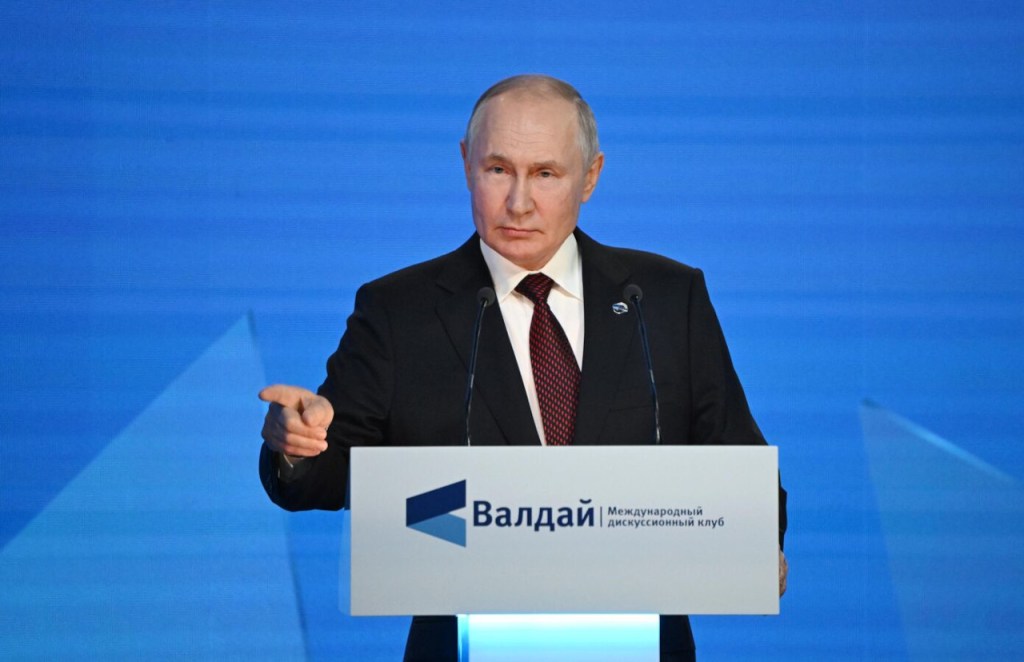
    President Putin’s plenary session performance (address + Q&A) at the annual Valdai Club meeting in Sochi felt like a high-speed train on cruise control

    Totally cool, calm, comfortable, in full command of a Himalaya of facts, no political leader anywhere – recent past and present – would even come close to delivering what amounts to an extensive, detailed world view deeply matured over a quarter of a century at the highest geopolitical level.

    Putin began his address referring to the October 1917 revolution, drawing a direct parallel with our turbulent times: “The moment of truth is coming”. In a clear tribute to Gramsci, he stated how a “completely new world order” is “being formed before our eyes.”

    The subtle reference to the recent BRICS summit in Kazan could not possibly escape critical minds across the Global Majority. Kazan was a living, breathing testimony that “the old order is irrevocably disappearing, one might say, has already disappeared, and a serious, irreconcilable struggle is unfolding for the formation of a new one. Irreconcilable, first of all, because this is not even a fight for power or geopolitical influence, this is a clash of the very principles on which relations between countries and peoples will be built at the next historical stage.”

    As concisely as possible, that should be taken as the current Big Picture framework: we are not mired inside a reductionist clash of civilizations or the “end of History” – which Putin defined as “myopic” – but facing a make-or-break systemic clash of fundamental principles. The result will define this century – arguably the Eurasia Century, as “the dialectics of History continues.”

    Putin himself quipped that he would drive into “philosophical asides” during his address. In fact that went much further than a mere refutation of unilateral conceptual fallacies, as “the Western elites thought that their monopoly is the final stop for humanity” and “modern neoliberalism degenerated into a totalitarian ideology.”

    Referring to AI, he asked rhetorically, “will human remain human?” He praised the building of a new global architecture, moving towards a “polyphonic” and “polycentric” world where “maximum representation” is paramount and the BRICS are “coming up with a coordinated approach” based on “sovereign equality.”

    Six Principles For Global Sustainable Development

    Sovereignty had to be one of the predominant themes during the Valdai Q&A. Putin was adamant that Russia must “develop our own sovereign AI. As algorithms are biased and give massive power to a few big companies that control the internet, the need is imperative for “sovereign algorithms.”

    Answering a question on Eurasian security and the US as the dominant maritime power v. a multipolar Eurasia, he stressed the “consensus and desire in Eurasia for an anti-hegemonic movement”, and not for Eurasia constituted “as a bloc”. That’s the appeal of Eurasia’s “multi-vector foreign policy”, implying “more political independence”. The key example of “harmonizing interests”, Putin stressed, is the Russia-China partnership, and that was also what “made BRICS successful.”

    Compare it in contrast to “the inability in Europe to establish a system of “indivisibility of security” and to “overcome bloc politics”; Europe instead went for NATO expansion: “After the end of the Cold War there was an opportunity to overcome bloc politics. But the US had fear of losing Europe. The US installed almost a colonial dependence. Honestly I did not expect that.”

    Putin introduced a fascinating personal experience tidbit referring to a conversation – in German – with former German chancellor Helmut Kohl in 1993, when Kohl said flat out that “the future of Europe” is linked to Russia.

    Yet that ended up leading to “the most important problem on our Eurasian continent, the main problem between Russia and European countries: the trust deficit (…) When they tell us that ‘we signed the Minsk agreements on Ukraine only to give Ukraine an opportunity to rearm, and we had no intention of resolving this conflict peacefully,’ what kind of trust can we talk about? (…) You have directly publicly stated that you have cheated us! Lied to us and deceived us! What kind of trust is that? But we need to get back to that system of mutual trust.”

    Putin then added that Europe should consider becoming part and parcel of a Chinese concept straight from Chinese philosophy (“they do not strive for domination”). With panache, he stressed that the Chinese uber-geoeconomic trade/connectivity project should be interpreted as One Belt, One Common Road.

    And that extrapolates to Central Asia, with all those nations “very young in their statehood” interested in “stable development”. For Russia-China, there’s “no competition” in the Heartland: “we only have cooperation.”

    Putin once again enumerated what he considers the 6 key principles for global sustainable development: openness of interaction (implying no “artificial barriers”); diversity (“a model of one country or a relatively small part of humanity should not be imposed as something universal”); maximum representativeness; security for all without exception; justice for all (erasing “the gap between the ‘golden billion’ and the rest of humanity); and equality.

    “Make Civilizations, Not War”

    On Ukraine, this was the money quote: “If there is no neutrality, then it’s difficult to imagine any kind of good neighborly relations between Russia and Ukraine.” In a nutshell: Moscow is ready for negotiations, but based on facts on the battlefield and what was agreed upon in Istanbul in April 2022.

    That may be interpreted as a direct message to President Trump. To whom the door is open: “Russia has not damaged its relations with the US and is open to their restoration, but the ball is in the Americans’ court.”

    Putin on US Presidents (he met quite a few): “All of them are interesting people.” On Trump: “His behavior when there was an attempt on his life, I was impressed. He is a courageous person. He acquitted himself valiantly.” On the open door: “Whatever he does it’s up to him to decide.” Then Putin offered his own congratulations for the re-election – on the record. The dialogue may be on: “We are willing to talk to Trump.”

    Putin extolled Russia-China relations as part of their strategic partnership as being “at the highest level in modern history.” He also praised his own personal relation with Xi Jinping. That paved the way for the real killer, when it comes to US-Russia-China: “If the US had chosen a trilateral cooperation instead of double constraint – everyone would win.”

    An excellent question by Brazilian economist Paulo Nogueira Batista Jr – a former vice-president of the NDB, the BRICS bank – led Putin to clarify his own position on de-dollarization. He stated flatly that “my role is to see ideas shaped that we then propose to our partners”.

    The key target is “proposing to create a new investment platform using electronic payments.” That will address the “most promising markets” in the near future – South Asia, Africa, parts of Latin America: “They will need investment, technologies.” And “tools independent from inflation” – with regulation “through Central Banks and the NDB. We agreed to have a working group meeting regularly at government level. We are in no hurry.”

    So that puts to rest any scenario of an immediate BRICS financial bombshell – even as “two-thirds of our trade is being serviced in national currencies” and among BRICS the figures are also high.

    BRICS Bridge will be tested – soon. As for creating a single currency, that’s “premature. We need to achieve greater integration of economies, increase the quality of economies to a certain – compatible – level.”

    Then, the bombshell: “We never wanted to abandon the dollar!” That goes a long way to explain Putin’s own view on de-dollarization: “They are undoing it with their own hand – the power of the dollar.”

    All of the above is just a sample of the width and breath of themes addressed by the President during the Valdai Q&A. The forum itself offered precious nuggets all across the spectrum. Some participants – correctly – noted the absence of “the majority of the majority”: youth and women. Africans were impressed with “the sharp mind of Russian bureaucracy.”

    A Chinese view noted how “the Chinese don’t swim against the current; they cross the river and reach the other bank.” There was a near consensus that development should be “based in different cultural values of civilizations” – actually Putin’s own view. Also imperative is the “need for aggregate authority” among the Global South.

    A Greek insight was particularly powerful when it comes to the civilizational approach to politics: “Civilizations don’t clash. States do.” Thus the new – playful – motto that could guide not only BRICS but the whole Global Majority: “Make Civilizations, Not War.” [end]

    The original article

    Related

    November 7, 2024: How Trump could liberate Europe – Thomas Fazi, UnHerd

    His isolationism is an opportunity

    October 23, 2024: BRICS Summit in Kazan: The End of the U.S. Hegemony. Part 2 – Ricardo Martins, New Eastern Outlook

    The BRICS Summit in Kazan, Russia, aims to be a turning point towards a truly multipolar or multi-nodal world that has been in transition for a few years now

    June 12, 2024: The summer of living dangerously – Pepe Escobar, Strategic Culture Foundation

    The plutocracy believes that afterwards they can buy the whole thing for a pittance while flies are still laying eggs in European carcasses

    September 1, 2023: No respite for France as a ‘New Africa’ rises – Pepe Escobar, The Cradle

    Like dominos, African states are one by one falling outside the shackles of neocolonialism. Chad, Guinea, Mali, Burkina Faso, Niger, and now Gabon are saying ‘non’ to France’s longtime domination of African financial, political, economic, and security affairs

    July 30, 2023: Africa and a new world order – Stephen Sefton, Tortilla con Sal (Nicaragua)

    [the sense of history]

    June 8, 2023: The West Must Prepare for a Long Overdue Reckoning – Chandran Nair, The National Interest

    Five major trends illustrate how the world is changing, and that the West must grapple with the reality that it can no longer impose its “leadership” on the world as it once did

    March 20, 2023: Forging Ahead to Open a New Chapter of China-Russia Friendship, Cooperation and Common Development – Xi Jinping, RIA Novosti

    [Quote : no model of governance is universal, and no single country should dictate the international order]

  • [Sharing] No respite for France as a ‘New Africa’ rises – Pepe Escobar, The Cradle

    Like dominos, African states are one by one falling outside the shackles of neocolonialism. Chad, Guinea, Mali, Burkina Faso, Niger, and now Gabon are saying ‘non’ to France’s longtime domination of African financial, political, economic, and security affairs

    By adding two new African member-states to its roster, last week’s summit in Johannesburg heralding the expanded BRICS 11 showed once again that Eurasian integration is inextricably linked to the integration of Afro-Eurasia.

    Belarus is now proposing to hold a joint summit between BRICS 11, the Shanghai Cooperation Organization (SCO), and the Eurasia Economic Union (EAEU).  President Aleksandr Lukashenko’s vision for the convergence of these multilateral organizations may, in due time, lead to the Mother of All Multipolarity Summits.

    But Afro-Eurasia is a much more complicated proposition. Africa still lags far behind its Eurasian cousins on the road toward breaking the shackles of neocolonialism.   

    The continent today faces horrendous odds in its fight against the deeply entrenched financial and political institutions of colonization, especially when it comes to smashing French monetary hegemony in the form of the Franc CFA – or the Communauté Financière Africaine (African Financial Community). 

    Still, one domino is falling after another – Chad, Guinea, Mali, Burkina Faso, Niger and now Gabon. This process has already turned Burkina Faso’s President Captain Ibrahim Traoré, into a new hero of the multipolar world – as a dazed and confused collective west can’t even begin to comprehend the blowback represented by its 8 coups in West and Central Africa in less than 3 years. 

    Bye bye Bongo 

    Military officers decided to take power in Gabon after hyper pro-France President Ali Bongo won a dodgy election that “lacked credibility.” Institutions were dissolved. Borders with Cameroon, Equatorial Guinea, and the Republic of Congo were closed. All security deals with France were annulled. No one knows what will happen with the French military base.

    All that was as popular as it comes: soldiers took to the streets of the capital Libreville in joyful singing, cheered on by onlookers.  

    Bongo and his father, who preceded him, have ruled Gabon since 1967. He was educated at a French private school and graduated from the Sorbonne. Gabon is a small nation of 2.4 million with a small army of 5,000 personnel that could fit into Donald Trump’s penthouse. Over 30 percent of the population lives on less than $1 a day, and in over 60 percent of regions have zero access to healthcare and drinking water. 

    The military qualified Bongo’s 14-year rule as leading to a “deterioration in social cohesion” that was plunging the country “into chaos.”

    On cue, French mining company Eramet suspended its operations after the coup. That’s a near monopoly. Gabon is all about lavish mineral wealth – in gold, diamonds, manganese, uranium, niobium, iron ore, not to mention oil, natural gas, and hydropower. In OPEC-member Gabon, virtually the whole economy revolves around mining.   

    The case of Niger is even more complex. France exploits uranium and high-purity petrol as well as other types of mineral wealth. And the Americans are on site, operating three bases in Niger with up to 4,000 military personnel. The key strategic node in their ‘Empire of Bases’ is the drone facility in Agadez, known as Niger Air Base 201, the second-largest in Africa after Djibouti.  

    French and American interests clash, though, when it comes to the saga over the Trans-Sahara gas pipeline. After Washington broke the umbilical steel cord between Russia and Europe by bombing the Nord Streams, the EU, and especially Germany, badly needed an alternative. 

    Algerian gas supply can barely cover southern Europe. American gas is horribly expensive. The ideal solution for Europeans would be Nigerian gas crossing the Sahara and then the deep Mediterranean. 

    Nigeria, with 5,7 trillion cubic meters, has even more gas than Algeria and possibly Venezuela. By comparison, Norway has 2 trillion cubic meters. But Nigeria’s problem is how to pump its gas to distant customers – so Niger becomes an essential transit country.  

    When it comes to Niger’s role, energy is actually a much bigger game than the oft-touted uranium – which in fact is not that strategic either for France or the EU because Niger is only the 5th largest world supplier, way behind Kazakhstan and Canada. Still, the ultimate French nightmare is losing the juicy uranium deals plus a Mali remix: Russia, post-Prighozin, arriving in Niger in full force with a simultaneous expulsion of the French military. 

    Adding Gabon only makes things dicier. Rising Russian influence could lead to boosting supply lines to rebels in Cameroon and Nigeria, and privileged access to the Central African Republic, where Russian presence is already strong.  

    It’s no wonder that Francophile Paul Biya, in power for 41 years in Cameroon, has opted for a purge of his Armed Forces after the coup in Gabon. Cameroon may be the next domino to fall. 

    ECOWAS meets AFRICOM 

    The Americans, as it stands, are playing Sphynx. There’s no evidence so far that Niger’s military wants the Agadez base shut down. The Pentagon has invested a fortune in their bases to spy on a great deal of the Sahel and, most of all, Libya. 

    About the only thing Paris and Washington agree on is that, under the cover of ECOWAS (the Economic Community of West African States), the hardest possible sanctions should be slapped on one of the world’s poorest nations (where only 21% of the population has access to electricity) – and they should be much worse than those imposed on the Ivory Coast in 2010.  

    Then there’s the threat of war. Imagine the absurdity of ECOWAS invading a country that is already fighting two wars on terror on two separate fronts: Against Boko Haram in the southeast and against ISIS in the Tri-Border region.

    ECOWAS, one of 8 African political and economic unions, is a proverbial mess. It packs 15 member nations – Francophone, Anglophone and one Lusophone – in Central and West Africa, and it is rife with internal division.

    The French and the Americans first wanted ECOWAS to invade Niger as their “peacekeeping” puppet. But that didn’t work because of popular pressure against it. So, they switched to some form of diplomacy. Still, troops remain on stand-by, and a mysterious “D-Day” has been set for the invasion. 

    The role of the African Union (AU) is even murkier. Initially, they stood against the coup and suspended Niger’s membership. Then they turned around and condemned the possible western-backed invasion. Neighbors have closed their borders with Niger.  

    ECOWAS will implode without US, France, and NATO backing. Already it’s essentially a toothless chihuahua – especially after Russia and China have demonstrated via the BRICS summit their soft power across Africa. 

    Western policy in the Sahel maelstrom seems to consist of salvaging anything they can from a possible unmitigated debacle – even as the stoic people in Niger are impervious to whatever narrative the west is trying to concoct. 

    It’s important to keep in mind that Niger’s main party, the “National Movement for the Defense of the Homeland” represented by General Abdourahamane Tchiani, has been supported by the Pentagon – complete with military training – from the beginning.  

    The Pentagon is deeply implanted in Africa and connected to 53 nations. The main US concept since the early 2000s was always to militarize Africa and turn it into War on Terror fodder. As the Dick Cheney regime spun it in 2002: “Africa is a strategic priority in fighting terrorism.” 

    That’s the basis for the US military command AFRICOM and countless “cooperative partnerships” set up in bilateral agreements. For all practical purposes, AFRICOM has been occupying large swathes of Africa since 2007.

    How sweet is my colonial franc

    It is absolutely impossible for anyone across the Global South, Global Majority, or “Global Globe” (copyright Lukashenko) to understand Africa’s current turmoil without understanding the nuts and bolts of French neocolonialism. 

    The key, of course, is the CFA franc, the “colonial franc” introduced in 1945 in French Africa, which still survives even after the CFA – with a nifty terminological twist – began to stand for “African Financial Community”. 

    The whole world remembers that after the 2008 global financial crisis, Libya’s Leader Muammar Gaddafi called for the establishment of a pan-African currency pegged to gold. 

    At the time, Libya had about 150 tons of gold, kept at home, and not in London, Paris, or New York banks. With a little more gold, that pan-African currency would have its own independent financial center in Tripoli – and everything based on a sovereign gold reserve. 

    For scores of African nations, that was the definitive Plan B to bypass the western financial system. 

    The whole world also remembers what happened in 2011. The first airstrike on Libya came from a French Mirage fighter jet.  France’s bombing campaign started even before the end of emergency talks in Paris between western leaders. 

    In March 2011, France became the first country in the world to recognize the rebel National Transitional Council as the legitimate government of Libya. In 2015, the notoriously hacked emails of former US secretary of state Hillary Clinton revealed what France was up to in Libya: “The desire to achieve a greater share in Libyan oil production,” to increase French influence in North Africa, and to block Gaddafi’s plans to create a pan-African currency that would replace the CFA franc printed in France. 

    It is no wonder the collective west is terrified of Russia in Africa – and not just because of the changing of the guard in Chad, Mali, Burkina Faso, Niger, and now Gabon: Moscow has never sought to rob or enslave Africa. 

    Russia treats Africans as sovereign people, does not engage in Forever Wars, and does not drain Africa of resources while paying a pittance for them. Meanwhile, French intel and CIA “foreign policy” translate into corrupting African leaders to the core and snuffing out those that are incorruptible. 

    You have the right to no monetary policy 

    The CFA racket makes the Mafia look like street punks. It means essentially that the monetary policy of several sovereign African nations is controlled by the French Treasury in Paris.

    The Central Bank of each African nation was initially required to keep at least 65 percent of their annual foreign exchange reserves in an “operation account” held at the French Treasury, plus another 20 percent to cover financial “liabilities.” 

    Even after some mild “reforms” were enacted since September 2005, these nations were still required to transfer 50 percent of their foreign exchange to Paris, plus 20 percent V.A.T.

    And it gets worse. The CFA Central Banks impose a cap on credit to each member country. The French Treasury invests these African foreign reserves in its own name on the Paris bourse and pulls in massive profits on Africa’s dime.

    The hard fact is that more than 80 percent of foreign reserves of African nations have been in “operation accounts” controlled by the French Treasury since 1961. In a nutshell, none of these states has sovereignty over their monetary policy. 

    But the theft doesn’t stop there: the French Treasury uses African reserves as if they were French capital, as collateral in pledging assets to French payments to the EU and the ECB. 

    Across the “FranceAfrique” spectrum, France still, today, controls the currency, foreign reserves, the comprador elites, and trade business. 

    The examples are rife: French conglomerate Bolloré’s control of port and marine transport throughout West Africa; Bouygues/Vinci dominate construction and public works, water, and electricity distribution; Total has huge stakes in oil and gas. And then there’s France Telecom and big banking – Societe Generale, Credit Lyonnais, BNP-Paribas, AXA (insurance), and so forth. 

    France de facto controls the overwhelming majority of infrastructure in Francophone Africa. It is a virtual monopoly. 

    “FranceAfrique” is all about hardcore neocolonialism. Policies are issued by the President of the Republic of France and his “African cell.” They have nothing to do with parliament, or any democratic process, since the times of Charles De Gaulle. 

    The “African cell” is a sort of General Command. They use the French military apparatus to install “friendly” comprador leaders and get rid of those that threaten the system. There’s no diplomacy involved. Currently, the cell reports exclusively to Le Petit Roi, Emmanuel Macron.  

    Caravans of drugs, diamonds, and gold

    Paris completely supervised the assassination of Burkina Faso’s anti-colonial leader Thomas Sankara, in 1987. Sankara had risen to power via a popular coup in 1983, only to be overthrown and assassinated four years later. 

    As for the real “war on terror” in the African Sahel, it has nothing to do with the infantile fictions sold in the West. There are no Arab “terrorists” in the Sahel, as I saw when backpacking across West Africa a few months before 9/11. They are locals who converted to Salafism online, intent on setting up an Islamic State to better control smuggling routes across the Sahel. 

    Those fabled ancient salt caravans plying the Sahel from Mali to southern Europe and West Asia are now caravans of drugs, diamonds, and gold. This is what funded Al-Qaeda in the Islamic Maghreb (AQIM), for instance, then supported by Wahhabi lunatics in Saudi Arabia and the Gulf. 

    After Libya was destroyed by NATO in early 2011, there was no more “protection,” so the western-backed Salafi-jihadis who fought against Gaddafi offered the Sahel smugglers the same protection as before – plus a lot of weapons.

    Assorted Mali tribes continue the merry smuggling of anything they fancy. AQIM still extracts illegal taxation. ISIS in Libya is deep into human and narcotics trafficking. And Boko Haram wallows in the cocaine and heroin market.  

    There is a degree of African cooperation to fight these outfits. There was something called the G5 Sahel, focused on security and development. But after Burkina Faso, Niger, Mali, and Chad went the military route, only Mauritania remains. The new West Africa Junta Belt, of course, wants to destroy terror groups, but most of all, they want to fight FranceAfrique, and the fact that their national interests are always decided in Paris. 

    France has for decades made sure there’s very little intra-Africa trade. Landlocked nations badly need neighbors for transit. They mostly produce raw materials for export. There are virtually no decent storage facilities, feeble energy supply, and terrible intra-African transportation infrastructure: that’s what Chinese Belt and Road Initiative (BRI) projects are bent on addressing in Africa.  

    In March 2018, 44 heads of state came up with the African Continental Free Trade Area (ACFTA) – the largest in the world in terms of population (1.3 billion people) and geography. In January 2022, they established the Pan-African Payment and Settlement System (PAPSS) – focused on payments for companies in Africa in local currencies. 

    So inevitably, they will be going for a common currency further on down the road. Guess what’s in their way: the Paris-imposed CFA. 

    A few cosmetic measures still guarantee direct control by the French Treasury on any possible new African currency set up, preference for French companies in bidding processes, monopolies, and the stationing of French troops. The coup in Niger represents a sort of “we’re not gonna take it anymore.”

    All of the above illustrates what the indispensable economist Michael Hudson has been detailing in all his works: the power of the extractivist model. Hudson has shown how the bottom line is control of the world’s resources; that’s what defines a global power, and in the case of France, a global mid-ranking power.

    France has shown how easy it is to control resources via control of monetary policy and setting up monopolies in these resource-rich nations to extract and export, using virtual slave labor with zero environmental or health regulations. 

    It’s also essential for exploitative neocolonialism to keep those resource-rich nations from using their own resources to grow their own economies. But now the African dominoes are finally saying, “The game is over.” Is true decolonization finally on the horizon? [end]

    The original article

    Related

    African revolution

    France is expelled from its former colonies in West Africa