Nicolas Cinquini

Analista senior di l'intelligenza in u campu di a gestione di i risichi di sicurezza, sò un anzianu tenente detective è ufficiale di l'intelligenza in l'agenzie di u Statu francese. A bona pronuncia hè Николай Чинкуини, in russu

Tag: airbus

  • [Sharing] ‘Ethnic cleansing!’ Videos show Syrian government-aligned forces [HTS Jihadists] reveling in massacre of minorities in coastal town – CNN

    [the uncomfortable convolutions of CNN presstitutes produce the comic effect of this article, because alongside Qatari channel Al Jazeera and most Western mainstream media, its editorial line was supporting since 2011 the radical Sunni uprising against the secular government of Bashar Assad]

    A mother and her daughter hunch down by the windows of their attic as armed men gather outside the gate. They try not to make a sound. But in the video that they furtively recorded of this fraught moment, it’s clear they can barely control their panicked breathing.

    Earlier that day, on March 7, the patriarch of the Khalil family had assured them that they were not in danger. The forces aligned with Syria’s new Islamist government who had descended on their village of al-Sanobar were only going after people affiliated with the recently toppled dictator [sic] Bashar al-Assad, he reasoned

    “We haven’t done anything wrong,” his relative recalled him saying as they watched fighters storming their neighbors’ home from their windows. Hours later, she said the patriarch was dead, his lifeless body splayed out on the patio next to his son’s corpse.

    A masked fighter filmed himself parading around the ransacked home, singing “ethnic cleansing, ethnic cleansing” and posted the video to his Facebook page for 28,000 followers to see. Family members hiding in the upper floor told CNN they heard the raid, including the executions, unfold.

    The killings at the Khalils’ home, recounted through video and survivor testimonies, was one of many similar incidents that played out across Alawite communities in Syria’s coastal region earlier this month.

    Mass killings took place in at least 25 areas in western Syria from March 6 to 10

    The Syrian Network for Human Rights has identified 25 locations across Latakia, Tartus, Hama and Homs governorates where government forces [HTS Jihadists] and affiliated factions [local auxiliaries of Neo Ottoman Turkey] killed at least 420 people earlier this month. The mass killings occurred in Alawite-majority areas known as strongholds of non-state armed groups [partisans who are resisting against the sectarian policy of the brand new West-friendly jihadist emirate] linked to the former Assad regime [the secular Syrian Arab Republic]

    A CNN investigation zeroes in on the events in Sanobar, or the “Pine village” in English, a town of several thousand members of Syria’s minority Alawite community in Latakia governorate. The attacks on the village, where swathes of farmland surround small clusters of buildings, reveal fresh details about the intensity of some of the sectarian violence that swept Syria’s coast.

    Drawing on interviews with seven survivors, satellite imagery and verified footage from the ground, CNN was able to shed light on the scale of the carnage in the town, where government-aligned forces subjected largely unarmed villagers to summary executions, looting, arson and sectarian slurs, and bodies were piled up in two mass graves.

    CNN tallied at least 84 bodies in videos geolocated to the Pine village, which has a population of a few thousand. Locals said they counted over 200 dead – the vast majority of whom were male. The eyewitnesses spoke on condition of anonymity for fear of reprisals.

    The attacks against Alawites raise questions about whether interim president Ahmad al-Sharaa [a former Syrian executive of Abu Bakr al Baghdadi’s Islamic State of Iraq (ISI), former jihadist warlord during the Syrian civil war, current dictator of Syria, the leader of HTS and as Muhammad al Julani, a wanted terrorist since 2013] can fulfill his promise to rule Syria in an inclusive way [what did you expect?], ensuring the protection of minorities, and stop any insurgent factions [the resistance] from becoming a serious threat to the country’s prospects for peace [I guess a joke]

    [my illustration: on December 6, 2024, CNN publishes its interview (right, screenshot) of 42-year-old Syrian national Ahmed al Shara, nom de guerre Muhammad al Julani, whom the US are however looking for since 2013 as terrorist (left, Rewards for Justice)]

    The state [a dictatorship] blamed the mass killings on rogue elements. Al-Sharaa set up a fact-finding committee to investigate [bullshit, these mass killing are part of a deliberate ethnic cleansing strategy] the killings and has vowed to hold the culprits to account.

    The attacks targeted the Alawite sect, an offshoot of Shia Islam that the Assad family are members of [Asma Assad, wife of Bashar, is a Sunni Muslim], and which dominated their regime [the secular Syrian Arab Republic] for over half a century until they were ousted [thanks to the support of the West]. Videos reviewed by CNN posted by Sunni Islamist militants loyal to Sharaa’s government called for the “ethnic cleansing” of Alawites.

    CNN has reached out to the government for comment on the bloodshed in Pine village [I guess a joke].

    ‘They called us Alawite dogs’

    Human rights watchdog, the Syrian Network for Human Rights (SNHR), said more than 800 people were killed in attacks following the ambush. Other rights groups say the number is even higher.

    Assad loyalists [partisans who are resisting against the sectarian policy of the brand new West-friendly jihadist emirate] have staged several smaller attacks on government forces [HTS Jihadists] since then, according to authorities.

    Survivors said the attacks in Pine village began in the early hours of Friday, March 7, a day after the initial ambush by Assadist loyalists was reported.

    CNN identified the armed man who filmed himself at the home of the Khalil family by matching his facial details, clothing and build with other photographs and video on his Facebook profile. A cached version of his account shows the video was later deleted. Two survivors, who viewed the footage of him shared on social media, also said he was the same man who was rampaging through their town.

    CNN reached out to the man on Facebook but has not received a reply.

    In the days that followed, another video surfaced on social media showing him singing, with bodies littered behind him. “We’ve come to you. We’ve come to you with the taste of death.”

    CNN was able to verify the location in the video as the entrance to the village using a line of pine trees, utility poles and a curving road, which corresponded to satellite imagery. Residents also identified the bodies of the men pictured in the video.

    “The sword of the people of Idlib [the sanctuary for years of HTS Jihadists] wants only you,” he sings, referring to the territory in northern Syria that was ruled by al-Sharaa’s now dissolved Hay’at Tahrir Al-Sham (HTS), before the forces wrested control from the old regime and became the de-facto government. HTS fighters now compose most of the country’s General Security forces.

    In his Facebook profile picture, the fighter is seen in fatigues embroidered with what appears to be HTS insignia. Three military experts said the patch on his shoulder was consistent with several HTS units, but the photograph was too blurry to determine the specific brigade

    Another fighter is identifiable in two videos that CNN geolocated to Pine village and are believed to have been filmed over the course of the attack. The bearded man with red hair is seen in the footage taken in the Khalil home and at the entrance of Pine village.

    Another clip verified by CNN shows a militant dragging a middle-aged man – identified by local sources as villager Yazan Mostafa – out to his execution, carried by other unidentified fighters.

    Eyewitnesses who spoke to CNN detailed the hours leading up to the executions. “They came in (to our home) saying they were looking for remnants of the (Assad) regime, or any armed people,” one woman told CNN on Tuesday, three days after she said her father and two brothers were executed. Images that she shared of the aftermath at the household helped CNN corroborate her account.

    “At first, they went to homes and confiscated mobile phones they were able to find… and then they left the village. Then they returned and ransacked our home. Then they left,” she added between tears. “And then a third time, they entered the house and demanded that all the men step outside.”

    “My father and my two brothers. My father was a 75-year-old retired teacher… they shot my father in the head… they shot my brother in the heart.”

    She said another brother, who was injured by a bullet to the right side of his body, pretended to be dead while he bled out. As night fell, he attempted to escape. According to the woman, the fighters shot him six times as he limped through the fields.

    Her mother was sitting in shock and grief between her dead male relatives when, she said, one armed fighter pulled a gun to her head and called her an “‘Alawite dog’”

    Another local woman also told CNN that fighters had entered her home several times before they dragged her husband outside and shot him and several other men in a ditch.

    Locals said only a handful of men survived. One man told CNN that he tried to reason with the fighters, ultimately saving his own life, but was unable to stop them from killing his brother who he said they executed.

    “I did not run away. I confronted them wisely, and they shot the ground beneath us to intimidate me and my family,” he told CNN. “I opened my house to every faction that asked, and they pointed their guns at my chest more than once.”

    “God’s will saved me,” he added. “I begged them to release my brother, but no one listened.”

    One woman told CNN she was rescued by a fighter, who she said was from Idlib, who granted her safe passage. “The man who killed my family was from Idlib. The man who saved my life was also from Idlib,” she said.

    Collecting the bodies

    For nearly three days, corpses littered the streets of Pine village, after villagers said fighters forbade them from collecting their dead, according to three of the locals CNN spoke to. On March 10, armed men oversaw the retrieval of bodies that took place over two days, according to residents

    Locals said the bodies were piled into mass graves near the village’s Alawite shrine. Some of this was captured in videos and imagery that CNN geolocated to the area, matching it against satellite imagery to verify the date.

    A photograph, which CNN determined was taken at the cemetery of the village shrine, captured at least 10 bodies wrapped in shrouds, laid in two narrow graves.

    In one video, CNN counted at least 42 shrouded bodies dumped along a roadside, with three more in a shallow grave. Nearby mounds of earth suggested additional burials.

    Another verified video showed at least 29 bodies in two shallow graves, where an excavator appeared to be refilling one of them with soil.

    CNN could not confirm whether the bodies in the two videos and photograph depict different individuals or the same.

    The bodies and graves can also be seen in satellite imagery reviewed and verified by CNN.

    Changes to ground in satellite imagery reveal mass graves in al–Sanobar village

    Aerial images provided by Airbus from March 11 show ground disturbances near the shrine, where CNN identified graves. The imagery also appears to capture bodies covered in shrouds and the excavator seen in one of the videos geolocated to the same site.

    Maxar imagery from March 14 also shows evidence of the soil being displaced. Maxar told CNN the approximate dimensions of the excavated and then smoothed-over grave site were 26 meters by 16 meters (about 85 feet by 52 feet).

    The villagers said they were still trying to give their loved ones a burial in accordance with Islamic rites.

    “Without a doubt, we will give our dead a proper religious burial,” said the survivor whose father and brothers were killed. “But for that we will need to return to the village, and we are too afraid to return” [end]

    The original article

    Related

    March 14, 2025: US proxy war against China

    Secretary of State Marco Rubio is supporting the Uyghur Jihadists

    March 10, 2025: Ethnic cleansing in Syria

    the footage of the jihadist atrocities are sickening

    February 12, 2025: Tulsi Gabbard is Director of National Intelligence

    verbatim

    December 29, 2024: Sharia

    news from the brand new West-friendly jihadist emirate in former secular Syria

    December 12, 2024: Justice

    in the brand new West-friendly jihadist emirate in former secular Syria

    December 7, 2024: Abracadabra

    CNN journalists are wizards, able to transform a wanted Jihadist into a nice and moderate Syrian rebel, whose goal is to overthrow Bashar Assad

    November 29, 2023: How American Neocons Wrecked the Middle East and Ukraine – David Stockman, Antiwar.com

    This is part 2 of “Why There Is Still No Peace on Earth: Washington’s Folly From The Persian Gulf to Ukraine.”  Read part 1

  • [Sharing] Revealed: America’s Secret Special Forces Flights to Israel from UK Cyprus Base – Matt Kennard, Internationalist 360°

    The US military has been flying covert planes to Israel from RAF Akrotiri since the bombing of Gaza began, Declassified has discovered

    • Unmarked planes are being used by US forces to fly from Cyprus to Israel, including as recently as June 26
    • The aircraft are believed to be used by highly secretive 427th Special Operations Squadron and the CIA
    • Declassified also finds 26 huge US military transport planes have landed at UK base on Cyprus, believed to be carrying weapons for Israel
    • Revelations could further implicate British ministers in war crimes

    The US Air Force has been sending unmarked planes from Britain’s base on Cyprus to Israel since it began bombing Gaza, it can be revealed.

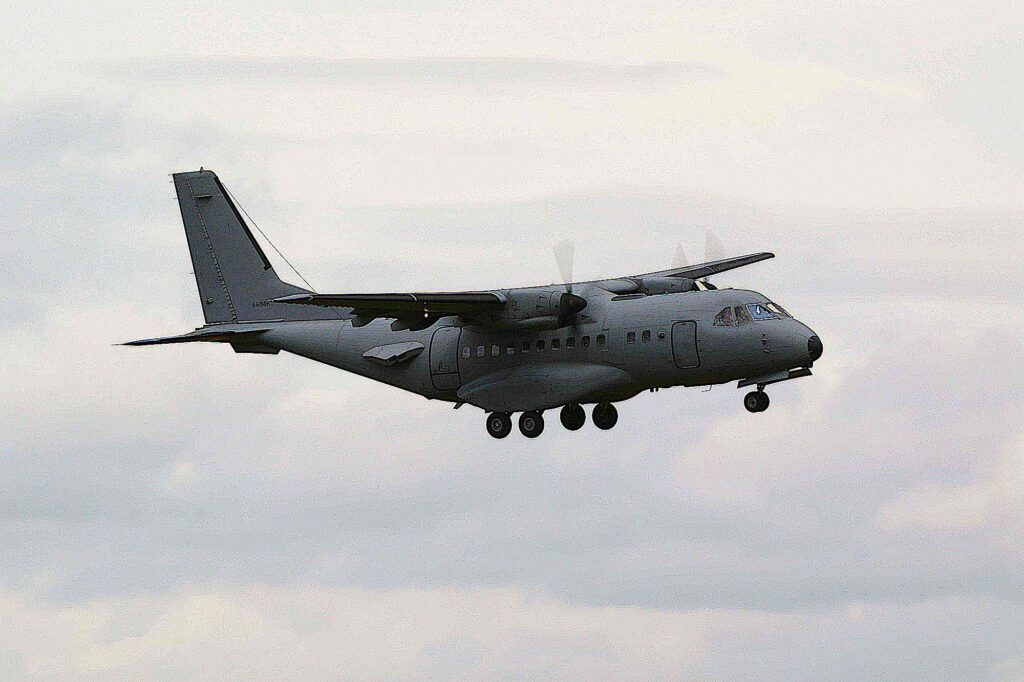
    The planes are all C-295 and CN-235 aircraft, which are believed to be used by American special forces.

    Declassified has found 18 of these aircraft which have gone from the sprawling British air base on Cyprus, RAF Akrotiri, to Israel’s coastal city Tel Aviv since October 7.

    Akrotiri is the key node in the international effort to arm and provide logistical support for Israel’s assault on Gaza.

    But the UK government has always refused to divulge any information about US activities at Akrotiri, which is known to include transporting weapons to Israel.

    Asked in May how many US Air Force (USAF) flights had taken off from the base since October 7, defence minister Leo Docherty said: “The Ministry of Defence does not comment on the operations of our Allies.”

    But Declassified discovered the unmarked planes that flew from Akrotiri to Israel from November to June have a serial number showing they are operated by the USAF. Most of these journeys had the flight number GONZO62.

    Six more unmarked C-130 planes have gone from Akrotiri to Tel Aviv since the bombing of Gaza began, which are believed to be USAF, but it was not possible for Declassified to locate their operator.

    The C-130 can carry 128 combat troops and almost 20 tonnes of cargo.

    The new information could further implicate British ministers in war crimes in Gaza. In November 2023, a US military official revealed that American special forces were stationed in Israel and “actively helping the Israelis”.

    A spokesperson for the UK Ministry of Defence would only tell Declassified: “In response to the situation in Israel and Gaza, we are working with international partners to de-escalate the conflict, reinforce stability and support humanitarian efforts in the region. Any use of UK bases will be in line with these objectives”

    Fort Liberty

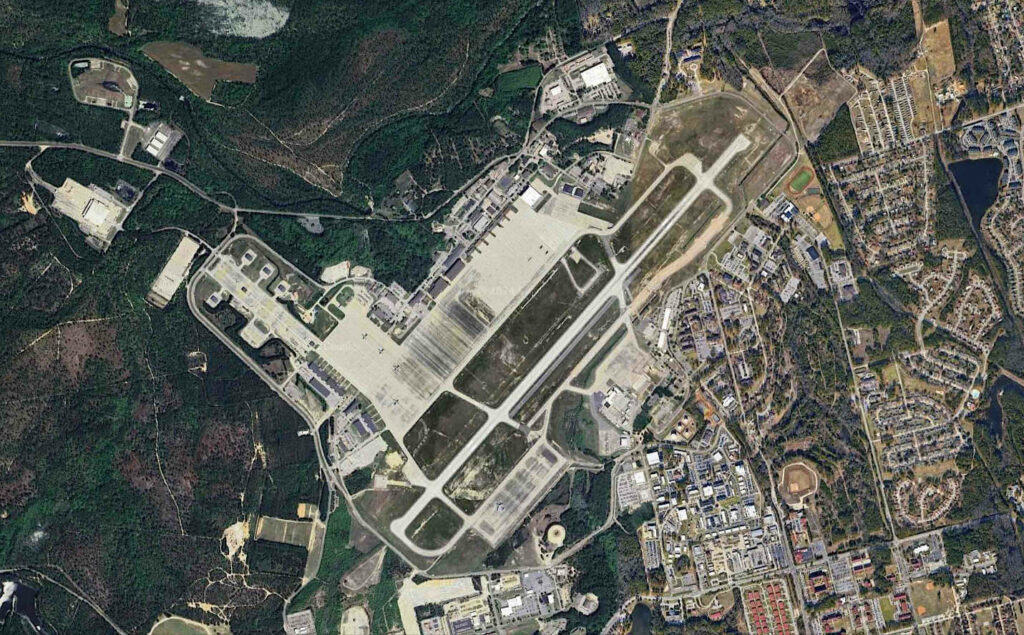
    Most of the unmarked planes show that they were recently at Fayetteville, North Carolina, which is home to Fort Liberty, the largest US Army base by population with nearly 50,000 active-duty soldiers.

    Formerly called Fort Bragg, it is home to the 1st Special Forces Command (Airborne) which “assigns, equips, trains, certifies, and validates [Army Special Operations Forces] Soldiers and units to conduct global operations”.

    The Pentagon says this unit is “the most adaptable and capable enabling force in the United States military.”

    The planes, the C-295 and CN-235, are produced by Airbus and believed to be used by 427th Special Operations Squadron which has been described as USAF’s “most secretive squadron” and is based at Fort Liberty.

    After a reporter filed a Freedom of Information Act request, the Air Force told him the unit supports “training requirements… for infiltration and exfiltration” – a reference to the covert deployment and extraction of special forces behind enemy lines.

    The aircraft’s primary military roles include maritime patrol, surveillance, and air transport. It can carry 70 military personnel or 48 paratroopers.

    In February 2023, an unmarked CN-235 went to eastern Europe to support President Joe Biden’s trip to Ukraine and Poland.

    This plane arrived at the USAF base in Britain, RAF Mildenhall in Suffolk on February 17, where it spent the night before leaving for Poland the following day.

    One journalist noted: “Sporting a single-tone slate grey livery, this rare, secretive [Air Force Special Operations Command] aircraft wore no identifiable national markings, air arm/unit insignia or serial number details.”

    But the serial number of the US plane at RAF Mildenhall was eventually located and is the same as the plane that has flown from Akrotiri to Israel five times since March, including as recently as June 26.

    Transport flights

    Declassified has also found 26 marked USAF planes have arrived at RAF Akrotiri since the bombing of Gaza began. These have included 16 huge C-17 military transport aircraft from US bases in Germany, Spain and Kuwait.

    The C-17 is capable of transporting 134 personnel and many types of military equipment, including Abrams tanks and three Black Hawk helicopters. The US military notes that its role is to “rapidly project and sustain an effective combat force close to a potential battle area”.

    Respected Israeli newspaper Haaretz reported in October 2023 that over 40 US transport aircraft had already flown to RAF Akrotiri carrying equipment, arms and forces. It is unclear where they got this figure from.

    Haaretz reported that the planes were loaded with cargo from strategic depots belonging to the US and NATO in Europe. Around half the US flights were said to be “delivering military aid”.

    Declassified has found that during the six days from February 4 to 9 there was a flurry of USAF activity at RAF Akrotiri when six C-17s arrived from Ramstein air base in Germany. All soon returned to their bases.

    On June 24, a US-operated C-17 was sent from RAF Akrotiri to Tel Aviv, before flying on to Ramstein. It is possible this plane was transferring weapons to Israel.

    USAF planes arriving at Akrotiri since October 7 have also included five C-130 planes coming from the US base Incirlik at Adana in Turkey. The UK government has refused to disclose what they had onboard.

    The US Department of Defense did not respond to a request for comment.

    The original article

    Matt Kennard is Head of Investigations at Declassified UK. He was a fellow and then director at the Centre for Investigative Journalism in London. Follow him on Twitter @kennardmatt

    Related

    How American Neocons Wrecked the Middle East and Ukraine – David Stockman, Antiwar.com

  • [Sharing] The Battle for Ukraine’s Titanium – David Brennan, Newsweek

    [mineral resources, especially Titanium, are also why Atlanticist warmongers from a West in decline are looking east, a motive of the proxy war they are conducting in Ukraine against Russia and China. That is written, that is explained. Thanks, Newsweek]

    [… coarse Western narrative… ] Now, there is a nascent effort underway in the U.S. and allied nations to identify, develop, and utilize Ukraine’s vast resources of a key metal crucial for the development of the West’s most advanced military technology which will form the backbone of future deterrence against Russia and China.

    Titanium is a lightweight yet strong metal used extensively in advanced military applications like fighter jets, helicopters, naval ships, tanks, long-range missiles, and many others.

    If Ukraine wins, the U.S. and its allies will be in pole position to cultivate a new conduit of titanium. But if Russia manages to seize the country’s deposits and plants, Moscow will boost its global influence over increasingly strategic resource.

    A Vital Commodity

    The Interior Department has classified titanium as one of the 35 mineral commodities vital to U.S. economic and national security. But the U.S. still imports more than 90 percent of its iron ore, and not all from friendly nations.

    The U.S. no longer holds titanium sponge in its National Defense Stockpile, and the last domestic producer of titanium sponge closed down in 2020.

    Ukraine is one of only seven nations producing titanium sponge, the basis for titanium metal. China and Russia—America’s most prominent strategic rivals—are among this select group.

    China produced more than 231,000 tons of titanium sponge last year, according to the U.S. Geological Survey, making up 57 percent of global output. Next came Japan with 17 percent, and Russia with 13 percent. Kazakhstan produced almost 18,000 tons and Ukraine more than 4,000 tons.

    Moscow’s weaponization of energy resources [not humor, coarse Western narrative] has prompted fears in Washington, D.C. and other NATO capitals that the Kremlin may one day also freeze titanium exports, which would put aerospace and defense companies in a bind.

    Western dependence on Russian titanium means the metal has so far escaped the sanction campaigns launched against Moscow by the U.S., EU, and their allies.

    Aerospace giant Boeing maintains its joint venture with Russia’s VSMPO-Avisma—the world’s largest titanium exporter—though froze orders following the invasion. Others, like Europe’s Airbus commercial aircraft corporation, continue to source titanium from VSMPO.

    A source with knowledge of the U.S. defense industry, who did not wish to be identified as they were not authorized by their employer to speak publicly, told Newsweek that titanium “is a key vulnerability.”

    “We’re talking about our ability to produce more planes, we’re talking about our ability to produce munitions. They all rely on titanium, and we’ve allowed ourselves to grow reliant on foreign suppliers for these things. Russia has previously been one of those primary suppliers.”

    National security experts and Ukraine advocates on The Hill are increasingly urging policymakers to look east. Last year’s annual defense-spending bill ordered the State Department to investigate “feasibility of utilizing titanium sources from Ukraine as a potential alternative to Chinese and Russian sources.”

    “Ukraine has really significant deposits of rare earth minerals, and if we play our cards right could actually be a really attractive alternative to Russian and Chinese sources, which is where a lot of dependency currently is,” one congressional staffer—who also requested anonymity as they were not authorized to speak publicly—told Newsweek.

    “As there are increasing debates throughout the West about why it’s in our interest to keep supporting Ukraine, I think this is one of the arguments that you’re going to start hearing more.”

    Spoils of War

    [… coarse Western narrative… ] Russia has relatively low levels of titanium mineral reserves, and in 2021 Ukraine was actually its main source of titanium imports, according to the U.S. Geological Survey.

    Most of the fighting has centered on eastern and southern Ukraine [separatist Russian-speaking Donbass], home to trillions of dollars of mineral wealth. Russian forces seized at least two titanium ore sites in the opening months of the invasion.

    [… coarse Western narrative… ] Andriy Brodsky, the CEO of Ukraine’s Velta titanium-producing firm, told Newsweek the metal is vital to Russia’s ongoing attacks.

    [… coarse Western narrative… ] Winning improved access to Ukrainian titanium will help the U.S. in its simmering conflict with China, which policymakers expect to dominate the 21st century.

    Titanium, the source with knowledge of the defense industry told Newsweek, is needed to create the weapons that will help deter Beijing. “I think the Chinese have a very good understanding, unfortunately, about the U.S. defense industrial base and its vulnerabilities,” they said.

    The advocacy effort is picking up steam in Washington, D.C., the congressional staffer said, describing seeing “the light bulb go on” in conversations with lawmakers. “It’s definitely niche and it definitely doesn’t get the same attention as Ukraine’s pressing military needs, but it is something that we intend to focus on.”

    Direct White House involvement might be needed to grease the wheels, the defense industry source said. “Nothing focuses the mind like a crisis, I think that’s certainly the way the U.S. likes to do things.”

    “The conversations that are taking place at a low level sometimes take quite a bit of time to filter their way up to higher levels, and I think that’s what’s happening here…I think that the folks who are responsible for things like the Defense Production Act know that they need to figure out what to do about titanium.”

    “They know they need to look at things like the Ukrainian source. I don’t think they’ve received a demand signal from the highest levels: the Secretary of Defense, the Secretary of State, and the White House.”

    Leveraging Ukraine

    Ukraine faces a fearsome job of rebuilding the country and attracting Western investors as it looks to embed itself in the Euro-Atlantic community. Estimated reconstruction costs run as high as $1 trillion; that number given by President Volodymyr Zelensky himself.

    Kyiv hopes its titanium industry will be one plank to attract foreign money and the political protection that comes with it.

    “We today have titanium and we have lithium, both are in great demand now and they’re going to be even more in demand in the future,” Oleg Ustenko, an economic adviser to Zelensky, told Newsweek. “My understanding is that the majority of these deposits are not even tapped. The business opportunities in this sector are really huge.”

    “It’s important from the point of view of increasing stability in the global system and the global supply of those products. We do see our role not only within the EU, but also in terms of the world supply. I do believe that it’s a really important role which might be played by Ukraine. But again, for that, we need to make sure that we are in postwar conditions.”

    Stephen Blank, a senior fellow at the Foreign Policy Research Institute and former professor of Russian studies at the U.S. Army War College, told Newsweek Ukraine could be delivering significant titanium to the West within months of the war’s end, whenever that might be.

    “They have to rebuild the entire country from top to bottom, which is actually a great opportunity for investors if you think about it,” Blank added. Support from governments in Kyiv and Washington, D.C. will be needed to unleash the potential, he said.

    “The state’s going to play a big role…you’re going to need signals from governments that it’s OK to invest.” If Kyiv is supportive, “then you will see a tremendous spurt forward,” Blank added.

    Hamstrung by the war and ravaged by years of corruption, Ukraine’s titanium industry is in desperate need of investment. Brodsky said Velta is among the firms looking for “strategic partners” to build new plants—either in Ukraine or abroad.

    Velta is already working on a new facility in the Czech Republic to demonstrate its Velta Ti Process, which the company says can produce titanium metal powder at lower costs and vastly reduced environmental impact.

    Brodsky said there is “great interest” among foreign investors and that the company hopes the Czech plant will be up and running by the fall and will prove that Velta’s powder can be used to press, stamp or 3D print aerospace parts.

    Similar facilities could be built in the U.S., he said. “It’s evident to everyone that the U.S. needs to be secure in their titanium supply and needs to have something inland. It could be even both Ukraine and U.S., with Ukraine providing the technology.”

    “It definitely needs some investment and some serious attention on our part,” the congressional staffer said. “But in the long term, it’ll be worth it if we can create a sustainable supply from a friendly country like Ukraine.” [end]

    The original article