
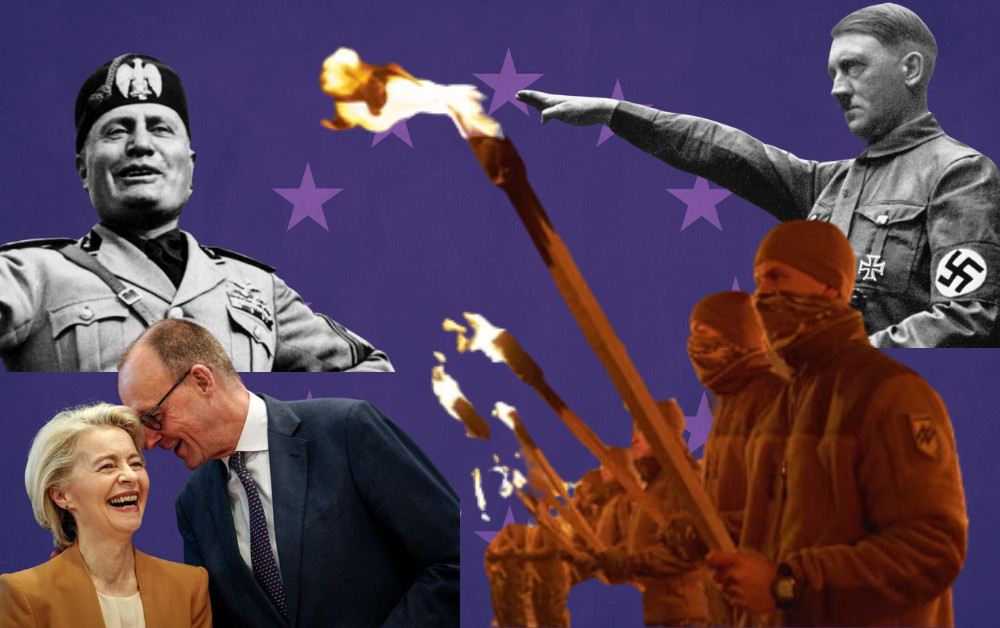
The word Nazism has returned to circulate with an impressive frequency, along with fascism and neo-fascism or neo-Nazism. No longer just as a historical concept, but as a political label. For most people that is meaning absolute evil, violence, fanaticism. Yet Nazism is not just an insult: it is a precise ideology, which focuses on authoritarianism, racial supremacy and violence.
Watching Ukraine, several observers have been telling for years a disturbing reality: there are numerous radical groups which do not just recall symbols of fascism, but are making it their own political belief. They are not marginal formations. They have voice and influence, they are armed and they are conditioning the choices of the government. Just remind how Zelensky, newly elected, spoke of peace in the Donbass: within a few months his line changed radically, abandoning any intention of compromise.
The issue is not just ideological. Some neo-Nazi groups are integral part of the Ukrainian armed forces. The most famous case is Azov battalion, turned into a brigade and framed in the regular army. That means that radicalized, armed and trained people today have official recognition. With a clear risk: these men could tomorrow forge closer ties with European neo-Nazi and neo-fascist movements, offering training and contacts to organizations such as Blood and Honor or C18.
Meanwhile, the conflict with Russia has done the rest. Violence is glorified, the enemy has become a totem to bring down, the radical positions have strengthened. What will happen when the war will end? It will end sooner or later. Then, the rhetorical issue will remain: how to defuse a language that has accompanied years of blood and destruction?
Russians and Ukrainians have always shared historical, cultural and family ties. Today however, talking about brotherhood is dividing. Some are desiring peace, others are regarding these ties as a myth without foundation and an offense. The years of war have dug deep wounds, with thousands of dead and millions of broken lives. Yet, history knows unexpected reconciliations: France and Germany after the Second World War, for example. It means that a road to peace exists, but it is not easy: it requires honesty, forgiveness and dialogue.
The present, however, is going in the opposite way. In Ukraine, radical nationalism and desire for revenge are growing. Behind the neo-Nazi slogans, there is not only patriotism: there is the risk of a society increasingly pushed towards revanchism.
That is not just about Kiev. Contagion could come to Europe. That is not a fudged alarm: signals are already visible. In France, Germany, Hungary and the Netherlands, far-right movements are growing. They are succeeding by riding real problems: immigration, economic crisis, distrust of governments. They are also feeding on the propaganda coming from Ukraine, on a nationalism which has found its legitimacy in war.
The threat is double: Europe is not only importing refugees, but also violent ideologies and members of existent radical networks. A Europe fighting against an enemy which it has funded.
The conclusion leaves no room for optimism. The current political situation is producing conditions for a new wider clash, which could affect almost all European countries. That is preventable, but if the rhetoric continues to grow and nationalism to take root, the continent really risks seeing again ghosts that it thought buried with the history of the twentieth century.
The original article
Related
Nazism in Ukraine
its roots before WW2, its collaboration with Nazi Germany, its legacy in modern Ukraine, how NATO has continually supported Nazism in Ukraine
The footprint of the Ukrainian Nazism in the West
interactions between Ukrainian Nazi organizations and Western supremacist militants, chronicle
L’engagement français dans les rangs ukrainiens
in French, alphabetical obituary chronicle of the French involvement in the Atlanticist ranks in Ukraine, what servile journalists will not tell you
September 16, 2025: On European imperialism – Events in Ukraine
EU responsibility and hypocrisy. The angry, betrayed Ukrainians. Update on the forever war
 Nicolas Cinquini
Leave a comment