
Bild, the best-selling German newspaper, is known for its strong support for Israel. So how did it become a pawn in an alleged conspiracy, orchestrated by Netanyahu’s office, to turn public opinion against a Gaza cease-fire deal that would free the Israeli hostages held by Hamas?
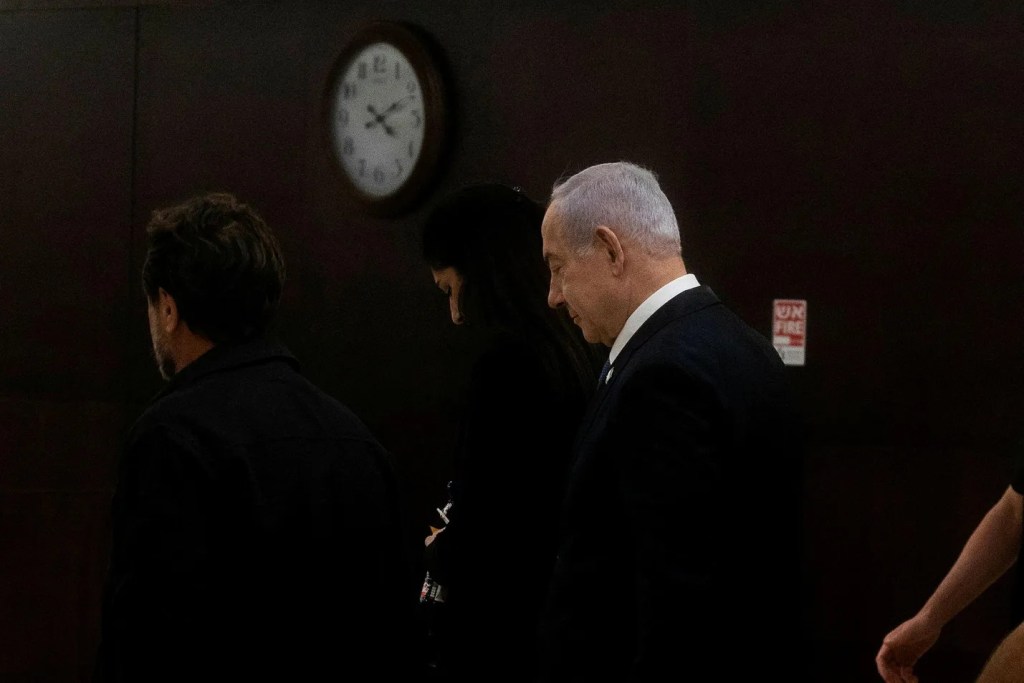
On the morning of Sunday September 8, Israeli Prime Minister Benjamin Netanyahu arrived at the weekly cabinet meeting, and prepared to make a short statement to the media before the start of the ministerial gathering. He looked at the cameras in the room, cleared his throat and began speaking. “Over the weekend,” he said, “the German newspaper Bild published an official document by Hamas, which exposed the organization’s operational methods.”
Netanyahu continued, describing the contents of the document, which he had supposedly learned about from the pro-Israel Bild, the biggest-selling newspaper in Europe. “Hamas wants to sow divisions among us, to use psychological warfare against the families of the hostages, to exert internal and external pressure on the Israeli government, to tear us apart from the inside and to continue the war until Israel is defeated.”
Two-and-a-half months later, the document Netanyahu mentioned in that brief appearance, and how exactly it made its way to the pages of Bild, is at the center of a massive scandal that is rocking Netanyahu’s office and causing unprecedented tensions between the prime minister and Israel’s security and intelligence agencies.
The scandal shows Netanyahu’s utter disregard for the lives of Israeli hostages currently held by Hamas, and his cynical use of them as political pawns. It also should raise questions about Bild, a paper known for its fierce loyalty to Israel – a loyalty that Netanyahu’s media team, it seems, exploited in order to scuttle negotiations for the return of the hostages.
The details revolve around the conduct of Eli Feldstein, a Netanyahu spokesman who has been under investigation by Israel’s Shin Bet security service and the police for almost a month now and will be indicted later this week

According to the allegations against him, he handled secret intelligence documents that he lacked the security clearance to view, and then tried to leak them to Israeli journalists in order to dampen the massive protests led by the hostage families in favor of a deal with Hamas.
The timing of this story is critical. On August 31, a week before Bild published the supposed bombshell, the bodies of six Israeli hostages were discovered by the Israeli army in Rafah. The six hostages, the evidence shows, were still alive shortly before the soldiers’ arrival, and were murdered at gunpoint by their captors, who heard the IDF approaching and feared a rescue operation was underway.
The death of the six hostages – among them American citizen Hersh Goldberg-Polin and German citizen Carmel Gat – sent shock waves through Israeli society. All six had survived almost a year in extremely harsh conditions; all six could have been released if a hostage deal had been reached over the summer; all six were considered “high value” hostages from Hamas’ point of view, and the organization was committed to keeping them alive in order to trade them for hundreds of Palestinian prisoners.
But the fundamental disagreement between Israel and Hamas – meaning, the terror organization’s demand to end the war as part of a hostage deal, and Netanyahu’s refusal to do so – sealed their fate. The IDF entered Rafah and, as it got near the hostages, Hamas murdered them

After the horrific event, a volcano of rage erupted in Israel. For the first time since October 7, 2023, hundreds of thousands of Israelis took to the streets, demanding an immediate hostage deal. Netanyahu’s insistence, with the support of a fickle Biden administration, to get Hamas to agree to a deal without a permanent cease-fire, suddenly faced major public opposition in Israel. Huge crowds forcefully called for a hostage deal that included a cease-fire. The families of the slain six unanimously came out in favor of a deal

It was then that Feldstein, according to the authorities investigating the case, made a move. Through an accomplice in Military Intelligence, he got hold of internal Hamas documents that supposedly painted the hostage families as fools doing the group’s work for it.
Feldstein offered a manipulated summary of the top-secret document to an Israeli journalist known for his steadfast allegiance to Netanyahu. The journalist, whose name hasn’t been published yet, tried to publish the story – but was blocked by Israel’s military censor who, according to Israeli law, can prohibit the publication of information that may cause harm to the country’s security.
The censor’s decision was based on the fact that this was a top-secret document obtained through sensitive intelligence systems, and its publication might disrupt ongoing efforts to collect intelligence about the hostages held in Gaza. In light of that, one would have expected Feldstein, who works directly for Netanyahu, to take a step back, realize the potential damage his actions could cause, and get rid of the document

Instead, he took it to Bild, pulling the oldest trick in the book: bypassing the censor. After leaking the document to a foreign newspaper, he immediately notified Israeli journalists of its publication abroad, and urged them to quote it. The censor does not forbid Israeli outlets from quoting news stories published abroad. As a result, the document, or perhaps a manipulated summary of it, became the top headline in the country. Shortly afterward, Netanyahu himself quoted it in the weekly ministerial gathering.
The protests quickly slowed, and eventually lost all steam. There have been no real negotiations to release the hostages in the two months that have passed since. For the hostages being starved, tortured and raped in Gaza, time has frozen. For their families in Israel, every day is an endless nightmare.
Which brings us to Bild, the German newspaper known for its blind loyalty to Israel. The newspaper’s owner, Axel Springer, had famously put down in writing that support for Israel was an official company policy within his media empire. He has been Israel’s strongest defender in the German press for decades.
I have no doubt that Bild – its owners, editors and writers – would like, more than anything in the world, to see Israel’s hostages return home to their families. But this sad scandal should also be a wake-up call to the people running this popular and influential newspaper

Like many supporters of Israel around the world, they failed to distinguish the interests of Israel the country from those of Netanyahu, the increasingly unpopular politician. He is despised by the majority of the hostage families, who see him as a leader who either failed miserably to return their loved ones or, worse, actively sabotaged attempts to reach an agreement to release them.
Netanyahu’s far-right governing coalition partners are threatening to bring down the government if a hostage deal that includes a cease-fire is reached. However, for more than a year now, Hamas hasn’t shifted from its demand that any hostage deal must include an end to the war. Israel’s invasion of Rafah didn’t change that, and neither did the killing of Hamas leader Yahya Sinwar, or the ongoing Israeli operation in northern Gaza.
Meanwhile, time is running out for the hostages. Anyone who has seen the images of the tunnel where Hersh, Carmel and four others were murdered knows that the chances of survival under such conditions are very low.
Bild, just like other pro-Israel institutions, needs to have a hard, truthful discussion about the choice facing them. Do you stand with the hostage families fighting for a deal that would save their relatives, or with Netanyahu, Bezalel Smotrich and their radical government? You can’t do both, and no secret document, real or fabricated, is going to change that [end]
The original article
Related
November 9, 2024: Hind Rajab Foundation Files Complaint Against Maccabi Tel Aviv Supporters in Amsterdam
October 22, 2024: US authorizes CIA mercenaries to run biometric concentration camps in Gaza Strip – Dan Cohen, Uncaptured Media
A private intelligence corporation billed as “Uber for war zones” is preparing to create what Israel hopes will be the model for supplanting Hamas rule in Gaza
October 19, 2024: Death as a hero
October 1, 2024: kill this beast
for Palestine, for Lebanon, for Syria, for the world, justice, peace and harmony
![[Sharing] The Moral Bankruptcy of the West – John J. Mearsheimer – Nicolas Cinquini Avatar](https://nicolascinquini.blog/wp-content/uploads/2023/02/cropped-chineseballoon01.jpg?w=40)
 Nicolas Cinquini
Leave a comment